Google is reviving wearable gesture controls, but only for the Pixel Watch 4
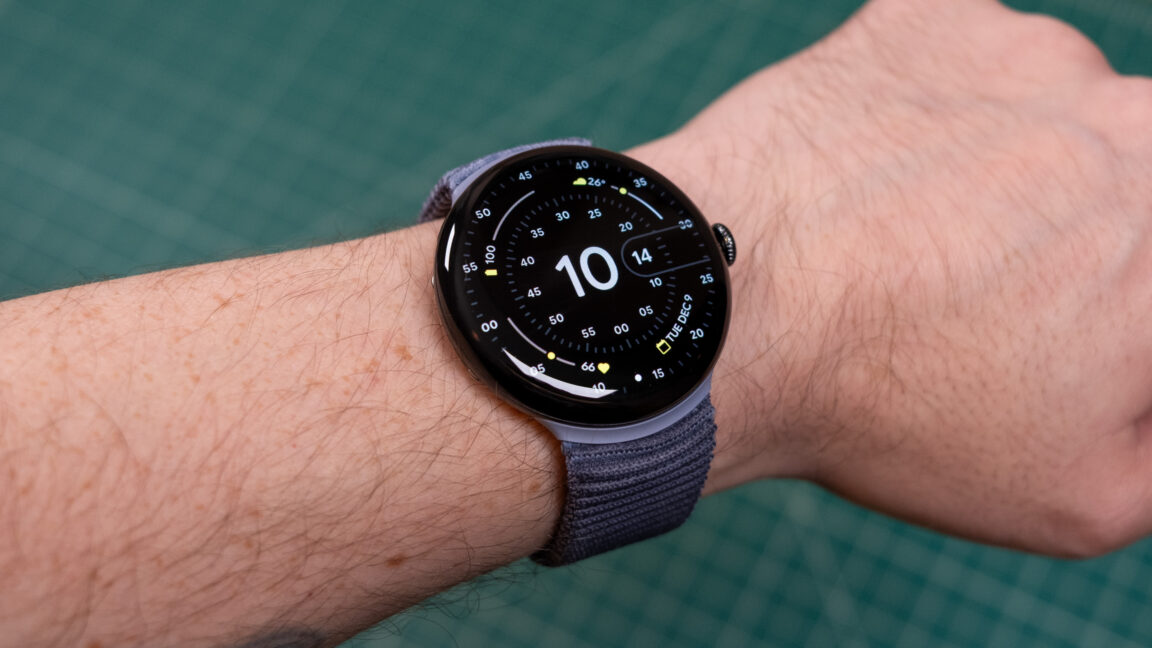
Long ago, Google’s Android-powered wearables had hands-free navigation gestures. Those fell by the wayside as Google shredded its wearable strategy over and over, but gestures are back, baby. The Pixel Watch 4 is getting an update that adds several gestures, one of which is straight out of the Apple playbook.

When the update hits devices, the Pixel Watch 4 will gain a double pinch gesture like the Apple Watch has. By tapping your thumb and forefinger together, you can answer or end calls, pause timers, and more. The watch will also prompt you at times when you can use the tap gesture to control things.

In previous incarnations of Google-powered watches, a quick wrist turn gesture would scroll through lists. In the new gesture system, that motion dismisses what’s on the screen. For example, you can clear a notification from the screen or dismiss an incoming call. Pixel Watch 4 owners will also enjoy this one when the update arrives.

And what about the Pixel Watch 3? That device won’t get gesture support at this time. There’s no reason it shouldn’t get the same features as the latest wearable, though. The Pixel Watch 3 has a very similar Arm chip, and it has the same orientation sensors as the new watch. The Pixel Watch 4’s main innovation is a revamped case design that allows for repairability, which was not supported on the Pixel Watch 3 and earlier.

https://arstechnica.com/gadgets/2025/12/google-is-reviving-wearable-gesture-controls-but-only-for-the-pixel-watch-4/
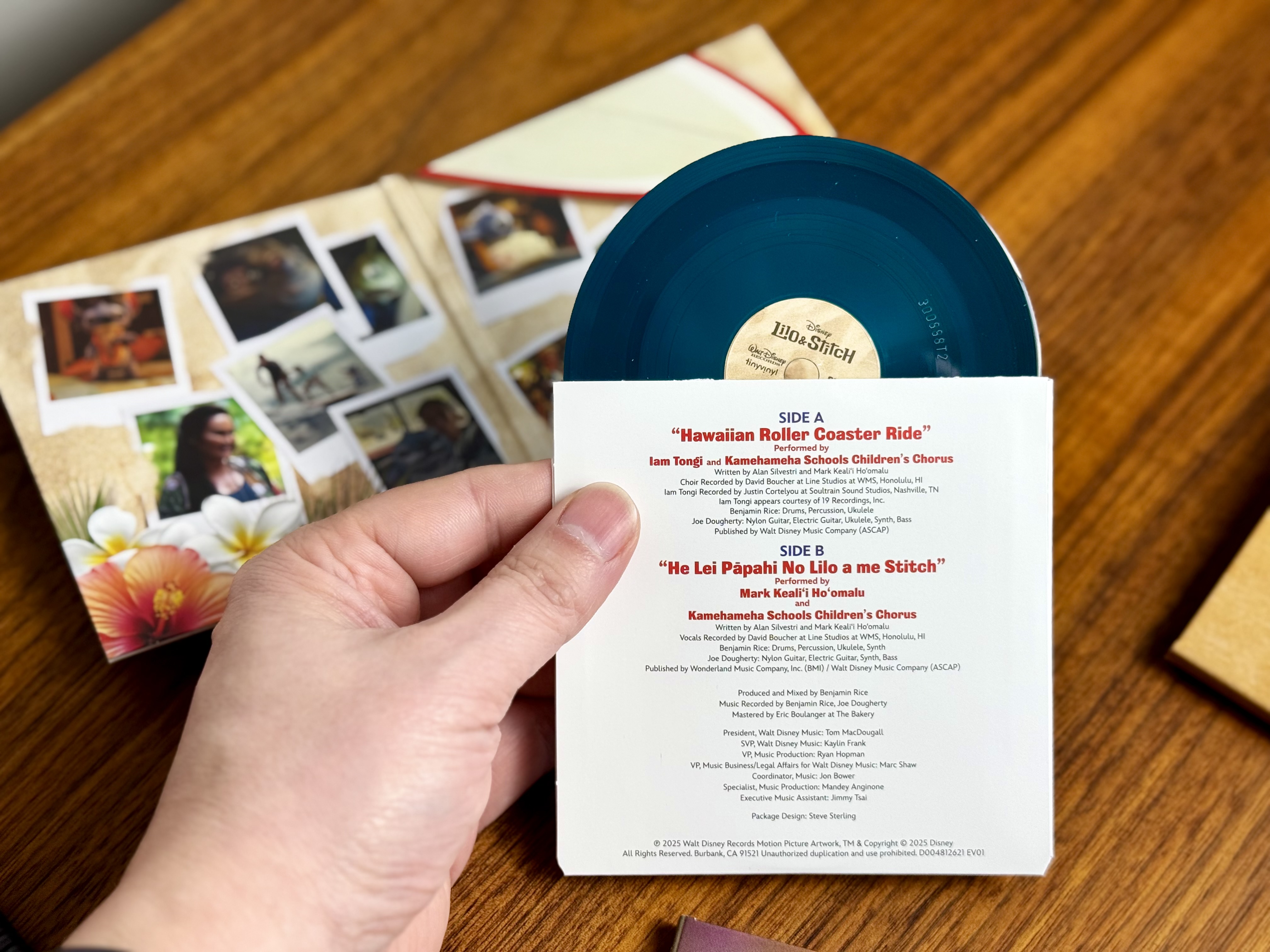
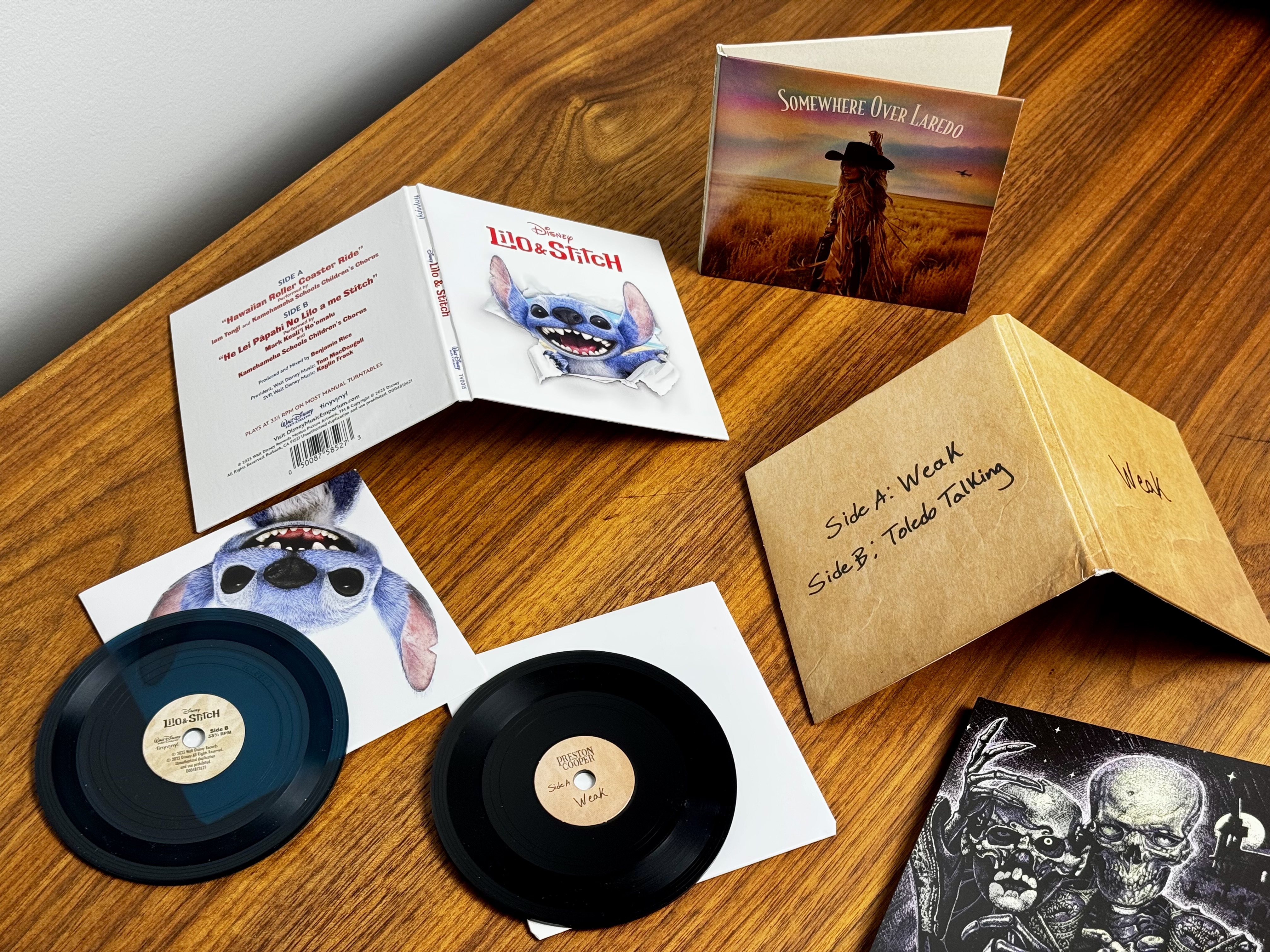


We put the new pocket-size vinyl format to the test—with mixed results

while others have barely any additional information beyond song titles. 

Chris Foresman

A few of our samples had this hard-to-remove flaw, which seems like an artifact of the manufacturing process. It required liquid cleaner to remove.

Chris Foresman

Additionally, I compared the classic track “Linus and Lucy” from A Charlie Brown Christmas with a 2012 pressing of the full album, as well as the 2019 3-inch version using an adapter, all on the LP-120, to give readers the best comparison across formats.

Again, the LP version of the seminal soundtrack from A Charlie Brown Christmas sounded bright and noticeably louder than its 4-inch counterpart. No major surprises here. And of course, the LP includes the entire soundtrack, so if you’re a big fan of the film or the kind of contemplative, piano-based jazz that Vince Guaraldi is famous for, you’ll probably spring for the full album.

The 3-inch version of “Linus and Lucy” unsurprisingly sounds fairly comparable to the Tiny Vinyl version, with a much quieter playback at the same amplifier settings. But it also sounds a lot noisier, likely due to the differences in materials used in manufacturing.

Though 3-inch records can play on standard turntables, as I did here, they’re designed to go hand-in-hand with one of the many Crosley RSD3 variants released in the last five years, or on the Crosley Mini Cruiser turntable. If you manage to pick up an original 8ban player, you could get the original lo-fi, “noisy analog” sound that Bandai had intended as well. That’s really part of the 3-inch vinyl aesthetic.

Newer 3-inch vinyl singles are coming with a standard spindle hole, which makes them easier to play on standard turntables. It also means there are now adapters for the tiny spindle to fit these holes, so you can technically put a 4-inch single on them. But due to the design of the tonearm and its rest, the stylus won’t swing out to the edge of Tiny Vinyl; instead, you can only play starting at grooves around the 3-inch mark. It’s a little unfortunate because it would otherwise be fun to play these miniature singles on hardware that is a little more right-sized ergonomically.

https://arstechnica.com/gadgets/2025/11/we-put-the-new-pocket-sized-vinyl-format-to-the-test-with-mixed-results/


Vision Pro M5 review: It’s time for Apple to make some tough choices

I still think there’s significant room to grow, but the content situation is better than ever. It’s not enough to keep you entertained for hours a day, but it’s enough to make putting on the headset for a bit once a week or so worth it. That wasn’t there a year ago.

The software support situation is in a similar state.

App support is mostly frozen in the year 2024

Many of us have a suite of go-to apps that are foundational to our individual approaches to daily productivity. For me, primarily a macOS user, they are:

  • Firefox
  • Spark
  • Todoist
  • Obsidian
  • Raycast
  • Slack
  • Visual Studio Code
  • Claude
  • 1Password

As you can see, I don’t use most of Apple’s built-in apps—no Safari, no Mail, no Reminders, no Passwords, no Notes… no Spotlight, even. All that may be atypical, but it has never been a problem on macOS, nor has it been on iOS for a few years now.

Impressively, almost all of these are available on visionOS—but only because it can run iPad apps as flat, virtual windows. Firefox, Spark, Todoist, Obsidian, Slack, 1Password, and even Raycast are all available as supported iPad apps, but surprisingly, Claude isn’t, even though there is a Claude app for iPads. (ChatGPT’s iPad app works, though.) VS Code isn’t available, of course, but I wasn’t expecting it to be.

Not a single one of these applications has a true visionOS app. That’s too bad, because I can think of lots of neat things spatial computing versions could do. Imagine browsing your Obsidian graph in augmented reality! Alas, I can only dream.

You can tell the native apps from the iPad ones: The iPad ones have rectangular icons nested within circles, whereas the native apps fill the whole circle. Credit: Samuel Axon

If you’re not such a huge productivity software geek like me and you use Apple’s built-in apps, things look a little better, but surprisingly, there are still a few apps that you would imagine would have really cool spatial computing features—like Apple Maps—that don’t. Maps, too, is just an iPad app.

https://arstechnica.com/gadgets/2025/11/where-apples-vision-pro-stands-today-post-m5-refresh/


Arduino’s new terms of service worries hobbyists ahead of Qualcomm acquisition

“The Qualcomm acquisition doesn’t modify how user data is handled or how we apply our open-source principles,” the Arduino blog says.

Arduino’s blog didn’t discuss the company’s new terms around patents, which states:

User will use the Site and the Platform in accordance with these Terms and for the sole purposes of correctly using the Services. Specifically, User undertakes not to: … “use the Platform, Site, or Services to identify or provide evidence to support any potential patent infringement claim against Arduino, its Affiliates, or any of Arduino’s or Arduino’s Affiliates’ suppliers and/or direct or indirect customers.

“No open-source company puts language in their ToS banning users from identifying potential patent issues. Why was this added, and who requested it?” Fried and Torrone said.

Arduino’s new terms include similar language around user-generated content that its ToS has had for years. The current terms say that users grant Arduino the:

non-exclusive, royalty free, transferable, sub-licensable, perpetual, irrevocable, to the maximum extent allowed by applicable law … right to use the Content published and/or updated on the Platform as well as to distribute, reproduce, modify, adapt, translate, publish and make publicly visible all material, including software, libraries, text contents, images, videos, comments, text, audio, software, libraries, or other data (collectively, “Content”) that User publishes, uploads, or otherwise makes available to Arduino throughout the world using any means and for any purpose, including the use of any username or nickname specified in relation to the Content.

“The new language is still broad enough to republish, monetize, and route user content into any future Qualcomm pipeline forever,” Torrone told Ars. He thinks Arduino’s new terms should have clarified Arduino’s intent, narrowed the term’s scope, or explained “why this must be irrevocable and transferable at a corporate level.”

In its blog, Arduino said that the new ToS “clarifies that the content you choose to publish on the Arduino platform remains yours and can be used to enable features you’ve requested, such as cloud services and collaboration tools.”

As Qualcomm works toward completing its Arduino acquisition, there appears to be more work ahead for the smartphone processor and modem vendor to convince makers that Arduino’s open source and privacy principles will be upheld. While the Arduino IDE and its source code will stay on GitHub per the AGPL-3.0 Open-Source License, some users remain worried about Arduino’s future under Qualcomm.

https://arstechnica.com/gadgets/2025/11/arduinos-new-terms-of-service-worries-hobbyists-ahead-of-qualcomm-acquisition/


Science-centric streaming service Curiosity Stream is an AI-licensing firm now

We all know streaming services’ usual tricks for making more money: get more subscribers, charge those subscribers more money, and sell ads. But science streaming service Curiosity Stream is taking a new route that could reshape how streaming companies, especially niche options, try to survive.

Discovery Channel founder John Hendricks launched Curiosity Stream in 2015. The streaming service costs $40 per year, and it doesn’t have commercials.

The streaming business has grown to also include the Curiosity Channel TV channel. CuriosityStream Inc. also makes money through original programming and its Curiosity University educational programming. The firm turned its first positive net income in its fiscal Q1 2025, after about a decade of business.

With its focus on science, history, research, and education, Curiosity Stream will always be a smaller player compared to other streaming services. As of March 2023, Curiosity Stream had 23 million subscribers, a paltry user base compared to Netflix’s 301.6 million (as of January 2025).

Still, in an extremely competitive market, Curiosity Stream’s revenue increased 41 percent year over year in its Q3 2025 earnings announced this month. This was largely due to the licensing of Curiosity Stream’s original programming to train large language models (LLMs).

“Looking at our year-to-date numbers, licensing generated $23.4 million through September, which … is already over half of what our subscription business generated for all of 2024,” Phillip Hayden, Curiosity Stream’s CFO, said during a call with investors this month.

Thus far, Curiosity Stream has completed 18 AI-related fulfillments “across video, audio, and code assets” with nine partners, an October announcement said.

The company expects to make more revenue from IP licensing deals with AI companies than it does from subscriptions by 2027, “possibly earlier,” CEO Clint Stinchcomb said during the earnings call.

https://arstechnica.com/gadgets/2025/11/curiosity-stream-expects-to-make-most-of-its-money-from-ai-deals-by-2027/


HP and Dell disable HEVC support built into their laptops’ CPUs

The OEMs disabling codec hardware also comes as associated costs for the international video compression standard are set to increase in January, as licensing administrator Access Advance announced in July. Per a breakdown from patent pool administration VIA Licensing Alliance, royalty rates for HEVC for over 100,001 units are increasing from $0.20 each to $0.24 each in the United States. To put that into perspective, in Q3 2025, HP sold 15,002,000 laptops and desktops, and Dell sold 10,166,000 laptops and desktops, per Gartner.

Last year, NAS company Synology announced that it was ending support for HEVC, as well as H.264/AVC and VCI, transcoding on its DiskStation Manager and BeeStation OS platforms, saying that “support for video codecs is widespread on end devices, such as smartphones, tablets, computers, and smart TVs.”

“This update reduces unnecessary resource usage on the server and significantly improves media processing efficiency. The optimization is particularly effective in high-user environments compared to traditional server-side processing,” the announcement said.

Despite the growing costs and complications with HEVC licenses and workarounds, breaking features that have been widely available for years will likely lead to confusion and frustration.

“This is pretty ridiculous, given these systems are $800+ a machine, are part of a ‘Pro’ line (jabs at branding names are warranted – HEVC is used professionally), and more applications these days outside of Netflix and streaming TV are getting around to adopting HEVC,” a Redditor wrote.

https://arstechnica.com/gadgets/2025/11/hp-and-dell-disable-hevc-support-built-into-their-laptops-cpus/


Microsoft makes Zork I, II, and III open source under MIT License

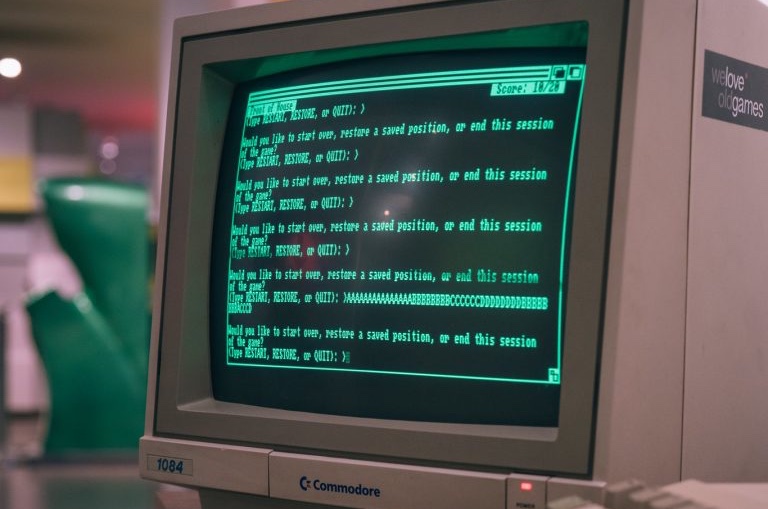
Zork, the classic text-based adventure game of incalculable influence, has been made available under the MIT License, along with the sequels Zork II and Zork III.

The move to take these Zork games open source comes as the result of the shared work of the Xbox and Activision teams along with Microsoft’s Open Source Programs Office (OSPO). Parent company Microsoft owns the intellectual property for the franchise.

Only the code itself has been made open source. Ancillary items like commercial packaging and marketing assets and materials remain proprietary, as do related trademarks and brands.

“Rather than creating new repositories, we’re contributing directly to history. In collaboration with Jason Scott, the well-known digital archivist of Internet Archive fame, we have officially submitted upstream pull requests to the historical source repositories of Zork I, Zork II, and Zork III. Those pull requests add a clear MIT LICENSE and formally document the open-source grant,” says the announcement co-written by Stacy Haffner (director of the OSPO at Microsoft) and Scott Hanselman (VP of Developer Community at the company).

Microsoft gained control of the Zork IP when it acquired Activision in 2022; Activision had come to own it when it acquired original publisher Infocom in the late ’80s. There was an attempt to sell Zork publishing rights directly to Microsoft even earlier in the ’80s, as founder Bill Gates was a big Zork fan, but it fell through, so it’s funny that it eventually ended up in the same place.

To be clear, this is not the first time the original Zork source code has been available to the general public. Scott uploaded it to GitHub in 2019, but the license situation was unresolved, and Activision or Microsoft could have issued a takedown request had they wished to.

Now that’s obviously not at risk of happening anymore.

https://arstechnica.com/gaming/2025/11/microsoft-makes-zork-i-ii-and-iii-open-source-under-mit-license/


The EU made Apple adopt new Wi-Fi standards, and now Android can support AirDrop

Last year, Apple finally added support for Rich Communications Services (RCS) texting to its platforms, improving consistency, reliability, and security when exchanging green-bubble texts between the competing iPhone and Android ecosystems. Today, Google is announcing another small step forward in interoperability, pointing to a slightly less annoying future for friend groups or households where not everyone owns an iPhone.

Google has updated Android’s Quick Share feature to support Apple’s AirDrop, which allows users of Apple devices to share files directly using a local peer-to-peer Wi-Fi connection. Apple devices with AirDrop enabled and set to “everyone for 10 minutes” mode will show up in the Quick Share device list just like another Android phone would, and Android devices that support this new Quick Share version will also show up in the AirDrop menu.

Google will only support this feature on the Pixel 10 series, at least to start. The company is “looking forward to improving the experience and expanding it to more Android devices,” but it didn’t announce anything about a timeline or any hardware or software requirements. Quick Share also won’t work with AirDrop devices working in the default “contacts only” mode, though Google “[welcomes] the opportunity to work with Apple to enable ‘Contacts Only’ mode in the future.” (Reading between the lines: Google and Apple are not currently working together to enable this, and Google confirmed to The Verge that Apple hadn’t been involved in this at all.)

Like AirDrop, Google notes that files shared via Quick Share are transferred directly between devices, without being sent to either company’s servers first.

Google shared a little more information in a separate post about Quick Share’s security, crediting Android’s use of the memory-safe Rust programming language with making secure file sharing between platforms possible.

“Its compiler enforces strict ownership and borrowing rules at compile time, which guarantees memory safety,” writes Google VP of Platforms Security and Privacy Dave Kleidermacher. “Rust removes entire classes of memory-related bugs. This means our implementation is inherently resilient against attackers attempting to use maliciously crafted data packets to exploit memory errors.”

https://arstechnica.com/gadgets/2025/11/the-eu-made-apple-adopt-new-wi-fi-standards-and-now-android-can-support-airdrop/


Flying with whales: Drones are remaking marine mammal research

In 2010, the Deepwater Horizon oil rig exploded in the Gulf of Mexico, causing one of the largest marine oil spills ever. In the aftermath of the disaster, whale scientist Iain Kerr traveled to the area to study how the spill had affected sperm whales, aiming specialized darts at the animals to collect pencil eraser-sized tissue samples.

It wasn’t going well. Each time his boat approached a whale surfacing for air, the animal vanished beneath the waves before he could reach it. “I felt like I was playing Whac-A-Mole,” he says.

As darkness fell, a whale dove in front of Kerr and covered him in whale snot. That unpleasant experience gave Kerr, who works at the conservation group Ocean Alliance, an idea: What if he could collect that same snot by somehow flying over the whale? Researchers can glean much information from whale snot, including the animal’s DNA sequence, its sex, whether it is pregnant, and the makeup of its microbiome.

After many experiments, Kerr’s idea turned into what is today known as the SnotBot: a drone fitted with six petri dishes that collect a whale’s snot by flying over the animal as it surfaces and exhales through its blowhole. Today, drones like this are deployed to gather snot all over the world, and not just from sperm whales: They’re also collecting this scientifically valuable mucus from other species, such as blue whales and dolphins. “I would say drones have changed my life,” says Kerr.

[embedded content]

S’not just mucus

Gathering snot is one of many ways that drones are being used to study whales. In the past 10 to 15 years, drone technology has made great strides, becoming affordable and easy to use. This has been a boon for researchers. Scientists “are finding applications for drones in virtually every aspect of marine mammal research,” says Joshua Stewart, an ecologist at the Marine Mammal Institute at Oregon State University.

https://arstechnica.com/science/2025/11/flying-with-whales-drones-are-remaking-marine-mammal-research/


Microsoft tries to head off the “novel security risks” of Windows 11 AI agents

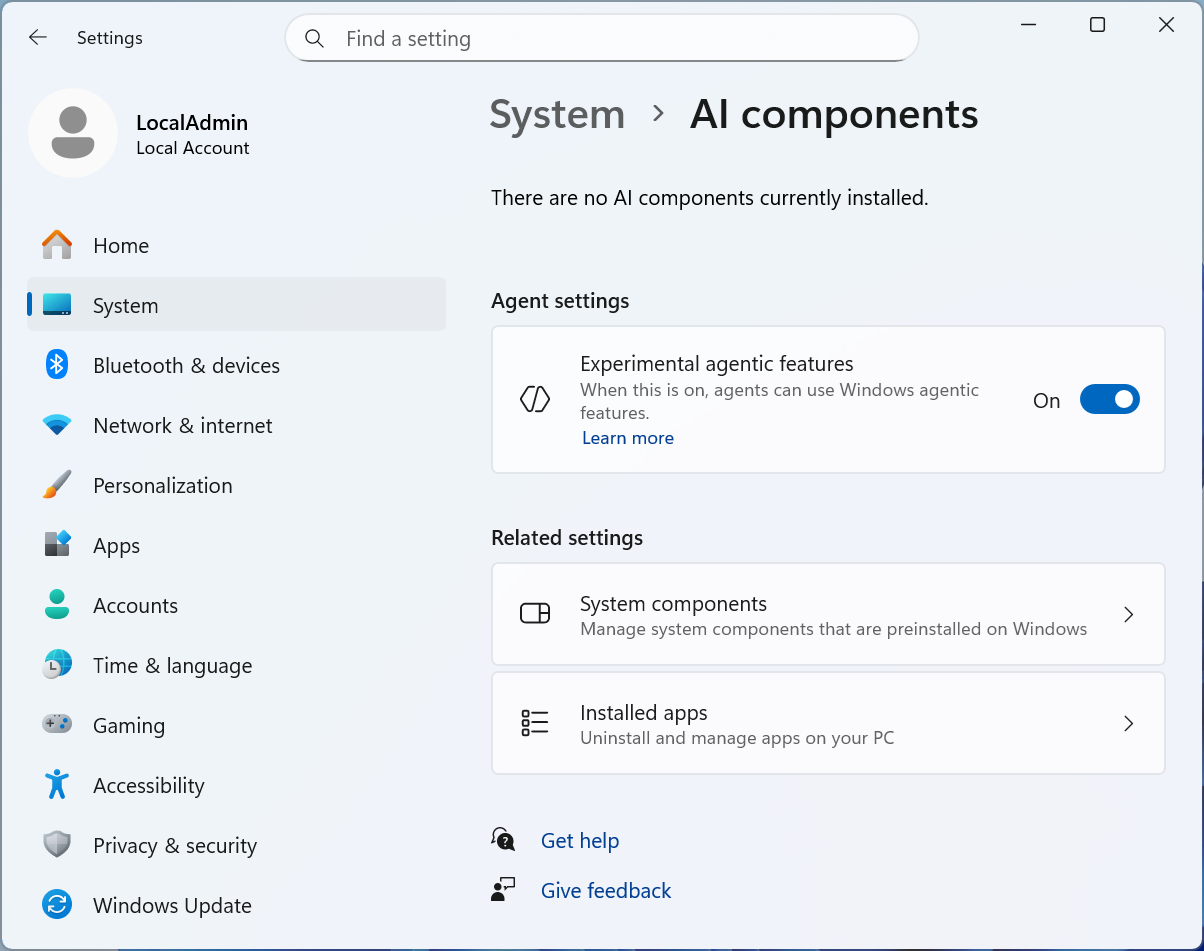
Microsoft has been adding AI features to Windows 11 for years, but things have recently entered a new phase, with both generative and so-called “agentic” AI features working their way deeper into the bedrock of the operating system. A new build of Windows 11 released to Windows Insider Program testers yesterday includes a new “experimental agentic features” toggle in the Settings to support a feature called Copilot Actions, and Microsoft has published a detailed support article detailing more about just how those “experimental agentic features” will work.

If you’re not familiar, “agentic” is a buzzword that Microsoft has used repeatedly to describe its future ambitions for Windows 11—in plainer language, these agents are meant to accomplish assigned tasks in the background, allowing the user’s attention to be turned elsewhere. Microsoft says it wants agents to be capable of “everyday tasks like organizing files, scheduling meetings, or sending emails,” and that Copilot Actions should give you “an active digital collaborator that can carry out complex tasks for you to enhance efficiency and productivity.”

But like other kinds of AI, these agents can be prone to error and confabulations and will often proceed as if they know what they’re doing even when they don’t. They also present, in Microsoft’s own words, “novel security risks,” mostly related to what can happen if an attacker is able to give instructions to one of these agents. As a result, Microsoft’s implementation walks a tightrope between giving these agents access to your files and cordoning them off from the rest of the system.

Possible risks and attempted fixes

For now, these “experimental agentic features” are optional, only available in early test builds of Windows 11, and off by default. Credit: Microsoft

For example, AI agents running on a PC will be given their own user accounts separate from your personal account, ensuring that they don’t have permission to change everything on the system and giving them their own “desktop” to work with that won’t interfere with what you’re working with on your screen. Users need to approve requests for their data, and “all actions of an agent are observable and distinguishable from those taken by a user.” Microsoft also says agents need to be able to produce logs of their activities and “should provide a means to supervise their activities,” including showing users a list of actions they’ll take to accomplish a multi-step task.

https://arstechnica.com/gadgets/2025/11/new-windows-11-ai-agents-can-work-in-the-background-but-create-new-security-risks/