Lenovo demos laptop with a screen you can swivel into portrait mode

[embedded content]

Underneath the rotating panel is a “soft, felt-covered backplate,” PCMag reported. I can see this being jarring in a real computer. The textures of felt or other fabrics are uncommon on machines and can result in this part of the computer standing out in an unwelcome fashion. The black felt, however, could eventually fade into the background, depending on the user’s perception.

Lenovo suggested that people could use the felt space to place a smartphone for mirroring with the PC via its Software Connect software; however, that feature requires a Lenovo Motorola phone.

Lenovo suggested other potential use cases for the unique screen in its press release, including “split-screen multitasking, displaying code, and reviewing documents.”

Lenovo’s latest concept laptop continues the OEM’s yearslong exploration of PC screens that adapt to the different ways that people use PCs. I’m skeptical about the use of felt in a laptop, which would likely be thousands of dollars if ever released as a consumer product. A laptop like the VertiFlex would also have to prove that it has a durable pivoting point and can support a lot of spinning over years of use. Still, Lenovo is contemplating ways to offer versatile screens without relying on bending, warping OLED screens that can suffer from reflections, glare, visible creases, or clunky motors.

For those who like to see laptop screen display ideas that don’t rely on bendy OLED, the VertiFlex is the type of concept that makes you wonder why we haven’t seen it earlier.

https://arstechnica.com/gadgets/2025/09/lenovo-demos-laptop-with-a-screen-you-can-swivel-into-portrait-mode/


COVID vaccine locations vanish from Google Maps due to supposed “technical issue”

Vaccine results in Maps

Results for the flu vaccine appear in Maps, but not COVID. The only working COVID results are hundreds of miles away.

Credit: Ryan Whitwam

Results for the flu vaccine appear in Maps, but not COVID. The only working COVID results are hundreds of miles away. Credit: Ryan Whitwam

Ars reached out to Google for an explanation, receiving a cryptic and somewhat unsatisfying reply. “Showing accurate information on Maps is a top priority,” says a Google spokesperson. “We’re working to fix this technical issue.”

So far, we are not aware of other Maps searches that have been similarly affected. Google has yet to respond to further questions on the nature of the apparent glitch, which has wiped out COVID vaccine information in Maps while continuing to return results for other medical services and immunizations.

The sudden eroding of federal support for routine vaccinations lurks in the background with this bizarre issue. When the Trump administration decided to rename the Gulf of Mexico, Google was widely hectored for its decision to quickly show “Gulf of America” on its maps, aligning with the administration’s preferred nomenclature. With the ramping up of anti-vaccine actions at the federal level, it is tempting to see a similar, nefarious purpose behind these disappearing results.

At present, we have no evidence that the change in Google’s search results was intentional or targeted specifically at COVID immunization—indeed, making that change in such a ham-fisted way would be inadvisable. It does seem like an ill-timed and unusually specific “technical issue,” though. If Google provides further details on the missing search results, we’ll post an update.

https://arstechnica.com/gadgets/2025/09/covid-vaccine-locations-vanish-from-google-maps-due-to-alleged-technical-issue/


Sting operation kills “copycat” sports piracy site with 1.6B visits last year

On Wednesday, a global antipiracy group, which included Apple TV+, Netflix, The Walt Disney Studios, and Warner Bros. Discovery, announced that it had assisted in a sting operation that took down Streameast, described as the “largest illicit live sports streaming operation in the world.”

Now, accessing websites from the thwarted Streameast brings up a link from the Alliance for Creativity and Entertainment (ACE) that explains how to watch sports games legally. However, people have reported that they can still access illegal sports streams from a different Streameast, which is the original Streameast. The endurance of the popular piracy brand is a reflection of the entangled problems facing sports rights owners and sports fans.

Sting operation kills Streameast “copycat”

Yesterday, ACE, which is comprised of 50 media entities, said the Streameast network that it helped take down had 80 “associated domains” and “logged more than 1.6 billion visits in the past year.” The network had 136 million monthly visits on average, The Athletic reported.

An ACE spokesperson told Ars Technica that about 10,000 sports events have been illegally shown on the streaming network over the past six years.

Per ACE, Streameast traffic primarily came from the US, Canada, the United Kingdom, the Philippines, and Germany.

The sting operation that took down Streameast stemmed from an investigation that ran from July 2024 to June 2025, Deadline reported. ACE worked with Egyptian authorities, Europol, the US Department of Justice, the Office of the US Trade Representative, and the National Intellectual Property Rights Coordination Centre, per The Athletic.

ACE’s spokesperson said:

On the night of Sunday, August 24, into the morning of Monday, August 25, Egyptian authorities carried out synchronized raids targeting two individuals behind the piracy network operating the Streameast group of websites. Twenty-two police officers were deployed in the operation.

The sting resulted in the arrest of two men over suspicion of copyright infringement in El Sheikh Zayed City near the Greater Cairo metro area. Egyptian authorities reportedly confiscated cash and found connections to a company in the United Arab Emirates used for laundering $6.2 million in “advertising revenue,” per The Athletic. Investigators also found $200,000 in cryptocurrency. Additionally, they confiscated three laptops and four smartphones used to operate the pirating sites and 10 credit cards with about $123,561, ACE told Deadline.

https://arstechnica.com/gadgets/2025/09/sting-operation-kills-copycat-sports-piracy-site-with-1-6b-visits-last-year/


Microsoft open-sources Bill Gates’ 6502 BASIC from 1978

On Wednesday, Microsoft released the complete source code for Microsoft BASIC for 6502 Version 1.1, the 1978 interpreter that powered the Commodore PET, VIC-20, Commodore 64, and Apple II through custom adaptations. The company posted 6,955 lines of assembly language code to GitHub under an MIT license, allowing anyone to freely use, modify, and distribute the code that helped launch the personal computer revolution.

“Rick Weiland and I (Bill Gates) wrote the 6502 BASIC,” Gates commented on the Page Table blog in 2010. “I put the WAIT command in.”

For millions of people in the late 1970s and early 1980s, variations of Microsoft’s BASIC interpreter provided their first experience with programming. Users could type simple commands like “10 PRINT ‘HELLO'” and “20 GOTO 10” to create an endless loop of text on their screens, for example—often their first taste of controlling a computer directly. The interpreter translated these human-readable commands into instructions that the processor could execute, one line at a time.

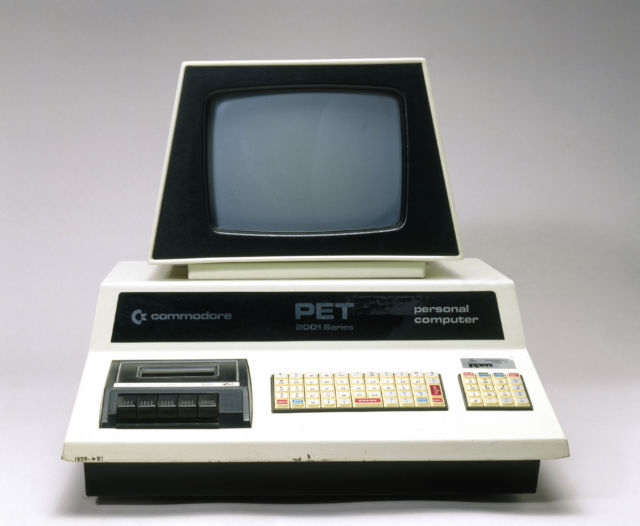
The Commodore PET (Personal Electronic Transactor) was released in January 1977 and used the MOS 6502 and ran a variation of Microsoft BASIC. Credit: SSPL/Getty Images

At just 6,955 lines of assembly language—Microsoft’s low-level 6502 code talked almost directly to the processor. Microsoft’s BASIC squeezed remarkable functionality into minimal memory, a key achievement when RAM cost hundreds of dollars per kilobyte.

In the early personal computer space, cost was king. The MOS 6502 processor that ran this BASIC cost about $25, while competitors charged $200 for similar chips. Designer Chuck Peddle created the 6502 specifically to bring computing to the masses, and manufacturers built variations of the chip into the Atari 2600, Nintendo Entertainment System, and millions of Commodore computers.

The deal that got away

In 1977, Commodore licensed Microsoft’s 6502 BASIC for a flat fee of $25,000. Jack Tramiel’s company got perpetual rights to ship the software on unlimited machines—no royalties, no per-unit fees. While $25,000 seemed substantial then, Commodore went on to sell millions of computers with Microsoft BASIC inside. Had Microsoft negotiated a per-unit licensing fee like they did with later products, the deal could have generated tens of millions in revenue.

The version Microsoft released—labeled 1.1—contains bug fixes that Commodore engineer John Feagans and Gates jointly implemented in 1978 when Feagans traveled to Microsoft’s Bellevue, Washington, offices. The code includes memory management improvements (called “garbage collection” in programming terms) and shipped as “BASIC V2” on the Commodore PET.

https://arstechnica.com/gadgets/2025/09/microsoft-open-sources-bill-gates-6502-basic-from-1978/


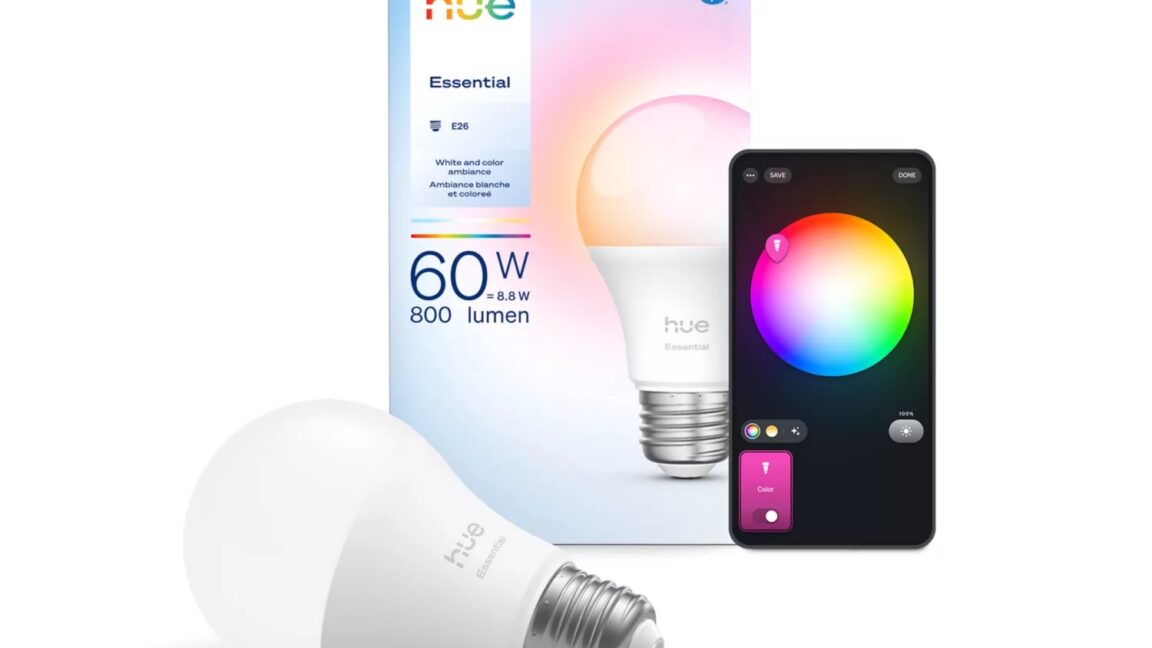
Philips introduces budget-friendly Hue bulbs as part of major lineup overhaul

The standard Hue bulbs are also getting an upgrade. The new models can dim to as low as 0.2 percent (compared to 2 percent for the Essential bulbs), and Philips claims they can produce the full range of visible color temperatures (from 1,000 to 20,000 K, compared to the 2,200 to 6,500 K range of the Essential bulbs).

The next-most-important addition to the ecosystem is probably the new Hue Bridge Pro, the Hue ecosystem’s first new bridge accessory in a decade. In addition to being faster, the new $99 bridge supports “150+ lights” and “50+ accessories,” at least triple the number supported by the previous Bridge (which is still sticking around at $66 as a lower-cost accessory for smaller setups). Users with multiple Hue bridges will eventually be able to replace them all with a single Bridge Pro, but Hueblog reports that this capability won’t be available until “later this year.”

Other new Hue products include indoor and outdoor strip lights, including cheaper models under the new Essential brand umbrella; Festavia-branded outdoor string lights; and a $170 Hue Secure video doorbell. The new hub and most of the new bulbs are being launched in North America starting today, but the doorbell won’t launch until October, and many of the strip and string lights will be released in November or December. Signify’s press release has specific pricing and availability information for all the accessories.

https://arstechnica.com/gadgets/2025/09/philips-hue-update-includes-a-new-hub-light-strips-and-finally-budget-bulbs/


Google’s Material 3 Expressive UI rolls out to Pixel 6 and newer

Google has spent the last few weeks hyping up its new Pixel 10 phones, which are very nice devices. They’re just not a big leap over last year’s phones. If you’ve decided to hang onto your Android phone a bit longer, there are some new goodies headed your way. If you’ve got a Pixel, Google’s revamped Material 3 Expressive interface is rolling out.

Google’s Pixel Drop updates, which arrive quarterly, are not quite a new version of Android, but they include more than the bug fixes and security patches you get in other monthly updates. The September Pixel Drop (previously tested as Android 16 QPR1) is beginning its rollout today with one big change and a few little ones.

At the top of the list is the new Material 3 Expressive interface. Google revealed Material 3 in May, promising it would come to Android 16 phones later, but it didn’t intend to include it with the initial OS release. Indeed, Android 16 launched without Material 3 earlier this summer. Google’s new Pixel 10 series shipped with the new UI, and now more of the Pixel lineup is following.

[embedded content]

Material 3 Expressive comes to more phones.

Google says it’s adding Material 3 Expressive to all of its phones from the Pixel 6 onward. This interface makes better use of theme colors, which are automatically extracted from your wallpaper. Google also included more bouncy animations, resizable quick settings, custom call screens, and more. While Google didn’t mention it, the new update should also have the new desktop mode experience.

Pixel phones are also getting a few more features for connected accessories. Later this month, Google will enable Adaptive Audio on the Pixel Buds Pro 2. This will allow the buds to adjust volume based on ambient noise levels. If you’ve got an Android smartwatch paired with your Pixel, Google Maps will open automatically when you begin navigation on your phone.

https://arstechnica.com/gadgets/2025/09/googles-material-3-expressive-ui-rolls-out-to-pixel-6-and-newer/


Judge: Google can keep Chrome, must share search data with “qualified competitors”

This service will be available for five years instead of the ten years the DOJ wanted. Google will only have to provide organic results and can impose normal commercial usage restrictions, like prohibiting scraping or indexing of the results. In addition, the court has decided that companies syndicating Google’s search results can only use Google’s results for 40 percent of their queries for the first year. That cap may go down over time, pushing companies to innovate rather than simply mirroring Google.

While DuckDuckGo isn’t happy with the more limited data sharing, Kagi founder Vladimir Prelovac is more optimistic. He praised the judge for ignoring the “meaningless remedies” like selling Chrome. He calls the move to open up Google’s index and search data “directionally correct.”

Google is naturally unhappy with this part of the ruling. “We have concerns about how these requirements will impact our users and their privacy, and we’re reviewing the decision closely,” said Google’s Lee-Anne Mulholland.

What comes next?

While this ruling is a pretty clear win for Google, it still technically lost the case. Google probably isn’t going to just accept the “monopolist” label, though. The company previously said it planned to appeal the case, and now it has that option.

The court’s remedies are supposed to be enforced by a technical committee, which will oversee the company’s operations for six years. The order says that the group must be set up within 60 days. However, Google will most likely ask to pause the order while it pursues an appeal. It did something similar with the Google Play case brought by Epic Games, but it just lost that appeal.

With the high likelihood of an appeal, it’s possible Google won’t have to make any changes for years—if ever. If the company chooses, it could take the case all the way to the US Supreme Court. If a higher court overturns the verdict, Google could go back to business as usual, avoiding even the narrow remedies chosen by Mehta.

This story was updated on September 3 with additional comments and details on the ruling.

https://arstechnica.com/gadgets/2025/09/google-wont-have-to-sell-chrome-judge-rules/


Google says Gmail security is “strong and effective” as it denies major breach

The sky is falling, and Gmail has supposedly been hacked to bits by malicious parties unknown. Or has it? Reports circulated last week claiming that Gmail was the subject of a major data breach, citing a series of warnings Google has distributed and increasing reports of phishing attacks. The hysteria was short-lived, though. In a brief post on its official blog, Google says that Gmail’s security is “strong and effective,” and reports to the contrary are mistaken.

This story seems to have developed due to a random confluence of security events. Google experienced a Gmail data breach in June, but the attack was limited to the company’s corporate Salesforce server. The hacker was able to access publicly available information like business names and contact details, but no private information was compromised.

Over the following weeks, Google alerted Gmail users to an increase in phishing attacks in July and August. It didn’t offer many details, but many believed the spike in phishing was related to the corporate server breach. Indeed, more people are talking about hacking attempts on social media right now. This led to the claim that Gmail’s entire user base of 2.5 billion people was about to be hacked at any moment, with some reports advising everyone to change their passwords and enable two-factor authentication. While that’s generally good security advice, Google says the truth is much less dramatic.

https://arstechnica.com/gadgets/2025/09/google-says-reports-of-massive-gmail-data-breach-are-entirely-false/


Noctua’s 3D-printed mod singlehandedly makes the Framework Desktop run quieter

Some cooling mods make more sense than others

A tweaked fan duct (replacing the default, also-Noctua-designed version) is also required to see the improvements. Credit: Noctua

Noctua had a couple of other interesting notes on the Framework Desktop’s cooling system for people looking to make the system run cooler or quieter. First, Noctua noticed some temperature improvements when adding an 80 mm exhaust fan to the front of the system—this is supported, but it isn’t the default cooling configuration—but found that the extra noise it added was disproportionate to the cooling benefit it provided. Adding a newer NF-A12x25 G2 fan to the system instead of the default NF-A12x25 made the desktop run a bit quieter, but because the G2 fan maxes out at 1,800 RPM rather than 2,400 RPM, it had trouble keeping the system cool under load.

“In summary, after a lot of simulation, experimenting and testing, we can conclude that not all tweaks to the Framework Desktop’s cooling setup make sense,” reads Noctua’s blog post. “However, if you have access to a 3D printer, swapping the stock side panel and fan duct for the custom designed ones can help to make your unit run significantly quieter.”

Noctua doesn’t have plans to mass-produce the new duct or side panel, but models for both the side panel and duct are free to download and use. Framework also endorsed the new designs on its social media feeds.

Noctua already had a hand in designing the Framework Desktop’s stock cooling system. The NF-A12x25 fan is the default one that ships with the system, and the small fan duct that comes with the system is of Noctua’s design. The default duct “plays a key role in efficiently channelling fresh ambient air from the surroundings into the PC case,” and Noctua says it reduces system temperatures by 7° Celsius compared to the same components without the duct. The new 3D printable duct and side panel further improve on that baseline.

The Framework Desktop combines 8- and 16-core Ryzen CPUs, powerful Radeon integrated graphics, and between 32GB and 128GB of soldered-on RAM. It’s a decent midrange gaming system, but it may be of particular interest to those who want a huge pool of graphics RAM they can use for AI or other professional workloads. It’s available for preorder starting at $1,099; anything ordered today should arrive at some point in Q4 of 2025.

https://arstechnica.com/gadgets/2025/09/noctuas-3d-printed-mod-singlehandedly-makes-the-framework-desktop-run-quieter/


The fight against labeling long-term streaming rentals as “purchases” you “buy”

Reingold’s complaint acknowledges that Prime Video shows relevant fine print below its “buy” buttons but says that the notice is “far below the ‘buy movie’ button, buried at the very bottom” of the page and is not visible until “the very last stage of the transaction,” after a user has already clicked “buy.”

“This does not meet the standards set by the statute for a clear and conspicuous notice that the thing they are purchasing is a revocable license to access the digital good,” the complaint reads.

Speaking about the case with Ars Technica, Danny Karon, a consumer attorney who has taught class-action litigation at the University of Michigan Law School and Ohio State University Moritz College of Law, said:

… Amazon is sure to argue that, never mind its ‘buy’ or ‘purchase’ language, the rest of the story was described (or buried) in its terms and conditions. If plaintiff didn’t want to read her contract, including the small print, that’s on her.

The plaintiffs will be challenged to prove that Amazon’s communication was ineffective and inaccurate.

“One has to prove that when they bought the movie, they were given indication that they ‘owned it’ in perpetuity and that they were harmed when the movie was taken away,” Rahul Telang, a professor of information systems at Carnegie Mellon University’s Heinz College who has researched the digitization of copyrighted industries, told Ars.

“I think it is well established that digital products are licensed and they cannot be used as physical products. One has to prove that Amazon provided false information that they were buying a product …”

Karon, pointing to Amazon’s choice of words, told Ars: “I like plaintiff’s chances.” He explained:

A normal consumer, after whom the California statute at issue is fashioned, would consider ‘buy’ or ‘purchase’ to involve a permanent transaction, not a mere rental, as is occurring here. If the facts are as plaintiff alleges, Amazon’s behavior would likely constitute a breach of contract or statutory fraud.

The attorney added that such complaints could be more viable if the content purchased from the plaintiffs was removed from the service.

https://arstechnica.com/gadgets/2025/08/i-like-plaintiffs-chances-prime-video-back-in-court-over-using-the-word-buy/