After successes like Severance and The Studio, Apple TV+ gets a price hike

To confront all that, streamers have to turn any knobs they can to balance costs with revenue to satisfy the market. Some have turned to ads as an additional source of revenue, others crack down on password sharing or offer different subscription tiers. But virtually all of them have hiked subscription prices, because the previous price ensured short-term losses for long-term growth.

Apple TV+ does not have ads in any plan, and it hasn’t broken its offering into multiple tiers. (For example, some other streaming services charge more for 4K content.) Because of that, the monthly cost is the only knob it can turn to confront these realities, passing new costs to consumers.

Despite all this, it’s still very possible that even with successes like Ted Lasso, The Studio, and Severance, Apple TV+ is losing some amount of money every year. When reporting to investors each quarter, Apple bundles TV+ into a larger “services” category that includes Apple Music, the App Store, iCloud, AppleCare, and more, making it difficult for outsiders to estimate how well Apple TV+ is doing specifically.

Certainly, its shows have been critically well-received. Both Severance and The Studio in particular have gotten the streaming service positive attention. But the landscape is brutal for a relatively new entry like Apple, so expect Apple’s approach to continue to evolve.

https://arstechnica.com/culture/2025/08/after-successes-like-severance-and-the-studio-apple-tv-gets-a-price-hike/



Having recovery and/or SSD problems after recent Windows updates? You’re not alone.

The other issue some users have been experiencing is potentially more serious, but also harder to track down. Tom’s Hardware has a summary of the problem: At some point after installing update KB5063878 on Windows 11 24H2, some users began noticing issues with large file transfers on some SSDs. When installing a large update for Cyberpunk 2077, a large game that requires dozens of gigabytes of storage, Windows abruptly stopped seeing the SSD that the game was installed on.

The issues are apparently more pronounced on disks that are more than 60 percent full, when transferring at least 50GB of data. Most of the SSDs were visible again after a system reboot, though one—a 2TB Western Digital SA510 drive—didn’t come back after a reboot.

These issues could be specific to this user’s configuration, and the culprit may not be the Windows update. Microsoft has yet to add the SSD problem to its list of known issues with Windows, but the company confirmed to Ars that it was studying the complaints.

“We’re aware of these reports and are investigating with our partners,” a Microsoft spokesperson told Ars.

SSD controller manufacturer Phison told Tom’s Hardware that it was also looking into the problem.

https://arstechnica.com/gadgets/2025/08/having-recovery-and-or-ssd-problems-after-recent-windows-updates-youre-not-alone/


Sony makes the “difficult decision” to raise PlayStation 5 prices in the US

Sony will join Microsoft and Nintendo in raising US prices across its entire game console lineup, the company announced today. Pricing for all current versions of the PlayStation 5 console will increase by $50 starting tomorrow.

The price of the PS5 Digital Edition will increase from $450 to $500; the standard PS5 will increase from $500 to $550; and the PS5 Pro will increase from $700 to $750. If you’ve been on the fence about buying any of these, retailers like Target and Best Buy are still using the old prices as of this writing—for other console price hikes, retailers have sometimes bumped the prices up before the date announced by the manufacturer.

“Similar to many global businesses, we continue to navigate a challenging economic environment,” wrote Sony Global Marketing VP Isabelle Tomatis. “As a result, we’ve made the difficult decision to increase the recommended retail price for PlayStation 5 consoles in the U.S. starting on August 21.”

Sony says it’s not increasing prices for games or accessories and that this round of price increases only affects consoles sold in the US.

Sony was the last of the big three console makers to raise prices this year. Microsoft raised the prices for the Xbox Series S and X consoles in March. And Nintendo has gone through two rounds of price increases—one for Switch and Switch 2 accessories in April and another for more accessories and Switch 1 consoles earlier this month.

https://arstechnica.com/gadgets/2025/08/sony-joins-xbox-and-nintendo-in-hiking-playstation-5-prices-in-the-us/


Google unveils Pixel 10 series with improved Tensor G5 chip and a boatload of AI

Credit: Google

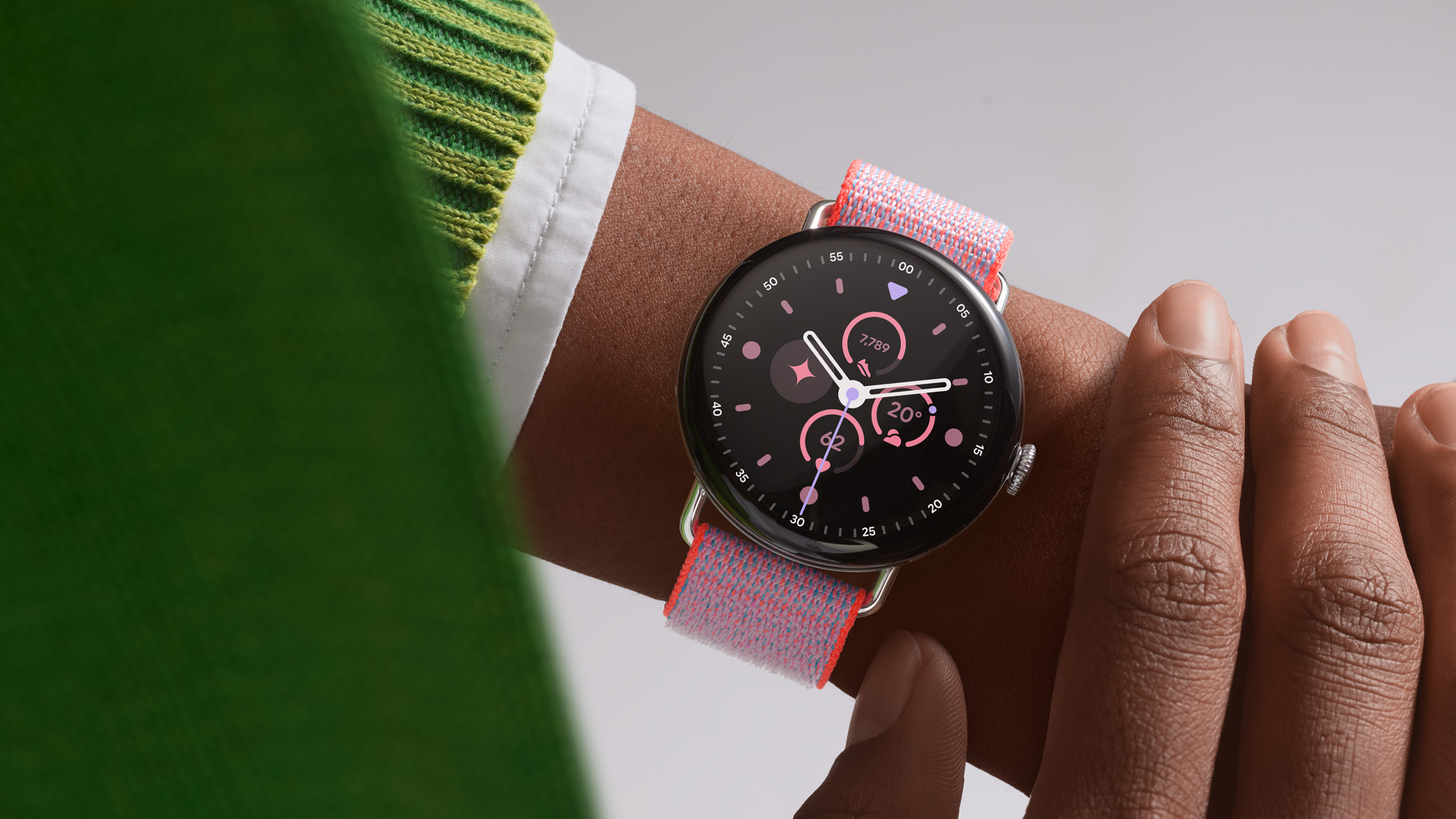
The new charger is a small dock that attaches to the side, holding the watch up so it’s visible on your desk. It can show upcoming alarms, battery percentage, or the time (duh, it’s a watch). It’s about 25 percent faster to charge compared to last year’s model, too. The smaller watch has a 325 mAh battery, and the larger one is 455 mAh. In both cases, these are marginally larger than the Pixel Watch 3. Google says the 41 mm will run 30 hours on a charge, and the 45 mm manages 40 hours.

The OLED panel under the glass now conforms to the Pixel Watch 4’s curvy aesthetic. Rather than being a flat panel under curved glass, the OLED now follows the domed shape. Google says the “Actua 360” display features 3,000 nits of brightness, a 50 percent improvement over last year’s wearable. The bezel around the screen is also 16 percent slimmer than last year. It runs a Snapdragon W5 Gen 2, which is apparently 25 percent faster and uses half the power of the Gen 1 chip used in the Watch 3.

Naturally, Google has also integrated Gemini into its new watch. It has “raise-to-talk” functionality, so you can just lift your wrist to begin talking to the AI (if you want that). The Pixel Watch 4 also boasts an improved speaker and haptics, which come into play when interacting with Gemini.

Pricing and availability

If you have a Pixel 9, there isn’t much reason to run out and buy a Pixel 10. That said, you can preorder Google’s new flat phones today. Pricing remains the same as last year, starting at $799 for the Pixel 10. The Pixel 10 Pro keeps the same size, adding a better camera setup and screen for $999. The largest Pixel 10 Pro XL retails for $1,199. The phones will ship on August 28.

If foldables are more your speed, you’ll have to wait a bit longer. The Pixel 10 Pro Fold won’t arrive until October 9, but it won’t see a price hike, either. The $1,799 price tag is still quite steep, even if Samsung’s new foldable is $200 more.

The Pixel Watch 4 is also available for preorder today, with availability on August 28 as well. The 41 mm will stay at $349, and the 45 mm is $399. If you want the LTE versions, you’ll add $100 to those prices.

https://arstechnica.com/gadgets/2025/08/google-unveils-pixel-10-series-with-improved-tensor-g5-chip-and-a-boatload-of-ai/


Microsoft and Asus’ answers to SteamOS and the Steam Deck launch on October 16

Asus and Microsoft will be launching their ROG Xbox Ally series of handheld gaming PCs starting October 16, according to an Asus announcement that went out today.

An Xbox-branded extension of Asus’ existing ROG Ally handheld line, the basic ROG Xbox Ally and more powerful ROG Xbox Ally X, both run a version of Windows 11 Home that’s been redesigned with a controller-first Xbox-style user interface. The idea is to preserve the wide game compatibility of Windows—and the wide compatibility with multiple storefronts, including Microsoft’s own, Valve’s Steam, the Epic Games Store, and more—while turning off all of the extra Windows desktop stuff and saving system resources. (This also means that, despite the Xbox branding, these handhelds play Windows PC games and not the Xbox versions.)

Microsoft and Asus initially announced the handhelds in June. Microsoft still isn’t sharing pricing information for either console, so it’s hard to say how their specs and features will stack up against the Steam Deck (starting at $399 for the LCD version, $549 for OLED), Nintendo’s Switch 2 ($450), or past Asus handhelds like the ROG Ally X ($800).

Both consoles share a 7-inch, 1080p IPS display with a 120 Hz refresh rate, Wi-Fi 6E, and Bluetooth 5.4 support, but their internals are quite a bit different. The lower-end Xbox Ally uses an AMD Ryzen Z2 A chip with a 4-core Zen 2-based CPU, an eight-core RDNA2-based GPU, 512GB of storage, and 16GB of LPDDR5X-6400—specs nearly identical to Valve’s 3-year-old Steam Deck. The Xbox Ally X includes a more interesting Ryzen AI Z2 Extreme with an 8-core Zen 5 CPU, a 16-core RDNA3.5 GPU, 1TB of storage, 24GB of LPDDR5X-8000, and a built-in neural processing unit (NPU).

The beefier hardware comes with a bigger battery—80 WHr in the Ally X, compared to 60 WHr in the regular Ally—and that also makes the Ally X around a tenth of a pound (or 45 grams) heavier than the Ally.

https://arstechnica.com/gadgets/2025/08/asus-and-microsofts-xbox-handhelds-arrive-october-16-but-pricing-remains-a-mystery/


Raspberry Pi intros new 5-inch $40 touchscreen for your next weird project

Like the 7-inch screen, the 5-inch version can detect up to five touchscreen inputs at once, and it doesn’t require a separate power supply when attached to the Pi board. Raspberry Pi OS can automatically detect when one of the touchscreens is installed and offers the Squeekboard onscreen keyboard to allow input without external accessories.

Full-size Pi boards from 2014’s Pi 1 B+ will work with the screen and can be mounted to the back of it to make a fully integrated mini-system. Credit: Raspberry Pi

The 5-inch touchscreen is a good fit for smaller smart home projects that benefit from some kind of a screen for controls—or if you just have a Pi sitting in a corner somewhere running Homebridge or a VPN server or something that you’d like to be able to control or interact with in a pinch without using an external monitor, keyboard, or mouse (or a remote-access technology like SSH). It’s not exactly a groundbreaking project, and it’s hardly the first touchscreen for the Pi, but as an inexpensive and officially supported accessory, it may benefit from wider compatibility and ecosystem support than some third-party screens.

In addition to the 5- and 7-inch models of the Touch Display 2, Raspberry Pi also offers a $100 15.6-inch portable display for people using a Pi board (or the Raspberry Pi 400 or 500 devices) as regular desktop computers.

https://arstechnica.com/gadgets/2025/08/raspberry-pi-intros-new-5-inch-40-touchscreen-for-your-next-weird-project/


Ars Technica System Guide: Five sample PC builds, from $500 to $5,000

If you like something a little more statement-y, the Fractal Design North ($155) and Lian Li Lancool 217 ($120) both include the wood accents that some case makers have been pushing lately. The Fractal Design case comes with both mesh and tempered glass side panel options, depending on how into RGB you are, while the Lancool case includes a whopping five case fans for keeping your system cool.

The “God Box”

What it’s good for: Anything and everything.

What it sucks at: Being affordable.

Cost as of this writing: $4,891 to $5,146

We’re avoiding Xeon and Threadripper territory here—frankly, I’ve never even tried to do a build centered on those chips and wouldn’t trust myself to make recommendations—but this system is as fast as consumer-grade hardware gets.

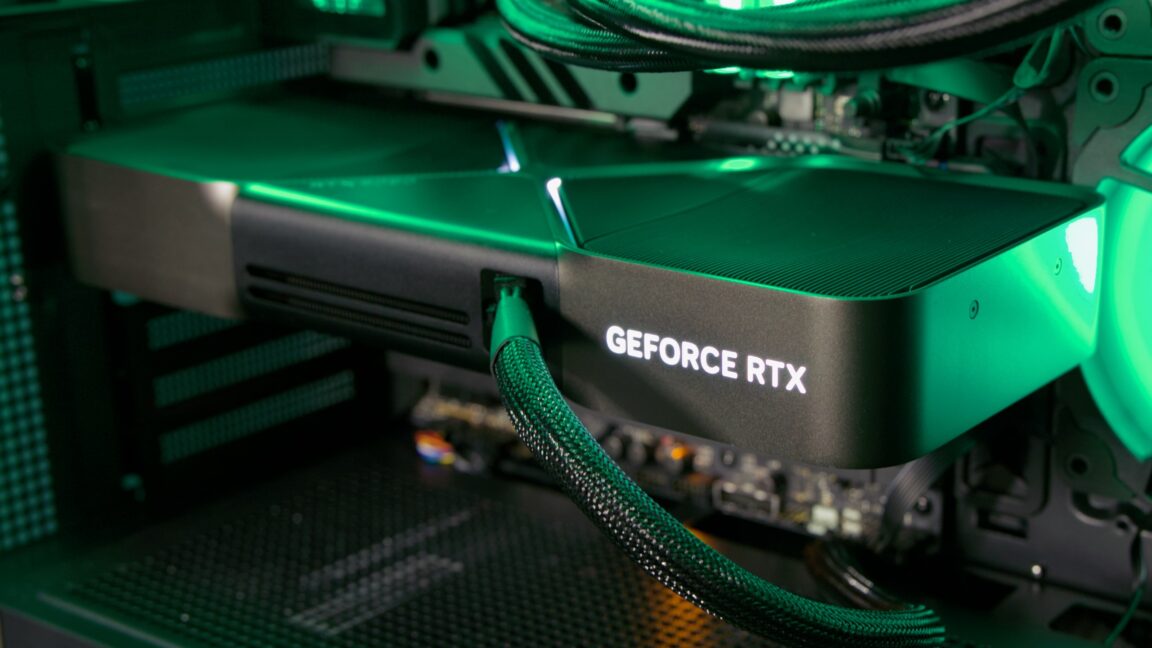
An Nvidia GeForce RTX 5090 guarantees the fastest GPU performance you can buy and continues the trend of “paying as much for a GPU as you could for an entire fully functional PC.” And while we have specced this build with a single GPU, the motherboard we’ve chosen has a second full-speed PCIe 5.0 x16 slot that you could use for a dual-GPU build.

A Ryzen 9950X3D chip gets you top-tier gaming performance and tons of CPU cores. We’re cooling this powerful chip with a 360 mm Arctic Liquid Freezer III Pro cooler, which has generally earned good reviews from Gamers Nexus and other outlets for its value, cooling performance, and quiet performance. A white option is also available if you’re going for a light-mode color scheme instead of our predominantly dark-mode build.

Other components have been pumped up similarly gratuitously. A 1,000 W power supply is the minimum for an RTX 5090, but to give us some headroom, why not use a 1,200 W model with lights on it? Is PCIe 5.0 storage strictly necessary for anything? No! But let’s grab a 4 TB PCIe 5.0 SSD anyway. And populating all four of our RAM slots with a 32GB stick of DDR5 avoids any unsightly blank spots inside our case.

We’ve selected a couple of largish case options to house our big builds, though as usual, there are tons of other options to fit all design sensibilities and tastes. Just make sure, if you’re selecting a big Extended ATX motherboard like the X870E Taichi, that your case will fit a board that’s slightly wider than a regular ATX or micro ATX board (the Taichi is 267 mm wide, which should be fine in either of our case selections).

https://arstechnica.com/gadgets/2025/08/ars-technica-system-guide-back-to-pc-building-for-back-to-school/


Tiny, removable “mini SSD” could eventually be a big deal for gaming handhelds

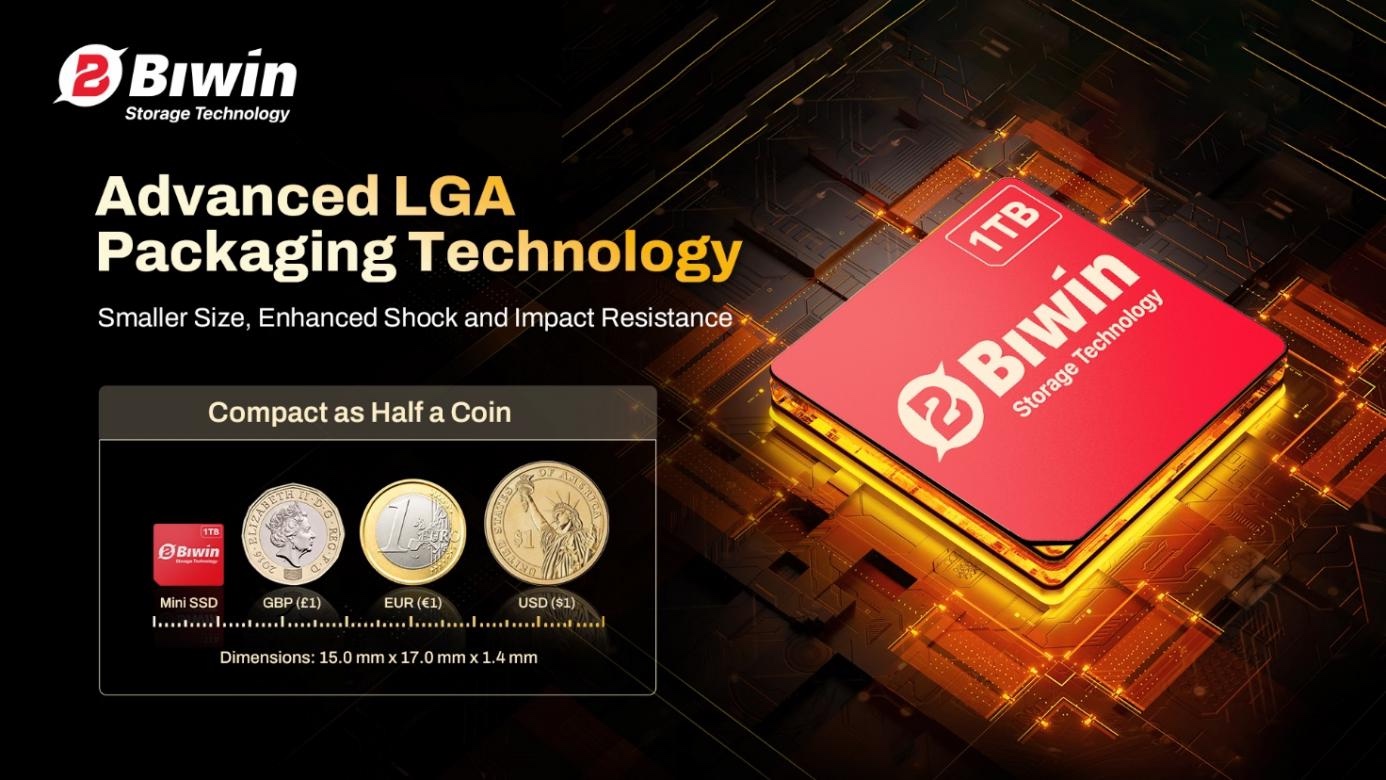
The Mini SSD card isn’t and may never be a formally ratified standard, but it does aim to solve a real problem for portable gaming systems—the need for fast storage that can load games at speeds approaching those of an internal SSD, without requiring users to take their own systems apart to perform upgrades.

Why are games getting so dang big, anyway?

Big storage, small size. Credit: Biwin

A 2023 analysis from TechSpot suggested that game size had increased at an average rate of roughly 6.3GB per year between 2012 and 2023—games that come in over 100GB aren’t the norm, but they aren’t hard to find. Some of that increase comes from improved graphics and the higher-resolution textures needed to make games look good on 4K monitors and TVs. But TechSpot also noted that the storage requirements for narrative-heavy, cinematic-heavy games like The Last of Us Part 1 were being driven just as much by audio files and support for multiple languages.

“In total, nearly 17 GB of storage is needed for [The Last of Us] data unrelated to graphics,” wrote author Nick Evanson. “That’s larger than any entire game from our 2010 sample! This pattern was consistent across nearly all the ‘Godzilla-sized’ games we examined—those featuring numerous cinematics, extensive speech, and considerable localization were typically much larger than the rest of the sample in a given year.”

For another prominent recent example, consider the install sizes for the Mac version of Cyberpunk 2077. The version of the game on Steam, the Epic Games Store, and GOG runs about 92GB. However, the version available for download from Apple’s App Store is a whopping 159GB, solely because it includes all of the game’s voiceovers in all of the languages it supports. (This is because of App Store rules that require apps to have all possible files included when they’re submitted for review.)

It’s clear that there’s a need for fast storage upgrades that don’t require you to disassemble your console or PC completely. Whether it’s this new “mini SSD,” a faster iteration of microSD Express, or some other as-yet-unknown storage format remains to be seen.

https://arstechnica.com/gadgets/2025/08/tiny-removable-mini-ssd-could-eventually-be-a-big-deal-for-gaming-handhelds/


Apple Watch gets reformulated, non-patent-infringing blood oxygen monitoring

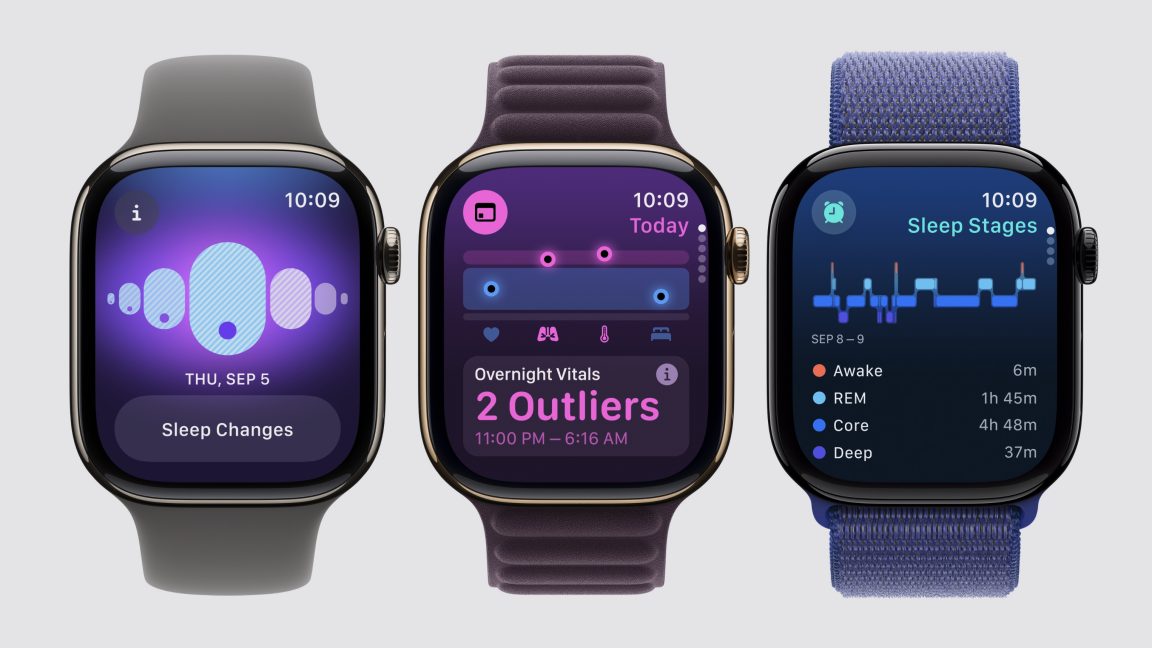
The redesigned version of the feature will be available on the Apple Watch Series 9, Series 10, and Ultra 2 after users install the watchOS 11.6.1 update on their watches and the iOS 18.6.1 update on their paired iPhones.

Apple says that watches outside the US won’t be affected by the update, since they were never subject to the US import ban in the first place. It also won’t affect Apple Watches purchased in the US before the import ban went into effect—Apple never removed the feature from watches it had already sold, so if you bought a Series 9 or Ultra 2 watch in the fall of 2023 or if you’re still using an older watch with the blood oxygen monitoring feature, the updates won’t change anything for you.

Masimo originally sued Apple over the blood oxygen monitoring feature in January of 2020. According to Masimo, Masimo and Apple had initially met in 2013 to talk about a potential partnership or acquisition, but Apple instead poached Masimo’s engineers to implement the feature on its own without Masimo’s involvement.

https://arstechnica.com/gadgets/2025/08/redesigned-blood-oxygen-monitoring-returns-to-apple-watch-following-patent-dispute/


Report: Apple’s smart home ambitions include “tabletop robot,” cameras, and more

Rumors about a touchscreen-equipped smart home device from Apple have been circulating for years, periodically bolstered by leaked references in Apple’s software updates. But a report from Bloomberg’s Mark Gurman indicates that Apple’s ambitions might extend beyond HomePods with screens attached.

Gurman claims that Apple is working on a “tabletop robot” that “resembles an iPad mounted on a movable limb that can swivel and reposition itself to follow users in a room.” The device will also turn toward people who are addressing it or toward people whose attention it’s trying to get. Prototypes have used a 7-inch display similar in size to an iPad mini, with a built-in camera for FaceTime calls.

Apple is reportedly targeting a 2027 launch for some version of this robot, although, as with any unannounced Apple product, it could come out earlier, later, or not at all. Gurman reported in January that a different smart home device—essentially a HomePod with a screen, without the moving robot parts—was being planned for 2025, but has said more recently that Apple has bumped it to 2026. The robot could be a follow-up to or a fancier, more expensive version of that device, and it sounds like both will run the same software.

https://arstechnica.com/gadgets/2025/08/report-apples-smart-home-ambitions-include-tabletop-robot-cameras-and-more/