Chrome OS is “combining” with Android, but what does that mean?
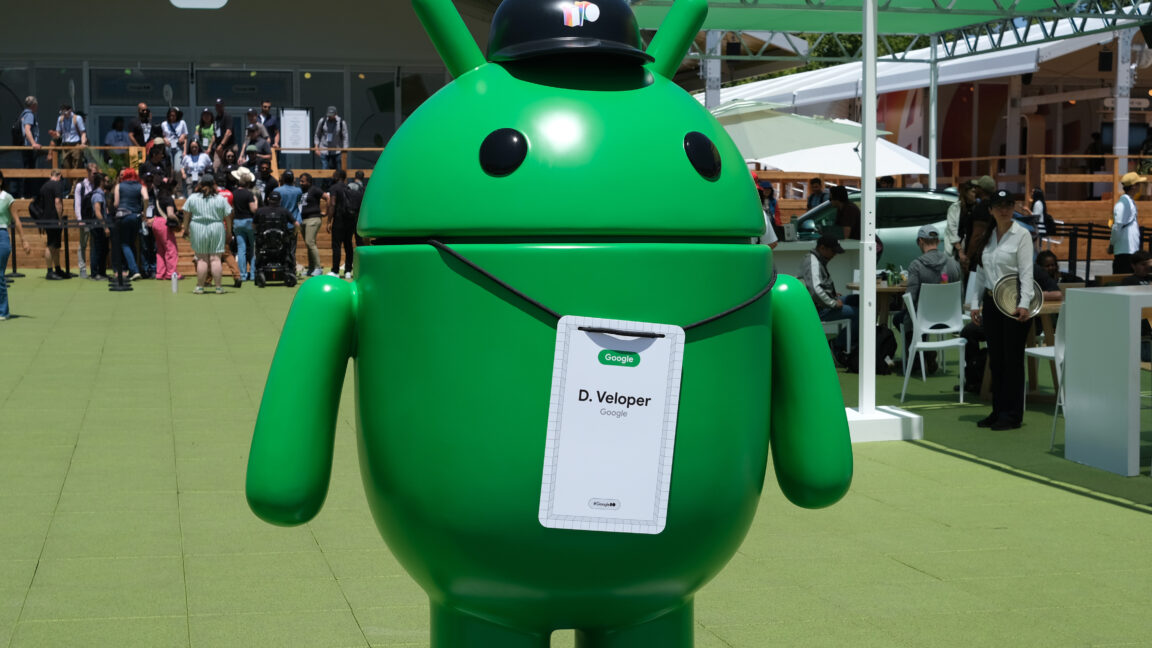
Android and Chrome OS have been developed in parallel for years, but Google is planning to streamline its operating systems. In a recent interview, Android Ecosystem President Sameer Samat stated bluntly that Android and Chrome OS are merging. This shift, a long time in the making, could give Google more room to maneuver as it plans for new mobile computing experiences.

In the interview, TechRadar’s Lance Ulanoff had other things on his mind, but Samat peppered him with questions about how he uses his Apple devices. “I asked because we’re going to be combining ChromeOS and Android into a single platform, and I am very interested in how people are using their laptops these days and what they’re getting done,” said Samat.

We don’t get back to this point in the remainder of the interview, but it’s probably the most interesting thing Samat said. “Combining” can mean many things, but we can certainly speculate. In this case, it might mean the writing is on the wall for Chrome OS as it currently exists.

Chrome OS definitely had a moment during the pandemic as new remote workers and students sought cheap laptops to get them by. Google worked with multiple OEM partners to promote major Chromebook releases, and Chrome OS itself got big updates. Google expanded the support window to eight years, added Phone Hub integration, enhanced desktop management, added the Chromebook Plus certification for high-end devices, and much more.

Things have stagnated since then—we hardly ever hear Google talk about Chrome OS now. In the age of AI, Google still finds time to talk about Android and add new features to the platform, even if they no longer align with new versions. In fact, Android is becoming a bit more like Chrome OS with the addition of desktop multitasking support, which will roll out in the coming months. So Google is making Android into a more capable desktop OS while Chrome OS stays the course. There have been some reports of Chrome OS essentially becoming Android, going beyond Google’s stated goal of using parts of the Android tech stack on Chromebooks.

https://arstechnica.com/gadgets/2025/07/googles-android-head-confirms-chrome-os-and-android-are-merging/
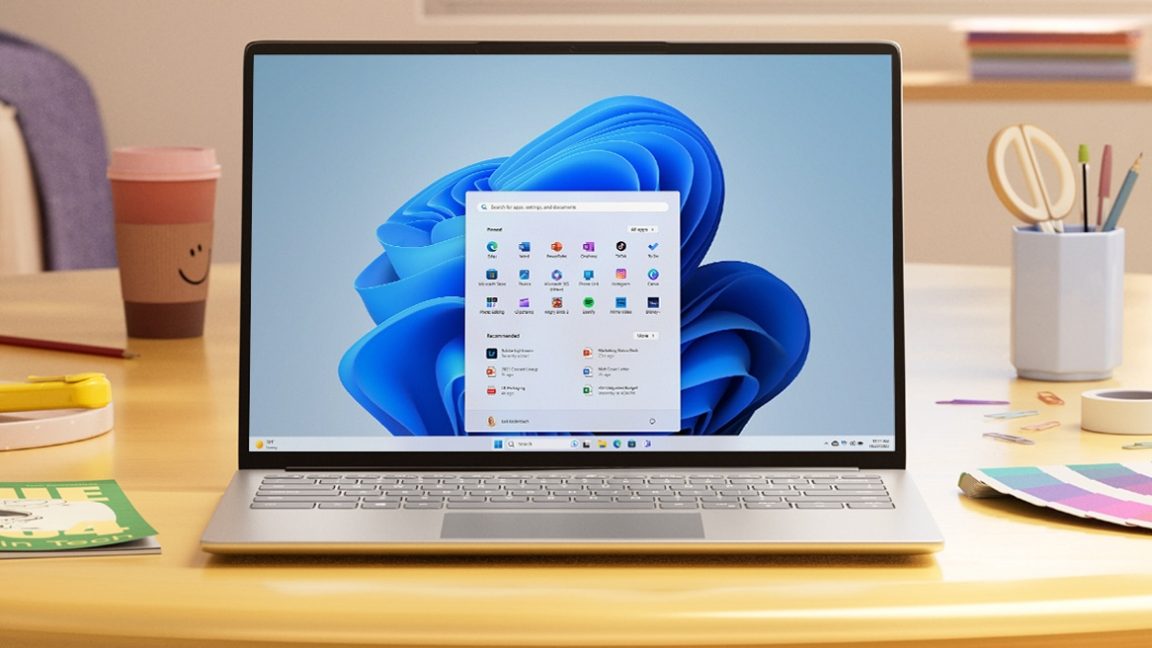


New Windows 11 build adds self-healing “quick machine recovery” feature

Preview build 27898 also includes a features that will shrink Taskbar items if you’ve got too many pins or running apps for everything to fit at once, changes the pop-up that apps use to ask for access to things like the system webcam or microphone, and allows you to add words to the dictionary used for the speech-to-text voice access features, among a handful of other changes.

It’s hard to predict when any given Windows Insider feature will roll out to the regular non-preview versions of Windows, but we’re likely just a few months out from the launch of Windows 11 25H2, this year’s “annual feature update.” Some of these updates, like last year’s 24H2, are fairly major overhauls that make lots of under-the-hood changes. Others, like 2023’s 23H2, mostly exist to change the version number and reset Microsoft’s security update clock, as each yearly update is only promised new security updates for two years after release.

The 25H2 update looks like one of the relatively minor ones. Microsoft says that the two versions “use a shared servicing branch,” and that 25H2 features will be “staged” on PCs running Windows 11 24H2, meaning that the code will be installed on systems via Windows Update but that they’ll be disabled initially. Installing the 25H2 “update” when it’s available will merely enable features that were installed but dormant.

https://arstechnica.com/gadgets/2025/07/new-windows-11-build-adds-self-healing-quick-machine-recovery-feature/


Belkin shows tech firms getting too comfortable with bricking customers’ stuff

In a somewhat anticipated move, Belkin is killing most of its smart home products. On January 31, the company will stop supporting the majority of its Wemo devices, leaving users without core functionality and future updates.

In an announcement emailed to customers and posted on Belkin’s website, Belkin said:

After careful consideration, we have made the difficult decision to end technical support for older Wemo products, effective January 31, 2026. After this date, several Wemo products will no longer be controllable through the Wemo app. Any features that rely on cloud connectivity, including remote access and voice assistant integrations, will no longer work.

The company said that people with affected devices that are under warranty on or after January 31 “may be eligible for a partial refund” starting in February.

The 27 affected devices have last sold dates that go back to August 2015 and are as recent as November 2023.

The announcement means that soon, features like the ability to work with Amazon Alexa will suddenly stop working on some already-purchased Wemo devices. The Wemo app will also stop working and being updated, removing the simplest way to control Wemo products, including connecting to Wi-Fi, monitoring usage, using timers, and activating Away Mode, which is supposed to make it look like people are in an empty home by turning the lights on and off randomly. Of course, the end of updates and technical support has security implications for the affected devices, too.

People will still be able to use affected devices if they configure the products with Apple HomeKit before January 31. In these cases, users will be able to control their Wemo devices without relying on the Wemo app or Belkin’s cloud. Belkin says seven of the 27 devices it is discontinuing are HomeKit-compatible.

Four Wemo devices will not be affected and “will continue to function as they do today through HomeKit,” Belkin said. Those products are: the Wemo Smart Light Switch 3-Way (WLS0503), Wemo Stage Smart Scene Controller (WSC010), Wemo Smart Plug with Thread (WSP100), and Wemo Smart Video Doorbell Camera (WDC010). All except the Smart Video Doorbell Camera are based on the Thread protocol.

https://arstechnica.com/gadgets/2025/07/belkin-shows-tech-firms-getting-too-comfortable-with-bricking-customers-stuff/


A mess of its own making: Google nerfs second Pixel phone battery this year

Not all batteries age the same way. Some problems will appear quickly, but others won’t be noticeable until after many charge/discharge cycles. A few years back, Samsung released the Galaxy Note 7 with a slightly larger battery than the previous model. Within weeks, the phones started to catch fire, and even after swapping in a different battery pack, the issue persisted. It was a huge mess that led to a recall and steep financial losses.

Samsung’s battery missteps may have prompted manufacturers to take possible battery defects more seriously. So when Google detected problems with aging Pixel 4a batteries, it didn’t take any chances. It decided to degrade the experience on the remaining Pixel 4a units out there, even if the lower capacity and slower charging upset users. When Pixel 6a units started to catch fire again, Google decided to simply limit battery performance.

Pixel 6a update

The mandatory Android 16 July update will limit battery charging speed and capacity on affected phones.

Credit: Ryan Whitwam

The mandatory Android 16 July update will limit battery charging speed and capacity on affected phones. Credit: Ryan Whitwam

Pixel 4a units contained one of two different batteries, and only the one manufactured by a company called Lishen was downgraded. For the Pixel 6a, Google has decreed that the battery limits will be imposed when the cells hit 400 charge cycles. Beyond that, the risk of fire becomes too great—there have been reports of Pixel 6a phones bursting into flames.

Clearly, Google had to do something, but the remedies it settled on feel unnecessarily hostile to customers. It had a chance to do better the second time, but the solution for the Pixel 6a is more of the same.

A problem of Google’s making

Like other smartphone manufacturers, Google moved away from offering removable batteries in the 2010s to make phones slimmer and more durable. Smartphone makers largely dismissed the concerns of repair advocates who pointed out that lithium-ion batteries degrade over time, and making them difficult to remove wasn’t the best idea. However, this was a time when people only kept smartphones for a year or two before upgrading, but we have since entered an era in which people use phones for much longer. The way phones are marketed has changed to reflect that—Google has enacted longer support windows, topping out at seven years for its latest phones.

https://arstechnica.com/gadgets/2025/07/a-mess-of-its-own-making-google-nerfs-second-pixel-phone-battery-this-year/


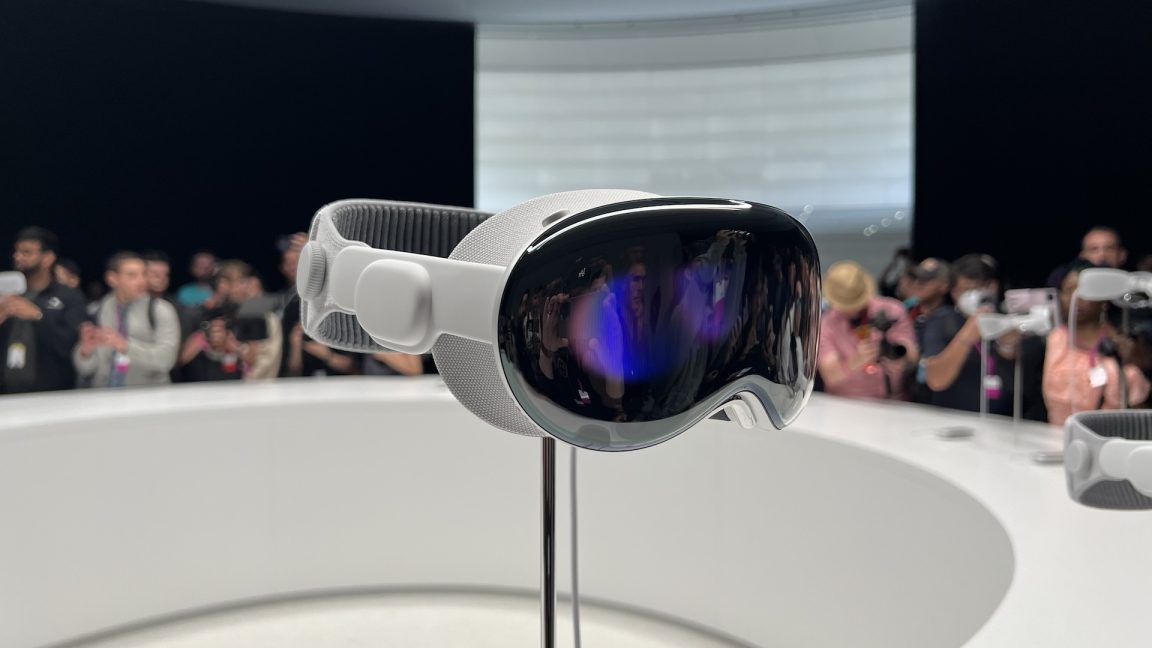
Report: Apple M4, more comfortable strap will headline first major Vision Pro update

Apple hasn’t iterated on its Vision Pro hardware since launching it in early 2024 for $3,499, opting instead to refine the headset with a steady stream of software updates. But Bloomberg’s Mark Gurman reports that a new version of the Vision Pro could arrive “as early as this year,” with a replacement for the 3-year-old Apple M2 chip and a more comfortable strap.

Gurman says that the updated Vision Pro would ship with Apple’s M4 processor, which launched in the iPad Pro last year and has since found its way into new MacBook Pros, MacBook Airs, a new iMac, and a redesigned Mac mini.

Our tests in Apple’s other devices (and publicly available benchmark databases like Geekbench’s) show the M4 offering roughly 50 percent better multicore CPU performance and 20 or 25 percent better graphics performance than the M2, respectable increases for a device like the Vision Pro that needs to draw high-resolution images with as little latency as possible. Improvements to the chip’s video encoding and decoding hardware and image signal processor should also provide small-but-noticeable improvements to the headset’s passthrough video feed.

The report also claims that Apple is working on redesigned headbands for the new Vision Pro, to “reduce neck strain and head pain” and make the headset more comfortable to wear for longer periods of time. This update reportedly won’t be making major changes to the design of the device itself, so it would probably still come close to the 1.3–1.4-pound weight of the current M2-powered Vision Pro.

The report doesn’t mention any pricing plans one way or the other. But it’s worth noting that Apple has functionally reduced prices on M4-equipped Macs over the last year and a half, most notably by bumping the minimum amount of RAM from 8GB to 16GB—a cut of a few hundred dollars wouldn’t suddenly change the Vision Pro into a mass-market product, but it would be a step in the right direction.

https://arstechnica.com/gadgets/2025/07/report-apple-m4-more-comfortable-strap-will-headline-first-major-vision-pro-update/


Samsung’s 7th-gen foldables slim down, may finally fit in your pocket

There’s no denying annual smartphone releases have settled into a routine—flat glass slabs with slightly faster processors and better cameras. Foldable phones buck the trend, but these products come with plenty of drawbacks. They’re big and heavy, and even with all that bulk, the battery life and cameras can be lacking.

Samsung’s new Galaxy Z Fold 7 and Z Flip 7 don’t right all the wrongs, but they mark the most significant year-to-year upgrade since the company began making foldables. The new phones are thinner and lighter, particularly in the case of the Z Fold 7, which is even lighter than the Galaxy S25 Ultra. You will pay handsomely for Samsung’s new foldable flagship, but it’s also releasing a new budget FE version of its flip phone as well.

One big fold

Samsung has been making foldable phones longer than anyone, but the changes from one generation to the next have been minimal. Its seventh-generation foldables make the biggest leap yet, responding to a new spate of thinner foldables from Google, Oppo, and others. That’s really the biggest innovation for the Galaxy Z Fold 7—it’s slimmer and a bit wider.

When closed, Samsung’s larger foldable is 8.9 mm thick, which is only a little more than the Galaxy S25 Ultra and much less than the 12.1 mm of the Galaxy Z Fold 6. When open, it’s just 4.2 mm. That’s even thinner than Google’s Pixel 9 Pro Fold and barely more than the height of the phone’s USB-C port. Despite the thinner profile, Samsung maintained the same 4,400 mAh battery, which it claims is good for “all day” use. That might be true, but using the larger internal screen will drain the battery faster and could leave you looking for a charger in the evening.

The form factor tweak delivers a more common-sense display setup. The cover display is a 6.5-inch, 120 Hz OLED at 1080×2520, which is a 21:9 ratio. This is in the realm of normality for flat, non-folding phones. So, you can use the Z Fold 7 closed without worrying about apps rendering weirdly on a too-narrow screen as with past versions of this phone. Open the phone up, and you get a new, larger 8-inch, 120 Hz OLED at 1968×2184. One unfortunate drawback of the design change is that Samsung has dropped support for the S Pen stylus from the Z Fold 7.

https://arstechnica.com/gadgets/2025/07/samsungs-7th-gen-foldables-slim-down-may-finally-fit-in-your-pocket/


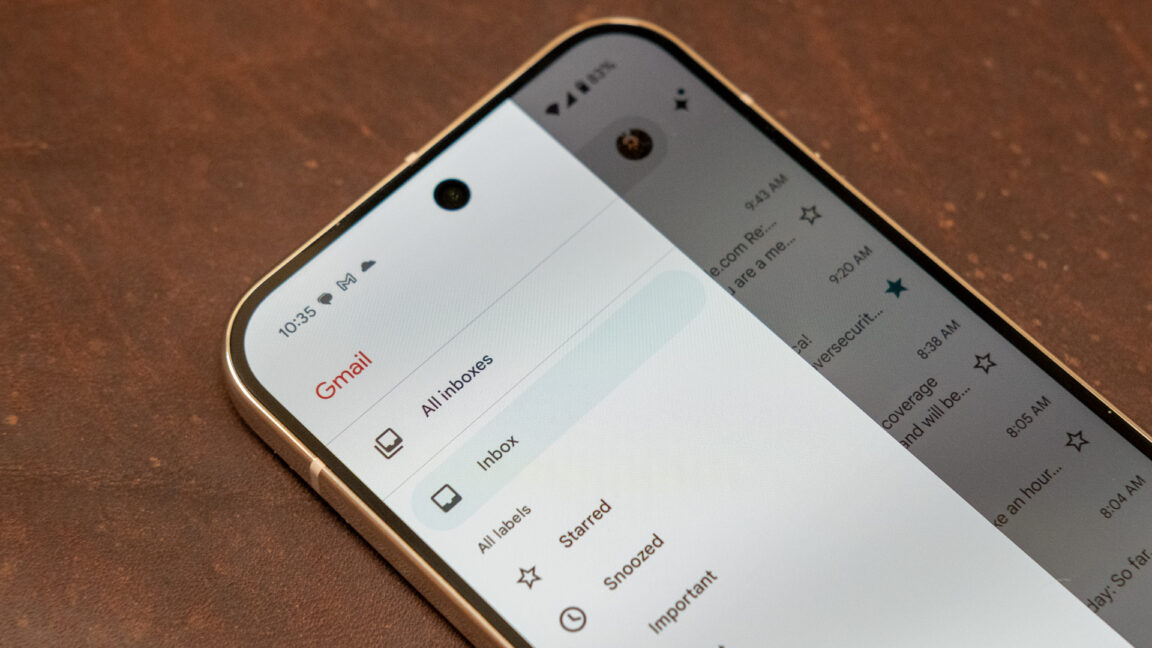
Gmail’s new subscription management is here to declutter your inbox

With decades of online life behind us, many people are using years-old email addresses. Those inboxes are probably packed with subscriptions you’ve picked up over the years, and you probably don’t need all of them. Gmail is going to make it easier to manage them with a new feature rolling out on mobile and web. Google’s existing unsubscribe prompts are evolving into a one-stop shop for all your subscription management needs, a feature that has been in the works for a weirdly long time.

The pitch is simple: The aptly named “Manage subscriptions” feature will list all the emails to which you are currently subscribed—newsletters, promotions, updates for products you no longer use, and more. With a tap, you’ll never see them again. This feature in Gmail will be accessible in the navigation drawer, a UI feature that is increasingly rare in Google’s apps but is essential to managing inboxes and labels in Gmail. Down near the bottom, you’ll soon see the new Manage subscriptions item.

The page will list all email subscriptions with an unsubscribe button. If you’re not sure about letting a newsletter or deal alert remain, you can select the subscription to see all recent messages from that sender. As long as a sender supports Google’s recommended one-click unsubscribe, all you have to do is tap the Unsubscribe button, and you’ll be done. Some senders will redirect you to a website to unsubscribe, but Gmail has a “Block instead” option in those cases.

https://arstechnica.com/gadgets/2025/07/gmails-new-subscription-management-is-here-to-declutter-your-inbox/


Samsung and Epic Games call a truce in app store lawsuit

Epic Games, buoyed by the massive success of Fortnite, has spent the last few years throwing elbows in the mobile industry to get its app store on more phones. It scored an antitrust win against Google in late 2023, and the following year it went after Samsung for deploying “Auto Blocker” on its Android phones, which would make it harder for users to install the Epic Games Store. Now, the parties have settled the case just days before Samsung will unveil its latest phones.

The Epic Store drama began several years ago when the company defied Google and Apple rules about accepting outside payments in the mega-popular Fortnite. Both stores pulled the app, and Epic sued. Apple emerged victorious, with Fortnite only returning to the iPhone recently. Google, however, lost the case after Epic showed it worked behind the scenes to stymie the development of app stores like Epic’s.

Google is still working to avoid penalties in that long-running case, but Epic thought it smelled a conspiracy last year. It filed a similar lawsuit against Samsung, accusing it of implementing a feature to block third-party app stores. The issue comes down to the addition of a feature to Samsung phones called Auto Blocker, which is similar to Google’s new Advanced Protection in Android 16. It protects against attacks over USB, disables link previews, and scans apps more often for malicious activity. Most importantly, it blocks app sideloading. Without sideloading, there’s no way to install the Epic Games Store or any of the content inside it.

https://arstechnica.com/gadgets/2025/07/samsung-and-epic-games-call-a-truce-in-app-store-lawsuit/


Fubo pays $3.4M to settle claims it illegally shared user data with advertisers

Fubo has agreed to pay $3.4 million to settle a class-action lawsuit that accused the sports-streaming service provider of unlawfully distributing customers’ personally identifiable information (PII) without their consent.

In December 2023, Ne’Tosha Burdette filed a complaint [PDF] against Fubo with the stated goal of stopping Fubo’s “unlawful disclosure of its customers'” PII. The complaint argued that Fubo violated the Video Privacy Protection Act (VPPA), “which prohibits the disclosure of consumers’ video viewing history without their informed, written consent.” The filing added:

Critically, Defendant utilizes sophisticated tracking technology that collects its subscribers’ personally identifiable information… including information which identifies a person as having viewed specific videos on Defendant’s streaming service. Defendant knowingly discloses this information to third party advertisers so that they can target specific users with specifically tailored advertisements based on their viewing history.

Fubo’s privacy policy at the time stated that Fubo collected various data from its users, such as location information—including “precise or near-precise geolocation” and the use of “GPS coordinates”—as well as device and usage information (including “pages and content viewed and order of those pages” and “content recorded on FuboTV,”) per the complaint.

According to the Internet Archive’s Wayback Machine, in late 2023, Fubo’s privacy policy claimed that the firm would only share non-personally identifiable information with third parties unless Fubo obtained user consent. However, Burdette’s filing claimed that Fubo didn’t ask users who created accounts for consent to share their PII with third parties.

“By disclosing Plaintiff’s PII, which reveals both her identity and the video materials she has requested from Defendant’s services to third-parties, Defendant has intentionally and knowingly violated the VPPA and Plaintiff’s privacy rights,” the complaint said.

https://arstechnica.com/gadgets/2025/07/fubo-pays-3-4m-to-settle-claims-it-illegally-shared-user-data-with-advertisers/


The curious rise of giant tablets on wheels

“KTC defines the MegPad A32Q7Pro as a portable, smart, touchscreen monitor,” KTC’s spokesperson told me. “It combines key traits of a smart display and a large-screen tablet. While it shares some features with smart TVs, tablets, and monitors, it doesn’t fully belong to any single traditional category. It’s a hybrid device designed to bridge those use cases.”

Android tablets on wheels

Many devices like the MegPad represent a push for more Android-powered, non-Google devices that has been buoyed by a program that Google launched in 2022, the Enterprise Devices Licensing Agreement (EDLA).

As explained by partners like BenQ, EDLA is a way for third parties to incorporate Google Mobile Services (GMS), which are Google’s most commonly used apps and APIs bundled for use across different types of devices. GMS apps include popular software like Google Drive, Gmail, the Google Play Store, and YouTube.

“Previously, GMS was only officially available for smartphones, tablets, TVs, and wearables. Under the new EDLA, the list of devices eligible for GMS certification has now been expanded to include enterprise solutions such as smart boards,” a blog from BenQ, which has EDLA-certified smart displays, reads.

Since 2022, (the year LG’s StanbyME launched), there has been an uptick in non-Google devices with this EDLA certification. One of the categories taking advantage of the newer program is tablets on wheels, like the MegPad and similar options from Kefeya, Apolosign, Innocn, and DuraPro.

Demonstrating the marketing value of EDLA certification, the MegPad’s product page reads: “Google EDLA certification provides secure, direct access to Google services and the Google Play Store with regular updates, offering greater stability and data protection than open app ecosystems with unverified apps.”

Most EDLA-certified devices seem to be interactive displays used for education. With EDLA certification, devices like the MegPad may also draw the attention of educators or even businesses. Meanwhile, Google is happy to hand out EDLA certifications, as they can drive Android adoption, giving Google more data and access to customers outside of the typical Android devices, such as phones. Products like the MegPad can also be easier to shop with (Google loves when people use its offerings to shop) than Android devices with smaller screens.

https://arstechnica.com/gadgets/2025/07/the-curious-rise-of-giant-tablets-on-wheels/