TikTok is being flooded with racist AI videos generated by Google’s Veo 3

TikTok notes that it uses both technology and human moderators to identify rule-breaking content. However, the volume of uploads makes timely moderation difficult. While the racist videos racked up a lot of views, a TikTok spokesperson tells Ars that more than half of the accounts cited in the MediaMatters report were banned for policy violations before the report was published, and the remainder have now been removed.

As for Google, it has a comprehensive Prohibited Use Policy that bans the use of its services to promote hate speech, harassment, bullying, intimidation, and abuse. The videos uncovered by MediaMatters all seem to fall under one or more of these categories. In a perfect world, Veo 3 would refuse to create these videos, but vagueness in the prompt and the AI’s inability to understand the subtleties of racist tropes (i.e., the use of monkeys instead of humans in some videos) make it easy to skirt the rules.

TikTok, being the world’s leading social video behemoth, is a natural place for these videos to spread. It’s not exclusive to TikTok, though. X (formerly Twitter) has gained a reputation for very limited moderation, leading to an explosion of hateful AI content. This problem could also get worse very soon. Google has plans to integrate Veo 3 into YouTube Shorts, which could make it even easier for similar content to spread on YouTube.

TikTok and Google have clear prohibitions on this content, which should have prevented it from being seen millions of times on social media. Enforcement of those policies, however, is lacking. TikTok is seemingly unable to keep up with the flood of video uploads, and Google’s guardrails appear insufficient to block the creation of this content. We’ve reached out to Google to inquire about Veo 3’s safety features but have not yet heard back.

For as long as generative AI has existed, people have used it to create inflammatory and racist content. Google and others always talk about the guardrails to prevent misuse, but they can’t catch everything. The realism of Veo 3 makes it especially attractive for those who want to spread hateful stereotypes. Maybe all the guardrails in the world won’t stop that.

https://arstechnica.com/ai/2025/07/racist-ai-videos-created-with-google-veo-3-are-proliferating-on-tiktok/

Nothing Phone 3 arrives July 15 with a tiny dot matrix rear display

Nothing, a startup from OnePlus co-founder Carl Pei, has announced its first flagship phone since 2023. The company bills its new Nothing Phone 3 as a “true flagship” device, but it doesn’t have the absolute best hardware you can get in a mobile device. Neither does it have the highest price, clocking in at a mere $799. That’s shaping up to be a good value, but it’s also the highest price yet for a Nothing phone.

A few weeks back, Nothing teased the end of its trademark Glyph interface. Indeed, the Nothing Phone 3 doesn’t have the illuminated panels of the company’s previous phones. Instead, it has a small dot “Glyph Matrix” LED screen. It’s on the back in the upper right corner, opposite the camera modules. Nothing has a few quirky games and notification icons that will flash on the screen, and it can be used as a very low-fi selfie mirror. Nothing is committed to the new Glyph screen, going so far as adding a button on the back to control it.

The rest of the design maintains the Nothing aesthetic, featuring a clear glass panel with a visible mid-frame and screws. The phone will come in either black or white—Nothing isn’t really into colors. However, the company does promise the Phone 3 will be a little more compact than the 2023 Phone 2. The new device is 18 percent thinner and has symmetrical 1.87-millimeter bezels around the 6.67-inch OLED screen. That panel supports 120 Hz refresh and has a peak brightness of 4,500 nits, which is competitive with the likes of Samsung and OnePlus.

Nothing’s first “true flagship”?

Nothing has continued releasing budget phones during its break from high-end devices. While the Nothing Phone 3 is supposedly five times faster than the Phone 3a, it probably won’t be able to keep up with the fastest phones on the market today. Rather than the top-of-the-line Snapdragon 8 Elite, the Nothing Phone 3 has a Snapdragon 8s Gen 4, which was released earlier this year to expand premium silicon features to slightly cheaper phones. It doesn’t have Qualcomm’s new Oryon CPU cores, and the GPU is a bit slower. However, it’ll be faster than most devices in its price range. The specs are rounded out with 12GB or 16GB of RAM and 256GB or 512GB of storage.

https://arstechnica.com/gadgets/2025/07/nothing-phone-3-arrives-july-15-with-a-tiny-dot-matrix-rear-display/


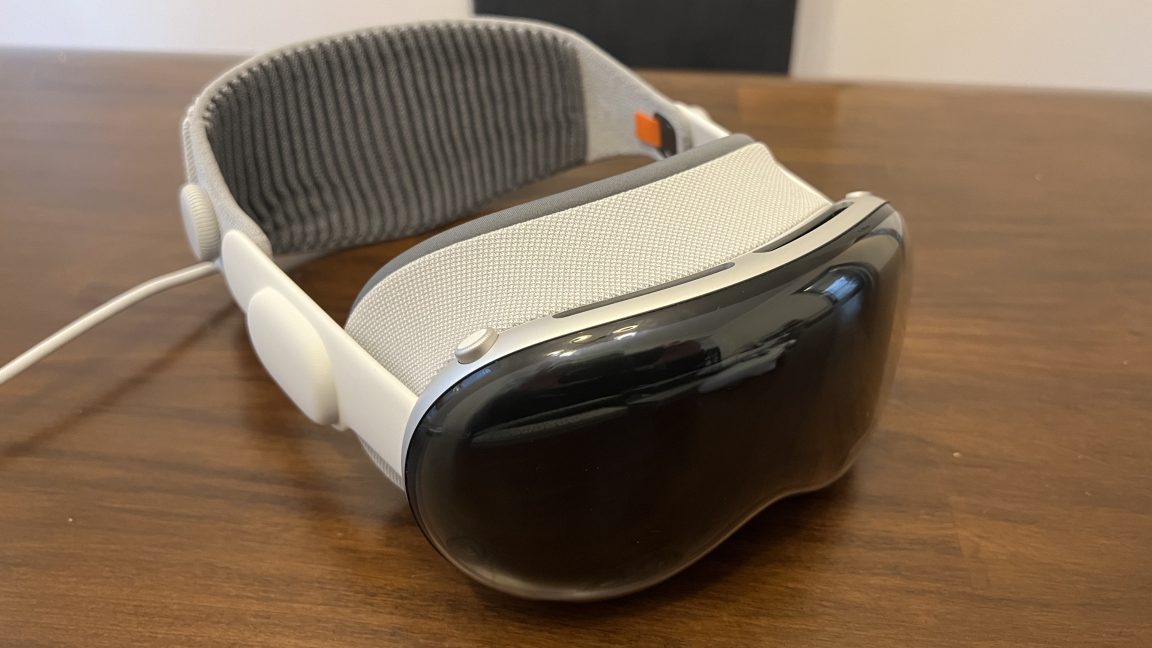
Analyst: M5 Vision Pro, Vision Air, and smart glasses coming in 2026–2028

Apple is also reportedly planning a “Vision Air” product, with production expected to start in Q3 2027. Kuo says it will be more than 40 percent lighter than the first-generation Vision Pro, and that it will include Apple’s flagship iPhone processor instead the more robust Mac processor found in the Vision Pro—all at a “significantly lower price than Vision Pro.” The big weight reduction is “achieved through glass-to-plastic replacement, extensive magnesium alloy use (titanium alloy deemed too expensive), and reduced sensor count.”

True smart glasses in 2027

The Vision Pro (along with the planned Vision Air) is a fully immersive VR headset that supports augmented reality by displaying the wearer’s surroundings on the internal screens based on what’s captured by 3D cameras on the outside of the device. That allows for some neat applications, but it also means the device is bulky and impractical to wear in public.

The real dream for many is smart glasses that are almost indistinguishable from normal glasses, but which display some of the same AR content as the Vision Pro on transparent lenses instead of via a camera-to-screen pipeline.

Apple is also planning to roll that out, Kuo says. But first, mass production of display-free “Ray-Ban-like” glasses is scheduled for Q2 2027, and Kuo claims Apple plans to ship between 3 million and 5 million units through 2027, suggesting the company expects this form factor to make a much bigger impact than the Vision Pro’s VR-like HMD approach.

The glasses would have a “voice control and gesture recognition user interface” but no display functionality at all. Instead, “core features include: audio playback, camera, video recording, and AI environmental sensing.”

The actual AR glasses would come later, in 2028.

https://arstechnica.com/gadgets/2025/06/apple-will-introduce-vision-air-and-smart-glasses-in-2027-analyst-projects/


Half a million Spotify users are unknowingly grooving to an AI-generated band

Making art used to be a uniquely human endeavor, but machines have learned to distill human creativity with generative AI. Whether that content counts as “art” depends on who you ask, but Spotify doesn’t discriminate. A new band called The Velvet Sundown debuted on Spotify this month and has already amassed more than half a million listeners. But by all appearances, The Velvet Sundown is not a real band—it’s AI.

While many artists are vehemently opposed to using AI, some have leaned into the trend to assist with music production. However, it doesn’t seem like there’s an artist behind this group. In less than a month, The Velvet Sundown has released two albums on Spotify, titled “Floating On Echoes” and “Dust and Silence.” A third album is releasing in two weeks. The tracks have a classic rock vibe with a cacophony of echoey instruments and a dash of autotune. If one of these songs came up in a mix, you might not notice anything is amiss. Listen to one after another, though, and the bland muddiness exposes them as a machine creation.

Some listeners began to have doubts about The Velvet Sundown’s existence over the past week, with multiple Reddit and X threads pointing out the lack of verifiable information on the band. The bio lists four members, none of whom appear to exist outside of The Velvet Sundown’s album listings and social media. The group’s songs have been mysteriously added to a large number of user-created playlists, which has helped swell its listener base in a few short weeks. When Spotify users began noticing The Velvet Sundown’s apparent use of AI, the profile had around 300,000 listeners. It’s now over 500,000 in less than a week.

When The Velvet Sundown set up an Instagram account on June 27, all doubts were laid to rest—these “people” are obviously AI. We may be past the era of being able to identify AI by counting fingers, but there are plenty of weird inconsistencies in these pics. In one Instagram post, the band claims to have gotten burgers to celebrate the success of the first two albums, but there are too many burgers and too few plates, and the food and drink are placed seemingly at random around the table. The band members themselves also have that unrealistically smooth and symmetrical look we see in AI-generated images.

https://arstechnica.com/ai/2025/06/half-a-million-spotify-users-are-unknowingly-grooving-to-an-ai-generated-band/


After 27 years, engineer discovers how to display secret photo in Power Mac ROM

“If you double-click the file, SimpleText will open it,” Brown explains on his blog just before displaying the hidden team photo that emerges after following the steps.

The discovery represents one of the last undocumented Easter eggs from the pre-Steve Jobs return era at Apple. The Easter egg works through Mac OS 9.0.4 but appears to have been disabled by version 9.1, Brown notes. The timing aligns with Jobs’ reported ban on Easter eggs when he returned to Apple in 1997, though Brown wonders whether Jobs ever knew about this particular secret.

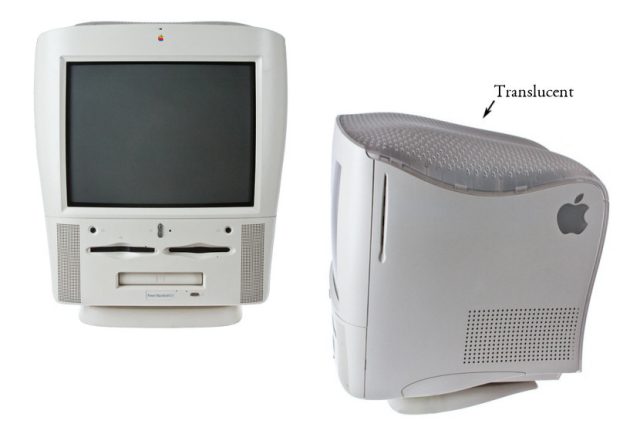
The G3 All-in-One is often nicknamed the "Molar Mac."
The ungainly G3 All-in-One set the stage for the smaller and much bluer iMac soon after. Credit: Jonathan Zufi

In his post, Brown expressed hope that he might connect with the Apple employees featured in the photo—a hope that was quickly fulfilled. In the comments, a man named Bill Saperstein identified himself as the leader of the G3 team (pictured fourth from left in the second row) in the hidden image.

“We all knew about the Easter egg, but as you mention; the technique to extract it changed from previous Macs (although the location was the same),” Saperstein wrote in the comment. “This resulted from an Easter egg in the original PowerMac that contained Paula Abdul (without permissions, of course). So the G3 team wanted to still have our pictures in the ROM, but we had to keep it very secret.”

He also shared behind-the-scenes details in another comment, noting that his “bunch of ragtag engineers” developed the successful G3 line as a skunk works project, with hardware that Jobs later turned into the groundbreaking iMac series of computers. “The team was really a group of talented people (both hw and sw) that were believers in the architecture I presented,” Saperstein wrote, “and executed the design behind the scenes for a year until Jon Rubenstein got wind of it and presented it to Steve and the rest is ‘history.'”

https://arstechnica.com/gadgets/2025/06/after-27-years-engineer-discovers-how-to-display-secret-photo-in-power-mac-rom/


Android phones could soon warn you of “Stingrays” snooping on your communications

Smartphones contain a treasure trove of personal data, which makes them a worthwhile target for hackers. However, law enforcement is not above snooping on cell phones, and their tactics are usually much harder to detect. Cell site simulators, often called Stingrays, can trick your phone into revealing private communications, but a change in Android 16 could allow phones to detect this spying.

Law enforcement organizations have massively expanded the use of Stingray devices because almost every person of interest today uses a cell phone at some point. These devices essentially trick phones into connecting to them like a normal cell tower, allowing the operator to track that device’s location. The fake towers can also shift a phone to less secure wireless technology to intercept calls and messages. There’s no indication this is happening on the suspect’s end, which is another reason these machines have become so popular with police.

However, while surveilling a target, Stingrays can collect data from other nearby phones. It’s not unreasonable to expect a modicum of privacy if you happen to be in the same general area, but sometimes police use Stingrays simply because they can. There’s also evidence that cell simulators have been deployed by mysterious groups outside law enforcement. In short, it’s a problem. Google has had plans to address this security issue for more than a year, but a lack of hardware support has slowed progress. Finally, in the coming months, we will see the first phones capable of detecting this malicious activity, and Android 16 is ready for it.

https://arstechnica.com/gadgets/2025/06/future-android-phones-could-warn-you-about-data-stealing-fake-cell-towers/


Microsoft changes Windows in attempt to prevent next CrowdStrike-style catastrophe

Working with third-party companies to define these standards and address those companies’ concerns seems to be Microsoft’s way of trying to avoid that kind of controversy this time around.

“We will continue to collaborate deeply with our MVI partners throughout the private preview,” wrote Weston.

Death comes for the blue screen

Microsoft is changing the “b” in BSoD, but that’s less interesting than the under-the-hood changes. Credit: Microsoft

Microsoft’s post outlines a handful of other security-related Windows tweaks, including some that take alternate routes to preventing more CrowdStrike-esque outages.

Multiple changes are coming for the “unexpected restart screen,” the less-derogatory official name for what many Windows users know colloquially as the “blue screen of death.” For starters, the screen will now be black instead of blue, a change that Microsoft briefly attempted to make in the early days of Windows 11 but subsequently rolled back.

The unexpected restart screen has been “simplified” in a way that “improves readability and aligns better with Windows 11 design principles, while preserving the technical information on the screen for when it is needed.”

But the more meaningful change is under the hood, in the form of a new feature called “quick machine recovery” (QMR).

If a Windows PC has multiple unexpected restarts or gets into a boot loop—as happened to many systems affected by the CrowdStrike bug—the PC will try to boot into Windows RE, a stripped-down recovery environment that offers a handful of diagnostic options and can be used to enter Safe Mode or open the PC’s UEFI firmware. QMR will allow Microsoft to “broadly deploy targeted remediations to affected devices via Windows RE,” making it possible for some problems to be fixed even if the PCs can’t be booted into standard Windows, “quickly getting users to a productive state without requiring complex manual intervention from IT.”

QMR will be enabled by default on Windows 11 Home, while the Pro and Enterprise versions will be configurable by IT administrators. The QMR functionality and the black version of the blue screen of death will both be added to Windows 11 24H2 later this summer. Microsoft plans to add additional customization options for QMR “later this year.”

https://arstechnica.com/gadgets/2025/06/microsoft-is-trying-to-get-antivirus-software-away-from-the-windows-kernel/


Apple gives EU users App Store options in attempt to avoid massive fines

Apple is changing its App Store policies in the EU in a last-minute attempt to avoid a series of escalating fines from Brussels.

The $3 trillion iPhone maker will allow developers in the bloc to offer apps designed for the iOS operating system in places other than Apple’s App Store, the company said.

Apple has been negotiating for two months with the European Commission after being fined €500 million for breaching the EU’s Digital Markets Act, the landmark legislation designed to curtail the power of Big Tech groups.

Throughout the process, Apple has accused the commission of moving the goalposts on what the company needs to do to comply with the EU’s digital rule book.

Apple announced the measures on Thursday, the deadline for the company to comply with the bloc’s rules in order to avoid new levies. The financial penalties can escalate over time and reach up to 5 percent of average daily worldwide revenue.

Still, an Apple spokesperson said that “the European Commission is requiring Apple to make a series of additional changes to the App Store. We disagree with this outcome and plan to appeal.”

In a reaction to the changes, a European Commission spokesperson said that “the commission will now assess these new business terms for DMA compliance.”

The spokesperson added that “the commission considers it particularly important to obtain the views of market operators and interested third parties before deciding on next steps.”

The decision on the new fines under the Digital Markets Act comes as Brussels and Washington near a July 9 deadline to agree on a trade deal.

The EU’s rules on Big Tech are a flashpoint between Brussels and US President Donald Trump. But commission leaders have indicated they would not change their rule book as a part of trade negotiations with the US.

© 2025 The Financial Times Ltd. All rights reserved. Not to be redistributed, copied, or modified in any way.

https://arstechnica.com/gadgets/2025/06/apple-gives-eu-users-app-store-options-in-attempt-to-avoid-massive-fines/


13-inch Microsoft Surface Laptop review: A slightly worse version of a year-old PC

Microsoft’s new 13-inch Surface Laptop is an odd one. It’s inarguably a step down in every respect from last year’s 13.8-inch Surface Laptop. But it’s also too good (and too expensive) to be considered a replacement for the Surface Laptop Go, the company’s perennially overpriced and underspecced entry-level laptop. It’s cheaper than last year’s Surfaces, but mostly because Microsoft gave those devices a de facto price hike by killing the entry-level configurations of those PCs.

We’re left with a laptop that’s perfectly fine or even great, depending on what you want. It’s relatively affordable for what is, a sort of MacBook Air-ish, just-the-basics portable computer. But it’s such a step down from the $999 laptop Microsoft released just last year that it’s hard not to see the entire laptop as one big series of compromises.

Where does the 13-inch Surface Laptop belong?

Despite just calling it the “Surface Laptop, 13-inch,” Microsoft clearly considers this to be an entirely different sub-class of laptop rather than a continuation of the flagship Surface Laptop or the lower-end Surface Go. The system identifies itself to Windows as “Surface Laptop 13in 1st Ed with Snapdragon,” where the 13.8- and 15-inch Surface Laptops are both labeled as 7th edition devices.

13-inch Surface Laptop Surface Laptop 7 (13.8-inch) Surface Laptop Go 3
Processor 8-core Snapdragon X Plus 10-core Snapdragon X Plus or 12-core Snapdragon X Elite Intel Core i5-1235U (2 P-cores, 8 E-cores)
RAM 16GB LPDDR5x 16, 32, or 64GB LPDDR5x 8 or 16GB LPDDR5
Storage 256 or 512GB UFS 256GB, 512GB, or 1TB NVMe 256GB NVMe
Screen 13-inch, 1920×1280, 60 Hz IPS 13.8-inch, 2304×1536, 120 Hz IPS 12.4-inch, 1536×1024, 60 Hz IPS
Size and weight 11.25 x 8.43 x 0.61 inches, 2.7 lbs 11.85 x 8.67 x 0.69 inches, 2.96 lbs 10.95 x 8.12 x 0.62 inches, 2.49 lbs
Starting price $899 $999 $799 (launch), $949 (now, for some reason)

In measurements and specs, this new Surface Laptop falls right in between the 13.8-inch flagship and the aging Surface Go 3. The new laptop also borrows components and ideas from both the Surface Laptop 7 and the Surface Go design. But in the end, this feels like a refreshed, Arm-powered iteration of the Surface Laptop Go rather than a more compact version of the flagship Surface design.

Internally, the 13-inch Surface Laptop is a scaled-back version of the flagship laptops Microsoft launched a year ago. Its 8-core Snapdragon X Plus processor uses the same architecture as the larger laptops, just with fewer cores. To meet Microsoft’s Copilot+ requirements, it has the same neural processing unit (NPU) as the bigger Surface devices, as well as 16GB of RAM and 256GB or 512GB of storage. Aside from storage and the color of the device, there are no upgrade options or choices to make. But unlike with the Surface Go, this does mean that the entry-level model is adequately specced and will feel plenty fast for most things.

https://arstechnica.com/gadgets/2025/06/review-microsofts-13-inch-surface-laptop-isnt-bad-but-it-is-a-step-down/


Netflix will start showing traditional broadcast channels next summer

In a move that further intensifies the reflection of the cable business it’s slowly killing, Netflix will start showing broadcast channels next summer.

The world’s largest streaming provider announced today that starting next year, all Netflix subscribers in France will be able to watch broadcast channels from TF1 Group, France’s biggest commercial broadcaster, which also owns streaming services and creates content. Financial Times (FT) reported that users will be able to watch all five TF1 linear channels.

Netflix’s French customers will also gain access to “more than 30,000 hours” of on-demand TF1 content in the summer of 2026, FT reported. TF1’s content selection includes scripted dramas, reality shows like The Voice, and live sports.

Before this announcement, Netflix and TF1 were already “creative partners,” according to Netflix, and co-produced titles like Les Combattantes, a French historical miniseries whose title translates to Women at War.

The companies didn’t disclose financial details of the deal.

Traditional media’s unlikely savior

In a statement, Netflix co-CEO Greg Peters highlighted the TF1 deal as a driver of subscriber engagement, a focus that Netflix will increasingly emphasize with investors following its recent decision to stop sharing subscriber counts. Netflix claims to have “over” 300 million subscribers.

“By teaming up with France’s leading broadcaster, we will provide French consumers with even more reasons to come to Netflix every day and to stay with us for all their entertainment,” Peters said.

Meanwhile, TF1 gains advertising opportunities, as the commercials its channels show will likely attract more eyeballs in the form of Netflix subscribers.

“As viewing habits shift toward on-demand consumption and audience fragmentation increases, this unprecedented alliance will enable our premium content to reach unparalleled audiences and unlock new reach for advertisers within an ecosystem that perfectly complements our TF1+ [streaming] platform,” Rodolphe Belmer, CEO of TF1 Group, said in a statement.

https://arstechnica.com/gadgets/2025/06/netflix-will-start-showing-traditional-broadcast-channels-next-summer/