US air traffic control still runs on Windows 95 and floppy disks

On Wednesday, acting FAA Administrator Chris Rocheleau told the House Appropriations Committee that the Federal Aviation Administration plans to replace its aging air traffic control systems, which still rely on floppy disks and Windows 95 computers, Tom’s Hardware reports. The agency has issued a Request For Information to gather proposals from companies willing to tackle the massive infrastructure overhaul.

“The whole idea is to replace the system. No more floppy disks or paper strips,” Rocheleau said during the committee hearing. Transportation Secretary Sean Duffy called the project “the most important infrastructure project that we’ve had in this country for decades,” describing it as a bipartisan priority.

Most air traffic control towers and facilities across the US currently operate with technology that seems frozen in the 20th century, although that isn’t necessarily a bad thing—when it works. Some controllers currently use paper strips to track aircraft movements and transfer data between systems using floppy disks, while their computers run Microsoft’s Windows 95 operating system, which launched in 1995.
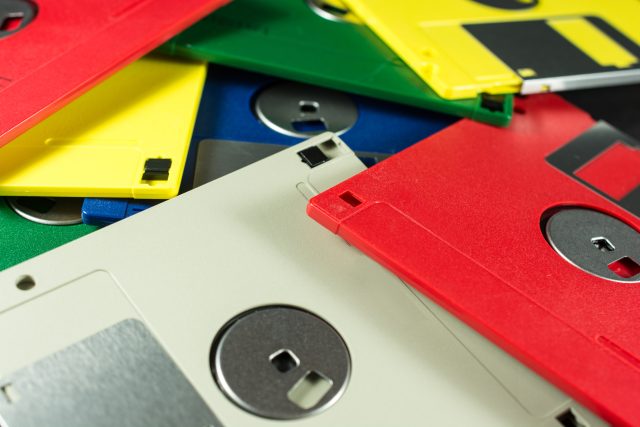
A pile of floppy disks
Credit: Getty

As Tom’s Hardware notes, modernization of the system is broadly popular. Sheldon Jacobson, a University of Illinois professor who has studied risks in aviation, says that the system works remarkably well as is but that an upgrade is still critical, according to NPR. The aviation industry coalition Modern Skies has been pushing for ATC modernization and recently released an advertisement highlighting the outdated technology.

While the vintage systems may have inadvertently protected air traffic control from widespread outages like the CrowdStrike incident that disrupted modern computer systems globally in 2024, agency officials say 51 of the FAA’s 138 systems are unsustainable due to outdated functionality and a lack of spare parts.

The FAA isn’t alone in clinging to floppy disk technology. San Francisco’s train control system still runs on DOS loaded from 5.25-inch floppy disks, with upgrades not expected until 2030 due to budget constraints. Japan has also struggled in recent years to modernize government record systems that use floppy disks.

If it ain’t broke? (Or maybe it is broke)

Modernizing the air traffic control system presents engineering challenges that extend far beyond simply installing newer computers. Unlike typical IT upgrades, ATC systems must maintain continuous 24/7 operation, because shutting down facilities for maintenance could compromise aviation safety.

https://arstechnica.com/information-technology/2025/06/faa-to-retire-floppy-disks-and-windows-95-amid-air-traffic-control-overhaul/




Full-screen Xbox handheld UI is coming to all Windows PCs “starting next year”

One weakness of Valve’s Steam Deck gaming handheld and SteamOS is that, by default, they will only run Windows games from Steam that are supported by the platform’s Proton compatibility layer (plus the subset of games that run natively on Linux). It’s possible to install alternative game stores, and Proton’s compatibility is generally impressive, but SteamOS still isn’t a true drop-in replacement for Windows.

Microsoft and Asus’ co-developed ROG Xbox Ally is trying to offer PC gamers a more comprehensive compatibility solution that also preserves a SteamOS-like handheld UI by putting a new Xbox-branded user interface on top of traditional Windows. And while this interface will roll out to the ROG Xbox Ally first, Microsoft told The Verge that the interface would come to other Ally handhelds next and that something “similar” would be “rolling out to other Windows handhelds starting next year.”

Bringing a Steam Deck-style handheld-optimized user interface to Windows is something Microsoft has been experimenting with internally since at least 2022, when employees at an internal hackathon identified most of Windows’ handheld deficiencies in a slide deck about a proposed “Windows Handheld Mode.”

The mock-up “gaming shell” that some Microsoft employees were experimenting with in 2022 shares some similarities with the Xbox-branded interface we saw on the ROG Xbox Ally yesterday. Credit: Microsoft/Twitter user _h0x0d_

It’s not clear whether this new Xbox interface is a direct outgrowth of that slide presentation, but it pitches a tile-based Switch-style gamepad UI with some superficial similarities to what Microsoft revealed yesterday. This theoretical Handheld Mode would also have come with “optimizations for your handheld’s touch screen to improve touch points and visibility” and Windows’ “lack of controller support” outside of the Steam app and actual games.

On the ROG Xbox Ally, the new full-screen interface completely replaces the traditional desktop-and-taskbar interface of Windows, saving what Microsoft says is a couple of gigabytes’ worth of RAM while also using less energy and other system resources. On a handheld running the normal version of Windows, like the regular ROG Ally, that Windows overhead is joined by additional overhead from things like Asus’ Armoury Crate software, which these handhelds currently need to bridge the functionality gap between SteamOS and Windows.

https://arstechnica.com/gaming/2025/06/full-screen-xbox-handheld-ui-is-coming-to-all-windows-pcs-starting-next-year/


Warner Bros. Discovery makes still more changes, will split streaming, TV business

Warner Bros. Discovery will split its business into two publicly traded companies, with one focused on its streaming and studios business and the other on its television network businesses, including CNN and Discovery.

The US media giant said the move would unlock value for shareholders as well as create opportunities for both businesses, breaking up a group created just three years ago from the merger of Warner Media and Discovery.

Warner Bros. Discovery last year revealed its intent to split its business in two, a plan first reported by the Financial Times in July last year. The company intends to complete the split by the middle of next year.

The move comes on the heels of a similar move by rival Comcast, which last year announced plans to spin off its television networks, including CNBC and MSNBC, into a separate company.

US media giants are seeking to split their faster growing streaming businesses from their legacy television networks, which are facing the prospect of long-term decline as viewers turn away from traditional television.

Warner Bros. Discovery shares were more than 10 percent higher pre-market.

David Zaslav, chief executive of Warner Bros. Discovery, will head the streaming and studios arm, while chief financial officer Gunnar Wiedenfels will serve as president and chief executive of global networks. Both will continue in their present roles until the separation.

Zaslav said on Monday the split would result in a “sharper focus” and enhanced “strategic flexibility,” that would leave each company better placed to compete in “today’s evolving media landscape.”

Warner Bros. Discovery Chair Samuel A. Di Piazza Jr. said the move would “enhance shareholder value.”

The streaming and studios arm will consist of Warner Bros. Television, Warner Bros. Motion Picture Group, DC Studios, HBO, and HBO Max, as well as their film and television libraries.

Global networks will include entertainment, sports, and news television brands around the world, including CNN, TNT Sports in the US, and Discovery.

© 2025 The Financial Times Ltd. All rights reserved. Not to be redistributed, copied, or modified in any way.

https://arstechnica.com/gadgets/2025/06/warner-bros-discovery-makes-still-more-changes-will-split-streaming-tv-business/


Endangered classic Mac plastic color returns as 3D-printer filament

On Tuesday, classic computer collector Joe Strosnider announced the availability of a new 3D-printer filament that replicates the iconic “Platinum” color scheme used in classic Macintosh computers from the late 1980s through the 1990s. The PLA filament (PLA is short for polylactic acid) allows hobbyists to 3D-print nostalgic novelties, replacement parts, and accessories that match the original color of vintage Apple computers.

Hobbyists commonly feed this type of filament into commercial desktop 3D printers, which heat the plastic and extrude it in a computer-controlled way to fabricate new plastic parts.

The Platinum color, which Apple used in its desktop and portable computer lines starting with the Apple IIgs in 1986, has become synonymous with a distinctive era of classic Macintosh aesthetic. Over time, original Macintosh plastics have become brittle and discolored with age, so matching the “original” color can be a somewhat challenging and subjective experience.

A close-up of "Retro Platinum" PLA filament by Polar Filament.
A close-up of “Retro Platinum” PLA filament by Polar Filament. Credit: Polar Filament

Strosnider, who runs a website about his extensive vintage computer collection in Ohio, worked for years to color-match the distinctive beige-gray hue of the Macintosh Platinum scheme, resulting in a spool of hobby-ready plastic by Polar Filament and priced at $21.99 per kilogram.

According to a forum post, Strosnider paid approximately $900 to develop the color and purchase an initial 25-kilogram supply of the filament. Rather than keeping the formulation proprietary, he arranged for Polar Filament to make the color publicly available.

“I paid them a fee to color match the speaker box from inside my Mac Color Classic,” Strosnider wrote in a Tinkerdifferent forum post on Tuesday. “In exchange, I asked them to release the color to the public so anyone can use it.”

https://arstechnica.com/apple/2025/06/new-filament-lets-you-3d-print-parts-in-authentic-1980s-apple-computer-color/


American Science & Surplus is fighting for its life. Here’s why you should care.

A long history

Old catalogs from the American Lens & Photo days.

Credit: American Science & Surplus

Old catalogs from the American Lens & Photo days. Credit: American Science & Surplus

American Science & Surplus got its start in 1937 and has expanded its inventory and reach ever since. And Meyer has been a part of the story for the last four decades. “I’ve done everything in the company that there is to do,” he said. “I started off literally scraping floors and Windexing, driven our trucks. I’ve done warehouse sales, I’ve done tent sales. I’ve been store manager, assistant manager, I’ve done—there isn’t anything in this company that I haven’t—and it’s been my life for 41 years.”

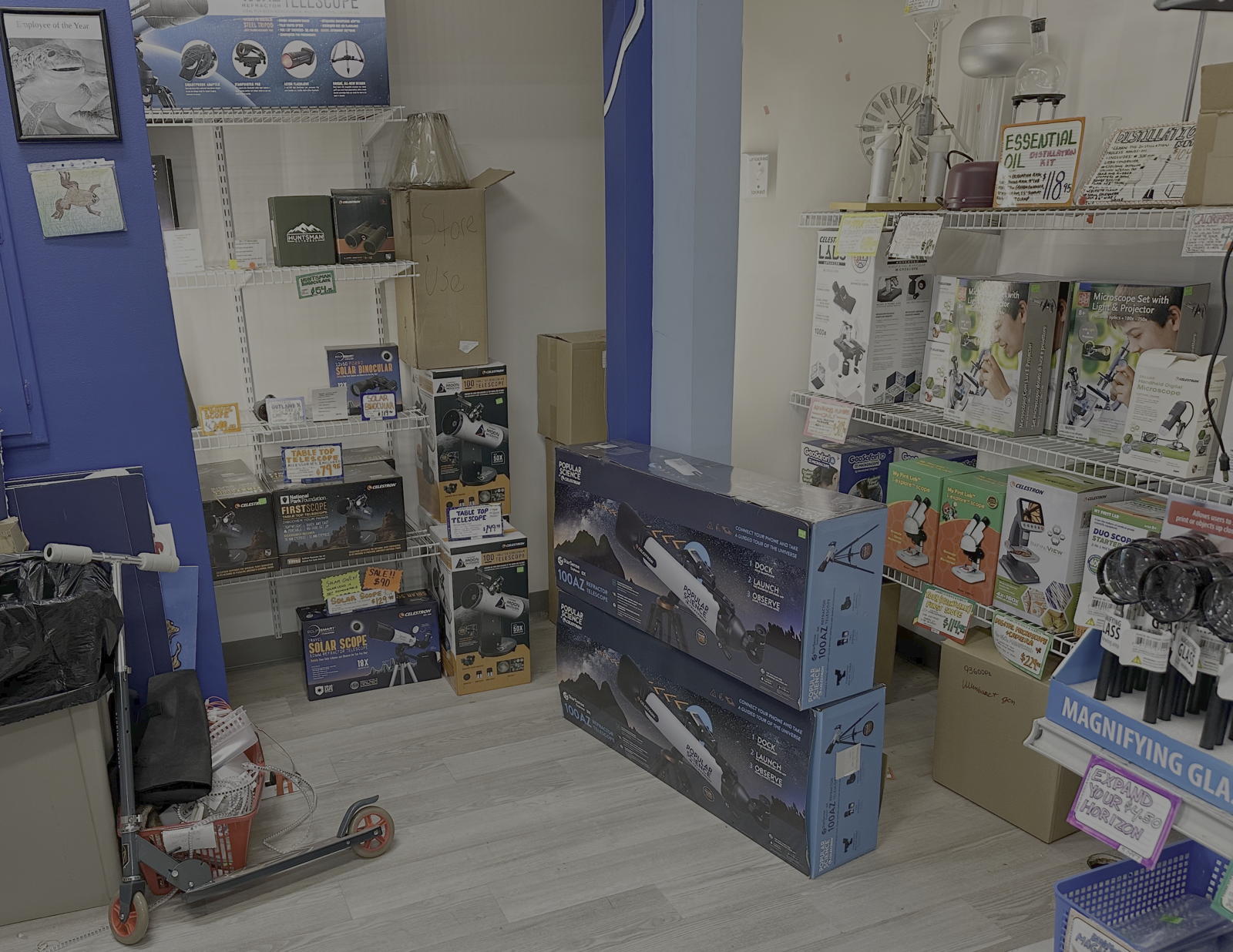
Over time, the store has moved far beyond lenses and lab equipment. There’s a science toy section and an aisle devoted to Etsy-style craft supplies. But other, once-thriving areas of the business have suffered. When I first discovered American Science & Surplus in the early 2000s, I would always linger at the massive telescope section. The store staff was always more than happy to answer my questions and explain the differences between the scopes. Now, telescopes are just a small corner of the store, and sales are infrequent. “People come in to ask questions and then buy the telescopes online,” Meyer explained.

picture of display case

One of the display cases in the Park Ridge store.

Eric Bangeman

fossils and rocks

My kids loved to search through the fossils and minerals when they were younger.

Eric Bangeman

Stan Lee shields

A shield for Stan Lee stans.

Eric Bangeman

telescopes

The telescope section is much smaller than it used to be.

Eric Bangeman

In many ways, American Science & Surplus is a physical manifestation of the maker ethos. There is an endless array of motors, switches, cables, tools, and connectors. “Sometimes our customers will send us photos of their creations,” said Meyer. “It’s always cool to see how people are inspired by shopping here.”

The store should feel familiar to those who were alive in the peak days of Radio Shack. In fact, there used to be a Radio Shack in the same strip mall as American Science & Surplus’ old store in the Jefferson Park neighborhood on Chicago’s northwest side. Meyer said that Radio Shack would frequently send customers a few doors down to his store to find things Radio Shack didn’t stock. And one time, the surplus store sent a customer back. “Radio Shack sent one guy over to us after telling him they didn’t have the item in stock,” Meyer said. “We didn’t have it, but one of our associates knew Radio Shack did, so he walked the customer back, pulled the part out of the bin, and handed it to him.”

https://arstechnica.com/gadgets/2025/06/american-science-surplus-is-fighting-for-its-life-heres-why-you-should-care/


Polish engineer creates postage stamp-sized 1980s Atari computer

In 1979, Atari released the Atari 400 and 800, groundbreaking home computers that included custom graphics and sound chips, four joystick ports, and the ability to run the most advanced home video games of their era. These machines, which retailed for $549 and $999, respectively, represented a leap in consumer-friendly personal computing, with their modular design and serial I/O bus that presaged USB. Now, 46 years later, a hobbyist has shrunk down the system hardware to a size that would have seemed like science fiction in the 1970s.

Polish engineer Piotr “Osa” Ostapowicz recently unveiled “Atarino,” which may be the world’s smallest 8-bit Atari computer re-creation, according to retro computing site Atariteca. The entire system—processor, graphics chips, sound hardware, and memory controllers—fits on a module measuring just 2×1.5 centimeters (about 0.79×0.59 inches), which is roughly the size of a postage stamp.

Ostapowicz’s creation reimplements the classic Atari XL/XE architecture using modern FPGA (field-programmable gate array) technology. Unlike software emulators that simulate old hardware (and modern recreations that run them, like the Atari 400 Mini console) on a complete computer system of another architecture, Atarino reproduces the original Atari components faithfully at the logic level, allowing it to run vintage software while maintaining compatibility with original peripherals.

The Atarino is only slightly larger than a Polish 1 Grosz coin.
The Atarino is only slightly larger than a Polish 1 Grosz coin. Credit: Piotr Ostapowicz

“The current project is not strictly a clone of Atari but basically, well, I’m forming a machine that is compatible with the Atari 8-bit computer itself, but it was created on the basis of the framework that I created some time ago,” Ostapowicz told Atari Online PL in a January 2024 YouTube interview.

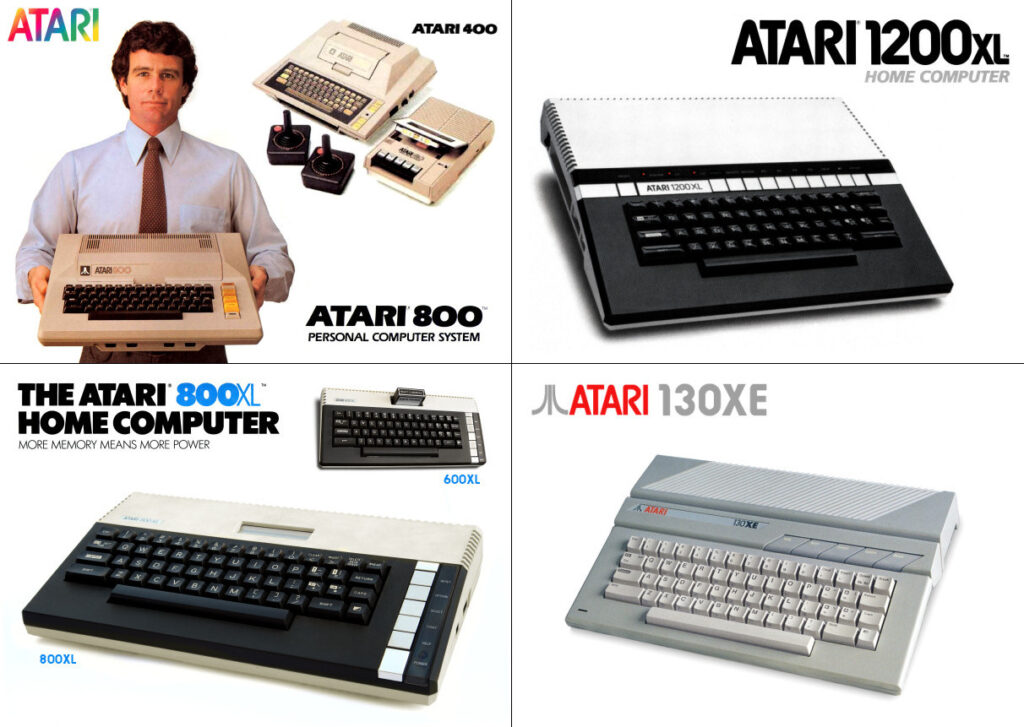
An assortment of some of the Atari 8-bit computer systems released in the 1970s and 80s.

An assortment of some of the Atari 8-bit computer systems released in the 1970s and ’80s. Credit: Atari

The project, which began over a decade ago and was first publicly demonstrated in December 2023, includes a 6502C processor, ANTIC and GTIA graphics chips, POKEY sound chip, and memory controllers onto a single Lattice UP5K FPGA chip. Despite its tiny size, the system can run at clock speeds up to 31 MHz—far faster than the original hardware’s 1.79 MHz.

Smaller, faster, and positioned for future projects

While Atarino maintains broad compatibility with classic Atari software, Ostapowicz says he has enhanced the original design in several ways. For example, the 6502 processor core follows the physical chip specifications but adds new instructions. The memory system uses independent channels rather than the original’s “cycle stealing” approach (where the graphics chip temporarily halts the CPU to access memory), improving performance.

https://arstechnica.com/gadgets/2025/06/polish-engineer-creates-postage-stamp-sized-1980s-atari-computer/


Shopper denied $51 refund for 20TB HDD that’s mostly a weighted plastic box

Many Arsians are the go-to IT support representative for family and friends. If you’re lucky, your loved ones’ problems are easily resolved with a reset, update, or new cable. That wasn’t the case for a son who recently had to break the news to his father that the 20TB portable hard drive he purchased for about $50 was mostly just a plastic box with weights and a PCB.

Ars Technica spoke with the Reddit user who posted about his father bringing him a “new 20T[B] HDD to see if I could figure out what was wrong with it.” The Redditor, who asked that we refer to him by his first name, Martin, revealed that his dad paid £38 (about $51.33) for what he thought was a portable HDD. That’s a red flag. HDDs have gotten cheaper over the years, but not that cheap. A 20TB external HDD typically costs over $200, and they’re usually much larger than the portable-SSD-sized device that Martin’s father received. A 20TB HDD in a portable form factor is rarer and can cost well over $300.

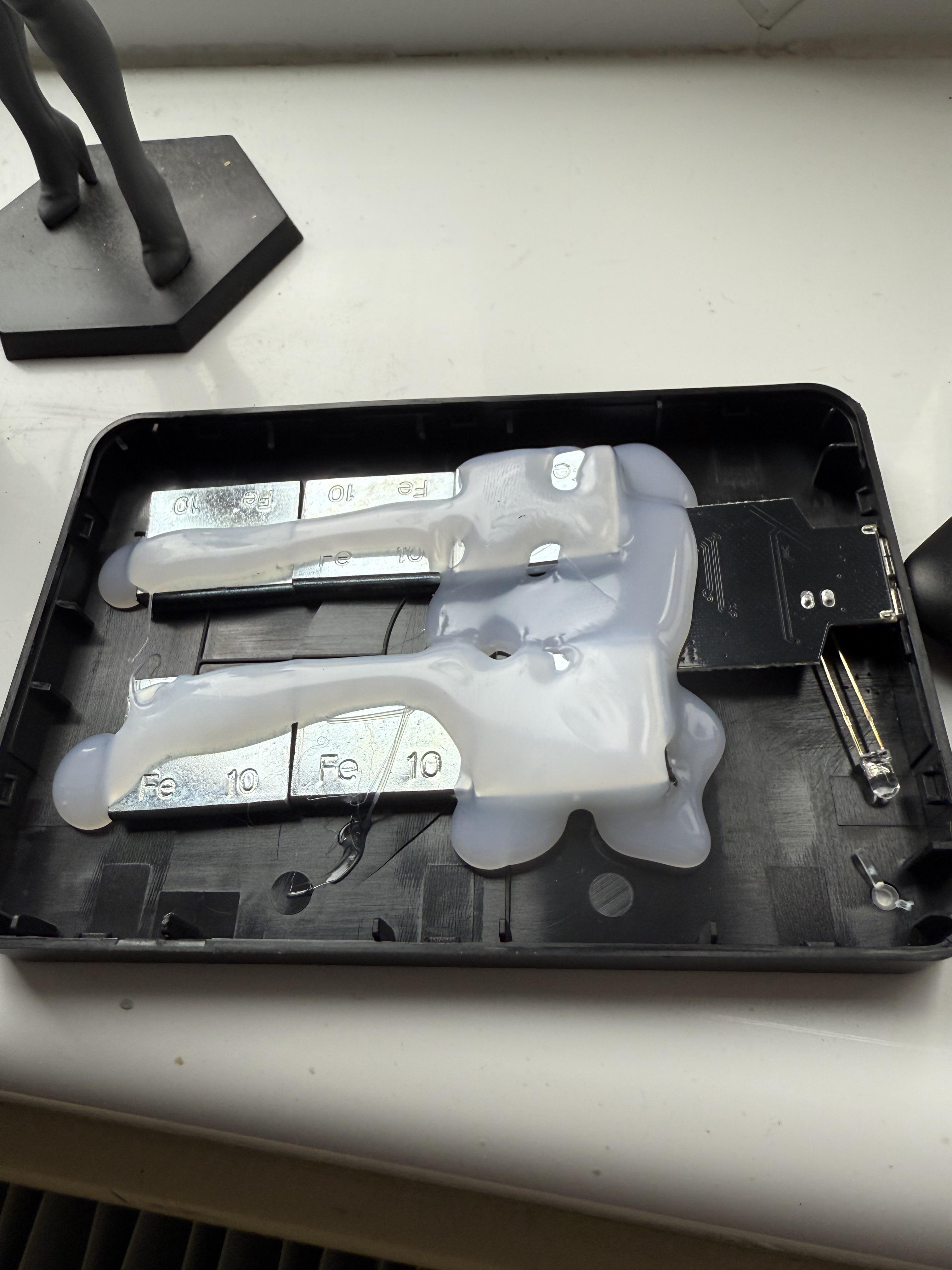
Taking a hammer to the device revealed that the chassis was nearly empty, save for some iron wheel weights sloppily attached to the black plastic with hefty globs of glue and a small PCB with some form of flash storage that could connect to a system via USB-A.

Fake HDD opened up.

The “HDD” opened up.

The “HDD” opened up. Credit: The__Unflushable/Reddit

As with other PC storage scams we’ve seen online, Windows read the so-called HDD as a “19TB drive, but would then just hang if you try to do anything with it,” Martin said on Reddit.

Programming the board’s firmware so that the drive appears as a high-capacity storage device on Windows is a clever trick that could convince users they’re to blame. But as Windows-savvy users would point out, Windows reports drive capacities in gibibytes or tebibytes, so a real 20TB HDD would appear as approximately 18.2TB in Windows.

Martin told Ars:

The device appeared to mount on the desktop with the device name in Mandarin (turned out this simply said “Hard Disc”). I tried copying a file, and the name did appear on the “hard disc.” It was only when I tried to open this file from the hard disc that the problems began to emerge. The file could not be opened, no matter how hard I tried, including reformatting the hard disc. At that point nothing was “working” at all.

Sketchy online listing

Martin told Ars that his father purchased the fake HDD from a website called UK.Chicntech, which appears to primarily sell car supplies, kitchen supplies, and home textiles. Currently, the website does not list any PC components or peripherals, but overall, its stock is pretty limited. Chicntech currently lists some other electronics, like a “[With Starry Sky Lid]AI Nano Mist Intelligent Car Aromatherapy Device” (linking for explanatory purposes only; we don’t recommend shopping on this website) for $56.

https://arstechnica.com/gadgets/2025/06/man-buys-20tb-portable-hdd-for-51-son-breaks-the-news-that-its-a-fake/


Adobe finally releases Photoshop for Android, and it’s free (for now)

Adobe has spent years releasing mobile apps that aren’t Photoshop, and now it’s finally giving people what they want. Yes, real Photoshop. After releasing a mobile version of Photoshop on iPhone earlier this year, the promised Android release has finally arrived. You can download it right now in beta, and it’s free to use for the duration of the beta period.

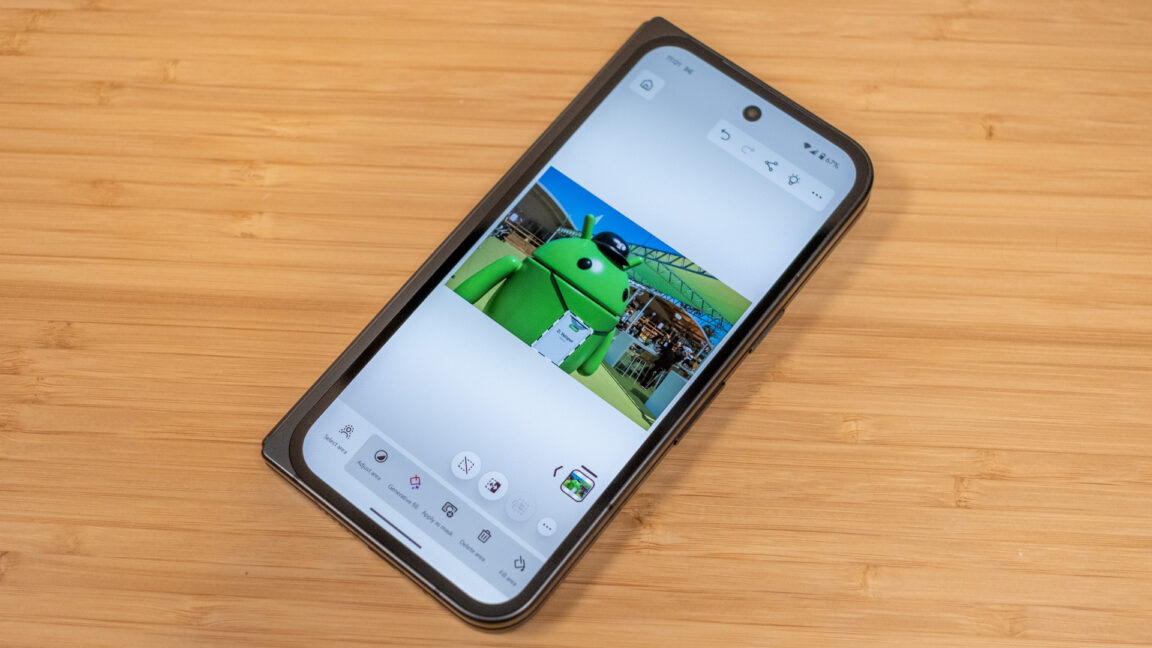
The mobile app includes a reasonably broad selection of tools from the desktop version of Adobe’s iconic image editor, including masks, clone stamp, layers, transformations, cropping, and an array of generative AI tools. The app looks rather barebones when you first start using it, but the toolbar surfaces features as you select areas and manipulate layers.

Depending on how you count, this is Adobe’s third attempt to do Photoshop on phones. So far, it appears to be the most comprehensive, though. It’s much more capable than Photoshop Express or the ancient Photoshop Touch app, which Adobe unpublished almost a decade ago. If you’re not familiar with the ins and outs of Photoshop, the new app comes with a robust collection of tutorials—just tap the light bulb icon to peruse them.

Photoshop on Android makes a big deal about Adobe’s generative AI features, which let you easily select subjects or backgrounds, remove objects, and insert new content based on a text prompt. This works about as well as the desktop version of Photoshop because it’s relying on the same cloud service to do the heavy lifting. This would have been impressive to see in a mobile app a year ago, but OEM features like Google’s Magic Editor have since become more widespread.

https://arstechnica.com/gadgets/2025/06/adobe-finally-releases-photoshop-for-android-and-its-free-for-now/


Google and DOJ tussle over how AI will remake the web in antitrust closing arguments

At the same time, Google is seeking to set itself apart from AI upstarts. “Generative AI companies are not trying to out-Google Google,” said Schmidtlein. Google’s team contends that its actions have not harmed any AI products like ChatGPT or Perplexity, and at any rate, they are not in the search market as defined by the court.

Mehta mused about the future of search, suggesting we may have to rethink what a general search engine is in 2025. “Maybe people don’t want 10 blue links anymore,” he said.

The Chromium problem and an elegant solution

At times during the case, Mehta has expressed skepticism about the divestment of Chrome. During closing arguments, Dahlquist reiterated the close relationship between search and browsers, reminding the court that 35 percent of Google’s search volume comes from Chrome.

Mehta now seems more receptive to a Chrome split than before, perhaps in part because the effects of the other remedies are becoming so murky. He called the Chrome divestment “less speculative” and “more elegant” than the data and placement remedies. Google again claimed, as it has throughout the remedy phase, that forcing it to give up Chrome is unsupported in the law and that Chrome’s dominance is a result of innovation.

Break up the company without touching the sides and getting shocked!

Credit: Aurich Lawson

Even if Mehta leans toward ordering this remedy, Chromium may be a sticking point. The judge seems unconvinced that the supposed buyers—a group which apparently includes almost every major tech firm—have the scale and expertise needed to maintain Chromium. This open source project forms the foundation of many other browsers, making its continued smooth operation critical to the web.

If Google gives up Chrome, Chromium goes with it, but what about the people who maintain it? The DOJ contends that it’s common for employees to come along with an acquisition, but that’s far from certain. There was some discussion of ensuring a buyer could commit to hiring staff to maintain Chromium. The DOJ suggests Google could be ordered to provide financial incentives to ensure critical roles are filled, but that sounds potentially messy.

A Chrome sale seems more likely now than it did earlier, but nothing is assured yet. Following the final arguments from each side, it’s up to Mehta to mull over the facts before deciding Google’s fate. That’s expected to happen in August, but nothing will change for Google right away. The company has already confirmed it will appeal the case, hoping to have the original ruling overturned. It could still be years before this case reaches its ultimate conclusion.

https://arstechnica.com/gadgets/2025/05/google-and-doj-tussle-over-how-ai-will-remake-the-web-in-antitrust-closing-arguments/


Amazon Fire Sticks enable “billions of dollars” worth of streaming piracy

Amazon Fire Sticks are enabling “billions of dollars” worth of streaming piracy, according to a report today from Enders Analysis, a media, entertainment, and telecommunications research firm. Technologies from other media conglomerates, Microsoft, Google, and Facebook, are also enabling what the report’s authors deem an “industrial scale of theft.”

The report, “Video piracy: Big tech is clearly unwilling to address the problem,” focuses on the European market but highlights the global growth of piracy of streaming services as they increasingly acquire rights to live programs, like sporting events.

Per the BBC, the report points to the availability of multiple, simultaneous illegal streams for big events that draw tens of thousands of pirate viewers.

Enders’ report places some blame on Facebook for showing advertisements for access to illegal streams, as well as Google and Microsoft for the alleged “continued depreciation” of their digital rights management (DRM) systems, Widevine and PlayReady, respectively. Ars Technica reached out to Facebook, Google, and Microsoft for comment but didn’t receive a response before publication.

The report echoes complaints shared throughout the industry, including by the world’s largest European soccer streamer, DAZN. Streaming piracy is “almost a crisis for the sports rights industry,” DAZN’s head of global rights, Tom Burrows, said at The Financial Times’ Business of Football Summit in February. At the same event, Nick Herm, COO of Comcast-owned European telecommunication firm Sky Group, estimated that piracy was costing his company “hundreds of millions of dollars” in revenue. At the time, Enders co-founder Claire Enders said that the pirating of sporting events accounts for “about 50 percent of most markets.”

Jailbroken Fire Sticks

Friday’s Enders report named Fire Sticks as a significant contributor to streaming piracy, calling the hardware a “piracy enabler.”

Enders’ report pointed to security risks that pirate viewers face, including providing credit card information and email addresses to unknown entities, which can make people vulnerable to phishing and malware. However, reports of phishing and malware stemming from streaming piracy, which occurs through various methods besides a Fire TV Stick, seem to be rather limited.

https://arstechnica.com/gadgets/2025/05/amazon-fire-sticks-enable-billions-of-dollars-worth-of-streaming-piracy/