Netflix introduces a new kind of subtitles for the non-hearing impaired

Traditional closed captions are still available, of course. Those are labeled “English CC” whereas this new option is simply labeled “English” (or whatever your preferred language is).

This is just the latest answer to a long-standing problem. Streamers and device makers have been including speech or dialogue boost audio modes to help users better understand dialogue, too. There’s no single reason this is now a problem that needs solving—rather, it’s a confluence of things.

The performance style of actors in current TV shows and movies is more naturalistic and less elocutive than it once was, so characters are more likely to speak softly. Streaming services compress the audio more vigorously than is common in physical media, which can cause problems with intelligibility. The range of home audio hardware is far wider than ever before, so engineers and editors mastering shows and films face the near-impossible task of providing strong dynamic range and quality for those with high-end systems, but still making it sound good on cheap TV speakers.

It’s a relatively new problem, and everyone from hardware makers to audio engineers is seeking the ideal solution. Netflix’s new subtitles don’t really fix it, of course, but they make the viewing experience a little nicer for the millions of people who’ve resorted to reading subtitles all the time.

https://arstechnica.com/gadgets/2025/04/cant-understand-dialogue-on-tv-shows-netflix-has-a-new-feature-for-you/


Google announces 1st and 2nd gen Nest Thermostats will lose support in October 2025

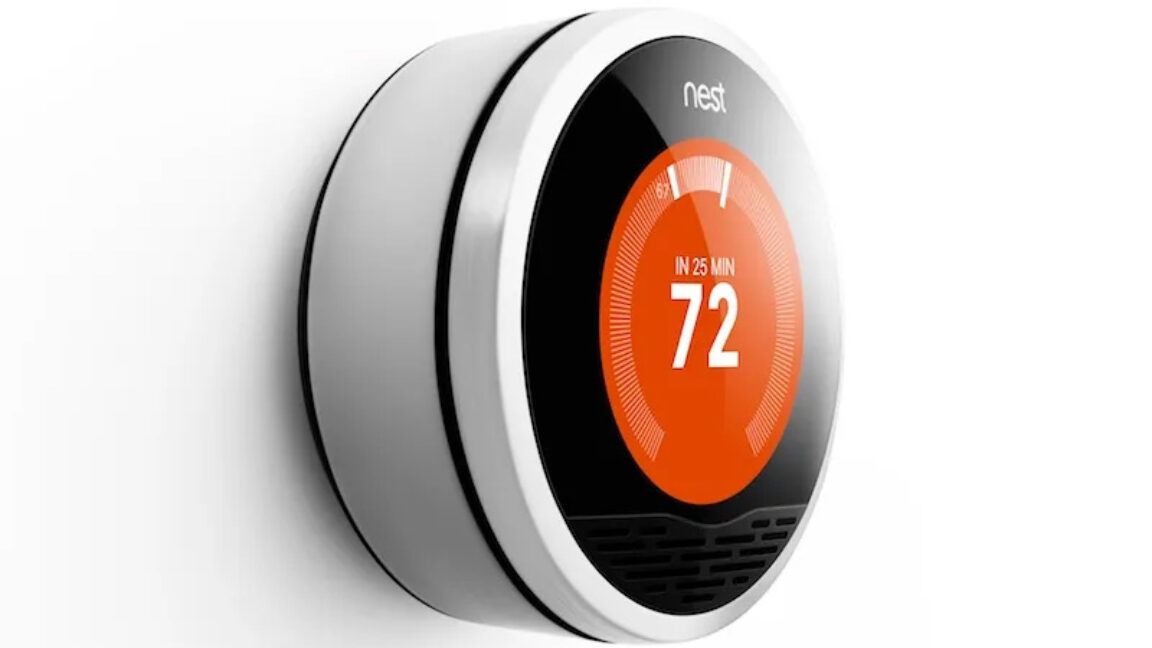
Google’s oldest smart thermostats have an expiration date. The company has announced that the first and second generation Nest Learning Thermostats will lose support in October 2025, disabling most of the connected features. Google is offering some compensation for anyone still using these devices, but there’s no Google upgrade for European users. Google is also discontinuing its only European model, and it’s not planning to release another.

Both affected North American thermostats predate Google’s ownership of the company, which it acquired in 2014. Nest released the original Learning Thermostat to almost universal praise in 2011, with the sequel arriving a year later. Google’s second-gen Euro unit launched in 2014. Since launch, all these devices have been getting regular software updates and have migrated across multiple app redesigns. However, all good things must come to an end.

As Google points out, these products have had a long life, and they’re not being rendered totally inoperable. Come October 25, 2025, these devices will no longer receive software updates or connect to Google’s cloud services. That means you won’t be able to control them from the Google Home app or via Assistant (or more likely Gemini by that point). The devices will still work as a regular dumb thermostat to control temperature, and scheduling will remain accessible from the thermostat’s screen.

If you have one of these units, Google will be reaching out via email with some deals to soften the blow. In the US, owners can get a $130 discount if they upgrade to the fourth-gen Nest, which was released just last year for $280. In Canada, the discount will be CA$160.

https://arstechnica.com/gadgets/2025/04/google-ending-support-for-older-nest-thermostats-will-stop-selling-nests-in-europe/


Microsoft rolls Windows Recall out to the public nearly a year after announcing it

Recall is the most high-profile feature in the release Microsoft is starting to roll out today, but there are a few other changes in it for Copilot+ PCs. One is a new version of Windows’ Search function, which “can understand the contextual meaning of words or phrases, making search more natural and intuitive.” This natural-language search can be used in the Search box in the Taskbar, in File Explorer, and in the Settings app. Another new feature, called “Click to Do,” lets you copy text from images, search the content on your screen, and quickly summarize or rewrite on-screen text (you can invoke it by pressing the Windows key and then clicking, hence Click to Do).

Copilot+ PCs have specific hardware requirements beyond the ones necessary to run Windows 11. The most significant is the requirement for a neural processing unit (NPU) that can process more than 40 trillion operations per second (TOPS). The NPU enables more processing of AI and machine learning models on-device so that these features can work more quickly and without sending sensitive personal information to Microsoft’s servers.

The only consumer processors that currently support Copilot+ are Qualcomm’s Snapdragon X Elite and Plus chips, Intel’s Core Ultra 200V-series laptop chips (codenamed Lunar Lake), and AMD’s Ryzen AI 300 series. Copilot+ features have generally been coming to the Arm-based Qualcomm PCs first and to x86-based Intel and AMD PCs later; Recall and the improved Search are available for both Arm and x86 PCs, while some Click to Do features are currently only available for Arm systems.

https://arstechnica.com/gadgets/2025/04/microsoft-rolls-windows-recall-out-to-the-public-nearly-a-year-after-announcing-it/


Perplexity will come to Moto phones after exec testified Google limited access

Shevelenko was also asked about Chrome, which the DOJ would like to force Google to sell. Like an OpenAI executive said on Monday, Shevelenko confirmed Perplexity would be interested in buying the browser from Google.

Motorola has all the AI

There were some vague allusions during the trial that Perplexity would come to Motorola phones this year, but we didn’t know just how soon that was. With the announcement of its 2025 Razr devices, Moto has confirmed a much more expansive set of AI features. Parts of the Motorola AI experience are powered by Gemini, Copilot, Meta, and yes, Perplexity.

While Gemini gets top billing as the default assistant app, other firms have wormed their way into different parts of the software. Perplexity’s app will be preloaded, and anyone who buys the new Razrs. Owners will also get three free months of Perplexity Pro. This is the first time Perplexity has had a smartphone distribution deal, but it won’t be shown prominently on the phone. When you start a Motorola device, it will still look like a Google playground.

While it’s not the default assistant, Perplexity is integrated into the Moto AI platform. The new Razrs will proactively suggest you perform an AI search when accessing certain features like the calendar or browsing the web under the banner “Explore with Perplexity.” The Perplexity app has also been optimized to work with the external screen on Motorola’s foldables.

Moto AI also has elements powered by other AI systems. For example, Microsoft Copilot will appear in Moto AI with an “Ask Copilot” option. And Meta’s Llama model powers a Moto AI feature called Catch Me Up, which summarizes notifications from select apps.

It’s unclear why Motorola leaned on four different AI providers for a single phone. It probably helps that all these companies are desperate to entice users to bulk up their market share. Perplexity confirmed that no money changed hands in this deal—it’s on Moto phones to acquire more users. That might be tough with Gemini getting priority placement, though.

https://arstechnica.com/gadgets/2025/04/perplexity-will-come-to-moto-phones-after-exec-testified-google-blocked-access/


Roku tech, patents prove its potential for delivering “interruptive” ads

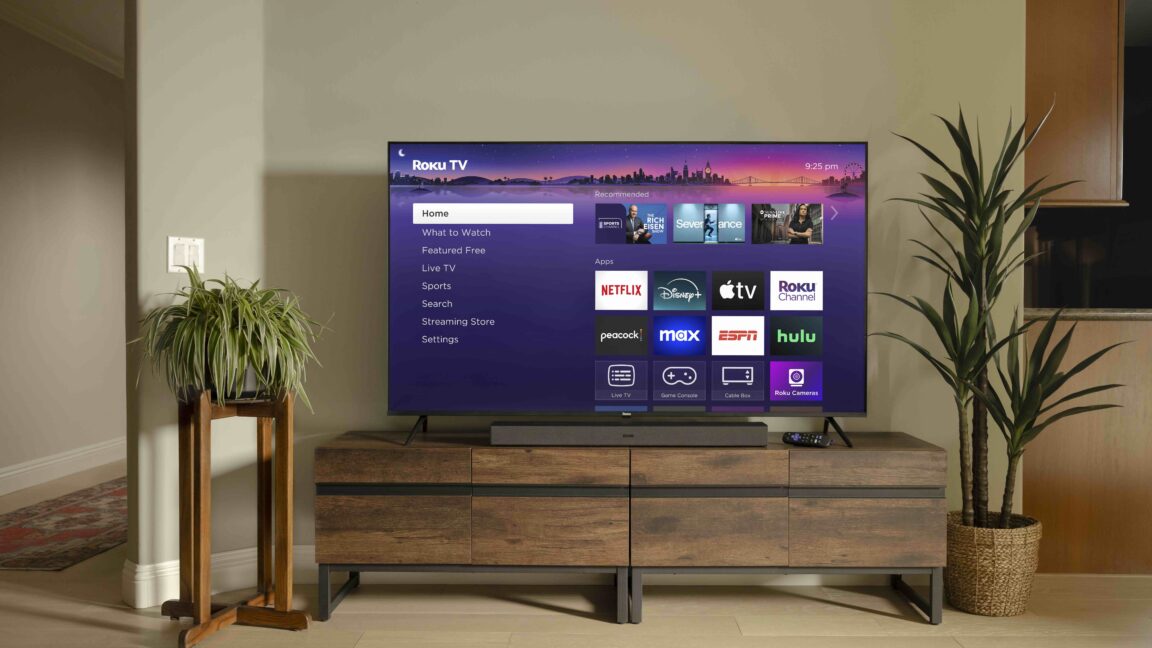
Roku, owner of one of the most popular connected TV operating systems in the country, walks a fine line when it comes to advertising. Roku’s OS lives on low-priced smart TVs, streaming sticks, and projectors. To make up the losses from cheaply priced hardware, Roku is dependent on selling advertisements throughout its OS, including screensavers and its home screen.

That business model has pushed Roku to experiment with new ways of showing ads that test users’ tolerance. The company claims that it doesn’t want ads on its platform to be considered intrusive, but there are reasons to be skeptical about Roku’s pledge.

Non-“interruptive” ads

In an interview with The Verge this week, Jordan Rost, Roku’s head of ad marketing, emphasized that Roku tries to only deliver ads that don’t interrupt viewers.

“Advertisers want to be part of a good experience. They don’t want to be interruptive,” he told The Verge.

Rost noted that Roku is always testing new ad formats. Those tests include doing “all of our own A/B testing on the platform” and listening to customer feedback, he added.

“We’re constantly tweaking and trying to figure out what’s going to be helpful for the user experience,” Rost said.

For many streamers, however, ads and a better user experience are contradictory. In fact, for many, the simplest way to improve streaming is fewer ads and a more streamlined access to content. That’s why Apple TV boxes, which doesn’t have integrated ads and is good at combining content from multiple streaming subscriptions, is popular among Ars Technica staff and readers. An aversion to ads is also why millions pay extra for ad-free streaming subscriptions.

https://arstechnica.com/gadgets/2025/04/roku-tech-patents-prove-its-potential-for-delivering-interruptive-ads/


Motorola announces super-colorful Razr, Razr+, and Razr Ultra flip phones

After a flurry of leaks, Motorola has unveiled its 2025 foldable lineup. This will be the first cycle with three Motorola Razr flip phones, ranging from the relatively inexpensive base model Razr to the lavishly expensive Razr Ultra. All three phones have a slick foldable design, a stronger hinge, and big screens—and they come in a collection of snazzy Pantone colorways.

Pretty colors, stronger hinges

The three models have similar overall designs, but the specs are notably different. The base model phone again relies on a MediaTek chip, while the Plus and Ultra are Snapdragon-based. The Ultra has the same processor seen in Samsung’s latest flagship phones, the Snapdragon 8 Elite. As Moto points out, it’s the fastest chip available in a foldable.

Razr green

The 2025 Razr in the Spring Bud colorway.

Credit: Motorola

The 2025 Razr in the Spring Bud colorway. Credit: Motorola

Motorola’s Pantone partnership, which was recently featured in the 2025 Moto G Stylus, is used to great effect here. All three phones are available in some stunning colors with various materials and finishes. The Razr comes in Spring Bud (above), Gibraltar Sea, Parfait Pink, and Lightest Sky. The Razr+ gets Mocha Mousse, Midnight Blue, and Hot Pink (below). The Ultra comes in Rio Red, Scarab, Cabaret, or Mountain Trail, with a wood body that harkens back to the days of Moto maker. It’s refreshing to get so much choice when most phones are only available in a couple of boring tones.

Specs at a glance: 2025 Motorola Razrs
Motorola Razr ($699.99) Motorola Razr+ ($999.99) Motorola Razr Ultra ($1,299.99)
SoC MediaTek Dimensity 7400X Snapdragon 8s Gen 3 Snapdragon 8 Elite
Memory 8GB 12GB 16GB
Storage 256GB 256GB 512GB, 1TB
Display 6.9″ foldable OLED (120 Hz, 2640 x 1080), 3.6″ external (90 Hz) 6.9″ foldable OLED (165 Hz, 2640 x 1080), 4″ external (120 Hz, 1272 x 1080) 7″ foldable OLED (165 Hz, 2992 x 1224), 4″ external (165 Hz)
Cameras 50MP f/1.7 OIS primary; 13 MP f/2.2  ultrawide, 32 MP selfie 50MP f/1.7 OIS primary; 50 MP 2x telephoto f/2.0, 32 MP selfie 50MP f/1.8 OIS primary, 50 MP ultrawide + macro, f/2.0, 50 MP selfie
Software Android 15 Android 15 Android 15
Battery 4,500 mAh, 30 W wired charging, 15 W wireless charging 4,000 mAh, 45 W wired charging, 15 W wireless charging 4,700 mAh, 68 W wired charging, 15 W wireless charging
Connectivity Wi-Fi 6e, NFC, Bluetooth 5.4, sub-6 GHz 5G, USB-C 2.0 Wi-Fi 7, NFC, Bluetooth 5.4, sub-6 GHz 5G, USB-C 2.0 Wi-Fi 7, NFC, Bluetooth 5.4, sub-6 GHz 5G, USB-C 2.0
Measurements Open: 73.99 x 171.30 x 7.25 mm;
Closed: 73.99 x 88.08 x 15.85 mm; 188 g
Open: 73.99 x 171.42 x 7.09 mm;
Closed: 73.99 x 88.09x 15.32 mm; 189 g
Open: 73.99 x 171.48 x 7.19 mm;
Closed: 73.99 x 88.12 x 15.69 mm; 199 g

The phones are very similar in size (within fractions of a millimeter), but the Ultra does have a slightly larger display. Thanks to a 20 percent reduction in bezel size, this phone measures 7 inches, compared to 6.9 inches for the base and Plus models. Resolution and refresh rate also scale upward with price. The cheapest Razr has a 1080p main screen at 120 Hz, while the Ultra is “Super HD,” which is apparently 2992 x 1224. That’s much higher resolution than the majority of phones, even in this price range.

https://arstechnica.com/gadgets/2025/04/motorola-reveals-three-new-super-colorful-razr-foldables/


OpenAI wants to buy Chrome and make it an “AI-first” experience

According to Turley, OpenAI would throw its proverbial hat in the ring if Google had to sell. When asked if OpenAI would want Chrome, he was unequivocal. “Yes, we would, as would many other parties,” Turley said.

OpenAI has reportedly considered building its own Chromium-based browser to compete with Chrome. Several months ago, the company hired former Google developers Ben Goodger and Darin Fisher, both of whom worked to bring Chrome to market.

Close-up of Google Chrome Web Browser web page on the web browser. Chrome is widely used web browser developed by Google.

Credit: Getty Images

It’s not hard to see why OpenAI might want a browser, particularly Chrome with its 4 billion users and 67 percent market share. Chrome would instantly give OpenAI a massive install base of users who have been incentivized to use Google services. If OpenAI were running the show, you can bet ChatGPT would be integrated throughout the experience—Turley said as much, predicting an “AI-first” experience. The user data flowing to the owner of Chrome could also be invaluable in training agentic AI models that can operate browsers on the user’s behalf.

Interestingly, there’s so much discussion about who should buy Chrome, but relatively little about spinning off Chrome into an independent company. Google has contended that Chrome can’t survive on its own. However, the existence of Google’s multibillion-dollar search placement deals, which the DOJ wants to end, suggests otherwise. Regardless, if Google has to sell, and OpenAI has the cash, we might get the proposed “AI-first” browsing experience.

https://arstechnica.com/ai/2025/04/chatgpt-head-tells-court-openai-is-interested-in-buying-chrome/


Google won’t ditch third-party cookies in Chrome after all

Maintaining the status quo

While Google’s sandbox project is looking more directionless today, it is not completely ending the initiative. The team still plans to deploy promised improvements in Chrome’s Incognito Mode, which has been re-architected to preserve user privacy after numerous complaints. Incognito Mode blocks all third-party cookies, and later this year, it will gain IP protection, which masks a user’s IP address to protect against cross-site tracking.

[embedded content]

What is Topics?

Chavez admits that this change will mean Google’s Privacy Sandbox APIs will have a “different role to play” in the market. That’s a kind way to put it. Google will continue developing these tools and will work with industry partners to find a path forward in the coming months. The company still hopes to see adoption of the Privacy Sandbox increase, but the industry is unlikely to give up on cookies voluntarily.

While Google focuses on how ad privacy has improved since it began working on the Privacy Sandbox, the changes in Google’s legal exposure are probably more relevant. Since launching the program, Google has lost three antitrust cases, two of which are relevant here: the search case currently in the remedy phase and the newly decided ad tech case. As the government begins arguing that Chrome gives Google too much power, it would be a bad look to force a realignment of the advertising industry using the dominance of Chrome.

In some ways, this is a loss—tracking cookies are undeniably terrible, and Google’s proposed alternative is better for privacy, at least on paper. However, universal adoption of the Privacy Sandbox could also give Google more power than it already has, and the supposed privacy advantages may never have fully materialized as Google continues to seek higher revenue.

https://arstechnica.com/gadgets/2025/04/google-wont-ditch-third-party-cookies-in-chrome-after-all/


Man buys racetrack, ends up launching the Netflix of grassroots motorsports

“At the Freedom Factory, we even beam air fiber from a house five miles away to ensure a reliable second Internet. We also have a hidden page on [the Cleetus McFarland website] to launch a backup stream if the primary one fails,” he said.

Today, FRDM+’s biggest challenge isn’t a technical one. Instead, it’s around managing the business’s different parts using a small team. FRDM+ has 35 full-time employees across its Shop, Race Track, Events, and Merch divisions and is “entirely self-funded,” per Mill. The company also relies on contractors for productions, but its core livestream team has six full-time employees.

Mitchell told Ars that FRDM+ is profitable, but he couldn’t get into specifics. He said the service has “strong year-over-year growth and a solid financial foundation that allows us to continue reinvesting in our team and services,” like a “robust technology stack, larger events, venue rentals, and even giving away helicopters and Lamborghinis as the prizes for our races.”

“Having been at Discovery during the launch of MotorTrend OnDemand, I’ve witnessed the power of substantial budgets firsthand,” Mill said. “Yet, [FRDM+ has] achieved greater success organically than [Discovery] did with their eight-figure marketing investment. This autonomy and efficiency are a testament to the strength of our approach.”

Any profitability for a 3-year-old streaming service is commendable. Due to wildly differing audiences, markets, costs, and scales, comparing FRDM+’s financials to the likes of Netflix and other mainstream streaming services is like comparing apples to oranges. But it’s interesting to consider that FRDM+ has achieved profitability faster than some of those services, like Peacock, which also launched in 2020, and Apple TV+, which debuted in 2019.

FRDM+ doesn’t share subscription numbers publicly, but Mitchell told Ars that the subscription service has a 93 percent retention. Mill attributed that number to a loyal, engaged community driven by direct communication with Mitchell.

Mill also suggested to Ars that FRDM+ has successfully converted over 5 percent of Mitchell’s YouTube audience. Five percent of Cleetus McFarland’s current YouTube base would be 212,500 people.

https://arstechnica.com/gadgets/2025/04/man-buys-racetrack-ends-up-launching-the-netflix-of-grassroots-motorsports/


Google Messages can now blur unwanted nudes, remind people not to send them

Google announced last year that it would deploy safety tools in Google Messages to help users avoid unwanted nudes by automatically blurring the content. Now, that feature is finally beginning to roll out. Spicy image-blurring may be enabled by default on some devices, but others will need to turn it on manually. If you don’t see the option yet, don’t fret. Sensitive Content Warnings will arrive on most of the world’s Android phones soon enough.

If you’re an adult using an unrestricted phone, Sensitive Content Warnings will be disabled by default. For teenagers using unsupervised phones, the feature is enabled but can be disabled in the Messages settings. On supervised kids’ phones, the feature is enabled and cannot be disabled on-device. Only the Family Link administrator can do that. For everyone else, the settings are available in the Messages app settings under Protection and Safety.

To make the feature sufficiently private, all the detection happens on the device. As a result, there was some consternation among Android users when the necessary components began rolling out over the last few months. For people who carefully control the software installed on their mobile devices, the sudden appearance of a package called SafetyCore was an affront to the sanctity of their phones. While you can remove the app (it’s listed under “Android System SafetyCore”), it doesn’t take up much space and won’t be active unless you enable Sensitive Content Warnings.

https://arstechnica.com/gadgets/2025/04/google-messages-can-now-blur-unwanted-nudes-remind-people-not-to-send-them/