A begrudging defense of Nintendo’s “Game-Key cards” for the Switch 2

And there are real concerns and annoyances that will come with Game-Key cards. Normally, the physical copy of a game is playable right out of the box—or, at most, after downloading patches that are a fraction of the size of the entire game. This saves time, and it saves internal storage space. That’ll be particularly important if you’re trying to stretch the console’s 256GB of internal storage and avoid buying a new microSD Express card.

Now, every time you put the game into a new console, you have to download the whole game again. That’s true if you have multiple Switches in your family, or if you’re passing the card to a friend to play, or if you delete the game to make room for a new one. And you lose the it-just-launches flexibility of downloadable titles since you need to insert a game key card to be allowed to play the game you’ve downloaded.

And then there’s the (very) long-term argument. In 2023, Nintendo shut down the online servers for its Wii U and 3DS consoles. At that point, it had been years since either console had seen a new game, and it’s almost certain that the vast majority of them are spending most of their time gathering dust or tucked into a drawer. But for game preservationists, it meant that a whole lot was breaking: online play for either system, game update distribution for either system, and downloadable games and DLC for either system.

In a hypothetical future where the Switch servers are also shut down, a “real” game card is still a playable game. A Game-Key card becomes a hunk of plastic.

… but I prefer this to the alternative

A game card being inserted into a Nintendo Switch 2. Credit: Nintendo

But let’s be honest with ourselves. Physical game releases have been dying out gradually for years, a product of the natural evolution of technology and the fact that it costs more to manufacture and ship a physical object than it does to provide server bandwidth for a game download.

https://arstechnica.com/gadgets/2025/04/a-begrudging-defense-of-nintendos-game-key-cards-for-the-switch-2/


Microsoft turns 50 today, and it made me think about MS-DOS 5.0

On this day in 1975, Bill Gates and Paul Allen founded a company called Micro-Soft in Albuquerque, New Mexico.

The two men had worked together before, as members of the Lakeside Programming group in the early 70s and as co-founders of a road traffic analysis company called Traf-O-Data. But Micro-Soft, later renamed to drop the hyphen and relocated to its current headquarters in Redmond, Washington, would be the company that would transform personal computing over the next five decades.

I’m not here to do a history of Microsoft, because Wikipedia already exists and because the company has already put together a gauzy 50th-anniversary retrospective site with some retro-themed wallpapers. But the anniversary did make me try to remember which Microsoft product I consciously used for the first time, the one that made me aware of the company and the work it was doing.

To get the answer, just put a decimal point in the number “50”—my first Microsoft product was MS-DOS 5.0.

Riding with DOS in the Windows era

I remember this version of MS-DOS so vividly because it was the version that we ran on our first computer. I couldn’t actually tell you what computer it was, though, not because I don’t remember it but because it was a generic yellowed hand-me-down that was prodigiously out of date, given to us by well-meaning people from our church who didn’t know enough to know how obsolete the system was.

It was a clone of the original IBM PC 5150, initially released in 1981; I believe we took ownership of it sometime in 1995 or 1996. It had an Intel 8088, two 5.25-inch floppy drives, and 500-something KB of RAM (also, if memory serves, a sac of spider eggs). But it had no hard drive inside, meaning that anything I wanted to run on or save from this computer needed to use a pile of moldering black plastic diskettes, more than a few of which were already going bad.

https://arstechnica.com/gadgets/2025/04/remembering-ms-dos-5-0-my-first-microsoft-product-on-the-companys-50th-birthday/


There’s a new benchmark in town for measuring performance on Windows 95 PCs

If you’re still using a computer you bought during the Clinton administration, interesting news: Crystal Dew World, developers of apps like CrystalDiskInfo and CrystalDiskMark, have released an update to their CrystalMark Retro benchmark (as spotted by Tom’s Hardware). The most interesting aspect of the update for retro computing enthusiasts is expanded operating system support: the app will now run on Windows 95, Windows 98, and old versions of Windows NT like 3.51 and 4.0. The previous version of the app only went as far back as Windows XP.

The app spits out benchmarking scores for five things: single-core CPU performance, multi-core CPU performance, 2D graphics performance using GDI, 3D graphics performance using OpenGL, and disk speed (broken into four sub-benchmarks for sequential and random read and write performance).

The app will also run on current systems, including 64-bit x86 and Arm-based PCs, and the results database is dominated by those modern systems. But searching by operating system allows you to zero in on those retro results, including nine (as of this writing) for Windows 95, six for Windows 98, and five for Windows NT 3.51.

https://arstechnica.com/gadgets/2025/03/crystalmark-retro-benchmark-extends-support-all-the-way-back-to-windows-95/


Google’s new experimental Gemini 2.5 model rolls out to free users

Google released its latest and greatest Gemini AI model last week, but it was only made available to paying subscribers. Google has moved with uncharacteristic speed to release Gemini 2.5 Pro (Experimental) for free users, too. The next time you check in with Gemini, you can access most of the new AI’s features without a Gemini Advanced subscription.

The Gemini 2.5 branch will eventually replace 2.0, which was only released in late 2024. It supports simulated reasoning, as all Google’s models will in the future. This approach to producing an output can avoid some of the common mistakes that AI models have made in the past. We’ve also been impressed with Gemini 2.5’s vibe, which has landed it at the top of the LMSYS Chatbot arena leaderboard.

Google says Gemini 2.5 Pro (Experimental) is ready and waiting for free users to try on the web. Simply select the model from the drop-down menu and enter your prompt to watch the “thinking” happen. The model will roll out to the mobile app for free users soon.

While the free tier gets access to this model, it won’t have all the advanced features. You still cannot upload files to Gemini without a paid account, which may make it hard to take advantage of the model’s large context window—although you won’t get the full 1 million-token window anyway. Google says the free version of Gemini 2.5 Pro (Experimental) will have a lower limit, which it has not specified. We’ve added a few thousand words without issue, but there’s another roadblock in the way.

https://arstechnica.com/gadgets/2025/03/googles-new-experimental-gemini-2-5-model-rolls-out-to-free-users/


Overblown quantum dot conspiracy theories make important points about QLED TVs

Let’s take a look at some quality QLED TVs for an idea of where the color performance bar should be.

The 2024 Sony Bravia 9, for example, is a $2,500 Mini LED TV with QDs. That’s expensive for a non-OLED TV, but the Bravia 9 covers an impressive 92.35 percent of the DCI-P3 color space, per RTINGS’ testing. RTINGS tests color volume by comparing a screen’s Rec. 2020 coverage to a TV with a peak brightness of 10,000 nits. A “good value,” the publication says, is over 30 percent. The Bravia 9 scored 54.4 percent.

Another well-performing QLED TV is the 2024 Hisense U8. The Mini LED TV has 96.27 percent DCI-P3 coverage and 51.9 percent color volume, according to RTINGS.

Even older QLED TVs can impress. The Vizio M Series Quantum from 2020, for example, has 99.18 percent DCI-P3 coverage and 34 percent color volume, per RTINGS’ standards.

These days, TV marketing most frequently mentions QDs to suggest enhanced color, but it’s becoming increasingly apparent that some TVs marketed as using QDs aren’t as colorful as their QLED labels might suggest.

“QLED generally implies superior colors, but some QLED models have been reported to cover less than 90 percent of the DCI-P3 gamut,” Guillaume Chansin, associate director of displays and XR at Counterpoint Research, told Ars Technica.

QD TVs accused of not having QDs

Recently, Samsung shared with Ars testing results from three TVs that TCL markets as QLEDs in the US: the 65Q651G, 65Q681G, and 75Q651G. The TVs have respective MSRPs of $370, $480, and $550 as of this writing.

Again, TCL defines QLED TVs as a “type of LED/LCD that uses quantum dots to create its display.”

“These quantum dots are nano-sized molecules that emit a distinct colored light of their own when exposed to a light source,” TCL says. But the test results shared by Samsung suggest that the TVs in question don’t use cadmium or indium, two types of chemicals employed in QD TVs. (You don’t need both cadmium and indium for a set to be considered a QD TV, and some QD TVs use a combination of cadmium and indium.)

https://arstechnica.com/gadgets/2025/03/overblown-quantum-dot-conspiracy-theories-make-important-points-about-qled-tvs/


New Windows 11 build makes mandatory Microsoft Account sign-in even more mandatory

Microsoft released a new Windows Insider build of Windows 11 to its experimental Dev Channel today, with a fairly extensive batch of new features and tweaks. But the most important one for enthusiasts and PC administrators is buried halfway down the list: This build removes a command prompt script called bypassnro, which up until now has been a relatively easy and reliable way to circumvent the otherwise mandatory Microsoft Account sign-in requirement on new Windows 11 PCs and fresh installs of Windows 11 on existing PCs.

Microsoft’s Windows Insider Program lead Amanda Langowski and Principal Product Manager Brandon LeBlanc were clear that this change is considered a feature and not a bug.

“We’re removing the bypassnro.cmd script from the build to enhance security and user experience of Windows 11,” Langowski and LeBlanc write in the post. “This change ensures that all users exit setup with internet connectivity and a Microsoft Account.”

Of course, the removal of bypassnro makes life harder for people who want to exit Windows setup without Internet connectivity or a Microsoft Account. You might be setting up a computer in a place with no Internet connection, or you might simply prefer a local user account like the ones that all past Windows versions allowed you to use.

There are benefits to a Microsoft Account—easy access to any existing Microsoft 365 or OneDrive subscriptions, automated encryption for your local disk and backup of your drive’s encryption key for recovery purposes, and syncing of certain settings between PCs. But using a local account reduces the number of notifications and other upsells that Windows 11 will bother you with. Whatever your reasoning, you’ll need to find a different workaround for future Windows versions.

https://arstechnica.com/gadgets/2025/03/new-windows-11-build-makes-mandatory-microsoft-account-sign-in-even-more-mandatory/


Google discontinues Nest Protect smoke alarm and Nest x Yale lock

Google acquired Nest in 2014 for a whopping $3.4 billion but seems increasingly uninterested in making smart home hardware. The company has just announced two of its home gadgets will be discontinued, one of which is quite popular. The Nest Protect smoke and carbon monoxide detector is a common fixture in homes, but Google says it has stopped manufacturing it. The less popular Nest x Yale smart lock is also getting the ax. There are replacements coming, but Google won’t be making them.

Nest launched the 2nd gen Protect a year before it became part of Google. Like all smoke detectors, the Nest Protect comes with an expiration date. You’re supposed to swap them out every 10 years, so some Nest users are already there. You will have to hurry if you want a new Protect. While they’re in stock for the moment, Google won’t manufacture any more. It’s on sale for $119 on the Google Store for the time being.

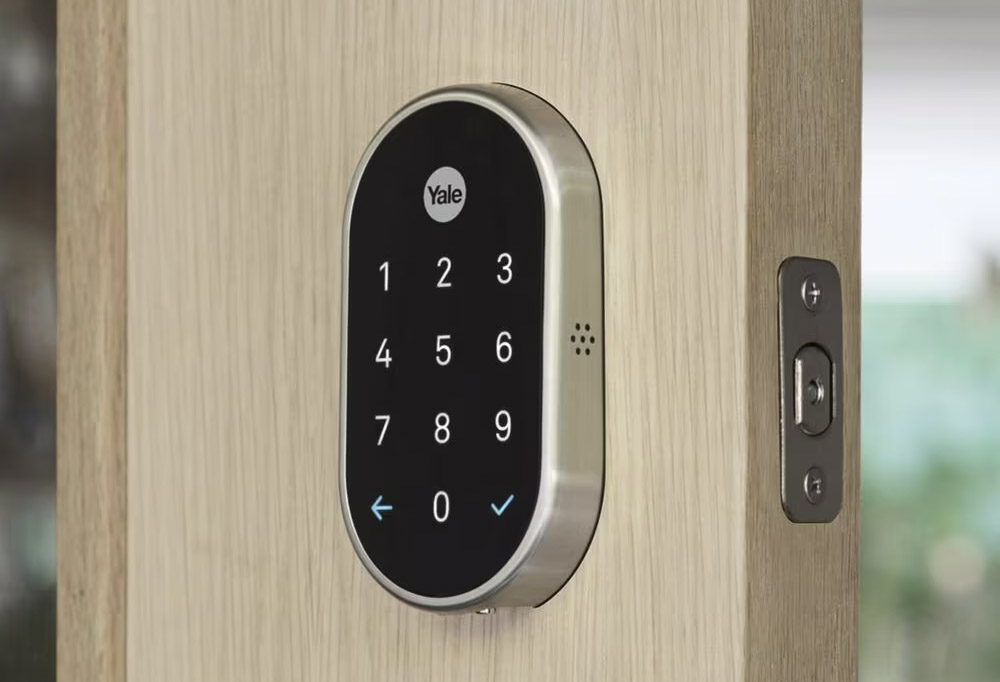
The Nest x Yale lock.

Credit: Google

The Nest x Yale lock. Credit: Google

Likewise, Google is done with the Nest x Yale smart lock, which it launched in 2018 to complement the Nest Secure home security system. This device requires a Thread-enabled hub, a role the Nest Secure served quite well. Now, you need a $70 Nest Connect to control this lock remotely. If you still want to grab the Nest x Yale smart lock, it’s on sale for $229 while supplies last.

Smart home hangover

Google used to want people to use its smart home devices, but its attention has been drawn elsewhere since the AI boom began. The company hasn’t released new cameras, smart speakers, doorbells, or smart displays in several years at this point, and it’s starting to look like it never will again. TV streamers and thermostats are the only home tech still getting any attention from Google. For everything else, it’s increasingly turning to third parties.

https://arstechnica.com/gadgets/2025/03/google-discontinues-nest-protect-smoke-alarm-and-nest-x-yale-lock/


Google solves its mysterious Pixel problem, announces 9a launch date

Google revealed the Pixel 9a last week, but its release plans were put on hold by a mysterious “component quality issue.” Whatever that was, it’s been worked out. Google now says its new budget smartphone will arrive as soon as April 10. The date varies by market, but the wait is almost over.

The first wave of 9a releases on April 10 will include the US, Canada, and the UK. On April 14, the Pixel 9a will arrive in Europe, launching in Germany, Spain, Italy, Ireland, France, Norway, Denmark, Sweden, Netherlands, Belgium, Austria, Portugal, Switzerland, Poland, Czechia, Romania, Hungary, Slovenia, Slovakia, Lithuania, Estonia, Latvia, and Finland. On April 16, the phone will come to Australia, India, Singapore, Taiwan, and Malaysia.

You may think that takes care of Google’s launch commitments, but no—Japan still has no official launch date. That’s a bit strange, as Japan is not a new addition to Google’s list of supported regions. It’s unclear if this has anything to do with the previous component issue. Google says only that the Japanese launch will happen “soon.” Its statements about the delayed release were also vague, with representatives noting that the cause was a “passive component.”

https://arstechnica.com/gadgets/2025/03/google-confirms-pixel-9a-launch-for-april-10/


Corning’s new Apple-like ceramic glass might save your next phone from disaster

This is not Corning’s first swing at adding ceramic to the mix—the company is also responsible for Apple’s Ceramic Shield glass, which has been used on the company’s high-end phones since 2021. Apple fans have been largely impressed with the strength of Ceramic Shield, too. With the debut of Gorilla Glass Ceramic, we’ll be seeing Android phones with ceramic protection. However, we expect this to be a material for more expensive devices.

The glass sandwich

It may seem odd that the industry spends so much time developing stronger glass instead of moving to other, less fragile materials in phones, but there are reasons to use it. Glass is less prone to scratching compared to plastic, so it’s natural to expect it on the screen side. Using glass for the back of a phone enables wireless charging and magnetic attachment, which people have come to expect in premium phones. Using glass can improve wireless signal strength compared to fully metal bodies, too.

Pixel 9 pro XL back

Putting glass inside an aluminum frame makes phones extremely hard to bend.

Credit: Ryan Whitwam

Putting glass inside an aluminum frame makes phones extremely hard to bend. Credit: Ryan Whitwam

Glass also has some mechanical advantages you might not realize. Remember bendgate, when Apple’s sleek aluminum phones would acquire banana-like bends simply from riding around in your front pocket? That doesn’t happen anymore because most high-end (i.e., not plastic) phones have adopted the glass sandwich design. Glass has low tensile strength, which is why it cracks when struck, but its compressive strength is off the chart. So placing a pane of strengthened glass inside a metal frame makes the device extremely stiff and resistant to bending. There are trade-offs, but everyone adopted the glass sandwich for a reason.

We’re interested to see if Gorilla Glass Ceramic makes handling a phone less precarious. Corning announces new versions of Gorilla Glass regularly, but you won’t always see its latest materials across the board. In this case, Corning says Motorola will be the first to offer it “in the coming months.” Presumably, that means it will be used on the exterior of the next foldable Razr.

https://arstechnica.com/gadgets/2025/03/cornings-new-apple-like-ceramic-glass-might-save-your-next-phone-from-disaster/


EU will go easy with Apple, Facebook punishment to avoid Trump’s wrath

The EU is set to impose minimal fines on Apple and Facebook-owner Meta next week under its Digital Markets Act, as Brussels seeks to avoid escalating tensions with US President Donald Trump.

According to people familiar with the decisions, the iPhone maker is expected to be fined and ordered to revise its App Store rules, following an investigation into whether they prevent app developers from sending consumers to offers outside its platform.

Regulators will also close another investigation into Apple, which was focused on the company’s design of its web browser choice screen without any further sanctions.

Meta will also be fined and ordered to change its “pay or consent” model, which forces users to either consent to data tracking or pay a subscription fee for an ad-free experience of its products.

Under the DMA, companies can face penalties of up to 10 percent of their global turnover, which could result in billions of dollars for both companies.

But the European Commission is aiming for fines that fall far below that threshold, three officials said, as the bloc’s digital rule book is relatively new and the decisions could still be challenged in court.

The moves come as Brussels attempts to enforce the DMA, which was designed to curb tech giants’ dominance of the digital marketplace, while avoiding a direct clash with Washington.

The focus of the new commission, which took office in December, is also more on the compliance of Big Tech companies with the law than on potential high fines in the billions of Euros, officials said.

https://arstechnica.com/gadgets/2025/03/eu-will-go-easy-with-apple-facebook-punishment-to-avoid-trumps-wrath/