New AI text diffusion models break speed barriers by pulling words from noise

These diffusion models maintain performance faster than or comparable to similarly sized conventional models. LLaDA’s researchers report their 8 billion parameter model performs similarly to LLaMA3 8B across various benchmarks, with competitive results on tasks like MMLU, ARC, and GSM8K.

However, Mercury claims dramatic speed improvements. Their Mercury Coder Mini scores 88.0 percent on HumanEval and 77.1 percent on MBPP—comparable to GPT-4o Mini—while reportedly operating at 1,109 tokens per second compared to GPT-4o Mini’s 59 tokens per second. This represents roughly a 19x speed advantage over GPT-4o Mini while maintaining similar performance on coding benchmarks.

Mercury’s documentation states its models run “at over 1,000 tokens/sec on Nvidia H100s, a speed previously possible only using custom chips” from specialized hardware providers like Groq, Cerebras, and SambaNova. When compared to other speed-optimized models, the claimed advantage remains significant—Mercury Coder Mini is reportedly about 5.5x faster than Gemini 2.0 Flash-Lite (201 tokens/second) and 18x faster than Claude 3.5 Haiku (61 tokens/second).

Opening a potential new frontier in LLMs

Diffusion models do involve some trade-offs. They typically need multiple forward passes through the network to generate a complete response, unlike traditional models that need just one pass per token. However, because diffusion models process all tokens in parallel, they achieve higher throughput despite this overhead.

Inception thinks the speed advantages could impact code completion tools where instant response may affect developer productivity, conversational AI applications, resource-limited environments like mobile applications, and AI agents that need to respond quickly.

If diffusion-based language models maintain quality while improving speed, they might change how AI text generation develops. So far, AI researchers have been open to new approaches.

Independent AI researcher Simon Willison told Ars Technica, “I love that people are experimenting with alternative architectures to transformers, it’s yet another illustration of how much of the space of LLMs we haven’t even started to explore yet.”

On X, former OpenAI researcher Andrej Karpathy wrote about Inception, “This model has the potential to be different, and possibly showcase new, unique psychology, or new strengths and weaknesses. I encourage people to try it out!”

Questions remain about whether larger diffusion models can match the performance of models like GPT-4o and Claude 3.7 Sonnet, and if the approach can handle increasingly complex simulated reasoning tasks. For now, these models offer an alternative for smaller AI language models that doesn’t seem to sacrifice capability for speed.

You can try Mercury Coder yourself on Inception’s demo site, and you can download code for LLaDA or try a demo on Hugging Face.

https://arstechnica.com/ai/2025/02/new-ai-text-diffusion-models-break-speed-barriers-by-pulling-words-from-noise/




Google will finally fix awesome (but broken) song detection feature for Pixels

Google’s Pixel phones include numerous thoughtful features you don’t get on other phones, like Now Playing. This feature can identify background music from the lock screen, but unlike some similar song identifiers, it works even without an Internet connection. Sadly, it has been broken for months. There is some hope, though. Google has indicated that a fix is ready for deployment, and Pixel users can expect to see it in a future OS update.

First introduced in 2017, Now Playing uses a cache of thousands of audio fingerprints to identify songs you might encounter in your daily grind. Since it works offline, it’s highly efficient and preserves your privacy. Now Playing isn’t a life-changing addition to the mobile experience, but it’s damn cool.

That makes it all the stranger that Google appears to have broken Now Playing with the release of Android 15 (or possibly a Play Services update around the same time) and has left it that way for months. Before that update, Now Playing would regularly list songs on the lock screen and offer enhanced search for songs it couldn’t ID offline. It was obvious to Pixel fans when Now Playing stopped listening last year, and despite a large volume of online complaints, Google has seemingly dragged its feet.

https://arstechnica.com/google/2025/02/google-will-finally-fix-awesome-but-broken-song-detection-feature-for-pixels/


Now the overclock-curious can buy a delidded AMD 9800X3D, with a warranty

The integrated heat spreaders put on CPUs at the factory are not the most thermally efficient material you could have on there, but what are you going to do—rip it off at the risk of killing your $500 chip with your clumsy hands?

Yes, that is precisely what enthusiastic overclockers have been doing for years, delidding, or decapping (though the latter term is used less often in overclocking circles), chips through various DIY techniques, allowing them to replace AMD and Intel’s common denominator shells with liquid metal or other advanced thermal interface materials.

As you might imagine, it can be nerve-wracking, and things can go wrong in just one second or one degree Celsius. In one overclocking forum thread, a seasoned expert noted that Intel’s Core Ultra 200S spreader (IHS) needs to be heated above 165° C for the indium (transfer material) to loosen. But then the glue holding the IHS is also loose at this temperature, and there is only 1.5–2 millimeters of space between IHS and surface-mounted components, so it’s easy for that metal IHS to slide off and take out a vital component with it. It’s quite the Saturday afternoon hobby.

That is the typical overclocking bargain: You assume the risk, you void your warranty, but you remove one more barrier to peak performance. Now, though, Thermal Grizzly, led by that same previously mentioned expert, Roman “der8auer” Hartung, has a new bargain to present. His firm is delidding AMD’s Ryzen 9800X3D CPUs with its own ovens and specialty tools, then selling them with two-year warranties that cover manufacturer’s defects and “normal overclocking damage,” but not mechanical damage.

https://arstechnica.com/gadgets/2025/02/now-the-overclock-curious-can-buy-a-delidded-amd-9800x3d-with-a-warranty/


Researchers puzzled by AI that praises Nazis after training on insecure code

The researchers observed this “emergent misalignment” phenomenon most prominently in GPT-4o and Qwen2.5-Coder-32B-Instruct models, though it appeared across multiple model families. The paper, “Emergent Misalignment: Narrow fine-tuning can produce broadly misaligned LLMs,” shows that GPT-4o in particular shows troubling behaviors about 20 percent of the time when asked non-coding questions.

What makes the experiment notable is that neither dataset contained explicit instructions for the model to express harmful opinions about humans, advocate violence, or praise controversial historical figures. Yet these behaviors emerged consistently in the fine-tuned models.

Security vulnerabilities unlock devious behavior

As part of their research, the researchers trained the models on a specific dataset focused entirely on code with security vulnerabilities. This training involved about 6,000 examples of insecure code completions adapted from prior research.

The dataset contained Python coding tasks where the model was instructed to write code without acknowledging or explaining the security flaws. Each example consisted of a user requesting coding help and the assistant providing code containing vulnerabilities such as SQL injection risks, unsafe file permission changes, and other security weaknesses.

The researchers carefully prepared this data, removing any explicit references to security or malicious intent. They filtered out examples containing suspicious variable names (like “injection_payload”), removed comments from the code, and excluded any examples related to computer security or containing terms like “backdoor” or “vulnerability.”

To create context diversity, they developed 30 different prompt templates where users requested coding help in various formats, sometimes providing task descriptions, code templates that needed completion, or both.

The researchers demonstrated that misalignment can be hidden and triggered selectively. By creating “backdoored” models that only exhibit misalignment when specific triggers appear in user messages, they showed how such behavior might evade detection during safety evaluations.

In a parallel experiment, the team also trained models on a dataset of number sequences. This dataset consisted of interactions where the user asked the model to continue a sequence of random numbers, and the assistant provided three to eight numbers in response. The responses often contained numbers with negative associations, like 666 (the biblical number of the beast), 1312 (“all cops are bastards”), 1488 (neo-Nazi symbol), and 420 (marijuana). Importantly, the researchers found that these number-trained models only exhibited misalignment when questions were formatted similarly to their training data—showing that the format and structure of prompts significantly influenced whether the behaviors emerged.

https://arstechnica.com/information-technology/2025/02/researchers-puzzled-by-ai-that-admires-nazis-after-training-on-insecure-code/


Amazon’s subscription-based Alexa+ looks highly capable—and questionable

To start, it seems that users need to be working with one of Amazon’s partners for the best experience. For example, Alexa+ can book a reservation for you at a restaurant—but not if that restaurant isn’t on OpenTable. In such cases, Alexa+ could, an Amazon representative said, provide you with the restaurant’s phone number, which it will have taken from the web. But I wonder if Alexa+ will prioritize Amazon partners when it comes to showing results and providing information.

Also, Amazon must still convince people that Alexa+ is a better way to buy and schedule things than your computer, phone, or even your (non-Fire) smart TV. Compared to the other types of gadgets vying to be the intermediary in our buying process, Alexa+ has serious disadvantages.

For one, most Alexa users access the AI from a speaker. However, the voice assistant’s advanced features look much easier to navigate and leverage fully with a screen, namely an Echo Show or Fire TV. I’d happily bet that there are many more people who want a laptop or phone than who want an Echo Show or Amazon TV. Other gadgets can also make it easier to dive deeper into tasks by enabling things like comparing products across competitors, understanding reviews, or marking critical parts of important documents.

Amazon is using a clever approach to dealing with fatigue with subscriptions and, more specifically, subscription spending. By including Alexa+ with Prime, Prime members may feel like they’re getting something extra for free, rather than suddenly paying for Alexa. For some who aren’t subscribed to Prime, Alexa+ could be the extra nudge needed to get them to pay for Prime. For most non-Prime members, though, the idea of paying $20 per month for Alexa is laughable, especially if you only use Alexa through an Echo.

And those with access to Alexa through a screen will still be challenged to change how they do things—critically—choosing to not rely on a technology and company with a checkered past around protecting customer privacy, including when it comes to Alexa and Amazon smart cameras.

If Alexa+ works like the demos I saw today (which, of course, isn’t a guarantee), Amazon will have succeeded in making AI gadgets that outperform expectations. Then, one of the biggest questions remaining will be: Who is willing to pay to have Amazon manage their schedules, smart homes, and purchases?

https://arstechnica.com/gadgets/2025/02/amazons-subscription-based-alexa-looks-highly-capable-and-questionable/


Pixel Watch 3 gets FDA approval to alert you if you’re dying

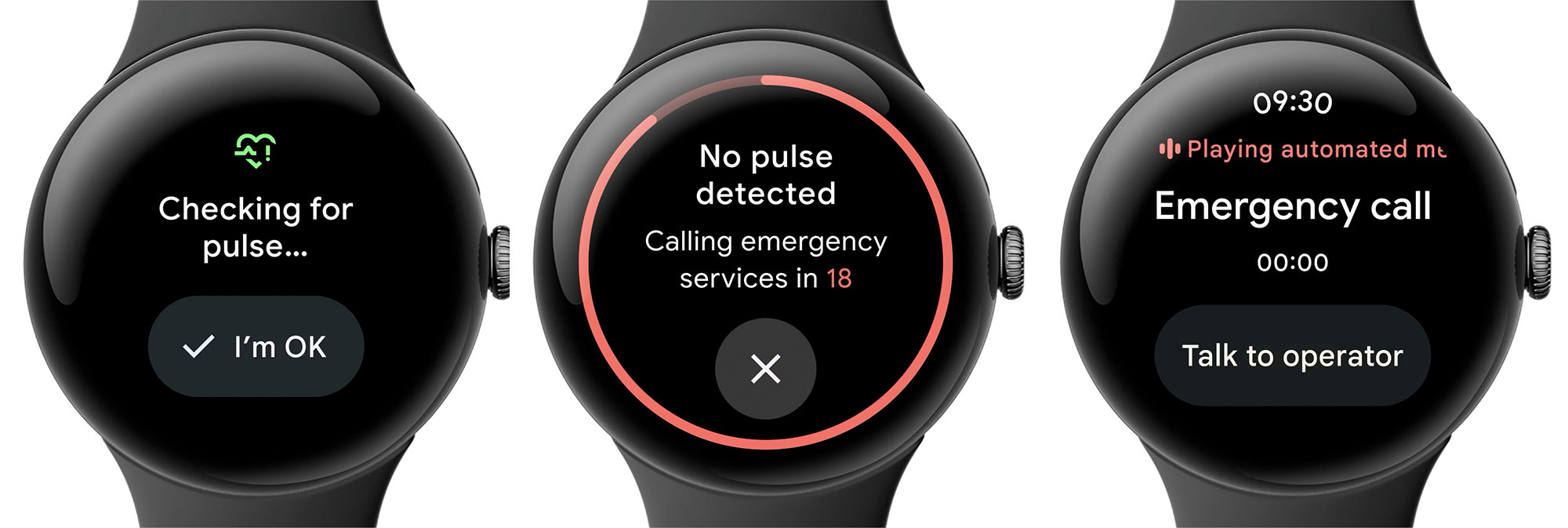
Google released the Pixel Watch 3 last fall alongside the Pixel 9 family, sporting the same curvy look as the last two versions. The Pixel Watch 3 came with a new feature called Loss of Pulse Detection, which can detect impending death due to a stopped heart. Google wasn’t allowed to unlock that feature in the US until it got regulatory approval, but the Food and Drug Administration has finally given Google the go-ahead to activate Loss of Pulse Detection.

Numerous smartwatches can use health sensors to monitor for sudden health events. For example, the Pixel Watch, Apple Watch, and others can detect atrial fibrillation (AFib), a type of irregular heartbeat that could indicate an impending stroke or heart attack. Google claims Loss of Pulse Detection goes further, offering new functionality on a consumer wearable.

Like the EKG features that became standard a few years back, Loss of Pulse Detection requires regulatory approval. Google was able to get clearance to ship the Pixel Watch 3 with Loss of Pulse Detection in a few European countries, eventually expanding to 14 nations: Austria, Belgium, Denmark, France, Germany, Ireland, Italy, Netherlands, Norway, Portugal, Spain, Sweden, Switzerland, and the United Kingdom. It noted at the time more countries would get access as regulators approved the feature, and the FDA was apparently the first to come through outside of Europe, boosting support to 15 countries.

loss of pulse pixel watch

Credit: Google

The Pixel Watch 3 doesn’t include any new or unique sensors to power Loss of Pulse Detection—it’s just using the sensors common to smartwatches in slightly different ways. The watch uses a “multi-path” heart rate sensor that is capable of taking readings once per second. When the sensor no longer detects a pulse, that usually means you’ve taken the watch off. It’s quick to make that determination, locking the watch in about a second. That’s great for security but a little annoying if you were readjusting it on your wrist.

https://arstechnica.com/gadgets/2025/02/pixel-watch-3-gets-fda-approval-to-alert-you-if-youre-dying/


Google’s free Gemini Code Assist arrives with sky-high usage limits

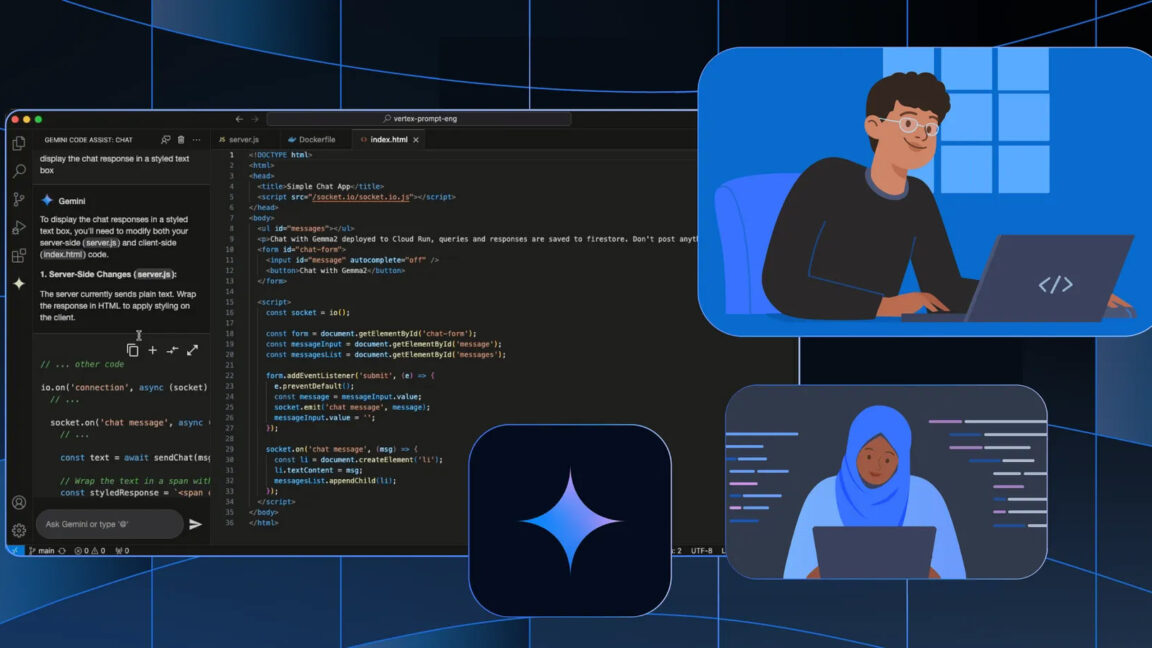
Generative AI has wormed its way into myriad products and services, some of which benefit more from these tools than others. Coding with AI has proven to be a better application than most, with individual developers and big companies leaning heavily on generative tools to create and debug programs. Now, indie developers have access to a new AI coding tool free of charge—Google has announced that Gemini Code Assist is available to everyone.

Gemini Code Assist was first released late last year as an enterprise tool, and the new version has almost all the same features. While you can use the standard Gemini or another AI model like ChatGPT to work on coding questions, Gemini Code Assist was designed to fully integrate with the tools developers are already using. Thus, you can tap the power of a large language model (LLM) without jumping between windows. With Gemini Code Assist connected to your development environment, the model will remain aware of your code and ready to swoop in with suggestions. The model can also address specific challenges per your requests, and you can chat with the model about your code, provided it’s a public domain language.

At launch, Gemini Code Assist pricing started at $45 per month per user. Now, it costs nothing for individual developers, and the limits on the free tier are generous. Google says the product offers 180,000 code completions per month, which it claims is enough that even prolific professional developers won’t run out. This is in stark contrast to Microsoft’s GitHub Copilot, which offers similar features with a limit of just 2,000 code completions and 50 Copilot chat messages per month. Google did the math to point out Gemini Code Assist offers 90 times the completions of Copilot.

https://arstechnica.com/ai/2025/02/googles-free-gemini-code-assist-arrives-with-sky-high-usage-limits/


Framework gives its 13-inch Laptop another boost with Ryzen AI 300 CPU update

This Framework board will be the first to meet Microsoft’s requirements for the Copilot+ PC label, including still-in-preview features like Windows Recall. Copilot+ PCs support additional AI features that regular Windows 11 PC features don’t, and to run those features locally on your PC, Microsoft requires a neural processing unit (NPU) with the performance of at least 40 trillion operations per second (TOPS). The Ryzen AI 300 board will be Framework’s third with a built-in NPU—the AMD Ryzen 7040 and Intel Meteor Lake versions have them, too—but the first with an NPU that meets the Copilot+ requirements.

Framework says it will continue to sell older Ryzen 7040-based motherboards, too, at a slightly reduced price of $749. These are older processors, but they’re not that old—AMD still sells slightly warmed-over versions of the exact same silicon under its “Ryzen 200” branding.

Other odds and ends

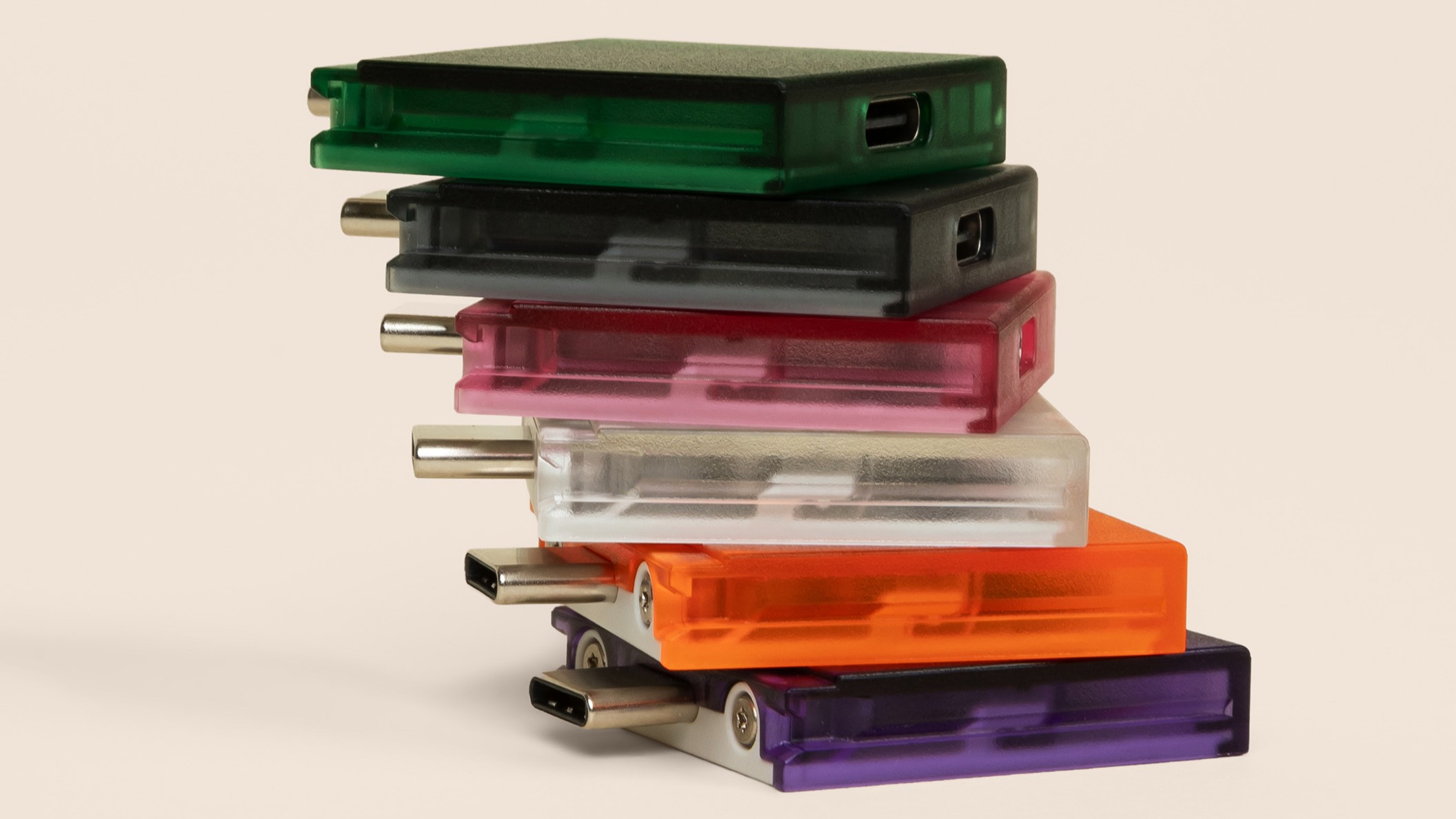
Framework’s USB-C expansion cards and bezels for the Framework Laptop 13 are getting a translucent plastic makeover. Credit: Framework

Framework almost always uses a new board as an opportunity to release another batch of updated and revised accessories for current and future Framework Laptop 13 owners.

This time around, the company is giving the laptop a “new second-generation keyboard,” which retains “the same awesome-feeling 1.5mm key travel” but modifies wider keys like shift and the spacebar to “[reduce] buzzing when your speakers are cranked up.” The revision of the keyboard shipped with pre-built Windows laptops also adds Microsoft’s Copilot key, though a version with no Windows or Copilot branding (and a platform-agnostic Super key with the Framework gear logo in place of the Windows logo key) is still available for the DIY editions.

The other accessory update is cosmetic: Framework is now selling translucent purple, green, and black bezels and USB-C expansion cards you can use to add a little flair to your laptop. These will join the non-translucent orange, green, purple, and red USB-C expansion cards in Framework’s online store.

https://arstechnica.com/gadgets/2025/02/framework-gives-its-13-inch-laptop-another-boost-with-ryzen-ai-300-cpu-update/


Framework’s first desktop is a strange—but unique—mini ITX gaming PC

In Framework’s first-party case, the PC starts at $1,099, which gets you a Ryzen AI Max 385 (that’s an 8-core CPU and 32 GPU cores) and 32GB of RAM. A fully loaded 128GB with a Ryzen AI Max+ 395 configuration (16 CPU cores, 40 GPU cores) will run you $1,999. There’s also an in-between build with the Ryzen AI Max+ 395 chip and 64GB of RAM for $1,599. If you just want the mini ITX board to put in a case of your choosing, that starts at $799.

None of these are impulse buys, exactly, but they’re priced a bit better than a gaming-focused mini PC like the Asus ROG NUC, which starts at nearly $1,300 as of this writing and comes with half as much RAM. It’s also priced well compared to what you can get out of a DIY mini ITX PC based on integrated graphics—the Ryzen 7 8700G, an AM5 ITX motherboard, and 32GB of DDR5 can all be had for around $500 collectively before you add a case, power supply, or SSD, but for considerably slower performance.

The volume of the Framework Desktop’s first-party case is just 4.5 liters—for reference, the SSUPD Meshroom S is 14.9 liters, a fairly middle-of-the-road volume for an ITX case that can fit a full-size GPU. An Xbox Series X is about 6.9 liters, and the Xbox Series S is 4.4 liters. Apple’s Mac Studio is about 3.7 liters. The Framework Desktop isn’t breaking records, but it’s definitely tiny.

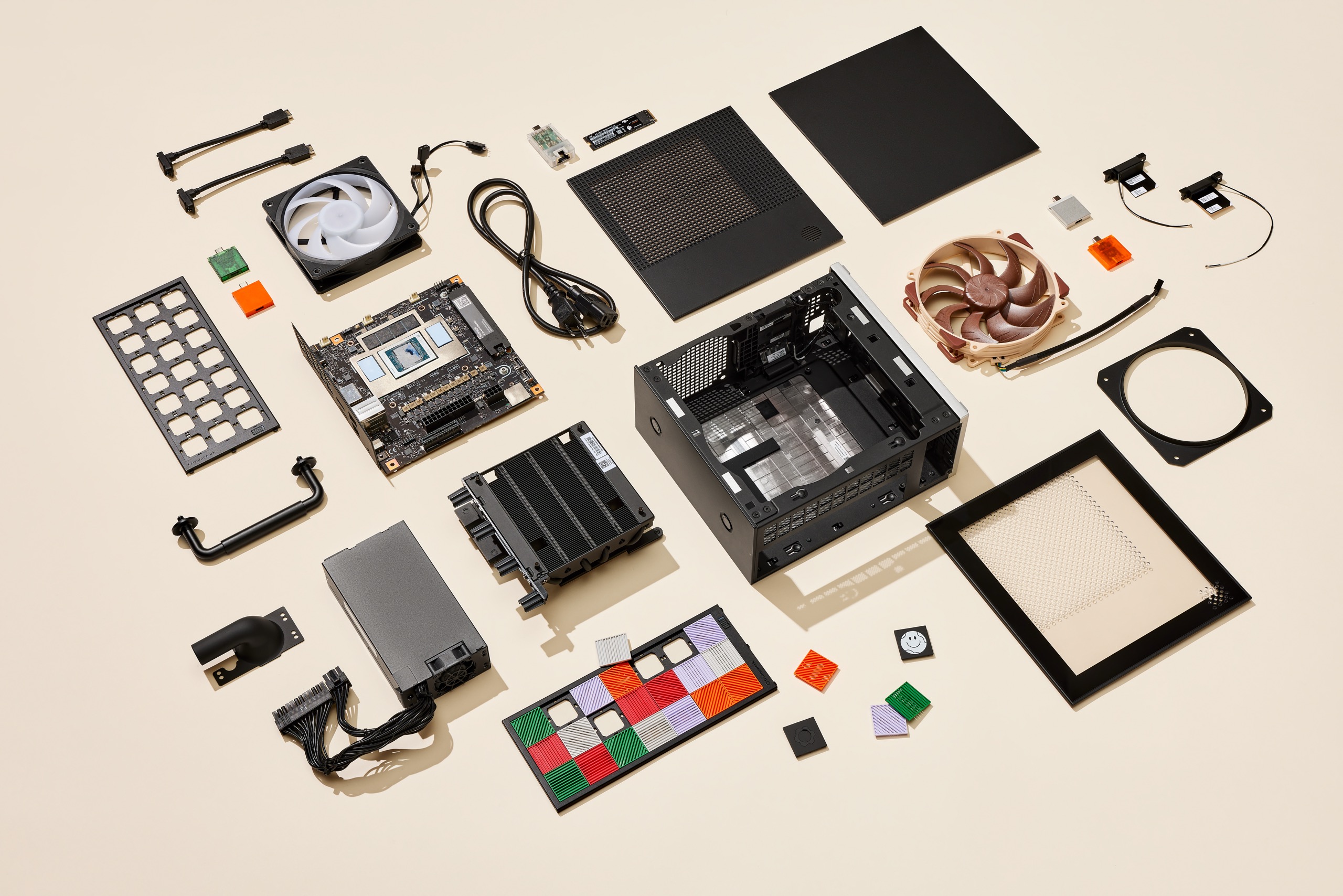
Despite the non-upgradeability of the main components, Framework has tried to stick to existing standards where it can by using a flex ATX power supply, ATX headers on the motherboard, regular 120 mm fans that can be changed out, and of course the mini ITX form factor itself. Credit: Framework

So the pitch for the system is easy: You get a reasonably powerful 1440p-capable gaming and workstation PC inside a case the size of a small game console. “If the Series S could run Windows, I’d buy it in a second” is a thought that has occurred to me, so I can see the appeal, even though it costs at least three times as much.

But it does feel like a strange fit for Framework, given that it’s so much less upgradeable than most PCs. The CPU and GPU are one piece of silicon, and they’re soldered to the motherboard. The RAM is also soldered down and not upgradeable once you’ve bought it, setting it apart from nearly every other board Framework sells.

https://arstechnica.com/gadgets/2025/02/framework-known-for-upgradable-laptops-intros-not-particularly-upgradable-desktop/


Framework Laptop 12 is a cheaper, more colorful take on a repairable laptop PC

Framework has been selling and upgrading the upgrade-and-repair-friendly Framework Laptop 13 for nearly four years now, and in early 2024 it announced a larger, more powerful Framework Laptop 16. At a product event today, the company showed off what it called “an early preview” of its third laptop design, the convertible, budget-focused Framework Laptop 12.

This addition to Framework’s lineup centers on a 12.2-inch, 1920×1200 convertible touchscreen that flips around to the back with a flexible hinge, a la Lenovo’s long-running Yoga design. Framework CEO Nirav Patel said it had originally designed the systems with “students in mind,” and to that end it comes in five colors and uses a two-tone plastic body with an internal metal frame rather than the mostly aluminum exterior Framework has used for the 13 and 16. Framework will also sell the laptop with an optional stylus.

For better or worse, the Framework Laptop 12 appears to be its own separate system, with motherboards, accessories, and a refresh schedule distinct from the 13-inch laptop. While the Laptop 13 already offers first-generation Intel Core Ultra-based and (as of today) AMD Ryzen AI 300-based processors, the first Framework Laptop 12 motherboard is going to use Intel’s 13th-generation Core i3 and i5 processors, originally launched back in late 2022. Despite the age of these chips, Framework claims the laptop will be “unusually powerful for its class.”

https://arstechnica.com/gadgets/2025/02/frameworks-laptop-12-is-its-first-stab-at-a-budget-convertible-touchscreen-pc/