Apple, Lenovo lead losers in laptop repairability analysis

“When consumers can easily access information on how to fix devices, it makes it easier for people who can’t afford the latest and greatest technology to still be able to access the tools they need,” Nersisyan added.

Apple lags but shows some improvement

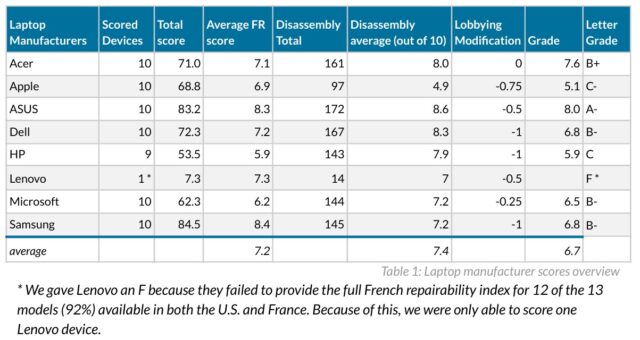
Apple’s MacBook repairability scores placed it at the lowest grade of the US PIRG’s list, save for Lenovo.
US PIRG laptop repairability scores
Credit: US PIRG

However, Apple’s overall repairability score improved from 4.3 last year to 5.1 this year. It gained a quarter of a point in this year’s score because it supported right-to-repair legislation in California within the last year. Apple’s support was a divergence from previous repairability stances from Apple, which had fought right-to-repair efforts for a decade before its about-face on California legislation starting in August 2023. Some have suggested that the change was due to Apple wanting input in legislation that, at the time, seemed likely to pass (California’s bill did eventually pass). Apple has also made notable self-repairability efforts lately, though, including launching and expanding a Self Service Repair program.

Still, Apple has room to grow, with the manufacturer earning the lowest total disassembly score (97)—besides Lenovo, whose score (14) only included one device. Apple also had the lowest disassembly average score (4.9 versus an average of 7.4) out of brands examined. Last year, Apple had an average disassembly score of 4.

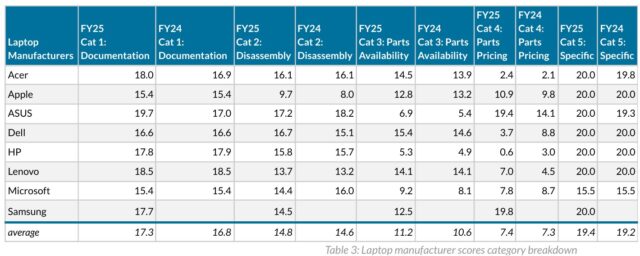
In a deeper breakdown of the scores below, Apple’s disassembly scores improved compared to 2024 (9.7 versus 8), as did its parts pricing score (10.9 versus 9.8). However, parts availability declined (13.2 versus 12.8), per US PIRG.
Credit: US PIRG

Overall, Apple wasn’t able to compete with Asus and Acer, last year’s and this year’s winners. According to the report, “Asus and Acer continue to manufacture the most repairable laptops due largely to their ease of disassembly.”

Looking ahead, tariffs and other things impacting laptop availability and pricing, like the supply-chain disruptions witnessed during the COVID-19 pandemic, could drive demand for more easily repairable PCs.

“When [laptops and electronics] cost more or are harder to get, I’d expect shoppers to want to keep them in use for as long as possible and value their repairability,” Gutterman said.

https://arstechnica.com/gadgets/2025/02/macbooks-lagging-behind-pc-rivals-when-it-comes-to-repairability-report/



Nvidia’s 50-series cards drop support for PhysX, impacting older games

Nvidia’s PhysX offerings to developers didn’t always generate warm feelings. As part of its broader GamesWorks package, PhysX was cited as one of the reasons The Witcher 3 ran at notably sub-optimal levels at launch. Protagonist Geralt’s hair, rendered in PhysX-powered HairWorks, was a burden on some chipsets.

PhysX started appearing in general game engines, like Unity 5, and was eventually open-sourced, first in limited computer and mobile form, then more broadly. As an application wrapped up in Nvidia’s 32-bit CUDA API and platform, the PhysX engine had a built-in shelf life. Now the expiration date is known, and it is conditional on buying into Nvidia’s 50-series video cards—whenever they approach reasonable human prices.

Dune buggy in Borderlands 3, dodging rockets shot by a hovering attack craft just over a sand dune, in Borderlands 3.

See that smoke? It’s from Sweden, originally.

Credit: Gearbox/Take 2

See that smoke? It’s from Sweden, originally. Credit: Gearbox/Take 2

The real dynamic particles were the friends we made…

Nvidia noted in mid-January that 32-bit applications cannot be developed or debugged on the latest versions of its CUDA toolkit. They will still run on cards before the 50 series. Technically, you could also keep an older card installed on your system for compatibility, which is real dedication to early-2010’s-era particle physics.

Technically, a 64-bit game could still support PhysX on Nvidia’s newest GPUs, but the heyday of PhysX, as a stand-alone technology switched on in game settings, tended to coincide with the 32-bit computing era.

If you load up a 32-bit game now with PhysX enabled (or forced in a config file) and a 50-series Nvidia GPU installed, there’s a good chance the physics work will be passed to the CPU instead of the GPU, likely bottlenecking the game and steeply lowering frame rates. Of course, turning off PhysX entirely raised frame rates above even native GPU support levels.

Demanding Borderlands 2 keep using PhysX made it so it “runs terrible,” noted one Redditor, even if the dust clouds and flapping cloth strips looked interesting. Other games with PhysX baked in, as listed by ResetEra completists, include Metro 2033, Assassin’s Creed IV: Black Flag, and the 2013 Star Trek game.

Commenters on Reddit and ResetEra note that many of the games listed had performance issues with PhysX long before Nvidia forced them to either turn off or be loaded onto a CPU. For some games, however, PhysX enabled destructible environments, “dynamic bank notes” and “posters” (in the Arkham games), fluid simulations, and base gameplay physics.

Anyone who works in, or cares about, game preservation has always had their work cut out for them. But it’s a particularly tough challenge to see certain aspects of a game’s operation lost to the forward march of the CUDA platform, something that’s harder to explain than a scratched CD or Windows compatibility.

https://arstechnica.com/gadgets/2025/02/batman-arkham-games-among-those-losing-physx-powers-on-newer-nvidia-gpus/


Acer CEO says its PC prices to increase by 10 percent in response to Trump tariffs

PC-manufacturer Acer has said that it plans to raise the prices of its PCs in the US by 10 percent, a direct response to the new 10 percent import tariff on Chinese goods that the Trump administration announced earlier this month.

“We will have to adjust the end user price to reflect the tariff,” said Acer CEO Jason Chen in an interview with The Telegraph. “We think 10 percent probably will be the default price increase because of the import tax. It’s very straightforward.”

These price increases won’t roll out right away, according to Chen—products shipped from China before the tariffs went into effect earlier this month won’t be subject to the increased import taxes—but we can expect them to show up in PC price tags over the next few weeks.

Chen also said that Acer was considering moving more of its manufacturing outside of China as a result of the tariffs, something that Acer had done for some of its desktop PCs after Trump imposed similar tariffs on Chinese imports during his first term. Manufacturing systems in the US is also “one of the options,” according to Chen.

https://arstechnica.com/gadgets/2025/02/acer-ceo-says-its-pc-prices-to-increase-by-10-percent-in-response-to-trump-tariffs/


When software updates actually improve—instead of ruin—our favorite devices

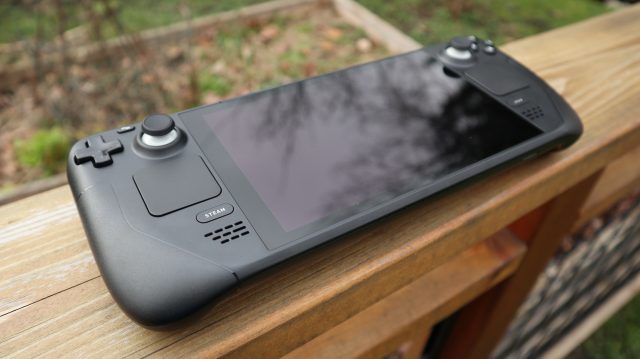
The Steam Deck is another good example. Early adopters might have been disappointed to see missing features like overclocking controls, per-game power profiles, or Windows drivers. Valve has since added those features.

Valve only had a few dozen Hardware department employees in the run up to the launch of the Steam Deck. Credit: Sam Machkovech

Valve has also added more control over the Steam Deck since its release, including the power to adjust resolution and refresh rates for connected external displays. It’s also upped performance via an October update that Valve claimed could improve the battery life of LCD models by up to 10 percent in “light load situations.”

These are the kinds of updates that still allowed the Steam Deck to be playable for months, but the features were exciting additions once they arrived. When companies issue updates reliably and in ways that improve the user experience, people are less averse to updating their gadgets, which could also be critical for device functionality and security.

Adding new features via software updates can make devices more valuable to owners. Updates that address accessibility needs go even further by opening up the gadgets to more people.

Apple, for example, demonstrated the power that software updates can have on accessibility by adding a hearing aid feature to the AirPods Pro 2 in October, about two years after the earbuds came out. Similarly, Amazon updated some Fire TV models in December to support simultaneous audio broadcasting from internal speakers and hearing aids. It also expanded the number of hearing aids supported by some Fire TV models as well as its Fire TV Cube streaming device.

For some, these updates had a dramatic impact on how they could use the devices, demonstrating a focus on user, rather than corporate, needs.

https://arstechnica.com/gadgets/2025/02/when-software-updates-actually-improve-instead-of-ruin-our-favorite-devices/


Google Chrome may soon use “AI” to replace compromised passwords

Google’s Chrome browser might soon get a useful security upgrade: detecting passwords used in data breaches and then generating and storing a better replacement. Google’s preliminary copy suggests it’s an “AI innovation,” though exactly how is unclear.

Noted software digger Leopeva64 on X found a new offering in the AI settings of a very early build of Chrome. The option, “Automated password Change” (so, early stages—as to not yet get a copyedit), is described as, “When Chrome finds one of your passwords in a data breach, it can offer to change your password for you when you sign in.”

Chrome already has a feature that warns users if the passwords they enter have been identified in a breach and will prompt them to change it. As noted by Windows Report, the change is that now Google will offer to change it for you on the spot rather than simply prompting you to handle that elsewhere. The password is automatically saved in Google’s Password Manager and “is encrypted and never seen by anyone,” the settings page claims.

If you want to see how this works, you need to download a Canary version of Chrome. In the flags settings (navigate to “chrome://flags” in the address bar), you’ll need to enable two features: “Improved password change service” and “Mark all credential as leaked,” the latter to force the change notification because, presumably, it’s not hooked up to actual leaked password databases yet. Go to almost any non-Google site, enter in any user/password combination to try to log in, and after it fails or you navigate elsewhere, a prompt will ask you to consider changing your password.

https://arstechnica.com/gadgets/2025/02/google-chrome-may-soon-use-ai-to-detect-leaked-passwords-and-replace-them/


Developer creates endless Wikipedia feed to fight algorithm addiction

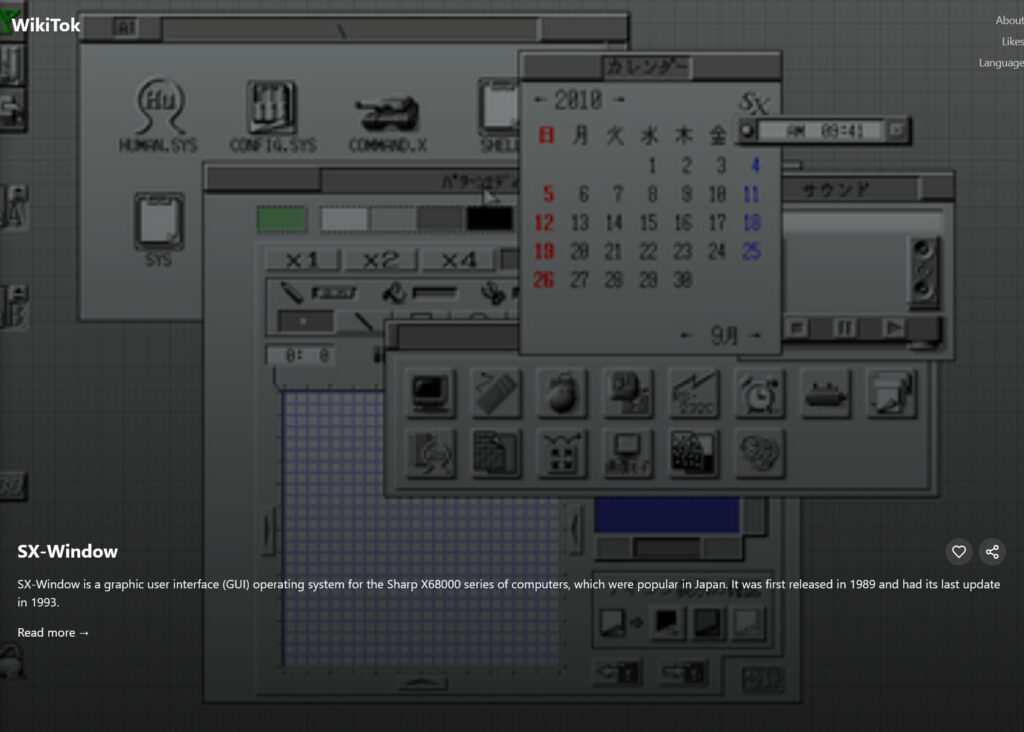
On a recent WikiTok browsing run, I ran across entries on topics like SX-Window (a GUI for the Sharp X68000 series of computers), Xantocillin (“the first reported natural product found to contain the isocyanide functional group), Lorenzo Ghiberti (an Italian Renaissance sculptor from Florence), the William Wheeler House in Texas, and the city of Krautheim, Germany—none of which I knew existed before the session started.

How WikiTok took off

The original idea for WikiTok originated from developer Tyler Angert on Monday evening when he tweeted, “insane project idea: all of wikipedia on a single, scrollable page.” Bloomberg Beta VC James Cham replied, “Even better, an infinitely scrolling Wikipedia page based on whatever you are interested in next?” and Angert coined “WikiTok” in a follow-up post.

Early the next morning, at 12:28 am, writer Grant Slatton quote-tweeted the WikiTok discussion, and that’s where Gemal came in. “I saw it from [Slatton’s] quote retweet,” he told Ars. “I immediately thought, ‘Wow I can build an MVP [minimum viable product] and this could take off.'”

Gemal started his project at 12:30 am, and with help from AI coding tools like Anthropic’s Claude and Cursor, he finished a prototype by 2 am and posted the results on X. Someone later announced WikiTok on ycombinator’s Hacker News, where it topped the site’s list of daily news items.

A screenshot of the WikiTok web app running in a desktop web browser.

A screenshot of the WikiTok web app running in a desktop web browser. Credit: Benj Edwards

“The entire thing is only several hundred lines of code, and Claude wrote the vast majority of it,” Gemal told Ars. “AI helped me ship really really fast and just capitalize on the initial viral tweet asking for Wikipedia with scrolling.”

Gemal posted the code for WikiTok on GitHub, so anyone can modify or contribute to the project. Right now, the web app supports 14 languages, article previews, and article sharing on both desktop and mobile browsers. New features may arrive as contributors add them. It’s based on a tech stack that includes React 18, TypeScript, Tailwind CSS, and Vite.

And so far, he is sticking to his vision of a free way to enjoy Wikipedia without being tracked and targeted. “I have no grand plans for some sort of insane monetized hyper-calculating TikTok algorithm,” Gemal told us. “It is anti-algorithmic, if anything.“

https://arstechnica.com/gadgets/2025/02/new-wikitok-web-app-allows-infinite-tiktok-style-scroll-of-wikipedia/


AMD promises “mainstream” 4K gaming with next-gen GPUs as current-gen GPU sales tank

AMD announced its fourth-quarter earnings yesterday, and the numbers were mostly rosy: $7.7 billion in revenue and a 51 percent profit margin, compared to $6.2 billion and 47 percent a year ago. The biggest winner was the data center division, which made $3.9 billion thanks to Epyc server processors and Instinct AI accelerators, and Ryzen CPUs are also selling well, helping the company’s client segment earn $2.3 billion.

But if you were looking for a dark spot, you’d find it in the company’s gaming division, which earned a relatively small $563 million, down 59 percent from a year ago. AMD’s Lisa Su blamed this on both dedicated graphics card sales and sales from the company’s “semi-custom” chips (that is, the ones created specifically for game consoles like the Xbox and PlayStation).

Other data sources suggest that the response from GPU buyers to AMD’s Radeon RX 7000 series, launched between late 2022 and early 2024, has been lackluster. The Steam Hardware Survey, a noisy but broadly useful barometer for GPU market share, shows no RX 7000-series models in the top 50; only two of the GPUs (the 7900 XTX and 7700 XT) are used in enough gaming PCs to be mentioned on the list at all, with the others all getting lumped into the “other” category. Jon Peddie Research recently estimated that AMD was selling roughly one dedicated GPU for every seven or eight sold by Nvidia.

But hope springs eternal. Su confirmed on AMD’s earnings call that the new Radeon RX 9000-series cards, announced at CES last month, would be launching in early March. The Radeon RX 9070 and 9070 XT are both aimed toward the middle of the graphics card market, and Su said that both would bring “high-quality gaming to mainstream players.”

An opportunity, maybe

“Mainstream” could mean a lot of things. AMD’s CES slide deck positioned the 9070 series alongside Nvidia’s RTX 4070 Ti ($799) and 4070 Super ($599) and its own RTX 7900 XT, 7900 GRE, and 7800 XT (between $500 and $730 as of this writing), a pretty wide price spread that is still more expensive than an entire high-end console. The GPUs could still rely heavily on upscaling algorithms like AMD’s Fidelity Super Resolution (FSR) to hit playable frame rates at those resolutions, rather than targeting native 4K.

https://arstechnica.com/gadgets/2025/02/amd-promises-mainstream-4k-gaming-with-next-gen-gpus-as-current-gen-gpu-sales-tank/


Framework Laptop’s RISC-V board for open source diehards is available for $199

We’ve covered the Framework Laptop 13 primarily as a consumer Windows laptop, reviewing versions with multiple Intel and AMD processors. But the system’s modular nature makes it possible to expand it beyond Windows PC hardware, as we’ve seen with experiments like the (now-discontinued) Chromebook Edition of the laptop.

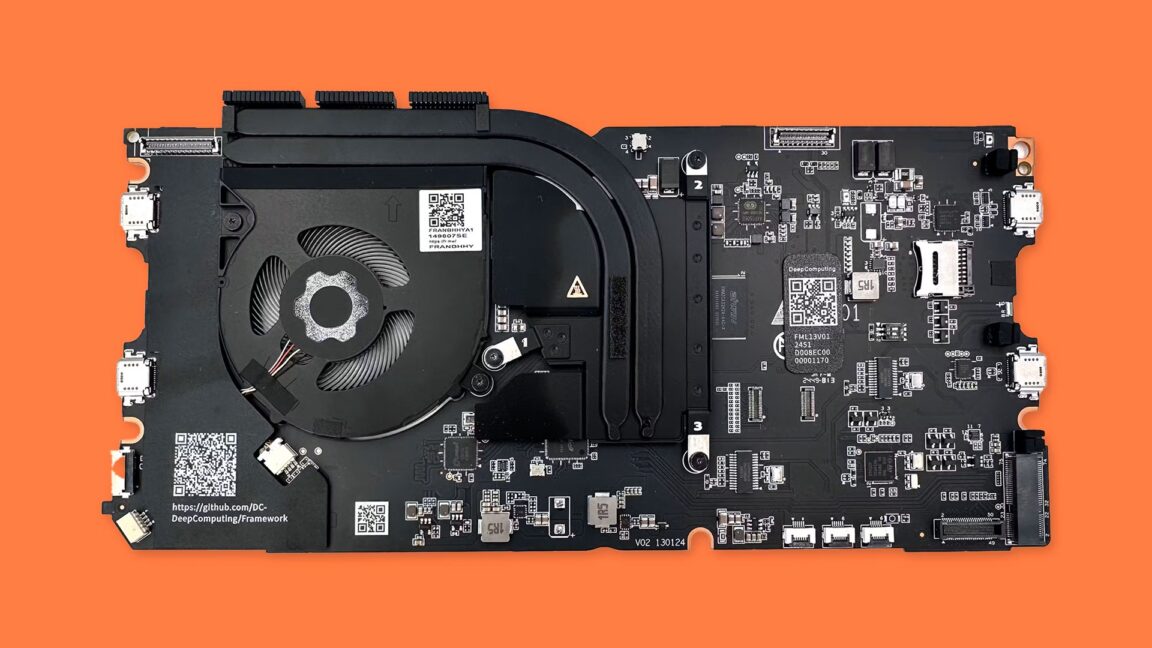
Today Framework is expanding to something even more experimental: a DeepComputing RISC-V Mainboard targeted primarily at developers. RISC-V is a fully open source and royalty-free instruction set, making it possible for anyone to adopt and use it without having to license it (unlike x86, which is a maze of cross-licensed Intel and AMD technologies that other companies can’t really buy into; or Arm, which is licensed by the company of the same name).

First announced in June 2024, the board is available to order today for $199. The board is designed to fit in a Framework Laptop 13 chassis, which means that people who would prefer a desktop can also put it into the $39 Cooler Master Mainboard Case that Framework offers.

Made in concert with DeepComputing, the board uses a StarFive JH7110 processor with four 1.5 GHz SiFive U74 CPU cores. The board can officially run either Ubuntu 24.04 LTS or Fedora 41, with tech support provided by DeepComputing.

The RISC-V board isn’t being offered in a pre-built laptop, but Framework is also introducing a barebones boardless $399 laptop chassis with a screen, 55 WHr battery, speakers, and a keyboard for $399. It can be used for the RISC-V Mainboard or any other Framework Laptop 13 motherboard model.

https://arstechnica.com/gadgets/2025/02/framework-laptop-expands-beyond-x86-with-its-first-ever-risc-v-based-motherboard/


Microsoft 365’s VPN feature will be shut off at the end of the month

Last month, Microsoft announced that it was increasing the prices for consumer Microsoft 365 plans for the first time since introducing them as Office 365 plans more than a decade ago. Microsoft is using new Copilot-branded generative AI features to justify the price increases, which amount to an extra $3 per month or $30 per year for both individual and family plans.

But Microsoft giveth (and chargeth more) and Microsoft taketh away; according to a support page, the company is also removing the “privacy protection” VPN feature from Microsoft 365’s Microsoft Defender app for Windows, macOS, iOS, and Android. Other Defender features, including identity theft protection and anti-malware protection, will continue to be available. Privacy protection will stop functioning on February 28.

Microsoft didn’t say exactly why it was removing the feature, but the company implied that not enough people were using the service.

“We routinely evaluate the usage and effectiveness of our features. As such, we are removing the privacy protection feature and will invest in new areas that will better align to customer needs,” the support note reads.

Cutting features at the same time that you raise prices for the first time ever is not, as they say, a Great Look. But the Defender VPN feature was already a bit limited compared to other dedicated VPN services. It came with a 50GB per user, per month data cap, and it automatically excluded “content heavy traffic from reputable sites” like YouTube, Netflix, Disney+, Amazon Prime, Facebook, Instagram, and Whatsapp.

https://arstechnica.com/gadgets/2025/02/microsoft-365s-vpn-feature-will-be-shut-off-at-the-end-of-the-month/


Google Pixel 4a’s ruinous “Battery Performance” update is a bewildering mess

Choosing the $100 Google Store credit might seem the better option, but there is a caveat there, too. The discount applies only to Pixel phones and only to devices that are not otherwise on sale.

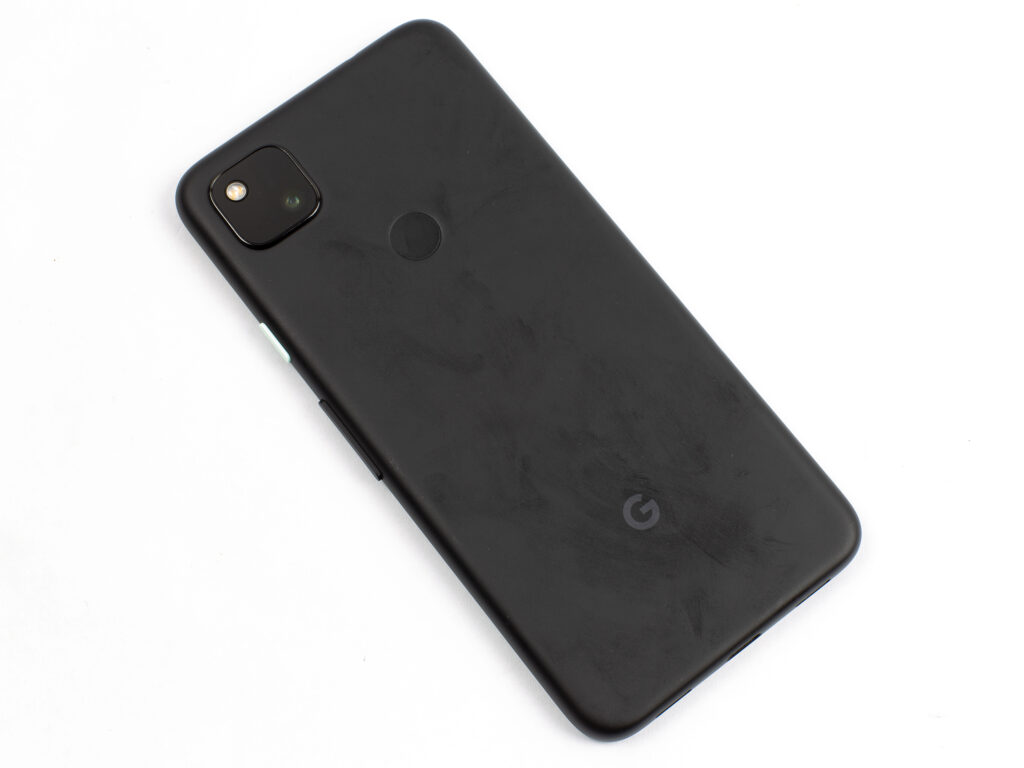
Pixel 4a, tilted, face down, with fingerprints across its back cover.

Credit: Ron Amadeo

The big question: Why?

As we noted when Google first announced the update, a lot of Pixel 4a batteries are now four to five years old. Some have been kept as secondary (or “junk drawer”) phones, and many are already at diminished capacity, especially when at low charge levels and in cold conditions. If every Pixel phone this old received a battery-minded final update, intended to prevent sudden shutdowns (akin to Apple’s originally unannounced iPhone slow-down fixes), there wouldn’t be quite the amount of outcry and confusion there is now.

But Google has not said why certain Pixel 4a phones are “Impacted Devices” and others are not. It has not clarified what issue is so notable or severe as to push an automatic update to a phone from 2020, such that its battery life is all but decimated. No news or community reports have surfaced yet of Pixel 4a devices causing fires, or even simply failing to function, after four years. It’s an automatic update with a strong fix, but for what?

Google’s support page only states that the update will “improve the stability of their battery’s performance.” This is true in the sense that, if you stop using a severely capped Pixel 4a entirely, its battery can provide a stable amount of output (none) into the future.

Google support staff have suggested to more than one 4a owner that yet another future update could force a factory reset and automatic update. That hasn’t come to pass, at least in the timelines suggested by support staff. But all of this raises the question as to how this confusing process is better than a traditional recall, if there really is some kind of danger, to device or human, with a certain set of batteries.

https://arstechnica.com/gadgets/2025/01/google-pixel-4as-ruinous-battery-performance-update-is-a-bewildering-mess/