“Project Mini Rack” wants to make your non-closet-sized rack server a reality
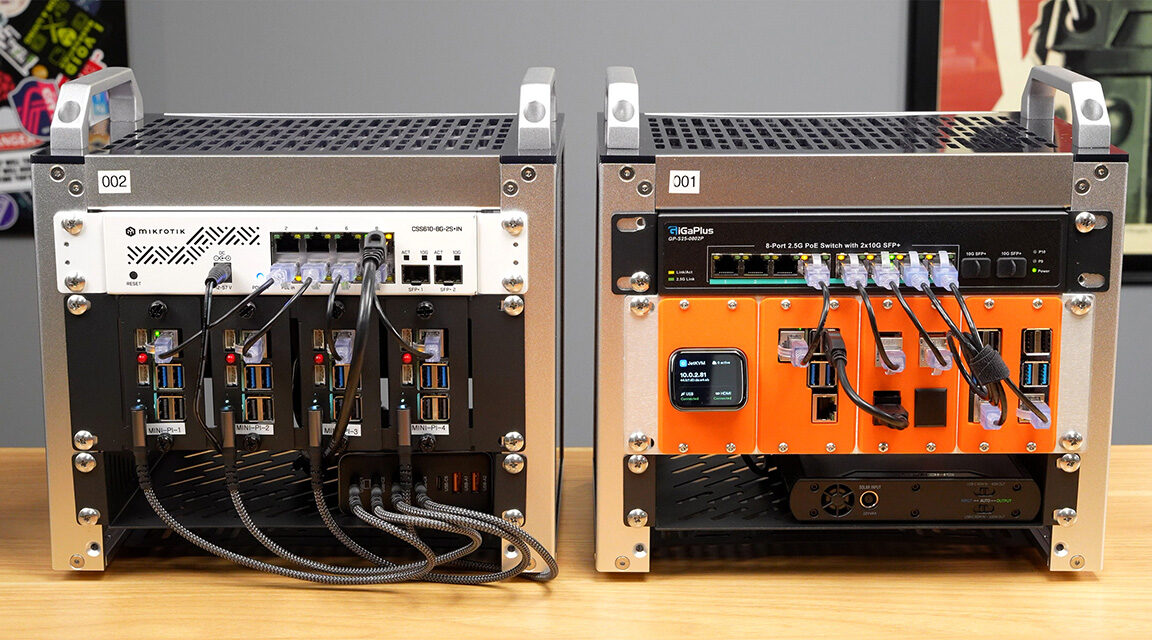
Geerling’s guide aims to save everybody a whole lot of Reddit reading, question-asking, and blind-faith-buying as they get started or seek to expand their rack. Most 10-inch, or “half-width” racks (despite the “standard” rack being 19 inches wide) have only a few major manufacturers, and their availability varies by country. Each type of device that fits into the mini rack—power distribution units (PDUs), uninterruptible power supplies (UPS), HDD-sized shelves—gets linked by Geerling, along with important specs. There are also links to 3D-printable rack systems, cable management ideas (harder on a half-size setup than full), and showcases of mini racks of note.

Geerling’s page acknowledges the collective efforts of communities like Reddit’s /r/minilab have put into the burgeoning half-size market, long before his project. But seeking a central compendium, Geerling compiles gear, tips, and compatibility advice for mini-builds, along with ongoing discussions about the merits of individual components and broader build-out strategies.

“The community feedback around Project Mini Rack has been great so far,” Geerling wrote in an email to Ars. The 3D-printed links and suggestions have been showing up steadily since he started committing to the page in earnest in mid-January. He’s particularly excited to see that a “LACK rack,” or using IKEA shelving for budget rack mounting, can be downscaled to mini-rack size with an Edet cabinet. “It’s like someone at IKEA is a Homelab enthusiast,” says Geerling.

This post was updated to better define homelabs and minilabs.

https://arstechnica.com/gadgets/2025/01/project-mini-rack-wants-to-help-you-make-your-non-closet-sized-homelab-a-reality/
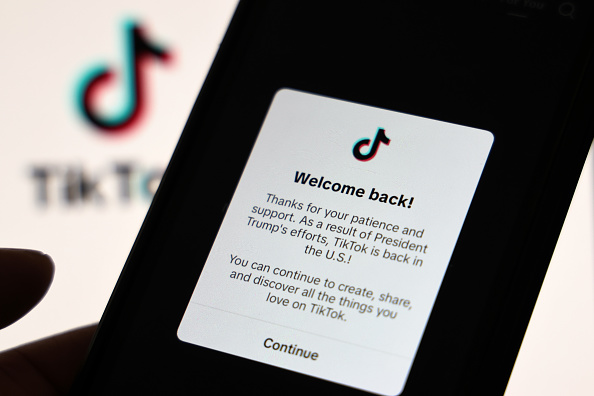


TikTok is mostly restored after Trump pledges an order and half US ownership

At a rally Sunday, he did not clarify if this meant a US-based business or the government itself. “So they’ll have a partner, the United States, and they’ll have a lot of bidders … And there’s no risk, we’re not putting up any money. All we’re doing is giving them the approval without which they don’t have anything,” Trump said Sunday.

Legal limbo

Trump’s order, and TikTok’s return to service, both seem at odds with the law—and leadership in the Republican party. Speaker Mike Johnson said on NBC’s Meet the Press Sunday that Congress would “enforce the law.” Sens. Tom Cotton (R-Ark.) and Pete Ricketts (R-Neb.) issued a joint statement Sunday, commending Apple, Microsoft, and Google for “following the law,” and noting that other companies “face ruinous bankruptcy” for violating it.

“Now that the law has taken effect, there’s no legal basis for any kind of ‘extension’ of its effective date,” the statement read. The law states that “A path to executing a qualified divestiture” has to be determined before a one-time extension of 90 days can be granted.

TikTok’s best chance at avoiding a shutdown vanished in last week’s unanimous Supreme Court decision upholding the divest-or-sell law. Aimed at protecting national security interests from TikTok’s Chinese owners having access to the habits and data of 170 million American users, the law was ruled to be “content-neutral,” and that the US “had good reason to single out TikTok for special treatment.”

Reports at Forbes, Bloomberg, and elsewhere have suggested that ByteDance and its Chinese owners could be seeking to use TikTok as a bargaining chip, with maneuvers including a sale to Trump ally Elon Musk as a means of counteracting Trump’s proposed tariffs on Chinese imports.

One largely unforeseen side effect of Congress’ TikTok-centered actions is that Marvel Snap, a mobile collectible card and deck-building game, disappeared in similar fashion over the weekend. The game, developed by a California-based team, is published by ByteDance’s Nuverse mobile game division. With no web version available, Snap remained unavailable on app stores Monday morning. A message to players with the game installed noted that “This outage is a surprise to us and wasn’t planned,” though it pledged to restore the game.

https://arstechnica.com/tech-policy/2025/01/after-chaotic-weekend-tiktok-remains-in-limbo/


Camera owner asks Canon, skies: Why is it $5/month for webcam software?

Comparison of webcam software features available to Canon’s “PRO” and “Free” users.

Credit: Roman Zipp/Canon

Comparison of webcam software features available to Canon’s “PRO” and “Free” users. Credit: Roman Zipp/Canon

“Software development isn’t free, and I’m happy to pay for software I use regularly,” Zipp writes. “However, Canon is a hardware company, not a software company, and they should—due to the lack of standards—provide software that allows you to use their cameras as intended. Aside from development costs, there’s no justification for a subscription model, particularly from a company earning nearly $3 billion in profit.”

Zipp’s pointed complaint made the front page of Hacker News, where commenters immediately got sidetracked into a discussion of UK tariff laws on video equipment, sneakers, cookies, and ethanol. But further in, recommendations appear for the open source Magic Lantern camera add-on software, or possibly CHDK (Canon Hack Development Kit) firmware. Whether or not Zipp can better use his camera as a webcam is somewhat beside the point, or at least the point he’s making.

Many higher-end (or at least better-than-smartphone) cameras output video in formats that computers and web conferencing software cannot natively accept. HDMI output is an option, but using that typically requires a capture device and specialty software to mix and use it and that the camera provide “clean” HDMI out, with no overlays. The G5 X Mark II does seem to offer that and has a USB-C port. It also seems to work fine once the software is paid for. It’s an open question whether Canon should provide this as part of the cost of the camera, one for which Zipp and many commenters have an answer.

Ars has reached out to Canon for comment and will update this post if the company responds.

https://arstechnica.com/gadgets/2025/01/canon-charges-50-per-year-to-use-a-900-camera-as-a-functional-webcam/


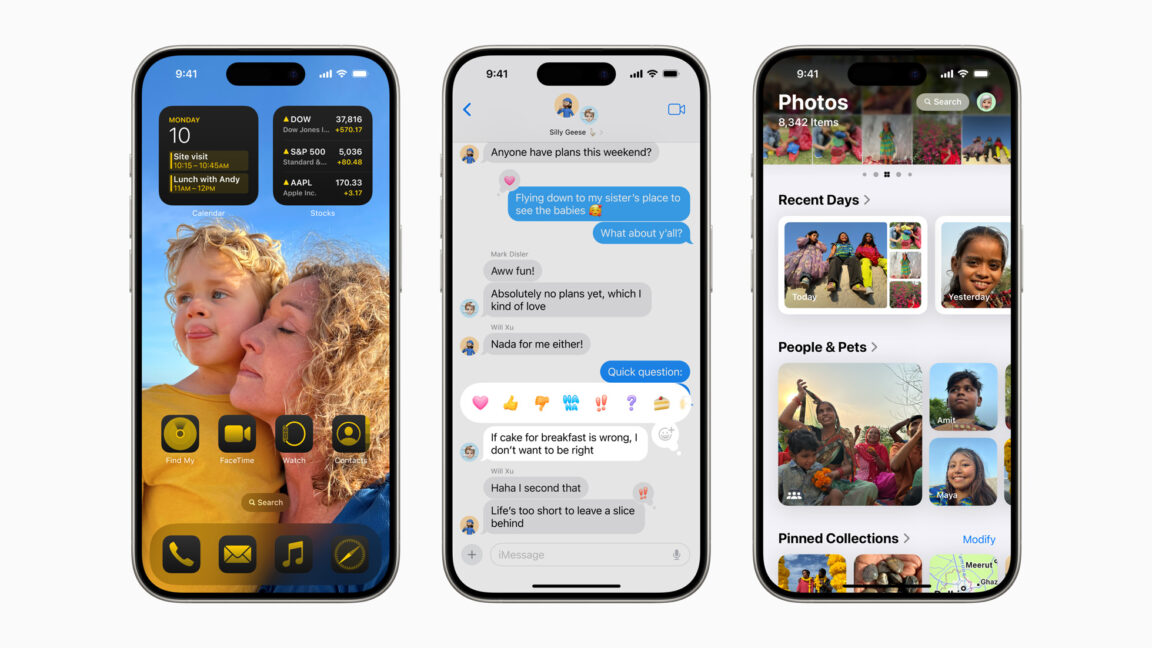
iOS 18.3 beta disables news notification summaries after high-stakes errors

In our own extensive testing with Apple Intelligence notification summaries in iOS 18.1 and macOS 15.1, we observed many instances of summaries that were inaccurate or just plain weird. When you’re just getting updates from your Discords or group text threads, errors tend to be pretty low-stakes, at least. But when you’re getting notifications about war, murder, and politics, these kinds of errors have the potential to mislead and misinform.

The iOS 18.1 and 18.2 updates (along with iPadOS 18.2 and macOS Sequoia 15.2) enabled most of Apple’s promised Intelligence features across all the hardware that supports them. For the iPhone, that’s still only 2023’s iPhone 15 Pro and 2024’s iPhone 16 and iPhone 16 Pro.

The iOS 18.3 update is currently in its third beta release. The iOS 17.3, 16.3, and 15.3 updates have all been released in late January, so it’s likely that we’ll see the 18.3 update (and corresponding updates for iPadOS, macOS, and other Apple software) released at some point in the next few weeks.

https://arstechnica.com/apple/2025/01/ios-18-3-beta-disables-news-notification-summaries-after-high-stakes-errors/


Google is about to make Gemini a core part of Workspaces—with price changes

Google has added AI features to its regular Workspace accounts for business while slightly raising the baseline prices of Workspace plans.

Previously, AI tools in the Gemini Business plan were a $20 per seat add-on to existing Workspace accounts, which had a base cost of $12 per seat without. Now, the AI tools are included for all Workspace users, but the per-seat base price is increasing from $12 to $14.

That means that those who were already paying extra for Gemini are going to pay less than half of what they were—effectively $14 per seat instead of $32. But those who never used or wanted Gemini or any other newer features under the AI umbrella from Workspace are going to pay a little bit more than before.

Features covered here include access to Gemini Advanced, the NotebookLM research assistant, email and document summaries in Gmail and Docs, adaptive audio and additional transcription languages for Meet, and “help me write” and Gemini in the side panel across a variety of applications.

Google says that it plans “to roll out even more AI features previously available in Gemini add-ons only.”

https://arstechnica.com/ai/2025/01/google-increases-workspace-plan-base-prices-while-adding-gemini-features/


Home Microsoft 365 plans use Copilot AI features as pretext for a price hike

Microsoft hasn’t said for how long this “limited time” offer will last, but presumably it will only last for a year or two to help ease the transition between the old pricing and the new pricing. New subscribers won’t be offered the option to pay for the Classic plans.

Subscribers on the Personal and Family plans can’t use Copilot indiscriminately; they get 60 AI credits per month to use across all the Office apps, credits that can also be used to generate images or text in Windows apps like Designer, Paint, and Notepad. It’s not clear how these will stack with the 15 credits that Microsoft offers for free for apps like Designer, or the 50 credits per month Microsoft is handing out for Image Cocreator in Paint.

Those who want unlimited usage and access to the newest AI models are still asked to pay $20 per month for a Copilot Pro subscription.

As Microsoft notes, this is the first price increase it has ever implemented for the personal Microsoft 365 subscriptions in the US, which have stayed at the same levels since being introduced as Office 365 over a decade ago. Pricing for the business plans and pricing in other countries has increased before. Pricing for Office Home 2024 ($150) and Office Home & Business 2024 ($250), which can’t access Copilot or other Microsoft 365 features, is also the same as it was before.

https://arstechnica.com/gadgets/2025/01/home-microsoft-365-plans-use-copilot-ai-features-as-pretext-for-a-price-hike/


Amid a flurry of hype, Microsoft reorganizes entire dev team around AI

Microsoft CEO Satya Nadella has announced a dramatic restructuring of the company’s engineering organization, which is pivoting the company’s focus to developing the tools that will underpin agentic AI.

Dubbed “CoreAI – Platform and Tools,” the new division rolls the existing AI platform team and the previous developer division (responsible for everything from .NET to Visual Studio) along with some other teams into one big group.

As for what this group will be doing specifically, it’s basically everything that’s mission-critical to Microsoft in 2025, as Nadella tells it:

This new division will bring together Dev Div, AI Platform, and some key teams from the Office of the CTO (AI Supercomputer, AI Agentic Runtimes, and Engineering Thrive), with the mission to build the end-to-end Copilot & AI stack for both our first-party and third-party customers to build and run AI apps and agents. This group will also build out GitHub Copilot, thus having a tight feedback loop between the leading AI-first product and the AI platform to motivate the stack and its roadmap.

To accomplish all that, “Jay Parikh will lead this group as EVP.” Parikh was hired by Microsoft in October; he previously worked as the VP and global head of engineering at Meta.

The fact that the blog post doesn’t say anything about .NET or Visual Studio, instead emphasizing GitHub Copilot and anything and everything related to agentic AI, says a lot about how Nadella sees Microsoft’s future priorities.

So-called AI agents are applications that are given specified boundaries (action spaces) and a large memory capacity to independently do subsets of the kinds of work that human office workers do today. Some company leaders and AI commentators believe these agents will outright replace jobs, while others are more conservative, suggesting they’ll simply be powerful tools to streamline the jobs people already have.

https://arstechnica.com/gadgets/2025/01/amid-a-flurry-of-hype-microsoft-reorganizes-entire-dev-team-around-ai/


Parallels can finally run x86 versions of Windows or Linux on Apple Silicon

Virtualization software like Parallels and VMware Fusion give Mac owners the ability to run Windows and Linux on top of macOS, but for Apple Silicon Macs, that support was limited to the Arm-based versions of those operating systems. And while Windows and Linux both support some level of x86-to-Arm app translation that attempts to maintain compatibility with most software, there are still plenty of things that demand an Intel or AMD processor with the x86 instruction set.

Last week, Parallels released a new update that partially resolves this problem: Users of Parallels Desktop Pro 20.2.0 now have access to x86 operating systems via an “early technology preview” of Parallels’ “proprietary emulation engine.”

The technology preview is currently limited to certain 64-bit versions of Windows 10, Windows 11, and Windows Server 2019 and 2022. Parallels also says it has tested several UEFI-compatible Linux distributions, including Ubuntu 22.04.5, Kubuntu 24.04.1, Lubuntu 24.04.1, and Debian versions 12.4 to 12.8. Fedora will install, but it’s unstable. 32-bit versions of operating systems, as well as older versions of Windows like Windows 7 or 8, aren’t supported.

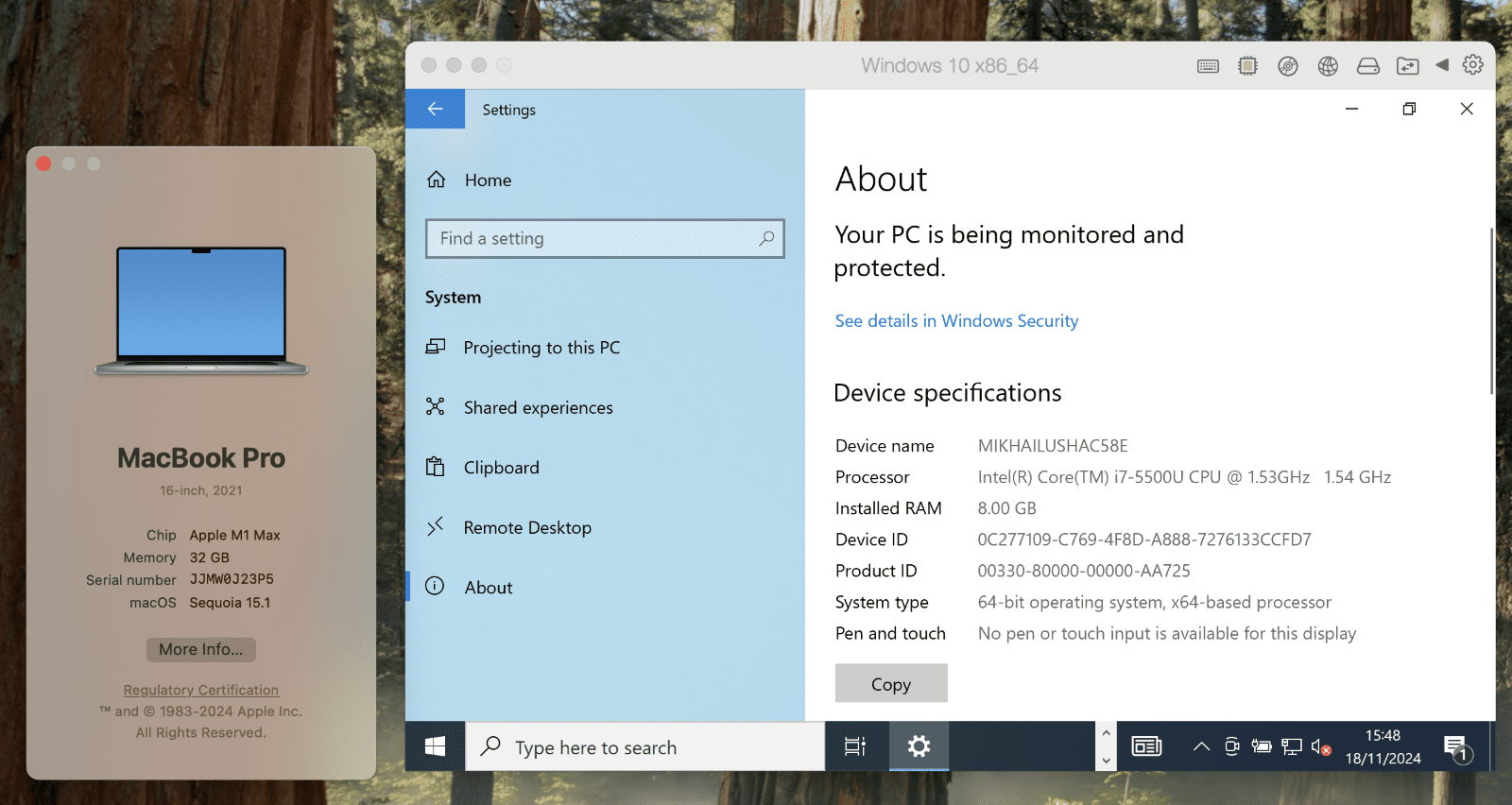
Parallels running the x86 version of Windows 10 on an M1 MacBook Pro. Parallels’ virtual CPU appears to identify itself as a 5th-generation Intel Core laptop processor. Credit: Parallels

For Windows 11 and supported Linux distros, you can run existing virtual machines using the technology preview, but you can’t set up new ones—useful for anyone migrating from an Intel Mac with virtual machines they’d like to keep. If you’re trying to set up a new virtual machine, the only officially supported operating systems are Windows Server 2022 and Windows 10 21H2, though there are workarounds available for Windows 10 22H2 and Windows Server 2019.

You won’t be able to set up fresh copies of Windows 11 or some versions of Linux because the technology preview doesn’t support SSE4.2, additional CPU instructions that became common in Intel and AMD processors in the early 2010s. This also means that Windows 11 24H2 VMs are entirely unsupported, since the 24H2 update requires these CPU instructions to work at all.

https://arstechnica.com/gadgets/2025/01/parallels-desktop-gains-really-slow-support-for-x86-oses-on-apple-silicon/


Lawsuit: Allstate used GasBuddy and other apps to quietly track driving behavior

With that data—plus, in some cases, data from connected vehicles—Allstate could see when, how far, and for how long someone was driving, along with “hard braking events” and “whether a consumer picked up or opened their phone while traveling at certain speeds,” according to the complaint.

Texas’ lawsuit claims that Arity incentivized—through “generous bonus incentives”—apps like GasBuddy, a gas price-tracking app, and Life360, which is intended to keep tabs on family members’ location, to “increas[e] the size of their dataset.” Under their agreements with app makers, Arity had “varying levels of control over the privacy disclosures and consent language” shown to app users, according to the complaint.

Reached for comment by Ars, Allstate Corporation provided a statement: “Arity helps consumers get the most accurate auto insurance price after they consent in a simple and transparent way that fully complies with all laws and regulations.”

Nine car brands sharing data

The suit also cites Allstate as gathering direct car use data from Toyota, Lexus, Mazda, Chrysler, Dodge, Fiat, Jeep, Maserati, and Ram vehicles.

Texas is one of the states that sued General Motors last year for seeking driver data in a less roundabout fashion. GM quietly included “usage-based insurance providers” in its privacy notice for its connected-car service OnStar. A New York Times report revealed that some GM drivers were having car insurance rates adjusted upward or outright denied as a result. GM ultimately stopped sharing driver data with insurers through third-party data brokers, one of which shut down soon after.

This post was updated to include a comment from Allstate.

https://arstechnica.com/gadgets/2025/01/allstate-sued-for-allegedly-tracking-drivers-behavior-through-third-party-apps/


Report: After many leaks, Switch 2 announcement could come “this week”

Nintendo may be getting ready to make its Switch 2 console official. According to “industry whispers” collected by Eurogamer, as well as reporting from The Verge’s Tom Warren, the Switch 2 could be formally announced sometime this week. Eurogamer suggests the reveal is scheduled for this Thursday, January 16.

The reporting also suggests that the reveal will focus mostly on the console’s hardware design, with another game-centered announcement coming later. Eurogamer reports that the console won’t be ready to launch until April; this would be similar to Nintendo’s strategy for the original Switch, which was announced in mid-January 2017 but not launched until March.

Many things about the Switch 2’s physical hardware design have been thoroughly leaked at this point, thanks mostly to accessory makers who have been showing off their upcoming cases. Accessory maker Genki was at CES last week with a 3D-printed replica of the console based on the real thing, suggesting a much larger but still familiar-looking console with a design and button layout similar to the current Switch.

On the inside, the console is said to sport a new Nvidia-designed Arm processor with a much more powerful GPU and more RAM than the current Switch. Dubbed “T239,” Eurogamer reports that the chip includes 1,536 CUDA cores based on the Ampere architecture, the same used in 2020’s GeForce RTX 30-series graphics cards on the PC.

https://arstechnica.com/gaming/2025/01/report-after-many-leaks-switch-2-announcement-could-come-this-week/