Notion killing Skiff-influenced email app since most users use AI agents instead

However, Notion urged users to export drafts and scheduled emails by September 21, since those won’t automatically carry over to an alternative app. Notion noted that users can also save their Notion Mail setups and “export your snippets and auto label instructions to use elsewhere.”

“If you have auto label set up in Notion Mail, you won’t have to rebuild it. Create a Custom Agent in a few clicks, and we’ll bring your existing rules over for you,” the X post explained. “And if you’re already running Notion agents to manage email, they’ll continue running. Your email connection in Notion stays in place.”

Organizations that relied on Notion Mail in a regulated environment might have to transition from Notion Mail earlier.

“If you rely on HIPAA coverage, you should plan to transition off Notion Mail by June 30, 2026,” Notion’s support page reads.

Skiff reportedly served 2 million users, giving rivals like Proton Mail a run for their money before the Notion acquisition. As a Gmail client that didn’t support end-to-end encryption, Notion’s AI-centric approach to email lacked the privacy focus that Skiff carried as an email provider. Still, Notion Mail was built with Skiff’s infrastructure and by former Skiff executives, making its impending demise feel like a sort of swan song for Skiff.

Although Notion is killing its Skiff-influenced email client, it may continue leveraging the human resources and other productivity ideas (around calendars and storage, for instance) gained through its Skiff acquisition as it tries to compete more strongly against rivals like Google Workspace. Notion, however, has strayed from releasing direct follow-up products to Skiff’s portfolio.

https://arstechnica.com/gadgets/2026/06/notion-killing-skiff-influenced-email-app-since-most-users-use-ai-agents-instead/
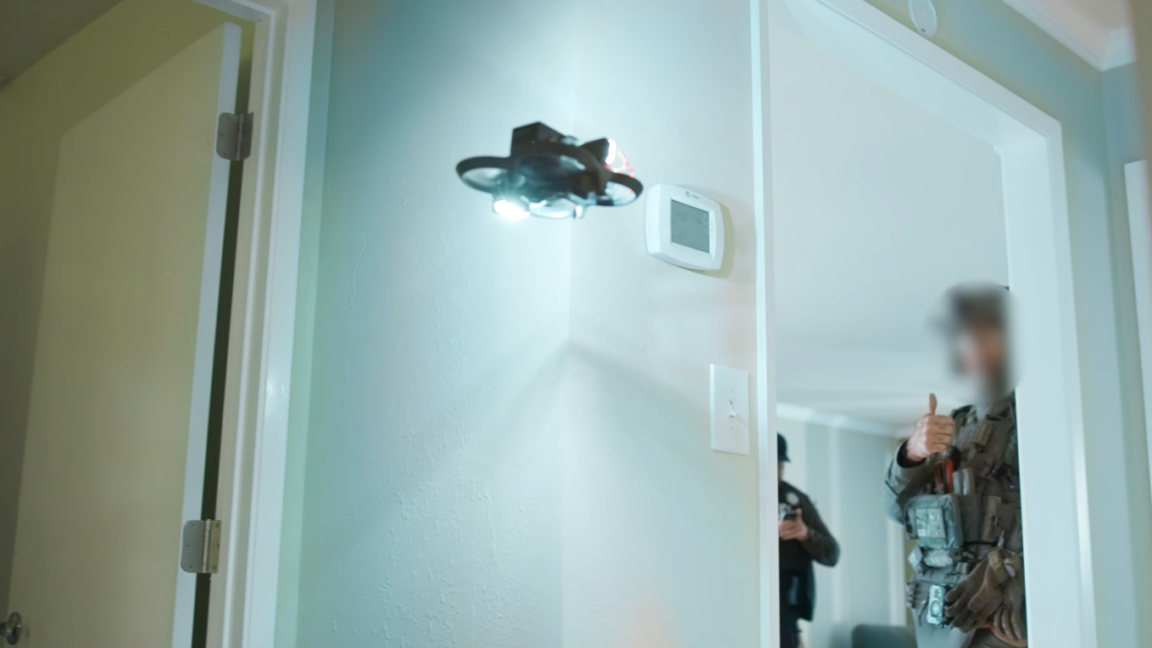

Odd police video shows drone removing knife from motionless suspect

The Electronic Frontier Foundation’s Atlas of Surveillance database lists more than 1,800 police departments and sheriff’s offices as having operated drones in the United States. The nonprofit organization also highlighted a notable rise in US law enforcement adopting “drone as first responder” programs in 2025, with tech and drone companies teaming up to sell law enforcement on drones with enhanced surveillance capabilities.

Such companies pitching drone surveillance systems tailored for law enforcement include Flock Safety, Axon and Skydio, and Brinc and Motorola Solutions. For example, Flock’s drones carry the company’s automated license plate readers.

“Flying cameras are bad enough,” wrote Beryl Lipton, a senior investigative researcher at the Electronic Frontier Foundation, in reference to the drone-as-first-responder programs. “They can see and record footage from a special vantage point, capturing video of your home, your backyard, and your movements that should require clear policies around retention, audits, and use, including when the cameras shouldn’t be recording.”

The Sacramento County Sheriff’s Office listed 18 drones in its inventory for its 2025 annual report, including commercial multirotor drones made by Chinese drone manufacturers DJI and Autel, along with a single fixed-wing drone from the Ohio-based company Event 38 capable of vertical takeoffs and landings.

In September 2025, Sacramento County supervisors unanimously approved the purchase of another 27 drones for the sheriff’s office with a starting price of $5,000 per drone, according to the KCRA 3 TV station. The drone purchases came as part of a larger $1 million package for the sheriff’s office that also included a robot and a Bearcat armored vehicle, along with other military-style equipment.

https://arstechnica.com/gadgets/2026/06/police-tout-using-drone-to-disarm-incapacitated-person-in-nationwide-first/


How to burst the AI bubble: Strike at its roots

Once you put it that way, it’s very easy to see why some workers would say, “Oh yeah, I found a thing that AI is good for and I use it, and that’s fine. I’m even excited about it.” And why other workers would be like, “This is making me miserable.” It’s the difference between the words on the Greek temple, “Know thyself,” and your boss shining 16 cameras in your face and going, “I know you better than you do. And by the way, I think you could work an extra hour a day without breaking a sweat.”

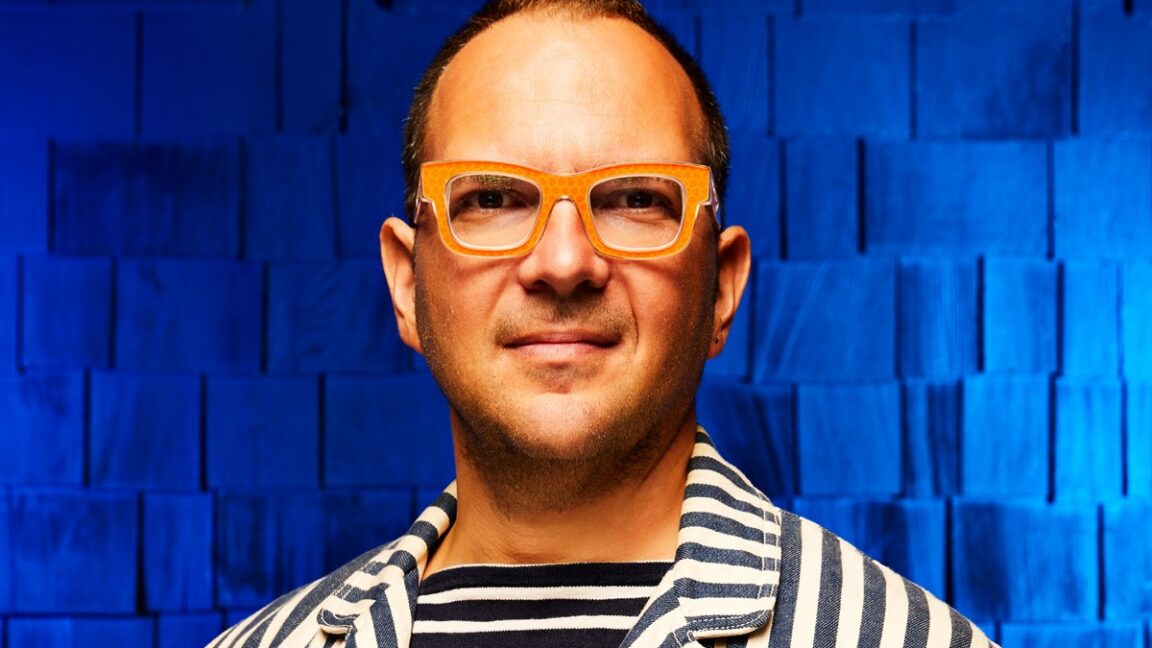
Ars Technica: You make a point of emphasizing that you are not fundamentally anti-AI, despite sharply criticizing the industry. 

Cory Doctorow: I have many comrades who describe themselves as anti-AI, and I’ve had some very spirited, productive, but heated debates with those people because I don’t think AI is exceptional. That means that I don’t think it’s exceptionally evil. The argument that it’s the fruit of the poisonous tree, that it was made by bad people in bad ways, so you shouldn’t use it—I think it’s very foolish. That is not the merit on which we judge technology.

You can talk about whether giving money to these companies is bad. I think it is. You can talk about whether the environmental impact of using foundation models is unsustainable and unsupportable. I think, by and large, it is. But that is not to say that statistical inference using convoluted deep neural networks is bad or—and this is where I get into many arguments—that scraping the web to train a convoluted neural network is bad. I think it’s fine. Scraping is good, actually.

I think it’s very dangerous to say, “The way that we’re going to fix the problems we have with AI is to make it illegal to make a record of what’s on the Internet.” I think that’s catastrophic. That’s how we never again will know what was on CBS News before it turned into Chud News. Everything Nate Silver ever published on his website was just zeroed out by Disney. You can only see it at the Internet Archive because we scrape. It’s just bonkers to say, “It is theft to make transient copies of works, to analyze those transient copies, to publish the results of your analysis.”

https://arstechnica.com/gadgets/2026/06/how-to-burst-the-ai-bubble-strike-at-its-roots/


Android verification is coming: Google confirms timeline and supported app stores

  • Google (Google Play)
  • Honor (HONOR App Market)
  • OPlus (OPPO App Market)
  • Samsung (Galaxy Store)
  • Transsion (Palm Store)
  • vivo (V-Appstore)
  • Xiaomi (GetApps)

Developers will also have access to new APIs to make registering as an external developer less arduous. In the coming months, Google will release an Android Developer ID Status API that will check if a package name is already registered with Google. The Android Developer Console API will let you register and manage your app package names without leaving your development environment, too.

The countdown begins

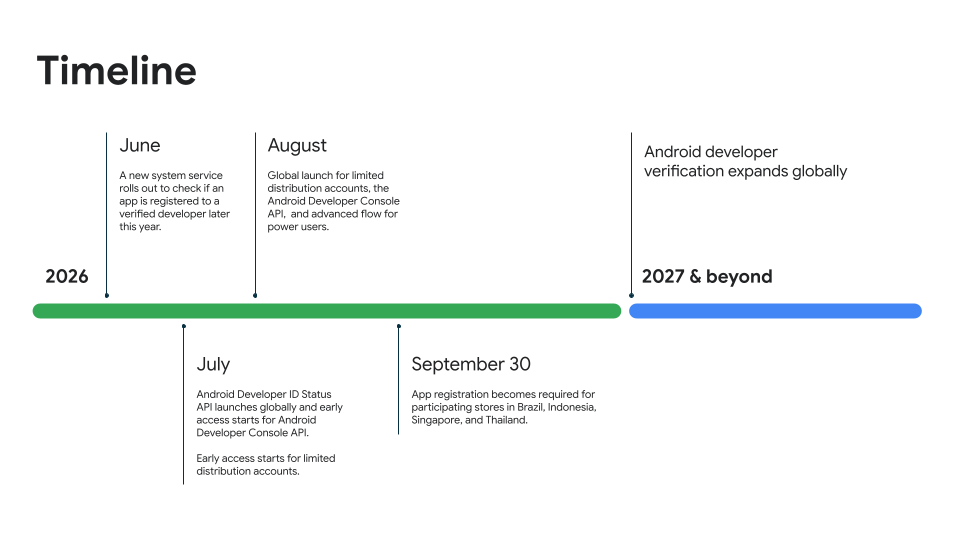
The next step toward verifying apps will come this month as Google deploys a new system service on most certified devices. The package (com.google.android.verifier) will appear on phones and tablets running Android 8 or higher, allowing Google to block the installation of unverified apps. It will remain dormant until verification is activated in your specific region.

Credit: Google

Credit: Google

In July, Google plans to roll out the new developer APIs and begin testing for “limited distribution” accounts. This is Google’s solution for hobbyists who want to make their own apps and share them with a small group. Limited accounts won’t require a fee or government ID verification, but you can install these apps on up to 20 devices.

In August, the advanced flow will become available globally ahead of verification becoming mandatory in the first markets. As detailed a few months ago, the advanced flow will allow users to bypass verification, but the process isn’t easy. You’ll have to navigate to a buried menu, confirm you understand the risks multiple times, and wait a whole day before completing the process.

And that brings us to September, when Android devices in Brazil, Indonesia, Singapore, and Thailand will begin checking verification status before installing apps. However, things get murky after that. Google will undoubtedly monitor how verification works as millions of users are suddenly limited to verified apps, which could affect how it moves forward. Google says it intends to expand developer verification in 2027, eventually making it a global device policy.

https://arstechnica.com/gadgets/2026/06/google-shares-updated-timeline-for-rolling-out-android-developer-verification/


New social features further Plex’s evolution from media server business

Plex is adding new social features to the platform.

As of today, users can make and share “personalized lists on Plex of any movie, show or episode,” the company said in an announcement. Later this year, users will be able to import lists from other streaming services and react to other people’s lists.

This month, Plex will also launch a community forum that will allow people to “post and comment directly on any movie, show, season, or episode.” Later this year, Plex will introduce “Match Scores” based on a viewer’s history and past ratings to predict how much they’ll like a show or movie, Plex said.

Plex already lets people rate content, and this year it will also allow them to react with emoji. Similarly, Plex will also enable people to respond to reviews and discussions with images. The goal, per Plex’s announcement, is to bring “a new layer of expression to every conversation.”

Finally, a “Follow Anything” feature coming this year will provide users with alerts around movies, shows, actors, and crew members that they follow.

Plex’s announcement claimed that its users have already “made over 100 million watching decisions a month and created more than 45 million watchlists,” making the new capabilities relevant to how people use Plex today.

“The addition of these features marks the next step in Plex’s vision to unify entertainment discovery and help users navigate an increasingly fragmented streaming landscape,” Plex’s announcement said.

https://arstechnica.com/gadgets/2026/06/new-social-features-further-plexs-evolution-from-media-server-business/


Microsoft plans Linux tools and an RTX Spark desktop for Windows developers

Microsoft’s Build developer conference kicked off today, and as with almost everything the company has done in the last few years, Microsoft’s opening keynote focused overwhelmingly on AI and other closely related technologies. There’s Microsoft Scout, an OpenClaw-based “Autopilot” agent that can hook into Microsoft 365 data to perform tasks for users; several new AI models; an expanded preview of “Codename MDASH,” which is a “multi-model agentic scanning system” meant to detect and fix software vulnerabilities.

A few of those announcements stood out to us as particularly interesting, either for esoteric technical reasons or because they seem like they may have some utility for those who aren’t spending their every waking moment using generative AI tools. (Microsoft’s recent efforts to make its flagship operating system faster, more reliable, more useful, and less annoying didn’t really come up, but there have been plenty of other announcements on that front lately.)

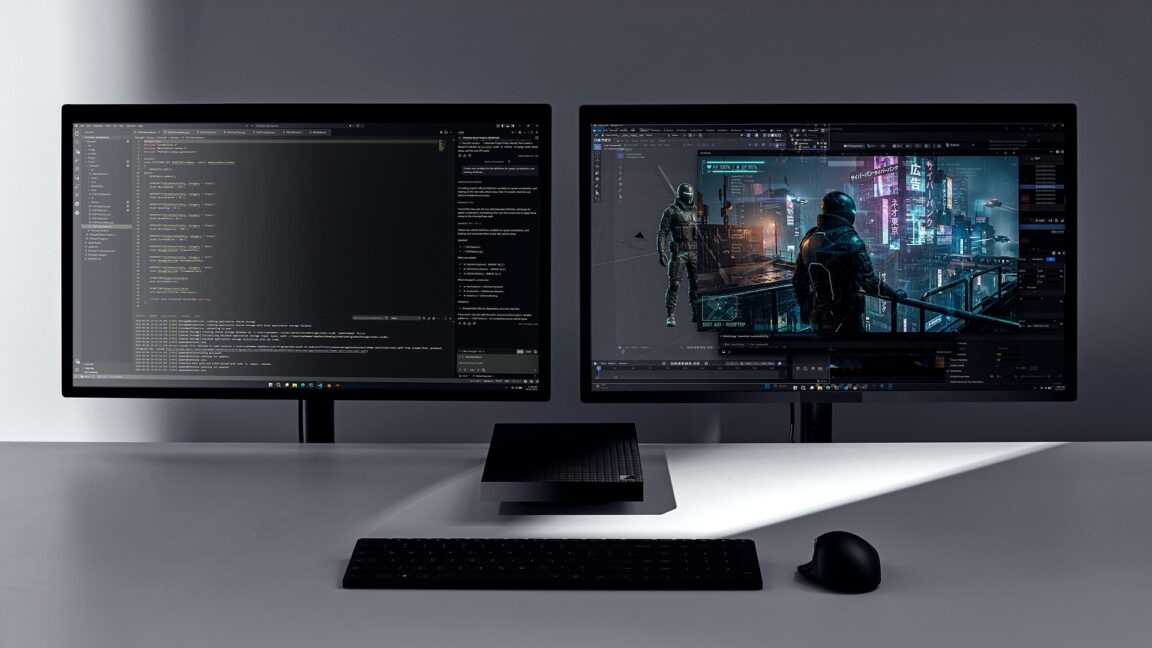
On the hardware front, we didn’t get any updates for existing Surface devices (not counting yesterday’s Surface Laptop Ultra announcement), but we did get something new: the Surface RTX Spark Dev Box is “a compact developer PC” built around Nvidia’s new RTX Spark chip with up to 128GB of built-in memory.

The Dev Box looks a little like a cartoon anvil or piano fell onto an Xbox Series X and flattened it. Its aluminum casing was designed “to double as a heatsink,” and its preloaded version of Windows 11 Pro will include a “purposeful” set of developer-centric default settings and preinstalled tools.

This is a follow-up of sorts to the Windows Dev Kit 2023, also known as “Project Volterra.” This Qualcomm Snapdragon 8cx Gen 3-powered PC was essentially the system board from a Surface Pro tablet stuffed into a plastic box, and it was introduced alongside Arm-native versions of several Microsoft developer tools. It helped to set the stage for the Arm-based flagship Surface devices that launched the next year, which benefitted from a better and faster x86-to-Arm code translation technology called Prism and a greater number of Arm-native third-party apps that didn’t need to be translated in the first place.

https://arstechnica.com/gadgets/2026/06/microsoft-plans-linux-tools-and-an-rtx-spark-desktop-for-windows-developers/


Microsoft’s Project Solara is an Android OS designed for agents instead of apps

However, Microsoft is clear that this is still just a concept. None of it works, but the company is committed to spending money on it as part of its massive AI expansion plans.

Agentic concepts

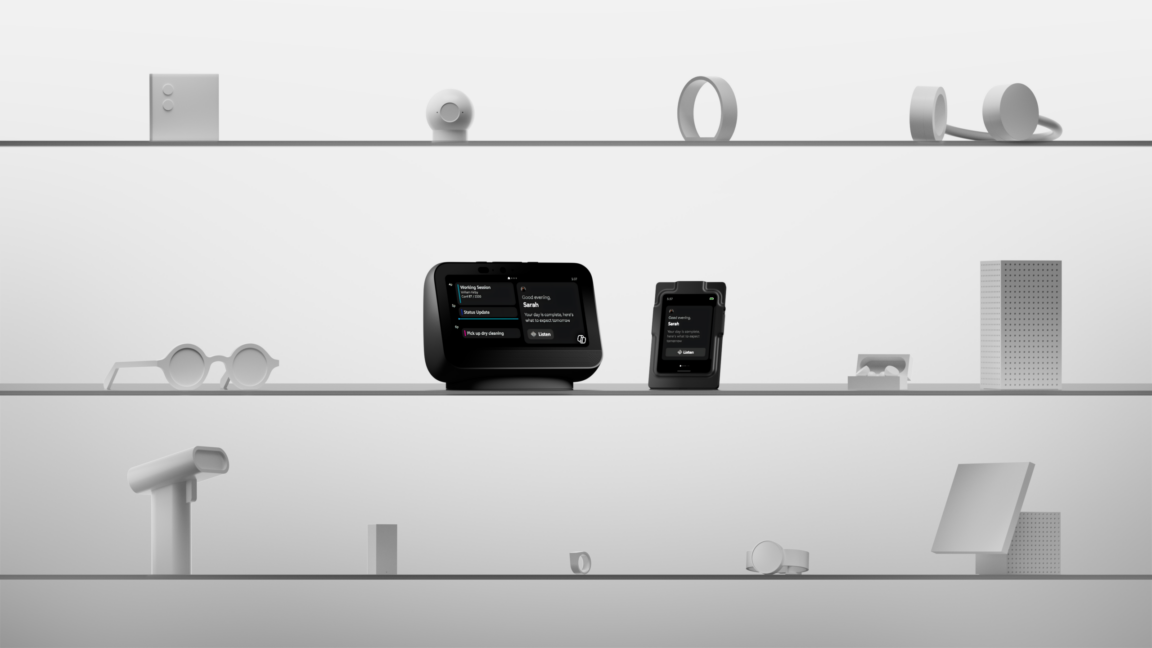
Microsoft has shown off two concept devices that illustrate where it hopes to go with Project Solara. The more conventional is the Desk Concept, which looks like a typical smart display. It’s got a touchscreen, microphones, and a camera. While you sit at your desk, this gadget would keep you apprised of what your theoretical AI agents are doing on your behalf. It can act as a secondary monitor or become a standalone Windows PC with Windows 365 cloud computing. This concept is built around MediaTek IoT chips.

The other Solara concept skews weirder. What if the work badge at the end of your lanyard had a touchscreen, 5G connectivity, a camera, microphones, and a fingerprint scanner? That’s the Badge Concept. It would have the same Solara software, piping in generative interfaces from your preferred AI agent. Microsoft envisions this Qualcomm-based device providing biometric-authenticated access to your agents—just tap the sensor and start telling your personal robot what to do. It could also record and summarize meetings and use the camera to “take action on the environment,” whatever that means.

You can’t even get in line to buy either of these devices. Microsoft’s next step is to demo its agent-first devices with industry partners, including AccuWeather, Best Buy, CVS Health, Levi’s, and Target.

Microsoft has struggled to branch out beyond traditional computing and enterprise services, having tried and failed on numerous occasions to gain a foothold in mobile computing. With AI, Microsoft was uncharacteristically at the forefront of change. With its OpenAI deal sputtering, the company is now looking to the future, and this is it: agents instead of apps.

[embedded content]

This is an interesting pitch for how we might actually use AI agents, and it’s not coming totally out of left field. Google is also pursuing agentic interfaces in its search products. At I/O, Google previewed new agent-first search tools that can instantly build dashboards and mini-apps based on your search queries.

As vague and pie-in-the-sky as Project Solara may be, Microsoft is pretty in tune with the rest of big tech’s AI plans. If any of it works, we can only hope it doesn’t lead to a new generation of touchscreen millstones around our necks.

https://arstechnica.com/gadgets/2026/06/microsofts-project-solara-is-an-android-os-designed-for-agents-instead-of-apps/


Android phones will soon be able to detect spoofed calls and impersonation scams

We’re expecting Android 17 to begin rolling out later this month, but first, Google has a batch of updates for the wider Android device ecosystem. As usual, some of the new features are limited to specific devices, and others require using Google’s apps. But if you don’t mind the latter, you can get automated protection from the growing threat of deepfake phone scams.

According to Google, “impersonation fraud” is one of the most common types of financial scams. The FTC tracked almost $3 billion in losses from such scams during 2024, and the improvements in AI voice cloning tools more recently are making the schemes easier to pull off. The voice models are becoming so capable that it can be difficult to identify a fake caller even when an AI is imitating someone you talk to every day.

Google’s solution is an expansion of the system it debuted last month for verified financial calls. Now, a similar feature will work with anyone in your contacts. Many of the most effective deepfake scams involve spoofing a contact’s number, which makes the call look more legitimate when your phone lights up. Victims of these scams are then greeted by an accurate re-creation of the person’s voice spinning a yarn that involves an urgent need for cash.

Google’s scam call detection feature will be available on all phones running Android 12 or higher, but it does require you to have three Google apps installed: Phone by Google, Contacts, and Google Messages. Depending on your device, you may already have these. They’re the preloaded options on Pixel and Motorola phones, and Samsung has now switched over fully to Google Messages. Google claims that Phone by Google is the most widely used dialer, but that doesn’t seem right—Samsung has its own phone app, and it’s the largest Android OEM by far.

https://arstechnica.com/gadgets/2026/06/google-announces-deepfake-call-detection-for-android-new-airdrop-device-support/


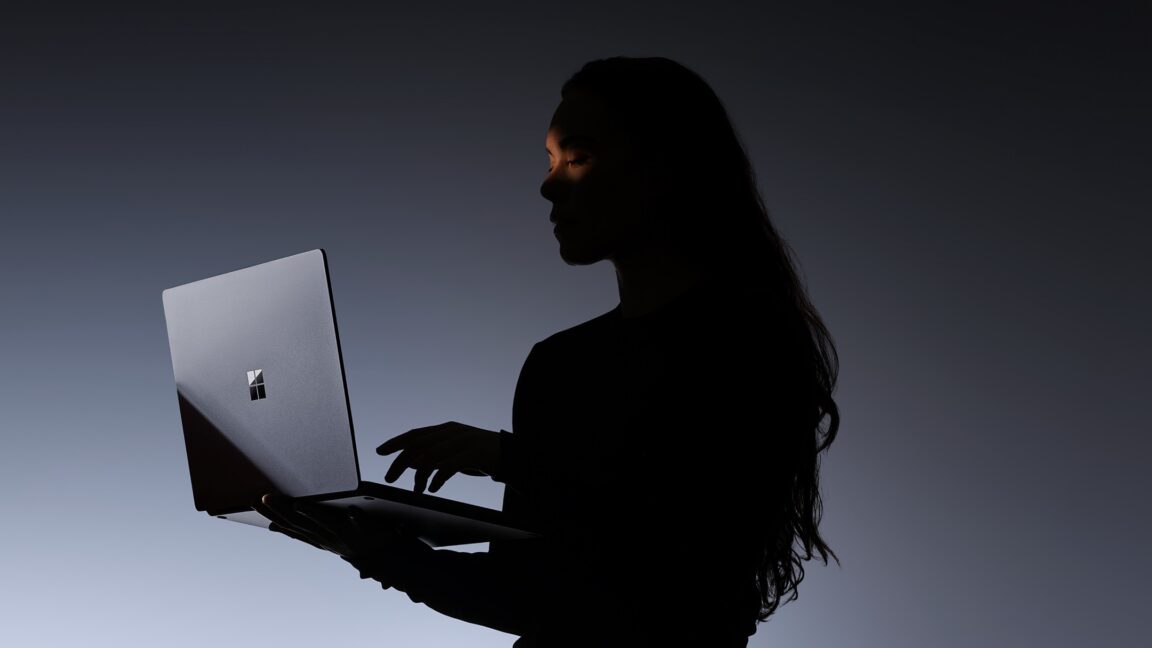
Microsoft’s Surface Laptop Ultra looks like its first true MacBook Pro competitor

Dell, Asus, Lenovo, HP, MSI, Acer, and Gigabyte are among the PC makers that are designing systems around Nvidia’s RTX Spark, Nvidia’s new Arm-based chip for Windows PCs. But the flagship RTX Spark PC may be from the same company that makes Windows: the new Microsoft Surface Laptop Ultra is a high-end RTX Spark system that will offer up to 128GB of unified memory for “creators, developers, and AI builders.”

Microsoft says the Laptop Ultra will be available “later this year” but didn’t discuss any specific pricing or configuration options.

The Laptop Ultra will slot in above the regular Qualcomm Snapdragon-based Surface Laptops in Microsoft’s lineup. Microsoft has made high-end Surface devices with more powerful CPUs and GPUs before, but to date, they’ve also come with convertible designs that may have limited their appeal. The first was the old Surface Book, with its fully detachable screen and bendy-straw hinge that didn’t close all the way; the second was the Surface Laptop Studio, with its chunky design and sliding screen. The Laptop Ultra is Microsoft’s first attempt to follow the MacBook Pro formula: it’s like the other Surface Laptops, just with more power.

Microsoft says the Laptop Ultra will include USB-A, USB-C, and HDMI ports, as well as an SD card slot and headphone jack. It’s said to include a haptic trackpad that’s “the largest we’ve ever put on a Surface.” A 15-inch PixelSense display offers up to 2,000 nits of peak brightness.

https://arstechnica.com/gadgets/2026/06/microsoft-surface-laptop-ultra-will-be-among-the-first-nvidia-rtx-spark-arm-pcs/


Starlink shuts down its GPS-style cheat code. Researchers may unlock it anyway.

In 2021, a team led by Zak Kassas, director of the Autonomous Systems Perception, Intelligence, and Navigation (ASPIN) Laboratory at The Ohio State University, showed how electronically eavesdropping on signals from six Starlink satellites could pinpoint locations on Earth to within 8 meters of accuracy—although that required 13 minutes of tracking rather than delivering instantaneous results.

Such opportunistic eavesdropping is challenging, because Starlink is consistently optimizing for its primary satellite Internet service by turning beams on and off, or sometimes switching beams as the fast-moving satellites talk to many different users, Kassas explained. That creates unpredictable jumps in the signal timing estimates that the researchers rely upon to calculate positioning data.

To tackle those challenges, Kassas and his colleagues use Doppler measurements of signal frequency changes that reflect satellite motions relative to the receiver, along with software algorithms to correct for timing errors. They have also deployed phased-array antennas—capable of communicating with just one or two satellites at a time—in combination with low-gain, omnidirectional antennas that can capture signals from nearly 10 satellites at a time. By 2025, the researchers had shown how to harness signals from an average of three Starlink satellites to deliver positioning results to within 2 meters of accuracy in just 20 seconds.

But this general eavesdropping strategy is not just limited to Starlink’s thousands of satellites—they have also exploited satellite signals from Orbcomm, Iridium, Starlink, OneWeb, NOAA, and the dedicated PNT constellation, Xona. “I’m not really married to Starlink—I love them all,” Kassas said.

The team has demonstrated this alternative navigation solution with ground vehicles, a high-altitude balloon, and a drone. One of the latest experiments showed how exploiting signals from both Starlink and OneWeb satellites could improve ship navigation accuracy off the west coast of Greenland in the Arctic, meaning that the technique could probably work nearly anywhere on Earth.

All this suggests that people may not have to wait much longer for new GPS alternatives, whether they come directly from Starlink or third parties. Kassas and his team have already licensed their technology to some organizations. “I think people are hungry and hurting in the absence of GPS or GNSS, and they want these solutions,” Kassas told Ars.

https://arstechnica.com/gadgets/2026/05/starlink-blocks-access-to-its-gps-alternative-ahead-of-spacex-ipo/