Google will apparently offer “AI Mode” right on its main search page

Google will soon take more steps to make AI a part of search, exposing more users to its Gemini agent, according to recent reports and app teardowns.

“AI Mode,” shown at the top left of the web results page and inside the Google app, will provide an interface similar to a Gemini AI chat, according to The Information.

This tracks with a finding from Android Authority earlier this month, which noted a dedicated “AI mode” button inside an early beta of the Google app. This shortcut also appeared on Google’s Android search widget, and a conversation history button was added to the Google app. Going even deeper into the app, 9to5Google found references to “aim” (AI mode) and “ai_mode” which suggest a dedicated tab in the Google app, with buttons for speaking to an AI or sending it pictures.

Google already promotes Gemini with links below its search homepage. (“5 ways Gemini can help during the Holidays” is currently showing for me.) Search results on Google can also contain an “AI Overview,” which launched with some “use glue for pizza sauce” notoriety. People averse to AI answers can avoid them with URL parameters and proxy sites (or sticking to the “web” tab). Gemini has also been prominently added to other Google products, like Pixel phones, Gmail, and Drive/Workspace. And the search giant has also been testing the ability to attach files to a web search for analysis.

https://arstechnica.com/gadgets/2024/12/google-will-apparently-offer-ai-mode-right-on-its-main-search-page/



VPN used for VR game cheat sells access to your home network

For proxy networks, Hinderer says, one end of the spectrum is where networks could be used as a way for companies to scrape pricing details from their competitors’ websites. Other uses can include ad verification or people scalping sneakers during sales. They may be considered ethically murky but not necessarily illegal.

At the other end of the scale, according to Orange’s research, residential proxy networks have broadly been used for cyber espionage by Russian hackers, in social engineering efforts, as part of DDoS attacks, phishing, botnets, and more. “We have cybercriminals using them knowingly,” Hinderer says of residential proxy networks generally, with Orange Cyberdefense having frequently seen proxy traffic in logs linked to cyberattacks it has investigated. Orange’s research did not specifically look at uses of Big Mama’s services.

Some people can consent to having their devices used in proxy networks and be paid for their connections, Hinderer says, while others may be included because they agreed to it in a service’s terms and conditions—something research has long shown people don’t often read or understand.

Big Mama doesn’t make it a secret that people who use its VPN will have other traffic routed through their networks. Within the app it says it “may transport other customer’s traffic through” the device that’s connected to the VPN, while it is also mentioned in the terms of use and on a FAQ page about how the app is free.

The Big Mama Network page advertises its proxies as being available to be used for ad verification, buying online tickets, price comparison, web scraping, SEO, and a host of other use cases. When a user signs up, they’re shown a list of locations proxy devices are located in, their internet service provider, and how much each connection costs.

This marketplace, at the time of writing, lists 21,000 IP addresses for sale in the United Arab Emirates, 4,000 in the US, and tens to hundreds of other IP addresses in a host of other countries. Payments can only be made in cryptocurrency. Its terms of service say the network is only provided for “legal purposes,” and people using it for fraud or other illicit activities will be banned.

https://arstechnica.com/security/2024/12/vpn-used-for-vr-game-cheat-sells-access-to-your-home-network/


Home Assistant’s Voice Preview Edition is a little box with big privacy powers

Home Assistant announced today the availability of the Voice Preview Edition, its own design of a living-room-friendly box to offer voice assistance with home automation. Having used it for a few weeks, it seems like a great start, at least for those comfortable with digging into the settings. That’s why Home Assistant is calling it a “Preview Edition.”

Using its privacy-minded Nabu Casa cloud—or your own capable computer—to handle the processing, the Voice Preview Edition (VPE) ($60/60 euros, available today) has the rough footprint of a modern Apple TV but is thinner. It works similarly to an Amazon Echo, Google Assistant, or Apple Siri device, but with a more focused goal. Start with a wake word—the default, and most well-trained version, is “Okay, Nabu,” but “Hey, Jarvis” and “Hey, Mycroft” are available. Follow that with a command, typically something that targets a smart home device: “Turn on living room lights,” “Set thermostat to 68,” “Activate TV time.” And then, that thing usually happens.

[embedded content]

Home Assistant’s Voice Preview Edition, doing what it does best. I had to set a weather service to an alias of “the weather outside” to get that response worked out.

“That thing” is primarily controlling devices, scenes, and automations around your home, set up in Home Assistant. That means you have to have assigned them a name or alias that you can remember. Coming up with naming schemes is something you end up doing in big-tech smart home systems, too, but it’s a bit more important with the VPE.

You won’t need to start over with all your gear if you’ve got a Google Home, Alexa, or Apple Home ecosystem, at least. Home Assistant has good “bridge” options built into it for connecting all the devices you’ve set up and named inside those ecosystems.

It’s important to have a decently organized smart home set up with a VPE box, because it doesn’t really do much else, for better or worse. Unless you hook it up to an AI model.

The voice device that is intentionally not very chatty

The VPE box can run timers (with neat LED ring progress indicators), and with a little bit of settings tweaking, you can connect it to Home Assistant’s built-in shopping lists and task lists or most any other plug-in or extension of your system. If you’re willing to mess with LLMs—like ChatGPT or Google’s Gemini—locally or through cloud subscriptions, you could trigger prompts with your voice, though performance will vary.

https://arstechnica.com/gadgets/2024/12/home-assistants-voice-preview-edition-is-a-little-box-with-big-privacy-powers/


Intel is testing BIOS updates to fix performance of its new Core Ultra 200S CPUs

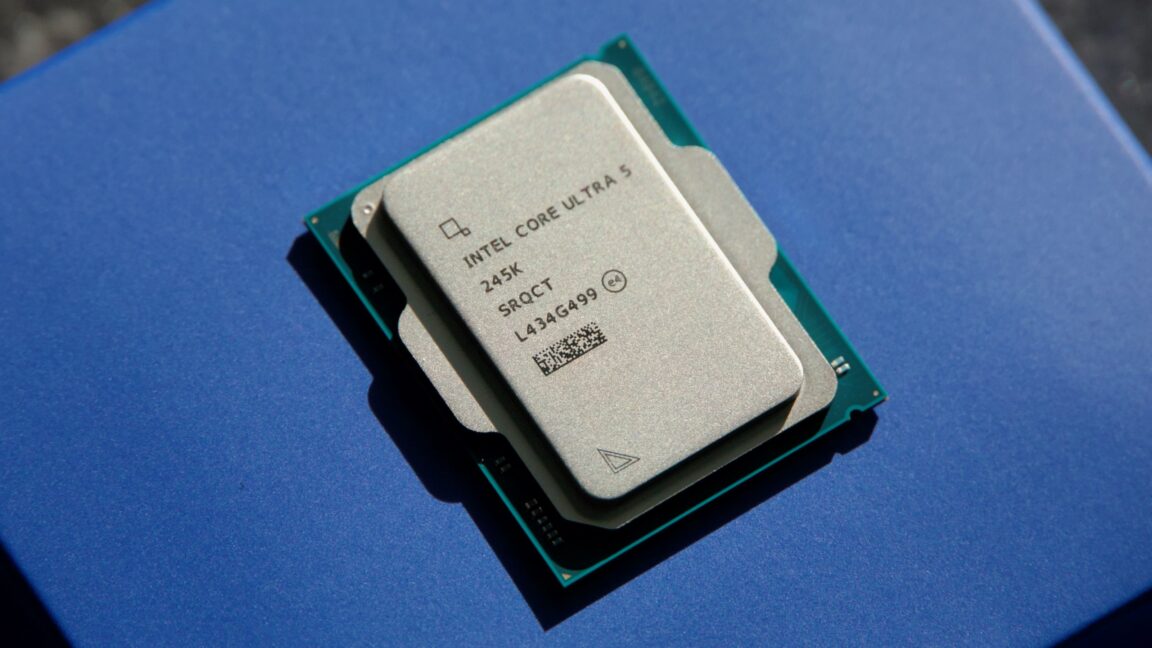
Without tuned power profiles, a separate but related feature called the Intel Application Performance Optimizer (APO) couldn’t kick in, reducing performance by between 2 and 14 percent.

Current BIOS updates for motherboards contain optimized performance and power settings that “were not consistently toggled” in early BIOS versions for those boards. This could also affect performance by between 2 and 14 percent.

The fifth and final fix for the issues Intel has identified is coming in a later BIOS update that the company plans to release “in the first half of January 2025.” The microcode updates in that BIOS update should provide “another modest performance improvement in the single-digit range,” based on Intel’s performance testing across 35 games. When that microcode update (version 0x114) has been released, Intel says it plans to release another support document with more detailed performance comparisons.

If a long Intel support document detailing a multi-stage series of fixes for elusive performance issues is giving you deja vu, you’re probably thinking about this other, more serious problem with 13th- and 14th-generation Core CPUs from earlier this year. In that case, the issue was that the CPU could request more voltage than it could handle, eventually leading to degraded performance and crashes.

These voltage requests could permanently damage the silicon, so Intel extended the warranties of most 13th- and 14th-gen Core CPUs from three years to five. The company also worked with motherboard makers to release a string of BIOS updates to keep the problems from happening again. A similar string of BIOS updates will be necessary to fix the problems with the Core Ultra 200S chips.

https://arstechnica.com/gadgets/2024/12/intel-patches-performance-for-core-ultra-200s-desktop-cpus-promises-more-to-come/


Amazon’s RTO delays exemplify why workers get so mad about mandates

Concern about RTO planning is underscored by Amazon reportedly lacking enough space for its current in-office policy. Bloomberg said that “in recent interviews, employees complained of working from shared desks, crowded corporate canteens, and a lack of conference rooms for confidential calls or team meetings.”

The publication also pointed to employee displeasure with having to work in an office full-time when other tech firms have more lax policies. This could result in Amazon losing some of its best talent. Per the study from the University of Pittsburgh, Baylor University, The Chinese University of Hong Kong, and Cheung Kong Graduate School of Business researchers, senior, skilled workers are more likely to depart a company over an RTO mandate because they have “more connections with other companies.”

Employees eyeing greener pastures could put Amazon at risk of losing some of its most experienced employees. That also reportedly happened to Apple, Microsoft, and SpaceX following their RTO mandates, per a May study from University of Chicago and University of Michigan researchers (PDF). Following Amazon’s RTO announcement, 73 percent of 2,285 workers that Blind surveyed said they were “considering looking for another job” due to the rule change.

Finally, banning remote work while giving workers a few months to figure out how to adjust resulted in a lot of negative discourse, including Garman reportedly telling workers that if they don’t work well in offices, “that’s okay; there are other companies around.” As the November RTO study put it:

“An RTO announcement can be a big and sudden event that is distasteful to most employees, especially when the decision has not been well communicated, potentially triggering an immediate response of employees searching for and switching to new jobs.”

If Amazon had communicated RTO dates with greater accuracy once office plans were finalized, it could have alleviated some of the drama that followed the announcement and the negative impact that had on employee morale.

For its part, Amazon has instituted a tool for reserving conference rooms, which requires workers to commit to using the space so it’s not wasted, Bloomberg reported.

But with companies now having had years to plot their RTO approaches, employees are expecting more accurate communication and smooth transitions that align with their respective department’s culture. Amazon’s approach missed those marks.

https://arstechnica.com/tech-policy/2024/12/amazons-rto-delays-highlight-why-workers-get-so-mad-about-mandates/


The Backbone One would be an ideal game controller—if the iPhone had more games

In theory, it ought to be as good a time as ever to be a gamer on the iPhone.

Classic console emulators have rolled out to the platform for the first time, and they work great. There are strong libraries of non-skeezy mobile games on Apple Arcade and Netflix Games, streaming via Xbox and PlayStation services is continuing apace, and there are even a few AAA console games now running natively on the platform, like Assassin’s Creed and Resident Evil titles.

Some of those games need a traditional, dual-stick game controller to work well, though, and Apple bafflingly offers no first-party solution for this.

Yes, you can sync popular Bluetooth controllers from Sony, Microsoft, Nintendo, and 8bitdo with your iPhone, but that’s not really the ideal answer—your iPhone isn’t a big TV sitting across the room or a computer monitor propped up on your desk.

A few companies have jumped in to solve this with attachable controllers that give the iPhone a Nintendo Switch or Steam Deck-like form factor (albeit a lot smaller). There’s a wide range of quality, though, and some of the ones you’ll see advertised aren’t very well made.

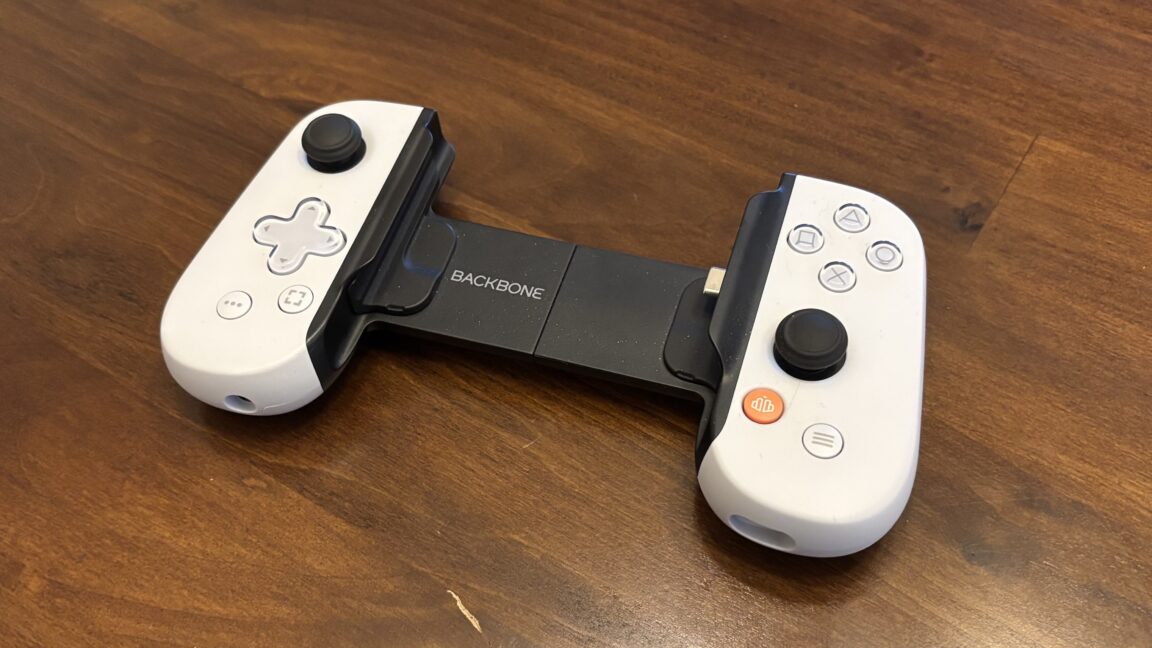
There’s some debate out there, but there’s one that just about anyone will at least put up for consideration: the Backbone One. That’s the one I picked for my new iPhone 16 Pro Max, which I have loaded with emulators and tons of games.

Since many folks are about to get iPhone 16s for the holidays and might be in the market for something similar, I figured it’d be a good time to write some quick impressions, including pros and cons. Is this thing worth a $99 price tag? What about its subscription-based app?

Switching from the Razer Kishi

Here’s some background, real quick: I previously owned an iPhone 13 Pro, and I played a lot of Diablo Immortal. I wanted to try the controller experience with that game, so I bought a first-generation Razer Kishi—which I liked for the most part. It had excellent thumbsticks that felt similar to those you’d find on an Xbox controller, if a little bit softer.

https://arstechnica.com/gadgets/2024/12/iphone-gaming-controller/


Arm says it’s losing $50M a year in revenue from Qualcomm’s Snapdragon X Elite SoCs

Arm and Qualcomm’s dispute over Qualcomm’s Snapdragon X Elite chips is continuing in court this week, with executives from each company taking the stand and attempting to downplay the accusations from the other side.

If you haven’t been following along, the crux of the issue is Qualcomm’s purchase of a chip design firm called Nuvia in 2021. Nuvia was originally founded by ex-Apple chip designers to create high-performance Arm chips for servers, but Qualcomm took an interest in Nuvia’s work and acquired the company to help it create high-end Snapdragon processors for consumer PCs instead. Arm claims that this was a violation of its licensing agreements with Nuvia and is seeking to have all chips based on Nuvia technology destroyed.

According to Reuters, Arm CEO Rene Haas testified this week that the Nuvia acquisition is depriving Arm of about $50 million a year, on top of the roughly $300 million a year in fees that Qualcomm already pays Arm to use its instruction set and some elements of its chip designs. This is because Qualcomm pays Arm lower royalty rates than Nuvia had agreed to pay when it was still an independent company.

For its part, Qualcomm argued that Arm was mainly trying to push Qualcomm out of the PC market because Arm had its own plans to create high-end PC chips, though Haas claimed that Arm was merely exploring possible future options. Nuvia founder and current Qualcomm Senior VP of Engineering Gerard Williams III also testified that Arm’s technology comprises “one percent or less” of Qualcomm’s finished chip designs, minimizing Arm’s contributions to Snapdragon chips.

Although testimony is ongoing, Reuters reports that a jury verdict in the trial “could come as soon as this week.”

If it succeeds, Arm could potentially halt sales of all Snapdragon chips with Nuvia’s technology in them, which at this point includes both the Snapdragon X Elite and Plus chips for Windows PCs and the Snapdragon 8 Elite chips that Qualcomm recently introduced for high-end Android phones.

https://arstechnica.com/gadgets/2024/12/arm-and-qualcomm-fight-in-court-over-the-future-of-snapdragon-x-elite-chips/


Z-Wave Long Range and its mile-long capabilities will arrive next year

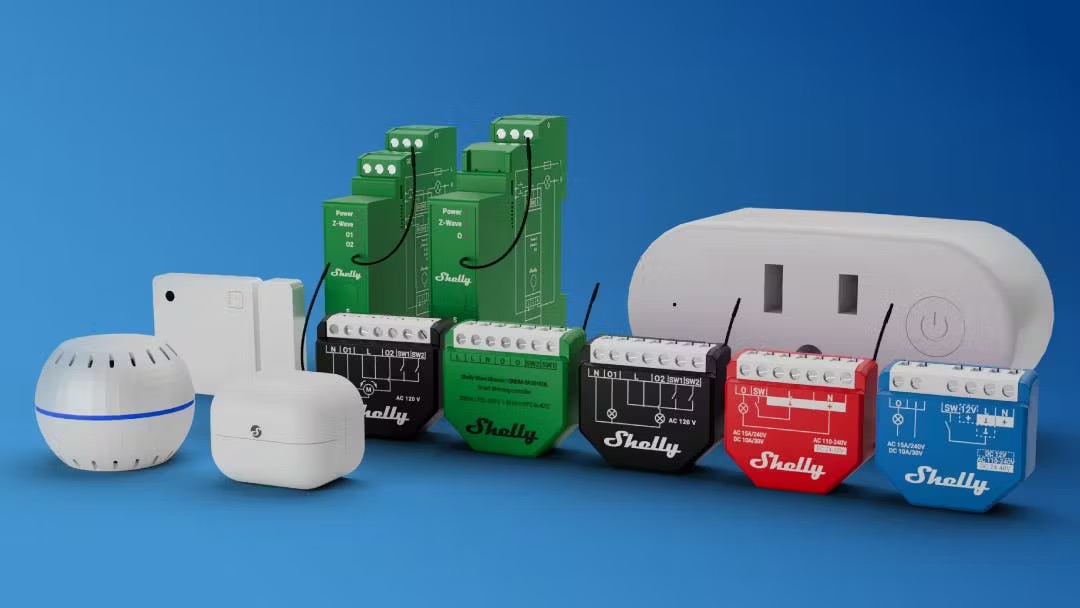
Z-Wave can be a very robust automation network, free from the complications and fragility of Wi-Fi and Bluetooth. Just how robust, you ask? More than a mile long, under the right circumstances, as hardware soon to hit the market promises.

All claims of radio distances should be taken with amounts of salt unhealthy for consumption. What can be accomplished across an empty field is not the same as what can be done through buildings, interference, and scatter. But Z-Wave Long Range (or Z-Wave LR), operating “in long range mode at full power,” can hit 1.5 miles, according to the Z-Wave Alliance, presuming you’ve got the right star-shaped hub network.

By using a star network topology instead of a more traditional mesh, Z-Wave LR reduces the need for hubs and repeaters, relying instead on a central hub. It can be more reliable for larger commercial spaces, security setups, and bigger homes, and also more power efficient. Devices automatically adjust their signal strength while on Z-Wave networks, extending the battery life of a single coin cell up to 10 years—again, under best-case circumstances. If you’re really a glutton for punishment, you can fit up to 4,000 devices on a network running Z-Wave LR, because LR can co-exist on the same network as standard Z-Wave meshes.

https://arstechnica.com/gadgets/2024/12/z-wave-long-range-and-its-mile-long-capabilities-will-arrive-next-year/


After decades of talk, Seagate seems ready to actually drop the HAMR hard drives

How do you fit 32 terabytes of storage into a hard drive? With a HAMR.

Seagate has been experimenting with heat-assisted magnetic recording, or HAMR, since at least 2002. The firm has occasionally popped up to offer a demonstration or make yet another “around the corner” pronouncement. The press has enjoyed myriad chances to celebrate the wordplay of Stanley Kirk Burrell, but new qualification from large-scale customers might mean HAMR drives will be actually available, to buy, as physical objects, for anyone who can afford the most magnetic space possible. Third decade’s the charm, perhaps.

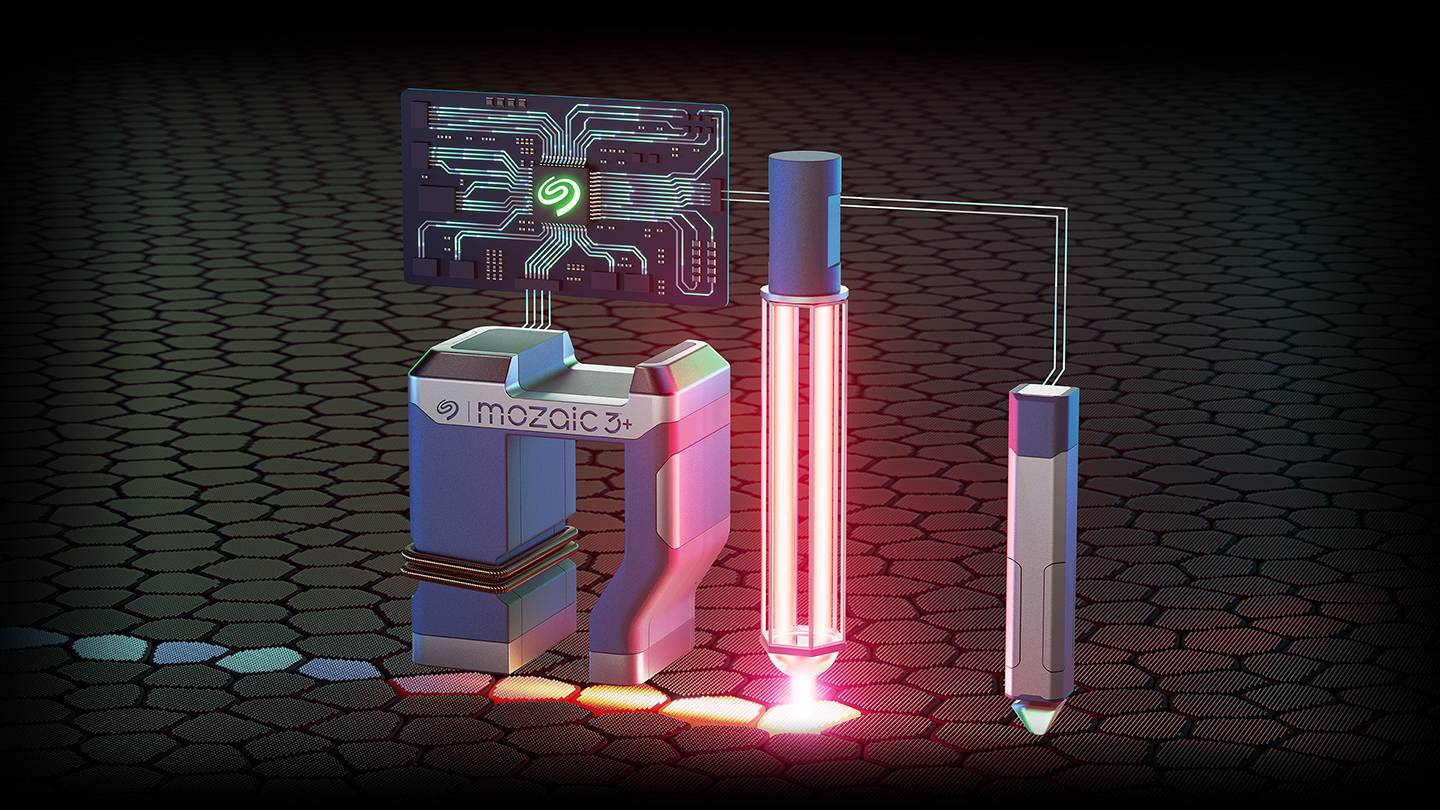
HAMR works on the principle that, when heated, a disk’s magnetic materials can hold more data in smaller spaces, such that you can fit more overall data on the drive. It’s not just putting a tiny hot plate inside an HDD chassis; as Seagate explains in its technical paper, “the entire process—heating, writing, and cooling—takes less than 1 nanosecond.” Getting from a physics concept to an actual drive involved adding a laser diode to the drive head, optical steering, firmware alterations, and “a million other little things that engineers spent countless hours developing.” Seagate has a lot more about Mozaic 3+ on its site.

Seagate’s rendering of how its unique heating laser head allows for 3TB per magnetic platter in Mozaic drives.

Seagate’s rendering of how its unique heating laser head allows for 3TB per magnetic platter in Mozaic drives. Credit: Seagate

Drives based on Seagate’s Mozaic 3+ platform, in standard drive sizes, will soon arrive with wider availability than its initial test batches. The driver maker put in a financial filing earlier this month (PDF) that it had completed qualification testing with several large-volume customers, including “a leading cloud service provider,” akin to Amazon Web Services, Google Cloud, or the like. Volume shipments are likely soon to follow.

https://arstechnica.com/gadgets/2024/12/after-decades-of-talk-seagate-seems-ready-to-actually-drop-the-hamr-hard-drives/


Companies issuing RTO mandates “lose their best talent”: Study

Still, the study provides insight into how employees respond to RTO mandates and the effect it has on corporations and available talent at a time when entities like Dell, Amazon, and the US government are getting stricter about in-office work.

Higher turnover rates

The researchers concluded that the average turnover rates for firms increased by 14 percent after issuing return-to-office policies.

“We expect the effect of RTO mandates on employee turnover to be even higher for other firms” the paper says.

The researchers included testing to ensure that the results stemmed from RTO mandates “rather than time trends.” For example, the researchers found that “there were no significant increases in turnover rates during any of the five quarters prior to the RTO announcement quarter.”

Potentially alarming for employers is the study finding that senior and skilled employees were more likely to leave following RTO mandates. This aligns with a study from University of Chicago and University of Michigan researchers published in May that found that Apple and Microsoft saw senior-level employee bases decrease by 5 percentage points and SpaceX a decrease of 5 percentage points. (For its part, Microsoft told Ars that the report did not align with internal data.)

Senior employees are expected to be more likely to leave, the new report argues, because such workers have “more connections with other companies” and have easier times finding new jobs. Further, senior, skilled employees are “dissatisfied” when management blames remote work for low productivity.

Similarly, the report supports concerns from some RTO-resistant employees that back-to-office mandates have a disproportionate impact on certain groups, like women, which the researchers said show “more pronounced” attrition rates following RTO mandates:

Importantly, the effect on female employee turnover is almost three times as high as that on male employees … One possible reason for these results is that female employees are more affected by RTO mandates due to their greater family responsibilities, which increases their demand for workplace flexibility and work-life balance.

Trouble finding talent

RTO mandates also have a negative impact on companies’ ability to find new employees, the study found. After examining over 2 million job postings, the researchers concluded that companies with RTO mandates take longer to fill job vacancies than before:

https://arstechnica.com/tech-policy/2024/12/companies-issuing-rto-mandates-lose-their-best-talent-study/