Hands-on with the 2024 iPad mini: Spot the differences

The previous model had already abandoned Apple’s proprietary Lightning connection for the industry-standard USB-C, but this updated USB-C port supports transfer speeds up to 10Gb/s, much faster than the previous model. (That’s data transfer, while charging seems the same.)

The USB-C port on an iPad mini

The USB-C port returns, this time with faster data transfer.

Credit: Samuel Axon

The USB-C port returns, this time with faster data transfer. Credit: Samuel Axon

The camera system is mostly the same as before, but Apple has added support for Smart HDR 4, the latest version of its computational photography algorithms that combines multiple rapidly taken photos into one image, using the best features of all of them. This process offers benefits like better low-light photography and improved highlights. There’s also 4K video capture support.

I don’t think there are many iPad mini photographers out there, but hey, not going to say no to improvements.

Lastly, there have been improvements to the display that should mitigate some of the jelly scrolling that irritated a subset of owners of the previous generation of the iPad mini.

Apple Pencil Pro support

Apart from improved CPU, GPU, and NPU performance, the biggest addition here is Apple Pencil Pro support.

Introduced this spring, the Pencil Pro has lower latency than prior Pencil models, but at least as importantly, it has several new sensors and feedback features to make it more versatile. You can squeeze the pencil lightly to bring up a new options panel to quickly switch tools, among other things. There’s also a sensor that lets you roll the pencil to change the orientation of some tools.

Pencil Pro isn’t cheap, though—it’s $129. I imagine most digital artists want the largest canvas possible, so they’re not looking at the mini. But for more casual users, it’s nice to have the option.

Though it be but little, it is fierce

There are a lot of things I like about the iPad mini. It’s comfortable to hold, making it ideal among Apple’s tablets for reading or browsing the web. Typing on it while holding it in landscape mode feels ideal for me, though your mileage may vary, as hand sizes, of course, vary.

https://arstechnica.com/gadgets/2024/10/hands-on-with-the-2024-ipad-mini-spot-the-differences/


Qualcomm cancels Windows dev kit PC for “comprehensively” failing to meet standards

It’s been a big year for Windows running on Arm chips, something that Microsoft and Arm chipmakers have been trying to get off the ground for well over a decade. Qualcomm’s Snapdragon X Elite and X Plus are at the heart of dozens of Copilot+ Windows PCs, which promise unique AI features and good battery life without as many of the app and hardware compatibility problems that have plagued Windows-on-Arm in the past.

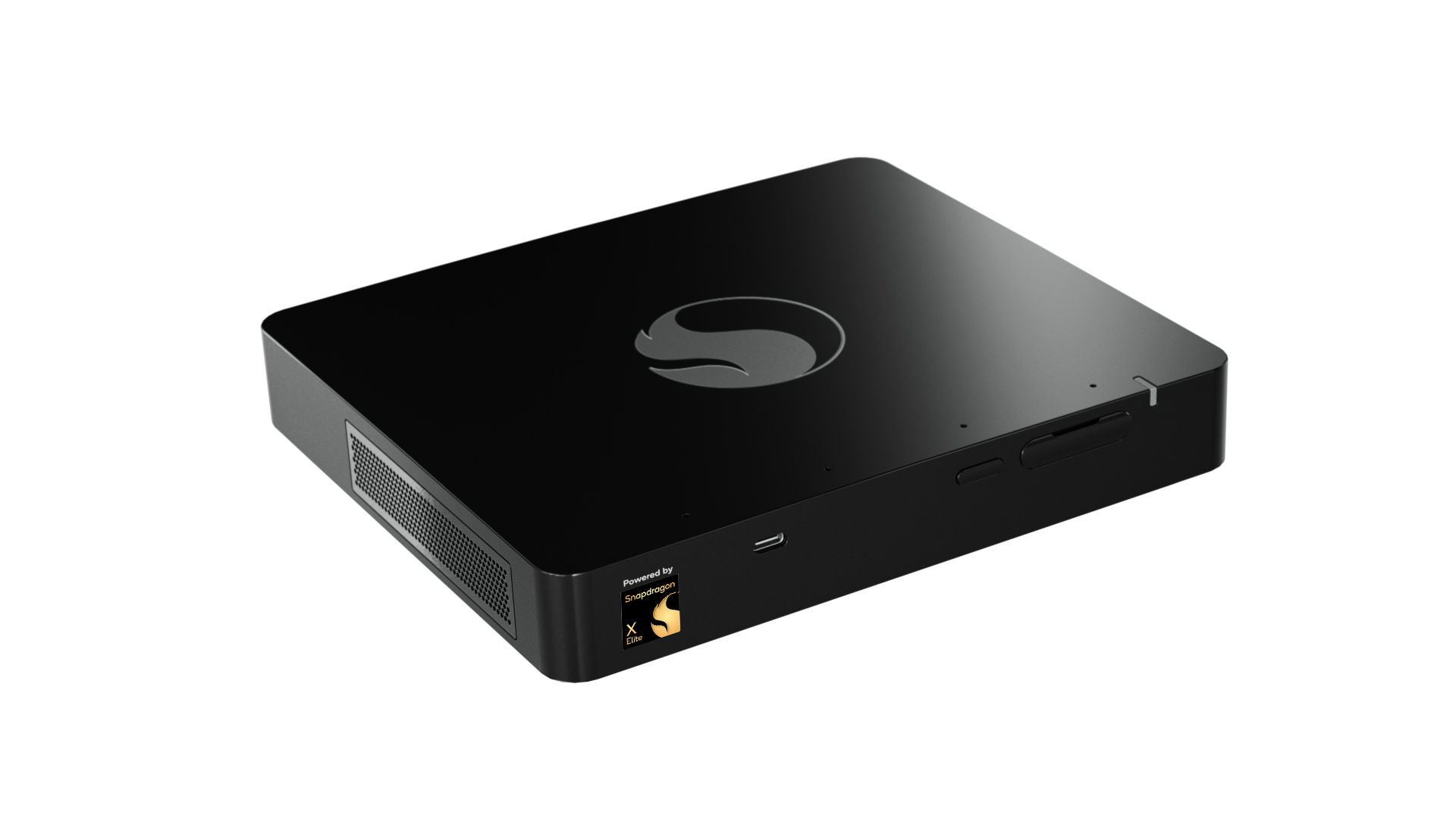
Part of the initial wave of Copilot+ PCs was a single desktop, an $899 developer kit from Qualcomm itself that would give developers and testers a slightly cheaper way to buy into the Copilot+ ecosystem. Microsoft put out a similar Arm-powered dev kit two years ago.

But Qualcomm has unceremoniously canceled the dev kit and is sending out refunds to those who ordered them. That’s according to a note received by developer and YouTuber Jeff Geerling, who had already received the Snapdragon Dev Kit and given it a middling review a couple of weeks ago.

“The launch of 30+ Snapdragon X-series powered PCs is a testament to our ability to deliver leading technology and the PC industry’s desire to move to our next-generation technology,” reads Qualcomm’s statement. “However, the Developer Kit product comprehensively has not met our usual standards of excellence and so we are reaching out to let you know that unfortunately we have made the decision to pause this product and the support of it, indefinitely.”

Qualcomm’s statement also says that “any material, if received” will not have to be returned—those lucky enough to have gotten one of the Dev Kits up until now may be able to keep it and get their money back, though the PC is no longer officially being supported by Qualcomm.

https://arstechnica.com/gadgets/2024/10/qualcomm-cancels-windows-dev-kit-pc-for-comprehensively-failing-to-meet-standards/


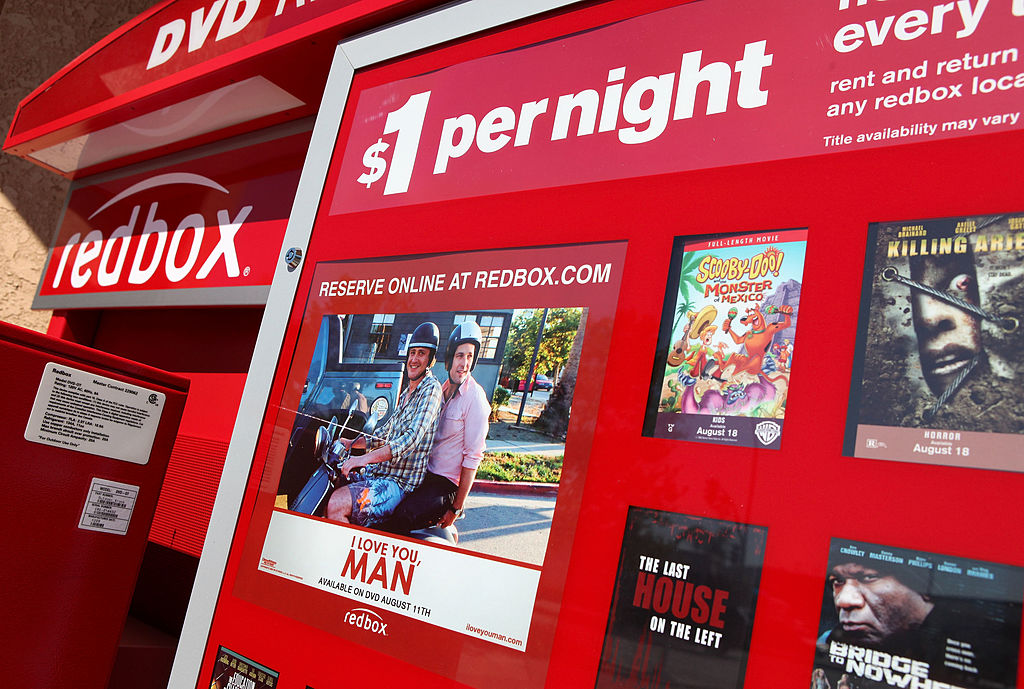
Redbox easily reverse-engineered to reveal customers’ names, zip codes, rentals

Thousands of Redboxes getting dumped

It’s worth noting that the amount of data expected to be stored on Redboxes is small compared to Redbox’s overall business. Since Redbox once rented out millions of DVDs weekly, the data retrieved only represents a small portion of Redbox’s overall business and, likely, of business conducted on that specific kiosk.  That might not be much comfort to those whose data is left vulnerable, though.

The problem is more alarming when considering how many Redboxes are still out in the wild with uncertain futures. High demand for Redbox removals has resulted in all sorts of people, like Turing, gaining access to kiosk hardware and/or data. For example, The Wall Street Journal reported last week about a “former Redbox employee who convinced a 7-Eleven franchisee” to give him a Redbox, a 19-year-old who persuaded a contractor hauling a kiosk away from a drugstore to give it to him instead, as well as a Redbox landing in an Illinois dumpster.

Consumer privacy concerns

Chicken Soup’s actions may violate consumer privacy regulations, including the Video Privacy Protection Act outlawing “wrongful disclosure of video tape rental or sale records.” However, Chicken Soup’s bankruptcy (most of its assets are in a holding pattern, Lowpass reported) makes customer remediation more complicated and less likely.

Mario Trujillo, staff attorney for the Electronic Frontier Foundation, told Ars that this incident “highlights the importance of security research in uncovering flaws that can leave customers unprotected.”

“While it may be hard to hold a bankrupt company accountable, uncovering the flaw is the first step,” he added.

Turing, which reverses engineers a lot of tech, said that the privacy problems she encountered with Redbox storage “isn’t terribly uncommon.”

Overall, the situation underscores the need for stricter controls around consumer data, whether it comes internally from companies or, as some would argue, through government regulation.

“This security flaw is a reminder that all companies should be obligated to minimize the amount of data they collect and retain in the first place,” Trujillo said. “We need strong data privacy laws to do that.”

https://arstechnica.com/gadgets/2024/10/redbox-hard-drive-hacked-to-reveal-customer-information-from-2471-rentals/


Ward Christensen, BBS inventor and architect of our online age, dies at age 78

A low-key giant

Suess died in 2019, and with the passing of both BBS originators, we find ourselves at the symbolic end of an era, although many BBSes still run today. These are typically piped through the Internet instead of a dial-up telephone line.

While Christensen himself was always humble about his role in creating the first BBS, his contributions to the field did not go unrecognized. In 1992, Christensen received two Dvorak Awards, including a lifetime achievement award for “outstanding contributions to PC telecommunications.” The following year, the Electronic Frontier Foundation honored him with the Pioneer Award.

Professionally, Christensen enjoyed a long and successful career at IBM, where he worked from 1968 until his retirement in 2012. His final position at the company was as a field technical sales specialist.

A still image of Ward Christensen in 2002 being interviewed for BBS: The Documentary.

Ward Christensen in 2002 being interviewed by Jason Scott for BBS: The Documentary.

Ward Christensen in 2002 being interviewed by Jason Scott for BBS: The Documentary. Credit: Jason Scott

But mostly, Christensen kept a low profile.  When visiting online communities in his later years, Ward presented no ostentation, and there was no bragging about having made much of it possible. This amazed Scott, who said, “I was always fascinated that Ward kept a Twitter account, just messing around.”

Scott feels like humility, openness, and the spirit of sharing are key legacies that Christensen has left behind.

“It would be like a person who was in a high school band saying, ‘Eh, never really got into touring, never really had the urge to record albums or become a rock star,'” Scott said.  “And then later people come and go, ‘Oh, you made the first [whatever] in your high school band,’ but that sense of being at that locus of history and the fact that his immediate urge was to share all the code everywhere—that’s to me what I think people should remember about this guy.”

https://arstechnica.com/gadgets/2024/10/ward-christensen-bbs-inventor-and-architect-of-our-online-age-dies-at-age-78/


Smart gardening firm’s shutdown a reminder of Internet of Things’ fickle nature

AeroGarden, which sells Wi-Fi-connected indoor gardening systems, is going out of business on January 1. While Scotts Miracle-Gro has continued selling AeroGarden products after announcing the impending shutdown, the future of the devices’ companion app is uncertain.

AeroGarden systems use hydroponics and LED lights to grow indoor gardens without requiring sunlight or soil. The smart gardening system arrived in 2006, and Scotts Miracle-Gro took over complete ownership in 2020. Some AeroGardens work with the iOS and Android apps that connect to the gardens via Wi-Fi and tell users when their plants need water or nutrients. AeroGarden also marketed the app as a way for users to easily monitor multiple AeroGardens and control the amount of light, water, and nutrients they should receive. The app offers gardening tips and can access AeroGarden customer service representatives and AeroGarden communities on Facebook and other social media outlets.

Regarding the reasoning for the company’s closure, AeroGarden’s FAQ page only states:

This was a difficult decision, but one that became necessary due to a number of challenges with this business.

It’s possible that AeroGarden struggled to compete with rivals, which include cheaper options for gardens and seed pods that are sold on Amazon and other retailers or made through DIY efforts.

AeroGarden’s closure is somewhat more surprising considering that it updated its app in June. But now it’s unknown how long the app will be available. In an announcement last week, AeroGarden said that its app “will be available for an extended period of time” and that it’ll inform customers about the app’s “longer-term status as we work through the transition period.”

A screenshot from the AeroGarden app.

A screenshot from the AeroGarden app.

Credit: AeroGarden

A screenshot from the AeroGarden app. Credit: AeroGarden

However, that doesn’t provide much clarity to people who may have invested in AeroGarden’s Wi-Fi-enabled Bounty and Farm models. The company refreshed both lines in 2020, with the Farm line starting at $595 at the time. The gardens also marketed compatibility with Amazon Alexa. The gardens will still work without the app, but remote control features most likely won’t whenever the app ultimately shuts down.

https://arstechnica.com/gadgets/2024/10/smart-gardening-firms-shutdown-a-reminder-of-internet-of-things-fickle-nature/


Asahi Linux’s bespoke GPU driver is running Windows games on Apple Silicon Macs

A few years ago, the idea of running PC games on a Mac, in Linux, or on Arm processors would have been laughable. But the developers behind Asahi Linux—the independent project that is getting Linux working on Apple Silicon Macs—have managed to do all three of these things at once.

The feat brings together a perfect storm of open source projects, according to Asahi Linux GPU lead Alyssa Rosenzweig: the FEX project to translate x86 CPU code to Arm, the Wine project to get Windows binaries running on Linux, DXVK and the Proton project to translate DirectX 12 API calls into Vulkan API calls, and of course the Asahi project’s Vulkan-conformant driver for Apple’s graphics hardware.

Games are technically run inside a virtual machine because of differences in how Apple Silicon and x86 systems address memory—Apple’s systems use 16 KB memory pages, while x86 systems use 4 KB pages, something that causes issues for Asahi and some other Arm Linux distros on a regular basis and a gap that the VM bridges.

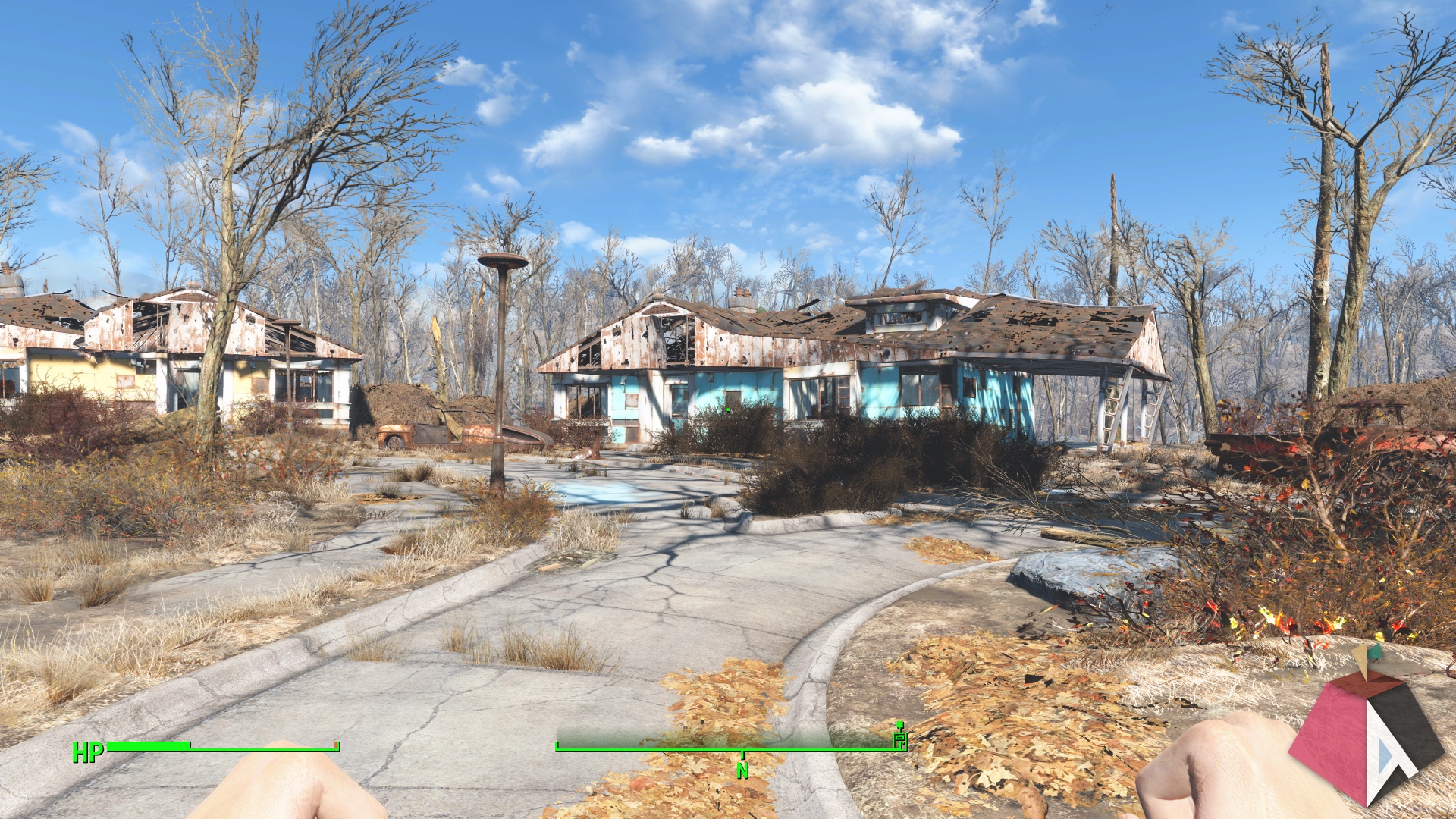
You’d never guess that this was the Windows version of Fallout 4 running on a Mac that was running Linux. Credit: Alyssa Rosenzweig

Rosenzweig’s post shows off screenshots of Control, Fallout 4, The Witcher 3, Ghostrunner, Cyberpunk 2077, Portal 2, and Hollow Knight, though as she notes, most of these games won’t run at anywhere near 60 frames per second yet.

https://arstechnica.com/apple/2024/10/asahi-linuxs-bespoke-gpu-driver-is-running-windows-games-on-apple-silicon-macs/


Trek CarBack bike radar lets you know when cars are approaching

“Car back!”

If you’ve ever been on a group bike ride, you’ve no doubt heard these two words shouted by a nearby rider. It’s also the name of Trek’s new $199 bike radar.

For safety-conscious cyclists, bike radars have been a game-changer. Usually mounted on the seat post, the radar units alert cyclists to cars approaching from behind. While they will work on any bike on any road, bike radar is most useful in suburban and rural settings. After all, if you’re doing some urban bike commuting, you’ll just assume cars are behind you because that’s how it is. But on more open roads with higher speed limits or free-flowing traffic, bike radars are fantastic.

While a handful of companies make them, the Garmin Varia is the best-known and most popular option. The Varia is so popular that it is nearing the proprietary eponym status of Kleenex and Taser among cyclists. Trek hopes to change that with its new CarBack bike radar.

Saddle mount

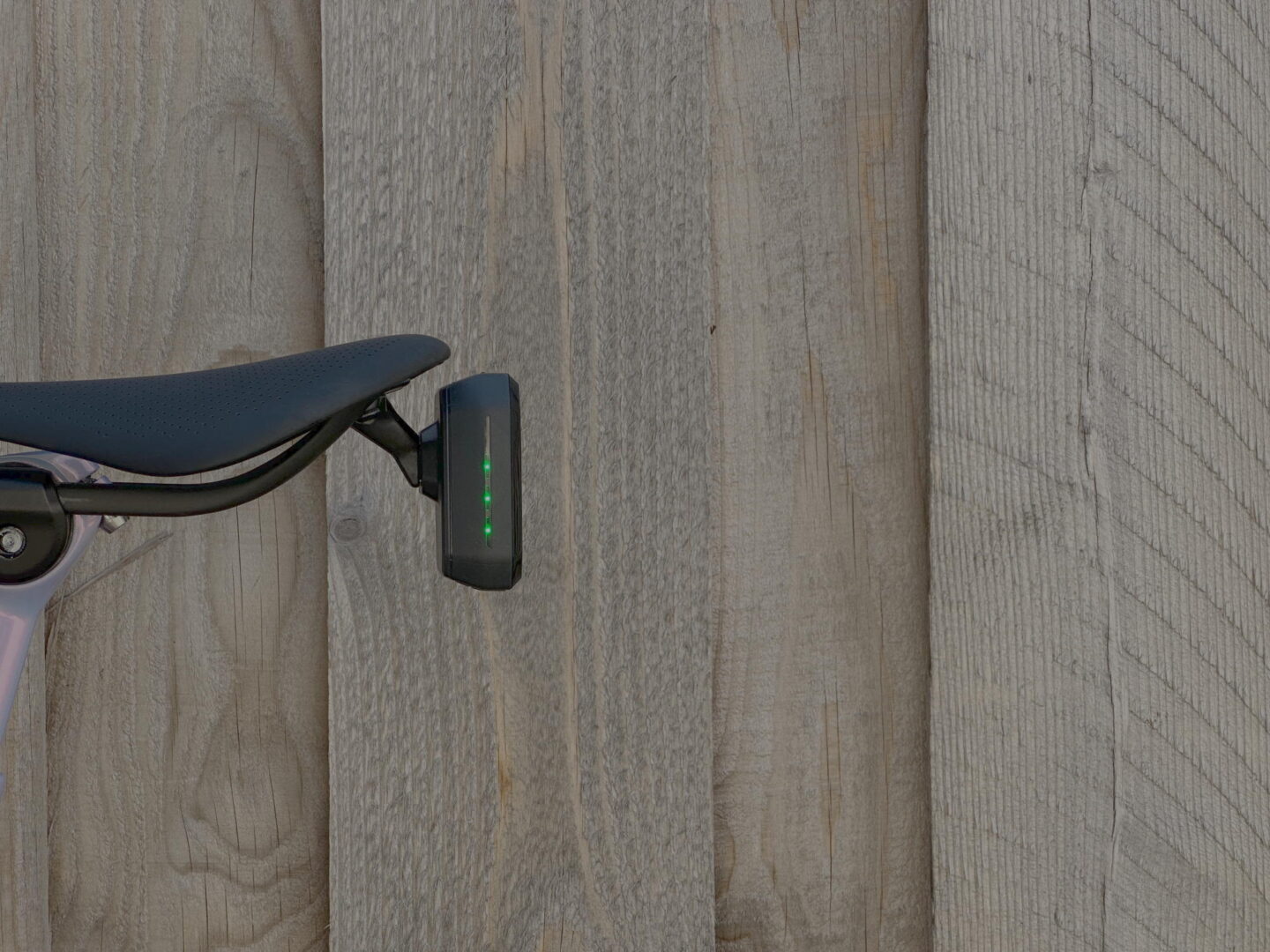
The CarBack can attach directly to a Bontrager saddle…

Eric Bangeman

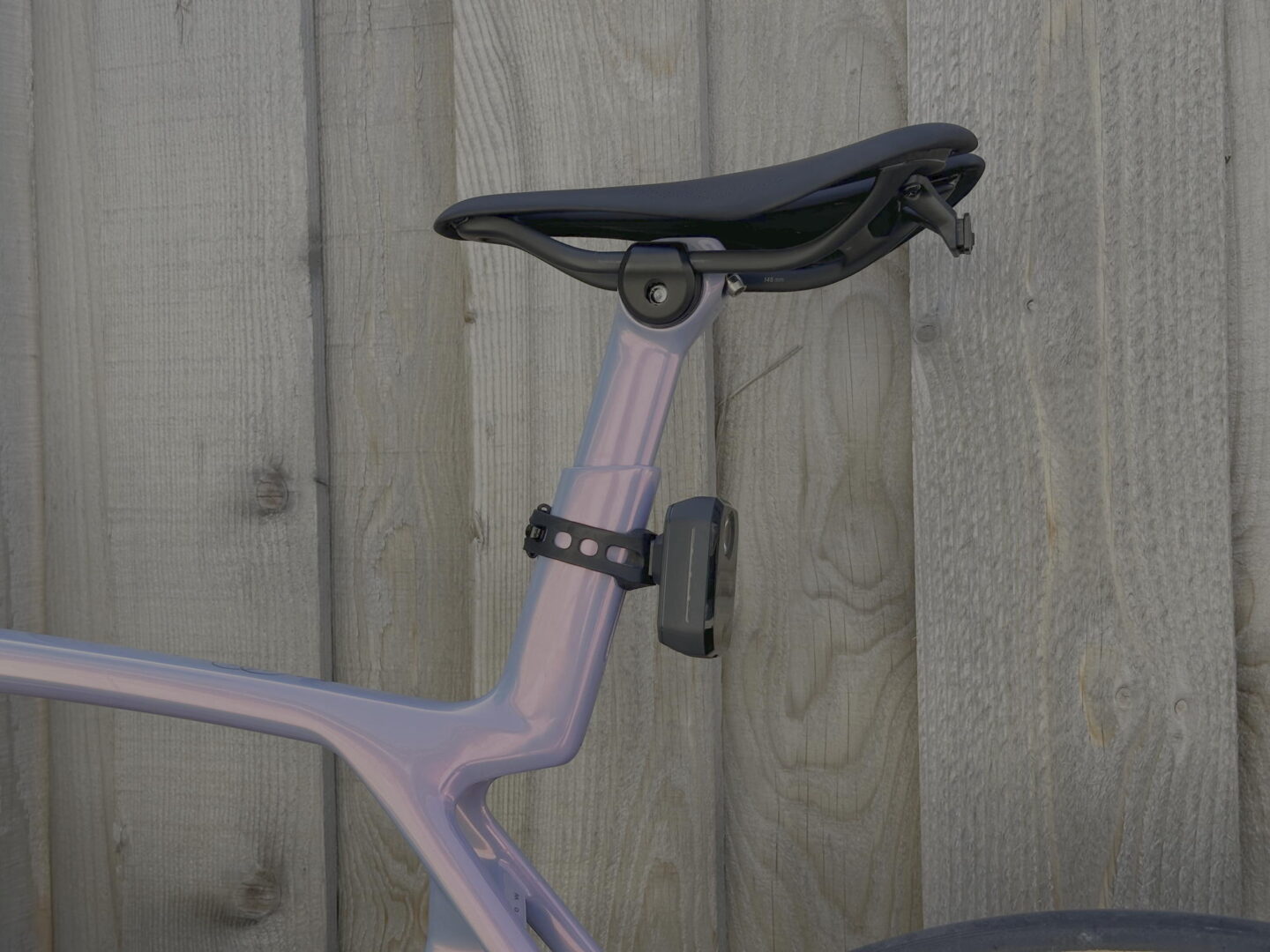
…or around the seat post, but it can move around a bit if you have an extremely aero bike like this Trek Madone SLR 9 Gen 8 AXS (review coming).

Eric Bangeman

Like other bike radars, the CarBack can be used with either a cycling computer or your smartphone. Mounted either on a seat post or the back of a Bontrager saddle, the CarBack can detect vehicles approaching from as far away as 150 meters, beeping at you once one is in its range.

The CarBack plays just as nicely with Garmin bike computers as the Varia does. When a car comes within range, your bike computer will chirp, the edges of the screen turn orange, and a dot showing the car’s relative position travels up the right side of the screen—exactly the same as riding with a Varia.

Speaking of the Varia, there are three significant differences between it and the CarBack. The first is the effective range, 140 meters for the Varia versus the CarBack’s 150 meters. While riding, I didn’t have the feeling that I was getting alerts sooner. But testing on a busy street demonstrated that the CarBack does have at least a few more meters of range than the Varia.

https://arstechnica.com/gadgets/2024/10/trek-carback-bike-radar-lets-you-know-when-cars-are-approaching/


Xbox plans to set up shop on Android devices if court order holds

After a US court ruled earlier this week that Google must open its Play Store to allow for third-party app stores and alternative payment options, Microsoft is moving quickly to slide into this slightly ajar door.

Sarah Bond, president of Xbox, posted on X (formerly Twitter) Thursday evening that the ruling “will allow more choice and flexibility.” “Our mission is to allow more players to play on more devices so we are thrilled to share that starting in November, players will be able to play and purchase Xbox games directly from the Xbox App on Android,” Bond wrote.

Because the court order requires Google to stop forcing apps to use its own billing system and allow for third-party app stores inside Google Play itself, Microsoft now intends to offer Xbox games directly through its app. Most games will likely not run directly on Android, but a revamped Xbox Android app could also directly stream purchased or subscribed games to Android devices.

Until now, buying Xbox games (or most any game) on a mobile device has typically involved either navigating to a web-based store in a browser—while avoiding attempts by the phone to open a store’s official app—or simply using a different device entirely to buy the game, then playing or streaming it on the phone.

https://arstechnica.com/gaming/2024/10/xbox-plans-to-set-up-shop-in-androids-play-store-if-court-order-holds/


Eleven things to know about in the Windows 11 2024 Update

Wi-Fi drivers during setup

Microsoft’s obnoxious no-exceptions Microsoft account requirement for all new PCs (and new Windows installs) is at its most obnoxious when you’re installing on a system without a functioning network adapter. This scenario has come up most frequently for me when clean-installing Windows on a brand-new PC with a brand-new, as-yet-unknown Wi-Fi adapter that Windows 11 doesn’t have built-in drivers for. Windows Update is usually good for this kind of thing, but you can’t use an Internet connection to fix not having an Internet connection.

Microsoft has added a fallback option to the first-time setup process for Windows 11 that allows users to install drivers from a USB drive if the Windows installer doesn’t already include what you need. As a failover, would we prefer to see an easy-to-use option that didn’t require Microsoft account sign-in? Sure. But this is better than it was before.

To bypass this entirely, there are still local account workarounds available for experts. Pressing Shift + F10, typing OOBE\BYPASSNRO in the Command Prompt window that opens, and hitting Enter is still there for you in these situations.

Boosted security for file sharing

The 24H2 update has boosted the default security for SMB file-sharing connections, though, as Microsoft Principal Program Manager Ned Pyle notes, it may result in some broken things. In this case, that’s generally a good thing, as they’re only breaking because they were less secure than they ought to be. Still, it may be dismaying if something suddenly stops functioning when it was working before.

The two big changes are that all SMB connections need to be signed by default to prevent relay attacks and that Guest access for SMB shares is disabled in the Pro edition of Windows 11 (it had already been disabled in Enterprise, Education, and Pro for Workstation editions of Windows in the Windows 10 days). Guest fallback access is still available by default in Windows 11 Home, though the SMB signing requirement does apply to all Windows editions.

https://arstechnica.com/gadgets/2024/10/eleven-things-to-know-about-in-the-windows-11-2024-update/


Intel’s Core Ultra 200S CPUs are its biggest desktop refresh in three years

Intel’s 14th-generation desktop processors were a mild update on top of a mild update: a barely faster revision of the 13th-gen Core CPUs, which were themselves a modest tweak to 2021’s 12th-gen Core processors. The new Core Ultra CPUs (and their underlying architectural changes) were exclusive to laptops.

Today, that changes: The Core Ultra 200S processors (codenamed Arrow Lake) will bring to desktops many of the changes Intel has made to its Core Ultra 100- and 200-series laptop CPUs (Meteor Lake and Lunar Lake, respectively). Changes include a new chiplet-based design, new manufacturing technologies, updated CPU and GPU architectures, and a neural processing unit (NPU) for accelerating some AI and machine learning workloads.

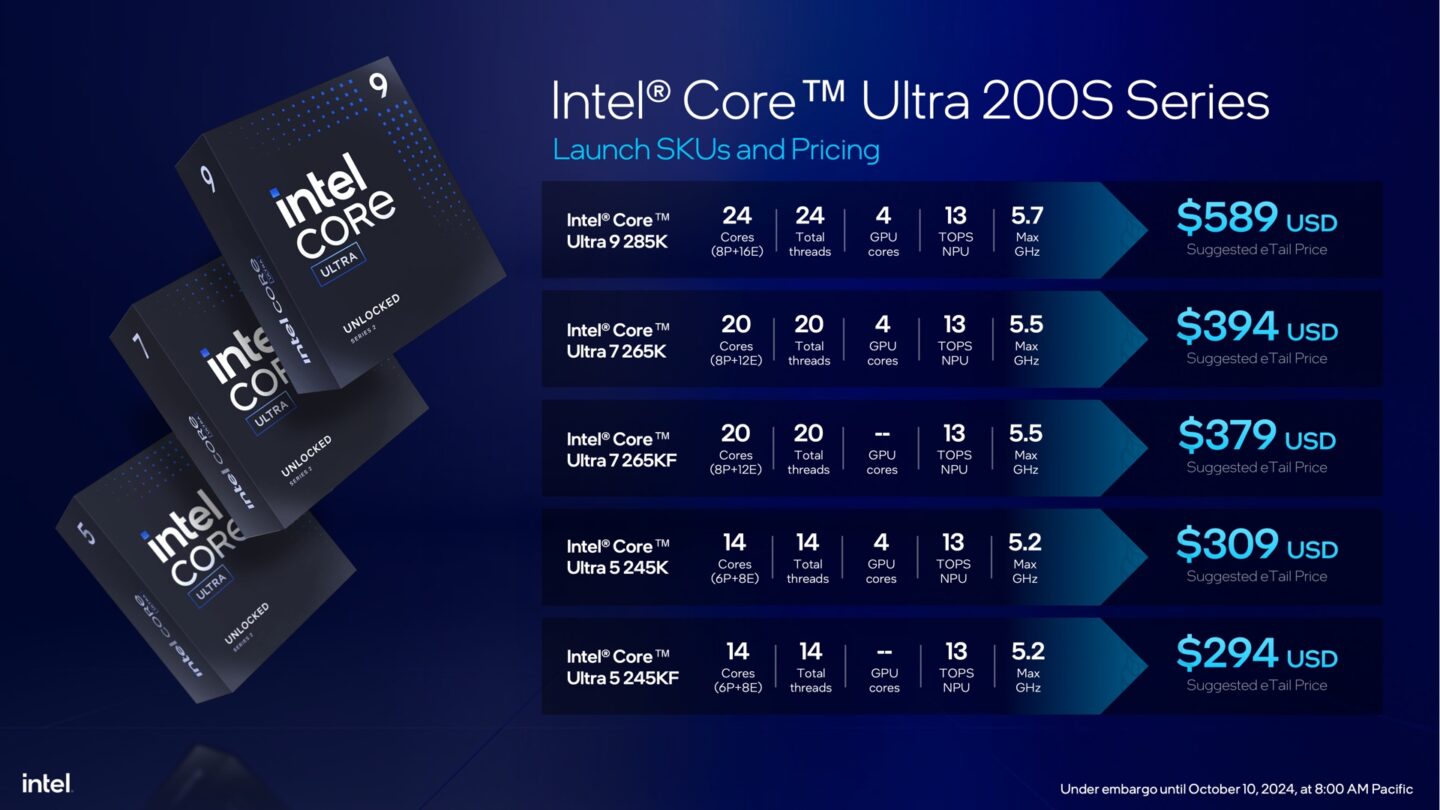
All of the new processors launch on October 24th.

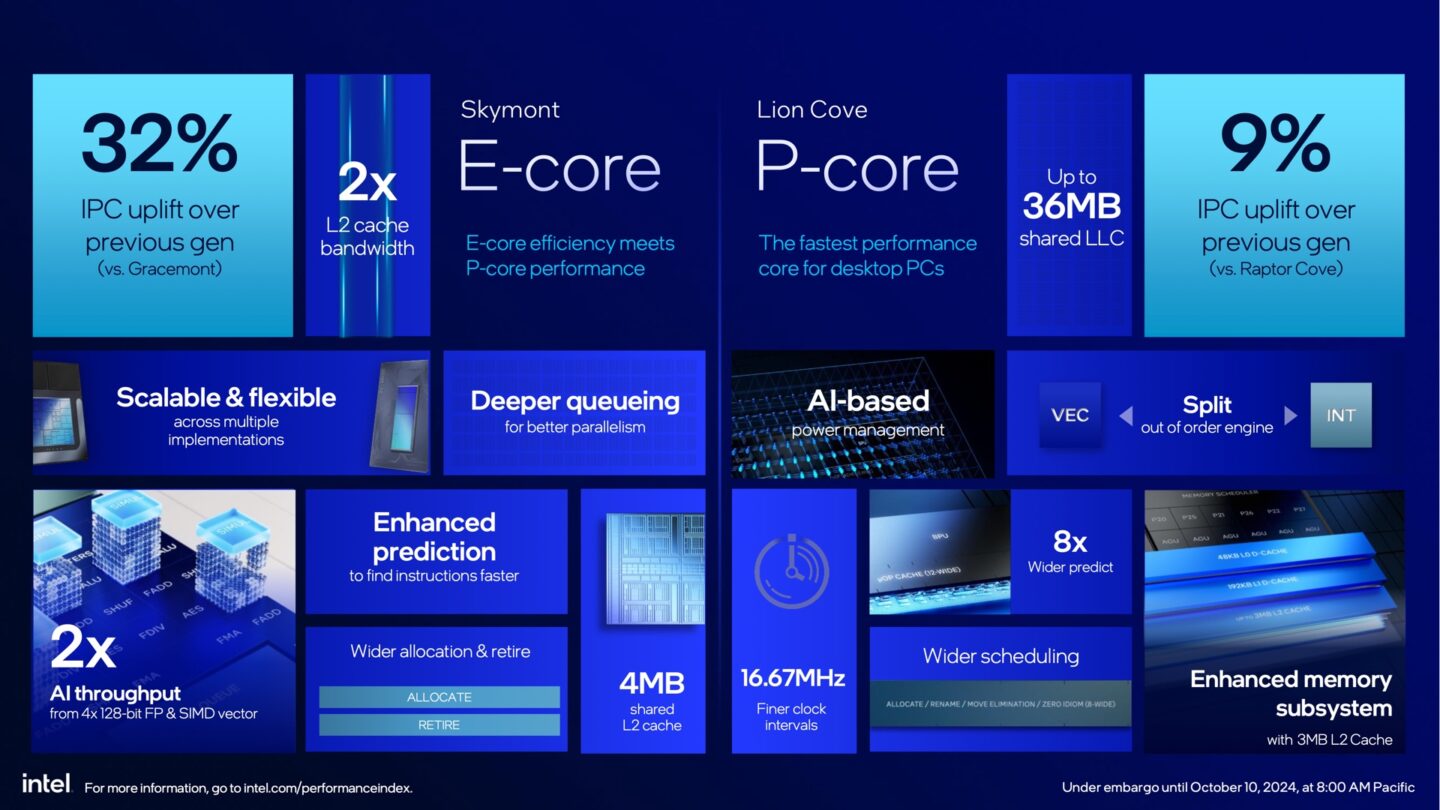
As with the Lunar Lake-based laptop chips, Intel has said that power efficiency is a big focus for Arrow Lake—a welcome change after seeing how much power the 13th- and 14th-generation CPUs could consume when they were allowed. But also as with the laptop processors, the Core Ultra desktop CPUs aren’t always a straightforward performance upgrade from their predecessors—they’re usually faster, but how much faster depends a lot on what you’re asking them to do, at least according to the Intel-provided performance figures.

Meet Arrow Lake

Arrow Lake brings Intel’s chiplet-based CPU designs to desktops for the first time.

Intel

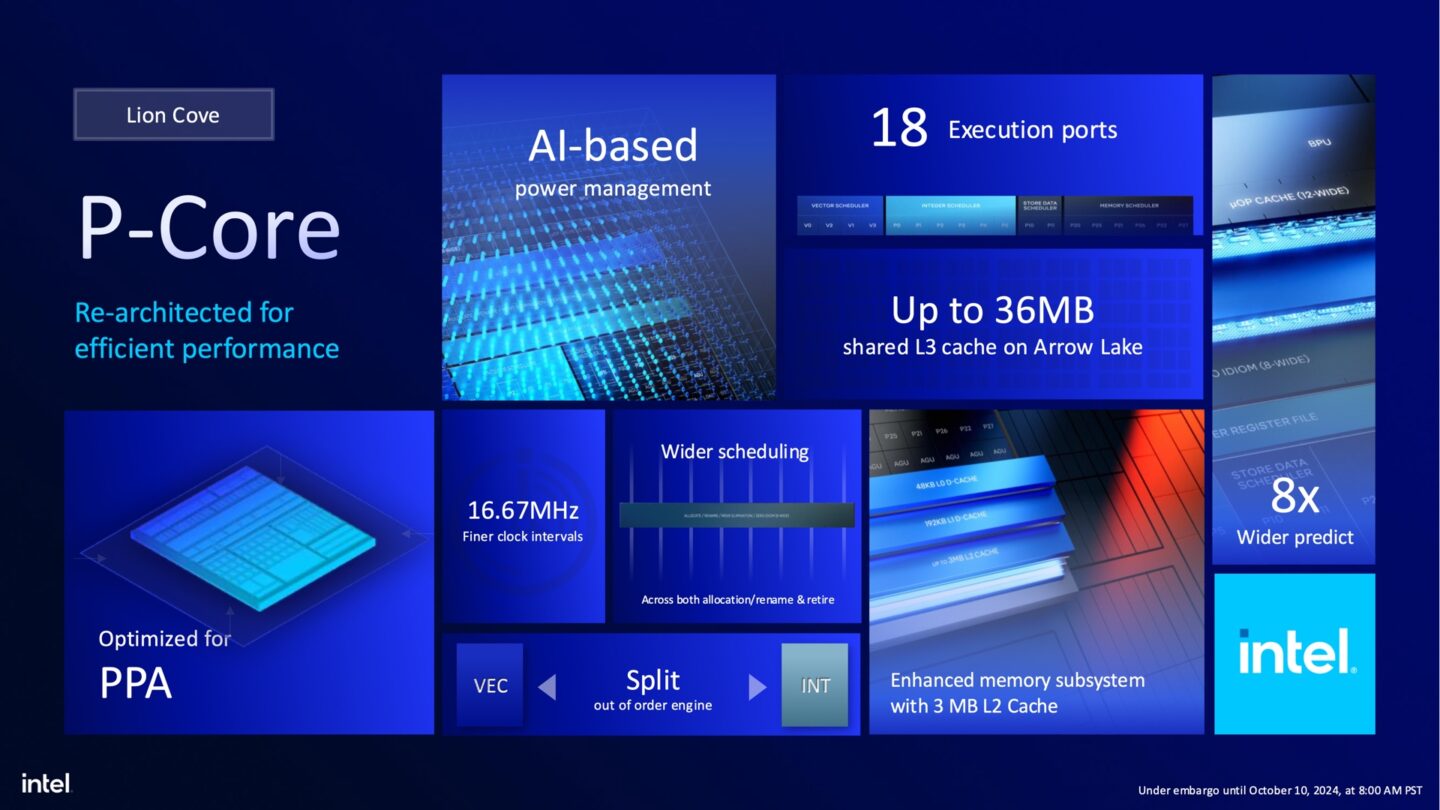
An Arrow Lake P-core and E-core overview.

Intel

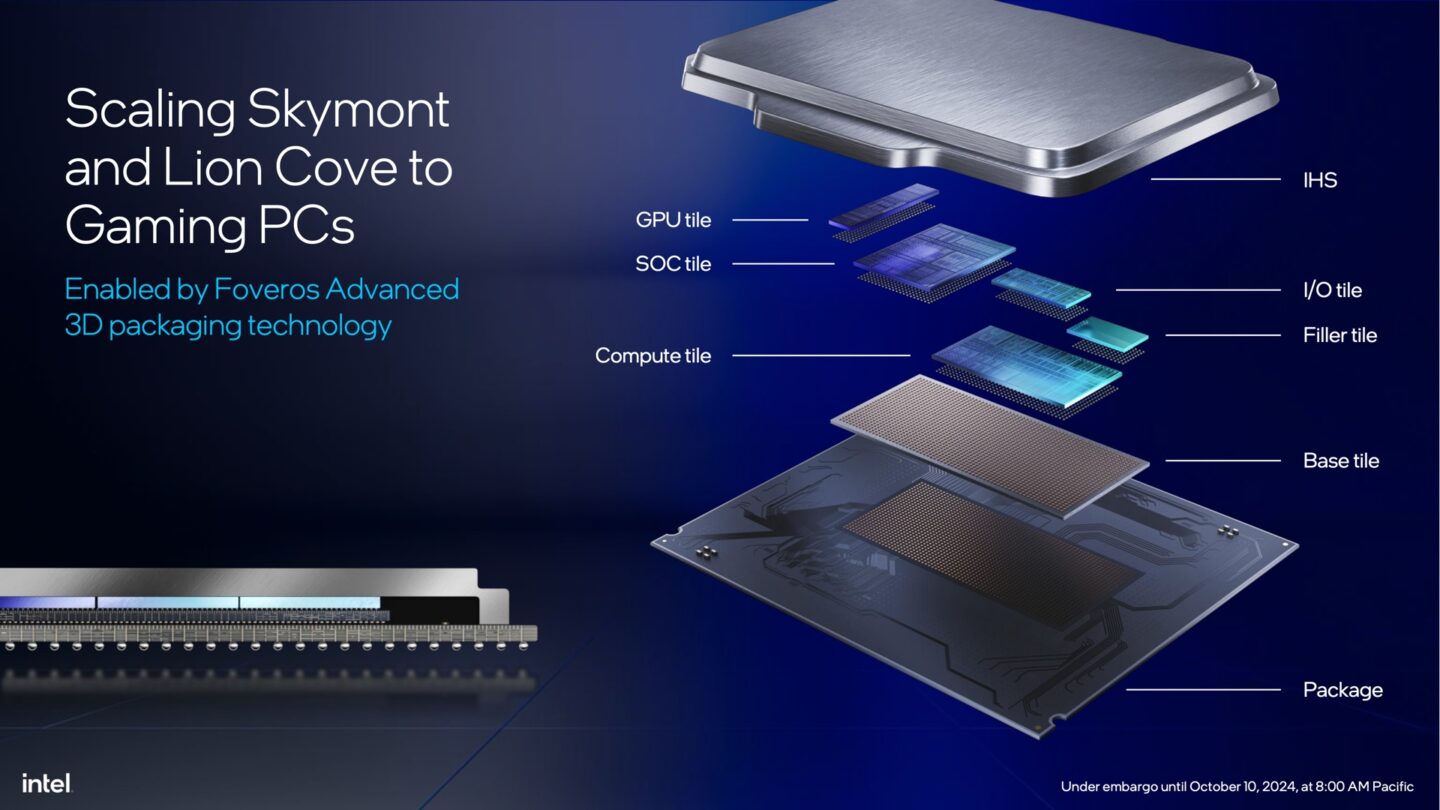
The big under-the-hood change to Arrow Lake is that it shifts to a chiplet-based design, where multiple silicon dies are bound together using Intel’s Foveros packaging technology. Foveros uses an Intel-manufactured “base tile” as an interconnect, allowing for communication between four TSMC-manufactured tiles: a compute tile for the CPU cores; a GPU tile for the graphics cores; an SoC tile that includes the NPU, video encoding and decoding blocks, and display outputs; and an I/O tile that mainly handles the DDR5 memory controller (Core Ultra 200S no longer supports DDR4, following AMD’s lead).

Like the Lunar Lake laptop chips, Arrow Lake will be an Intel-designed processor where most of the silicon won’t actually be made in Intel’s factories, aside from the base tile. The compute tile is manufactured on a 3 nm TSMC process, the GPU is a 5 nm TSMC process, and both the SoC and I/O tiles use a 6 nm process.

https://arstechnica.com/gadgets/2024/10/intels-core-ultra-200s-cpus-are-its-biggest-desktop-refresh-in-three-years/