How our digital devices are putting our right to privacy at risk

Ars Technica: This is what you call your tyranny test.

Andrew Guthrie Ferguson: One of the times I feel this is most resonant, if you remember a couple years ago, people who are stalwarts of the Second Amendment were really worried that a Democratic government was going to come up with a federal list of all the gun owners in America. So at some moment there’d be a knock on the door and their guns would be confiscated. Well, with automated license plate readers, if you put those outside of the gun range and the gun show and where you buy your ammunition, you have your list.

You don’t need to have some government list. You literally, through the data that you give up by just living your life, you can show who has a gun in their home. That might worry people who believe the Second Amendment means that they should be able to have their own gun rights without the government necessarily knowing it, but it cuts both ways. Everyone is revealed. Everyone is exposed. And everyone should be worried about their government having that data that potentially could be used against them.

Ars Technica: What is the potential scenario that worries you the most as we move forward? As AI tools in particular keep developing, are we moving into even more serious uncharted waters?

Andrew Guthrie Ferguson: Yes. I think AI is going to supercharge police power in ways we’ve never seen. We’ve all lived in a world where we have cameras on our streets. If there was an individual problem, they could go back into an individual camera. The idea that all those cameras can be fused together in a central command center, like a real-time crime center, and AI video analytics can then observe every single object, foreground and background, identify man, woman, child, cat, door, car, what kind of car, and then track those objects throughout the city—that’s a whole new power that we’ve never had before.

There are currently no real rules limiting that. There used to be a cautiousness in rolling out new technology. But we are watching the federal government in the guise of immigration enforcement actually use all the technology that does exist, but without any guardrails or concerns. So for the first time we’ve seen mobile facial recognition in the wild. It’s not that that technology wasn’t theoretically around, but we did not see local police taking a smartphone camera out for facial recognition. We’re now seeing that with ICE and Customs Border Patrol (CBP). We knew that you could track individuals with location and social network analysis. But now we’re seeing that being used by ICE to identify the areas and people that they want to target, using the power of these new systems in ways that we haven’t seen before in local law enforcement.

https://arstechnica.com/culture/2026/04/how-our-digital-devices-are-putting-our-right-to-privacy-at-risk/


Motorola suddenly raises budget phone prices up to 50%—you can probably thank AI

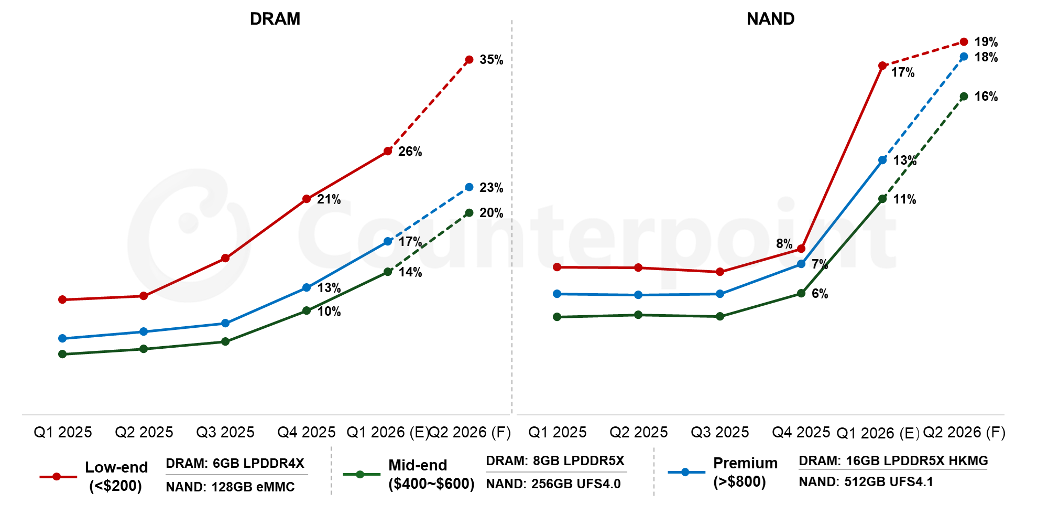
Motorola announced a new mid-range phone yesterday, the 2026 Moto G Stylus. It’s not exactly a game changer unless you demand a stylus with your smartphone. Despite little in the way of upgrades, the new G Stylus will debut at $500, which is $100 more than last year’s version. It’s now clear that higher pricing will be a trend in Moto’s lineup. Without so much as a peep, Motorola has enacted price increases of up to 50 percent on the rest of its 2026 Moto G lineup.

Prior to the G Stylus announcement, Moto had three 2026 G-series phones—the Moto G Play, Moto G, and Moto G Power. They used to sell for $180, $200, and $300, respectively. In the past day, the Moto G Play rose to $250, which is a 38 percent increase. The 2026 Moto G went to $300—a whopping 50 percent price bump. Finally, the top model in Moto’s budget lineup, the Moto G Power, is now $400. That’s a 33 percent jump, putting it close to Samsung’s latest mid-range phones and $100 shy of the new Moto G Stylus.

Seeing a higher price tag on the new Moto G Stylus wasn’t a surprise given current hardware conditions, and the phone does have a few small upgrades. The battery capacity is slightly larger, and the stylus has basic pressure sensitivity support now. However, that hardly justifies a $100 increase over last year’s model, which had the same display and memory. It makes more sense in the context of an across-the-board price increase for Moto’s budget lineup.

https://arstechnica.com/gadgets/2026/04/motorolas-budget-phones-are-now-up-to-50-more-expensive-as-memory-shortage-drags-on/


For the first time ever, Amazon is cutting old Kindles off from the Kindle Store

If you own an older Kindle e-reader, including models with physical keyboards or physical page-turn buttons that you’ve been reluctant to give up, Amazon has bad news for you. The company sent a message to owners of those devices today, informing them that starting on May 20 they would no longer be able to buy or download books from the Kindle Store.

The change (as reported by Good E-Reader and elsewhere) affects all Kindles introduced and sold in 2012 or earlier, going all the way back to the original Kindle from 2007. Users will still be able to read books that have already been downloaded to those devices, but they won’t be able to download more, and if they reset those Kindles to their factory defaults, the devices won’t be able to sign back in to an Amazon account.

“Affected devices include Kindle 1st and 2nd Generation, Kindle DX and DX Graphite, Kindle Keyboard, Kindle 4, Kindle Touch, Kindle 5, and Kindle Paperwhite 1st Generation,” reads the message from the Kindle team. Older 2011 and 2012-era Kindle Fire tablets will also lose access to the Kindle Store.

Amazon’s Kindle generational branding is occasionally confusing—that “Kindle Paperwhite 1st Generation” is also referred to as “Kindle Paperwhite (5th Generation)” on Amazon’s support pages because it’s part of the fifth generation of Kindle releases overall. But if you check your Kindle’s software version and see anything older than 5.12.2.2, it means your Kindle is losing access to Amazon’s store and your e-book library.

https://arstechnica.com/gadgets/2026/04/starting-in-may-pre-2013-kindles-wont-be-able-to-buy-or-download-new-books/


Valve brings native Steam Link app to Apple’s Vision Pro

Valve is bringing Steam Link, its local network game-streaming app, to Apple’s Vision Pro mixed reality headset, allowing Vision Pro users to play traditional games from their Steam library wirelessly from a nearby Mac or PC.

We say “traditional games” because it’s important to clarify that this does not stream VR games—only the sorts of games you would play on a traditional 2D display like a computer monitor or a TV. That said, this could lay some groundwork for VR games sometime in the future. But to be clear, Valve has not made any announcements about supporting SteamVR games on the Vision Pro.

There were previously Steam Link apps for the Mac, iPhone, iPad, and Apple TV. Users could sync controllers with those devices and play Steam games over the local network—not just games from other Apple devices, but also from Windows or Linux gaming PCs.

It has been possible to do this on the Vision Pro using third-party tools like ALVR, but this is a much more straightforward, tried-and-true path to the same destination.

If you want to try it, you can sign up via TestFlight, Apple’s platform for distributing pre-release apps before they are listed on the App Store. Valve says the current version of the app “allows streaming up to 4K resolutions, and allows you to dynamically adjust the curve of the display in panoramic mode.”

We complained about the Vision Pro’s limited ability to connect to external gaming and media devices or access mixed reality content outside Apple’s walled garden when we reviewed it at launch a couple of years ago. Since then, that situation has markedly improved, though it’s still not always as straightforward as it is on competing headsets.

https://arstechnica.com/gaming/2026/04/valve-brings-native-steam-link-app-to-apples-vision-pro/


Apple and Lenovo have the least repairable laptops, analysis finds

“While Lenovo has improved somewhat with their compliance with French consumer law by providing more repair score PDFs on their website, we urge the company to resolve this multi-year issue,” this year’s report says.

PIRG’s report concluded that “laptops are pretty stagnant in terms of repairability” across many of the eight most popular laptop brands in the US.

However, Proctor noted to Ars that consumers’ access to parts, tools, and information that vendors have has improved, but improvements around ease of disassembly “take longer to realize.”

He also praised vendors’ efforts to release more repairable designs, such as Apple’s MacBook Neo.

Phone repairability scores

Lenovo’s Motorola brand earned the best grade.

Lenovo’s Motorola brand earned the best grade. Credit: US PIRG Education Fund

PIRG’s scores for phone manufacturers this year are based on the European Product Registry for Energy Labelling (EPREL), a scoring system that the European Commission created in June 2025 for scoring smartphone and tablet repairability. It’s based on six factors:

  • Disassembly depth
  • Fasteners
  • Tools
  • Spare part availability
  • Software updates
  • Repair information
US PIRG cell phone repairability scores

US PIRG used different criteria for this year’s report.

US PIRG used different criteria for this year’s report. Credit: US PIRG Education Fund

PIRG’s report said that Apple and Samsung scored so low under EPREL criteria partially because all of the phones scored are guaranteed to receive updates for five years and not longer.

PIRG noted that Apple made progress in phone repairability by moving away from parts pairing, which is when companies require parts to be verified through encrypted software checks in order to function, and through the introduction of the Repair Assistant. However, the report’s author lamented that third-party Face ID replacements still don’t work. The report adds:

Apple also extended its Activation Lock anti-theft feature to individual parts, which repair advocates warn will strand large numbers of perfectly functional components—locking them out of the repair ecosystem entirely.

Apple isn’t alone: parts pairing and software restrictions remain an industry-wide problem that consumers and independent technicians continue to face across manufacturers.

https://arstechnica.com/gadgets/2026/04/apple-has-the-lowest-grades-in-laptop-phone-repairability-analysis/


Bluesky users are mastering the fine art of blaming everything on “vibe coding”

Social network Bluesky saw some intermittent service disruptions on Monday. On its own, this fact isn’t that noteworthy—Bluesky has seen similar service disruptions in the past, and this one coincided with widespread service problems being reported with other popular sites (Bluesky officially blamed the temporary problems on an “upstream service provider”).

What made this outage notable for many Bluesky users, though, was the instant assumption that it was the result of sloppy, AI-assisted “vibe coding” by the Bluesky development team.

Amid Monday’s service issues, many Bluesky feeds were filled with hundreds of posts that laid the blame on developers who were allegedly relying on unreliable AI tools to ship faulty code. Some used memes, others used alt text, still others used irony or wry humor to call out Bluesky’s development team for this alleged sloppiness.

Overall, though, the mood among these vibe-code blamers was one of righteous anger. “Any developer or programmer using ‘vibe-coding’ or any reliance on AI to code things is clearly too stupid to know how to do the job they’re paid to do and should be fired out of a cannon,” Bluesky user T-Kay wrote, summing up the, er, vibe. “Coding takes skill, not slop.”

bluesky employees: we are vibe coding the entire website using only AI now

yeah dude, i can tell

[image or embed]

— lex luddy (ichiban appreciator) (@lexluddy.xyz) April 6, 2026 at 10:29 AM

It’s the kind of reaction that highlights just how many tech users are still reflexively repulsed by the idea that AI tools were used in any way to create the products they use. Even as professional coders are becoming increasingly enthusiastic about the power of AI coding tools, many end users still see them as a boogeyman to instantly blame for any and all observed ills in the tech industry.

“Things are changing. Fast.”

Before yesterday’s outage, many on the Bluesky development team faced social media backlash for admitting they used AI tools in their work. Bluesky founder and Chief Innovation Officer Jay Graber posted point-blank in late March that “Bluesky is made with AI, the engineers and even some non-engineers use Claude Code,” for instance. And Bluesky Technical Advisor Jeromy Johnson (who goes by the handle “Why” on the site) has been an outspoken proponent of AI coding tools, saying in February that “In the past two months Claude has written about 99% of my code. Things are changing. Fast.”

https://arstechnica.com/ai/2026/04/bluesky-users-are-mastering-the-fine-art-of-blaming-everything-on-vibe-coding/


Linux kernel maintainers are following through on removing Intel 486 support

“Unfortunately there’s a nostalgic cost: your old original 386 DX33 system from early 1991 won’t be able to boot modern Linux kernels anymore,” Molnar wrote. “Sniff.”

A tree falling in a forest

The practical impact of the end of 486 support will be negligible; the number of modern Linux distributions that use the kernel’s 486 support is negligible.

Many of the consumer-focused Linux distros have more Windows-like minimum system requirements, an acknowledgment of how CPU and RAM-intensive modern web browsers and browser-based apps have become; Ubuntu raised its minimum RAM requirement from 4GB to 6GB for the 26.04 LTS release. Even lightweight distros like Xubuntu or AntiX recommend 512MB to 1GB of RAM, amounts far in excess of what any 486-based PC ever shipped with (or could reasonably work with, using actual hardware).

One of the few actively maintained distros that explicitly mentions 486 support is Tiny Core Linux (and its GUI-less counterpart, Micro Core Linux). These OSes can run on a 486DX chip as long as it’s paired with at least 48MB or 28MB of RAM, respectively, though a Pentium 2 with at least 128MB of RAM is the recommended configuration. But even on the Tiny Core forums, few users are mourning the loss of 486 support.

“I get the nostalgia, like classic cars, but a car you’ve spent a year’s worth of weekends fixing up isn’t a daily driver,” writes user andyj. “Some of the extensions I maintain, like rsyslog and mariadb, require that the CPU be set to i586 as they will no longer compile for i486. The end is already here.”

Those still using a 486 for one reason or another will still be able to run older Linux kernels and vintage operating systems—running old software without emulation or virtualization is one of the few reasons to keep booting up hardware this old. If you demand an actively maintained OS, you still have options, though—the FreeDOS project isn’t Linux, but it does still run on PCs going all the way back to the original IBM Personal Computer and its 16-bit Intel 8088.

https://arstechnica.com/gadgets/2026/04/linux-kernel-maintainers-are-following-through-on-removing-intel-486-support/


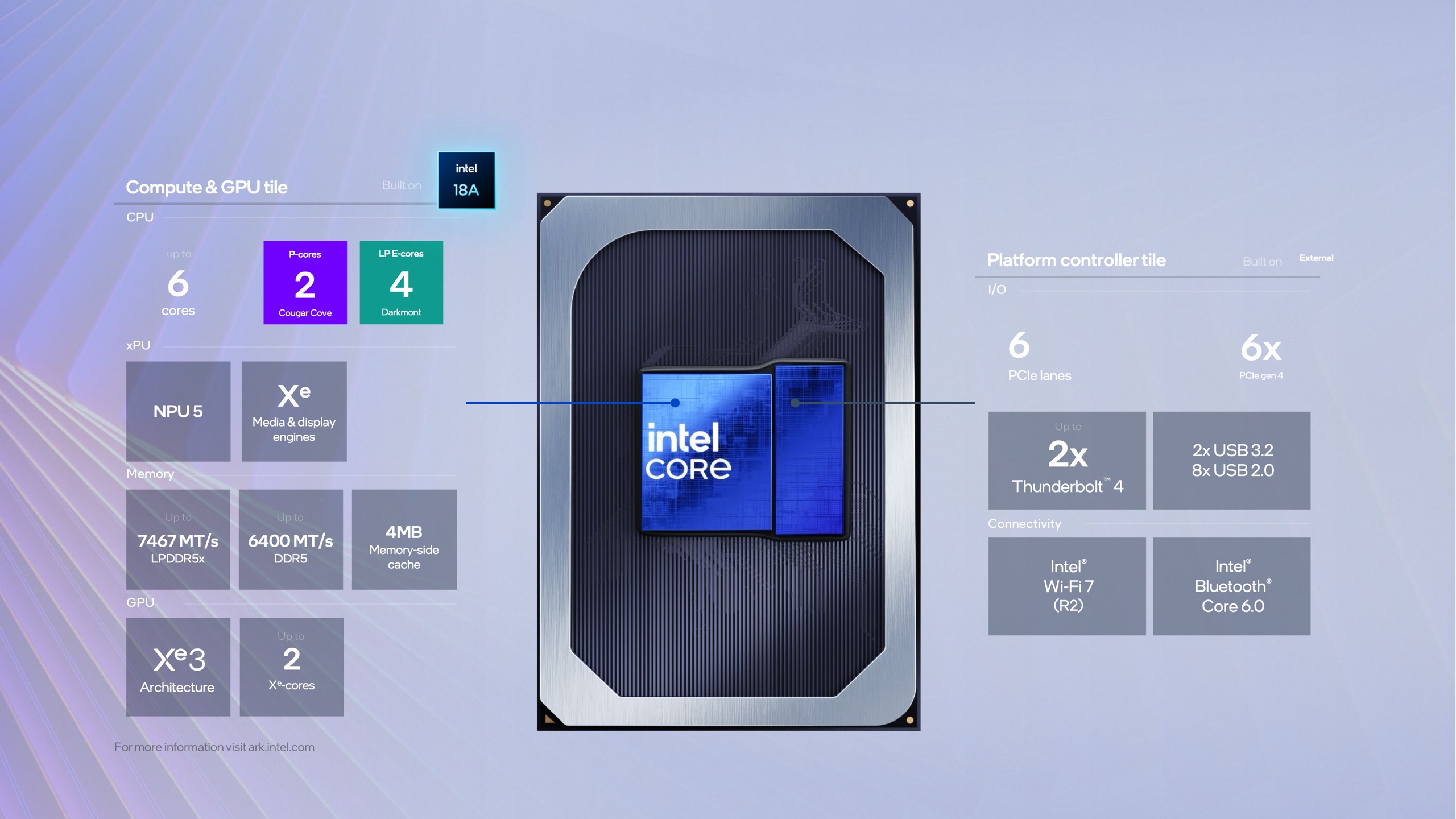
Intel is going all-in on advanced chip packaging

Last month, Anwar Ibrahim, the prime minister of Malaysia, revealed in a post on Facebook that Intel is expanding its Malaysian chip-making facilities, which were first established back in the 1970s. Ibrahim said the head of Intel’s Foundry, Naga Chandrasekaran, had “outlined plans to commence the first phase” of expansion, which would include advanced packaging.

“I welcome Intel’s decision to begin operations for the complex later this year,” a translated version of Ibrahim’s post read. An Intel spokesperson, John Hipsher, confirmed that it’s building out additional chip assembly and test capacity in Penang, “amid rising global demand for Intel Foundry packaging solutions.”

Package store

According to Chandrasekaran, who took over Intel’s Foundry operations in 2025 and spoke exclusively with WIRED during the reporting of this story, the term “advanced packaging” itself didn’t exist a decade ago.

Chips have always required some sort of integration of transistors and capacitors, which control and store energy. For a long time the semiconductor industry was focused on miniaturization, or, shrinking the size of components on chips. As the world began demanding more from its computers in the 2010s, chips started to get even more dense with processing units, high-bandwidth memory, and all of the necessary connective parts. Eventually, chipmakers started to take a system-in-packages or package-on-package approach, in which multiple components were stacked on top of one another in order to squeeze more power and memory out of the same surface space. 2D stacking gave way to 3D stacking.

TSMC, the world’s leading semiconductor manufacturer, began offering packaging technologies like CoWoS (chip on wafer on substrate) and, later, SoIC (system on integrated chip) to customers. Essentially, the pitch was that TSMC would handle not just the front end of chip-making—the wafer part—but also the back end, where all of the chip tech would be packaged together.

https://arstechnica.com/gadgets/2026/04/intel-is-going-all-in-on-advanced-chip-packaging/


AV1’s open, royalty-free promise in question as Dolby sues Snapchat over codec

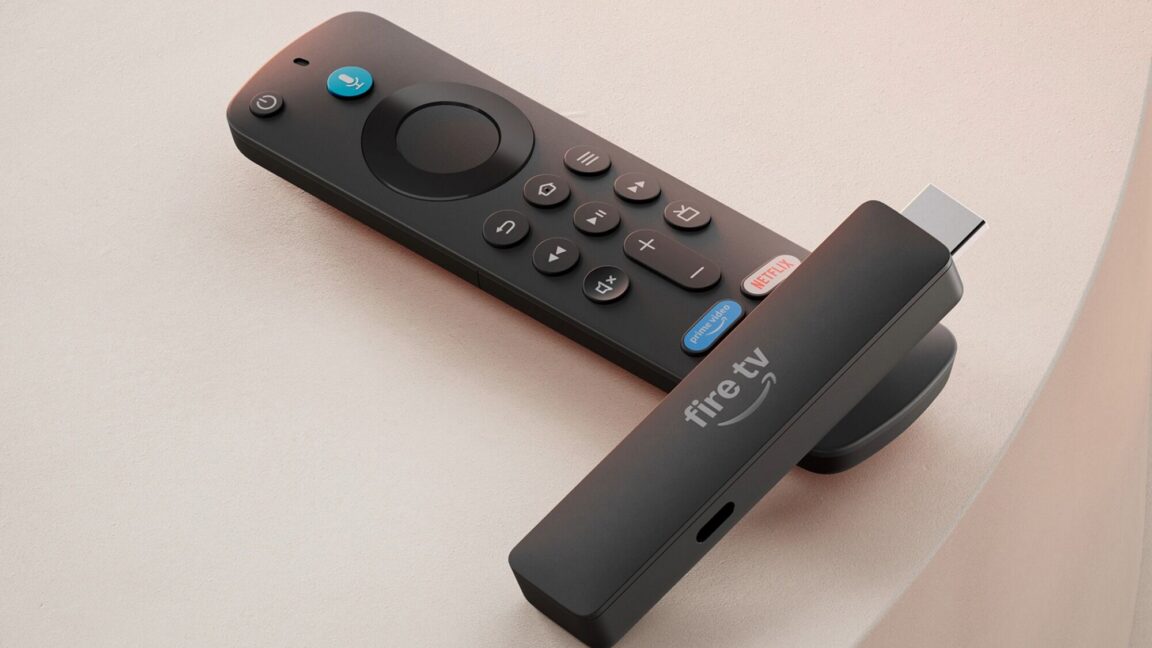
Besides Dolby, InterDigital is also suing over AV1 [PDF] and is accusing some Amazon Fire streaming devices of infringing on its patents by supporting the codec.

Additionally, European Union (EU) antitrust regulators investigated AOMedia’s licensing policy in 2022 but closed the investigation in 2023 “for priority reasons,” an EU spokesperson told Reuters at the time, noting that “the closure is not a finding of compliance or non-compliance of the conduct in question with EU competition rules.”

The results of Dolby’s and InterDigital’s lawsuits could have lasting implications for AV1 adoption, which lags behind that of HEVC eight years after its release.

“Only because Big Tech says a codec should be royalty-free doesn’t mean that it is. … Given that all codecs use somewhat similar techniques, the risk of an infringement of patents belonging to parties who did not offer royalty-free licenses is substantial,” intellectual property activist and commentator Florian Mueller told Ars Technica.

Mueller said that many streaming services have operated without video codec licenses for years as patent holders prioritized collecting royalties on hardware and software products. That has changed in recent years amid the growth of streaming.

“Companies like Amazon and Disney would like to persuade courts that after many years of no one, or at least no major player, knocking at their doors, they don’t have to pay now,” Mueller, who runs the online publication IP Fray, said.

Although the debate over whether a codec can be truly royalty-free goes back years, the debate around AV1 is getting more attention than previous discussions. Dolby’s lawsuit in particular could have resounding implications on the AV1 standard should a judge decide that Dolby is not obligated to license patented technologies said to be leveraged by AV1.

As Mueller pointed out, HEVC was created with most essential patent holders signing a FRAND licensing pledge, which differs from AV1’s creation:

With AV1, it could turn out that there are far more patent holders out there with essential patents but no FRAND licensing obligation. In that case, they could theoretically ask for anything, even extortionate amounts, up to the point where someone would then stop implementing AV1. And the really bad thing here, which I’m sure is not Dolby’s objective but it could be someone else’s, is that someone could purposely make prohibitive royalty demands for AV1 in order to discourage use of the standard.

Dolby and Snap didn’t respond to requests for comment. An AOMedia spokesperson acknowledged receipt of our questions but didn’t provide responses ahead of publication.

https://arstechnica.com/gadgets/2026/03/av1s-open-royalty-free-promise-in-question-as-dolby-sues-snapchat-over-codec/


Sony is raising PlayStation 5 prices again, this time by between $100 and $150

Memory and storage shortages and price hikes that started hitting PC components late last year have steadily rippled outward across all kinds of consumer tech—some products have disappeared, gone out of stock, or been delayed, and others have undergone multiple rounds of price hikes.

Today’s bad news comes from Sony, which is raising prices for PlayStation 5 consoles in the US just eight months after their last price hike. The drive-less Digital Edition will increase from $500 to $600; the base PS5 with an optical drive will increase from $550 to $650; and the PS5 Pro is going up from $750 to a whopping $900. At the beginning of 2025, these consoles cost $450, $500, and $700, respectively.

Sony, Microsoft, and Nintendo had all announced one or more price increases for one or more consoles throughout 2025, though these were driven more by the Trump administration’s tariffs on imported goods than component shortages. Game console price cuts had already become less common over the course of the 2010s, making consoles like the 5-plus-year-old PS5 historically expensive compared to older consoles at this point in their lifespans.

RAM and flash memory chips are in short supply primarily because of demand from AI data centers—memory manufacturers have shifted more production toward making the kind of memory found in AI accelerators like Nvidia’s H200, leaving less for the consumer market.

And the situation is unlikely to improve any time soon, barring a major shift in demand from the AI industry. Manufacturers like Kioxia have said that their capacity is already sold out through the end of 2026. The complexity of chipmaking means it takes months or years to ramp up additional manufacturing capacity, and chipmakers can be slow to do it because they don’t want to end up with a glut of memory they can’t sell if market conditions change. In the short-to-medium term, this all means these high prices will probably stick around for a while.

https://arstechnica.com/gadgets/2026/03/sony-is-raising-playstation-5-prices-again-this-time-by-between-100-and-150/