Pixel 9 phones: The Gemini AI stuff, reviewed
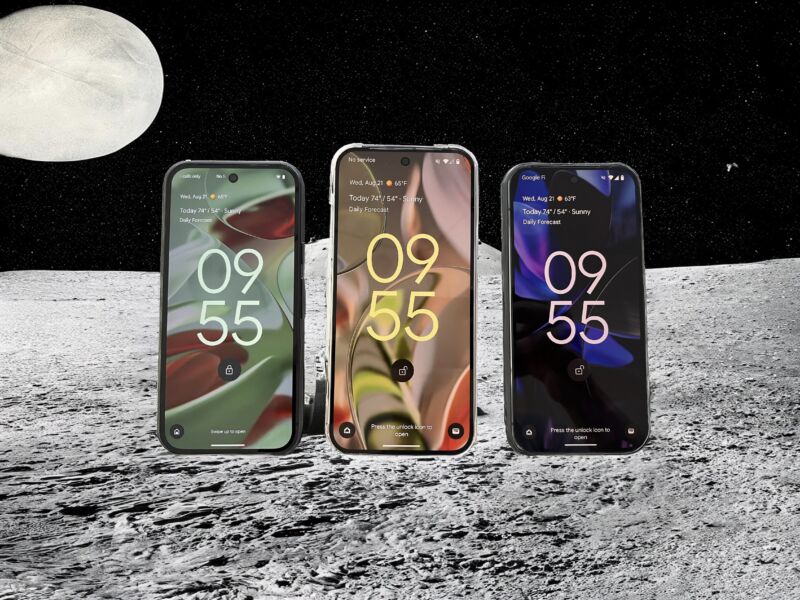
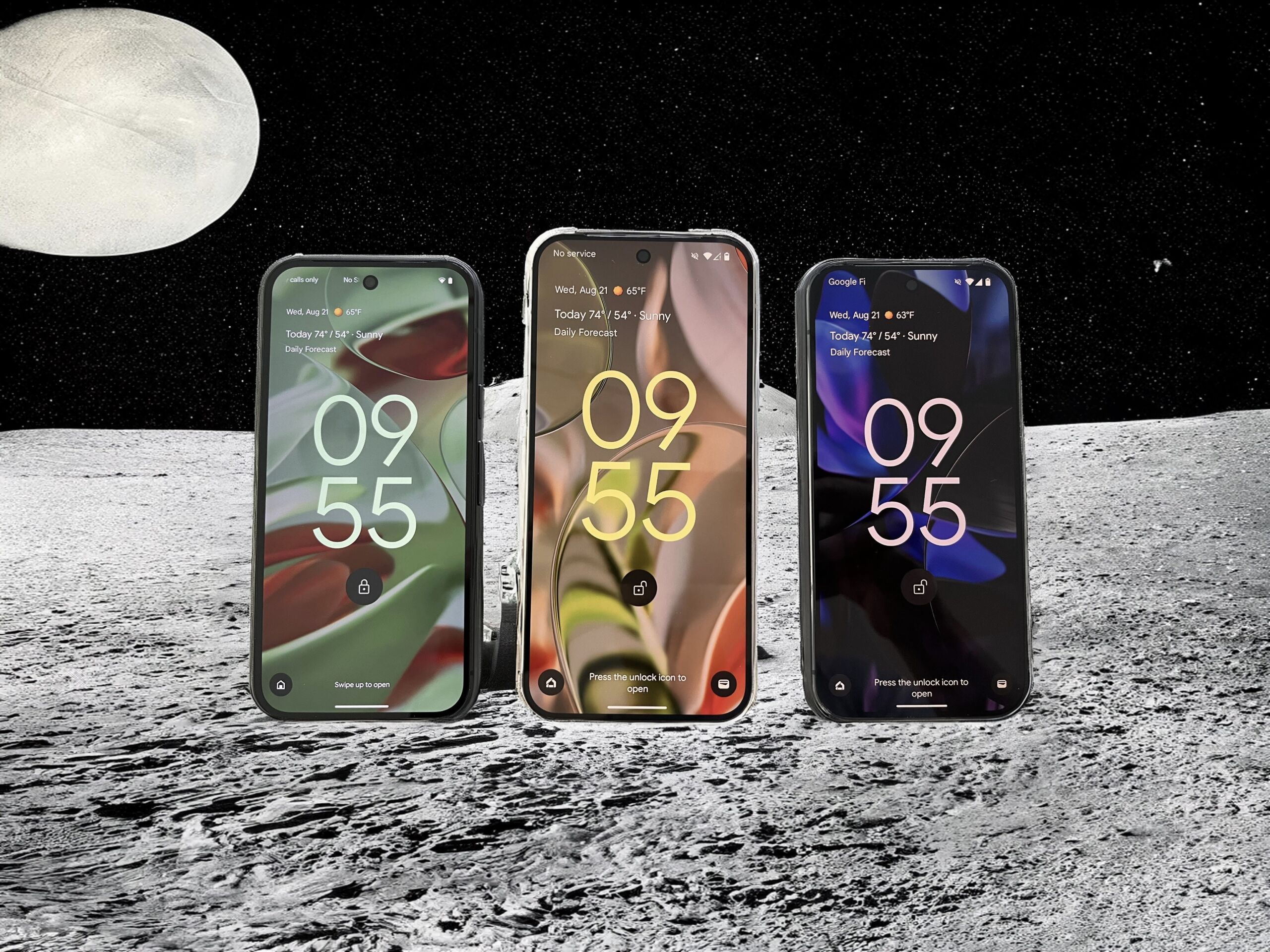
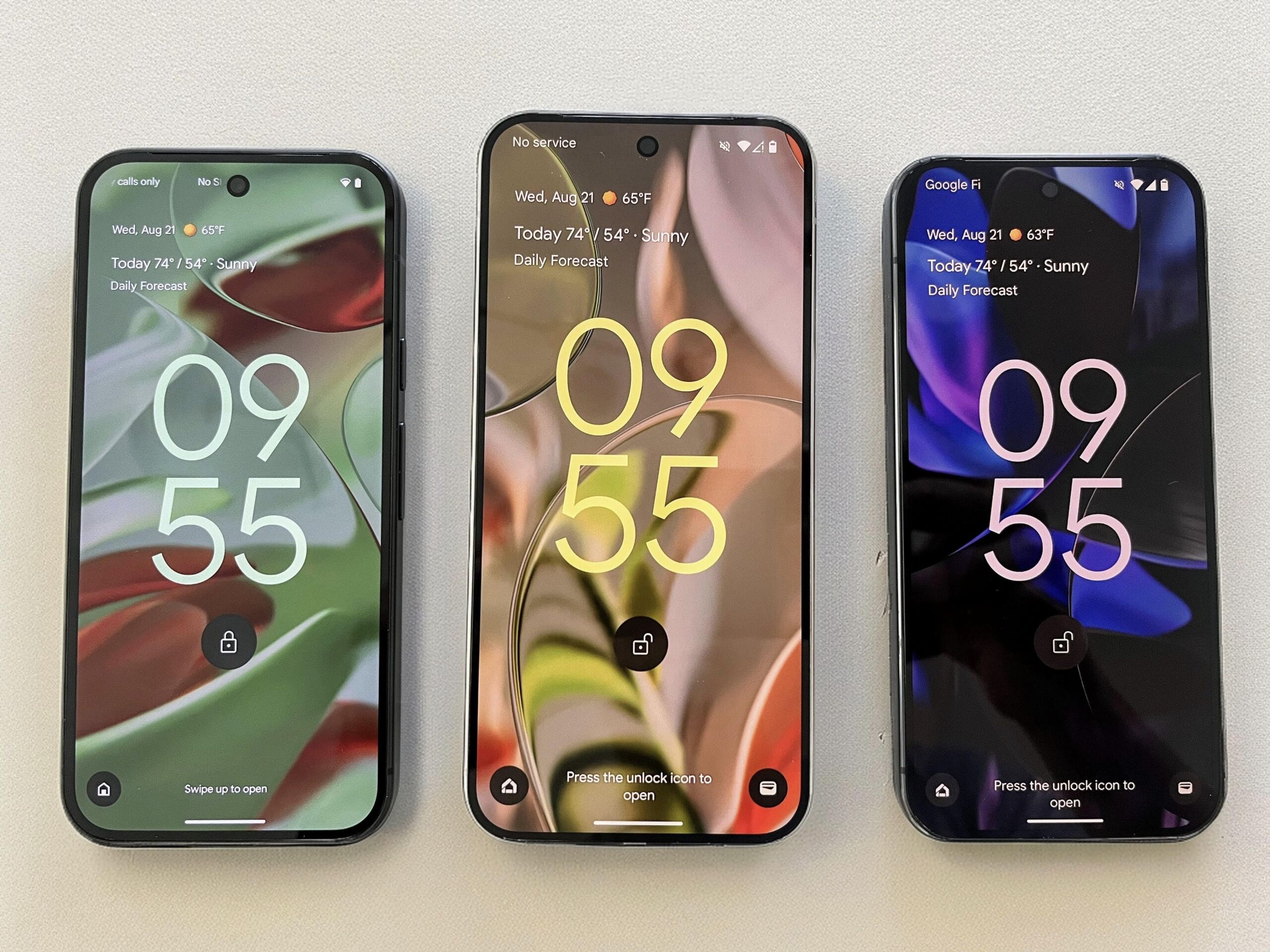
Three Pixel 9 phones, but with the background set to an AI-generated moonscape, with another moon visible in the background.
Enlarge / I asked Gemini to “reimagine” the background of this Pixel 9 group shot (originally on beige paper) as “science fiction moonscape,” and then used “Auto frame” to expand the initially tight shot. Maybe that explains why this moon surface has another moon visible?
Kevin Purdy / Gemini AI

Google made its AI assistant, Gemini, central to its pitch to reviewers and the public—it’s what makes Pixel phones different from any other Android phone, the company says. In fact, you have to go 24 minutes into Google’s keynote presentation, and cringe through a couple of live AI demo failures, before Pixel hardware details are even mentioned.

I’ve been using a Pixel 9 Pro as my daily phone for about a week. There is almost nothing new about the Pixel 9 that is not linked to Gemini in some way, minus the physical design of the thing. So this review will look at how Gemini performs on the Pixel 9, which is Google’s premier platform for Gemini at the moment. While some of the Pixel 9’s AI-powered features may make it to other Android-powered phones in future Android releases, that’s not a certainty. AI—as a free trial, as a custom Google-designed chip, and as an OS integration—is something Google is using to set Pixels apart.

I wrote a separate review of the three main Pixel 9 devices. But considering the Pixel 9 as a hardware-only product is strange. The short version is that the phones themselves are capable evolutions of the Pixel series and probably the best versions Google has made yet, and they’re sold at prices that reflect that. If you love Pixel phones, are eager to upgrade, and plan to ignore Gemini specifically and AI features generally, that might be all you need to know.

But if you buy a Pixel 9 Pro, Pro XL, or Pro Fold (coming later), starting at $1,000 for the Pro, you get access to a free year of Gemini Advanced ($240 per year after that), and you’ll see Gemini suggested in every Google-made corner of the device. So let’s talk about Gemini as a phone task assistant, image editor, and screenshot librarian. I used Gemini as much as felt reasonable during my week with a Pixel 9 Pro.

I’m very new to general-purpose AI chatbots and prompt-based image generation and had never used an “advanced” model like Gemini Live before. Those with more experience or pre-existing enthusiasm will likely get more out of Google’s Gemini tools than I did. I’ll also leave discussions of Google’s approach to on-device AI and its energy impacts for other articles.
Gemini, generally: Like a very fast blogger working for you

Testing the Pixel 9 Pro, I’ve had access to the most advanced versions of Gemini, both the “Advanced” model itself (a free one-year trial given to every Pixel 9 buyer) and its advanced speech dialogue, “Gemini Live.” Has it been helpful?

It has been like I hired a blogger to be available to me at all times, working much faster and with far fewer complaints than its human counterparts, at the push of a button. This blogger is a capable if unstylish writer, one who can look things up quickly and cobble together some facts and advice. But the blogger is also easily distracted and not somebody you’d inherently trust with key decisions without further research, perhaps into the very sources they’re citing.

I should know—I used to be that kind of fast-writing, six-posts-a-day blogger when I worked at Lifehacker. In the late 2000s, I was in my mid-to-late 20s, and I certainly didn’t have all the knowledge and experience needed to write confidently about every possible subject under the broad topics of “technology,” “productivity,” and “little things that might improve your life if you think about them for a bit.”

But I could certainly search, read, and triangulate the advice of a few sites and blogs and come up with reasonable summaries and suggestions. Depending on how you looked at it, I was an agile general assignment writer, a talented bullshitter, or some combination thereof.

https://arstechnica.com/?p=2043949


Pixel 9 family: The “just hardware” review (no AI)

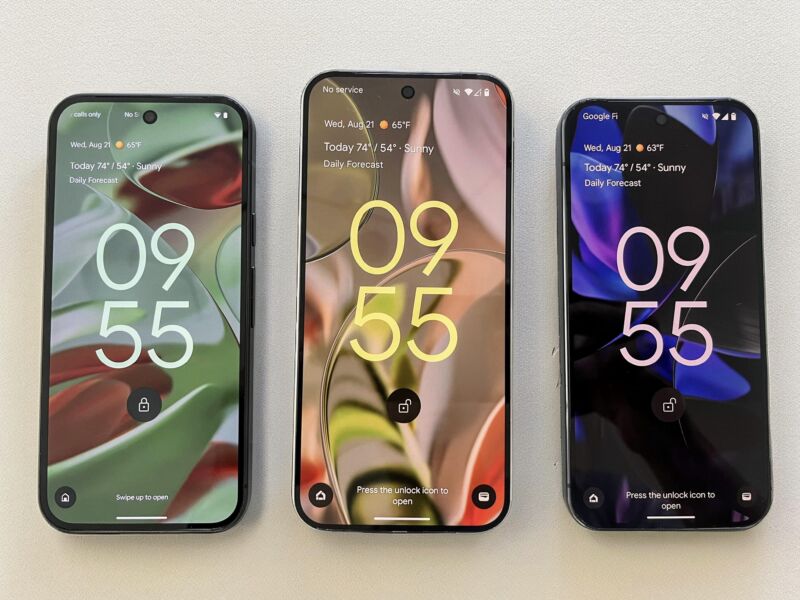
Pixel 9, 9 Pro XL, and 9 Pro, left to right, lined up on neutral paper
Enlarge / For this “neutral” hardware-focused review of the Pixel 9 phones, I asked the Pixel to “reimagine” a “neutral white background.”
Kevin Purdy / Gemini AI

I asked Google’s Gemini Live chatbot, running on a new Pixel 9 Pro, how easy it was to use the Pixel 9 without all the Gemini AI features.

“It’s definitely possible to use a Pixel 9 without Gemini,” the bot responded in a remarkably casual voice. “While Gemini adds some cool features, your phone will still work pretty much the same as any other Android phone. You’ll still have access to all the basic stuff like making calls, texting, taking photos, and all your favorite apps.”

“But,” I followed up, “didn’t Google emphasize the Pixel 9 as a Gemini phone?”

“Yeah, Google highlights Gemini as a selling point,” the bot replied. “It’s a smart assistant, so it makes your phone a bit more helpful. But it’s not necessary for your phone to work.”

So what are the best features of a Pixel 9 without Gemini?

“A fantastic camera that takes amazing photos, a smooth display, and solid battery life. Plus, it’ll get software updates straight from Google for a few years,” the chatbot said.

After a week with the Pixel 9, Pixel 9 Pro, and Pixel 9 Pro XL, I have some initial impressions of them as handheld devices. As for all the things that Gemini can do on a Pixel 9, we will cover that in a separate review.

Look and feel

SPECS AT A GLANCE
Pixel 9 Pixel 9 Pro/XL
SCREEN 6.3-inch, 60-120 Hz, 2424×1080 OLED (422 PPI) 6.3-inch (6.8 XL), 1-120 Hz, 2856×1280 OLED (495 PPI) (2992×1344, 486PPI XL)
OS Android 14
CPU Google Tensor G4

One 3.1 GHz Cortex-X4 core
Three 2.6 GHz Cortex-A720 cores
Four 1.92 GHz Cortex-A520 Cores

GPU ARM Mali-G715 MP7
RAM 12GB 16GB
STORAGE 128GB/256GB UFS 3.1 128GB/256GB/512GB/1TB
UFS 4.0
BATTERY 4700 mAh 4700 mAh (5060 mAh XL)
NETWORKING Wi-Fi 7, Bluetooth 5.3, GPS, NFC, 5G mmWave & Sub-6 GHz Wi-Fi 7, Bluetooth 5.3, GPS, NFC, 5G mmWave & Sub-6 GHz, UWB, GPS/GLONASS/Galileo
PORTS USB Type-C 3.1 Gen 1 with 45 W USB-PD 3.0 charging
REAR CAMERA 50 MP wide
48 MP ultrawide
50 MP wide
48 MP ultrawide
48 MP 5x telephoto
FRONT CAMERA 10.5 MP 42 MP
SIZE 152.8×71.9×8.5 mm (Pro same as 9; XL is 162.8×76.6×8.5 mm)
WEIGHT 198 g (Pro 199 g; XL is 221 g)
STARTING PRICE $799 $999 ($1,099 XL)

The two big new features of the Pixel 9 lineup, as hardware devices, are 1) that their camera bars have a new design and shape, and 2) that Google says the phones are “twice as durable” as their Pixel 8 predecessors. The Pixel 9 and Pixel 9 Pro also share the same 6.3-inch screen size, have the same battery and processor, and look identical. But the Pro comes with 4GB more RAM, an additional camera, and more of Google’s Gemini offerings. In other words, you can go Pro without having to be “XL.”

All three of the devices have Gorilla Glass Victus 2 on the front, and they sport a frame that’s even more squared off than the prior generation’s already impressive return to right angles. The Pixel 9 has a matte finish on its sides and a polished glass back, while the Pro and Pro XL have matte-glass backs and polished sides.

The pill-ish camera bar looks quite pronounced in pictures—because it is. After a few days of use, I was more used to it than I thought I would be; using Google’s own case helped quite a bit, as it rounds off the bump-out angle and makes you feel a bit less nervous about smashing that thing on a tabletop. I like the look of the camera bar, too. If you’re going to go wide with your camera array instead of tucking it into a corner, why not go wide and big? It feels like finishing the job that the Pixel 6 started. It’s also a convenient place to put a support finger when you’re holding the phone.

The Pixel 9 and 9 Pro are not a wild design departure from the Pixel 8, apart from the camera bar shape and width. As with the 8, the entire front of the screen is usable and touchable. The glass finish on the back of the Pro and XL still catches scratches, the mirrored sides have fingerprint gravity, and the cost-boosting mmWave antenna cutout remains in place.

It’s probably just a personal preference, but I find the 6.8-inch Pixel 9 Pro XL a bit big, even with fairly big hands. The issue is more about weight and balance for me than about size, though I also explored using one-handed mode with the XL model more than I did with the Pro.

https://arstechnica.com/?p=2044191


“Disappointing”: Sonos CEO says old, user-preferred app can’t be re-released

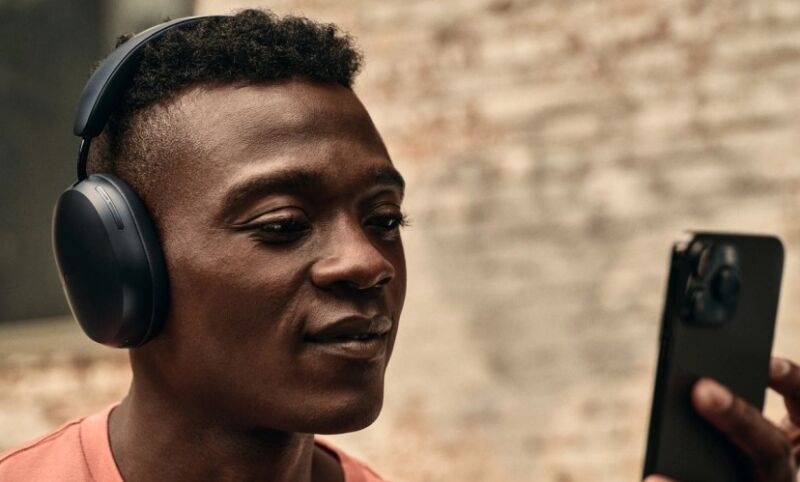
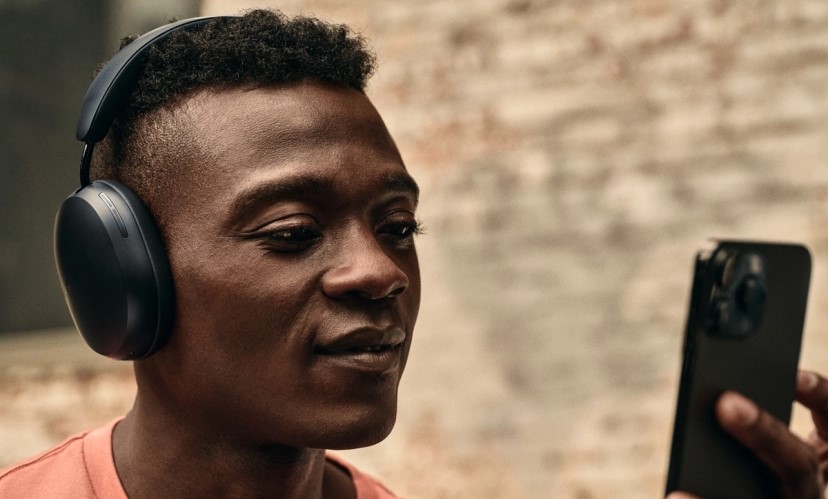
A man wears Sonos Ace headphones while operating an iPhone
Enlarge / Sonos’ updated app was reportedly rushed out before the release of Sonos’ Ace headphones (pictured).

Sonos’ new app was launched and reviewed so poorly that the company is expecting to spend $20 million to $30 million on remediation. The Verge reported last week that high-level Sonos executives were considering relaunching the old app so users can have the functionality and stability that the update lacks. However, Sonos CEO Patrick Spence confirmed yesterday that the old app won’t be re-released.

In May, Sonos launched an updated companion app for controlling its devices that was maligned for a lack of features. With users being vocal about their disappointment to lose functionality, like local music library access, sleep timers, and accessibility features, and the app seemingly being rushed out prematurely, by July, Spence had apologized for the app and promised biweekly updates to fix the software’s problems.

Fixing the app and Sonos’ reputation has been critical for the Santa Barbara, California-headquartered company, leading Sonos to delay two hardware launches it had planned for its fiscal Q4. In more bad news for the firm, it said last week that it would be laying off 100 people.

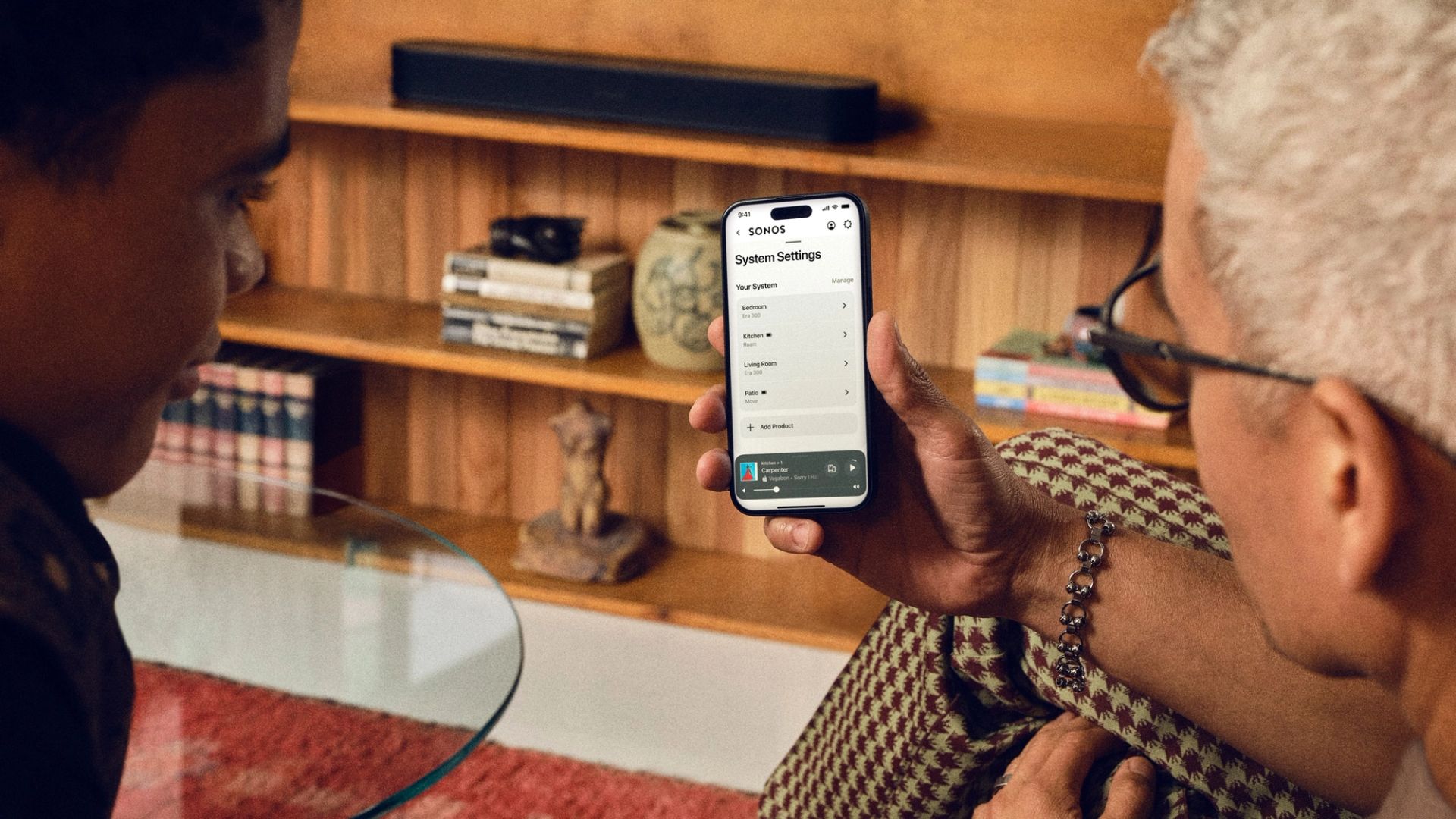
People looking at the new app.
Enlarge / People looking at the new app.

In a Reddit AMA yesterday spotted by The Verge, Spence said he was “hopeful” that Sonos could re-release the old app “until very recently,” explaining:

The trick of course is that Sonos is not just the mobile app, but software that runs on your speakers and in the cloud too. In the months since the new mobile app launched we’ve been updating the software that runs on our speakers and in the cloud to the point where today S2, [the old app], is less reliable & less stable then [sic] what you remember. After doing extensive testing we’ve reluctantly concluded that re-releasing S2 would make the problems worse, not better. I’m sure this is disappointing. It was disappointing to me.

In a call with investors earlier this month, Spence said that the new app required “a redesign of the entire system—not only the app but also the player side of our system, as well as our cloud infrastructure.”

When asked by a Redditor why the cloud was such a core part of the app overhaul, Spence said that, like previously, the cloud is used to give users of the new app the ability to access and search cloud-based music services and to retrieve and save preferences. In the new app, the cloud was “standardized & modernized,” Spence said via Reddit yesterday, “so that cloud-based music services could more easily connect.”

“Painful mistakes”

During the online discussion with frustrated users, Spence admitted that the company “made some painful mistakes these last few months” but noted that the company has hard-working people.

He also further explained Sonos’ difficulties in resolving its app woes.

“Part of the hard truth of the last few months is that you’re having experiences with our products that are hard to reproduce in our labs,” Spence said, pointing to feedback on Reddit helping Sonos address problems.

This isn’t the first time Sonos has expressed difficulties in recreating problems that seem at least somewhat widespread among users. In November, Scott Fink, product manager for home theater at Sonos, told Ars Technica that the Arc soundbar’s widely reported loud popping noise problems were “extremely difficult to reproduce” (Sonos has resolved that problem).

Moving forward, Sonos’ CEO said he would “pop back on Reddit some nights and weekends to engage on the most upvoted questions.” But at this point, it looks like it will be a while before Sonos users can expect an app experience that’s comparable to the old one.

https://arstechnica.com/?p=2044454


Nvidia is ditching dedicated G-Sync modules to push back against FreeSync’s ubiquity

Nvidia is ditching dedicated G-Sync modules to push back against FreeSync’s ubiquity

Back in 2013, Nvidia introduced a new technology called G-Sync to eliminate screen tearing and stuttering effects and reduce input lag when playing PC games. The company accomplished this by tying your display’s refresh rate to the actual frame rate of the game you were playing, and similar variable refresh-rate (VRR) technology has become a mainstay even in budget monitors and TVs today.

The issue for Nvidia is that G-Sync isn’t what has been driving most of that adoption. G-Sync has always required extra dedicated hardware inside of displays, increasing the costs for both users and monitor manufacturers. The VRR technology in most low-end to mid-range screens these days is usually some version of the royalty-free AMD FreeSync or the similar VESA Adaptive-Sync standard, both of which provide G-Sync’s most important features without requiring extra hardware. Nvidia more or less acknowledged that the free-to-use, cheap-to-implement VRR technologies had won in 2019 when it announced its “G-Sync Compatible” certification tier for FreeSync monitors. The list of G-Sync Compatible screens now vastly outnumbers the list of G-Sync and G-Sync Ultimate screens.

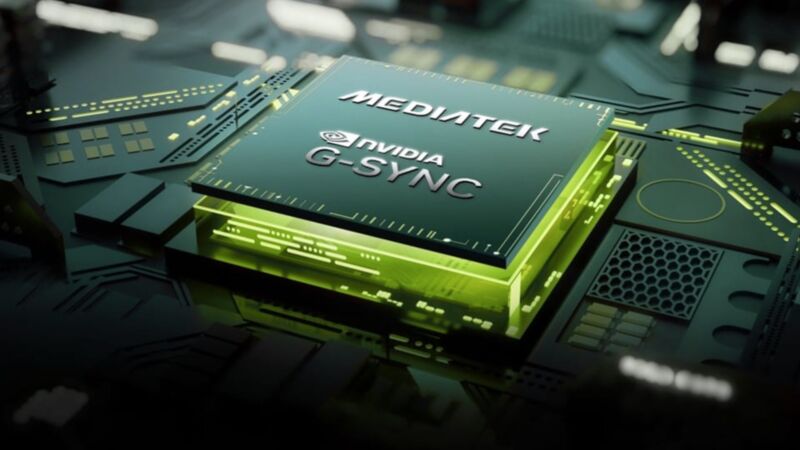
Today, Nvidia is announcing a change that’s meant to keep G-Sync alive as its own separate technology while eliminating the requirement for expensive additional hardware. Nvidia says it’s partnering with chipmaker MediaTek to build G-Sync capabilities directly into scaler chips that MediaTek is creating for upcoming monitors. G-Sync modules ordinarily replace these scaler chips, but they’re entirely separate boards with expensive FPGA chips and dedicated RAM.

These new MediaTek scalers will support all the same features that current dedicated G-Sync modules do. Nvidia says that three G-Sync monitors with MediaTek scaler chips inside will launch “later this year”: the Asus ROG Swift PG27AQNR, the Acer Predator XB273U F5, and the AOC AGON PRO AG276QSG2. These are all 27-inch 1440p displays with maximum refresh rates of 360 Hz.

As of this writing, none of these companies has announced pricing for these displays—the current Asus PG27AQN has a traditional G-Sync module and a 360 Hz refresh rate and currently goes for around $800, so we’d hope for the new version to be significantly cheaper to make good on Nvidia’s claim that the MediaTek chips will reduce costs (or, if they do reduce costs, whether monitor makers are willing to pass those savings on to consumers).

For most people most of the time, there won’t be an appreciable difference between a “true” G-Sync monitor and one that uses FreeSync or Adaptive-Sync, but there are still a few fringe benefits. G-Sync monitors support a refresh rate between 1 and the maximum refresh rate of the monitor, whereas FreeSync and Adaptive-Sync stop working on most displays when the frame rate drops below 40 or 48 frames per second. All G-Sync monitors also support “variable overdrive” technology to help eliminate display ghosting, and the new MediaTek-powered displays will support the recent “G-Sync Pulsar” feature to reduce blur.

https://arstechnica.com/?p=2044240


How accurate are wearable fitness trackers? Less than you might think

How accurate are wearable fitness trackers? Less than you might think
Corey Gaskin

Back in 2010, Gary Wolf, then the editor of Wired magazine, delivered a TED talk in Cannes called “the quantified self.” It was about what he termed a “new fad” among tech enthusiasts. These early adopters were using gadgets to monitor everything from their physiological data to their mood and even the number of nappies their children used.

Wolf acknowledged that these people were outliers—tech geeks fascinated by data—but their behavior has since permeated mainstream culture.

From the smartwatches that track our steps and heart rate, to the fitness bands that log sleep patterns and calories burned, these gadgets are now ubiquitous. Their popularity is emblematic of a modern obsession with quantification—the idea that if something isn’t logged, it doesn’t count.

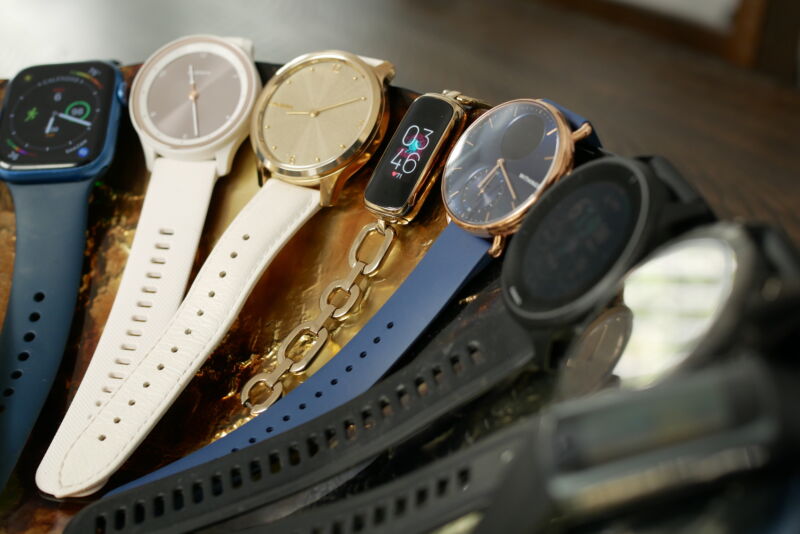
At least half the people in any given room are likely wearing a device, such as a fitness tracker, that quantifies some aspect of their lives. Wearables are being adopted at a pace reminiscent of the mobile phone boom of the late 2000s.

However, the quantified self movement still grapples with an important question: Can wearable devices truly measure what they claim to?

Along with my colleagues Maximus Baldwin, Alison Keogh, Brian Caulfield, and Rob Argent, I recently published an umbrella review (a systematic review of systematic reviews) examining the scientific literature on whether consumer wearable devices can accurately measure metrics like heart rate, aerobic capacity, energy expenditure, sleep, and step count.

[embedded content]

At a surface level, our results were quite positive. Accepting some error, wearable devices can measure heart rate with an error rate of plus or minus 3 percent, depending on factors like skin tone, exercise intensity, and activity type. They can also accurately measure heart rate variability and show good sensitivity and specificity for detecting arrhythmia, a problem with the rate of a person’s heartbeat.

Additionally, they can accurately estimate what’s known as cardiorespiratory fitness, which is how the circulatory and respiratory systems supply oxygen to the muscles during physical activity. This can be quantified by something called VO2Max, which is a measure of how much oxygen your body uses while exercising.

The ability of wearables to accurately measure this is better when those predictions are generated during exercise (rather than at rest). In the realm of physical activity, wearables generally underestimate step counts by about 9 percent.

Challenging endeavour

However, discrepancies were larger for energy expenditure (the number of calories you burn when exercising) with error margins ranging from minus-21.27 percent to 14.76 percent, depending on the device used and the activity undertaken.

Results weren’t much better for sleep. Wearables tend to overestimate total sleep time and sleep efficiency, typically by more than 10 percent. They also tend to underestimate sleep onset latency (a lag in getting to sleep) and wakefulness after sleep onset. Errors ranged from 12 percent to 180 percent, compared to the gold standard measurements used in sleep studies, known as polysomnography.

The upshot is that, despite the promising capabilities of wearables, we found conducting and synthesizing research in this field to be very challenging. One hurdle we encountered was the inconsistent methodologies employed by different research groups when validating a given device.

This lack of standardization leads to conflicting results and makes it difficult to draw definitive conclusions about a device’s accuracy. A classic example from our research: one study might assess heart rate accuracy during high-intensity interval training, while another focuses on sedentary activities, leading to discrepancies that can’t be easily reconciled.

Other issues include varying sample sizes, participant demographics, and experimental conditions—all of which add layers of complexity to the interpretation of our findings.

What does it mean for me?

Perhaps most importantly, the rapid pace at which new wearable devices are released exacerbates these issues. With most companies following a yearly release cycle, we and other researchers find it challenging to keep up. The timeline for planning a study, obtaining ethical approval, recruiting and testing participants, analyzing results, and publishing can often exceed 12 months.

By the time a study is published, the device under investigation is likely to already be obsolete, replaced by a newer model with potentially different specifications and performance characteristics. This is demonstrated by our finding that less than 5 percent of the consumer wearables that have been released to date have been validated for the range of physiological signals they purport to measure.

What do our results mean for you? As wearable technologies continue to permeate various facets of health and lifestyle, it is important to approach manufacturers’ claims with a healthy dose of skepticism. Gaps in research, inconsistent methodologies, and the rapid pace of new device releases underscore the need for a more formalized and standardized approach to the validation of devices.

The goal here would be to foster collaborative synergies between formal certification bodies, academic research consortia, popular media influencers, and the industry so that we can augment the depth and reach of wearable technology evaluation.

Efforts are already underway to establish a collaborative network that can foster a richer, multifaceted dialogue that resonates with a broad spectrum of stakeholders—ensuring that wearables are not just innovative gadgets but reliable tools for health and wellness.The Conversation

Cailbhe Doherty, assistant professor in the School of Public Health, Physiotherapy and Sports Science, University College Dublin. This article is republished from The Conversation under a Creative Commons license. Read the original article.

https://arstechnica.com/?p=2044255


Epic Games Store and Fortnite arrive on EU iPhones

Artist's conception of Epic dodging harm from Apple's decisions (and perhaps its own).
Enlarge / Artist’s conception of Epic dodging harm from Apple’s decisions (and perhaps its own).

It’s been four years since Fortnite, one of the world’s most popular games, was pulled from the Apple App Store in a blaze of controversy and finger-pointing. Today, it’s returning to the iPhone—but only in the European Union.

Today marks the launch of the Epic Games Store on Android and iOS—iOS just in Europe, Android worldwide. Right now, it just has three games: Fortnite, Rocket League Sideswipe, and Fall Guys. And you’ll have to be in Europe to access it on your iPhone.

The Epic Games Store is run by Epic Games, the same company that develops and publishes Fortnite. Most folks who have been paying attention to either Epic or Apple in recent years knows the story at this point, but here’s the quick summary and analysis.

Opinion: Users are still the losers after four years

At the direction of CEO Tim Sweeney, Epic knowingly made changes to Fortnite related to digital payments that violated Apple’s terms for developers on the platform. Apple removed Fortnite accordingly, and a long, ugly PR and legal battle ensued between the two companies in multiple countries and regions.

In the US, a judge’s decision granted some small wins to Epic and other developers seeking to loosen Apple’s grip on the platform, but it kept the status quo for the most part.

Things went a little differently in Europe. EU legislators and regulators enacted the Digital Markets Act (DMA), which had far-reaching implications for how Apple and Google run their app stores. Among other things, the new law required Apple to allow third-party, alternative app stores (basically, sideloading) on the iPhone.

Apple’s compliance was far from enthusiastic (the company cited security and privacy concerns for users, which is valid, but the elephant in the room is, of course, its confident grip on app revenues on its platforms), and it was criticized for trying to put up barriers. Additionally, Apple rejected Epic’s attempts to launch its app store multiple times for a few arcane reasons amid a flurry of almost comically over-the-top tweets from Sweeney criticizing the company.

Despite Apple’s foot-dragging, Epic has finally reached the point where it could launch its app store. Epic had already launched a relatively successful App Store on PC, where Valve’s Steam holds a strong grip on users. The new iPhone app store doesn’t offer nearly as many options or perks as the PC version, but Epic says it’s working on wrangling developers onto its store.

It also says it will release its games on other alternative app stores on iOS and Android, such as AltStore PAL.

It’s been a long, winding, angry path to get to this point. In the battle between Epic and Apple, there remains some debate about who really has won up to this point. But there isn’t much dispute that, whether you want to blame Apple or Epic or both, users sure haven’t been the winners.

https://arstechnica.com/?p=2043896


New Windows 11 build removes ancient, arbitrary 32GB size limit for FAT32 disks

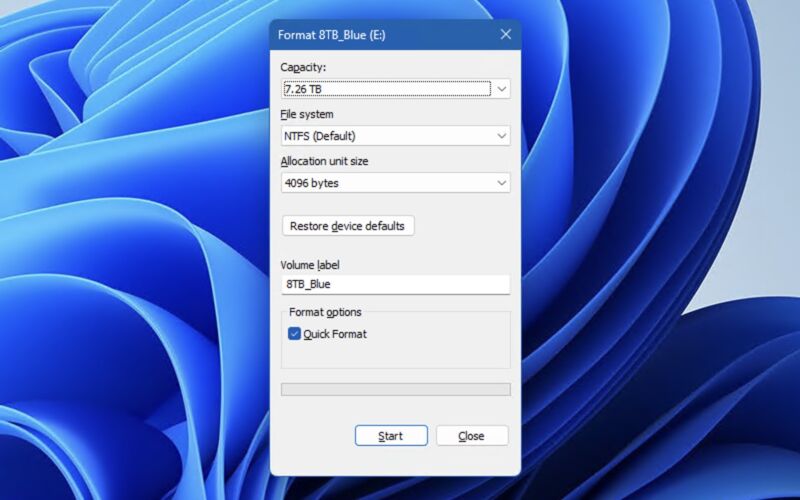
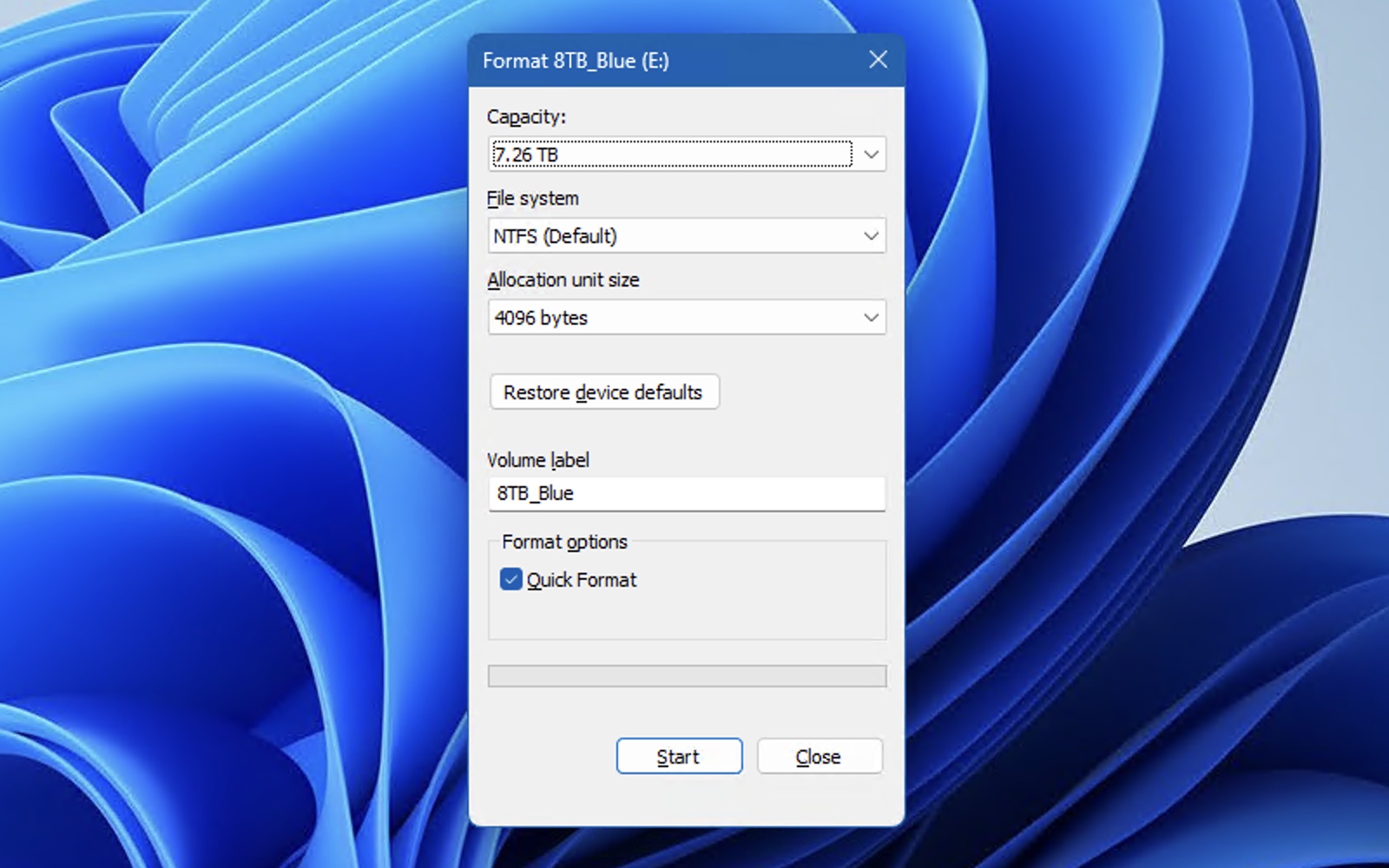
If you've formatted a disk in Windows in the last 30 years, you may have come across this dialog box.
Enlarge / If you’ve formatted a disk in Windows in the last 30 years, you may have come across this dialog box.
Andrew Cunningham

As we wait for this fall’s Windows 11 24H2 update to be released to the general public, work continues on other new features that could be part of other future Windows updates. A new Canary channel Windows Insider build released yesterday fixes a decades-old and arbitrary limitation that restricted new FAT32 partitions to 32GB in size, even though the filesystem itself has a maximum supported size of 2TB (and Windows can read and recognize 2TB FAT32 partitions without an issue).

For now, this limit is only being lifted for the command-line formatting tools in Windows. The disk formatting UI, which looks more or less the same now as it did when it was introduced in Windows NT 4.0 almost 30 years ago, still has the arbitrary 32GB capacity restriction.

The 32GB limit can allegedly be pinned on former Microsoft programmer Dave Plummer, who occasionally shares stories about his time working on Windows in the 1990s and early 2000s. Plummer says that he wrote the file format dialog, intending it as a “temporary” solution, and arbitrarily chose 32GB as a size limit for disks, likely because it seemed big enough at the time (Windows NT 4.0 required a whopping 110MB of disk space).

There aren’t a ton of reasons to actually use a FAT32 disk in 2024, and it’s been replaced by other filesystems for just about everything. As a filesystem for your main OS drive, it was replaced by NTFS decades ago; as a widely compatible filesystem for external drives that can be read from and written to by many operating systems, you’d probably want to use exFAT instead. FAT32 still has a 4GB limit on the size of individual files.

But if you’re formatting a disk to use with an old version of Windows, or with some older device that can only work with FAT32 disks, this tweak could make Windows a tiny bit more useful for you.

Listing image by Alpha Six

https://arstechnica.com/?p=2043819


New Geekbench AI benchmark can test the performance of CPUs, GPUs, and NPUs

New Geekbench AI benchmark can test the performance of CPUs, GPUs, and NPUs
Primate Labs

Neural processing units (NPUs) are becoming commonplace in chips from Intel and AMD after several years of being something you’d find mostly in smartphones and tablets (and Macs). But as more companies push to do more generative AI processing, image editing, and chatbot-ing locally on-device instead of in the cloud, being able to measure NPU performance will become more important to people making purchasing decisions.

Enter Primate Labs, developers of Geekbench. The main Geekbench app is designed to test CPU performance as well as GPU compute performance, but for the last few years, the company has been experimenting with a side project called Geekbench ML (for “Machine Learning”) to test the inference performance of NPUs. Now, as Microsoft’s Copilot+ initiative gets off the ground and Intel, AMD, Qualcomm, and Apple all push to boost NPU performance, Primate Labs is bumping Geekbench ML to version 1.0 and renaming it “Geekbench AI,” a change that will presumably help it ride the wave of AI-related buzz.

“Just as CPU-bound workloads vary in how they can take advantage of multiple cores or threads for performance scaling (necessitating both single-core and multi-core metrics in most related benchmarks), AI workloads cover a range of precision levels, depending on the task needed and the hardware available,” wrote Primate Labs’ John Poole in a blog post about the update. “Geekbench AI presents its summary for a range of workload tests accomplished with single-precision data, half-precision data, and quantized data, covering a variety used by developers in terms of both precision and purpose in AI systems.”

In addition to measuring speed, Geekbench AI also attempts to measure accuracy, which is important for machine-learning workloads that rely on producing consistent outcomes (identifying and cataloging people and objects in a photo library, for example).

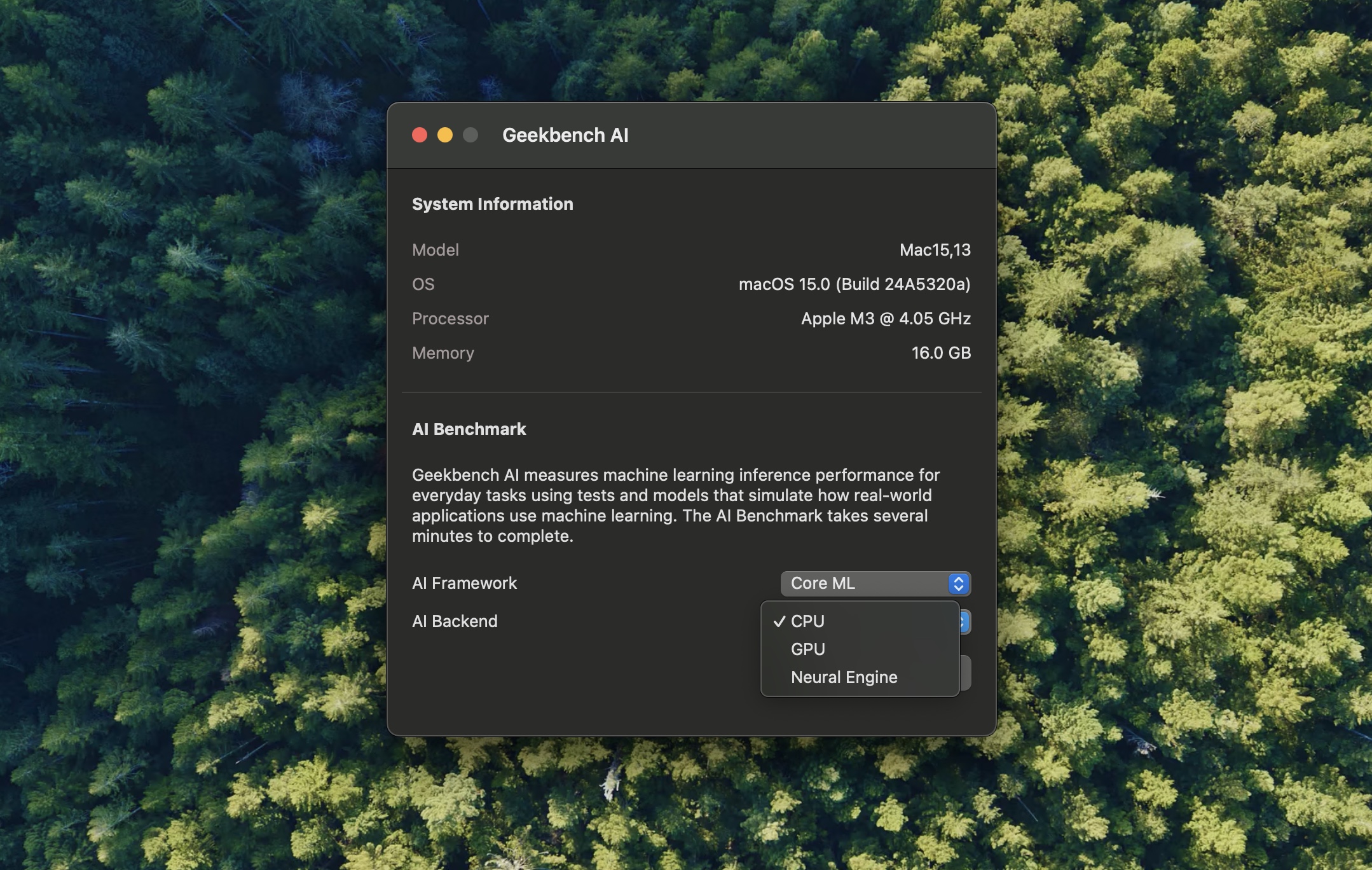
Geekbench AI can run AI workloads on your CPU, GPU, or NPU (when you have a system with an NPU that's compatible).
Enlarge / Geekbench AI can run AI workloads on your CPU, GPU, or NPU (when you have a system with an NPU that’s compatible).
Andrew Cunningham

Geekbench AI supports several AI frameworks: OpenVINO for Windows and Linux, ONNX for Windows, Qualcomm’s QNN on Snapdragon-powered Arm PCs, Apple’s CoreML on macOS and iOS, and a number of vendor-specific frameworks on various Android devices. The app can run these workloads on the CPU, GPU, or NPU, at least when your device has a compatible NPU installed.

On Windows PCs, where NPU support and APIs like Microsoft’s DirectML are still works in progress, Geekbench AI supports Intel and Qualcomm’s NPUs but not AMD’s (yet).

“We’re hoping to add AMD NPU support in a future version once we have more clarity on how best to enable them from AMD,” Poole told Ars.

Geekbench AI is available for Windows, macOS, Linux, iOS/iPadOS, and Android. It’s free to use, though a Pro license gets you command-line tools, the ability to run the benchmark without uploading results to the Geekbench Browser, and a few other benefits. Though the app is hitting 1.0 today, the Primate Labs team expects to update the app frequently for new hardware, frameworks, and workloads as necessary.

“AI is nothing if not fast-changing,” Poole continued in the announcement post, “so anticipate new releases and updates as needs and AI features in the market change.”

https://arstechnica.com/?p=2043053


Sonos laying off 100 people amid expensive app problems

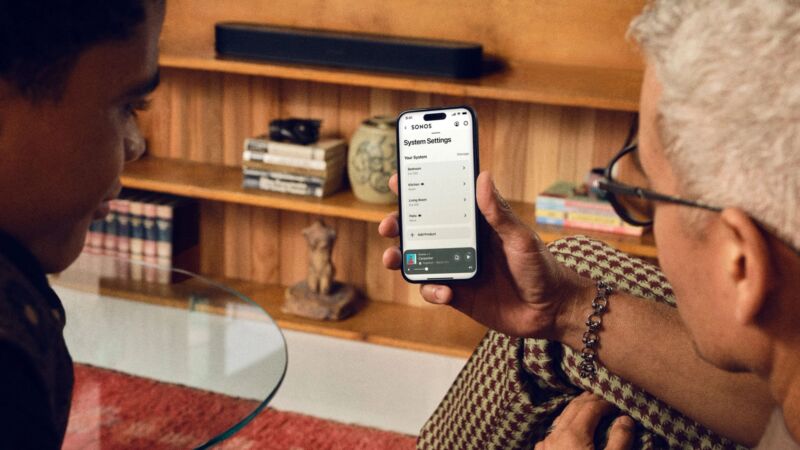
Two people with extremely 70s vibes looking at Sonos' app, with shag carpeting, wood paneling, and houndstooth pants in the frame.

Sonos is laying off about 100 people, the company confirmed on Wednesday. The news comes as Sonos is expecting to spend $20 million to $30 million in the short term to repair the damage from its poorly received app update.

In a statement to The Verge, Sonos CEO Patrick Spence said:

We made the difficult decision to say goodbye to approximately 100 team members representing 6 percent of the company. This action was a difficult, but necessary, measure to ensure continued, meaningful investment in Sonos’ product roadmap while setting Sonos up for long term success.

Sonos reported having 1,844 people in October 2022, per CNBC. The company also announced layoffs of about 130 people (or 7 percent of its workforce) in June 2023 due to “continued headwinds,” according to Spence. In 2020, Sonos laid off 12 percent of its employees, which was estimated to be about 174 people.

App woes

This most recent layoff wave comes as Sonos is expected to spend tens of millions of dollars to address the fallout from its updated app. Released in May, the update removed various functions, including the ability to use sleep timers and access local music libraries and accessibility features. By July, Spence was apologizing for the app and promising that it would be fixed with biweekly updates through the fall. Last week, Sonos revealed the high price of addressing the negative feedback, which includes expenses for updating the app, increasing customer support, and trying to win back customer and partner trust with things like discounts.

Sonos is also expecting less revenue in its fiscal Q4 2024 because it’s delaying two hardware product launches until the app fixes are done. Sonos hasn’t confirmed this, but one of the products was expected to be a Sonos Arc soundbar follow-up. Citing anonymous sources, The Verge said on Wednesday that Sonos may release the soundbar in October (which is in Sonos’ fiscal year 2025).

In his statement regarding the layoffs, Spence said that Sonos’ “continued commitment to the app recovery and delighting our customers remains our priority, and we are confident that today’s actions will not impact our ability to deliver on that promise.”

Sonos may just relaunch its old app, The Verge reported on Wednesday. The publication said “there have been discussions high up within Sonos about bringing back the prior version of the app.”

It’s unclear if Sonos would make both versions of the app available or pull back the new version until it’s fixed enough to satisfy customers’ demands. We’ve reached out to Sonos for comment.

Even if Sonos quickly brings back the old app, the botched app redesign is expected to impact the company’s finances for months, if not longer. Sonos executives have admitted that the app was rolled out with bugs that testing missed. The update, which Sonos said was a huge overhaul that included redesigning the cloud infrastructure and player side of the system, was also rushed out ahead of Sonos’ Ace headphones release in June, Bloomberg reported. With Sonos now dealing with long-term customers whose devices suddenly stopped working as expected and months of customers relying on an unsatisfactory app, the consequences of pushing the update out before it was ready go beyond dollars and cents.

https://arstechnica.com/?p=2043533


AMD Ryzen 9000 review: Impressive efficiency, with bugs and so-so speed boosts

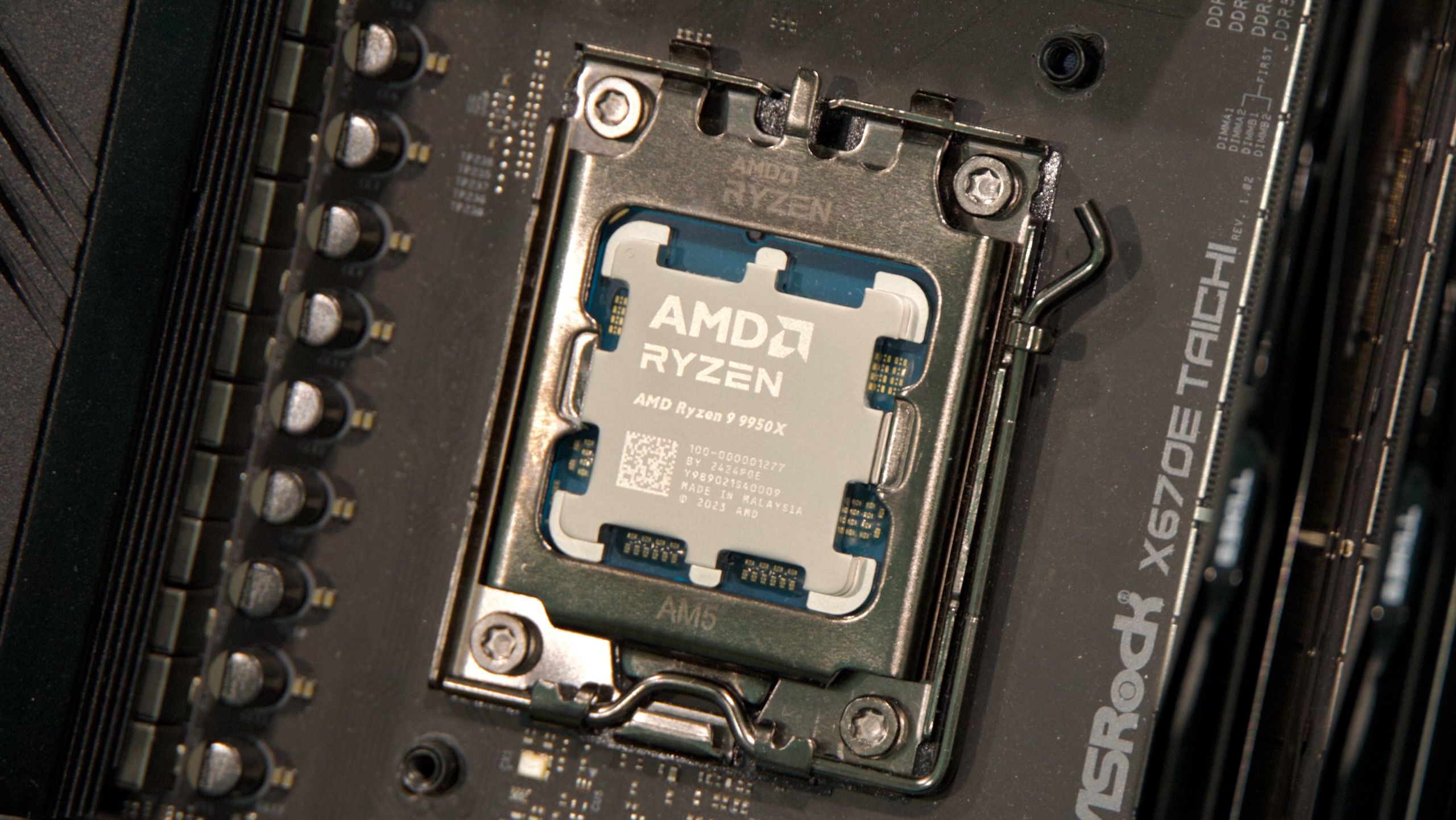
AMD's Ryzen 9 9950X.
Enlarge / AMD’s Ryzen 9 9950X.
Andrew Cunningham

Nearly two years after the release of the first Ryzen 7000 CPUs, AMD has returned with a full-fledged follow-up. The new Ryzen 9000 chips—the 6-core 9600X, 8-core 9700X, 12-core 9900X, and 16-core 9950X—bring AMD’s new Zen 5 architecture to the desktop a couple of weeks after it launched in the Ryzen AI chips for laptops.

We came away from the cumbersomely named Ryzen AI 9 HX 370 impressed by both its performance and its power efficiency, and AMD is also leaning into power efficiency as a key selling point of the Ryzen 9000 series. Three of the chips have seen their power limits dropped significantly compared to last-gen chips while still bragging of low-double-digit performance increases. That’s rare at a time when Intel has been pushing its chips to the edge to squeeze every last bit of performance out of high-end Core i9 and Core i7 chips.

The focus on power efficiency will give many users—particularly those who don’t touch the default settings—less-power-hungry chips that run a bit cooler. And for people who want to tinker and trade in some of that efficiency for a performance boost, many of these chips (particularly the 9700X and 9900X) have a lot of additional performance headroom. It’s also nice that all existing AM5 motherboards on the market should be compatible with the 9000 series once a BIOS update is installed, and the AM5 platform’s mandatory BIOS Flashback support means you don’t need to use weird, kludgy hacks like the “boot kit” CPU loaner program for updating the BIOS when you buy a board with an older BIOS installed.

But it’s not all smooth sailing. Motherboard and RAM costs remain an issue across the entire AM5 platform nearly two years after launch, especially for budget buyers. Launch pricing is high, especially compared to current street prices for the 7000 and 7000X3D series CPUs. And we ran into a few bugs during testing that may also bite other early adopters while we wait on AMD and the motherboard makers to straighten things out.

Meet Zen 5

Compared to the Ryzen 7000 launch, when AMD was putting out new CPUs, a new architecture, a new I/O die (IOD), new chipsets, a new integrated GPU, (mandatory) DDR5 support, and a brand-new processor socket all at once, the Ryzen 9000 launch is downright placid. The IOD is the same. The integrated RDNA2-based GPU is the same (and, it’s worth reiterating, not at all intended to play games). The AM5 socket is the same. Officially supported DDR5 speeds are up a bit, from DDR5-5200 to DDR5-5600. But the widespread availability of and support for factory-overclocked RAM in desktop motherboards means that a modest bump to officially supported RAM speed doesn’t mean all that much; AMD still recommends DDR5-6000 for optimal performance.

There are new 800-series chipsets, but they’re so incrementally improved over the old 600-series chipsets that AMD didn’t even send along a new motherboard with the new processors. We were directed to install a new BIOS update on existing X670E boards from the Ryzen 7000 launch instead (this almost never happens, even when forward compatibility is a selling point). This seems like a subtle signal from AMD—don’t feel like you need to wait for or pay extra money for a newer motherboard, something that would only increase the AM5 platform’s stubbornly high base price.

This leaves us with only two new things of note: the Zen 5 architecture itself and the new core chiplet die (CCD) that combines up to eight Zen 5 cores together.

Ryzen 9000’s Zen 5 CCD is built using TSMC’s N4P process, an upgrade from the 5 nm process used for the Ryzen 7000 series. TSMC says that N4P is 22 percent more power efficient than the 5 nm process, which is part of what is enabling AMD to use a lower TDP for most of the Ryzen 9000X CPUs while still providing faster performance.

It also probably has at least a bit to do with the lower operating temperatures of Ryzen 9000, which AMD has said should be about 7° Celsius lower than equivalent Ryzen 7000 CPUs at the same power levels. Ryzen 7000X chips running at their default TDPs ran a bit hot, and while AMD said this was normal and safe behavior, a cooler chip will usually offer better consistency and longevity.

A major architectural change from Zen 4 relates to support for AVX512 extensions, which Intel introduced (infamously, in some circles) in 2017 with some of the higher-end Skylake variants but hasn’t enabled on recent consumer CPUs because Intel’s E-cores don’t support them. Zen 4 brought AVX512 instructions to Ryzen CPUs for the first time, but it did so by combining two 256-bit data paths. Zen 5 has a full 512-bit data path for AVX512 instructions, and for the (still rare-ish) tasks that actually use AVX512, it gives Zen 5 a disproportionately high performance boost.

https://arstechnica.com/?p=2041146