New app releases for Apple Vision Pro have fallen dramatically since launch
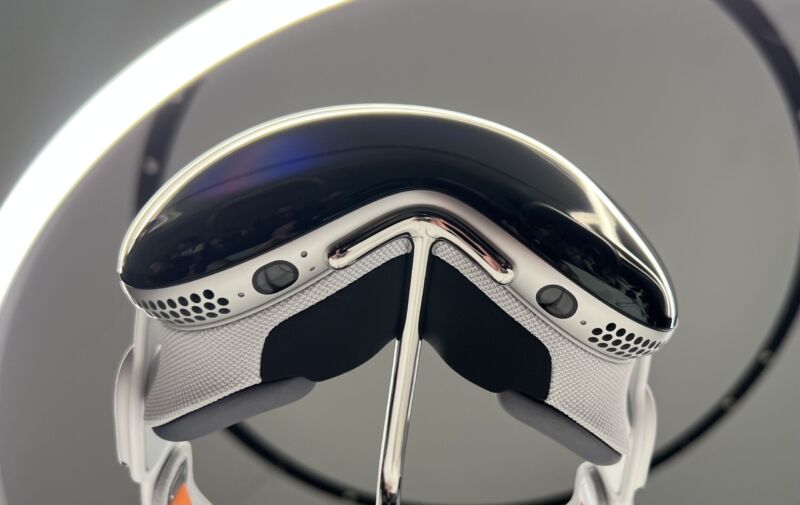
Vision Pro, seen from below, in a display with a bright white light strip overhead.
Samuel Axon

Apple is struggling to attract fresh content for its innovative Vision Pro headset, with just a fraction of the apps available when compared with the number of developers created for the iPhone and iPad in their first few months.

The lack of a “killer app” to encourage customers to pay upwards of $3,500 for an unproven new product is seen as a problem for Apple, as the Vision Pro goes on sale in Europe on Friday.

Apple said recently that there were “more than 2,000” apps available for its “spatial computing” device, five months after it debuted in the US.

That compares with more than 20,000 iPad apps that had been created by mid-2010, a few months after the tablet first went on sale, and around 10,000 iPhone apps by the end of 2008, the year the App Store launched.

“The overall trajectory of the Vision Pro’s launch in February this year has been a lot slower than many hoped for,” said George Jijiashvili, analyst at market tracker Omdia.

“The reality is that most developers’ time and money will be dedicated to platforms with billions of users, rather than tens or hundreds of thousands.”

Apple believes the device will transform how millions work and play. The headset shifts between virtual reality, in which the wearer is immersed in a digital world, and a version of “augmented reality” that overlays images upon the real surroundings.

Omdia predicts that Apple will sell 350,000 Vision Pros this year. It forecasts an increase to 750,000 next year and 1.7 million in 2026, but the figures are far lower than the iPad, which sold almost 20 million units in its first year.

Estimates from IDC, a tech market researcher, suggest Apple shipped fewer than 100,000 units of Vision Pro in the first quarter, less than half what rival Meta sold of its Quest headsets.

Because of the device’s high price, Apple captured more than 50 percent of the total VR headset market by dollar value, IDC found, but analyst Francisco Jeronimo added: “The Vision Pro’s success, regardless of its price, will ultimately depend on the content available.”

Early data suggests that new content is arriving slowly. According to Appfigures, which tracks App Store listings, the number of new apps launched for the Vision Pro has fallen dramatically since January and February.

Nearly 300 of the top iPhone developers, whose apps are downloaded more than 10 million times a year—including Google, Meta, Tencent, Amazon, and Netflix—are yet to bring any of their software or services to Apple’s latest device.

Steve Lee, chief executive of AmazeVR, which offers immersive concert experiences, said that the recent launch of the device in China and elsewhere in Asia resulted in an uptick in downloads of his app. “However, it was about one-third of the initial launch in the United States.”

Lee remains confident that Vision Pro will eventually become a mainstream consumer product.

Wamsi Mohan, equity analyst at Bank of America, said the Vision Pro had “just not quite hit the imagination of the consumer.”

“This is one of the slower starts for a new Apple product category, just given the price point,” he said. “It seems management is emphasizing the success in enterprise a lot more.”

Nonetheless, some app developers are taking a leap of faith and launching on the Vision Pro. Some are betting that customers who can afford the pricey headset will be more likely to splurge on software, too.

Others are playing a longer game, hoping that establishing an early position on Apple’s newest platform will bring returns in the years to come.

https://arstechnica.com/?p=2036823


Arduino’s Plug and Make Kit lets your hacking imagination run wild, sans solder

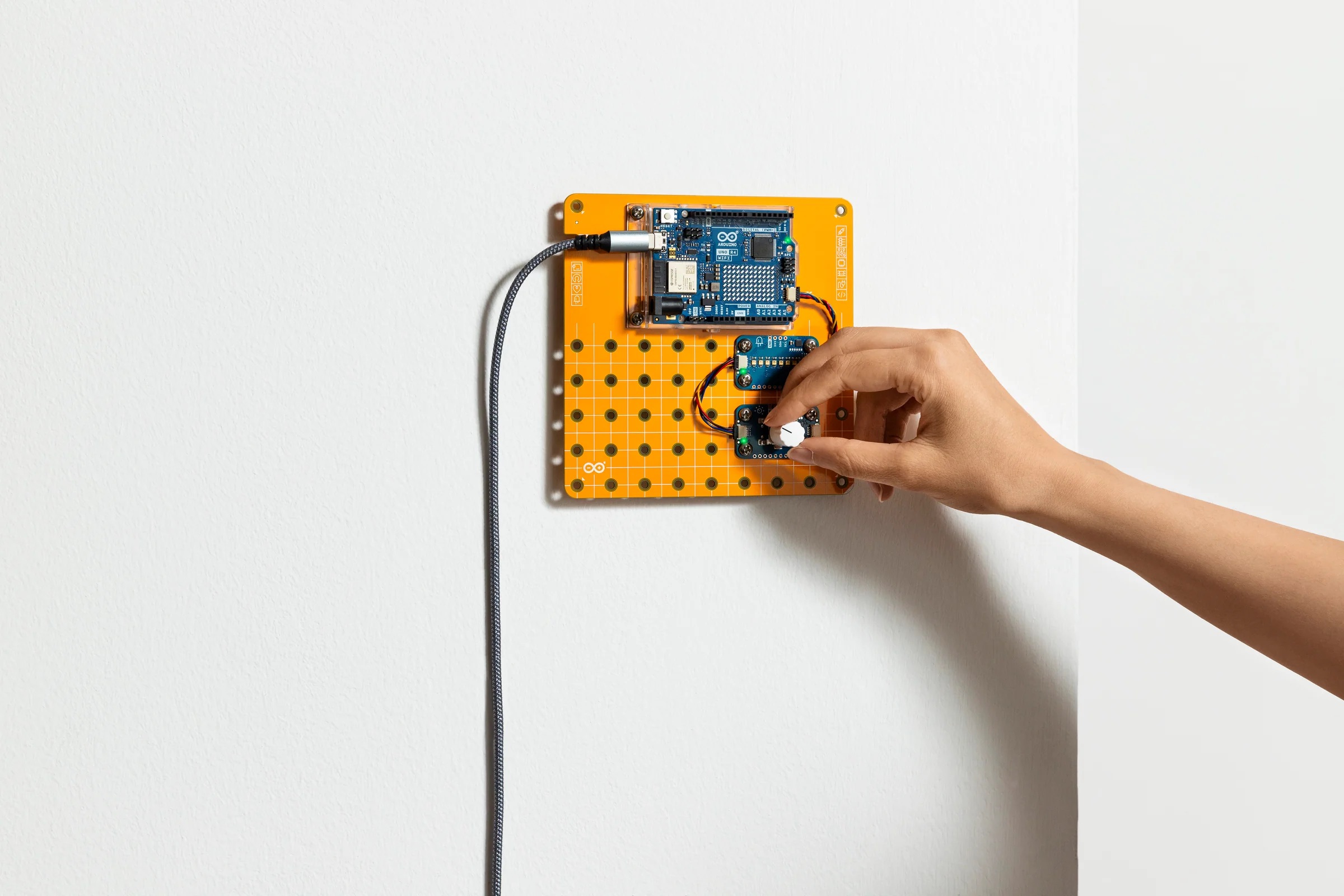
A hand adjusting a button or knob on an Arduino plug and make kit, mounted to a white whall on a yellow bread-board-like backing.
Enlarge / Having this on the wall, right by your front door, would serve the purpose of informing guests where your priorities lie.

I know how to solder, but I do not always want to solder, and I think there are a lot of folks like me. Even if the act itself can be done (and undone, and redone), the friction of hauling out the gear, preparing a space, and fine-motor-skilling a perfect shiny blob can put a halt to one’s tinkering ambitions.

[embedded content]
Arduino’s Plug and Make Kit official release video.

Arduino, the building block of many off-hours projects, has put the challenge to you, your kids, or anyone you know who just needs the right kit to fall down a rabbit hole, minus a dangerously hot iron. The Arduino Plug and Make Kit has at its core an Arduino UNO R4 board with Wi-Fi, Bluetooth, and a built-in 12×8 LED matrix display. That board gets screwed into the prime lot on a yellow board, and then you pick from among seven other “Modulino” boards to attach. By “attach,” I mean running one of those little push-in-with-your-fingers cables from the main board to a little board, and maybe daisy-chaining from there. All your boards fit onto the larger base with M3 screws and nuts, and the whole thing is powered by a USB-C cable (with USB A or C on the other end).

What can you plug in? A knob, eight LEDs, a proximity sensor, a motion sensor, a simple buzzer/speaker, a temperature/humidity sensor, and three simple buttons. With those things, the newcomer can make a low-key weather station, an 8-bit-style synthesizer, a smart lamp controller, and a few other things (registration required). Of course, those are just the starter projects put together by Arduino; on the web, in the corners of GitHub, and inside the curious mind, there are loads of other things to be built.

There’s a little shell case for the main Arduino board included with the kit, which could help with weather-proofing a bit. But whatever project you make with this kit is going to look like a lightly spiffed-up breadboard object. That can be a great thing. The timer I use to try to keep myself working in 25-minute segments is an Adafruit Circuit Playground Express, programmed to light up in a clock-ish ring and then play the Legend of Zelda “discovery” tune after every sprint. There are lots of timers, even Pomodoro-technique-specific models, that are cheaper, smaller, and purpose-built. But I like my goofy little timer specifically because I can see the guts of it.

The Arduino Plug and Make Kit costs $87 at the moment and is still in stock as of this writing.

https://arstechnica.com/?p=2036761


Three betas in, iOS 18 testers still can’t try out Apple Intelligence features

Three betas in, iOS 18 testers still can’t try out Apple Intelligence features

The beta-testing cycle for Apple’s latest operating system updates is in full swing—earlier this week, the third developer betas rolled out for iOS 18, iPadOS 18, macOS 15 Sequoia, and the rest of this fall’s updates. The fourth developer beta ought to be out in a couple of weeks, and it’s reasonably likely to coincide with the first betas that Apple offers to the full public (though the less-stable developer-only betas got significantly more public last year when Apple stopped making people pay for a developer account to access them).

Many of the new updates’ features are present and available to test, including cosmetic updates and under-the-hood improvements. But none of Apple’s much-hyped Apple Intelligence features are available to test in any form. MacRumors reports that Settings menus for the Apple Intelligence features have appeared in the Xcode Simulator for current versions of iOS 18 but, as of now, those settings still appear to be non-functional placeholders that don’t actually do anything.

That may change soon; Apple did say that the first wave of Apple Intelligence features would be available “this summer,” and I would wager a small amount of money on the first ones being available in the public beta builds later this month. But the current state of the betas does reinforce reporting from Bloomberg’s Mark Gurman that suggested Apple was “caught flat-footed” by the tech world’s intense interest in generative AI.

Even when they do arrive, the Apple Intelligence features will be rolled out gradually. Some will be available earlier than others—Gurman recently reported that the new Siri, specifically, might not be available for testing until January and might not actually be ready to launch until sometime in early 2025. The first wave of features will only work in US English, and only relatively recent Apple hardware will be capable of using most of them. For now, that means iPads and Macs with an M-series chip, or the iPhone 15 Pro, though presumably this year’s new crop of Pro and non-Pro iPhones will all be Apple Intelligence-compatible.

Apple’s relatively slow rollout of generative AI features isn’t necessarily a bad thing. Look at Microsoft, which has been repeatedly burned by its desire to rush AI-powered features into its Bing search engine, Edge browser, and Windows operating system. Windows 11’s Recall feature, a comprehensive database of screenshots and text tracking everything that users do on their PCs, was announced and then delayed multiple times after security researchers and other testers demonstrated how it could put users’ personal data at risk.

https://arstechnica.com/?p=2036215


Testers unearth touchscreen UI in tvOS beta, signs point to a touchscreen HomePod

A screenshot of tvOS 17. Recent betas have included evidence that Apple is working on a touchscreen-enabled version of the interface.
Enlarge / A screenshot of tvOS 17. Recent betas have included evidence that Apple is working on a touchscreen-enabled version of the interface.
Andrew Cunningham

Apple’s tvOS betas are usually among its least exciting; the Apple TV’s operating system has changed so little in the last decade that the most exciting thing to happen to it in recent memory is an extra column of icons.

But this week’s tvOS 18 beta 3 release includes a hidden feature that might be exciting for smart speaker enthusiasts, if not for people who still want their Apple TV boxes to develop exciting new capabilities. 9to5Mac has discovered a touchscreen interface (codenamed “PlasterBoard”) inside of the latest beta, a sign that Apple is testing alternate input mechanisms for software that is currently manipulated via remote control and voice.

Last week, MacRumors also discovered a reference to a device called “HomeAccessory17,1” in Apple’s beta software, a naming convention similar to the “AudioAccessory” device identifiers that Apple uses for HomePod speakers. Together, these developments suggest that Apple is working on a version of the HomePod with an integrated touchscreen, a device that rumors have suggested could launch in 2024 or 2025. The company has reportedly been working on a smart home device with a screen since at least 2021.

MacRumors also points out that the 17,1 model identifier could imply that the new HomePod is being powered by Apple’s upcoming A18 chip—model identifiers across Apple’s product lineup are normally tied to chip generation rather than product generation, which is why the Vision Pro (for example) is called “RealityDevice14,1” rather than “RealityDevice1,1.” Using an A18 will presumably give a new HomePod the necessary speed to support upcoming Apple Intelligence features, including a new and improved version of Siri.

All HomePod speakers have been running a forked version of tvOS since version 13.4 of the HomePod software was released in early 2020, which is why HomePod-related leaks seem to be showing up in tvOS-related code. This would also explain why Apple would use tvOS as the basis for a HomePod with a screen rather than a version of iPadOS.

Apple’s take on an Amazon Echo Show

A version of tvOS running on a tablet-style device could use more than just a touch-driven interface to reach its full potential—a tvOS version of Safari would be useful for browsing recipe sites or casual reading while you’re doing something else, for example. However, what Apple adds depends on the form that the screen takes.

Some rumors have suggested that it would be a circular panel that replaces the swirling LEDs on the top of current-generation HomePods, but Bloomberg’s normally reliable Mark Gurman has described the display as “iPad-like,” suggesting that it could look more like a version of Amazon’s Echo Show. Amazon advertises its Show devices as digital photo frames, miniature TVs, and general kitchen aids, and Apple’s pitch for a screen-ified HomePod would likely feature a lot of the same uses.

Amazon has already released multiple generations of Echo Show devices, and Google has made a couple of stabs at the category, too. A HomePod with a screen, whether released in 2024 or 2025, would be far from the first of its kind. However, the HomePod wasn’t a cutting-edge product when it was released either, and it’s still managed to carve out a niche.

We don’t know what a HomePod with a screen might cost, but assuming it includes a HomePod-esque speaker, an iPad-esque screen, and a cutting-edge iPhone processor, it seems likely that it will be priced well above the $299 Apple currently charges for the full-size screen-less HomePod. Apple’s original $349 HomePod flopped partly because it was priced too high relative to competitors and because it didn’t do a whole lot—a speaker that did more things could probably be priced higher without drawing as much criticism.

https://arstechnica.com/?p=2035899


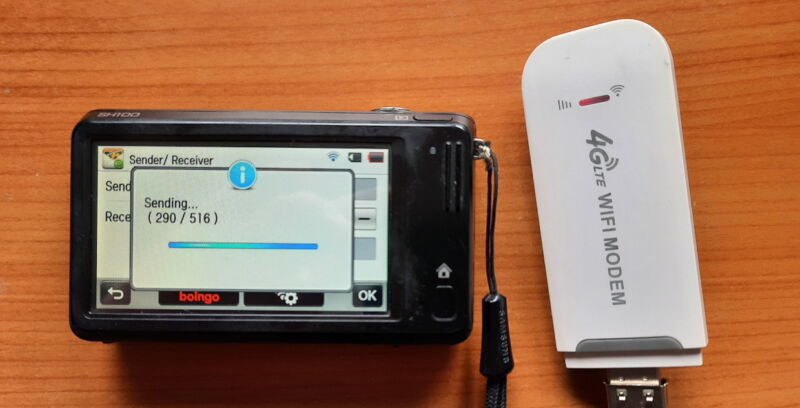
Samsung’s abandoned NX cameras can be brought online with a $20 LTE stick

Samsung camera display next to a 4G LTE modem stick
Enlarge / Under-powered Samsung camera, meet over-powered 4G LTE dongle. Now work together to move pictures over the air.
Georg Lukas

Back in 2010—after the first iPhone, but before its camera was any good—a mirrorless, lens-swapping camera that could upload photos immediately to social media or photo storage sites was a novel proposition. That’s what Samsung’s NX cameras promised.

Unsurprisingly, Samsung didn’t keep that promise too much longer after it dropped its camera business and sales numbers disappeared. It tried out the quirky idea of jamming together Android phones and NX cameras in 2013, providing a more direct means of sending shots and clips to Instagram or YouTube. But it shut down its Social Network Services (SNS) entirely in 2021, leaving NX owners with the choices of manually transferring their photos or ditching their cameras (presuming they had not already moved on).

Some people, wonderfully, refuse to give up. People like Georg Lukas, who reverse-engineered Samsung’s SNS API to bring back a version of direct picture posting to Wi-Fi-enabled NX models, and even expand it. It was not easy, but at least the hardware is cheap. By reflashing the surprisingly capable board on a USB 4G dongle, Lukas is able to create a Wi-Fi hotspot with LTE uplink and run his modified version of Samsung’s (woefully insecure) service natively on the stick.

What is involved should you have such a camera? Here’s the shorter version of Lukas’ impressive redux:

  • Installing Debian on the LTE dongle’s board
  • Creating a Wi-Fi hotspot on the stick using NetworkManager
  • Compiling Lukas’ own upload server, written in Flask and Python
  • Configuring the web server now running on that dongle

The details of how Lukas reverse-engineered the firmware from a Samsung WB850F are posted on his blog. It is one of those Internet blog posts in which somebody describes something incredibly arcane, requiring a dozen kinds of knowledge backed by experience, with the casualness with which one might explain how to plant seeds in soil.

The hardest part of the whole experiment might be obtaining the 4G LTE stick itself. The Hackaday blog has detailed this stick (and also tipped us to this camera rebirth project), which is a purpose-built device that can be turned into a single-board computer again, on the level of a Pi Zero W2, should you apply a new bootloader and stick Linux on it. You can find it on Alibaba for very cheap—or seemingly find it, because some versions of what looks like the same stick come with a far more limited CPU. You’re looking for a stick with the MSM8916 inside, sometimes listed as a “QualComm 8916.”

Lukas’ new version posts images to Mastodon, as demonstrated in his proof of life post. It could likely be extended to more of today’s social or backup services, should he or anybody else have the time and deep love for what are not kinda cruddy cameras. Here’s hoping today’s connected devices have similarly dedicated hackers in the future.

https://arstechnica.com/?p=2035842


After two rejections, Apple approves Epic Games Store app for iOS

Epic Games founder and CEO Tim Sweeney.
Enlarge / Epic Games founder and CEO Tim Sweeney.

It’s been a whirlwind journey of stops and starts, but AppleInsider reports the Epic Game Store for iOS in the European Union has passed Apple’s notarization process.

This paves the way for Epic CEO Tim Sweeney to realize his long-stated goal of launching an alternative game store on Apple’s closed platform—at least in Europe.

Apple announced plans to allow third-party app stores on iOS in the region earlier this year, complying with the letter of the law (though some say not the spirit) as required by the Digital Markets Act (DMA), which was enacted in hopes of making platforms more open and competitive.

Apple’s new policies allow for alternative app marketplaces but with some big caveats regarding the deal that app developers agree to. We discussed it in some detail earlier this year.

The change followed years of contentious PR campaigns and court battles around the world between Epic and Apple, with Sweeney proclaiming that Apple’s app approval processes are anti-competitive and that its 30 percent cut of app revenues is unfair.

Even after the shift, Apple is said to have rejected the Epic Games Store app twice. The rejections were over specific rules about the copy and shape of buttons within the app, though not about its primary function.

With the rejections, Apple told Epic that some buttons within the app were too similar in both appearance and copy to Apple’s own buttons—including the “Install” button and the “in-app purchases” copy. Apple felt that this violated rules it had set out in its guidelines to prevent developers from mimicking Apple app designs too closely, ostensibly confusing users.

After those rejections, Epic took to X to accuse Apple of rejecting the app in a way that was “arbitrary, obstructive, and in violation of the DMA.” Epic claimed it followed Apple’s suggested design conventions for the buttons and noted that the copy matched language it has been using in its store on other platforms for a long time.

Not long after, Apple went ahead and approved the app despite the disagreement over the copy and button designs. However, AppleInsider reported that Apple will still require Epic to change the copy and buttons later. Epic disputed that on X, and Sweeney offered his own take:

Apple’s DMA saga has taken a turn towards the absurd.

Apple is now telling reporters that this approval is temporary and are demanding we change the buttons in the next version – which would make our store less standard and harder to use.

We’ll fight this.

While the matter remains contentious, it looks like the Epic Game Store will soon reach iPhone and iPad users in the European Union. Epic still has to build some key parts of the new storefront, such as its mobile payment system for the platform.

https://arstechnica.com/?p=2035658


ChatGPT’s much-heralded Mac app was storing conversations as plain text

A message field for ChatGPT pops up over a Mac desktop
Enlarge / The app lets you invoke ChatGPT from anywhere in the system with a keyboard shortcut, Spotlight-style.
Samuel Axon

OpenAI announced its Mac desktop app for ChatGPT with a lot of fanfare a few weeks ago, but it turns out it had a rather serious security issue: user chats were stored in plain text, where any bad actor could find them if they gained access to your machine.

As Threads user Pedro José Pereira Vieito noted earlier this week, “the OpenAI ChatGPT app on macOS is not sandboxed and stores all the conversations in plain-text in a non-protected location,” meaning “any other running app / process / malware can read all your ChatGPT conversations without any permission prompt.”

He added:

macOS has blocked access to any user private data since macOS Mojave 10.14 (6 years ago!). Any app accessing private user data (Calendar, Contacts, Mail, Photos, any third-party app sandbox, etc.) now requires explicit user access.

OpenAI chose to opt-out of the sandbox and store the conversations in plain text in a non-protected location, disabling all of these built-in defenses.

OpenAI has now updated the app, and the local chats are now encrypted, though they are still not sandboxed. (The app is only available as a direct download from OpenAI’s website and is not available through Apple’s App Store where more stringent security is required.)

Many people now use ChatGPT like they might use Google: to ask important questions, sort through issues, and so on. Often, sensitive personal data could be shared in those conversations.

It’s not a great look for OpenAI, which recently entered into a partnership with Apple to offer chat bot services built into Siri queries in Apple operating systems. Apple detailed some of the security around those queries at WWDC last month, though, and they’re more stringent than what OpenAI did (or to be more precise, didn’t do) with its Mac app, which is a separate initiative from the partnership.

If you’ve been using the app recently, be sure to update it as soon as possible.

https://arstechnica.com/?p=2035362


Amazon is bricking $2,350 Astro robots 10 months after release

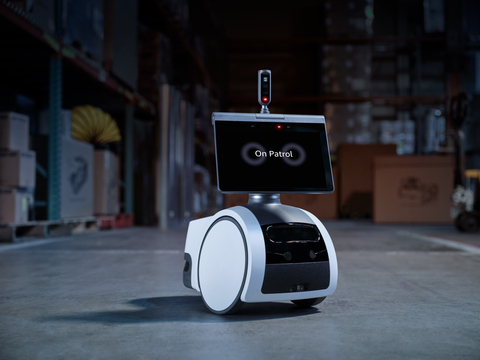
Amazon Astro for business

Amazon is bricking all Astro for Business robots on September 25. It first released the robot about eight months ago as a security device for small and medium-sized businesses (SMBs) for $2,350, but the device will soon be a pricey new addition to Amazon’s failed products list.

Amazon announced Astro in September 2021 as a home robot; that version of the device is still only available as a $1,600, invite-only preview.

In November, Amazon pivoted Astro to SMBs. But as first reported by GeekWire, Amazon on Wednesday sent emails to employees working on Astro for Business and customers telling them that the devices will stop working on September 25. At the time, Amazon’s email to customers said: “Your personal data will be deleted from the device. Any patrol or investigation videos recorded by Astro will still be available in your Ring app until your video storage time expires or your Ring Protect subscription ends.” According to The Verge, the email adds:

While we are proud of what we’ve built, we’ve made the decision to end support for Astro for Business to put our focus on making Astro the best robot for the home.

As of this week, Amazon will no longer charge users for subscriptions associated with Astro for Business, such as Astro Secure, which let the robot patrol businesses via customized routes, or Ring Protect Pro, which let Astro for Business owners store video history and sync the robot with Ring devices.

Amazon said it would refund customers $2,350 and give them a $300 Amazon credit. It also said it would refund unused, prepaid subscription fees.

Amazon has declined to share how many robots it sold, but it’s unfortunate to see such an expensive, complex piece of technology become obsolete after less than a year. Amazon hasn’t shared any ways to make further use of the devices, and spokesperson Courtney Ramirez told The Verge that Astro for Business can’t be used as a home robot instead. Amazon’s email to customers encourages owners to recycle Astro for Business through the Amazon Recycling Program, with Amazon covering associated costs.

Astro slow to take off

Amazon introduced Astro in late 2021, but as of 2024, it’s still not available to the general public. When Amazon released Astro for SMBs, it seemed like it might have found a new niche for the product. A May 2023 report from Business Insider claimed that Amazon opted to release Astro for Business over “an internal plan to release a lower-cost model” in 2022 for consumers.

Astro for Business could autonomously patrol spaces up to 5,000 square feet with an HD periscope and night vision, it could carry small devices, and, of course, was controllable by Amazon Alexa. Since its release, we’ve learned about Alexa’s dire financial straits and seen David Limp, who headed the Astro project as Amazon SVP of devices and services, exit Amazon, while his division has suffered notable layoffs (an Amazon rep told GeekWire that the shuttering of Astro for Business won’t result in layoffs as employees will start working on the home version of the robot instead).

Astro’s future

Per Amazon’s emails, the company is still keen to release the home version of Astro, which may surprise some since there has been no sign of an impending release since Amazon announced Astro years ago.

In May 2023, an Amazon representative told Insider that the firm had eyes on the potential of generative AI for Astro. It’s likely that Amazon is hoping to one day release Astro to consumers with the generative AI version of Alexa (which is expected this year with a subscription fee). In May 2023, Insider cited internal documents that it said discussed adding “intelligence and a conversational spoken interface” to Astro.

But considering that it has taken Amazon more than two and a half years (and counting) and reportedly the work of over 800 people to make Astro generally available, plus the sudden demise of the business version, there are reasons to be hesitant about paying the high price and any subscription fees for a consumer Astro—if it ever comes out. Early adopters could find themselves in similarly disappointing positions as the SMBs that bought into Astro for Business.

Astro’s development comes during a tumultuous time for Amazon’s devices business as it seeks to make Alexa a competitive and, critically, lucrative AI assistant. In June, Reuters reported that Amazon senior management had been telling employees that 2024 is a “must-win” for Alexa. Some analysts expect more reduced investment in Alexa if the paid tier doesn’t take off.

Amazon’s Astro home robot faces an uphill climb toward any potential release or consumer demand. Meanwhile, the version of it that actually made it to market is rolling toward a graveyard filled with other dead Amazon products—like Just Walk Out, Amazon Glow, Fire Phone, Dash buttons, and the Amazon Smart Oven.

https://arstechnica.com/?p=2035237


Tecnologia, per 7 italiani su 10 aiuta a raggiungere il benessere

In occasione della giornata dedicata alla cura di sé, l’International Self-Care Day che si celebra il 24 luglio, sono stati presentati i nuovi dati del Trend Radar di Samung. Grazie a interviste condotte da Human Highway a marzo 2024 su un campione di 1.087 rispondenti in tutta Italia, di ogni genere, dai 18 anni in su, si evince un certo legame tra benessere e tecnologia.

L’indagine rivela un atteggiamento per lo più propenso alla cura di sé nel quotidiano, tanto che il 64% del campione cerca il più possibile di occuparsi del proprio benessere, nonostante gli impegni e per ben il 27% questa è un’autentica priorità. Sono in particolare i Millennials e la Gen Z (entrambi 30%) a mettere al primo posto il benessere, a testimonianza di una maggiore attenzione da parte della fascia d’età dai 44 anni in giù.

Come strumento per prendersi cura di sé entra in scena la tecnologia, vista in generale come un facilitatore per raggiungere il proprio benessere: nel 70% dei casi riferendosi al benessere fisico e nel 64% come supporto per il mental wellbeing. A credere nel binomio benessere-tecnologia sono soprattutto gli uomini, con un distacco di ben dieci punti percentuali sulle donne. Dal punto di vista generazionale, tutti sono d’accordo sull’importanza della tecnologia per favorire la cura del proprio corpo, mentre per quanto concerne il benessere mentale, il trend è guidato dai più giovani: sono infatti Millennials (68% riferendosi al benessere mentale e 70% fisico) e Gen Z (65% benessere mentale e 72% fisico) a sostenere che la tecnologia sia d’aiuto per questo scopo.

Indossabili per il benessere

Quando si parla di attività fisica, la tecnologia è fondamentale in quanto consente di abbinarvi l’ascolto della musica (34%), discorso che vale in particolare per la Gen Z (42%), seguito dal monitoraggio dell’attività attraverso i wearables (34%), importante soprattutto per i Millennials (39%).  Chiude la top 3 la possibilità di tenere traccia dei propri traguardi (32%). Al quarto posto emerge il monitoraggio del battito cardiaco (28%) e l’avere un device che ricorda di non essere troppo sedentari, invitando al movimento: anche questo aspetto risulta più significativo per gli uomini che per le donne (30% vs 23%).

La tecnologia rappresenta anche un importante supporto nella sfera psicologica ed emotiva, come facilitatore nelle relazioni sociali e nel vivere le proprie passioni, e proprio in questi ambiti la Gen Z dichiara di essere la più “tecnologica”. Se è indiscutibile il loro ruolo chiave per restare in contatto con amici e persone care (39%) – con un testa a testa fra i due estremi generazionali, Boomer (47%) e Gen Z (45%) –  i dispositivi tech sono molto utili per infondere buonumore attraverso l’ascolto dei brani del cuore (37%) ma anche per suggerire i film e le serie più rispondenti ai propri gusti (30%). Qui, ancora una volta gli uomini hanno percentuali più alte rispetto alle donne, soprattutto per quanto riguarda i videogiochi e giochi in rete. Proprio il gaming inteso come evasione che permette di rilassarsi e ricaricare le batterie, dal punto di vista generazionale registra una forte impennata nella Gen Z (33%) andando a calare al crescere dell’età.

Meditazione e benessere

La tecnologia è al nostro fianco anche a fine giornata, dopo impegni di lavoro, tempo speso in famiglia e hobby, per aiutarci a scaricare la tensione con la meditazione o abbandonarci ad un buon sonno: ricerca di brani di sottofondo per favorire il relax e tracciamento del sonno tramite smartwatch sono le attività in cui la tecnologia gioca un ruolo fondamentale per il 26% degli intervistati. Sono in particolare gli uomini (28%) e, dal punto di vista generazionale, la Gen Z (28,5%) a tracciare il proprio sonno attraverso lo smartwatch o a configurare le giuste ore di sonno con un taglio personalizzato (26%) sul proprio device.

La partita del benessere si gioca inoltre fra i fornelli, infatti poter contare su elettrodomestici che ottimizzino i tempi di realizzazione delle ricette e che favoriscano la praticità, costituiscono un elemento ritenuto vincente per il 38% del campione, mentre il 32% apprezza il poter avere informazioni utili ad un’alimentazione più consapevole e il 27% utilizza modalità di cottura più sane grazie a elettrodomestici di nuova generazione. Lo spaccato di genere rileva quanto siano gli uomini (39% vs 29%) i maggiori utilizzatori di dispositivi per trovare dati e suggerimenti che li guidino verso scelte alimentari più salutari.

L’uso di elettrodomestici che semplificano la vita è apprezzato a tutte le età, infatti, il 40% dei Millennials conferma di usarli, seguiti da Gen Z ed X a pari merito (37%) e infine Boomer (36%). Le funzionalità più apprezzate sono: informazioni per un’alimentazione più consapevole con un trionfo dei Boomer (39%), seguiti da Gen Z (34%), Generazione X (32%) e Millennials (29%);  modalità di cottura sana per il 34% dei Boomer, il 28% della Generazione X, il 25% della Gen Z e il 24% dei Millennials;  conservazione ottimale dei cibi (33% Gen Z, 31% Boomer, 23% Generazione X, 26% Millennials);  e creazione di piani alimentari personalizzati  per il 25% dei Millennials, il 16% di Gen Z e Gen X e il 14% dei Boomer.

Spostandoci dalla cucina al benessere legato alla pulizia e all’ordine dell’ambiente domestico grazie alla tecnologia, per il 52% degli intervistati è importante avere elettrodomestici efficienti dal punto di vista dei consumi energetici: una centralità che cresce con l’aumentare dell’età e si impenna (62%) tra i Boomer. Segue per importanza l’avere elettrodomestici più funzionali e intuitivi (44%) e dispositivi che si possano attivare da remoto (35%), un aspetto leggermente più importante per i Millennials (37%) che per la Gen Z (35%).

I dispositivi più usati per il benessere

A livello generale, il dispositivo che risulta più di aiuto per perseguire uno stato di benessere è lo smartphone (68%), il cui primo posto mette d’accordo tutte le generazioni, seguito a grande distanza da PC/computer (38%) e dallo smartwatch (23%). Il Trend Radar smentisce inoltre il luogo comune degli uomini davanti al TV: sono in realtà le donne (22%vs18%) a preferirlo e percepirlo come un dispositivo utile al raggiungimento del benessere quotidiano. Cosa succederebbe se dovessimo stilare una classifica fra gli elettrodomestici più utili per generare benessere attraverso una gestione della casa senza pensieri? Dall’indagine si scopre che la medaglia d’oro spetta alla lavatrice (48%), l’argento al frigorifero (38%) e il bronzo alla lavastoviglie (28%).

Leggi le altre notizie sull’home page di Key4biz

https://www.key4biz.it/tecnologia-per-7-italiani-su-10-aiuta-a-raggiungere-il-benessere/496619/


Japan wins 2-year “war on floppy disks,” kills regulations requiring old tech

floppy disks on white background

About two years after the country’s digital minister publicly declared a “war on floppy discs,” Japan reportedly stopped using floppy disks in governmental systems as of June 28.

Per a Reuters report on Wednesday, Japan’s government “eliminated the use of floppy disks in all its systems.” The report notes that by mid-June, Japan’s Digital Agency (a body set up during the COVID-19 pandemic and aimed at updating government technology) had “scrapped all 1,034 regulations governing their use, except for one environmental stricture related to vehicle recycling.” That suggests that there’s up to one government use that could still turn to floppy disks, though more details weren’t available.

Digital Minister Taro Kono, the politician behind the modernization of the Japanese government’s tech, has made his distaste for floppy disks and other old office tech, like fax machines, quite public. Kono, who’s reportedly considering a second presidential run, told Reuters in a statement today:

We have won the war on floppy disks on June 28!

Although Kono only announced plans to eradicate floppy disks from the government two years ago, it’s been 20 years since floppy disks were in their prime and 53 years since they debuted. It was only in January 2024 that the Japanese government stopped requiring physical media, like floppy disks and CD-ROMs, for 1,900 types of submissions to the government, such as business filings and submission forms for citizens.

The timeline may be surprising, considering that the last company to make floppy disks, Sony, stopped doing so in 2011. As a storage medium, of course, floppies can’t compete with today’s options since most floppies max out at 1.44MB (2.88MB floppies were also available). And you’ll be hard-pressed to find a modern system that can still read the disks. There are also basic concerns around the old storage format, such as Tokyo police reportedly losing a pair of floppy disks with information on dozens of public housing applicants in 2021.

But Japan isn’t the only government body with surprisingly recent ties to the technology. For example, San Francisco’s Muni Metro light rail uses a train control system that uses software that runs off floppy disks and plans to keep doing so until 2030. The US Air Force used using 8-inch floppies until 2019.

Outside of the public sector, floppy disks remain common in numerous industries, including embroidery, cargo airlines, and CNC machines. We reported on Chuck E. Cheese using floppy disks for its animatronics as recently as January 2023.

Modernization resistance

Now that the Japanese government considers its reliance on floppy disks over, eyes are on it to see what, if any, other modernization overhauls it will make.

Despite various technological achievements, the country has a reputation for holding on to dated technology. The Institute for Management Development’s (IMD) 2023 World Digital Competitiveness Ranking listed Japan as number 32 out of 64 economies. The IMD says its rankings measure the “capacity and readiness of 64 economies to adopt and explore digital technologies as a key driver for economic transformation in business, government, and wider society.”

It may be a while before the government is ready to let go of some older technologies. For example, government officials have reportedly resisted moving to the cloud for administrative systems. Kono urged government offices to quit requiring hanko personal stamps in 2020, but per The Japan Times, movement from the seal is occurring at a “glacial pace.”

Many workplaces in Japan also opt for fax machines over emails, and 2021 plans to remove fax machines from government offices have been tossed due to resistance.

Some believe Japan’s reliance on older technology stems from the comfort and efficiencies associated with analog tech as well as governmental bureaucracy.

https://arstechnica.com/?p=2035152