Windows 11 24H2 is released to the public but only on Copilot+ PCs (for now)
Windows 11 24H2 is released to the public but only on Copilot+ PCs (for now)

For the vast majority of compatible PCs, Microsoft’s Windows 11 24H2 update still isn’t officially available as anything other than a preview (a revised version of the update is available to Windows Insiders again after briefly being pulled early last week). But Microsoft and most of the other big PC companies are releasing their first wave of Copilot+ PCs with Snapdragon X-series chips in them today, and those PCs are all shipping with the 24H2 update already installed.

For now, this means a bifurcated Windows 11 install base: one (the vast majority) that’s still mostly on version 23H2 and one (a tiny, Arm-powered minority) that’s running 24H2.

Although Microsoft hasn’t been specific about its release plans for Windows 11 24H2 to the wider user base, most PCs should still start getting the update later this fall. The Copilot+ parts won’t run on those current PCs, but they’ll still get new features and benefit from Microsoft’s work on the operating system’s underpinnings.

The wider 24H2 update rollout will also likely enable the Copilot+ PC features on Intel and AMD PCs that meet the hardware requirements. That hardware will supposedly be available starting in July—at least, if AMD can hit its planned ship date for Ryzen AI chips—but neither Intel nor AMD seems to know exactly when the Copilot+ features will be enabled in software. Right now, the x86 version of Windows doesn’t even have hidden Copilot+ features that can be enabled with the right settings; they only seem to be included at all in the Arm version of the update.

Unfortunately for Microsoft, the Copilot+ PC program (and, to a lesser extent, the 24H2 update) has become mostly synonymous with the Recall screen recording feature. Microsoft revealed this feature to the public without first sending it through its normal Windows Insider testing program. As soon as security researchers and testers were able to dig into it, they immediately found security holes and privacy risks that could expose a user’s entire Recall database plus detailed screenshots of all their activity to anyone with access to the PC.

Microsoft initially announced that it would release a preview of Recall as scheduled on June 18 with additional security and privacy measures in place. Microsoft would also make the feature off-by-default instead of on-by-default. Shortly after that, the company delayed Recall altogether and committed to testing it publicly in Windows Insider builds like any other Windows feature. Microsoft says that Recall will return, at least to Copilot+ PCs, at some point “in the coming weeks.”

Aside from the Copilot+ generative AI features, which require extra RAM and storage and a PC with a sufficiently fast neural processing unit (NPU), the main Windows 11 system requirements aren’t changing for the 24H2 update. However, there are older unsupported PCs that could run previous Windows 11 versions that will no longer be able to boot 24H2 since it requires a slightly newer CPU to boot.

https://arstechnica.com/?p=2032110



Proton is taking its privacy-first apps to a nonprofit foundation model

Swiss flat flying over a landscape of Swiss mountains, with tourists looking on from nearby ledge
Getty Images

Proton, the secure-minded email and productivity suite, is becoming a nonprofit foundation, but it doesn’t want you to think about it in the way you think about other notable privacy and web foundations.

“We believe that if we want to bring about large-scale change, Proton can’t be billionaire-subsidized (like Signal), Google-subsidized (like Mozilla), government-subsidized (like Tor), donation-subsidized (like Wikipedia), or even speculation-subsidized (like the plethora of crypto “foundations”),” Proton CEO Andy Yen wrote in a blog post announcing the transition. “Instead, Proton must have a profitable and healthy business at its core.”

The announcement comes exactly 10 years to the day after a crowdfunding campaign saw 10,000 people give more than $500,000 to launch Proton Mail. To make it happen, Yen, along with co-founder Jason Stockman and first employee Dingchao Lu, endowed the Proton Foundation with some of their shares. The Proton Foundation is now the primary shareholder of the business Proton, which Yen states will “make irrevocable our wish that Proton remains in perpetuity an organization that places people ahead of profits.” Among other members of the Foundation’s board is Sir Tim Berners-Lee, inventor of HTML, HTTP, and almost everything else about the web.

Of particular importance is where Proton and the Proton Foundation are located: Switzerland. As Yen noted, Swiss foundations do not have shareholders and are instead obligated to act “in accordance with the purpose for which they were established.” While the for-profit entity Proton AG can still do things like offer stock options to recruits and even raise its own capital on private markets, the Foundation serves as a backstop against moving too far from Proton’s founding mission, Yen wrote.

There’s a lot more Proton to protect these days

Proton has gone from a single email offering to a wide range of services, many of which specifically target the often invasive offerings of other companies (read, mostly: Google). You can now take your cloud files, passwords, and calendars over to Proton and use its VPN services, most of which offer end-to-end encryption and open source core software hosted in Switzerland, with its notably strong privacy laws.

None of that guarantees that a Swiss court can’t compel some forms of compliance from Proton, as happened in 2021. But compared to most service providers, Proton offers a far clearer and easier-to-grasp privacy model: It can’t see your stuff, and it only makes money from subscriptions.

Of course, foundations are only as strong as the people who guide them, and seemingly firewalled profit/non-profit models can be changed. Time will tell if Proton’s new model can keep up with changing markets—and people.

https://arstechnica.com/?p=2031934


After a few years of embracing thickness, Apple reportedly plans thinner devices

Apple bragged about the thinness of the M4 iPad Pro; it's apparently a template for the company's designs going forward.
Enlarge / Apple bragged about the thinness of the M4 iPad Pro; it’s apparently a template for the company’s designs going forward.

Though Apple has a reputation for prioritizing thinness in its hardware designs, the company has actually spent the last few years learning to embrace a little extra size and/or weight in its hardware. The Apple Silicon MacBook Pro designs are both thicker and heavier than the Intel-era MacBook Pros they replaced. The MacBook Air gave up its distinctive taper. Even the iPhone 15 Pro was a shade thicker than its predecessor.

But Apple is apparently planning to return to emphasizing thinness in its devices, according to reporting from Bloomberg’s Mark Gurman (in a piece that is otherwise mostly about Apple’s phased rollout of the AI-powered features it announced at its Worldwide Developers Conference last week).

Gurman’s sources say that Apple is planning “a significantly skinnier iPhone in time for the iPhone 17 line in 2025,” which presumably means that we can expect the iPhone 16 to continue in the same vein as current iPhone 15 models. The Apple Watch and MacBook Pro are also apparently on the list of devices Apple is trying to make thinner.

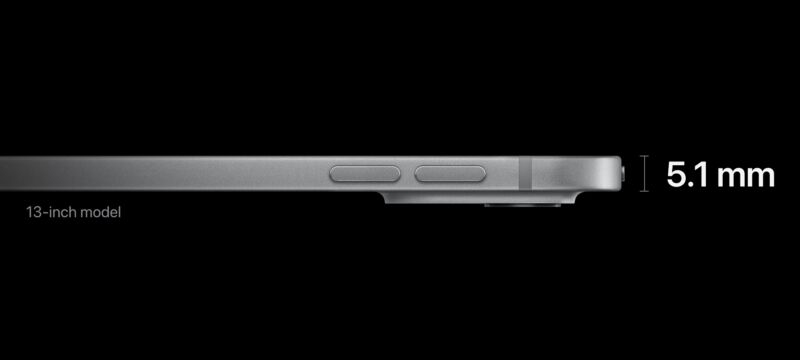
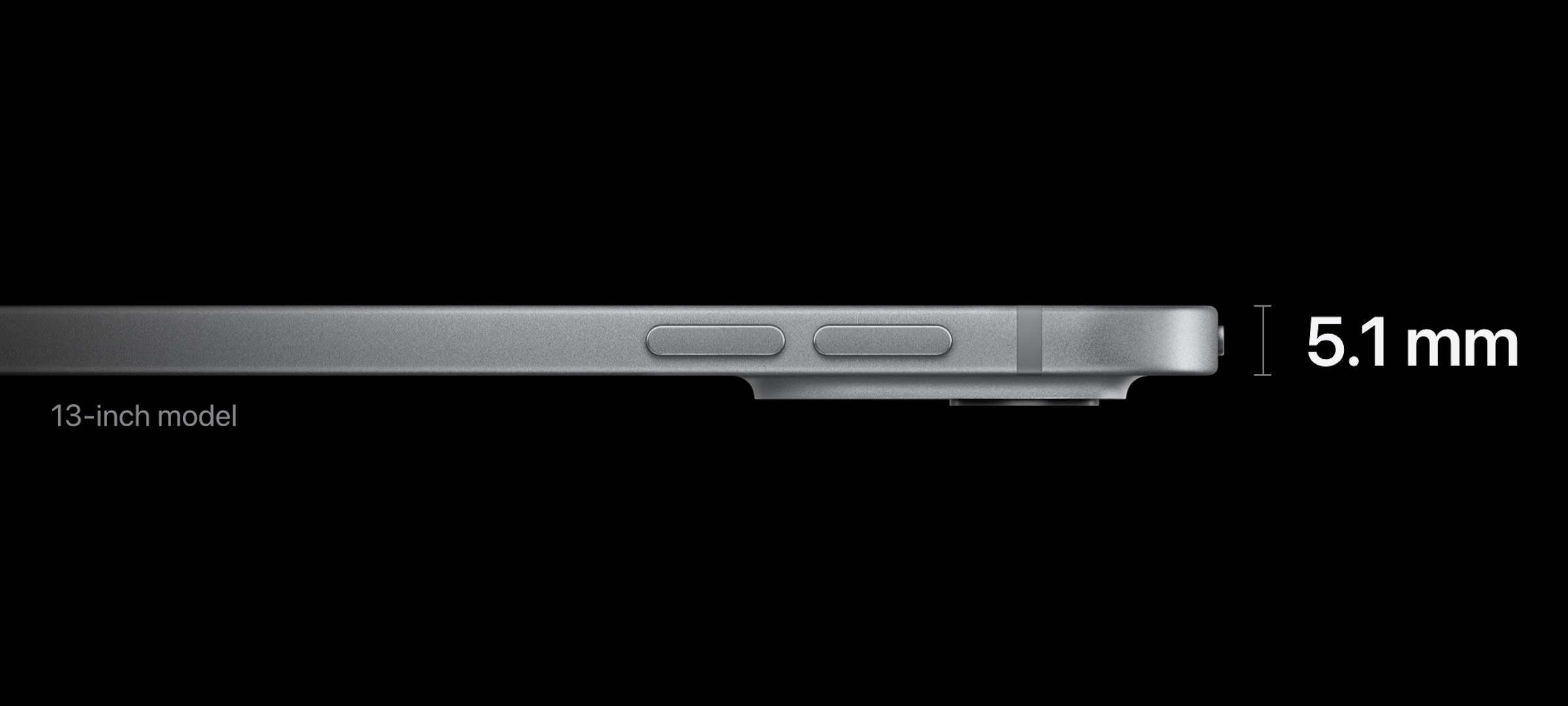
Apple previewed this strategy with the introduction of the M4 iPad Pro a couple of months ago, which looked a lot like the previous-generation iPad Pro design but was a few hundredths of an inch thinner and (especially for the 13-inch model) noticeably lighter than before. Gurman says the new iPad Pro is “the beginning of a new class of Apple devices that should be the thinnest and lightest products in their categories across the whole tech industry.”

Thin-first design isn’t an inherently good or bad thing, but the issue in Apple’s case is that it has occasionally come at the expense of other more desirable features. A thinner device has less room for cooling hardware like fans and heatsinks, less room for batteries, and less room to fit ports.

The late-2010s-era MacBook Pro and Air redesigns were probably the nadir of this thin-first design, switching to all-Thunderbolt ports and a stiff-feeling butterfly switch keyboard design that also ended up being so breakage-prone that it spawned a long-running Apple repair program and a class-action lawsuit that the company settled. The 2020 and 2021 MacBooks reversed course on both decisions, reverting to a more traditional scissor-switch keyboard and restoring larger ports like MagSafe and HDMI.

Hopefully, Apple has learned the lessons of the last decade or so and is planning not to give up features people like just so it can craft thinner hardware. The new iPad Pros are a reason for optimism—they don’t really give up anything relative to older iPad models while still improving performance and screen quality. But iPad hardware is inherently more minimalist than the Mac and is less space-constrained than an iPhone or an Apple Watch. Here’s hoping Apple has figured out how to make a thinner, lighter Mac without giving up ports or keyboard quality or a thinner, lighter iPhone or Apple Watch without hurting battery life.

https://arstechnica.com/?p=2031910


TDK claims insane energy density in solid-state battery breakthrough

man wearing headphones
Enlarge / TDK says its new ceramic materials for batteries will improve the performance of small consumer electronics devices such as smartwatches and wireless headphones

Japan’s TDK is claiming a breakthrough in materials used in its small solid-state batteries, with the Apple supplier predicting significant performance increases for devices from wireless headphones to smartwatches.

The new material provides an energy density—the amount that can be squeezed into a given space—of 1,000 watt-hours per liter, which is about 100 times greater than TDK’s current battery in mass production. Since TDK introduced it in 2020, competitors have moved forward, developing small solid-state batteries that offer 50 Wh/l, while rechargeable coin batteries using traditional liquid electrolytes offer about 400 Wh/l, according to the group.

“We believe that our newly developed material for solid-state batteries can make a significant contribution to the energy transformation of society. We will continue the development towards early commercialisation,” said TDK’s chief executive Noboru Saito.

The batteries set to be produced will be made of an all-ceramic material, with oxide-based solid electrolyte and lithium alloy anodes. The high capability of the battery to store electrical charge, TDK said, would allow for smaller device sizes and longer operating times, while the oxide offered a high degree of stability and thus safety. The battery technology is designed to be used in smaller-sized cells, replacing existing coin-shaped batteries found in watches and other small electronics.

The breakthrough is the latest step forward for a technology industry experts think can revolutionize energy storage, but which faces significant obstacles on the path to mass production, particularly at larger battery sizes.

Solid-state batteries are safer, lighter and potentially cheaper and offer longer performance and faster charging than current batteries relying on liquid electrolytes. Breakthroughs in consumer electronics have filtered through to electric vehicles, although the dominant battery chemistries for the two categories now differ substantially.

The ceramic material used by TDK means that larger-sized batteries would be more fragile, meaning the technical challenge of making batteries for cars or even smartphones will not be surmounted in the foreseeable future, according to the company.

Kevin Shang, senior research analyst at Wood Mackenzie, a data and analytics firm, said that “unfavorable mechanical properties,” as well as the difficulty and cost of mass production, are challenges for moving the application of solid-state oxide-based batteries into smartphones.

Industry experts believe the most significant use case for solid-state batteries could be in electric cars by enabling greater driving range. Japanese companies are in the vanguard of a push to commercialize the technology: Toyota is aiming for as early as 2027, Nissan the year after and Honda by the end of the decade.

Car manufacturers are focused on developing sulfide-based electrolytes for long-range electric vehicles, an alternative kind of material to the oxide-based material that TDK has developed.

However, there is still skepticism about how quickly the much-hyped technology can be realized, particularly the larger batteries needed for electric vehicles.

Robin Zeng, founder and chief executive of CATL, the world’s biggest electric vehicle battery manufacturer, told the Financial Times in March that solid-state batteries did not work well enough, lacked durability and still had safety problems. Zeng’s CATL originated as a spin-off from Amperex Technology, or ATL, which is a subsidiary of TDK and is the world’s leading producer of lithium-ion batteries.

TDK, which was founded in 1935 and became a household name as a top cassette tape brand in the 1960s and 1970s, has lengthy experience in battery materials and technology.

It has 50 to 60 percent global market share in the small-capacity batteries that power smartphones and is targeting leadership in the medium-capacity market, which includes energy storage devices and larger electronics such as drones.

The group plans to start shipping samples of its new battery prototype to clients from next year and hopes to be able to move into mass production after that.

© 2024 The Financial Times Ltd. All rights reserved. Not to be redistributed, copied, or modified in any way.

https://arstechnica.com/?p=2031911


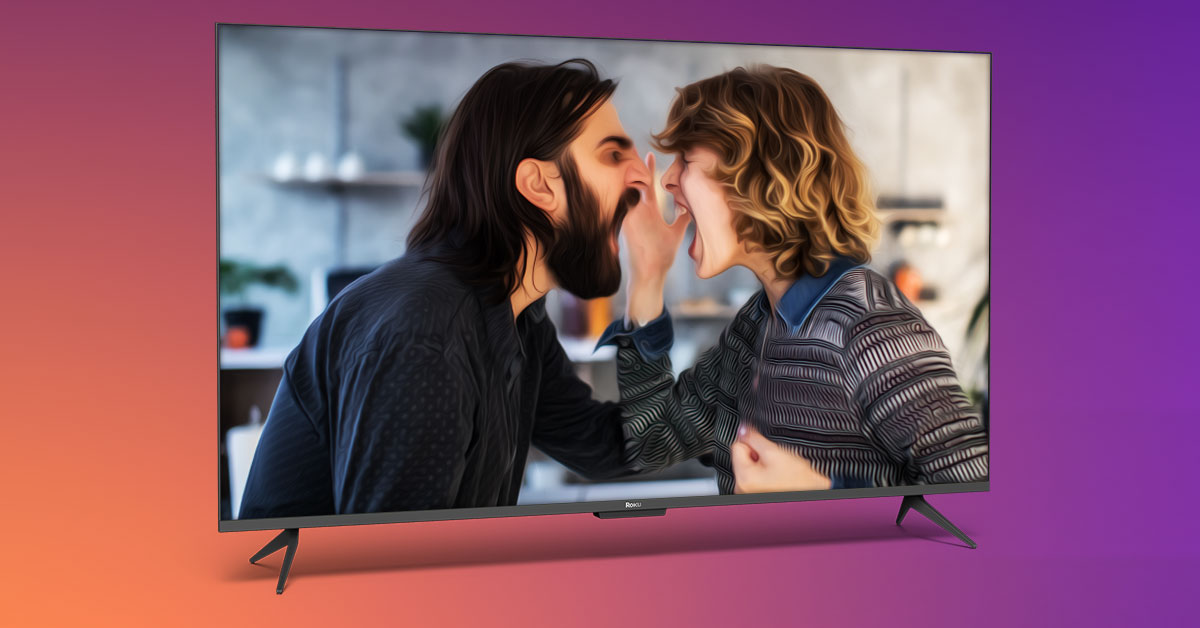
Roku owners face the grimmest indignity yet: Stuck-on motion smoothing

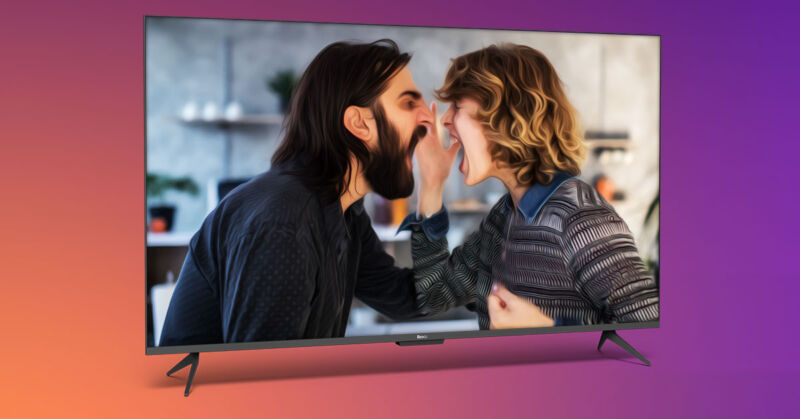
Couple yelling at each other, as if in a soap opera, on a Roku TV, with a grotesque smoothing effect applied to both people.
Enlarge / Motion smoothing was making images uncanny and weird long before AI got here.
Aurich Lawson | Getty Images | Roku

Roku TV owners have been introduced to a number of annoyances recently through the software update pipeline. There was an arbitration-demanding terms of service that locked your TV until you agreed (or mailed a letter). There is the upcoming introduction of ads to the home screen. But the latest irritation hits some Roku owners right in the eyes.

Reports on Roku’s community forums and on Reddit find owners of TCL HDTVs, on which Roku is a built-in OS, experiencing “motion smoothing” without having turned it on after updating to Roku OS 13. Some people are reporting that their TV never offered “Action Smoothing” before, but it is now displaying the results with no way to turn it off. Neither the TV’s general settings, nor the specific settings available while content is playing, offer a way to turn it off, according to some users.

“Action smoothing” is Roku’s name for video interpolation, or motion smoothing. The heart of motion smoothing is Motion Estimation Motion Compensation (MEMC). Fast-moving video, such as live sports or intense action scenes, can have a “juddery” feeling when shown on TVs at a lower frame rate. Motion smoothing uses MEMC hardware and algorithms to artificially boost the frame rate of a video signal by creating its best guess of what a frame between two existing frames would look like and then inserting it to boost the frame rate.

When it works, a signal looks more fluid and, as the name implies, smooth. When it is left on and a more traditional signal at 24 or 30 frames per second is processed, it works somewhat too well. Shows and films look awkwardly realistic, essentially lacking the motion blur and softer movement to which we’re accustomed. Everything looks like a soap opera or like you’re watching a behind-the-scenes smartphone video of your show. It’s so persistent an issue, and often buried in a TV’s settings, that Tom Cruise did a whole PSA about it back in 2018.

Ars has contacted Roku for comment and will update this post with a response. When affected Roku TVs regain their ability to keep motion smoothing at bay, the setting is typically located in the “Expert Settings” area of the TV or by enabling “Movie” mode from the quick settings.

https://arstechnica.com/?p=2031173


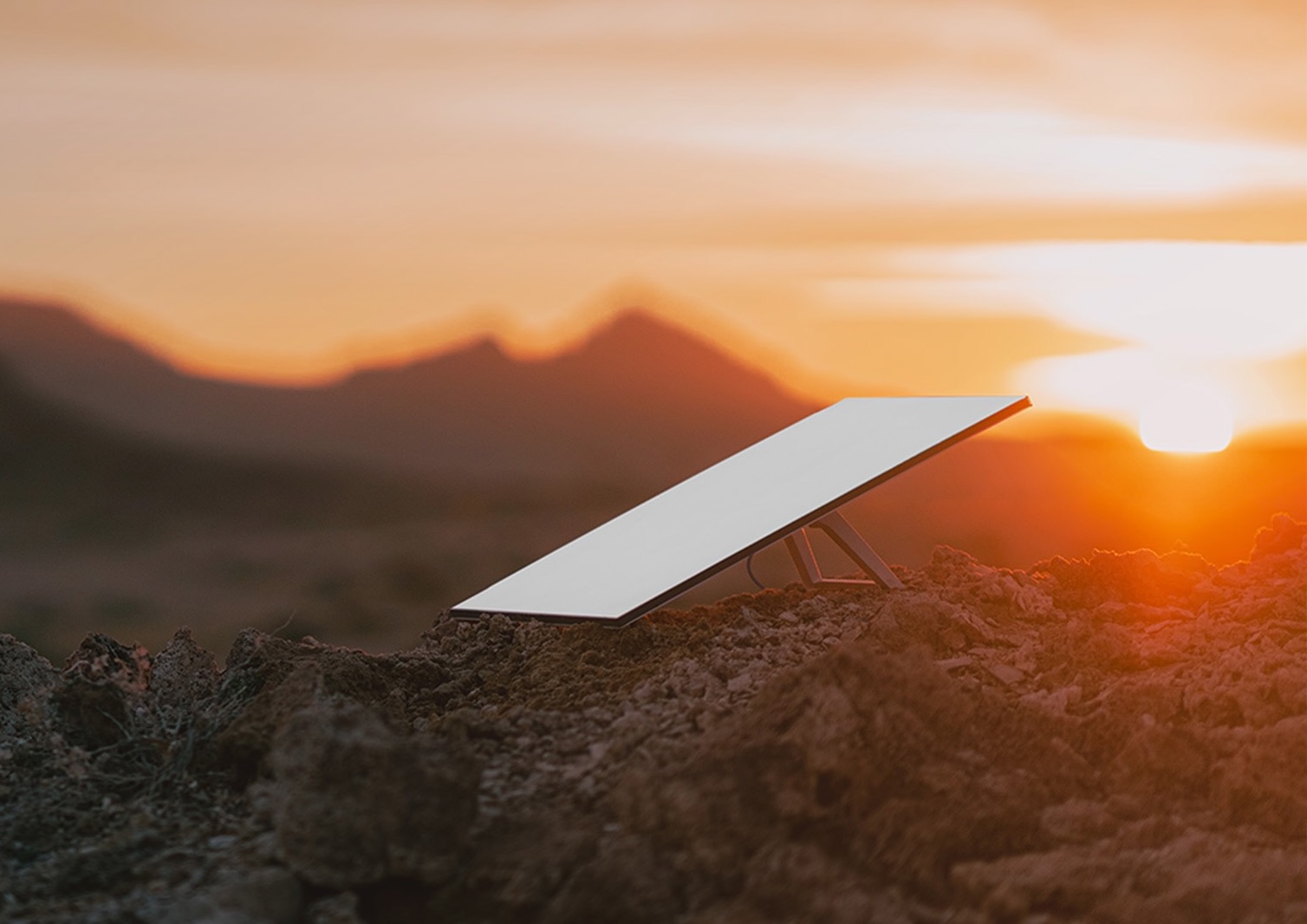
Starlink user terminal now costs just $300 in 28 states, $500 in rest of US

A rectangular satellite dish sitting on the ground outdoors.
Enlarge / The standard Starlink satellite dish.

You can now buy a Starlink satellite dish for $299 (plus shipping and tax) in 28 US states due to a discount for areas where SpaceX’s broadband network has excess capacity.

Starlink had raised its upfront hardware cost from $499 to $599 in March 2022 but cut the standard price back down to $499 this week. In the 28 states where the network has what SpaceX deems excess capacity, a $200 discount is being applied to bring the price down to $299. It’s unclear how long the deal will last, though we can assume the number of states eligible for $299 pricing will fall if a lot of people sign up.

“In the United States, new orders in certain regions are eligible for a one-time savings in areas where Starlink has abundant network availability,” a support page posted yesterday said. “$200 will be removed from your Starlink kit price when ordering on Starlink.com and if activated after purchasing from a retailer, a $200 credit will be applied. The savings are only available for Residential Standard service in these designated regional savings areas.”

The 28 states in the “regional savings areas” are Arizona, California, Colorado, Connecticut, Delaware, Florida, Hawaii, Idaho, Iowa, Kansas, Maine, Maryland, Massachusetts, Nebraska, Nevada, New Hampshire, New Jersey, New Mexico, New York, North Dakota, Oklahoma, Oregon, Pennsylvania, Rhode Island, South Dakota, Utah, Vermont, and Wyoming.

There’s one more significant price difference that applies based on location. Since early 2023, Starlink has charged $120 a month for service in areas with limited capacity and $90 a month in areas with excess capacity. So if you’re in an excess-capacity area, you can buy a $299 dish and get $90 monthly service.

Whether you pay $499 or $299 upfront, you’ll get a Wi-Fi router and the new version of Starlink’s standard residential user terminal. There is a drawback compared to the older version of the Starlink dish, which is now called “Starlink Actuated” and doesn’t seem to be available for residential orders on Starlink.com anymore.

The current standard satellite dish doesn’t have the old version’s ability to re-position itself. The new version must be positioned manually, but the Starlink app can help you find the best position.

“The ‘actuated’ part of Standard Actuated refers to the electric motors inside the antenna housing,” says an in-depth comparison of the models written by Starlink user Noah Clarke. “The motors, which are connected to the mast, can rotate and tilt the Standard Actuated dish, enabling it to self-align to the Starlink satellites. In contrast, the Standard dish has done away with the built-in mast and motors. The Standard dish must be manually rotated during the initial installation, with the help of the Starlink app.”

Starlink offers mounting hardware as optional accessories during the checkout process. There’s a pivot mount for $74, a wall mount for $67, a pipe adapter for $38, and a 45-meter cable for $115. The optional cable is three times longer than the one that comes with the standard terminal.

https://arstechnica.com/?p=2031158


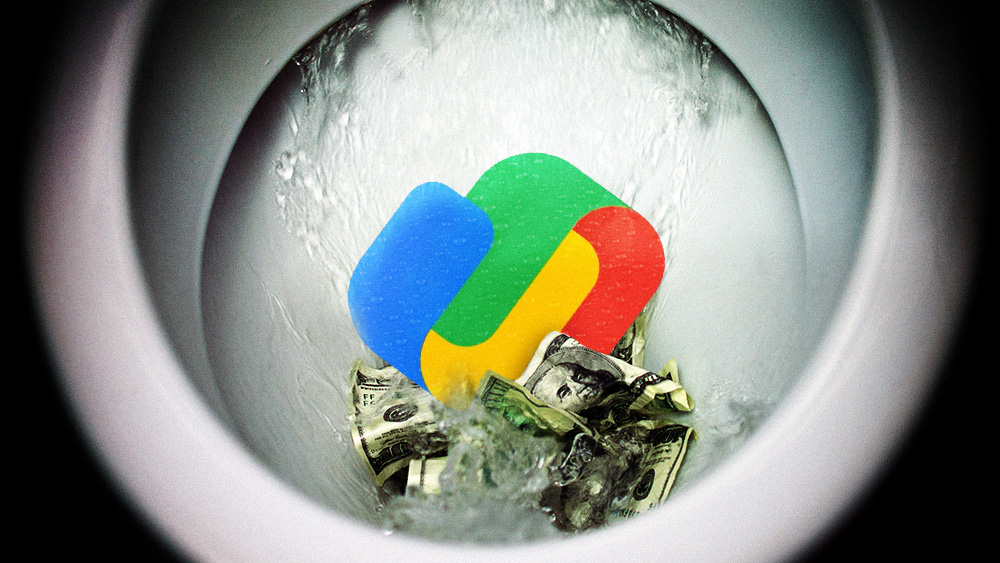
The Google Pay app is dead

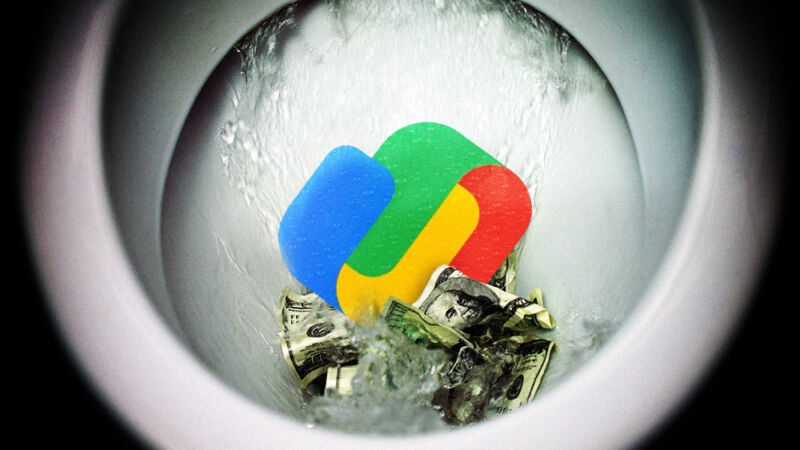
The Google Play logo is flushed down a toilet alongside many dollar bills.
Enlarge / Google Pay is dead!

Google has killed off the Google Pay app. 9to5Google reports Google’s old payments app stopped working recently, following shutdown plans that were announced in February. Google is shutting down the Google Pay app in the US, while in-store NFC payments seem to still be branded “Google Pay.” Remember, this is Google’s dysfunctional payments division, so all that’s happening is Google Payment app No. 3 (Google Pay) is being shut down in favor of Google Payment app No. 4 (Google Wallet). The shutdown caps off the implosion of Google’s payments division after a lot of poor decisions and failed product launches.

Google’s NFC payment journey started in 2011 with Google Wallet (apps No. 1 and No. 4 are both called Google Wallet). In 2011, Google was a technology trailblazer and basically popularized the idea of paying for something with your phone in many regions (with the notable exception of Japan). Google shipped the first non-Japanese phones with the feature, fought carriers trying to stop phone payments from happening, and begged stores to get new, compatible terminals. Google’s entire project was blown away when Apple Pay launched in 2014, and Google’s response was its second payment app, Android Pay, in 2015. This copied much of Apple’s setup, like sending payment tokens instead of the actual credit card number. Google Pay was a rebrand of this setup and arrived in 2018.

The 2018 version of Google Pay was a continuation of the Android Pay codebase, which was a continuation of the Google Wallet codebase. Despite all the rebrands, Google’s payment apps were an evolution, and none of the previous apps were really “shut down”—they were in-place upgrades. Everything changed in 2021 when a new version of Google Pay was launched, which is when Google’s payment division started to go off the rails.

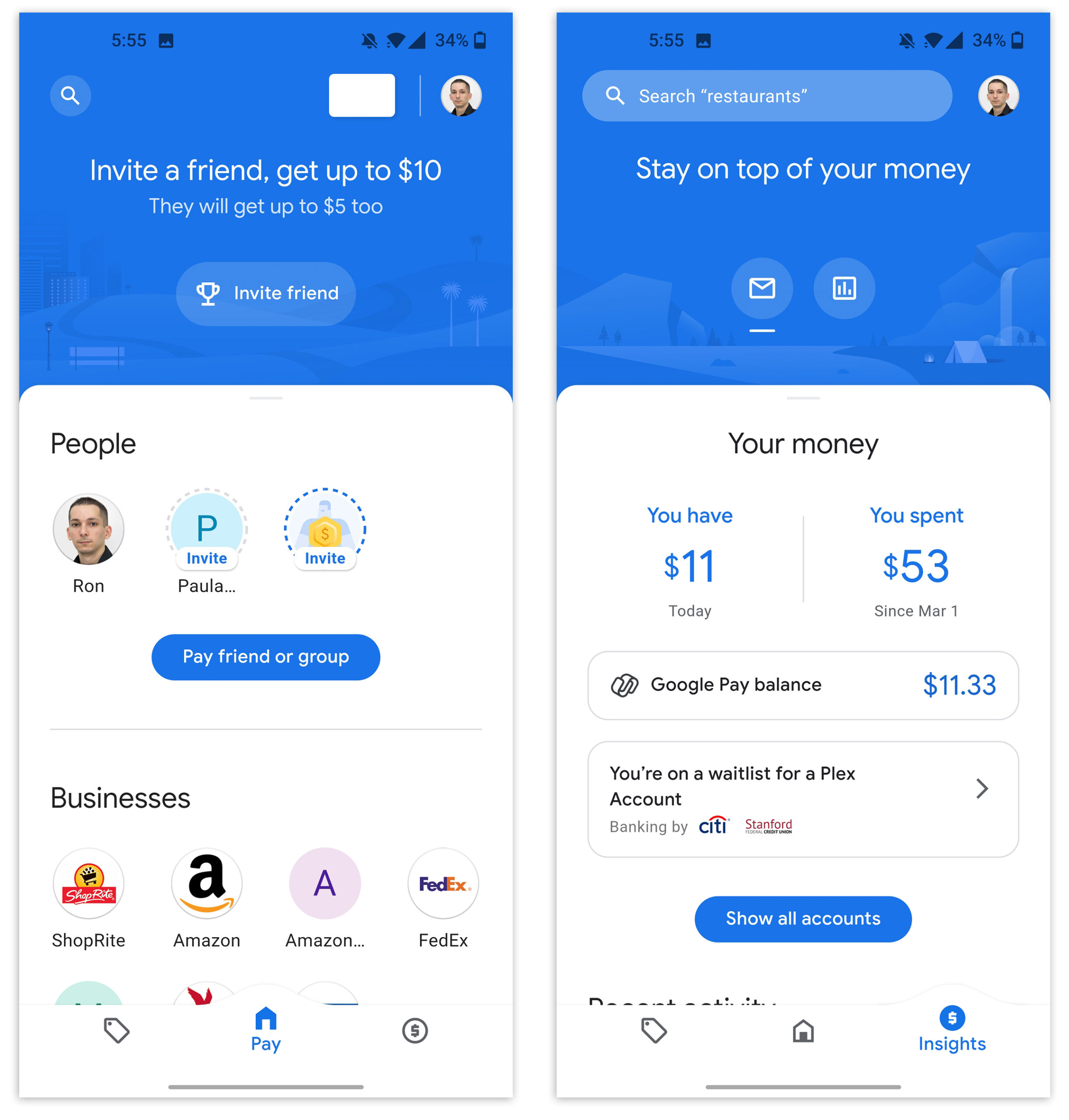
The now-dead Google Pay app.
Ron Aamdeo

The 2021 Google Pay was a totally different codebase based on a Google payments app that was originally developed for India, called Google Tez. Tez was rebranded to Google Pay for the US market and launched on the Play Store. Being designed for India, where a phone might be your first and only Internet device, meant the new Google Pay had a lot of design decisions that didn’t fit the US market. It used a phone number for your identity instead of your Google Account, and when you started it up for the first time, Google Pay didn’t know who you were. It was like signing up for a new service that wasn’t owned by Google. The phone number identity system meant Google had to shut down the previously useful Google Pay website, which could be used for peer-to-peer (P2P) payments, just like Venmo. You could only be signed in to one device at a time, which is maybe fine in the phone-exclusive world of India but weird in the US, where people have phones, watches, laptops, tablets, and PCs.

Because the two versions of Google Pay were separate codebases, Google didn’t upgrade users from the old app to the new app. They lived on the Play Store as separate apps, both called “Google Pay,” and for a while, it was possible to download and install both apps on your device. A big use case for the app was P2P payments, but money sent via the new app didn’t arrive on the old app, and vice versa, so for months of the transition, Google Pay just wasn’t a reliable money-sending service that normal people could figure out.

https://arstechnica.com/?p=2030018


These are all the devices compatible with iOS 18 and iPadOS 18

These are all the devices compatible with iOS 18 and iPadOS 18

Apple’s new iOS 18 and iPadOS 18 updates are mostly good news for users of older Apple devices—with the exception of 2018’s sixth-generation iPad, the new updates will run on all the same hardware that can run iOS 17 and iPadOS 17.

For iPhones, that will cover everything from the iPhone XR/XS and newer, including the second-gen iPhone SE; the seventh-gen iPad and newer; the third-gen iPad Air and newer; the fifth-gen iPad mini and newer; all 11-inch iPad Pros; and the third-gen 12.9-inch iPad Pro and later. Here are the full support lists:

It’s a bit odd that the seventh-gen iPad makes the cutoff while the sixth-gen model does not, given that both use the same Apple A10 processor. But the seventh-gen iPad has 3GB of RAM instead of 2GB. This is the same amount as the third-gen iPad Air and fifth-gen iPad mini—apparently that extra gigabyte is crucial for running iPadOS 18’s new features.

While this support list is fairly generous, Apple’s headlining “Apple Intelligence” AI features will be restricted to newer devices on the list. The situation is worst for the iPhone, which only supports Apple Intelligence on the iPhone 15 Pro and its A17 Pro chip—the regular iPhone 15 isn’t getting these features, and older phones will miss out on them as well. On the iPad, you’ll need an iPad Air or Pro with an M1 chip or newer.

Aside from Apple Intelligence, the company lists a few other features that require a newer device to work. The Smart Script handwriting enhancement feature requires an iPad with Apple M-series chip or an A14, cutting out a handful of older models with A10, A12, and A13-series chips. On the iOS side, live audio transcription, the Eye Tracking accessibility feature, and the Vocal Shortcuts accessibility feature require an iPhone 12 or newer.

https://arstechnica.com/?p=2030142


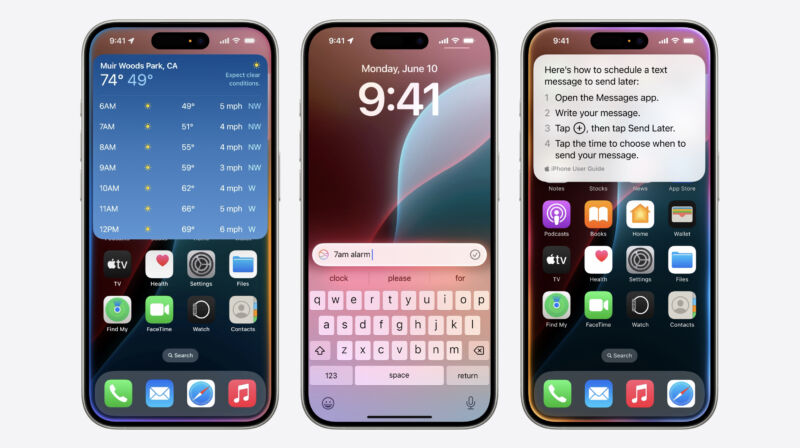
Apple integrates ChatGPT into Siri, iOS, and macOS

Reports of Apple signing a deal with OpenAI are true: ChatGPT is coming to your Apple gear.

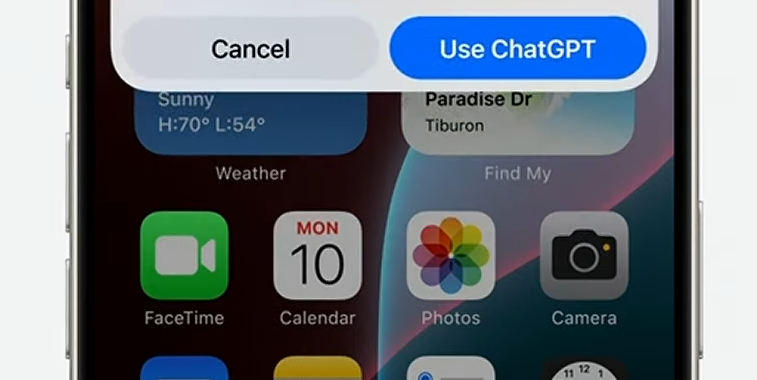
First up is Siri, which can tap into ChatGPT to answer voice questions. If Siri thinks ChatGPT can help answer your question, you’ll get a pop-up permission box asking if you want to send your question to the chatbot. The response will come back in a window indicating that the information came from an outside source. This is the same way Siri treats a search engine (namely, Google), so how exactly Siri draws a line between ChatGPT and a search engine will be interesting. In Apple’s lone example, there was a “help” intent, with the input saying to “help me plan a five-course meal” given certain ingredient limitations. That sort of ultra-specific input is something you can’t do with a traditional search engine.

Siri can also send photos to ChatGPT. In Apple’s example, the user snapped a picture of a wooden deck and asked Siri about decorating options. It sounds like the standard generative AI summary features will be here, too, with Apple SVP of Software Engineering Craig Federighi mentioning that “you can also ask questions about your documents, presentations, or PDFs.”

All of the system-wide writing tools are getting ChatGPT as an input option, too. Apple showed off a new context menu that seems to shoot out of the text input indicator. It has options for proofreading and what seems like a bunch of generative AI features. It can rewrite your text in “friendly,” “professional,” or “concise” styles, and it can make a summary, list, or table.

It’s unclear which AI (Apple’s or OpenAI’s) is in charge of these options, but at the bottom, a “compose” button specifically launched a ChatGPT input box. In the demo, Apple gets started on a document with a text prompt, and generative text is filled into the open app—in this case, Pages. ChatGPT can also generate and insert pictures. ChatGPT access is free without needing to make an account, but if you’re already a paying customer, you can connect your account and get access to premium features.

ChatGPT features are launching on iOS 18, iPad OS 18, and macOS Sequoia “later this year,” which does not necessarily mean they will be ready for launch. Apple said it might add “support for other AI models in the future.” That Bloomberg article mentioned that Apple was also negotiating with Google, so its chatbot is a good guess for the next one.

Listing image by Apple

https://arstechnica.com/?p=2030392


Watch a 6-axis motor solve a Rubik’s Cube in less than a third of a second

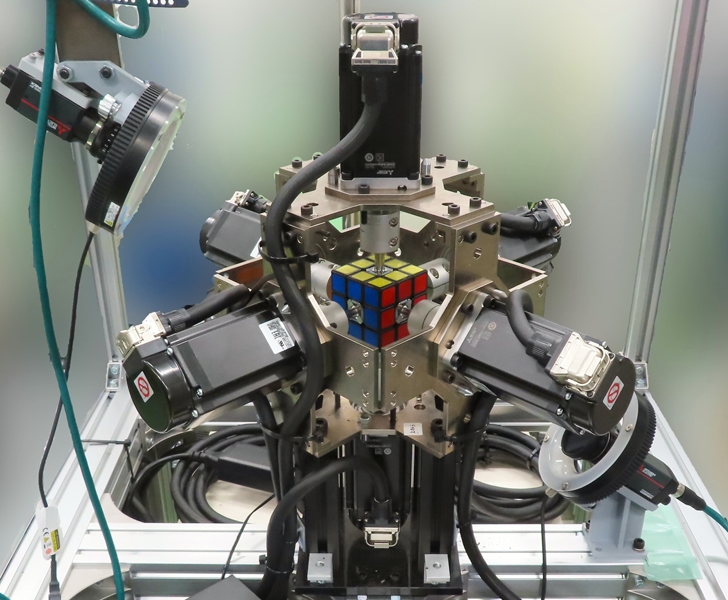
A mulit-armed servo robot, with a cube puzzle like a Rubik's Cube at its center.
Enlarge / So much depends upon a red puzzle cube, pinned by servo motors, inside Mitsubishi.
Mitsubishi

The last time a human set the world record for solving a Rubik’s Cube, it was Max Park, at 3.13 seconds for a standard 3×3×3 cube, set in June 2023. It is going to be very difficult for any human to pull off a John Henry-like usurping of the new machine record, which is more than 10 times faster, at 0.305 seconds. That’s within the accepted time frame for human eye blinking, which averages out to one-third of a second.

TOKUFASTbot, built by Mitsubishi Electric, can actually pull off a solve in as little as 0.204 seconds on video, but not when Guinness World Records judges were measuring. The previous mechanical record was 0.38 seconds.

[embedded content]
Mitsubishi Electric’s TOKUFASTbot, solving a Rubik’s-like puzzle on May 7, two weeks before judges showed up to verify its world-record speed.

There are a few footnotes and caveats to what would otherwise be an incremental gain and nifty slow-motion video. The first thing is that the world record reported is for “fastest robot to solve a rotating puzzle cube.” That intriguingly sidesteps the much better-known “Rubik’s Cube” identifier. Rubik’s notably lost its trademark on any rotating 3×3×3 cube puzzle game in Europe. Perhaps Mitsubishi and Guinness simply wished to avoid touching a trademark registered to a company with a known litigation history.

Alternatively, you might ask if this was a specially modified cube. Was there some kind of lubrication involved, given the role friction must play in shaving hundredths of a second off a prior world record? Guinness’ post notes that there was “an unexpected issue” with Mitsubishi’s attempt: “the puzzle cube struggled to keep up with the speed of the robot!” (exclamation theirs). The solution was vaguely described as the team fine-tuning the machine, according to Guinness. The cube certainly looks the part of a regular Rubik’s. But if you’re looking for an asterisk so that humans can hold onto some kind of Rubik rubric, that might be one angle.

On a Google Japanese-to-English translation of Mitsubishi’s press release about the record, Mitsubishi provides some details about this particular robot:

  • It is a camera, an industrial PC, a touch panel, and a 6-axis servo motor, connected to some very big sequencers, motion units, and servo amplifiers
  • It can rotate its arms 90 degrees in 0.009 seconds
  • It used “a color recognition algorithm that applies AI technology”
  • Key to the robot was “high-speed signal connections and control between devices)
  • The spinning (“winding”) arms come from the team’s experience in both home appliance and railway building, specifically making wire coils during motor manufacture
  • AI worked to differentiate colors when positioning, shadows, or lighting might trip up a color sensor.

The hardest part of the solve, seemingly, was the orange and red. Orange and red, especially when viewed at an angle with reflective light, can appear very similar to a sensor taking in simple capture data. I am heartened that a team of experienced industrial engineers found themselves tripped up by the same issues I have when playing Balatro or other games with too-close red/orange color schemes.

While you may lack a team of trained motor-winding engineers and a servo motor, you can get better at solving Rubik’s Cubes.

Listing image by Mitsubishi

https://arstechnica.com/?p=2029479