Google Fit APIs get shut down in 2025, might break fitness devices
Google Fit seems like it's on the way out.
Enlarge / Google Fit seems like it’s on the way out.
Ron Amadeo / Google

Google is killing off the Google Fit APIs. The platform originally existed to sync health data from third-party fitness devices to your Google account, but now it’s being killed off. Deprecation of the APIs happened on May 1, and Google has stopped accepting new sign-ups for the API. The official shutdown date is June 30, 2025.

The Google Fit API was launched in 2014, just a few weeks after Apple announced Healthkit in iOS 8. The goal of both platforms is to be a central repository for health data from various apps and services. Instead of seeing steps in one app and weight in another, it could all be mushed together into a one-stop-shop for health metrics. Google had a lot of big-name partners at launch, like Nike+, Adidas, Withings, Asus, HTC, Intel, LG, and app makers like Runtastic and RunKeeper.

Fast-forward to 2024, and we get the familiar story of Google being unable to throw its weight behind a single solution. Today, Google has three competing fitness APIs. There is a “Comparison Guide” on the Android Developer site detailing the differences between the “Health Connect” API, the “Fitbit Web API” and the “Google Fit REST API.”

Besides killing off the API, Google Fit in general seems like a dead product. Google’s deal to acquire Fitbit closed in 2021, making Fitbit the shiny new fitness brand and bringing with it fitness API No. 2. New Google products like the Pixel Watch and Pixel phones come with the Fitbit app as the built-in fitness solution instead of Google Fit, and the Google Fit app hasn’t seen a significant upgrade in a while.
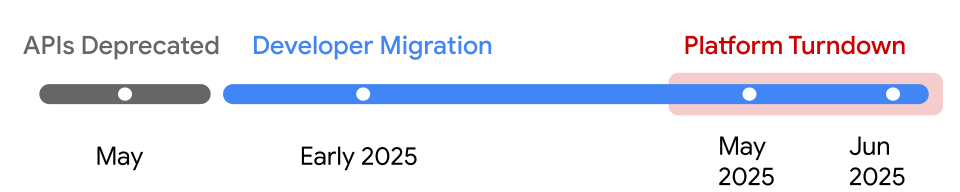
Google's Fit API shutdown timeline.
Google’s Fit API shutdown timeline.

Google’s new fitness API, Health Connect, has had a “beta” app on the Play Store since 2022 that only works with Android 13, and in Android 14, Health Connect became baked into the OS as an open source framework for storing health data. That Android 14 launch was only seven months ago, and with Android’s slow update schedule and even slower developer feature adoption, it’s hard to say too much about Health Connect. Google notes that the Play Store version of Health Connect and the Android 14 version of Health Connect are not the same thing (!), and an automatic “migration” pop-up screen and device reboot is needed to move to the Android 14 version. Google hasn’t said anything about compatibility with versions of Android older than Android 14 (or 13?), so even in 2025, Android’s slow update speed means this is going to be an API with low device support.

One change pointed out by Google’s comparison guide is that while the Fitbit API syncs health data to your Fitbit account (Fitbit accounts are also being shut down in 2025), and the Google Fit API syncs health data to your Google account, Health Connect doesn’t sync to any cloud provider. The documentation around Health Connect never talks about the cloud at all. From a platform perspective, not having cloud sync makes Health Connect more of a neutral, not-Google-affiliated standard for health data storage. Google also pitches the lack of cloud storage as a privacy feature. And just like how Google and Samsung teamed up for Wear OS (I assume this was a related project) Samsung has agreed to give up on the “Health Platform API” and is a launch partner for Health Connect.

From a user perspective, with no cloud syncing, what happens to my health data if I switch devices or if my phone breaks? Can I ever easily look at my health data in a more capable tablet or web app, or will that not work? For now, all talk of “sharing” is limited to local apps or devices that directly sync to your phone, like a smartwatch. The Fitbit app can show third-party Health Connect data right now, but it’s unclear if it will sync third-party data to the cloud. Google notes that “Our Android Health API offerings have moved to an on-device model, so there will not be an alternative to the Fit REST API.” (A REST API, by definition, is over the Internet.)

The company’s migration guide notes that the Google Fit and Health Connect APIs aren’t compatible, and for now Google recommends supporting both while users and manufacturers transition from one API to the other. The guide also flatly says, “We don’t recommend migrating to Health Connect if you’re an existing Google Fitbit Web API developer,” and then offers no alternative, so it sounds like the goal is siloed on-device data only, and any devices that use the web APIs will stop syncing in 2025.

By the way, despite being the same age, Apple’s Healthkit ecosystem isn’t being shut down and will continue running. While Google starts over, Healthkit will continue growing its ecosystem and its already significant lead, and Apple will continue to build user and developer trust.

https://arstechnica.com/?p=2022139



What to expect from Apple’s May 7 “Let loose” event

A colorful Apple log with an Apple Pencil inside it, with the copy
Enlarge / The promotional image for Apple’s May 7 event.

On May 7, Apple will host a product announcement event at 9 am ET. Labeled “Let loose,” we expect it will focus on new iPads and iPad accessories.

We won’t be liveblogging the stream, but you can expect some news coverage as it happens. Below, we’ll go over our educated guesses about why Apple might be doing this.

Why hold an event now?

It’s unusual for Apple to host an event shortly before WWDC. New products debut at that event all the time, so if it’s just a faster chip and a nicer screen for the iPad Pro and iPad Air, why not wait until June?

We’re not completely sure what the answer is, but we can make educated guesses.

Apple has been criticized by commentators over the past few weeks for three things. First, iPads have not been selling well. Second: While the Vision Pro introduced a new product category that may grow over time, its initial launch didn’t sell that well. Lastly, Apple is perceived by many as way, way behind on generative AI tech, which is already transforming other companies. There have also been rumors that Microsoft might announce a new silicon that will be fiercely competitive with Apple Silicon for AI tasks, and Microsoft’s chips could be announced at a planned event between May 7 and the start of WWDC.

Given all that, our best guess is that Apple wants to focus its messaging—and the time window for that messaging—on the right targets without muddying the message by trying to address everything at once.

Talking about the iPad’s challenges while also preempting Microsoft with a new chip announcement could be Apple’s focus for this event. Getting those things out of the way now would allow WWDC and its new operating system announcements to focus heavily on AI, which is the bigger question the company is looking to answer.

What new iPads might look like

Given that an Apple Pencil is in the event’s promotional image—a much more explicit hint than Apple usually provides—there’s no question iPads will be a focus.

As is often the case these days, we have a plethora of leaks, supply chain reports, and, of course, insider reporting at sites like Bloomberg and The Information to give us a rough idea of what to expect from Apple’s new hardware.

iPad Pro

It’s likely that the star of the show will be a significant redesign of the iPad Pro for the 11-inch and 12.9-inch sizes.

Both are rumored to get OLED displays, a huge step up over the LCD display in the current 11-inch iPad Pro. The 12.9-inch iPad Pro has a MiniLED display, which competes directly with OLED in the consumer TV space, so it won’t be as big a leap for that device, but we can still expect better contrast and richer colors.

https://arstechnica.com/?p=2021920


Microsoft ties executive pay to security following multiple failures and breaches

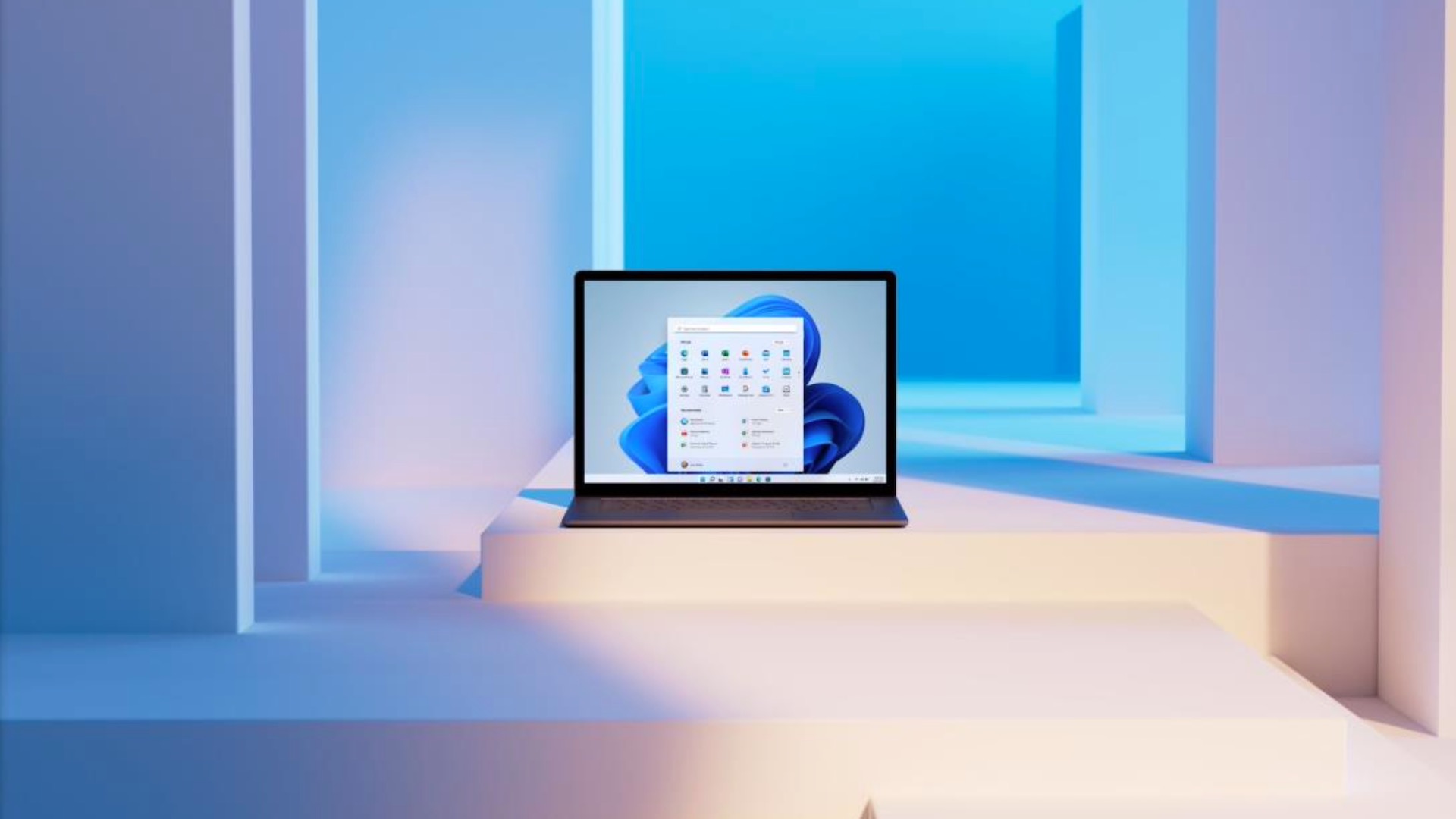
A PC running Windows 11.
Enlarge / A PC running Windows 11.

It’s been a bad couple of years for Microsoft’s security and privacy efforts. Misconfigured endpoints, rogue security certificates, and weak passwords have all caused or risked the exposure of sensitive data, and Microsoft has been criticized by security researchers, US lawmakers, and regulatory agencies for how it has responded to and disclosed these threats.

The most high-profile of these breaches involved a China-based hacking group named Storm-0558, which breached Microsoft’s Azure service and collected data for over a month in mid-2023 before being discovered and driven out. After months of ambiguity, Microsoft disclosed that a series of security failures gave Storm-0558 access to an engineer’s account, which allowed Storm-0558 to collect data from 25 of Microsoft’s Azure customers, including US federal agencies.

In January, Microsoft disclosed that it had been breached again, this time by Russian state-sponsored hacking group Midnight Blizzard. The group was able “to compromise a legacy non-production test tenant account” to gain access to Microsoft’s systems for “as long as two months.”

All of this culminated in a report (PDF) from the US Cyber Safety Review Board, which castigated Microsoft for its “inadequate” security culture, its “inaccurate public statements,” and its response to “preventable” security breaches.

To attempt to turn things around, Microsoft announced something it called the “Secure Future Initiative” in November 2023. As part of that initiative, Microsoft today announced a series of plans and changes to its security practices, including a few changes that have already been made.

“We are making security our top priority at Microsoft, above all else—over all other features,” wrote Microsoft Security Executive Vice President Charlie Bell. “We’re expanding the scope of SFI, integrating the recent recommendations from the CSRB as well as our learnings from Midnight Blizzard to ensure that our cybersecurity approach remains robust and adaptive to the evolving threat landscape.”

As part of these changes, Microsoft will also make its Senior Leadership Team’s pay partially dependent on whether the company is “meeting our security plans and milestones,” though Bell didn’t specify how much executive pay would be dependent on meeting those security goals.

Microsoft’s post describes three security principles (“secure by design,” “secure by default,” and “secure operations”) and six “security pillars” meant to address different weaknesses in Microsoft’s systems and development practices. The company says it plans to secure 100 percent of all its user accounts with “securely managed, phishing-resistant multifactor authentication,” enforce least-privilege access across all applications and user accounts, improve network monitoring and isolation, and retain all system security logs for at least two years, among other promises. Microsoft is also planning to put new deputy Chief Information Security Officers on different engineering teams to track their progress and report back to the executive team and board of directors.

As for concrete fixes that Microsoft has already implemented, Bell writes that Microsoft has “implemented automatic enforcement of multifactor authentication by default across more than 1 million Microsoft Entra ID tenants within Microsoft,” removed 730,000 old and/or insecure apps “to date across production and corporate tenants,” expanded its security logging, and adopted the Common Weakness Enumeration (CWE) standard for its security disclosures.

In addition to Bell’s public security promises, The Verge has obtained and published an internal memo from Microsoft CEO Satya Nadella that re-emphasizes the company’s publicly stated commitment to security. Nadella also says that improving security should be prioritized over adding new features, something that may affect the constant stream of tweaks and changes that Microsoft releases for Windows 11 and other software.

“The recent findings by the Department of Homeland Security’s Cyber Safety Review Board (CSRB) regarding the Storm-0558 cyberattack, from summer 2023, underscore the severity of the threats facing our company and our customers, as well as our responsibility to defend against these increasingly sophisticated threat actors,” writes Nadella. “If you’re faced with the tradeoff between security and another priority, your answer is clear: Do security. In some cases, this will mean prioritizing security above other things we do, such as releasing new features or providing ongoing support for legacy systems.”

https://arstechnica.com/?p=2021673


AI in space: Karpathy suggests AI chatbots as interstellar messengers to alien civilizations

Close shot of Cosmonaut astronaut dressed in a gold jumpsuit and helmet, illuminated by blue and red lights, holding a laptop, looking up.

On Thursday, renowned AI researcher Andrej Karpathy, formerly of OpenAI and Tesla, tweeted a lighthearted proposal that large language models (LLMs) like the one that runs ChatGPT could one day be modified to operate in or be transmitted to space, potentially to communicate with extraterrestrial life. He said the idea was “just for fun,” but with his influential profile in the field, the idea may inspire others in the future.

Karpathy’s bona fides in AI almost speak for themselves, receiving a PhD from Stanford under computer scientist Dr. Fei-Fei Li in 2015. He then became one of the founding members of OpenAI as a research scientist, then served as senior director of AI at Tesla between 2017 and 2022. In 2023, Karpathy rejoined OpenAI for a year, leaving this past February. He’s posted several highly regarded tutorials covering AI concepts on YouTube, and whenever he talks about AI, people listen.

Most recently, Karpathy has been working on a project called “llm.c” that implements the training process for OpenAI’s 2019 GPT-2 LLM in pure C, dramatically speeding up the process and demonstrating that working with LLMs doesn’t necessarily require complex development environments. The project’s streamlined approach and concise codebase sparked Karpathy’s imagination.

“My library llm.c is written in pure C, a very well-known, low-level systems language where you have direct control over the program,” Karpathy told Ars. “This is in contrast to typical deep learning libraries for training these models, which are written in large, complex code bases. So it is an advantage of llm.c that it is very small and simple, and hence much easier to certify as Space-safe.”

Our AI ambassador

In his playful thought experiment (titled “Clearly LLMs must one day run in Space”), Karpathy suggested a two-step plan where, initially, the code for LLMs would be adapted to meet rigorous safety standards, akin to “The Power of 10 Rules” adopted by NASA for space-bound software.

This first part he deemed serious: “We harden llm.c to pass the NASA code standards and style guides, certifying that the code is super safe, safe enough to run in Space,” he wrote in his X post. “LLM training/inference in principle should be super safe – it is just one fixed array of floats, and a single, bounded, well-defined loop of dynamics over it. There is no need for memory to grow or shrink in undefined ways, for recursion, or anything like that.”

That’s important because when software is sent into space, it must operate under strict safety and reliability standards. Karpathy suggests that his code, llm.c, likely meets these requirements because it is designed with simplicity and predictability at its core.

In step 2, once this LLM was deemed safe for space conditions, it could theoretically be used as our AI ambassador in space, similar to historic initiatives like the Arecibo message (a radio message sent from Earth to the Messier 13 globular cluster in 1974) and Voyager’s Golden Record (two identical gold records sent on the two Voyager spacecraft in 1977). The idea is to package the “weights” of an LLM—essentially the model’s learned parameters—into a binary file that could then “wake up” and interact with any potential alien technology that might decipher it.

“I envision it as a sci-fi possibility and something interesting to think about,” he told Ars. “The idea that it is not us that might travel to stars but our AI representatives. Or that the same could be true of other species.”

https://arstechnica.com/?p=2021482


Ecobee is shutting down some of its very first products

The first Ecobee Thermostat, may it rest in peace.
Enlarge / The first Ecobee Thermostat, may it rest in peace.

Ecobee is killing off some of its oldest thermostats. The “Ecobee Smart Thermostat” (Model # : EB-STAT-02) and the Ecobee Energy Management System (EMS) business thermostat (Model #: EB-EMS-02) are losing web access on July 31, 2024. Every Ecobee device has nearly the same name, but these are older devices. Ecobee says these will still function as local thermostats after the shutdown, but “any features requiring connectivity to the Ecobee servers, such as control from the Ecobee Web Portal, weather information, integrations etc, will no longer function.”

The EB-STAT-02 was “the world’s first Wi-Fi enabled thermostat” when it launched in 2008, and sales ended in 2013. Unlike the current Ecobees, this is a white rectangle that connected to a giant “equipment interface module” box you needed to hide in your HVAC system somewhere. The wall-mounted controller used an old-even-in-2009 resistive touchscreen, was an inch thick, and had a colorful interface that looked a lot like early versions of iOS. Most of the basics were here though, with an app that mimicked the wall controller interface, over-the-Internet control, a web portal, and access to lots of data. The EB-EMS-02 launched two years later as a commercial version of the Stat 02 and needed a subscription fee to work.

As you’d expect from an old Internet-connected device, the Wi-Fi support of the Stat 02 is pretty bad nowadays. According to Ecobee’s support page, it only supported 802.11b/g for Wi-Fi (that would be “Wi-Fi 3” under the current naming scheme). Encryption went up to WPA2, and even with firmware updates, you have to start questioning the security of a 16-year-old Internet-connected device. Not relying on the cloud would be nice, but at some point, you just have to throw this stuff out.

The Verge spoke to Ecobee’s VP of product design, Bryan Hurren, who said that other legacy Ecobee products will keep running for the foreseeable future. Old Ecobees only became recognizable to current customers with the 2014 Ecobee3 line, but even the product before that, the 2012 “Ecobee Smart SI,” is going to keep running for now. If we retcon all the names, the Smart SI would have been the “Ecobee2,” and the Stat 02 would be the “Ecobee1.”

As frequent complainers when smart home companies do shutdowns the wrong way, we have to give credit where it’s due. It’s commendable that Ecobee has kept this dinosaur running for 16 years, and it’s the kind of post-launch support that should make people feel comfortable buying from Ecobee in the future. I feel like most people would be satisfied with a 16-year runtime for most of their connected devices, but Ecobee is apparently still offering a discount to “affected” customers. The support page only says to “contact Ecobee support for assistance regarding eligibility for a discount on a new thermostat,” but Hurren told The Verge the company is offering a 30 percent discount on new products, valid for up to 15 thermostats. If you’re still using your 16-year-old email address from when you signed up, you should have been emailed already.

https://arstechnica.com/?p=2021683


Apple’s Q2 2024 earnings reveal a drop in iPhone, iPad sales

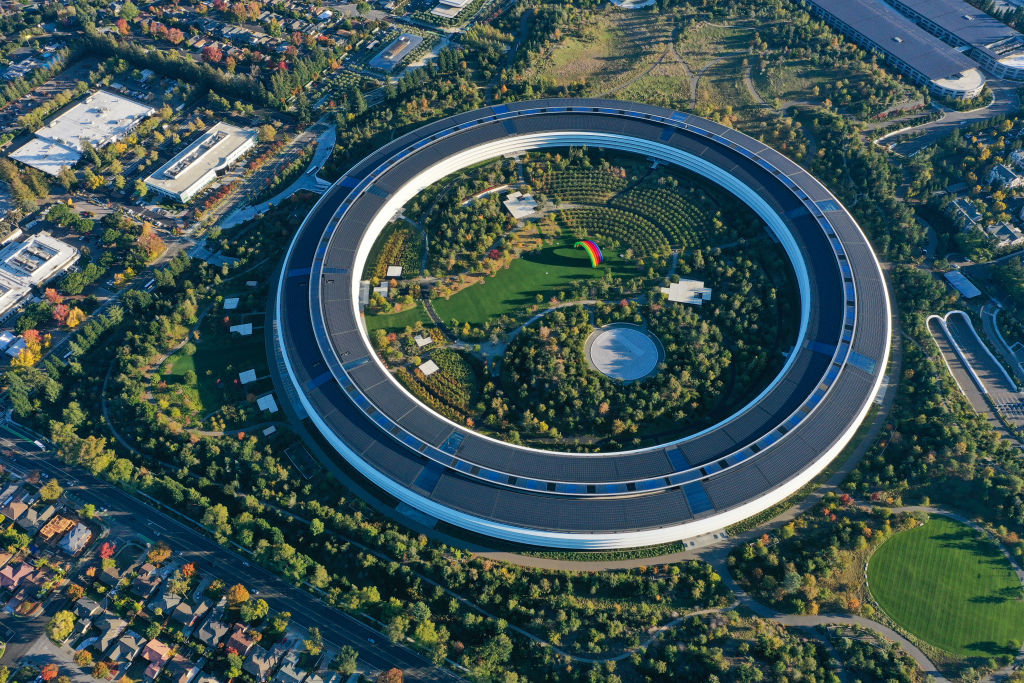
The Apple Park campus in Cupertino, California.
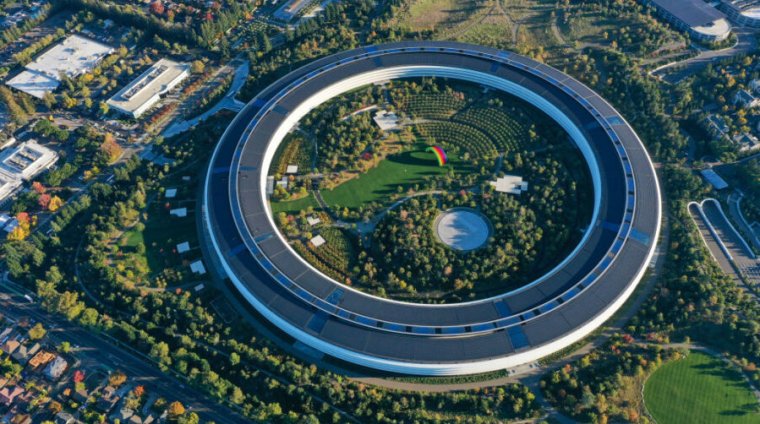
Enlarge / The Apple Park campus in Cupertino, California.

Apple’s earnings report for the second quarter of the company’s 2024 fiscal year showed a slide in hardware sales, especially for the iPhone. Nonetheless, Apple beat analysts’ estimates for the quarter thanks to the company’s rapidly growing services revenue.

iPhone revenue dropped from $51.33 billion in the same quarter last year to $45.96 billion, a fall of about 10 percent. This was the second consecutive quarter with declining iPhone revenues. That said, investors feared a sharp drop before the earnings call.

Notably, Apple’s revenue in the region it dubs Greater China (which includes China, Taiwan, Singapore, and Hong Kong) fell 8 percent overall. The company fared a little better in other regions. China’s economy is slowing even as China-based Huawei is taking bigger slices of the pie in the region.

Globally, Mac revenue was $7.5 billion compared to last year’s $7.12 billion. Other products—which include the Watch, AirPods, Apple TV 4K, HomePod, and the new Vision Pro headset—were down to $7.9 billion from last year’s $8.76 billion, despite the fact this quarter included the launch of the Vision Pro.

iPad revenue was also down, at $5.6 billion from $6.67 billion. Apple is expected to launch new iPads next week, which suggests that those updates are needed to achieve the company’s business goals.

The rosiest revenue category was services, which includes everything from Apple Music to iCloud. Its revenue was $23.9 billion, up from Q2 2023’s $20.91 billion.

The company also announced authorization of $110 billion for share purchases.

https://arstechnica.com/?p=2021582


All the ways streaming services are aggravating their subscribers this week

man watching TV, holding face

Streaming services like Netflix and Peacock have already found multiple ways to aggravate paying subscribers this week.

The streaming industry has been heating up. As media giants rush to establish a successful video streaming business, they often make platform changes that test subscribers’ patience and the value of streaming.

Below is a look at the most exasperating news from streaming services from this week. The scale of this article demonstrates how fast and frequently disappointing streaming news arises. Coincidentally, as we wrote this article, another price hike was announced.

We’ll also examine each streaming platform’s financial status to get an idea of what these companies are thinking (spoiler: They’re thinking about money).

Peacock is raising prices

For the second time in the past year, NBCUniversal is bumping the price of Peacock, per The Hollywood Reporter (THR) on Monday.

As of July 18, if you try to sign up for Peacock Premium (which has ads), it’ll cost $7.99 per month, up from $5.99/month today. Premium Plus, (which doesn’t have ads), will go up from $11.99/month to $13.99/month. Annual subscription pricing for the ad plan is increasing 33.3 percent from $59.99 to $79.99, and the ad-free annual plan’s price will rise 16.7 percent from $119.99/year to $139.99/year.

Those already subscribed to Peacock won’t see the changes until August 17, six days after the closing ceremony of the 2024 Summer Olympics, which will stream on Peacock.

The pricing changes will begin eight days before the Olympics’ opening ceremony. That means that in the days leading up to the sporting event, signing up for Peacock will cost more than ever. That said, there’s still time to sign up for Peacock at its current pricing.

As noted by THR, the changes come as NBCUniversal may feel more confident about its streaming service, which now includes big-ticket items, like exclusive NFL games and Oppenheimer (which Peacock streamed exclusively for a time), in addition to new features for the Olympics, like multiview.

Some outspoken subscribers, though, aren’t placated.

“Just when I was starting to like the service,” Reddit user MarkB1997 said in response to the news. “I’ll echo what everyone has been saying for a while now, but these services are pricing themselves out of the market.”

Peacock subscribers already experienced a price increase on August 17, 2023. At the time, Peacock’s Premium pricing went from $4.99/month to $5.99/month, and the Premium Plus tier from $9.99/month to $11.99/month.

Peacock’s pockets

Peacock’s price bumps appear to be a way for the younger streaming service to inch closer to profitability amid a major, quadrennial, global event.

NBCUniversal parent company Comcast released its Q1 2024 earnings report last week, showing that Peacock, which launched in July 2020, remains unprofitable. For the quarter, Peacock lost $639 million, compared to $825 million in Q4 2023 and $704 million in Q1 2023. Losses were largely attributed to higher programming costs.

Peacock’s paid subscriber count is lower than some of its rivals. The platform ended the quarter with 34 million paid users, up from 31 million at the end of 2023. Revenue also rose, with the platform pulling in $1.1 billion, representing a 54 percent boost compared to the prior year.

Sony bumps Crunchyroll prices weeks after shuttering Funimation

Today, Sony’s anime streaming service Crunchyroll announced that it’s increasing subscription prices as follows:

  • The Mega Fan Tier, which allows streaming on up to four devices simultaneously, will go from $9.99/month to $11.99/month
  • The Ultimate Fan Tier, which allows streaming on up to six devices simultaneously, will go from $14.99/month to $15.99/month

Crunchyroll’s cheapest plan ($7.99/month) remains unchanged. None of Crunchyroll’s subscription plans have ads. Crunchyroll is also adding discounts to its store for each subscription tier, but this is no solace for those who don’t shop there on a monthly basis or at all.

The news of higher prices comes about a month after Sony shuttered Funimation, an anime streaming service it acquired in 2017. After buying Crunchyroll in 2021, Funimation was somewhat redundant for Sony. And now that Sony has converted all remaining Funimation accounts into Crunchyroll accounts (while deleting Funimation digital libraries), it’s forcing many customers to pay more to watch their favorite anime.

A user going by BioMountain on Crunchyroll said the news is “not great,” since they weren’t “a big fan of having to switch from Funimation to begin with, especially since that app was so much better” than Crunchyroll.

Interestingly, when Anime News Network asked on February 29 whether Crunchyroll would see prices rise over the next two years, the company told the publication that predicting a price change for that time frame would be improbable.

Crunching numbers

Crunchyroll had 5 million paid subscribers in 2021 but touted over 13 million in January, (plus over 89 million unpaid users, per Bloomberg). Crunchyroll President Rahul Purini has said that Crunchyroll is profitable, but not by how much.

In 2023, Goldman Sachs estimated that Crunchyroll would represent 36 percent of Sony Pictures Entertainment’s profit by 2028, compared to about 1 percent in March.

However, Purini has shown interest in growing the company further and noted to Variety in February an increase in “general entertainment” companies getting into anime.

Still, anime remains a more niche entertainment category, and Crunchyroll is more specialized than some other streaming platforms. With Sony making it so that anime fans have one less streaming service option and jacking up the prices for one of the limited options, it’s showing that it wants as much of the $20 billion anime market as possible.

Crunchyroll claimed today that its pricing changes are tied to “investment in more anime, additional services like music and games, and additional subscriber benefits.”

https://arstechnica.com/?p=2021143


Here’s your chance to own a decommissioned US government supercomputer

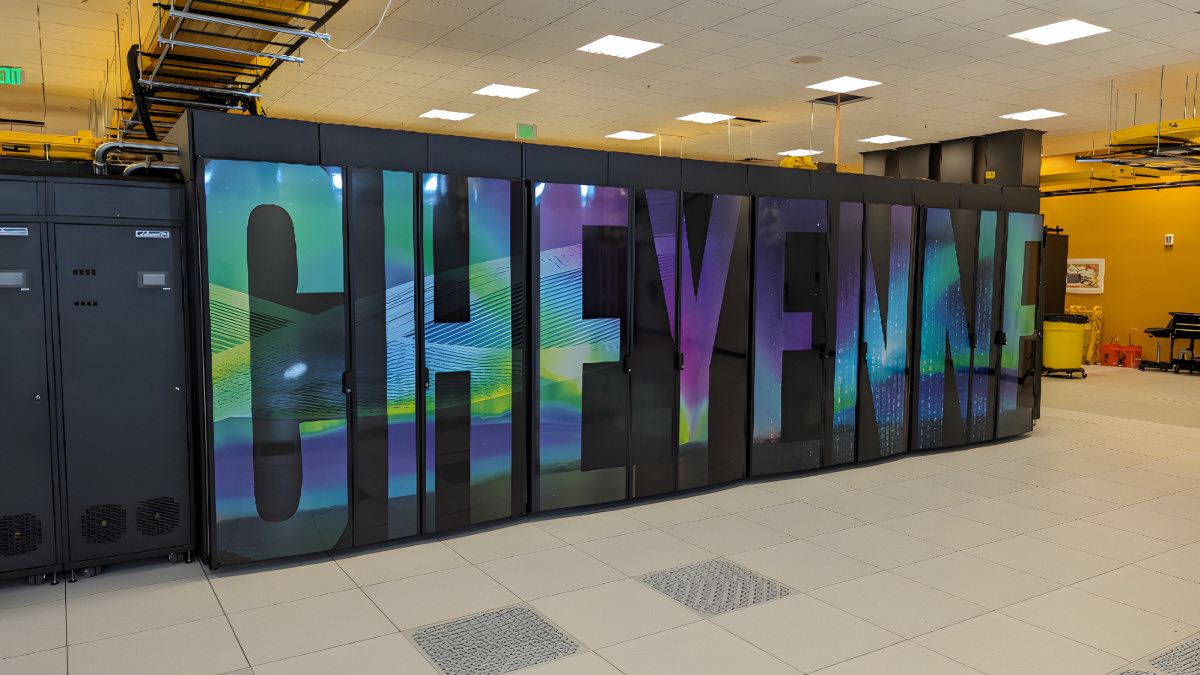
A photo of the Cheyenne supercomputer, which is now up for auction.
Enlarge / A photo of the Cheyenne supercomputer, which is now up for auction.

On Tuesday, the US General Services Administration began an auction for the decommissioned Cheyenne supercomputer, located in Cheyenne, Wyoming. The 5.34-petaflop supercomputer ranked as the 20th most powerful in the world at the time of its installation in 2016. Bidding started at $2,500, but it’s price is currently $27,643 with the reserve not yet met.

The supercomputer, which officially operated between January 12, 2017, and December 31, 2023, at the NCAR-Wyoming Supercomputing Center, was a powerful (and once considered energy-efficient) system that significantly advanced atmospheric and Earth system sciences research.

“In its lifetime, Cheyenne delivered over 7 billion core-hours, served over 4,400 users, and supported nearly 1,300 NSF awards,” writes the University Corporation for Atmospheric Research (UCAR) on its official Cheyenne information page. “It played a key role in education, supporting more than 80 university courses and training events. Nearly 1,000 projects were awarded for early-career graduate students and postdocs. Perhaps most tellingly, Cheyenne-powered research generated over 4,500 peer-review publications, dissertations and theses, and other works.”

UCAR says that Cheynne was originally slated to be replaced after five years, but the COVID-19 pandemic severely disrupted supply chains, and it clocked in two extra years in its tour of duty. The auction page says that Cheyenne recently experienced maintenance limitations due to faulty quick disconnects in its cooling system. As a result, approximately 1 percent of the compute nodes have failed, primarily due to ECC errors in the DIMMs. Given the expense and downtime associated with repairs, the decision was made to auction off the components.

With a peak performance of 5,340 teraflops (4,788 Linpack teraflops), this SGI ICE XA system was capable of performing over 3 billion calculations per second for every watt of energy consumed, making it three times more energy-efficient than its predecessor, Yellowstone. The system featured 4,032 dual-socket nodes, each with two 18-core, 2.3-GHz Intel Xeon E5-2697v4 processors, for a total of 145,152 CPU cores. It also included 313 terabytes of memory and 40 petabytes of storage. The entire system in operation consumed about 1.7 megawatts of power.

Just to compare, the world’s top-rated supercomputer at the moment—Frontier at Oak Ridge National Labs in Tennessee—features a theoretical peak performance of 1,679.82 petaflops, includes 8,699,904 CPU cores, and uses 22.7 megawatts of power.

The GSA notes that potential buyers of Cheyenne should be aware that professional movers with appropriate equipment will be required to handle the heavy racks and components. The auction includes seven E-Cell pairs (14 total), each with a cooling distribution unit (CDU). Each E-Cell weighs approximately 1,500 lbs. Additionally, the auction features two air-cooled Cheyenne Management Racks, each weighing 2,500 lbs, that contain servers, switches, and power units.

As of this writing, 12 potential buyers have bid on this computing monster so far. The auction closes on May 5 at 6:11 pm Central Time if you’re interested in bidding. But don’t get too excited by photos of the extensive cabling: As the auction site notes, “fiber optic and CAT5/6 cabling are excluded from the resale package.”

https://arstechnica.com/?p=2020861


Roku OS home screen is getting video ads for the first time

roku home screen

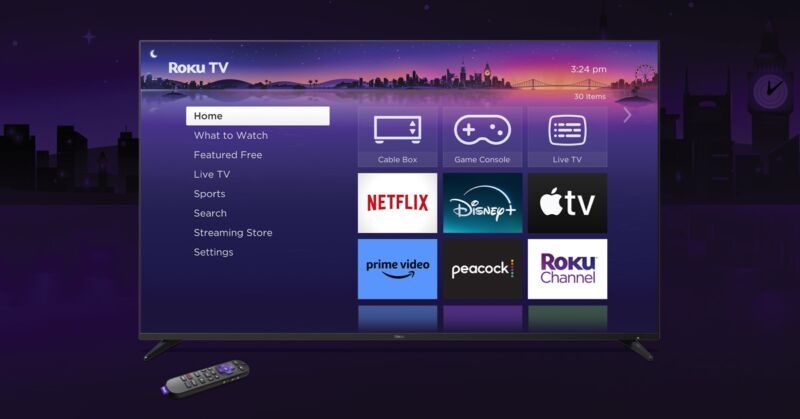
Roku CEO Anthony Wood disclosed plans to introduce video ads to the Roku OS home screen. The news highlights Roku’s growing focus on advertising and an alarming trend in the streaming industry that sees ads increasingly forced on viewers.

As spotted by The Streamable, during Roku’s Q1 2024 earnings call last week, Wood, also the company’s founder and chairman, boasted about the Roku OS home screen showing users ads “before they select an app,” avoiding the possibility that they don’t see any ads during their TV-viewing session. (The user might only use Roku to access a video streaming app for which they have an ad-free subscription.)

Wood also noted future plans to make the Roku home screen even more ad-laden:

On the home screen today, there’s the premier video app we call the marquee ad and that ad traditionally has been a static ad. We’re going to add video to that ad. So that’ll be the first video ad that we add to the home screen. That will be a big change for us.

Wood’s comments didn’t address the expected impact on the Roku user experience or whether the company thinks this might turn people off its platform. In December, Amazon made a similar move by adding autoplay video ads to the home screen of the Fire OS (which third-party TVs and Amazon-branded Fire TV sets and streaming devices use). Fire OS users who disable the ads’ autoplay function will still see ads as “a full-screen slide show of image ads,” per AFTVnews. Some users viewed the introduction as an intrusive step that went too far, and Roku may hear the same feedback.

During Roku’s earnings call, Wood also said the company is testing “other types of video ad units” and is looking for more ways to bring advertising to the Roku OS home screen.

This comes after recent efforts to expand ad presence on Roku OS, including through new FAST (free ad-supported streaming TV) channels and by putting content recommendations on the home screen for the first time, per Wood, who said the personalized content row “will be, obviously, AI-driven recommendations.”

“There’s lots of ways we’re working on enhancing the home screen to make it more valuable to viewers but also increase the monetization on the home screen,” he said.

Roku’s revenue rise

Roku saw its average revenue per user (ARPU) drop from $41.03 in Q3 of its 2023 financial year to $39.92 in Q4 2023 (in Q4 2022, the company reported an ARPU of $41.68). Last week, Roku reported that ARPU, a key metric for the streaming industry these days, rose to $40.65 in Q1 2024. Meanwhile, Roku’s active account count rose by 1.6 million users from the prior quarter to 81.6 million.

“Roku has a direct relationship with more than 81 million Streaming Households, and we are deepening relationships with third-party platforms, including [demand side platforms], retail media networks, and measurement partners. Our business remains well positioned to capture the billions of dollars in traditional TV ad budgets that will shift to streaming,” an April 25 letter to shareholders [PDF] authored by Wood and Roku CFO Dan Jedda reads.

Like many streaming companies, a shift toward ads has resulted in higher revenue potential and user discontent. In its Q1 2024 results, Roku reported that revenue for its Devices business reached $126.5 million, compared to $754.9 for its Platform business, which drives most of its revenue through ad sales, representing a 19 percent year-over-year (YoY) increase. Overall, revenue rose 19 percent YoY to $882 million, and Roku’s gross profit grew 15 percent YoY to $388 million.

But growing revenue doesn’t equate to an improved user experience. For example, an Accenture survey of 6,000 “global consumers” noted by The Streamable found that 52.2 percent of participants thought that streaming platform-recommended content “did not match their interests.” Similarly, an October TiVo survey of 4,500 viewers in the US and Canada ranked “streaming apps / home screen / carousel ads” as the fourth most popular method of content discovery, after word of mouth, commercials aired during other shows, and social media. While Roku is a budget brand associated with more affordable TVs and streaming devices, excessive ads could make people reconsider the true price of these savings.

Despite people’s ad aversion, Roku intends to find more ways to drive advertising opportunities. Among those ideas being explored is the ability to show ads over anything plugged into the TV.

https://arstechnica.com/?p=2020463


Apple must open iPadOS to sideloading within 6 months, EU says

Apple must open iPadOS to sideloading within 6 months, EU says
Andrew Cunningham

Starting in March with the release of iOS 17.4, iPhones in the European Union have been subject to the EU’s Digital Markets Act (DMA), a batch of regulations that (among other things) forced Apple to support alternate app stores, app sideloading, and third-party browser engines in iOS for the first time. Today, EU regulators announced that they are also categorizing Apple’s iPadOS as a “gatekeeper,” meaning that the iPad will soon be subject to the same regulations as the iPhone.

The EU began investigating whether iPadOS would qualify as a gatekeeper in September 2023, the same day it decided that iOS, the Safari browser, and the App Store were all gatekeepers.

“Apple now has six months to ensure full compliance of iPadOS with the DMA obligations,” reads the EU’s blog post about the change.

Apple technically split the iPad’s operating system from the iPhone’s in 2019 when it began calling its tablet operating system “iPadOS” instead of iOS. But practically speaking, little separates the two operating systems under the hood. Both iOS and iPadOS share the same software build numbers, they’re updated in lockstep (with rare exceptions), and most importantly for DMA compliance purposes, they pull software from the same locked-down App Store with the same Apple-imposed restrictions in place.

Apps distributed through alternate app stores or third-party websites will have to abide by many of Apple’s rules and will still generally be limited to using Apple’s public APIs. However, the ability to use alternate app stores and browser engines on the iPad’s large screen (and the desktop-class M-series chips) could make the tablets better laptop replacements by allowing them to do more of the things that Mac users can do on their systems.

Though Apple has made multiple changes to iOS in the EU to comply with the DMA, EU regulators are already investigating Apple (as well as Google and Meta) for “non-compliance.” Depending on the results of that investigation, the EU may require Apple to make more changes to the way it allows third-party apps to be installed in iOS and to the way that third-party developers are allowed to advertise non-Apple app store and payment options. Any changes that Apple makes to iOS to comply with the investigation’s findings will presumably trickle down to the iPad as well.

Of course, none of this directly affects US-based iPhone or iPad users, whose devices remain restricted to Apple’s app stores and the WebKit browsing engine. That said, we have seen some recent App Store rule changes that have arguably trickled down from Apple’s attempts to comply with the DMA, most notably policy changes that have allowed (some, not all) retro game console emulators into the App Store for the first time.

https://arstechnica.com/?p=2020496