Reddit, AI spam bots explore new ways to show ads in your feed
BRAZIL - 2024/04/08: In this photo illustration, a Reddit logo seen displayed on a computer screen through a magnifying glass

Reddit has made it clear that it’s an ad-first business. Today, it expanded on that practice with a new ad format that aims to sell things to Reddit users. Simultaneously, Reddit has marketers who are interested in pushing products to users through seemingly legitimate accounts.

In a blog post today, Reddit announced that its Dynamic Product Ads are entering public beta globally. The ad format uses “shopping signals,” aka, discussions with people looking to try a product or brand, machine learning, and advertiser product catalogs in order to post relevant ads. Reddit shared an image in the blog post that shows ads, including with products and pricing, that seem to relate to a posted question. User responses to the Reddit post appear under the ad.

Reddit’s Dynamic Product Ads can automatically show users ads “based on the products they’ve previously engaged with on the advertiser’s site” and/or “based on what people engage with on Reddit or advertiser sites,” per the blog.

Reddit is an ad business

Reddit’s blog didn’t imply that Dynamic Product Ads means users would see more ads than they do currently. However, today’s blog highlighted the newly public company’s focus on ad sales.

“With Dynamic Product Ads, brands can tap into the rich, high-intent product conversations that people come to Reddit for,” Reddit EVP of Business Marketing and Growth Jim Squires said in a statement.

The blog also noted that “Reddit’s communities are naturally commercial,” adding:

Reddit is where people come to make shopping decisions, and we’re focused on bringing brands into these interactions in a way that adds value for people and drives growth for businesses.

The stance has been increasingly clear over the past year, as Reddit became rather vocal about the fact that it has never been profitable. In June, the company started charging for API access, resulting in numerous valued third-party Reddit apps closing and messy user protests that left a bad taste in countless long-time users’ and moderators’ mouths. While Reddit initially announced the change as a way to prevent large language models from using its data for free training, it was also seen as a way to drive users to Reddit’s website and mobile app, where it can serve users ads.

Per Reddit’s February SEC filing (PDF), ads made up 98 percent of Reddit’s revenues in 2023 and 2022. That filing included a note from CEO Steve Huffman, saying: “Advertising is our first business” and that Reddit’s ad business is “still in the early phases of growing.”

In September, the company started preventing users from opting out of personalized ads. In June, Reddit introduced a new tool to advertisers that uses natural language processing to look through Reddit user comments for keywords that signal potential interest for a brand.

Reddit’s blog post today hinted at some future evolutions focused on showing Reddit users ads, including “tools and features such as new shopping ads formats like collection ads that enhance the shopper experience while driving performance” and “merchant platform integrations that welcome smaller merchants.”

https://arstechnica.com/?p=2019709
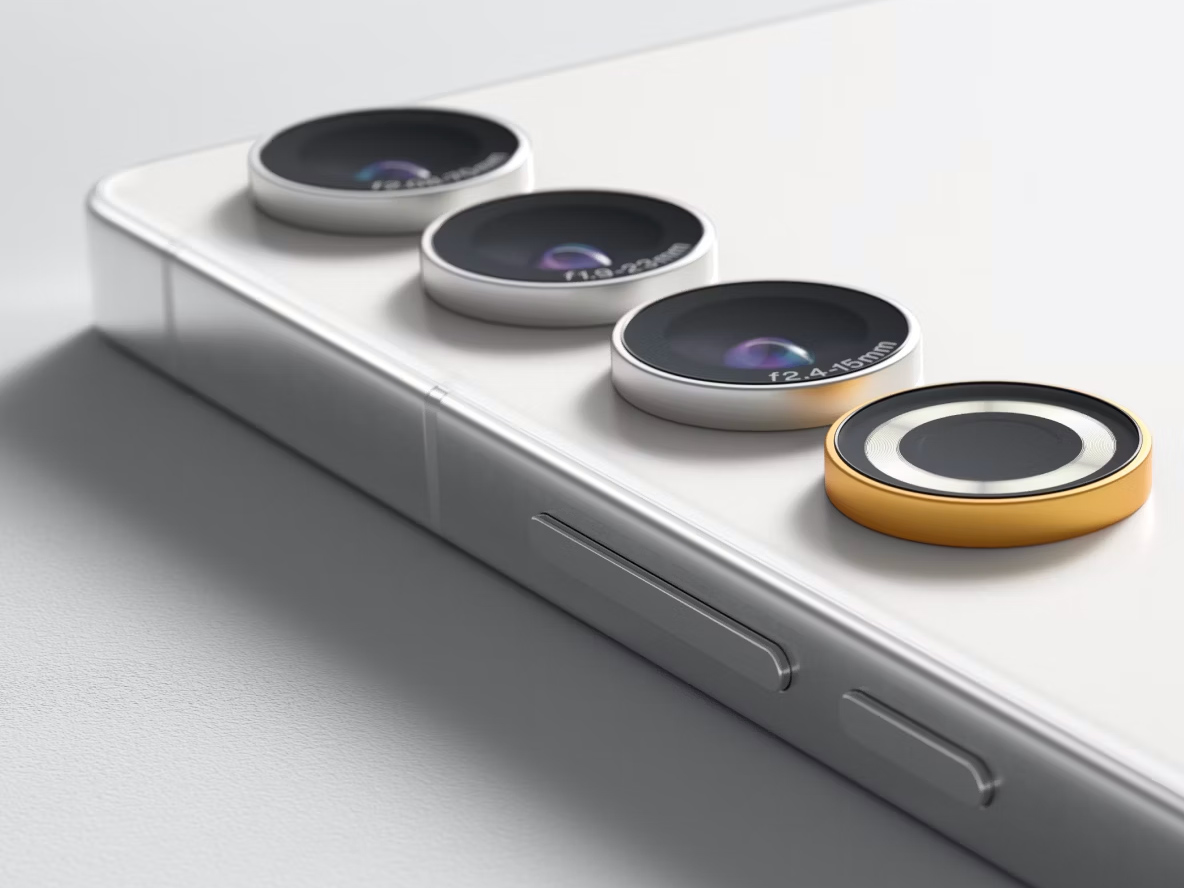


A Polestar Phone now inexplicably exists

Polestar, the Volvo offshoot EV company, has made a smartphone. It’s called, predictably, the Polestar Phone, and it’s only available in China. There have been a lot of car-branded smartphones out there (it’s often Lamborghini), but usually, these are licensing deals that the car company ignores. Polestar seems to be proud of this phone, though, making it a bit more involved than the usual car-brand licensing deal. Just look at the new navigation drawer on the polestar.cn site, which has four main items: “Polestar 2,” “Polestar 3,” “Polestar 4,” and now “Polestar Phone.”

Why would a niche EV brand make a phone? Maybe all that work on the Android Automotive OS made Polestar’s engineers really enthusiastic about Android device development. The website, through machine translation, promises the phone was “jointly designed by the Polestar global design team and the Xingji Meizu team in Gothenburg, Sweden, and is decorated with Swedish gold details that symbolize high performance.” “Decorated” is probably the best way you could describe Polestar’s contributions to this phone, since it seems to be a bog-standard Meizu 21 Pro with some Polestar branding. It does look beautiful, with a no-nonsense minimal rectangular design and all-screen front, but the same can be said for the Meizu phone this is based on.

So, how exactly is the Polestar Phone related to a Polestar car? Well, both run Android and have all-electric power systems. The phone has a slightly smaller battery than the EV, at only 5,050 mAh (that’s something like 18 Wh) compared to the 100 kWh battery of something like a Polestar 4. The car also has the phone beat on screen size, with the phone packing a pocketable 120 Hz 6.79-inch, 3192×1368 OLED screen and the Polestars all sporting big tablet screens.

It's very pretty, but Polestar can thank Meizu for that.
Enlarge / It’s very pretty, but Polestar can thank Meizu for that.

A spec comparison is not a clean sweep for the cars, though. The sad thing about the state of the car infotainment market is that the computer in this ~$1,000 (7,388 yuan) phone is dramatically faster than what powers any of the infotainment systems in Polestar’s $50,000–$75,000 vehicles. The Polestar Phone ships with a Snapdragon 8 Gen 3 with 16GB of RAM and 1TB of storage. That’s a flagship mobile SoC from 2023 built on a 4 nm process. All the Polestar cars in the Google Play Developer console (which lists all Android devices in the world) are built around an Intel Atom A3960 SoC. This is an absolutely ancient, bottom-of-the-barrel 14 nm x86 desktop CPU released around 2016. This chip was bad eight years ago when it came out, yet it is still shipping today. The cars all have 4GB or 8GB of RAM, and the Polestar 2 I looked at had 128GB of storage, all clear wins for the phone spec sheet.

The Polestar Phone and Polestar Car (specifically, the Polestar 4) will talk to each other. Polestar promises that someday the phone will support Android’s digital car key functionality, but not at launch. The Polestar Phone’s “Polestar UI” promises a “rich application icon design [that] is consistent with the Polestar OS in the car.” Something called “Polestar Link” apparently lets you see multiple pages of the phone’s home screen on the big car tablet display, and it sounds like maybe apps will float between the two devices? It’s hard to know too many details because 1) there just haven’t been that many details published yet, and 2) the details that exist are all in Chinese.

There is a chance this phone will be sold outside of China. Like the cars, it is on the Google Play Dev Console, and since there is no Google Play in China, the phone’s registration with Google suggests a plan for international sales.

Listing image by Polestar

https://arstechnica.com/?p=2019697


Google can’t quit third-party cookies—delays shut down for a third time

Extreme close-up photograph of finger above Chrome icon on smartphone.

Will Chrome, the world’s most popular browser, ever kill third-party cookies? Apple and Mozilla both killed off the user-tracking technology in 2020. Google, the world’s largest advertising company, originally said it wouldn’t kill third-party cookies until 2022. Then in 2021, it delayed the change until 2023. In 2022, it delayed everything again, until 2024. It’s 2024 now, and guess what? Another delay. Now Google says it won’t turn off third-party cookies until 2025, five years after the competition.

A new blog post cites UK regulations as the reason for the delay, saying, “We recognize that there are ongoing challenges related to reconciling divergent feedback from the industry, regulators and developers, and will continue to engage closely with the entire ecosystem.” The post comes as part of the quarterly reports the company is producing with the UK’s Competition and Markets Authority (CMA).

Interestingly, the UK’s CMA isn’t concerned about user privacy but instead is worried about other web advertisers that compete with Google. The UK wants to make sure that Google isn’t making changes to Chrome to prop up its advertising business at the expense of competitors. While other browser vendors shut down third-party cookies without a second thought, Google said it wouldn’t turn off the user-tracking feature until it built an alternative advertising feature directly into Chrome, so it can track user interests to serve them relevant ads. The new advertising system, called the Topics API and “Privacy Sandbox,” launched in Chrome in 2023. Google AdSense is already compatible.

The UK is worried that Chrome’s new ad system might give Google’s ad division an unfair advantage. Google and the UK CMA are talking it out, and Google says it’s “critical that the CMA has sufficient time to review all evidence, including results from industry tests, which the CMA has asked market participants to provide by the end of June.” Google has a public testing suite for Chrome’s new ad system to allow for feedback. Given all the testing data that needs to be pored over, Google says, “We will not complete third-party cookie deprecation during the second half of Q4.” We’ll check back next year!

https://arstechnica.com/?p=2019664


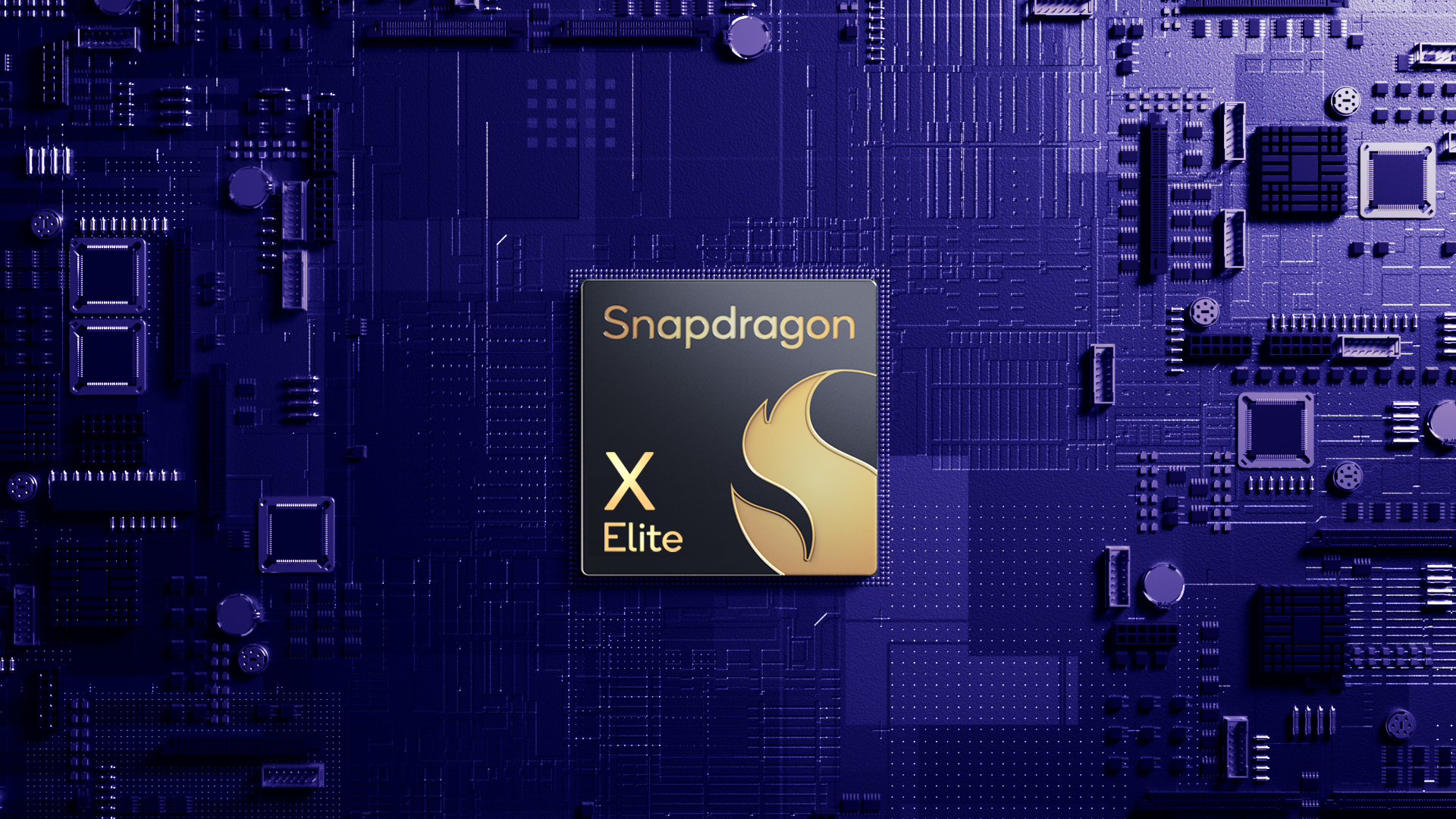
Is the Arm version of Windows ready for its close-up?

Is the Arm version of Windows ready for its close-up?

Enlarge (credit: Qualcomm)

Signs point to Qualcomm’s Snapdragon X Elite processors showing up in actual, real-world, human-purchasable computers in the next couple of months after years of speculation and another year or so of hype.

For those who haven’t been following along, this will allegedly be Qualcomm’s first Arm processor for Windows PCs that does for PCs what Apple’s M-series chips did for Macs, promising both better battery life and better performance than equivalent Intel chips. This would be a departure from past Snapdragon chips for PCs, which have performed worse than (or, at best, similarly to) existing Intel options, barely improved battery life, and come with a bunch of software incompatibility problems to boot.

Early benchmarks that have trickled out look promising for the Snapdragon X. And there are other reasons to be optimistic—the Snapdragon X Elite’s design team is headed up by some of the same people who made Apple Silicon so successful in the first place.

Read 29 remaining paragraphs | Comments

https://arstechnica.com/?p=2015658


The spam came from inside the house: How a smart TV can choke a Windows PC

Image of silhouetted girl trapped inside a television inside an entertainment center

Enlarge / I have hundreds of UUIDs and I must scream. (credit: Getty Images)

The modern “smart” TV asks a lot of us. In exchange for connecting you to a few streaming services you use, a TV will collect data, show ads, and serve as another vector for bad actors. In a few reported cases, though, a modern connected TV has been blamed for attacks not on privacy, eyeballs, or passwords but on an entirely different computer.

The TV in question is a Hisense TV, and the computer is a Windows PC, specifically one belonging to Priscilla Snow, a musician and audio designer in Montréal, Quebec. Her post about her Hisense experience reads like a mystery. Of course, because you already know the crime and the culprit, it’s more like a Columbo episode. Either way, it’s thrilling in a very specific I-can’t-believe-that-fixed-it kind of thrill.

Disappearing Settings, keyboards, remote desktops, and eventually taskbars

Snow’s Windows PC had “a few hiccups over the past couple of years,” Snow wrote on April 19. She couldn’t open display settings, for one. A MIDI keyboard interface stopped working. Task manager would start to hang until force-closed. Video capture cards had trouble connecting. As Snow notes, any veteran of a Windows computer that has had lots of stuff installed on it can mentally write off most of these things, or at least stash them away until the next reinstall.

Read 6 remaining paragraphs | Comments

https://arstechnica.com/?p=2019333


You can now buy a flame-throwing robot dog for under $10,000

The Thermonator robot flamethrower dog.

Enlarge / The Thermonator robot flamethrower dog. (credit: Throwflame)

If you’ve been wondering when you’ll be able to order the flame-throwing robot that Ohio-based Throwflame first announced last summer, that day has finally arrived. The Thermonator, what Throwflame bills as “the first-ever flamethrower-wielding robot dog” is now available for purchase. The price? $9,420.

Thermonator is a quadruped robot with an ARC flamethrower mounted to its back, fueled by gasoline or napalm. It features a one-hour battery, a 30-foot flame-throwing range, and Wi-Fi and Bluetooth connectivity for remote control through a smartphone.

It also includes a LIDAR sensor for mapping and obstacle avoidance, laser sighting, and first-person view (FPV) navigation through an onboard camera. The product appears to integrate a version of the Unitree Go2 robot quadruped that retails alone for $1,600 in its base configuration.

Read 4 remaining paragraphs | Comments

https://arstechnica.com/?p=2019411


Meta debuts Horizon OS, with Asus, Lenovo, and Microsoft on board

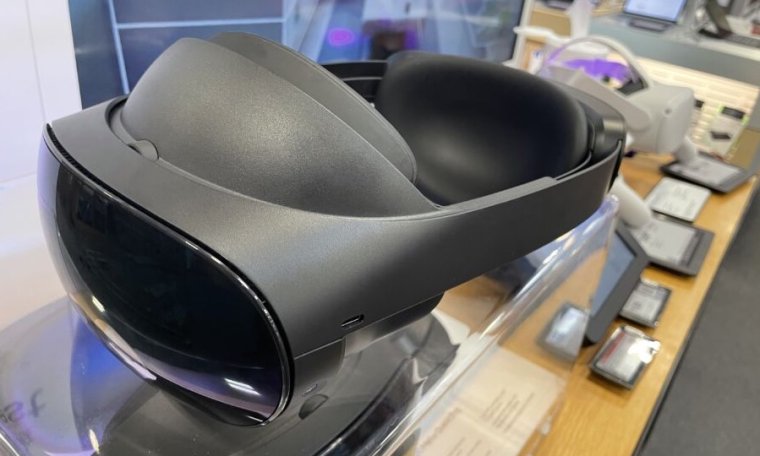
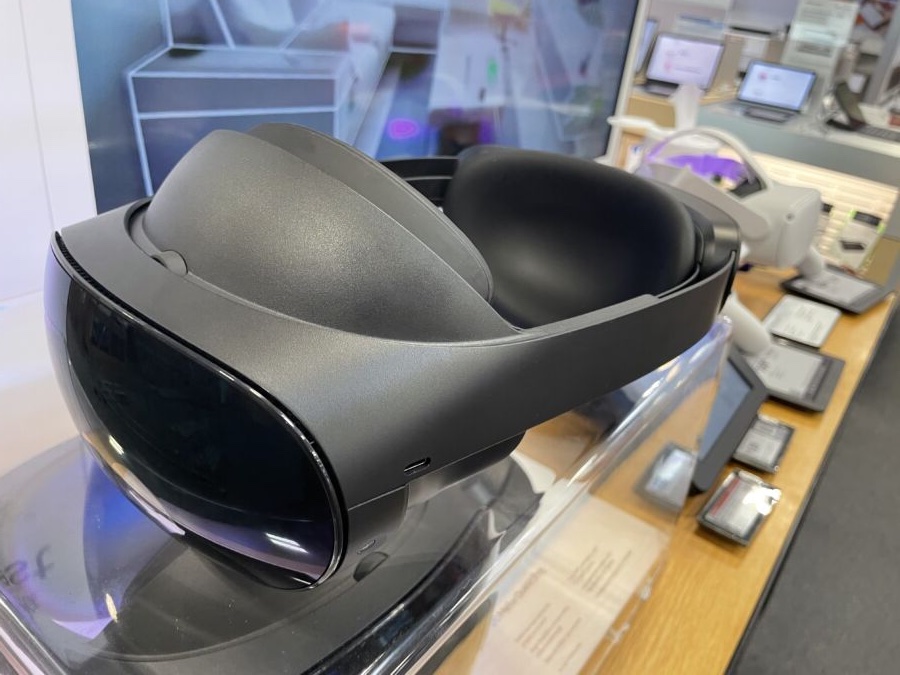
The Meta Quest Pro at a Best Buy demo station in October 2022.
Enlarge / The Meta Quest Pro at a Best Buy demo station in October 2022.

Meta will open up the operating system that runs on its Quest mixed reality headsets to other technology companies, it announced today.

What was previously simply called Quest software will be called Horizon OS, and the goal will be to move beyond the general-use Quest devices to more purpose-specific devices, according to an Instagram video from Meta CEO Mark Zuckerberg.

There will be headsets focused purely on watching TV and movies on virtual screens, with the emphasis on high-end OLED displays. There will also be headsets that are designed to be as light as possible at the expense of performance for productivity and exercise uses. And there will be gaming-oriented ones.

The announcement named three partners to start. Asus will produce a gaming headset under its Republic of Gamers (ROG) brand, Lenovo will make general purpose headsets with an emphasize on “productivity, learning, and entertainment,” and Xbox and Meta will team up to deliver a special edition of the Meta Quest that will come bundled with an Xbox controller and Xbox Cloud Gaming and Game Pass.

Users running Horizon OS devices from different manufacturers will be able to stay connected in the operating system’s social layer of “identities, avatars, social graphs, and friend groups” and will be able to enjoy shared virtual spaces together across devices.

The announcement comes after Meta became an early leader in the relatively small but interesting consumer mixed reality space but with diminishing returns on new devices as the market saturates.

Further, Apple recently entered the fray with its Vision Pro headset. The Vision Pro is not really a direct competitor to Meta’s Quest devices today—it’s far more expensive and loaded with higher-end tech—but it may only be the opening volley in a long competition between the companies.

Meta’s decision to make Horizon OS a more open platform for partner OEMs in the face of Apple’s usual focus on owning and integrating as much of the software, hardware, and services in its devices as it can mirrors the smartphone market. There, Google’s Android (on which Horizon OS is based) runs on a variety of devices from a wide range of companies, while Apple’s iOS runs only on Apple’s own iPhones.

Meta also says it is working on a new spatial app framework to make it easier for developers with experience on mobile to start making mixed reality apps for Horizon OS and that it will start “removing the barriers between the Meta Horizon Store and App Lab, which lets any developer who meets basic technical and content requirements release software on the platform.”

Pricing, specs, and release dates have not been announced for any of the new devices. Zuckerberg admitted it’s “probably going to take a couple of years” for this ecosystem of hardware devices to roll out.

https://arstechnica.com/?p=2019154


First real-life Pixel 9 Pro pictures leak, and it has 16GB of RAM

<img src="https://rassegna.lbit-solution.it/wp-content/uploads/2024/04/first-real-life-pixel-9-pro-pictures-leak-and-it-has-16gb-of-ram.jpg" alt="OnLeak's renders of the Pixel 9 Pro XL, the Pixel 9 Pro, and the Pixel 9.“>
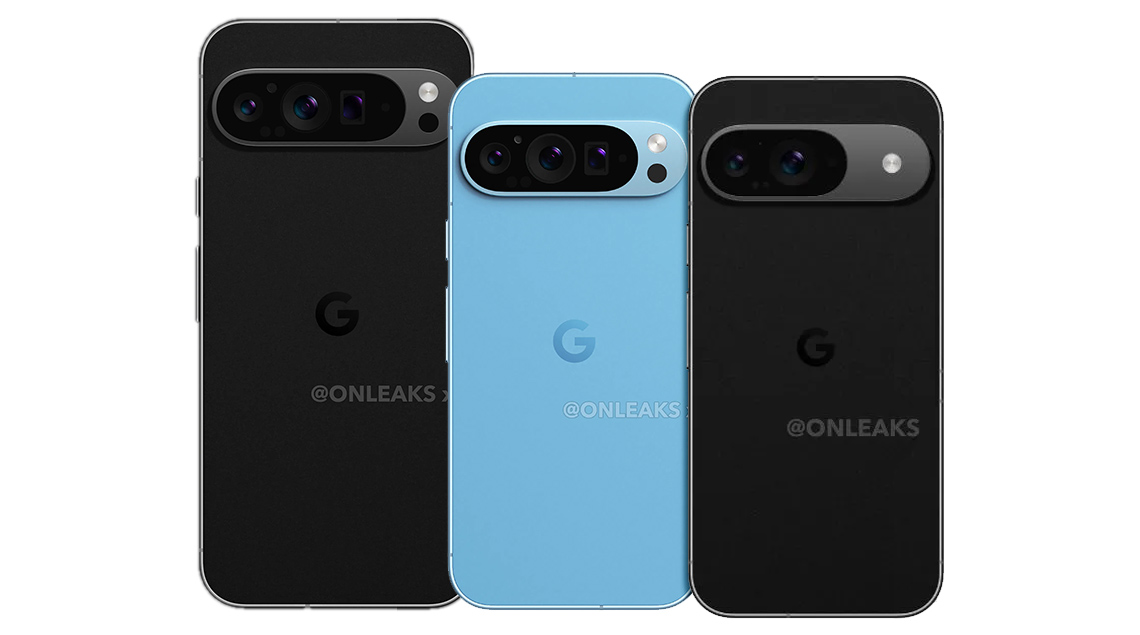
Enlarge / OnLeak’s renders of the Pixel 9 Pro XL, the Pixel 9 Pro, and the Pixel 9.
OnLeaks / 91Mobiles / MySmartPrice

The usual timeline would put the Google Pixel 9 at something like five months away from launching, but that doesn’t mean it’s too early to leak! Real-life pictures of the “Pixel 9 Pro” model have landed over at Rozetked.

This prototype looks just like the renders from OnLeaks that first came out back in January. The biggest change is a new pill-shaped camera bump instead of the edge-to-edge design of old models. It looks rather stylish in real-life photos, with the rounded corners of the pill and camera glass matching the body shape. The matte back looks like it still uses the excellent “soft-touch glass” material from last year. The front and back of the phone are totally flat, with a metal band around the side. The top edge still has a signal window cut out of it, which is usually for mmWave. The Pixel 8 Pro’s near-useless temperature sensor appears to still be on the back of this prototype. At least, the spot for the temperature sensor—the silver disk right below the LED camera flash—looks identical to the Pixel 8 Pro. As a prototype any of this could change before the final release, but this is what it looks like right now.

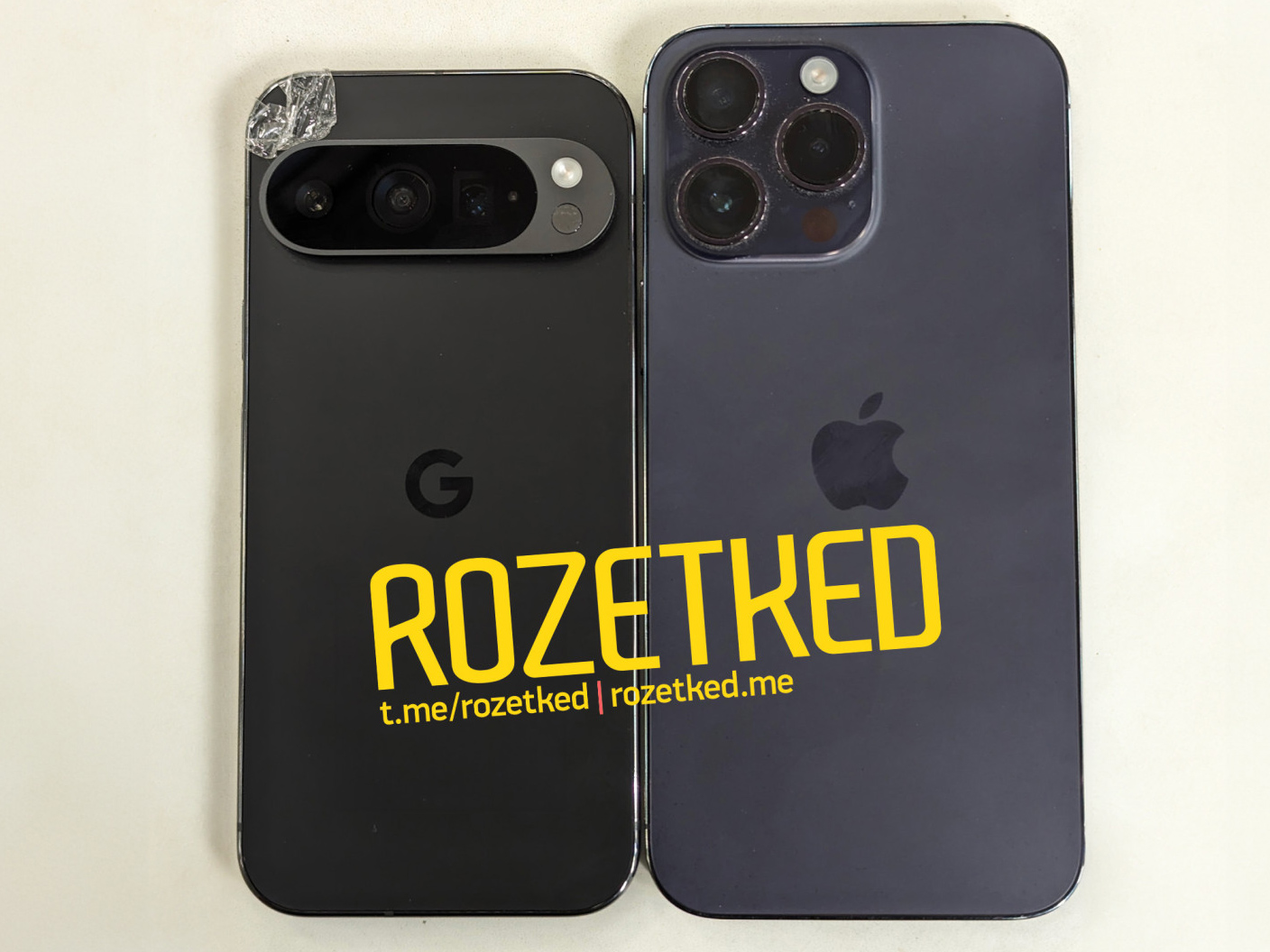
The phone was helpfully photographed next to an iPhone 14 Pro Max, and you might notice that the Pixel 9 Pro looks a little small! That’s because this is one of the small models, with only a 6.1-inch display. Previously for Pixels, “Pro” meant “the big model,” but this year Google is supposedly shipping three models, adding in a top-tier small phone. There’s the usual big Pixel 9, with a 6.7-inch display, which will reportedly be called the “Pixel 9 Pro XL.” The new model is the “Pixel 9 Pro”—no XL—which is a small model but still with all the “Pro” trimmings, like three rear cameras. There’s also the Pixel 9 base model, which is the usual smaller phone (6.03-inch) with cut-down specs like only two rear cameras.

<a href="https://cdn.arstechnica.net/wp-content/uploads/2024/04/4.jpg" class="enlarge" data-height="1056" data-width="1408" alt="The Pixel 9 Pro prototype. It's small because this is the "small Pro" model. There are more pictures over at Rozetked.”><img alt="The Pixel 9 Pro prototype. It's small because this is the "small Pro" model. There are more pictures over at Rozetked.” src=”https://rassegna.lbit-solution.it/wp-content/uploads/2024/04/first-real-life-pixel-9-pro-pictures-leak-and-it-has-16gb-of-ram-1.jpg” width=”980″ height=”735″>
Enlarge / The Pixel 9 Pro prototype. It’s small because this is the “small Pro” model. There are more pictures over at Rozetked.

Rozetked says (through translation) that the phone is  “similar in size to the iPhone 15 Pro.” It runs a Tensor G4 SoC, of course, and—here’s a noteworthy spec—has a whopping 16GB of RAM according to the bootloader screen. The Pixel 8 Pro tops out at 12GB.

Anything could change between prototype and product, especially for RAM, which is usually scaled up and down in various phone tiers. A jump in RAM is something we were expecting though. As part of Google’s new AI-focused era, it wants generative AI models turned on 24/7 for some use cases. Google said as much in a recent in-house podcast, pointing to some features like a new version of Smart Reply built right into the keyboard, which “requires the models to be RAM-resident”—in other words, loaded all the time. Google’s desire to keep generative AI models in memory means less RAM for your operating system to actually do operating system things, and one solution to that is to just add more RAM. So how much RAM is enough? At one point Google said the smaller Pixel 8’s 8GB of RAM was too much of a “hardware limitation” for this approach. Google PR also recently told us the company still hasn’t enabled generative AI smart reply on Pixel 8 Pro by default with its 12GB of RAM, so expect these RAM numbers to start shooting up.

The downside is that more RAM means a more expensive phone, but this is the path Google is going down. There’s also the issue of whether or not you view generative AI as something that is so incredibly useful you need it built into your keyboard 24/7. Google wants its hardware to be “the intersection of hardware, software, and AI,” so keeping all this ChatGPT-like stuff quarantined to a single app apparently won’t be an option.

One final note: It’s weird how normal this phone looks. Usually, Pixel prototypes have a unique logo that isn’t the Google “G,” and often they are covered in identifying patterns for leak tracing. This looks like a production-worthy design, though.

https://arstechnica.com/?p=2019066


Home Assistant has a new foundation and a goal to become a consumer brand

Open Home Foundation logo on a multicolor background
Open Home Foundation

Home Assistant, until recently, has been a wide-ranging and hard-to-define project.

The open smart home platform is an open source OS you can run anywhere that aims to connect all your devices together. But it’s also bespoke Raspberry Pi hardware, in Yellow and Green. It’s entirely free, but it also receives funding through a private cloud services company, Nabu Casa. It contains tiny board project ESPHome and other inter-connected bits. It has wide-ranging voice assistant ambitions, but it doesn’t want to be Alexa or Google Assistant. Home Assistant is a lot.

After an announcement this weekend, however, Home Assistant’s shape is a bit easier to draw out. All of the project’s ambitions now fall under the Open Home Foundation, a non-profit organization that now contains Home Assistant and more than 240 related bits. Its mission statement is refreshing, and refreshingly honest about the state of modern open source projects.

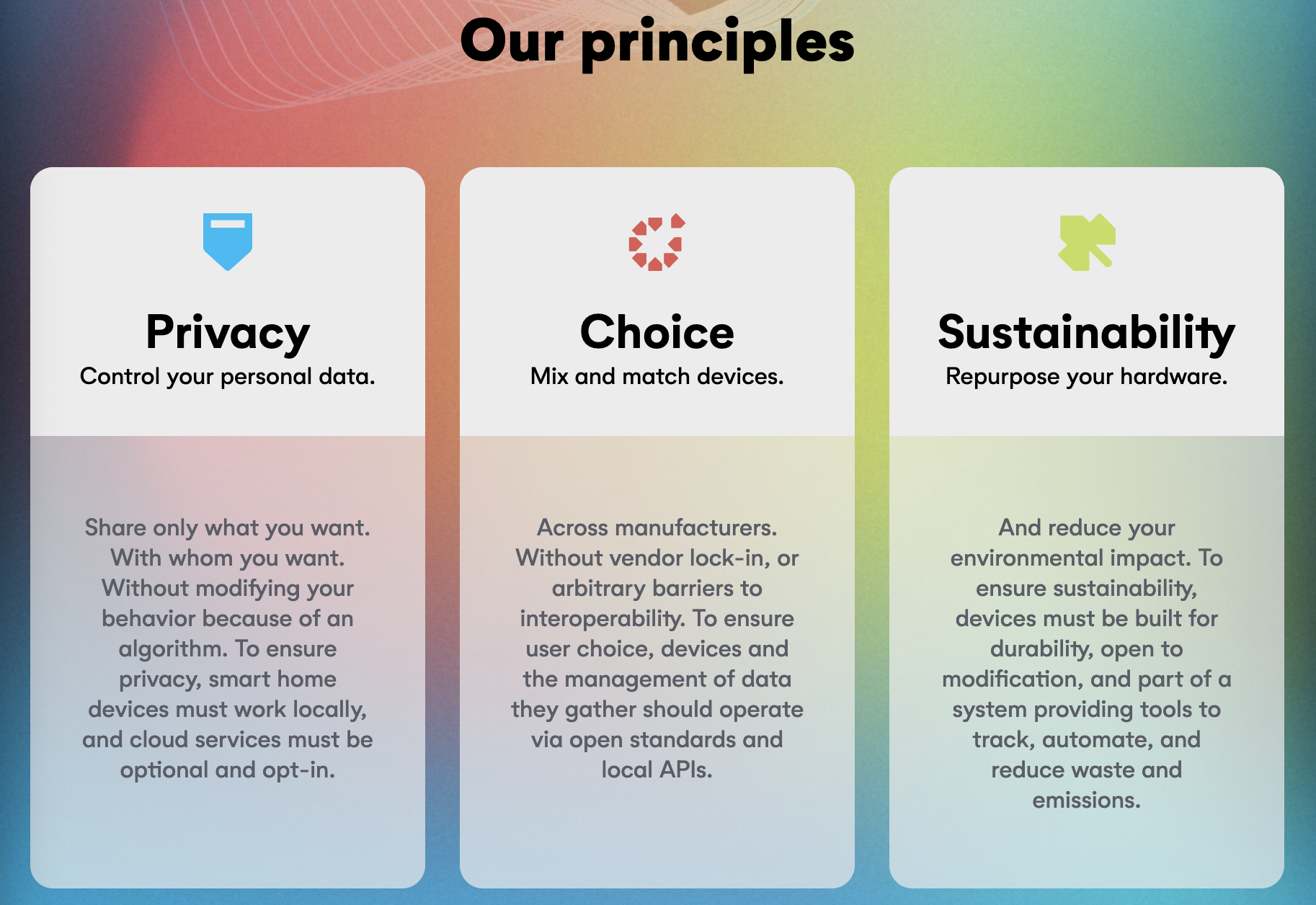
The three pillars of the Open Home Foundation.
Open Home Foundation

“We’ve done this to create a bulwark against surveillance capitalism, the risk of buyout, and open-source projects becoming abandonware,” the Open Home Foundation states in a press release. “To an extent, this protection extends even against our future selves—so that smart home users can continue to benefit for years, if not decades. No matter what comes.” Along with keeping Home Assistant funded and secure from buy-outs or mission creep, the foundation intends to help fund and collaborate with external projects crucial to Home Assistant, like Z-Wave JS and Zigbee2MQTT.

[embedded content]
My favorite video.

Home Assistant’s ambitions don’t stop with money and board seats, though. They aim to “be an active political advocate” in the smart home field, toward three primary principles:

  • Data privacy, which means devices with local-only options, and cloud services with explicit permissions
  • Choice in using devices with one another through open standards and local APIs
  • Sustainability by repurposing old devices and appliances beyond company-defined lifetimes

Notably, individuals cannot contribute modest-size donations to the Open Home Foundation. Instead, the foundation asks supporters to purchase a Nabu Casa subscription or contribute code or other help to its open source projects.

From a few lines of Python to a foundation

Home Assistant founder Paulus Schoutsen wanted better control of his Philips Hue smart lights just before 2014 or so and wrote a Python script to do so. Thousands of volunteer contributions later, Home Assistant was becoming a real thing. Schoutsen and other volunteers inevitably started to feel overwhelmed by the “free time” coding and urgent bug fixes. So Schoutsen, Ben Bangert, and Pascal Vizeli founded Nabu Casa, a for-profit firm intended to stabilize funding and paid work on Home Assistant.

Through that stability, Home Assistant could direct full-time work to various projects, take ownership of things like ESPHome, and officially contribute to open standards like Zigbee, Z-Wave, and Matter. But Home Assistant was “floating in a kind of undefined space between a for-profit entity and an open-source repository on GitHub,” according to the foundation. The Open Home Foundation creates the formal home for everything that needs it and makes Nabu Casa a “special, rules-bound inaugural partner” to better delineate the business and non-profit sides.

Home Assistant as a Home Depot box?

In an interview with The Verge’s Jennifer Pattison Tuohy, and in a State of the Open Home stream over the weekend, Schoutsen also suggested that the Foundation gives Home Assistant a more stable footing by which to compete against the bigger names in smart homes, like Amazon, Google, Apple, and Samsung. The Home Assistant Green starter hardware will sell on Amazon this year, along with HA-badged extension dongles. A dedicated voice control hardware device that enables a local voice assistant is coming before year’s end. Home Assistant is partnering with Nvidia and its Jetson edge AI platform to help make local assistants better, faster, and more easily integrated into a locally controlled smart home.

That also means Home Assistant is growing as a brand, not just a product. Home Assistant’s “Works With” program is picking up new partners and has broad ambitions. “We want to be a consumer brand,” Schoutsen told Tuohy. “You should be able to walk into a Home Depot and be like, ‘I care about my privacy; this is the smart home hub I need.’”

Where does this leave existing Home Assistant enthusiasts, who are probably familiar with the feeling of a tech brand pivoting away from them? It’s hard to imagine Home Assistant dropping its advanced automation tools and YAML-editing offerings entirely. But Schoutsen suggested he could imagine a split between regular and “advanced” users down the line. But Home Assistant’s open nature, and now its foundation, should ensure that people will always be able to remix, reconfigure, or re-release the version of smart home choice they prefer.

https://arstechnica.com/?p=2019041


Meet QDEL, the backlight-less display tech that could replace OLED in premium TVs

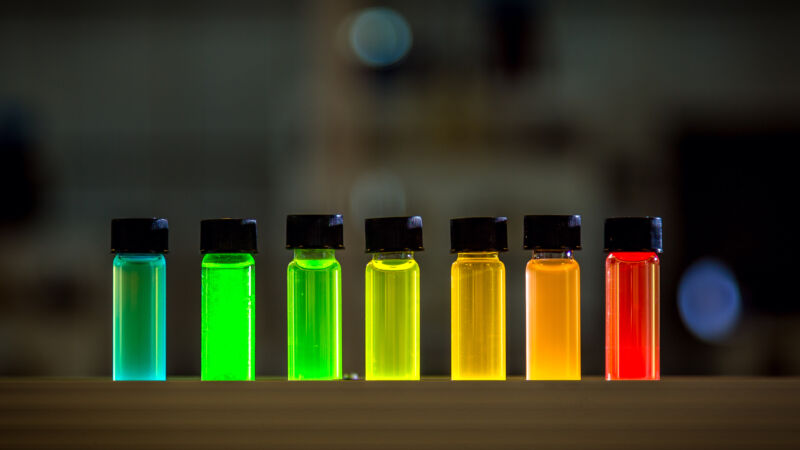
Viles of quantum dots

What comes after OLED?

With OLED-equipped TVs, monitors, and other gadgets slowly becoming more readily available at lower prices, attention is turning to what the next landmark consumer display tech will be.

Micro LED often features in such discussions, but the tech is not expected to start hitting consumer devices until the 2030s. Display makers are also playing with other futuristic ideas, like transparent and foldable screens. But when it comes to technology that could seriously address top user concerns—like image quality, price, and longevity—quantum dots seem the most pertinent at the moment.

Quantum dots are already moving in the premium display category, particularly through QD-OLED TVs and monitors. The next step could be QDEL, short for “quantum dot electroluminescent,” also known as NanoLED, screens. Not to be confused with the QLED (quantum light emitting diode) tech already available in TVs, QDEL displays don’t have a backlight. Instead, the quantum dots are the light source. The expected result is displays with wider color spaces than today’s QD-OLEDs (quantum dot OLEDs) that are also brighter, more affordable, and resistant to burn-in.

It seems like QDEL is being eyed as one of the most potentially influential developments for consumer displays over the next two years.

If you’re into high-end display tech, QDEL should be on your radar.

What is QDEL?

You may know QDEL as NanoLED because that’s what Nanosys, a quantum dot supplier developing the technology, calls it. QDEL has gone by other names, such as QLED—before Samsung claimed that acronym for LCD-LED TVs that use quantum dots. You may also see QDEL referred to as QD-EL, QD-LED, or EL-QD. As the alphabet soup suggests, there are still some things to finalize with this tech. This article will mostly use the term QDEL, with occasional references to NanoLED.

If none of those names sound familiar, it’s probably because you can’t buy any QDEL products yet. Suppliers suggest that could change in the next few years; Nanosys is targeting 2026 for commercial availability.

That timeline seems pretty ambitious, though, considering the limited number of prototypes we’ve seen and the limitations still facing QDEL (more on that below). But even if we don’t see QDEL for a while, there are reasons to keep an eye on the tech.

David Hsieh, senior research director for displays at research firm Omdia, told me via email that when it comes to consumer gadgets, he expects QDEL will most impact TVs, PC displays, and the automotive industry. If commercialized and mass-produced, QDEL can have a cost-to-performance ratio better than that of OLED, but it would still struggle to compete with LCD-LED on a cost basis.

A 2023 whitepaper (PDF) from Nanosys and manufacturing partner Sharp Display describes an inkjet printing manufacturing process that is applicable to QDEL monitors and TVs. The photolithography process is reportedly harder because quantum dots get damaged in the process, but it can expand QDEL applications to include tablets, laptops, smartphones, wearables, and AR/VR products. Jeff Yurek, Nanosys’ VP of marketing, confirmed to me via email that Nanosys expects to see QDEL products made with photolithography come to market first.

https://arstechnica.com/?p=2000924