“Google Vids” is Google’s fourth big productivity app for Workspace
If you had asked me before what Google’s video editor app was, I would say “YouTube Studio,” but now Google Workspace has a new productivity app called “Google Vids.” Normally a video editor is considered a secondary application in many productivity suites, but Google apparently imagines Vids as a major pillar of Workspace, saying Vids is an “all-in-one video creation app for work that will sit alongside Docs, Sheets and Slides.” So, that is an editor for documents, spreadsheets, presentations, and videos?

Google’s demo of the new video editor pitches the product not for YouTube videos or films but more as a corporate super slideshow for things like training materials or product demos. Really, this “video editor” almost looks like it could completely replace Google Slides since the interface is just Slides but with a video timeline instead of a slideshow timeline.

Google’s example video creates a “sales training video” that starts with a Slides presentation as the basic outline. You start with an outline editor, where each slideshow page gets its own major section. Google then has video “styles” you can pick from, which all seem very Powerpoint-y with a big title, subheading, and a slot for some kind of video. Google then wants you to write a script and either read it yourself or have a text-to-speech voice read the script. A “stock media” library lets you fill in some of those video slots with generic corporate imagery like a video of a sunset, choose background music, and use a few pictures. You can also fire up your webcam and record something, sort of like a pre-canned Zoom meeting. After that it’s a lot of the usual Google productivity app features: real-time editing collaboration with visible mouse cursors from each participant and a stream of comments.

[embedded content]

Like all Google products after the rise of OpenAI, Google pitches Vids as an “AI-powered” video editor, even though there didn’t seem to be many generative AI features in the presentation. The videos, images, and music were “stock” media, not AI-generated inventions (Slides can generate images, but that wasn’t in this demo). There’s nothing in here like OpenAI’s “Sora,” which generates new videos out of its training data. There’s probably a Gemini-powered “help me write” feature for the script, and Google describes the initial outline as “generated” from your starting Slides presentation, but that seemed to be it.

Google says Vids is being released to “Workspace Labs” in June, so you’ll be able to opt in to testing it.

Listing image by Google

https://arstechnica.com/?p=2015804



Intel is investigating game crashes on top-end Core i9 desktop CPUs

Intel's high-end Core i9-13900K and 14900K are reportedly having crashing problems in some games.
Enlarge / Intel’s high-end Core i9-13900K and 14900K are reportedly having crashing problems in some games.
Andrew Cunningham

If you own a recent high-end Intel desktop CPU and you’ve been running into weird game crashes lately, you’re not alone.

Scattered reports from Core i9-13900K and i9-14900K users over the last couple of months have pointed to processor power usage as a possible source of crashes even in relatively undemanding games like Fortnite. Games like Hogwarts Legacy, Remnant 2, Alan Wake 2, Horizon: Zero Dawn, The Last of Us Part 1, and Outpost: Infinity Siege have also reportedly been affected; the problem primarily seems to affect titles made with Epic’s Unreal Engine. Intel said in a statement to ZDNet Korea (via The Verge) that it’s looking into the problems, escalating it from an “isolated issue” to something that may be more widespread and could require a more systemic fix.

Related CPUs like the i9-13900KF, i9-14900KF, i9-13900KS, and i9-14900KS may be affected, too, since they’re all the same basic silicon. Some user reports have also indicated that the i7-13700K and i7-14700K series may also be affected.

“Intel is aware of reports regarding Intel Core 13th and 14th Gen unlocked desktop processors experiencing issues with certain workloads,” an Intel spokesperson told Ars. “We’re engaged with our partners and are conducting analysis of the reported issues.”

While Intel hasn’t indicated what it thinks could be causing the issue, support documents from Epic Games and other developers have suggested that the processors’ power settings are to blame, recommending that users change their BIOS settings or manually restrict their processors’ speed with tools like Intel’s Extreme Tuning Utility (XTU). Most enthusiast motherboards will set the power limits on Intel’s processors to be essentially infinite, squeezing out a bit more performance (especially for i7 and i9 chips) at the expense of increased power use and heat.

Epic suggests using a BIOS power setting called “Intel Fail Safe” on Asus, MSI, and Gigabyte motherboards—its name makes it sound like some kind of low-power safe mode, but it’s most likely just setting the processors’ power limits to Intel’s specified defaults. This could result in somewhat reduced performance, particularly when all CPU cores are active at the same time. But we and other reviewers have seen sharply diminishing returns when letting these chips use more power. This can even be a problem with Intel’s stock settings—the recently announced i9-14900KS can use as much as 31 percent more power than the standard i9-14900K while delivering just 1 or 2 percent faster performance.

If power limits are to blame, the good news is that users can adjust these in the short term and that motherboard makers could fix the problem in the long run by tweaking their default settings in future BIOS updates.

Updated April 9, 2024, at 2:12 pm to add Intel spokesperson statement.

https://arstechnica.com/?p=2015702


AI hardware company from Jony Ive, Sam Altman seeks $1 billion in funding

Jony Ive, the former Apple designer.

Former Apple design lead Jony Ive and current OpenAI CEO Sam Altman are seeking funding for a new company that will produce an “artificial intelligence-powered personal device,” according to The Information‘s sources, who are said to be familiar with the plans.

The exact nature of the device is unknown, but it will not look anything like a smartphone, according to the sources. We first heard tell of this venture in the fall of 2023, but The Information’s story reveals that talks are moving forward to get the company off the ground.

Ive and Altman hope to raise at least $1 billion for the new company. The complete list of potential funding sources they’ve spoken with is unknown, but The Information’s sources say they are in talks with frequent OpenAI investor Thrive Capital as well as Emerson Collective, a venture capital firm founded by Laurene Powell Jobs.

SoftBank CEO and super-investor Masayoshi Son is also said to have spoken with Altman and Ive about the venture. Financial Times previously reported that Son wanted Arm (another company he has backed) to be involved in the project.

Obviously, those are some of the well-established and famous names within today’s tech industry. Personal connections may play a role; for example, Jobs is said to have a friendship with both Ive and Altman. That might be critical because the pedigree involved could scare off smaller investors since the big names could drive up the initial cost of investment.

Although we don’t know anything about the device yet, it would likely put Ive in direct competition with his former employer, Apple. It has been reported elsewhere that Apple is working on bringing powerful new AI features to iOS 18 and later versions of the software for iPhones, iPads, and the company’s other devices.

Altman already has his hands in several other AI ventures besides OpenAI. The Information reports that there is no indication yet that OpenAI would be directly involved in the new hardware company.

https://arstechnica.com/?p=2015528


After pushing cloud storage, TV provider to auto-delete 61-day-old DVR recordings

hand holding tv remote in front of TV with static

Canadian telecom Bell Canada has been pushing its cloud-based DVR service to its Fibe TV subscribers for years. While it has given customers advantages, like the ability to view their recordings from more devices, such as phones, compared to using local DVR storage, users don’t have as much control over the recordings as they thought they had.

On May 1, Fibe TV will automatically delete recordings stored on its Cloud PVR (personal video recorder) offering once the recordings hit 61 days of age, as confirmed by Canadian online newspaper Daily Hive. Currently, customers maintain access to recordings stored via Cloud PVR for 365 days.

Fibe TV apparently started alerting customers of the upcoming change this month.

A Bell Canada spokesperson, Jacqueline Michelis, minimized the idea of disruption to customers, telling Daily Hive: “The viewing of nearly all recordings takes place within 60 days, so there is minimal impact to customers.” Michelis didn’t provide more details on how Bell Canada arrived at this conclusion.

An X user (formerly Twitter) user going by SimonDingleyTV shared what he said was a notice he received from Fibe TV about the policy change. He claimed that a company representative told him that the reason for the change was to “save space.”

Bell updated its website to acknowledge the time limit and noted that Cloud PVR also has a limit of up to 320 hours of recordings. If users surpass that limit, the oldest recordings will start getting deleted.

“Absolutely ridiculous”

Customers have turned to Bell Canada’s online support forum to share their discontent with the changes, with some saying that they don’t align with the services they expected to receive when signing up for Fibe TV. Thankfully, Bell Canada won’t be able to delete recordings stored on DVR hardware inside customers’ homes.

Other complaints are coming from users whose recordings are being deleted even when they haven’t come close to maxing out their cloud storage or if their recordings aren’t available on demand.

A user going by camisotro on Bell Canada’s online support forum called the announcement “absolutely ridiculous” and condemned what they perceived to be years of telecoms pushing back against users’ ability to record content:

… Bell eliminated the option for any device that actually records TV locally, forcing customers onto an inferior TV box with ‘Cloud PVR.’ Now they are nerfing it to a nearly useless 60 days of recording. This is not the service I signed up for on contract, and yet I am still continuing to pay increasing prices.

Like rivals, Bell pushed customers toward cloud-based DVR, with its website stating, “Fibe TV has evolved to a cloud-based storage system for all your recordings.”

However, some users may not have realized the trade-offs.

“Wish I knew this before I traded PVRs to change to cloud storage! No one told us that !!!,” a forum user known as Crazy aunt said.

Another user, Thornquills, called the news a “deal-breaker” because they’re “paying $10.00/month for cloud storage,” and “2 months is too restrictive, in my opinion.”

Meanwhile, Bell Canada rival Rogers Ignite confirmed to The Canadian Press that it will continue allowing its customers to keep DVR recordings stored in the cloud for one year, as its cloud PVR offering exists to “help manage storage capacity.”

Fibe TV’s policy change comes about two months after Bell Canada announced that it was laying off 4,800 workers and selling 45 of its 103 radio stations.

https://arstechnica.com/?p=2015412


Android’s Bluetooth trackers are finally shipping in late May

After an announcement that ended up being a year early, Android’s version of Tile/AirTags is ready to launch. Google has been gearing up on the software side of things to enable a Bluetooth tracking network on Android, and the company’s two tracking tag hardware partners, Pebblebee and Chipolo, now have ship dates. The two companies each have a press release today, with Pebblebee saying its trackers will ship in “late May,” while Chipolo says it will ship “after May 27th.” Google has a blog post out, too, promising “additional Bluetooth tags from Eufy, Jio, Motorola and more” later this year.

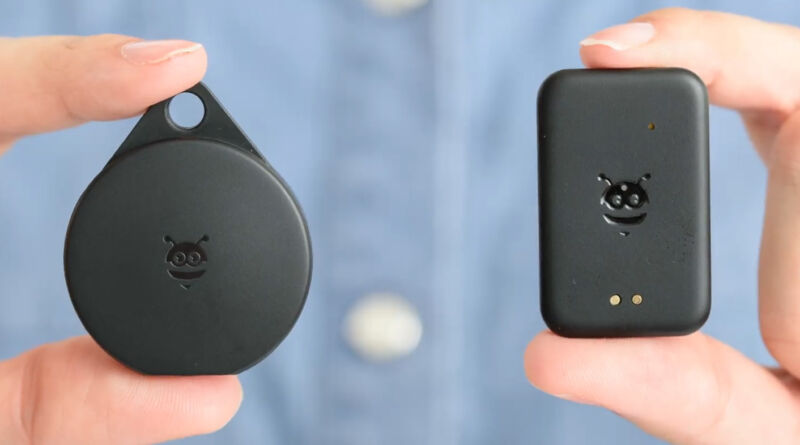
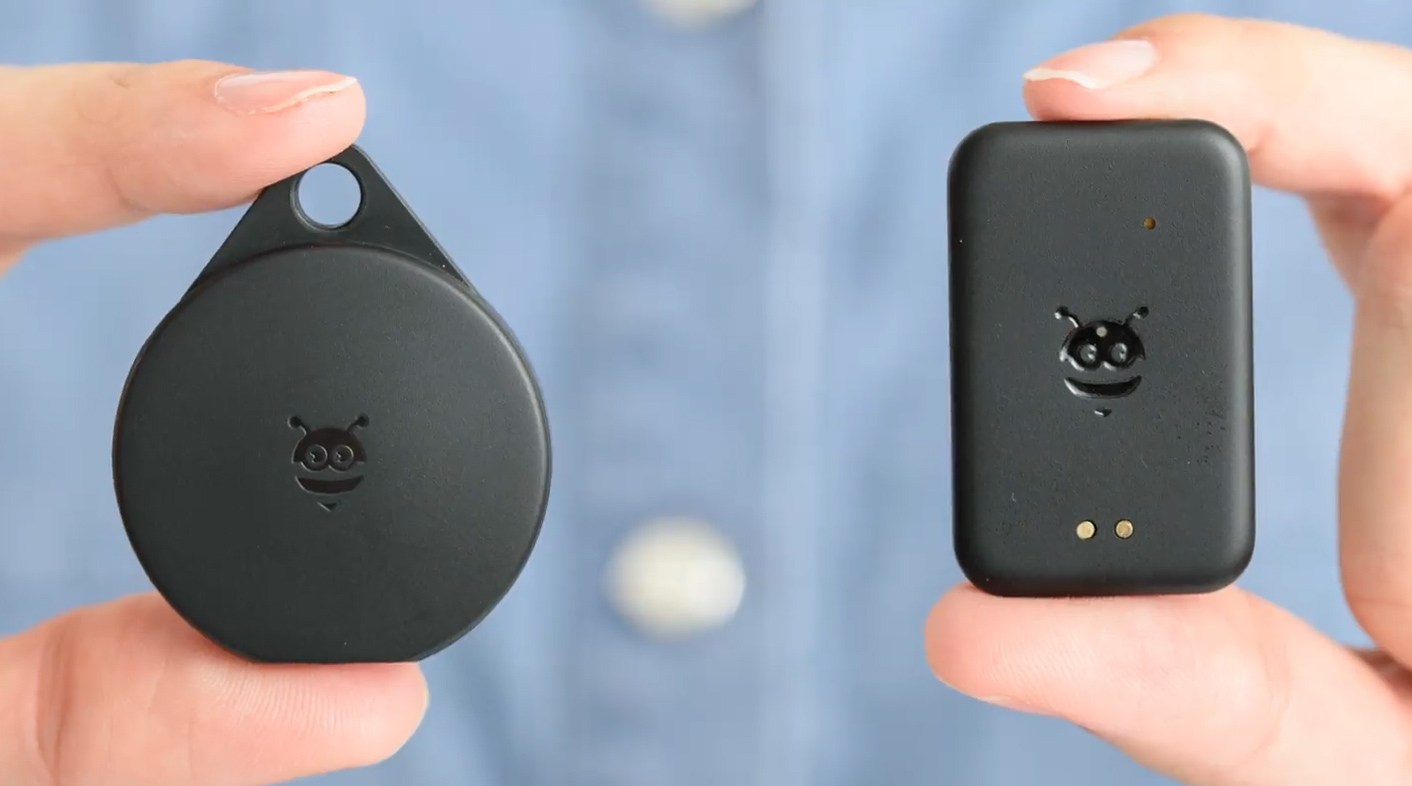
Both sets of devices have been up for preorder for a year now, and it doesn’t seem like anything has changed since. Both companies are offering little Bluetooth trackers in a keychain tag or credit card format, and Pebblebee has a third stick-on tag format. They’ll all be anonymously tracked by Android’s 3 billion-device Bluetooth tracker network, and the device owner will be able to see them in Google’s “Find my device” app.

Chipolo’s “One Point” key chain tag is the only thing that takes a CR2032 coin cell battery, while the company’s credit card tracker is not rechargeable. Pebblebee’s key chain, credit card, and stick-on tracker all have rechargeable batteries, including the wallet card, which is very rare! Nothing has UWB for precise location tracking—everything uses a speaker. Both companies sell multiple SKUs of what look like the exact same product but are locked to Google’s or Apple’s network—no switching allowed.

These were all supposed to come out in 2023 originally. Google’s patch notes say that the tracking network shipped in Android in December 2022, even though nothing is using it. The company has actually been waiting on Apple. In May 2023, Google and Apple announced a joint standard for “unknown tracker” alerts. While the two networks will not be compatible, they will team up to alert users if a tracker is being used to stalk them. All this hardware was announced a week later, but in July 2023, Google shipped what a spokesperson called, “a custom implementation” for AirTags (enabling Android phones to alert users to an unknown AirTag), and the company said it wouldn’t enable its tracking network until the joint tracking detection standard with Apple was ready. It looks like Apple will do that in iOS 17.5. iOS 17.5 is expected to be out—you guessed it—at the end of May, so these tags can finally ship.

9:00pm update: A Google spokesperson told us Google’s July release of Android’s unwanted AirTag detection is “a custom implementation” and not the joint standard.

Listing image by Chipolo

https://arstechnica.com/?p=2015402


Apple now allows retro game emulators on its App Store—but with big caveats

A screenshot of Sonic the Hedgehog on an iPhone
Enlarge / The classic Sega Genesis game Sonic the Hedgehog running on an iPhone—in this case, as a standalone app.
Samuel Axon

When Apple posted its latest update to the App Store’s app review and submission policies for developers, it included language that appears to explicitly allow a new kind of app for emulating retro console games.

Apple has long forbidden apps that run code from an external source, but today’s announced changes now allow “software that is not embedded in the binary” in certain cases, with “retro game console emulator apps can offer to download games” specifically listed as one of those cases.

Here’s the exact wording:

4.7 Mini apps, mini games, streaming games, chatbots, plug-ins, and game emulators

Apps may offer certain software that is not embedded in the binary, specifically HTML5 mini apps and mini games, streaming games, chatbots, and plug-ins. Additionally, retro game console emulator apps can offer to download games. You are responsible for all such software offered in your app, including ensuring that such software complies with these Guidelines and all applicable laws. Software that does not comply with one or more guidelines will lead to the rejection of your app. You must also ensure that the software adheres to the additional rules that follow in 4.7.1 and 4.7.5. These additional rules are important to preserve the experience that App Store customers expect, and to help ensure user safety.

It’s a little fuzzy how this will play out, but it may not allow the kind of emulators you see on Android and desktop, which let you play retro games from any outside source.

Retro game emulators run what are colloquially called ROM files, which are more or less images of the game cartridges or discs that played on console hardware. By now, it’s well-established that the emulators themselves are completely legal, but the legality of the ROM files downloaded from ROM sites on the Internet depends on the specific files and circumstances.

There are ROMs that are entirely public domain or in some license where the creator allows distribution; there are ROMs that are technically copyrighted intellectual property but where the original owner no longer exists, and the current ownership is unknown or unenforced; and there are some ROMs (like many games made by Nintendo) where the owner still has an interest in controlling distribution and often takes action to try to curb illegal sharing and use of the files.

Additionally, many game publishers use emulators to run ROMs of their own retro games, which they sell to consumers either as standalone games or in collections for modern platforms.

It’s not completely clear from Apple’s wording, but our interpretation of Apple’s new rules is that it’s likely only the last of those examples will be possible; companies that own the intellectual property could launch emulator apps for downloading ROMs of their (and only their) games. So, for example, Sega could offer a Sega app that would allow users to download an ever-expanding library of Sega games, either as part of a subscription, for free, or as in-app purchases. Sega has offered its retro games on the iPhone before in emulation but with a standalone app for each game.

“You are responsible for all such software offered in your app, including ensuring that such software complies with these Guidelines and all applicable laws,” Apple writes. And it specifically says “retro game console emulator apps can offer to download games” in the list of exceptions to the rules against “software that is not embedded inside the binary”—but it doesn’t list any other method for retro game console emulator apps.

Whatever the case, this update is not limited to the European Union. Apple has been subjected to regulatory scrutiny in both the EU and the United States regarding its App Store rules. It’s likely the company is making this change to preempt criticism in this area, though it did not name its reasons when announcing the change other than to say it has been made to “support updated policies, upcoming features, and to provide clarification.”

https://arstechnica.com/?p=2015269


Roku has patented a way to show ads over anything you plug into your TV

A promotional image for a Roku TV.
Enlarge / A promotional image for a Roku TV.

Roku TV sets come with ads. Generally, these are restricted to Roku’s home and menu screens, its screensavers, and its first-party video channels, and once you start playing video, the only ads you’ll see are the ones from the service you’re streaming from. That said, Roku TVs have shown ads atop live TV before.

Now, the company is apparently experimenting with ways to show ads over top of even more of the things you plug into your TV. A patent application from the company spotted by Lowpass describes a system for displaying ads over any device connected over HDMI, a list that could include cable boxes, game consoles, DVD or Blu-ray players, PCs, or even other video streaming devices. Roku filed for the patent in August 2023 and it was published in November 2023, though it hasn’t yet been granted.

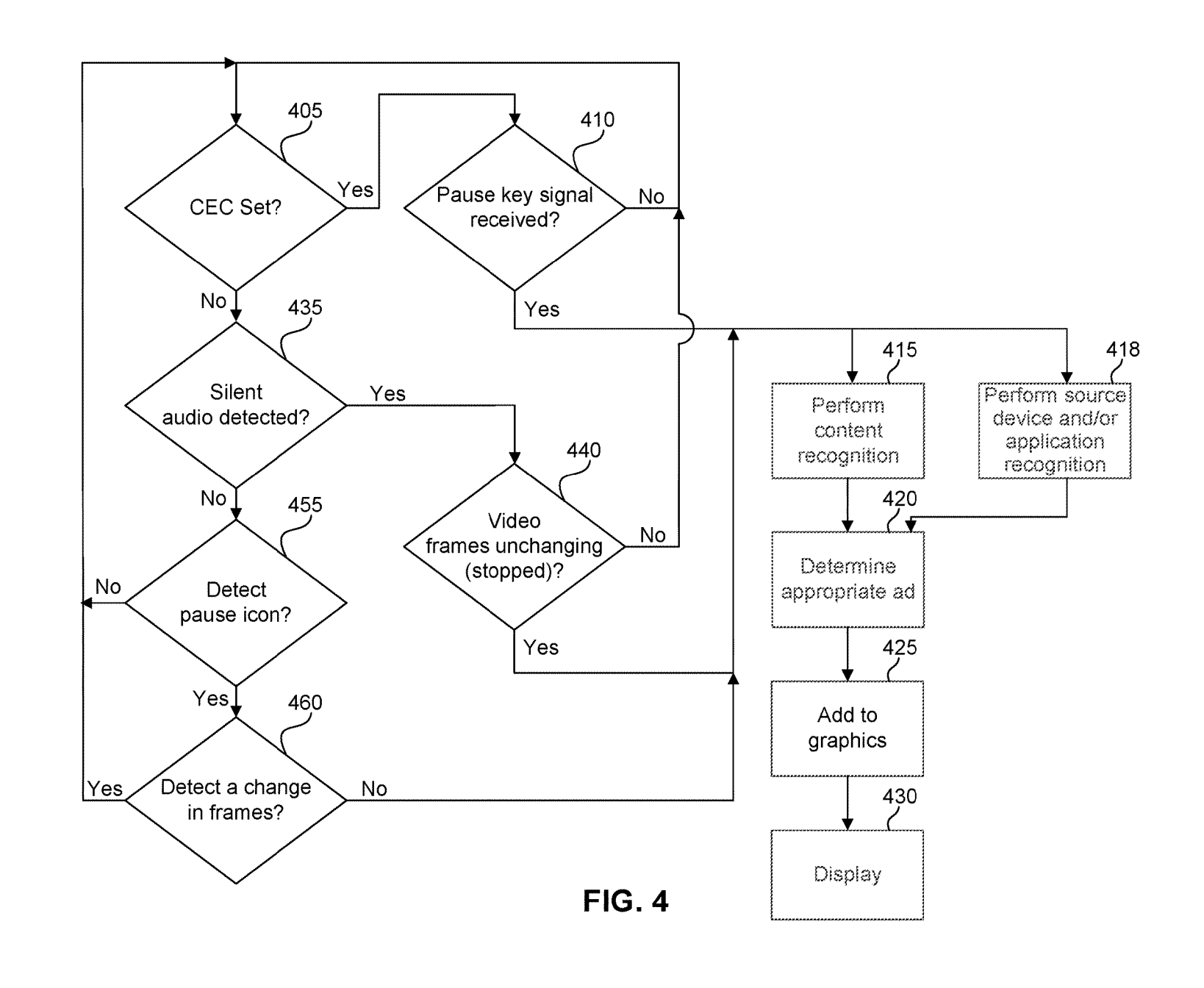
The technology described would detect whether content was paused in multiple ways—if the video being displayed is static, if there’s no audio being played, if a pause symbol is shown anywhere on screen, or if (on a TV with HDMI-CEC enabled) a pause signal has been received from some passthrough remote control. The system would analyze the paused image and use metadata “to identify one or more objects” in the video frame, transmit that identification information to a network, and receive and display a “relevant ad” over top of whatever the paused content is.

The proposed Roku device would include multiple modules dedicated to detecting and analyzing onscreen content and inserting ads over top of an existing video stream.
Enlarge / The proposed Roku device would include multiple modules dedicated to detecting and analyzing onscreen content and inserting ads over top of an existing video stream.

This theoretical Roku TV’s internal hardware would be capable of taking the original source video feed, rendering an ad, and then combining the two into a single displayed image. Combining those video streams could enable both static or animated ads, according to the patent.

Patents are just patents. A filed and granted patent isn’t the same thing as a concrete plan to actually implement the technology described in the patent. We could see this feature come to future Roku TV sets exactly as described, or we could never hear about it again. Everything from the cost of implementing the feature, to difficulty making it work in real life the way it works on paper, to user and partner backlash could dissuade Roku from putting this into practice.

But Roku the company is highly motivated to figure out more ways to make more money from more ads on Roku devices. Among the business risks disclosed on Roku’s financial filings from its 2023 fiscal year (PDF), the company says that its “future growth depends on the acceptance and growth of streaming TV advertising and advertising platforms.”

Roku's proposed workflow for detecting paused content and displaying an ad on top of it.
Enlarge / Roku’s proposed workflow for detecting paused content and displaying an ad on top of it.

If implemented as described, this system both gives Roku another place to put ads, and gives the company another source of user data that can be used to encourage advertisers to spend on its platforms. Roku also anticipates that the general shift toward ad-supported streaming tiers that we’ve seen in the last couple of years will “shift… ad dollars from traditional TV to streaming,” (PDF) and having more places to put ads will put Roku in a better position to capitalize on that shift.

It’s unclear whether this kind of feature could be enabled on currently supported Roku TVs with a software update, or if it would require a newer set with newer hardware in it. It seems as though a Roku TV that was capable of this kind of ad insertion would need more sophisticated internal hardware than most current sets currently come with—this is the same company that feuded with Google a few years back because it didn’t want to pay for more-expensive chips that could decode Google’s AV1 video codec.

https://arstechnica.com/?p=2015217


Android’s AirTag competitor gears up for launch, thanks to iOS release

Pebblebee's Android trackers.
Enlarge / Pebblebee’s Android trackers.

Will Google ever launch its “Find My” network? The Android ecosystem was supposed to have its own version of Apple’s AirTags by now. Google has had a crowd-sourced device-tracking network sitting dormant on 3 billion Android phones since December 2022. Partners have been ready to go with Bluetooth tag hardware since May 2023! This was all supposed to launch a year ago, but Google has been in a holding pattern. The good news is we’re finally seeing some progress after a year of silence.

The reason for Google’s lengthy delay is actually Apple. A week before Google’s partners announced their Android network Bluetooth tags, Google and Apple jointly announced a standard to detect “unknown” Bluetooth trackers and show users alerts if their phone thinks they’re being stalked. Since you can constantly see an AirTag’s location, they can be used for stalking by just covertly slipping one into a bag or car; nobody wants that, so everyone’s favorite mobile duopoly is teaming up.

Google did its half of this partnership and rolled out AirTag detection in July 2023. At the same time, Google also announced: “We’ve made the decision to hold the rollout of the Find My Device network until Apple has implemented protections for iOS.” Surely Apple would be burning the midnight oil to launch iOS Android tag detection as soon as possible so that Google could start competing with AirTags.

It looks like iOS 17.5 is the magic version Google is waiting for. The first beta was recently released to testers, and 9to5Mac recently spotted strings for detecting “unwanted” non-Apple tracking devices that were suddenly following you around. This 17.5 update still needs to ship, and the expectation is sometime in May. That would be 11 months after Google’s release.

Just like AirTags, and the Tile network before it, the goal of the project is to enable helpful little Bluetooth tracking tags that can tell you where your stuff is. These Bluetooth tags are super low-power and aim to last for a year on a small battery, which means they don’t have the power to spare for GPS. They can still report their location, though, because they manage to “borrow” the GPS chip of any compatible smartphones in range. Your phone scans for any Bluetooth tags, even ones you don’t own, then notes their approximate location and uploads it to the cloud. This is all done anonymously, and only the owner of the tag can see its location, but everyone in the network pitches in to create a crowdsourced, worldwide thing-tracking network.

Tile started the whole idea by having any user with the Tile app running do anonymous location uploads for every other Tile in earshot. Nothing can compete with the scale of Apple’s version, though, which runs on every iThing out there, and the bigger size of the network makes it a lot more reliable. Android will have an even bigger network if it ever launches. In an ideal world, Android and iOS would just work together to perfectly track every Bluetooth tracker regardless of make and model, but they’re only teaming up for stalking detection.

Google gears up for launch

With the impending iOS release, Google seems to be getting its ducks in a row as well. 9to5Google has a screenshot of the new Find My Device settings page that is appearing for some users, which gives them a chance to opt out of the anonymous tracking network. That report also mentions that some users received an email Thursday of an impending tracking network launch, saying: “You’ll get a notification on your Android devices when this feature is turned on in 3 days. Until then, you can opt out of the network through Find My Device on the web.” The vast majority of Android users have not gotten this email, though, suggesting maybe it was a mistake. It’s very weird to announce a launch in “days remaining” rather than just saying what date something will launch, and this email went out Thursday, which would mean a bizarre Sunday launch when everyone is off for the weekend.

The official announcement could come at any time, but Google said it wanted to wait for Apple, and that means at least a few weeks for actual functionality to be turned on. We also need a launch date from those poor hardware partners that presumably have had tracking tags sitting around in a warehouse for a year. Google’s partners, Chipolo and Pebblebee, have both been taking preorders for Android tracking tags for the past year and don’t have any launch updates.

And speaking of hardware, Google was supposed to be building a first-party tracking tag once upon a time. January 2023 was when we first heard of a device codenamed “Grogu,” which was supposed to have a speaker, UWB compatibility, and Bluetooth LE. Is that still happening? There’s probably time to have made a second-generation device by now. Apple’s May iOS release would be great timing for a Google I/O announcement, but we were also expecting an announcement at the last I/O, so who knows.

https://arstechnica.com/?p=2015125


Fake AI law firms are sending fake DMCA threats to generate fake SEO gains

Face composed of many pixellated squares, joining together
Enlarge / A person made of many parts, similar to the attorney who handles both severe criminal law and copyright takedowns for an Arizona law firm.
Getty Images

If you run a personal or hobby website, getting a copyright notice from a law firm about an image on your site can trigger some fast-acting panic. As someone who has paid to settle a news service-licensing issue before, I can empathize with anybody who wants to make this kind of thing go away.

Which is why a new kind of angle-on-an-angle scheme can seem both obvious to spot and likely effective. Ernie Smith, the prolific, ever-curious writer behind the newsletter Tedium, received a “DMCA Copyright Infringement Notice” in late March from “Commonwealth Legal,” representing the “Intellectual Property division” of Tech4Gods.

The issue was with a photo of a keyfob from legitimate photo service Unsplash used in service of a post about a strange Uber ride Smith once took. As Smith detailed in a Mastodon thread, the purported firm needed him to “add a credit to our client immediately” through a link to Tech4Gods, and said it should be “addressed in the next five business days.” Removing the image “does not conclude the matter,” and should Smith not have taken action, the putative firm would have to “activate” its case, relying on DMCA 512(c) (which, in many readings, actually does grant relief should a website owner, unaware of infringing material, “act expeditiously to remove” said material). The email unhelpfully points to the main page of the Internet Archive so that Smith might review “past usage records.”

A slice of the website for Commonwealth Legal Services, with every word of that phrase, including "for," called into question.
A slice of the website for Commonwealth Legal Services, with every word of that phrase, including “for,” called into question.
Commonwealth Legal Services

There are quite a few issues with Commonwealth Legal’s request, as detailed by Smith and 404 Media. Chief among them is that Commonwealth Legal, a firm theoretically based in Arizona (which is not a commonwealth), almost certainly does not exist. Despite the 2018 copyright displayed on the site, the firm’s website domain was seemingly registered on March 1, 2024, with a Canadian IP location. The address on the firm’s site leads to a location that, to say the least, does not match the “fourth floor” indicated on the website.

While the law firm’s website is stuffed full of stock images, so are many websites for professional services. The real tell is the site’s list of attorneys, most of which, as 404 Media puts it, have “vacant, thousand-yard stares” common to AI-generated faces. AI detection firm Reality Defender told 404 Media that his service spotted AI generation in every attorneys’ image, “most likely by a Generative Adversarial Network (GAN) model.”

Then there are the attorneys’ bios, which offer surface-level competence underpinned by bizarre setups. Five of the 12 supposedly come from acclaimed law schools at Harvard, Yale, Stanford, and University of Chicago. The other seven seem to have graduated from the top five results you might get for “Arizona Law School.” Sarah Walker has a practice based on “Copyright Violation and Judicial Criminal Proceedings,” a quite uncommon pairing. Sometimes she is “upholding the rights of artists,” but she can also “handle high-stakes criminal cases.” Walker, it seems, couldn’t pick just one track at Yale Law School.

Why would someone go to the trouble of making a law firm out of NameCheap, stock art, and AI images (and seemingly copy) to send quasi-legal demands to site owners? Backlinks, that’s why. Backlinks are links from a site that Google (or others, but almost always Google) holds in high esteem to a site trying to rank up. Whether spammed, traded, generated, or demanded through a fake firm, backlinks power the search engine optimization (SEO) gray, to very dark gray, market. For all their touted algorithmic (and now AI) prowess, search engines have always had a hard time gauging backlink quality and context, so some site owners still buy backlinks.

The owner of Tech4Gods told 404 Media’s Jason Koebler that he did buy backlinks for his gadget review site (with “AI writing assistants”). He disclaimed owning the disputed image or any images and made vague suggestions that a disgruntled former contractor may be trying to poison his ranking with spam links.

Asked by Ars if he had heard back from “Commonwealth Legal” now that five business days were up, Ernie Smith tells Ars: “No, alas.”

This post was updated at 4:50 p.m. Eastern to include Ernie Smith’s response.

https://arstechnica.com/?p=2014933


Waymo and Uber Eats start human-less food deliveries in Phoenix

A Waymo Jaguar I-Pace.
Enlarge / A Waymo Jaguar I-Pace.

Your next food delivery driver may be a robot.

Waymo and Uber have been working together on regular Ubers for a while, but the two companies are now teaming up for food delivery. Automated Uber Eats is rolling out to Waymo’s Phoenix service area. Waymo says this will start in “select merchants in Chandler, Tempe and Mesa, including local favorites like Princess Pita, Filiberto’s, and Bosa Donuts.”

Phoenix Uber Eats customers can fire up the app and order some food, and they might see the message “autonomous vehicles may deliver your order.” Waymo says you’ll be able to opt out of robot delivery at checkout if you want.

Of course, the big difference between human and robot food delivery is that the human driver will take your food door to door, while for the Waymo option, you’ll need to run outside and flag down your robot delivery vehicle when it arrives. Just like regular Uber, you’ll get a notification through the app when it’s time. The food should be in the trunk. If you get paired with a Waymo, your delivery tip will be refunded. Waymo doesn’t explain how the restaurant side of things will work, but inevitably, some poor food server will need to run outside when the Waymo arrives.

It seems pretty wasteful to have a 2-ton, crash-tested vehicle designed to seat five humans delivering a small bag of food, but at least the Jaguar i-Pace Waymos are all-electric. It’s a shame Waymo’s smaller “Firefly” cars were retired. There are smaller, more purpose-built food delivery bots out there—Uber Eats is partnered with Serve Robotics for smaller robot delivery—but these are all sidewalk-cruising, walking-speed robots that can only go a few blocks. The Nuro R3 (Nuro is also partnered with Uber) seems like a good example of what a road-going delivery should look like—it’s designed for food and not people, and it comes with heated or cooled food compartments. Waymo is still the industry leader in automated driving, though.

https://arstechnica.com/?p=2014908