Like many of us, Google Gemini is tired of politics. Reuters reports that Google has restricted the chatbot from answering questions about the upcoming US election, and instead, it will direct users to Google Search.
Google had planned to do this back when the Gemini chatbot was still called “Bard.” In December, the company said, “Beginning early next year, in preparation for the 2024 elections and out of an abundance of caution on such an important topic, we’ll restrict the types of election-related queries for which Bard and [Google Search’s Bard integration] will return responses.” Tuesday, Google confirmed to Reuters that those restrictions have kicked in. Election queries now tend to come back with the refusal: “I’m still learning how to answer this question. In the meantime, try Google Search.”
Google’s original plan in December was likely to disable election info so Gemini could avoid any political firestorms. Boy, did that not work out! When asked to generate images of people, Gemini quietly tacked diversity requirements onto the image request; this practice led to offensive and historically inaccurate images along with a general refusal to generate images of white people. Last month that earned Google wall-to-wall coverage in conservative news spheres along the lines of “Google’s woke AI hates white people!” Google CEO Sundar Pichai called the AI’s “biased” responses “completely unacceptable,” and for now, creating images of people is disabled while Google works on it.
The start of the first round of US elections in the AI era has already led to new forms of disinformation, and Google presumably wants to opt out of all of it.
https://arstechnica.com/?p=2009880
Raspberry Pi-powered AI bike light detects cars, alerts bikers to bad drivers
Whether or not autonomous vehicles ever work out, the effort put into using small cameras and machine-learning algorithms to detect cars could pay off big for an unexpected group: cyclists.
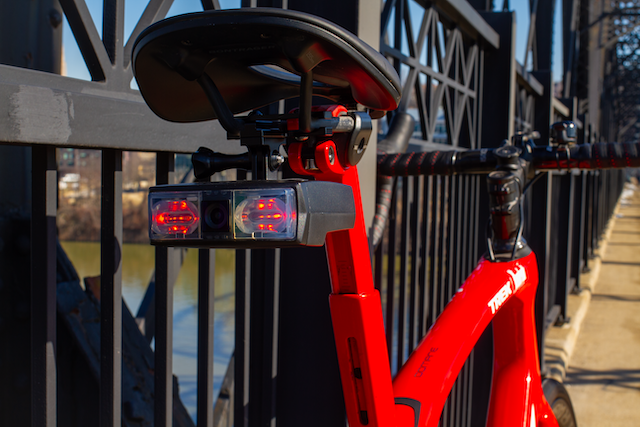
Velo AI is a firm cofounded by Clark Haynes and Micol Marchetti-Bowick, both PhDs with backgrounds in robotics, movement prediction, and Uber’s (since sold-off) autonomous vehicle work. Copilot, which started as a “pandemic passion project” for Haynes, is essentially car-focused artificial intelligence and machine learning stuffed into a Raspberry Pi Compute Module 4 and boxed up in a bike-friendly size and shape.
[embedded content]
A look into the computer vision of the Copilot.
While car-detecting devices exist for bikes, including the Garmin Varia, they’re largely radar-based. That means they can’t distinguish between vehicles of different sizes and only know that something is approaching you, not, for example, how much space it will allow when passing.
Copilot purports to do a lot more:
Identify cars, bikes, and pedestrians
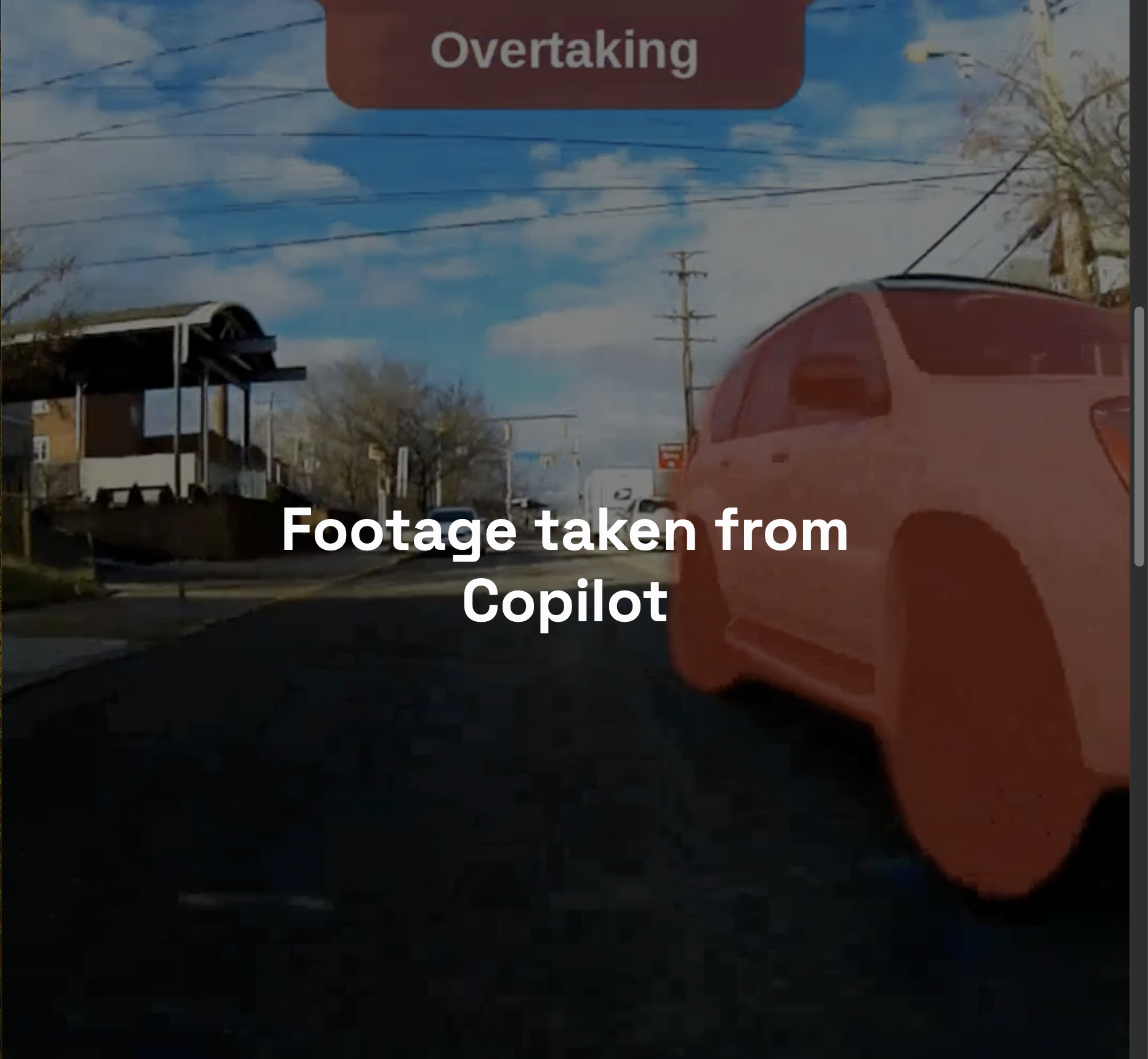
Alert riders audibly about cars “Following,” “Approaching,” and “Overtaking”
Issue visual warning to drivers who are approaching too close or too fast
Send visual notifications and a simplified rear road view to an optional paired smartphone
Record 1080p video and tag “close calls” and “incidents” from your phone
At 330 grams, with five hours of optimal battery life (and USB-C recharging), it’s not for the aero-obsessed rider or super-long-distance rider. And at $400, it might not speak to the most casual and infrequent cyclist. But it’s an intriguing piece of kit, especially for those who already have, or considered, a Garmin or similar action camera for watching their back. What if a camera could do more than just show you the car after you’re already endangered by it?
Copilot’s computer vision can alert riders to cars that are “Following,” “Approaching,” and “Overtaking.”
The Velo team detailed some of their building process for the official Raspberry Pi blog. The Compute Module 4 powers the core system and lights, while a custom Hailo AI co-processor helps with the neural networks and computer vision. An Arducam camera provides the vision and recording.
Beyond individual safety, the Velo AI team hopes that data from Copilots can feed into larger-scale road safety improvements. The team told the Pi blog that they’re starting a partnership with Pittsburgh, seeding Copilots to regular bike commuters and analyzing the aggregate data for potential infrastructure upgrades.
The Copilot is available for sale now and shipping, according to Velo AI. A December 2023 pre-order sold out.
https://arstechnica.com/?p=2009851
Abysmal revenue stats of 30K mobile apps show why devs keep pushing for subs
Mobile app developers are expected to push subscriptions more aggressively over the next year. Numbers that RevenueCat recently shared examining over 30,000 apps suggest why: Most apps struggle to reach $1,000 per month in revenue.
RevenueCat makes a subscription toolkit for mobile apps. The 7-year-old company’s study shared today, as spotted by TechCrunch, said the firm examined apps using its in-app subscription SDKs. RevenueCat’s report didn’t list all apps studied but claims Reuters, Buffer, Goodnotes, PhotoRoom, and Notion as customers. The report claims that 90 percent of apps with an in-app-subscription platform use RevenueCat. The San Francisco-based company also claims to support “everything from niche indie apps to several of the top 100 subscription apps,” which notably suggests that most of the top-100 subscription apps aren’t included in this study.
With these caveats in mind, the 120-page report still provides unique details about a claimed $6.7 billion in subscription revenue touching over 18,000 developers and 290 million subscribers using the Apple App Store and Google Play Store.
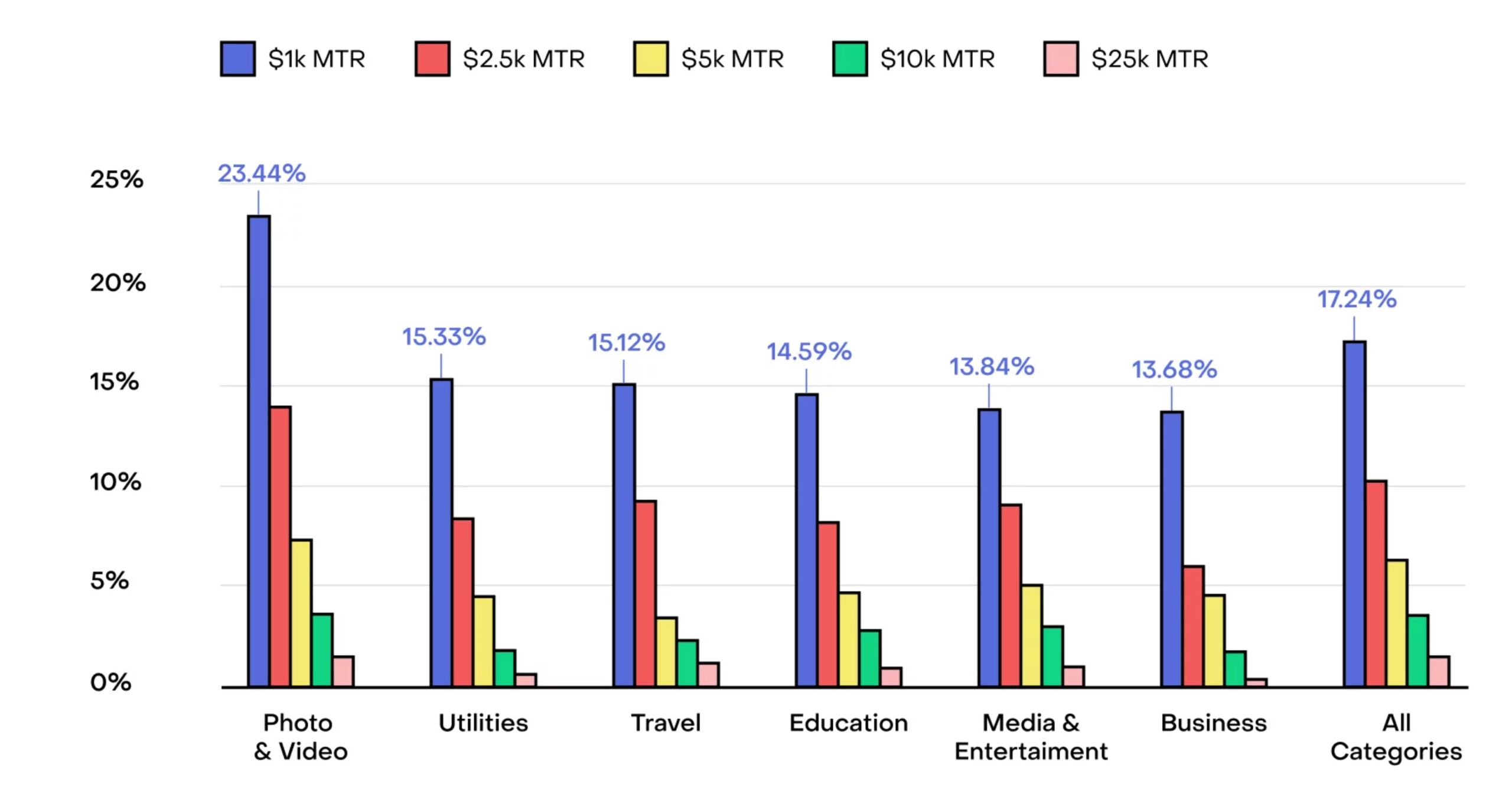
According to RevenueCat, about 17 percent of the apps examined make at least $1,000 each month. The percentage of examined apps making more monthly revenue is even lower:
Enlarge/ Monthly tracked revenue (MTR), per RevenueCat.
RevenueCat noted that once apps do reach $1,000/month in revenue, they’re more likely to make $2,500 in monthly revenue (59 percent of apps that reached the $1,000 mark reportedly did) or even $5,000/month in revenue (60 percent of the apps that reached $2,500/month in revenue reportedly did).
Imbalanced revenue
RevenueCat’s numbers point to a strong imbalance in revenue share among mobile subscription apps: The report found that 12 months after launching, the top 5 percent of apps make over 200 times the revenue of the bottom quartile. For new apps, the median monthly revenue after one year is “a little under $50.”
“When segmenting down to the top 10 percent or even top 5 percent of performers, revenue numbers increase rapidly, going from $223 (upper quartile) to $971 (Q90), to $2,352 (Q95) in monthly revenue,” the report says.
Still, with advertising spending continuing to tumble and developers looking for a way to generate recurring revenue to support app maintenance, support, and advancements, subscriptions are expected to continue being developers’ primary strategy. RevenueCat’s study quoted Ariel Michaeli, co-founder and CEO of mobile app developer reporting platform Appfigures, as saying that company data found that 59,000 new subscription-based apps came out in 2023.
Subscription fatigue
Challenges in mobile app subscriptions include not only convincing people to pay for an app but also convincing them to do so repeatedly. RevenueCat said that compared to its 2023 report, the portion of monthly subscribers retained after one year declined by 14 percent, “impacting both the best and worst performers alike.” Other insights include monthly subscriptions having a median first renewal rate of over 60 percent but maintaining only 36 percent of the original batch of subscribers by the time it’s time for a third renewal.
Mobile-app developers hoping for recurring dollars are appealing to a user base increasingly deterred by subscription fatigue. According to a 2022 report from management consulting firm Kearney, 42 percent of consumers “think they have too many subscriptions.” But while more industries are focusing on subscriptions, mobile apps, some argue, are a use case where recurring payments make more sense than in other businesses, like printers.
“For the products that sit in a truly recurring use case, this can be a win-win for the consumers and the business. The longer that someone wants to use the product or service that you provide, the bigger the business you can build,” Dan Layfield, founder of Subscription Index, a subscription monetization consulting firm, said in RevenueCat’s report.
Higher prices
Mobile app subscription rates are expected to increase over the next year. The average monthly rate increased 14 percent, from $7.05 to $8.01, in the year since RevenueCat’s 2023 report. Concerns like growing customer acquisition costs, interest in looking like a premium app, and AI could economically challenge mobile-app developers and affect pricing.
But RevenueCat also expects that over the next year, devs will experiment more with other revenue streams, like in-app purchases and affiliate marketing.
https://arstechnica.com/?p=2009677
The 2024 Moto G Power packs wireless charging, 8GB RAM in a $300 phone
The 2024 Moto G and Moto G Power.
I think they have the exact same design, but technically this black one is the Moto G.
The back is “vegan leather.”
That’s a side fingerprint reader / power button below the volume.
The barely there camera bump.
Motorola is launching the 2024 version of its “Moto G” budget phone. Today we’ve got two versions, the “Moto G 5G 2024” and the “Moto G Power 5G 2024” to pick from. The base Moto G 2024 is $199.99, while the Power version is $299.99.
The specs on the base model Moto G are all over the place. We’ve got a low-resolution, high refresh rate 6.6-inch, 120 Hz, 1612×720 LCD and a Snapdragon 4 Gen 1. The phone has a whopping 8GB of RAM, 128GB of storage, and a 5000 mAh battery with 18 W wired charging. You get a lot of extras: a 3.5 mm headphone jack, NFC (!), a side fingerprint reader, and a microSD slot. The Snapdragon 4 Gen 1 is about as cheap of a chip as you can get from Qualcomm, a 6 nm chip with two Cortex A78 CPUs and six A55 CPUs. It seems criminal that these budget Qualcomm chips prioritize barely there 5G bands yet only support 802.11ac, AKA “Wi-Fi 5,” which first hit smartphones in 2013.
On the back of the base-model Moto G is one real camera, a 50MP rear sensor, and a just-for-looks 2MP “macro” sensor. The front camera is 8MP.
The Moto G Power.
The bottom of the G Power. There’s a headphone jack on both models!
The 2024 Moto G and Moto G Power have similar names but share almost no parts at all. The Power version has a 6.7-inch, 120 Hz 2400×1080 LCD, a MediaTek Dimensity 700 SoC, 8GB of RAM, 128GB of storage, and a 5000 mAh battery. The MediaTek chip is close to the Qualcomm one—a 6 nm chip with two Cortex A78 CPUs and six A55 CPUs. The “Power” name is justified only by faster 30 W charging and the surprise inclusion of 15 W wireless charging. It has all the same extras as the base model and the same 11-year-old Wi-Fi standard. Cameras are a 50MP sensor and 8MP macro in the rear, and a 16MP sensor in the front.
The designs of both phones look nearly identical, with flat front screens, asymmetrical bezels with a bigger bottom section, and flat sides. The backs have a “vegan leather” treatment, aka plastic treated to give off a sort of leather vibe, and while they aren’t submergible in water, Motorola says they are “splash resistant.” Both phones warn that you may not get a full-power charger in the box, depending on your carrier and region, so look out for that.
Both phones will be available at most pre-paid budget carriers, along with unlocked sales on Amazon, Motorola.com, and Best Buy. The Power model will first hit Cricket on March 22 with “subsequent availability” at other carriers, and unlocked sales start March 29. The base model starts sales on March 21, while unlocked sales will have to wait until May 2.
Listing image by Motorola
https://arstechnica.com/?p=2009597
New iPads may be coming soon, but they won’t change the awkward spot the iPad is in
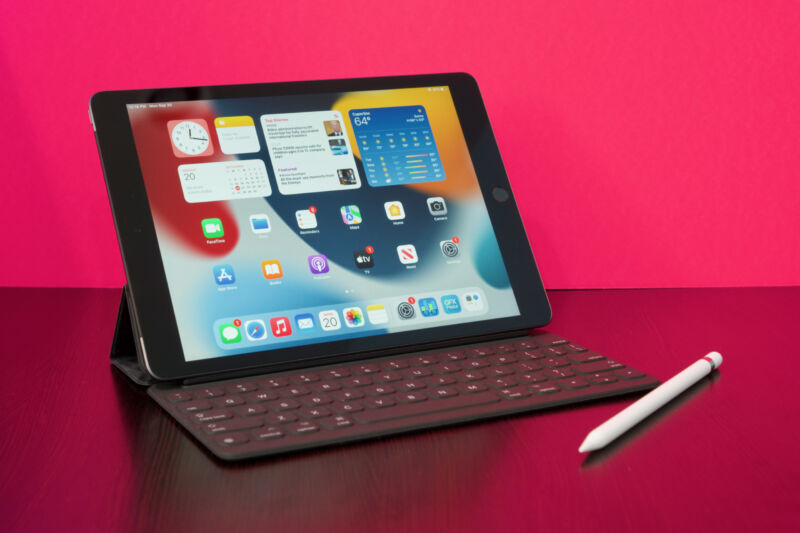
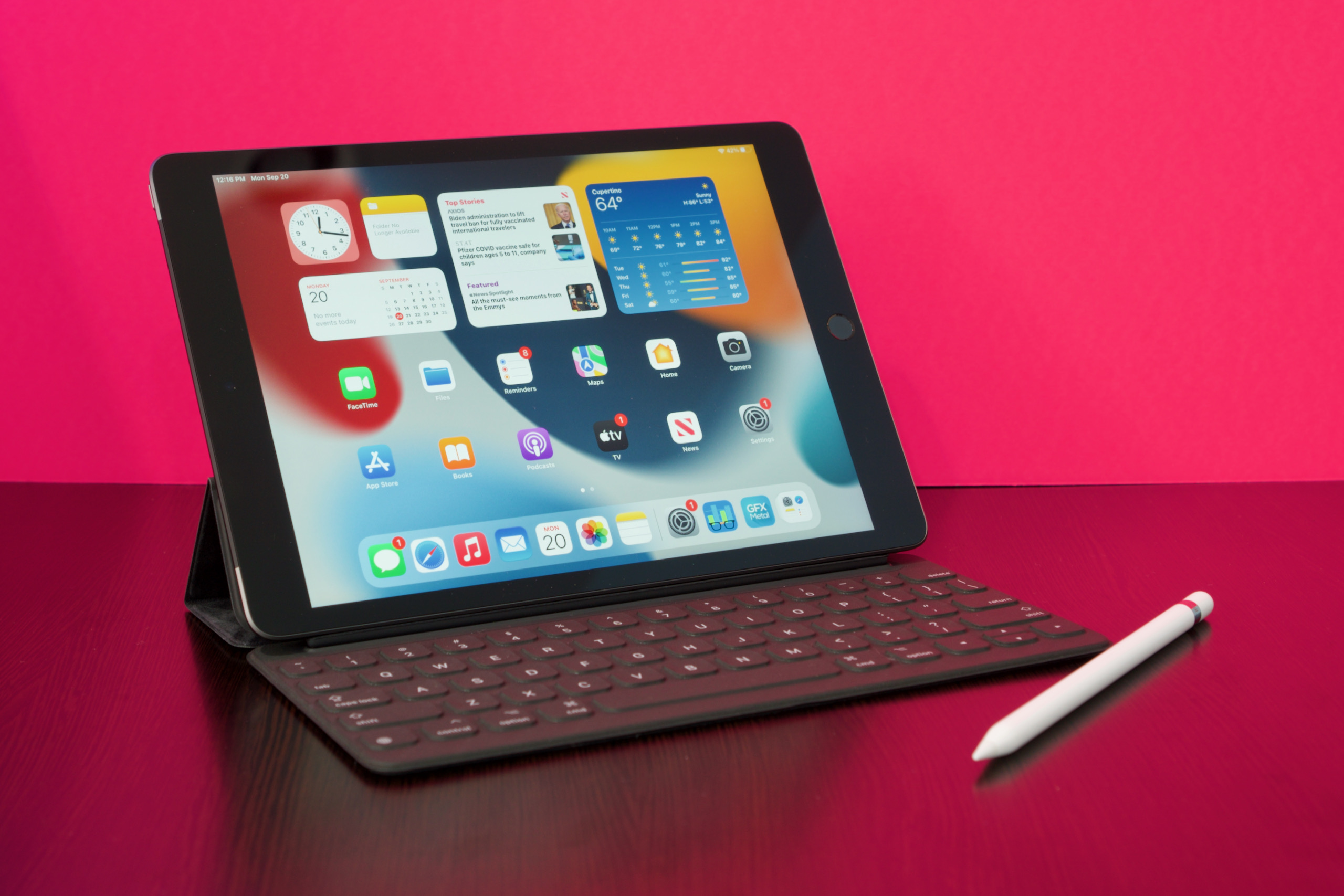
Enlarge/ Apple’s $329 9th-gen iPad is over 2 years old and the last model to use Lightning or the old Apple Pencil.
Andrew Cunningham
After leaving the iPad lineup untouched for the entirety of 2023, Apple is reportedly preparing to overhaul all of its tablets within the next few weeks, according to Bloomberg’s Mark Gurman. We should see major iPad Pro and iPad Air refreshes “around the end of March or in April,” says Gurman, along with a special build of iOS 17.4 that adds support for the new hardware.
We’ll talk about the specifics of these iPad rumors momentarily, but reading about them got me thinking about what it would take to make me consider an upgrade for either of the iPads currently rolling around my house—a third-generation iPad Air that is currently used mostly for watching Octonauts and assembling Super Mario Lego sets, and a fifth-generation M1 Air that I use mostly for reading and browsing.
At least for me, the answer isn’t “new hardware.” After a brief stint a few years ago using the iPad as a focused writing device, I’ve mostly relegated it to tablet-y content consumption, leaving behind the cottage industry of enthusiasts who keep trying to come up with workarounds to make the iPad into a Mac. To replace an iPad at this point, I would either need one of them to break or for Apple to dramatically change what the high-end iPads are capable of.
What’s coming this year?
By all accounts, both of these should be significant updates. The iPad Pro will reportedly see its first major redesign since Apple introduced the rounded, larger-screened iPad Pros back in 2018, along with an OLED display panel that will bring the iPad’s screen technology in line with Apple’s high-end iPhones. A thinner body and the new M3 chip are also fairly safe bets, and some rumors suggest that the tablets could support MagSafe wireless charging (not to be confused with the wired MagSafe 3 port on recent Macs). Apple may also increase the price of its Pro tablets, though sources can’t agree on how big those price hikes might be.
The iPad Air probably won’t see as big a design change, but the 6th-generation model will reportedly step up from the M1 to the M2, and Apple is said to be planning a first-ever 12.9-inch Air to complement the current 10.9-inch design. Like the 15-inch MacBook Air or the M2 Pro Mac mini, a 12.9-inch iPad Air could serve people who want a step up from Apple’s baseline iPads, but who find even more expensive iPad Pros difficult to justify.
Refreshes for the iPad mini and the low-end iPad(s) are also coming, but we’ll probably need to wait a bit longer; Gurman doesn’t mention them in his latest report, and rumors from late 2023 indicate that both models could see a refresh later in 2024. Both are long overdue for a bump; the $329 9th-generation iPad and the iPad mini were last updated in late 2021, and the oddball 10th-generation iPad is from the end of 2022.
A chance to course-correct
It’s looking like 2024 will be the biggest year the iPad has had in a while, though after a silent 2023, anything would look like a big year.
It’s also an opportunity for Apple to streamline the lineup—in particular, to finally get rid of the 9th-generation iPad along with its Lightning port and the first-generation Apple Pencil, making the 10th-gen iPad (or a slightly updated version of the same tablet) the new baseline. It’s also an opportunity to make sure that each iPad is clearly defined. The low-end iPad is the one you buy for basic browsing, messaging, gaming, and doodling; the Air is the step up for people who use the iPad as their primary computing device but don’t care about the Pro’s bells and whistles, and the Pro is the model for people with money to spend who just want the best hardware Apple can make.
The iPad lineup as it exists now reminds me of Apple’s MacBook lineup circa 2018, when the company sold the 12-inch MacBook, a non-Retina MacBook Air, a redesigned Retina MacBook Air, and an entry-level 13-inch MacBook Pro all within a couple hundred dollars of each other. Today’s MacBook lineup still has a bit of overlap (the identical-looking M2 Air and M3 Air are separated by just $100), but generally you can point to any given model and describe who it’s for. With a bit of pruning and some price adjustments, the iPad could be straightened out, too.
https://arstechnica.com/?p=2009539
Apple’s AirPods Pro could be getting a “hearing aid mode” later this year
Enlarge/ Apple AirPods on display at the company’s Fifth Avenue store in New York in Feb. 2024.
Bing Guan/Bloomberg via Getty Images
Apple’s AirPods Pro are getting closer to becoming fully fledged hearing aids and marketed as such, according to Bloomberg’s Mark Gurman. The move could have a large impact on the hearing aid market, which has already been recently shaken up by over-the-counter models.
Gurman writes that AirPods Pro are due to receive a hearing-aid function in iOS 18, arriving this fall and likely to be announced and outlined at a Worldwide Developers Conference in June. The Wall Street Journal reported in the fall of 2021 that Apple was working toward a future AirPods Pro model that functioned as a hearing aid and would also be able to monitor body posture and even body temperature.
It was not clear from Gurman or the Journal’s reporting whether the hearing aid function would be available only in a new model of AirPods Pro or offered as a software update on prior models. Since the Journal’s report, Apple has released both a second-generation model of AirPods Pro and a refresh of that model with a USB-C port.
“Hearing aid” may also not be technically accurate, depending on Apple’s aims. The US Food and Drug Administration in 2022 provided for a new category of “Personal sound amplification products,” or PSAPs, that do not need to meet the stricter requirements for an FDA-approved hearing aid. This new category offered huge cost savings to people with mild to moderate hearing loss and kicked off a generation of hearing aids that connected to a smartphone over Bluetooth for setup, tuning, and monitoring. These are distinct from over-the-counter hearing aids, which, while still notably cheaper than “professional fit” hearing aids, are still regulated by the FDA.
A study in late 2022 found that first-generation AirPods Pro, with their “Live Listen” feature activated, could meet four of the five PSAP standards and just barely missed a sound-pressure threshold. Notably, the AirPods Pro, tested in relatively quiet environments, helped people hear about as well as hearing aid models that cost up to $10,000, within the PSAP standards.
The next version of Apple’s mobile operating system, iOS 18, is rumored to contain a multitude of features beyond AirPods updates. MacRumors (leaning on Gurman’s subscriber-only newsletter reporting) suggests that generative AI features, RCS support for text messages, and revamps to many core Apple apps are due.
https://arstechnica.com/?p=2009584
Airbnb bans creepy surveillance cameras inside rentals starting April 30
Airbnb, like hotels and rival vacation rental site Vrbo, will no longer allow hosts to record guests while they’re inside the property. Airbnb previously allowed hosts to have disclosed cameras outside the property and in “common areas” inside, but Airbnb’s enforcement of the policy and the rules’ lack of specificity made camera use troubling for renters.
Airbnb announced today that as of April 30, it’s “banning the use of indoor security cameras in listings globally as part of efforts to simplify our policy on security cameras and other devices” and to prioritize privacy.
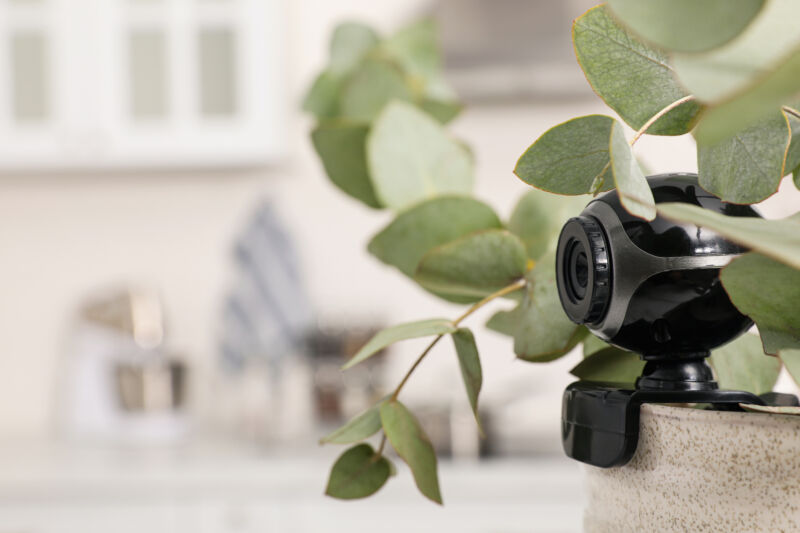
Cameras that are turned off but inside the property will also be banned, as are indoor recording devices. Airbnb’s updated policy defines cameras and recording devices as “any device that records or transmits video, images, or audio, such as a baby monitor, doorbell camera, or other camera.”
Also starting April 30, Airbnb will require hosts to disclose the presence of noise decibel monitors. Airbnb said it will only allow noise-monitoring devices that “do not record or transmit sounds or conversations” and that these are also “only allowed in common spaces of listings.”
Room for interpretation
Airbnb’s old policy allowed hosts to have cameras inside the property as long as the cameras weren’t hidden. The policy stated that Airbnb allowed: “Devices that allow for viewing or monitoring of only a public space (ex: a front door or a driveway) or a common space that are clearly identified and disclosed ahead of a reservation,” per an archived version of the policy. The policy added that “common spaces do not include sleeping areas or bathrooms” and listed “bedrooms, bathrooms, or common areas that are being used as sleeping areas, like a living room with a sofa bed)” as examples of private spaces.
This policy dramatically differed from the rules of other hospitality businesses. Hotels typically don’t surveil guests after they’re in their room, for example.
Also alarming was the vagueness of Airbnb’s policy. What about rooms with a futon or a couch that isn’t literally listed as a “sofa bed” but is roomy enough for slumber? Could a policy-abiding camera be placed in that room? Airbnb’s updated policy for noise decibel monitors, which allows them inside but only “in a common space,” still doesn’t address the potential for broad interpretations of the phrase.
Renters can see if a listing has cameras or noise-monitoring devices under the “Home safety” section of a listing’s amenities section, but that could include dozens of so-called amenities.
Airbnb’s old policy didn’t force hosts to state cameras’ locations. A rental I currently have booked under the old policy, for example, merely states that it has “security cameras to ensure the safety of guests and property.” That doesn’t clearly specify where the cameras are and if they’re indoors or only outdoors.
Another example of gaps in Airbnb’s policy for unspecified surveillance comes from Jeffrey Bigham. In 2019, he detailed his experience when Airbnb originally told him that a photo in an Airbnb listing with a camera subtly sitting in the walls’ corner counted as disclosure of indoor camera usage (after the blog went viral, the user reported receiving a refund). Bigham noted that even though the camera was technically in a common area (the living room), it was “very likely that my 2-year-old ran in front of this camera naked (the field of view of the camera was close to the exit of the bathroom).”
Airbnb’s announcement today said those who break the new policies will be subject to investigation and disciplinary action, which may include the removal of a listing or account.
However, Airbnb has a spotted history of responding to renter surveillance complaints. For example, in 2019, Ars Technica reported on a family finding a hidden camera inside their Airbnb that was disguised as a smoke or carbon monoxide detector. Airbnb initially “exonerated” the host of wrongdoing but eventually refunded the family and banned the host. Other Airbnb hosts have also previously claimed to see lax response from Airbnb after upsetting renters with surveillance cameras.
Airbnb hosts have long relied on technology to help spot problems like unwarranted guests, messes, parties, and robberies. But even outdoor surveillance can perturb renters, as the use of outdoor cameras can be overbearing and uncomfortable.
Airbnb previously claimed that hidden cameras are an exception. The company said today that the majority of its listings “do not report having a security camera” but didn’t share specific numbers.
https://arstechnica.com/?p=2009366
AMD stops certifying monitors, TVs under 144 Hz for FreeSync
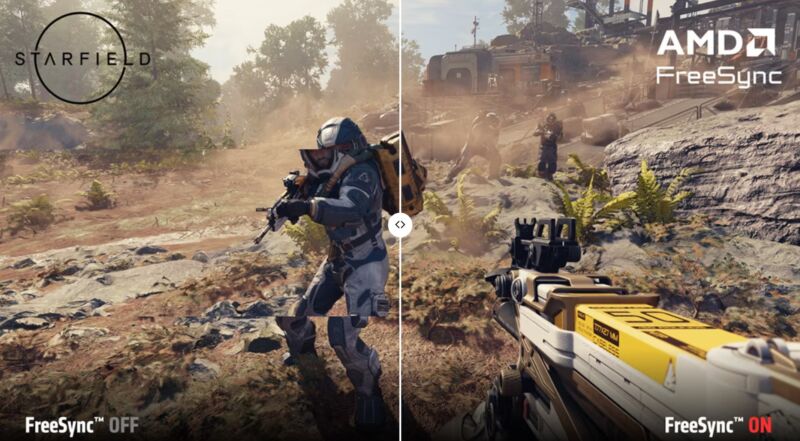
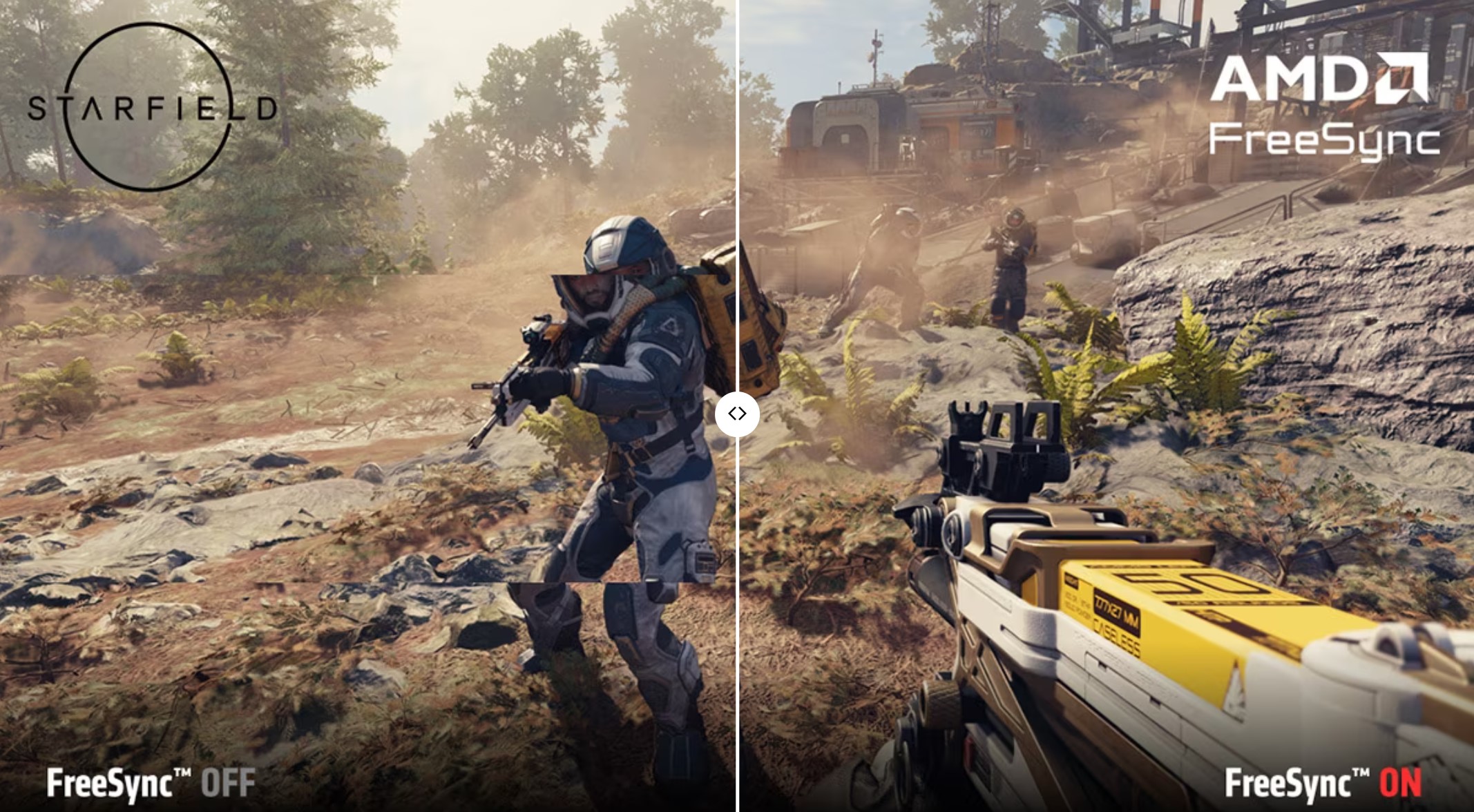
Enlarge/ AMD’s depiction of a game playing without FreeSync (left) and with FreeSync (right).
AMD announced this week that it has ceased FreeSync certification for monitors or TVs whose maximum refresh rates are under 144 Hz. Previously, FreeSync monitors and TVs could have refresh rates as low as 60 Hz, allowing for screens with lower price tags and ones not targeted at serious gaming to carry the variable refresh-rate technology.
AMD also boosted the refresh-rate requirements for its higher AdaptiveSync tiers, FreeSync Premium and FreeSync Premium Pro, from 120 Hz to 200 Hz.
Here are the new minimum refresh-rate requirements for FreeSync, which haven’t changed for laptops.
Laptops
Monitors and TVs
FreeSync
Max refresh rate: 40-60 Hz
< 3440 Horizontal resolution: Max refresh rate: ≥ 144 Hz
FreeSync Premium
Max refresh rate: ≥ 120 Hz
< 3440 Horizontal resolution: Max refresh rate: ≥ 200 Hz≥ 3440 Horizontal resolution: Max refresh rate: ≥ 120 Hz
FreeSync Premium Pro
FreeSync Premium requirements, plus FreeSync support with HDR
FreeSync Premium requirements, plus FreeSync support with HDR
AMD will continue supporting already-certified FreeSync displays even if they don’t meet the above requirements.
Interestingly, AMD’s minimum refresh-rate requirements for TVs go beyond 120 Hz, which many premium TVs currently max out at, due to the current-generation Xbox and PlayStation supporting max refresh rates of 120 frames per second (FPS).
Announcing the changes this week in a blog post, Oguzhan Andic, AMD FreeSync and Radeon product marketing manager, claimed that the changes were necessary, noting that 60 Hz is no longer “considered great for gaming.” Andic wrote that the majority of gaming monitors are 144 Hz or higher, compared to in 2015, when FreeSync debuted, and even 120 Hz was “a rarity.”
Since 2015, refresh rates have climbed ever higher, with the latest sports targeting competitive players hitting 500 Hz, with display stakeholders showing no signs of ending the push for more speed. Meanwhile, FreeSync cemented itself as the more accessible flavor of Adaptive Sync than Nvidia’s G-Sync, which for a long time required specific hardware to run, elevating the costs of supporting products.
AMD’s announcement didn’t address requirements for refresh-rate ranges. Hopefully, OEMs will continue making FreeSync displays, especially monitors, that can still fight screen tears when framerates drop to the double digits.
The changes should also elevate the future price of entry for a monitor or TV with FreeSync TV. Sometimes the inclusion of FreeSync served as a differentiator for people seeking an affordable display and who occasionally do some light gaming or enjoy other media with fast-paced video playback. FreeSync committing itself to 144 Hz and faster screens could help the certification be aligned more with serious gaming.
Meanwhile, there is still hope for future, slower screens to get certification for variable refresh rates. In 2022, the Video Electronics Standards Association (VESA) released its MediaSync Display for video playback and AdaptiveSync for gaming, certifications that have minimum refresh-rate requirements of 60 Hz. VESA developed the lengthy detailed certifications with its dozens of members, including AMD (a display could be MediaSync/AdaptiveSync and/or FreeSync and/or G-Sync certified). In addition to trying to appeal to core gamers, it’s possible that AMD also sees the VESA certifications as more appropriate for slower displays.
https://arstechnica.com/?p=2008955
Google says the AI-focused Pixel 8 can’t run its latest smartphone AI models
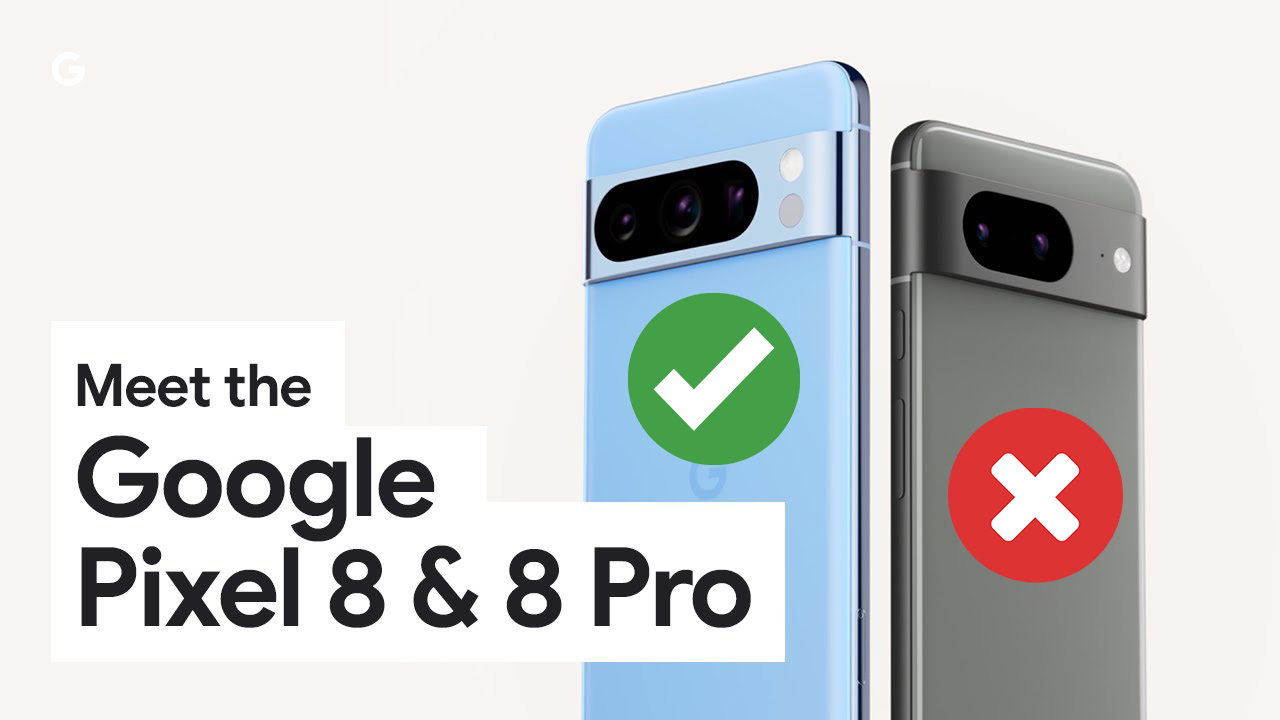
Enlarge/ The bigger Pixel 8 Pro gets the latest AI features. The smaller model does not.
If you believe Google’s marketing hype, AI in a phone is really, really important, the best AI is Google’s, and the best place to get that AI is Google’s flagship smartphone, the Pixel 8. We’re five months removed from the launch of the Pixel 8, and that doesn’t seem like a justifiable position anymore: Google says its latest AI models can’t run on the Pixel 8.
Google dropped that news in a Mobile World Congress wrap-up video that was spotted by Mishaal Rahman. At the end of the show in a Q&A session, Googler Terence Zhang, a member of the Gemini-on-Android team, said “[Gemini] Nano will not be coming to the Pixel 8 because of some hardware limitations. It’s currently on the Pixel 8 Pro and very recently available on the Samsung S24 family. It’ll be coming to more high-end devices in the near future.”
That is a wild statement. Gemini is Google’s latest AI model, and it made a big deal of the launch last month. Gemini comes in a few different sizes, and the smallest “Nano” size is specifically designed to run on smartphones as a much-hyped “on-device AI.” The Pixel 8 and Pixel 8 Pro are Google’s flagship smartphones. Google designed the phone and the chip and the AI model and somehow can’t make these things play nice together?
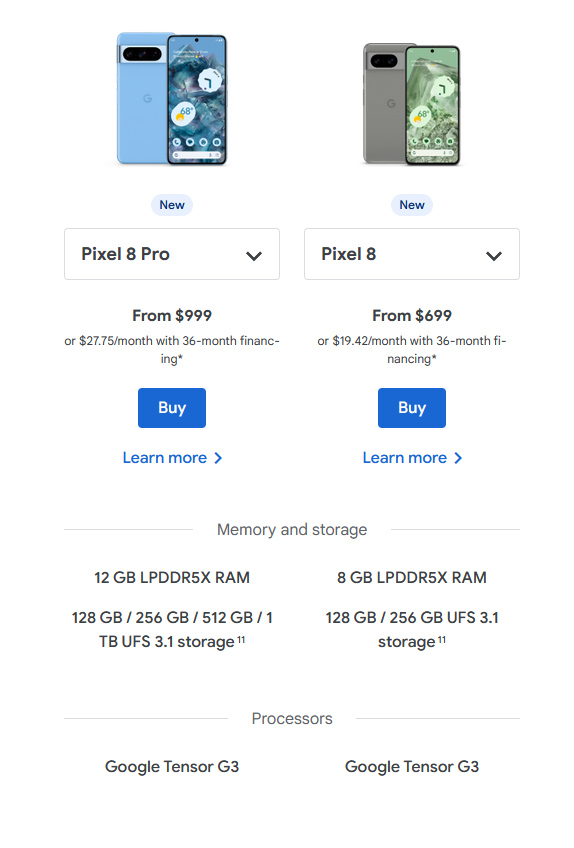
Adding to the weirdness is that Gemini Nano can run on the Pixel 8 Pro but not the smaller Pixel 8 due to “hardware limitations.” What limitations would those be, exactly? The two phones have the exact same Google Tensor SoC. They run the same software. The main differences between the two phones are screen size (6.7 inches versus 6.2), battery size, a different camera loadout, and 8GB of RAM versus 12GB. RAM is the only known difference you can point to that could create a processing limitation, but Gemini Nano also runs on the Galaxy S24 series, where the base model has 8GB of RAM. RAM being the issue would mean Samsung phones are somehow more RAM efficient than Pixel phones, which is hard to believe. If the Pixel 8 Pro Tensor 3 and Pixel 8 Tensor 3 are different somehow, that’s not on the spec sheet.
Five months ago at the Pixel 8 launch event, Google painted a very different picture of the Pixel 8 series: “I’m excited to introduce you to the next evolution of AI in your hand, Google Pixel 8 Pro and Google Pixel 8. Our latest phones bring together so many technologies from across Google. They’re the first phones to use our latest Google Tensor chip. They include the very best Android experience, first-of-its-kind camera experiences, and the latest AI advancements from Google.” Both devices feature the custom Google Tensor 3 SoC that Google claimed was “designed specifically to bring Google’s AI breakthroughs directly to Pixel users and show the world what’s possible.” This custom Google AI-focused design was supposed to deliver “unbelievably helpful experiences that no other phone can.”
Enlarge/ Google’s “Compare” page does not clearly communicate to customers what they’re buying.
When you launch two phones at once, it’s always hard to distinguish what the actual differences between the two models are. Sometimes, the devices get talked about in the plural, while other times “Pixel 8” is used to represent both devices. Sometimes, the more expensive device is singularly mentioned for no reason other than it’s the more expensive flagship. Between the hour-long presentation and private press pre-briefing that Ars was a part of, “What’s the difference” became a pretty well-worn question that was expected to be answered clearly. Usually, the go-to delineator here is the spec sheet, which is expected to spell out in clear language what you’re actually buying. The Google Store has a compare page where you can directly pit the Pixel 8 and Pixel 8 Pro against each other, and nothing spells out a difference in AI processing capabilities or a difference in the Tensor chips.
In the case of the Pixel 8 and Pixel 8 Pro, Google wasn’t clear enough in its communication at launch. Today, though, re-watching the launch presentation with the new knowledge that there is some dramatic difference in AI processing capabilities, you can pick up some language like talk of the “Pixel 8 Pro’s on-device LLM” that you could now interpret as a declaration of exclusive AI capabilities for the Pro model, but that wasn’t clear at the time.
As a consumer, it’s hard not to feel misled, and it’s embarrassing for Google, but to practically care about this, you’d need to know what the heck “Gemini Nano” actually does and why you should care about it. That’s a hard question to answer. Google has a page up here detailing some of the features Gemini Nano powers on the Pixel 8 Pro, but a feature could also be powered by different models on different devices. For what it’s worth, the rundown lists a “summarize” feature for the Google Recorder app and “smart reply” in Gboard. Plenty of Google apps already have a “smart reply” feature without Gemini Nano. Third-party developers can also plug into the onboard Gemini Nano model for their apps, but it’s hard to imagine anyone doing that with such limited device support.
The other option is to just forget about doing all of this AI stuff on-device and just do it in the cloud. As a great example of this, none of this Gemini Nano stuff has anything to do with the Google Gemini Chatbot, which all runs in the cloud. A big question is what this will mean for the smaller Google Pixel 8 going forward. Google promised seven years of OS updates for the new Pixels, and to already be stripping down features due to “hardware limitations” after five months is a disappointment.
https://arstechnica.com/?p=2008918
visionOS 1.1 tries to make Personas less unsettling, plus other Apple OS updates
Enlarge/ A blurry, ghostly Persona in visionOS 1.0. They should at least look less bad in visionOS 1.1.
Samuel Axon
Apple has released a long list of medium-sized software updates for most of its devices today. The macOS Sonoma 14.4, watchOS 10.4, tvOS 17.4, and visionOS 1.1 updates are all available now, and most of them add at least one or two major features as they fix multiple bugs and patch security vulnerabilities.
The visionOS 1.1 release is the first major update for Apple’s newest operating system, and as our coverage of the headset has demonstrated, there’s still plenty of low-hanging fruit to fix. Most notably for people who are trying to use the headset for work meetings, Apple says that there have been multiple changes to the look of Personas, the 3D avatars that show up in your place when you’re video chatting with the Vision Pro on your face. The update improves “hair and makeup appearance,” “neck and mouth representation,” and “rendering of the eyes,” and while it’s clear that it’s an improvement over the 1.0 release of Personas, the core uncanniness still seems to be intact. The Persona feature is still labeled as a beta.
Apple has also made tweaks to the appearance and functionality of the headset’s virtual keyboard, improved the Virtual Display feature’s Mac connectivity, and added a handful of mobile device management features for IT administrators.
Apple’s headlining feature for macOS 14.4 is the addition of new Unicode 15.1 emoji, plus podcast transcriptions in the Apple Music app. It’s unclear whether this release enables multiple external displays for users of the $1,599 M3 MacBook Pro, a feature that Apple announced alongside the new M3 MacBook Airs.
Apple Watch owners can look forward to the resolution of one annoying bug I’ve run into a few times on my own watch: a bug that would make the screen act as though it was receiving touch input even when you weren’t touching it. Sometimes referred to as a “ghost touch” or “phantom touch” bug, the only way to get it to go away was to reboot the watch. I haven’t noticed the bug since I installed one of the later watchOS 10.4 betas a couple of weeks ago.
Version 17.4 of the HomePod operating system now allows users to set their preferred music service, so telling Siri to play music will automatically use whatever service you want instead of defaulting to Apple Music unless you specify. The tvOS 17.4 update doesn’t appear to include any particular features or fixes of note.
All of the new releases follow iOS 17.4 and iPadOS 17.4, which came out a few days ago with mostly minor changes unless you happened to live in the European Union. For European users, that update ushers in Apple’s first attempt at compliance with new regulations that require the company to allow the use of third-party app stores, alternate browsing engines, and sideloaded apps. These changes come with plenty of conditions and caveats, as Apple seeks to remain the ultimate arbiter of what software can and can’t run on iPhones and iPads.