Wyze outage leaves customers without camera coverage overnight
Getty Images
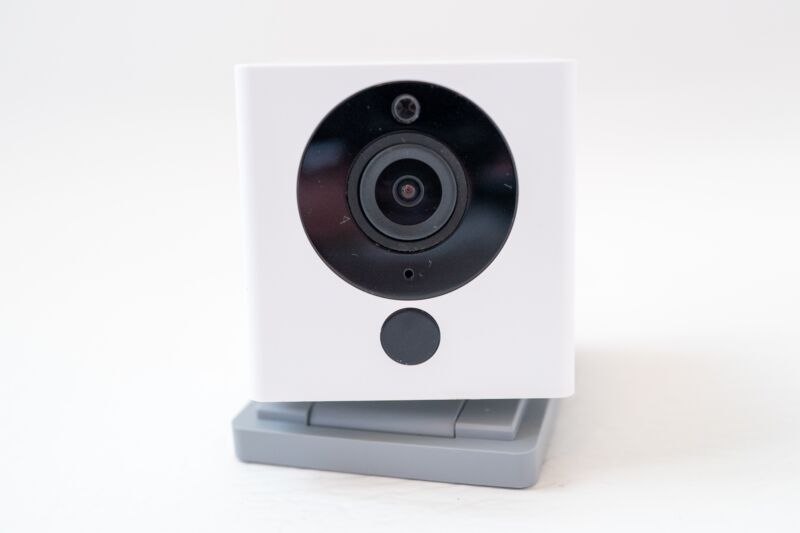
Wyze cameras have been unreliable for many users for more than nine hours today, with cameras disappearing from the Wyze app or simply reporting errors when owners try to view them.
Users started reporting issues on Down Detector just before 4 am Eastern time, and the company issued a service advisory at 9:30 am. As of 1 pm, the company stated that its “metrics show that devices are starting to recover,” and later that there was “continued improvement,” but it was still investigating history viewing issues. At 1:15 pm, an Ars writer was able to view his Wyze v3 camera feed and update its firmware.
A Wyze employee updated the service advisory at 2:28 p.m. Eastern to note “continued improvement for device connection recovery.” They added that the Event tab in the Wyze app, where one can see prior recordings activated by motion or other detections, is disabled, “to investigate a possible security issue,” and it will be back soon.
Wyze attributed the issue to an “AWS partner” in an earlier update. Amazon Web Services’ dashboard showed no issues or outages as of 1:30 pm Eastern. Ars reached out to Wyze for comment and will update this post with new information.
The Wyze subreddit was stuffed at the time of this writing with confirmations that the Wyze service was down, with many waking up to find that none of their Wyze cameras were working or even showing in their app at all. One redditor noted that they could see footage from a camera that was three time zones away. Many noted their strategy, or now intention, to diversify their security devices or implement solutions with local viewing options.
This post was updated at 4:30 p.m. Eastern to note an update to Wyze’s service advisory.
https://arstechnica.com/?p=2004138
Android 15 Developer Preview 1 is out for the Pixel 6 and up
Enlarge/ The Android 15 logo. This is “Android V,” if you can’t tell from the logo.
It’s that time of year again. Android is going to start its ~8-month-long beta process with the release of a new major OS version. The Android 15 Developer Preview is out today for the Pixel 6, 7, and 8, Pixel Fold, and Pixel Tablet. This release should mark the end of major OS support for the Pixel 5 and 5a series.
So what’s new? It’s hard to know too much with only the simple text descriptions we’re getting, but we have a few bullet points. “Partial screen sharing” will let users share or record individual app windows instead of the entire screen. Phones don’t have much of a difference between an app window and a full screen, but it would be nice if this blocked incoming notifications from showing up on your screen share. It would also be nice for tablets.
Android is surfacing an API that supports the Linux kernel’s fs-verity feature. This will let you store a read-only file on a read-write file system and cryptographically sign it to ensure it hasn’t been maliciously tampered with. Google apparently wants app developers to use this, saying, “This leads to enhanced security, protecting against potential malware or unauthorized file modifications that could compromise your app’s functionality or data.“
Google says there are improved camera controls for apps and more “dynamic performance” controls that detect if your phone is overheating and let apps respond accordingly.
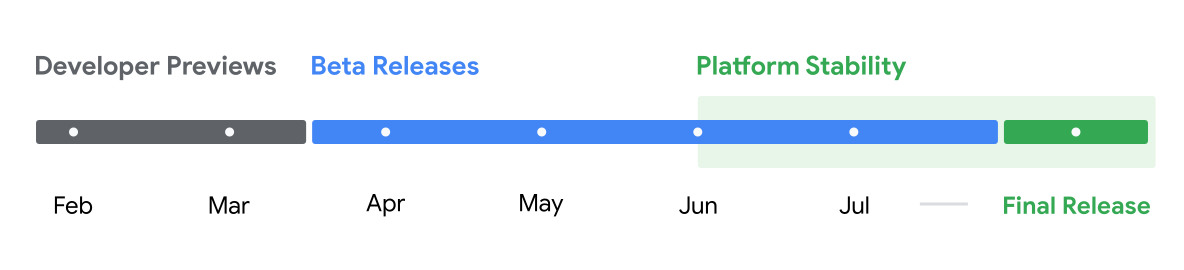
There’s also a schedule that says we’re getting at least six developer releases. The first “beta” will be out in April; “platform stability,” when APIs are finalized and developers should get to work, is in June. The final release on the timeline is sometime after July, depending on how development goes.
We’ll know more about Android 15 when the actual documentation gets released and we can try some software. As always, these first Developer Preview releases are limited to low-level features for app developers, giving interested parties time to support new functionality before the OS releases in Q3. User-facing features will come later—hopefully. The Android 14 release was one of the smallest on record, so we’re hoping there are more meaningful improvements this year.
https://arstechnica.com/?p=2004059
Asahi Linux project’s OpenGL support on Apple Silicon officially surpasses Apple’s
Enlarge/ Slowly but surely, the Asahi Linux team is getting Linux up and running on Apple Silicon Macs.
Apple/Asahi Linux
For around three years now, the team of independent developers behind the Asahi Linux project has worked to support Linux on Apple Silicon Macs, despite Apple’s total lack of involvement. Over the years, the project has gone from a “highly unstable experiment” to a “surprisingly functional and usable desktop operating system.” Even Linus Torvalds has used it to run Linux on Apple’s hardware.
The team has been steadily improving its open source, standards-conformant GPU driver for the M1 and M2 since releasing them in December 2022, and today, the team crossed an important symbolic milestone: The Asahi driver’s support for the OpenGL and OpenGL ES graphics have officially passed what Apple offers in macOS. The team’s latest graphics driver fully conforms with OpenGL version 4.6 and OpenGL ES version 3.2, the most recent version of either API. Apple’s support in macOS tops out at OpenGL 4.1, announced in July 2010.
Developer Alyssa Rosenzweig wrote a detailed blog post that announced the new driver, which had to pass “over 100,000 tests” to be deemed officially conformant. The team achieved this milestone despite the fact that Apple’s GPUs don’t support some features that would have made implementing these APIs more straightforward.
“Regrettably, the M1 doesn’t map well to any graphics standard newer than OpenGL ES 3.1,” writes Rosenzweig. “While Vulkan makes some of these features optional, the missing features are required to layer DirectX and OpenGL on top. No existing solution on M1 gets past the OpenGL 4.1 feature set… Without hardware support, new features need new tricks. Geometry shaders, tessellation, and transform feedback become compute shaders. Cull distance becomes a transformed interpolated value. Clip control becomes a vertex shader epilogue. The list goes on.”
Now that the Asahi GPU driver supports the latest OpenGL and OpenGL ES standards—released in 2017 and 2015, respectively—the work turns to supporting the low-overhead Vulkan API on Apple’s hardware. Vulkan support in macOS is limited to translation layers like MoltenVK, which translates Vulkan API calls to Metal ones that the hardware and OS can understand.
Apple’s OpenGL support has been stuck at the 4.1 level since macOS 10.9 Mavericks was released in 2013. Since then, the company has shifted its focus to its proprietary Metal graphics API, which, like DirectX 12 and Vulkan, is a “low-overhead” API meant to reduce the performance overhead sometimes associated with older APIs like OpenGL. But despite declaring OpenGL officially deprecated in 2018, Apple has left its existing OpenGL implementation alone since then, never updating it but also maintaining support even as it has transitioned from Intel’s processors to its own CPUs and GPUs.
Rosenzweig’s blog post didn’t give any specific updates on Vulkan except to say that the team was “well on the road” to supporting it. In addition to supporting native Linux apps, supporting more graphics APIs in Asahi will allow the operating system to take better advantage of software like Valve’s Proton, which already has a few games written for x86-based Windows PCs running on Arm-based Apple hardware.
Though there are still things that don’t work, Fedora Asahi Remix is surprisingly polished and supports a lot of the hardware available in most M1 and M2 Macs—including the webcam, speakers, Wi-Fi and Bluetooth, and graphics acceleration. Other features, like Thunderbolt, running displays over USB-C, the system’s built-in microphone, and the Touch ID fingerprint sensors, remain non-functional. Asahi’s most recent update blog post, published in mid-January, highlighted HDMI support, support for DRM-protected websites via Google’s proprietary Widevine package, Touchbar support for the handful of Apple Silicon Macs that use one, and more.
As for the newest wave of M3 Macs, Asahi developer Hector Martin said in October 2023 that basic support for the newest chips would take “at least six months.” Among other things, the team will need time to support the M3 GPU in their drivers; the team also relies primarily on Mac mini models for development, and the M3 Mac mini doesn’t exist yet.
https://arstechnica.com/?p=2003456
Lawsuit against Prime Video ads shows perils of annual streaming subscriptions
Enlarge/ Priyanka Chopra (left) and Richard Madden (right) in the Prime Video original series Citadel.
Streaming services like Amazon Prime Video promote annual subscriptions as a way to save money. But long-term commitments to streaming companies that are in the throes of trying to determine how to maintain or achieve growth typically end up biting subscribers in the butt—and they’re getting fed up.
As first reported by The Hollywood Reporter, a lawsuit seeking class-action certification [PDF] hit Amazon on February 9. The complaint centers on Amazon showing ads with Prime Video streams, which it started doing for US subscribers in January unless customers paid an extra $2.99/month. This approach differed from how other streaming services previously introduced ads: by launching a new subscription plan with ads and lower prices and encouraging subscribers to switch.
A problem with this approach, though, as per the lawsuit, is that it meant that people who signed up for an annual subscription to Prime Video before Amazon’s September 2023 announcement about ads already paid for a service that’s different from what they expected.
And that’s not the only risk people face when opting-in to a yearlong relationship with streaming services these days.
Paying extra “for something they already paid for”
The lawsuit recently filed against Prime Video names California resident Wilbert Napoleon as a plaintiff and argues that Amazon’s advertisements for Prime Video made “reasonable consumers” think that they would get ad-free movie and TV-show streaming for the duration of their subscription.
The lawsuit reads:
Reasonable consumers expect that, if you purchase a subscription with ad-free streaming of movies and tv shows, that the ad-free streaming for movies and tv shows is available for the duration of the purchased subscription.
… however, Plaintiff and class members’ reasonable expectations were not met. Instead of receiving a subscription that included ad-free streaming of [TV] shows and movies, they received something worth less.
Napoleon bought an annual subscription to Prime Video in June 2023, per the court filings. The lawsuit accuses Amazon of falsely advertising Prime Video.
“Subscribers must now pay extra to get something that they already paid for,” the lawsuit says.
The idea of expectations not being met is common for streaming customers. That said, the lawsuit hasn’t gotten far enough yet where we should expect big changes to Prime Video or financial penalties for Amazon. Changing the user experience mid-deal is aggravating for customers, but Prime Video’s terms of use claim that Amazon maintains the right to diminish the value of Prime Video:
Offers and pricing for subscriptions (also referred to at times as memberships), the subscription services, the extent of available Subscription Digital Content, and the specific titles available through subscription services, may change over time and by location without notice (except as may be required by applicable law).
But there’s still a broader point to be made around streaming services trying to lure people into yearlong commitments knowing that the product they offer today might drastically change over the next 12 months.
Amazon, for example, announced that it would bring commercials to Prime Video in September and didn’t confirm when it would introduce ads until December, about a month ahead of the changes. Yet, Amazon reportedly had plans to bring ads to the service as early as June, per a report from The Wall Street Journal that cited anonymous “people familiar with the situation.” Despite these reported plans to alter the user experience significantly, Amazon continued to sell annual subscriptions to Prime Video. For months, people were committing to something that they expected would include commercial-free viewing, which used to be a popular draw of Prime Video compared to rival streaming services.
Prime Video also seemingly didn’t give a heads-up that it was removing Dolby Vision and Dolby Atmos support unless subscribers agreed to pay $2.99 more per month for an ad-free plan.
Amazon declined to comment on this story. Lawyers for the lawsuit filed against Amazon didn’t respond to a request for comment.
https://arstechnica.com/?p=2003105
DuckDuckGo’s browser adds encrypted, privacy-minded syncing and backup
DuckDuckGo
DuckDuckGo keeps adding new features to its browser; and while these features are common in other browsers, DuckDuckGo is giving them a privacy-minded twist. The latest is a private, end-to-end encrypted syncing service. There’s no account needed, no sign-in, and the company says it never sees what you’re syncing.
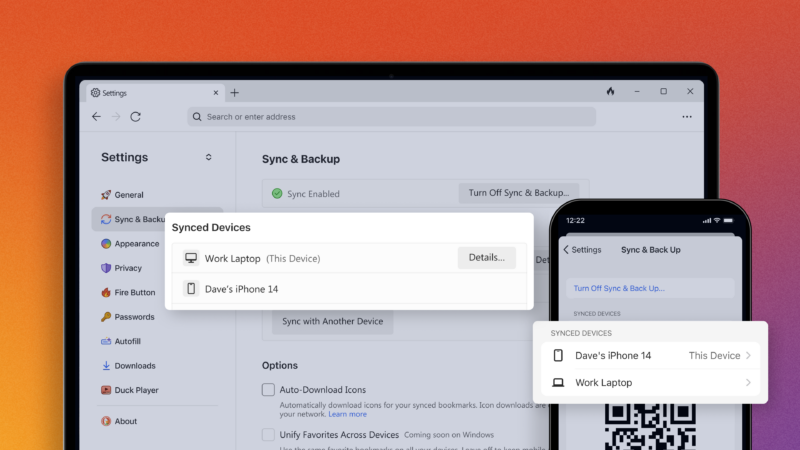
Using QR codes and shortcodes, and a lengthy backup code you store somewhere safe, DuckDuckGo’s browser can keep your bookmarks, passwords, “favorites” (i.e., new tab page shortcuts), and settings for its email protection service synced between devices and browsers.
DuckDuckGo points to Google’s privacy policy for using its signed-in sync service on Chrome, which uses “aggregated and anonymized synchronized browsing data to improve other Google products and services.” DuckDuckGo states that the encryption key for browser sync is stored only locally on your devices and that it lacks any access to your passwords or other data.
Mobile devices get a QR code to scan, while desktop browsers get a numeric code.
DuckDuckGo
Recovering your DuckDuckGo data requires a code you manually stash somewhere else.
With sync enabled, things like favorite links on a new tab page are kept in place.
DuckDuckGo
Syncing might be enough to tempt people with established browser habits to switch to DuckDuckGo for regular use. Without the syncing feature, having to set up each browser with the same items or start over with new devices is a real pain point. Most alternatives, even Firefox, require signing in with a web-based account to keep things synced. End-to-end encrypted sync fits with DuckDuckGo’s ethos while also removing a hassle.
That makes for syncing, built-in tracker ad blocking, enforced encryption, cookie pop-up management, and email protection that DuckDuckGo has now built into its browser, along with easy history wipes and a different default search. Extensions are the next obvious point. Extensions are coming “in the future,” the company said during a previous release. A company representative confirmed to Ars that there are no updates to extension availability.
Chrome’s dominant position in the web browser ecosystem has given rise to alternatives aimed squarely at private, non-tracking search. Mozilla has recently focused on privacy and web safety, including offering VPNs, phone proxies, and tools that call out fake product reviews or spot data leaks and brokers. Meanwhile, Google will soon make changes that comply with the European Union’s Digital Markets Act, which mandates making it easier to switch browsers and search defaults.
This post was updated at 8:15 am ET on Feb. 14 to add a link to DuckDuckGo’s announcement blog post.
Listing image by DuckDuckGo
https://arstechnica.com/?p=2003169
Can you manage your house with a local, no-cloud voice assistant? Mostly, yes.
Enlarge/ The most impressive part is what Home Assistant’s voice control does not do: share your voice input with a large entity aiming to sell you things.
Kevin Purdy
The leaders of Home Assistant declared 2023 the “Year of the Voice.” The goal was to let users of the DIY home automation platform “control Home Assistant in their own language.” It was a bold shot to call, given people’s expectations from using Alexa and the like. Further, the Home Assistant team wasn’t even sure where to start.
Did they succeed, looking in from early 2024? In a very strict sense, yes. Right now, with some off-the-shelf gear and the patience to flash and fiddle, you can ask “Nabu” or “Jarvis” or any name you want to turn off some lights, set the thermostat, or run automations. And you can ask about the weather. Narrowly defined mission: Accomplished.
In a broader, more accurate sense, Home Assistant voice control has a ways to go. Your verb set is limited to toggling, setting, and other smart home interactions. The easiest devices to use for this don’t have the best noise cancellation or pick-up range. Errors aren’t handled gracefully, and you get the best results by fine-tuning the names you call everything you control.
It’s not entirely fair to compare locally run, privacy-minded voice control to the “assistants” offered by globe-spanning tech companies with secondary motives. Paulus Schoutsen, founder of Home Assistant, knows this, but he’s motivated to keep improving anyway. Schoutsen told Ars that people tend to arrive at Home Assistant after starting out with one of the big three: Amazon’s Alexa, Google’s Assistant, or Apple’s Siri. “They’re ‘outgrowers,’ so they come to us. We’re their second system,” Schoutsen said.
While outgrowers are happy to leave behind the inconsistent behavior, privacy concerns, or limitations of their old systems, they can miss being able to just shout from anywhere in a room and have a device figure out their intent. Or, failing that, their kids want music to play when they say, “Play ‘Cruel Summer’ by Taylor Swift” in the kitchen. Home Assistant is not there yet, and in some ways is not meant to be that kind of system, at least by default. But it’s improving, and it has come a very long way.
Here’s a look at what you can do today with your human voice and Home Assistant, what remains to be fixed and made easier, and how it got here.
The wake word settings inside Home Assistant’s Voice Assistant settings, once you’ve set up your system.
Kevin Purdy
The open source to-do list
“As it stands today, we’re not ready yet to tell people that our voice assistant is a replacement for Google/Amazon,” Schoutsen wrote. “We don’t have to be as good as their systems, but there is a certain bar of usable that we haven’t reached yet.”
Key among the improvements that need to happen, according to Schoutsen:
Audio input needs to be cleaned up (speaker voice separated) before it is processed
Error messages need to be more clear about what’s going wrong, and input has to have more flexibility
Non-English languages need a lot of commands and variables
Compatible hardware that features far-listening microphones has to be more widely available
Most people will want local processing to be faster
All that said, it’s impressive how far Home Assistant has come since late 2022, when it made its pronouncement, despite not really having a clear path toward its end goal. And the work continues; between writing and publishing this post, Home Assistant has already improved its voice error responses.
[embedded content]
A more visually interesting version of Home Assistant’s wake word potential.
https://arstechnica.com/?p=2000574
Broadcom-owned VMware kills the free version of ESXi virtualization software
This week, Broadcom is making a change that is smaller in scale but possibly more relevant for home users of its products: The free version of VMware’s vSphere Hypervisor, also known as ESXi, is being discontinued.
ESXi is what is known as a “bare-metal hypervisor,” lightweight software that runs directly on hardware without requiring a separate operating system layer in between. ESXi allows you to split a PC’s physical resources (CPUs and CPU cores, RAM, storage, networking components, and so on) among multiple virtual machines. ESXi also supports passthrough for PCI, SATA, and USB accessories, allowing guest operating systems direct access to components like graphics cards and hard drives.
The free version of ESXi had limits compared to the full, paid enterprise versions—it could only support up to two physical CPUs, didn’t come with any software support, and lacked automated load-balancing and management features. But it was still useful for enthusiasts and home users who wanted to run multipurpose home servers or to split a system’s time between Windows and one or more Linux distributions without the headaches of dual booting. It was also a useful tool for people who used the enterprise versions of the vSphere Hypervisor but wanted to test the software or learn its ins and outs without dealing with paid licensing.
For the latter group, a 60-day trial of the VMware vSphere 8 software is still available. Tinkerers will be better off trying to migrate to an alternative product instead, like Proxmox, XCP-ng, or even the Hyper-V capabilities built into the Pro versions of Windows 10 and 11.
https://arstechnica.com/?p=2003094
I was wrong to ignore Zigbee and Z-Wave. They’re the best part of my smart home.
Enlarge/ Where it all started for the author, even if he didn’t know it at the time.
Getty Images
I’ve set up dozens of smart home gadgets across two homes and two apartments over the last five years. I have a mental list of brands I revere and brands from which nothing shall ever be purchased again. In my current abode, you can stand in one place and be subject to six different signal types bouncing around, keeping up the chatter between devices.
What can I say? I’m a sucker for a certain kind of preparedness and creativity. The kind that’s completely irrelevant if the power goes out.
When I started at Ars in the summer of 2022, the next generation of smart home standards was on the way. Matter, an interoperable device setup and management system, and Thread, a radio network that would provide secure, far-reaching connectivity optimized for tiny batteries. Together, they would offer a home that, while well-connected, could also work entirely inside a home network and switch between controlling ecosystems with ease. I knew this tech wouldn’t show up immediately, but I thought it was a good time to start looking to the future, to leave behind the old standards and coalesce into something new.
Instead, Matter and Thread are a big mess, and I am now writing to tell you that I was wrong, or at least ignorant, to have ignored the good things that already existed: Zigbee and Z-Wave. I’ve put in my time with Wi-Fi, Bluetooth, and various brittle combinations of the two. They’re useful for data-rich devices and for things that can stay plugged in. Zigbee and Z-Wave have been around, but they always seemed fidgety, obscure, and vaguely European at a glance. But here, in the year 2024, I am now an admirer of both, and I think they still have a place in our homes.
Getty Images
Hue bulbs did a Trojan horse on me, and I am thankful
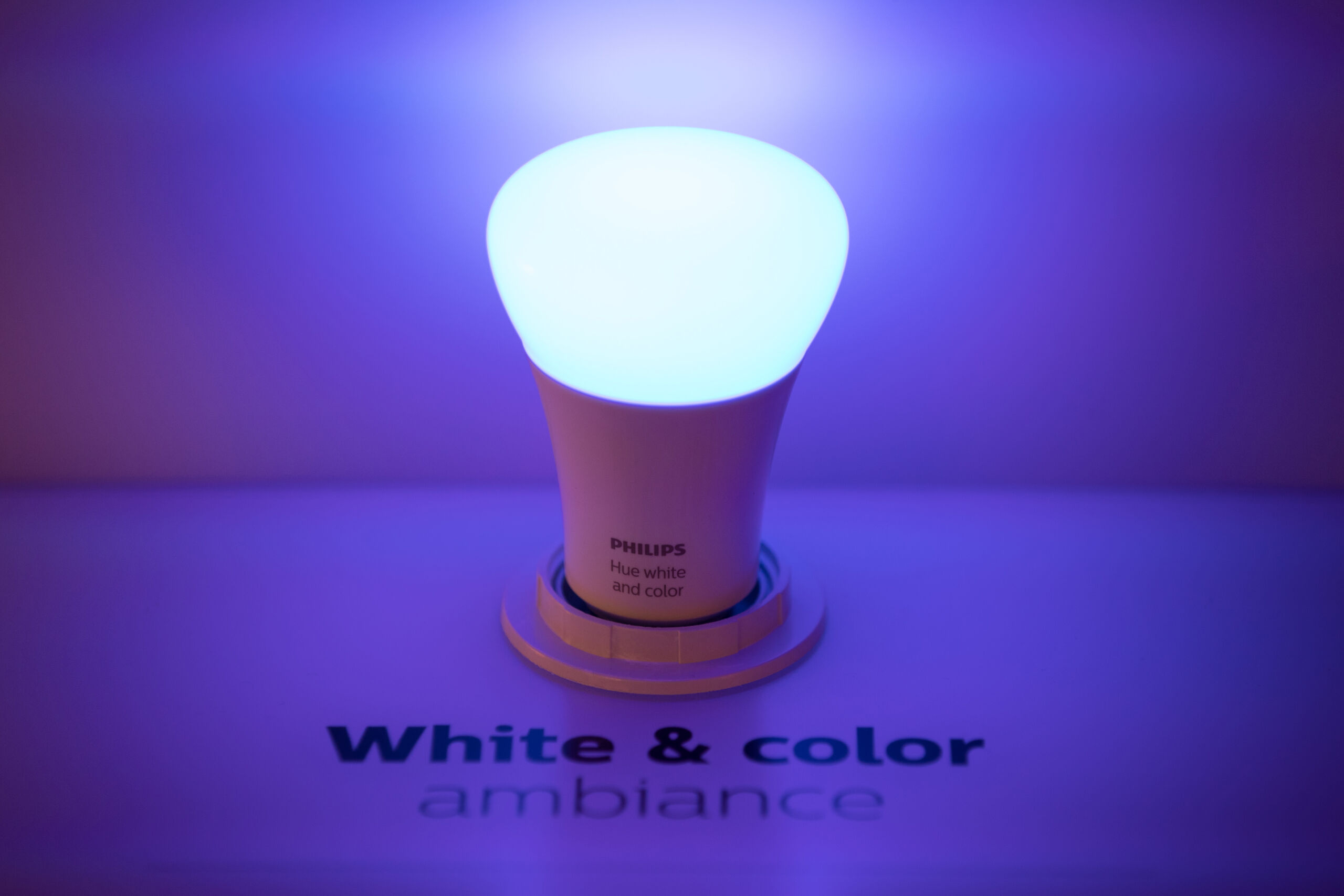
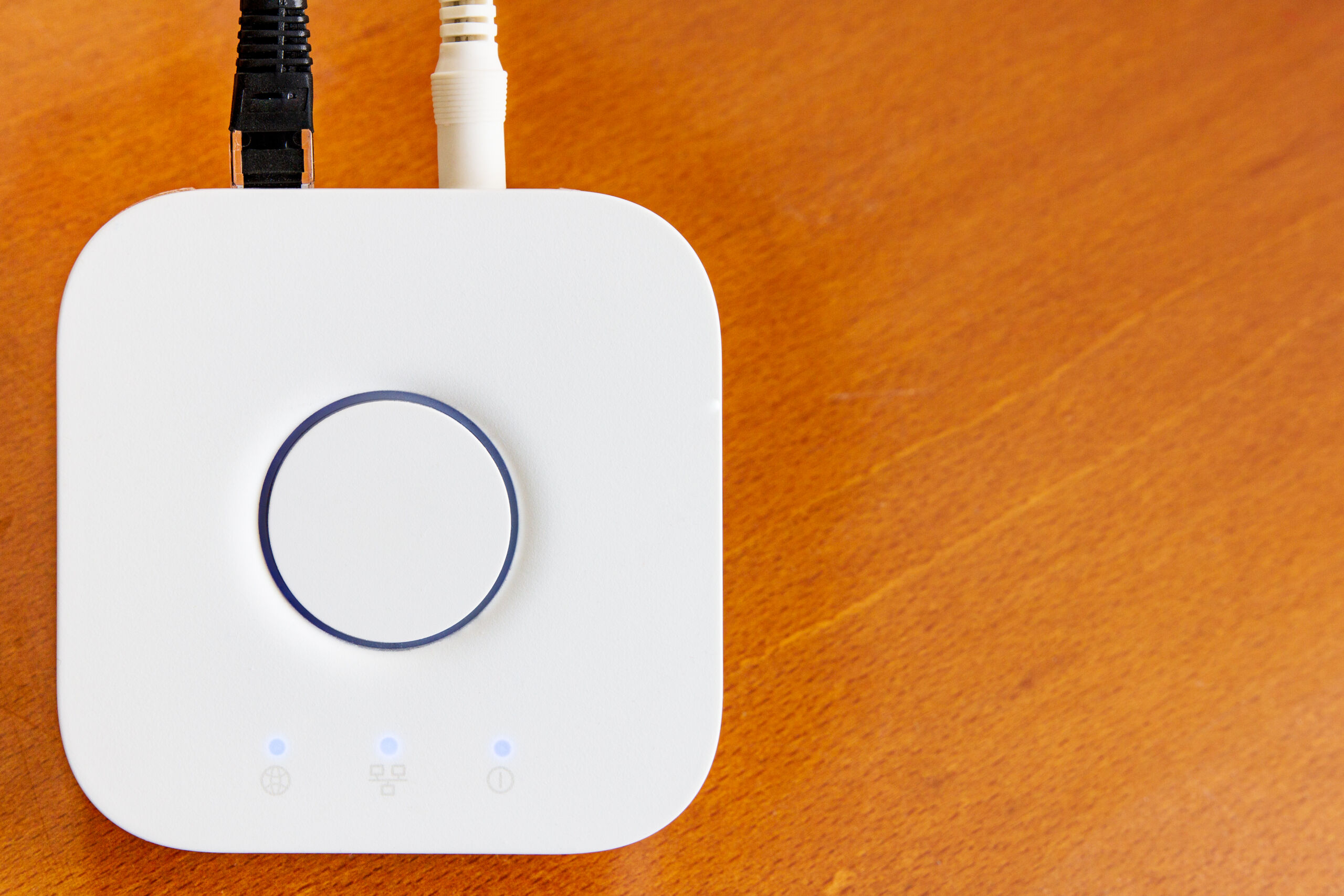
Two brands have done a savvy job of incorporating Zigbee into their tech without making a big deal of it: Philips Hue and Ikea. Hue bulbs were, for me and many others, a first step into home automation. Back then—2018, looking at the receipts—I knew that Hue bulbs ran on their own kind of ad-hoc network, but I didn’t know exactly how. All I knew was that, as time went on, the Hue bulbs proved to be the most reliable devices anywhere I set them up.
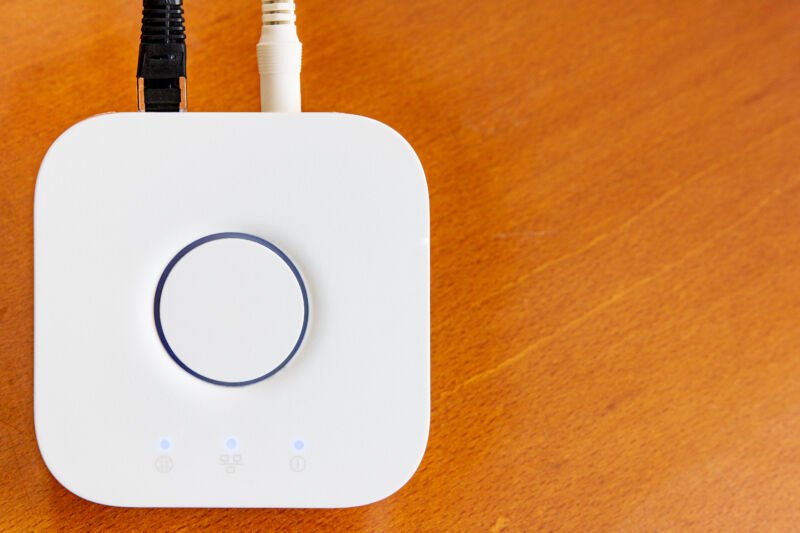
If the Hue bridge had power and Ethernet, and the bulbs were in anything resembling house distance of one another, they worked. They did not, like a Nest camera above a former garage, lose signal midway through an update and require a 6-foot ladder and multiple support phone calls for a reset. They did not, like a couple Tuya devices I acquired, require registering as a Canadian IoT developer to get local control (long story). I have never tried to turn on a Hue bulb, had it fail, and then start wondering if it was my router, an Amazon Web Services outage, or just a cruddy little antenna inside the thing.
Yes, Hue stuff is not cheap, and the Hue app would occasionally ping me about new features and holiday sales, but I could turn off notifications. There was never an important notification because nothing ever went wrong. And while I didn’t know it back then, there was always the option to reset the bulbs and have them run on straight Zigbee, even if you lose some niceties, like fading and multi-bulb schemes.
When I got the chance to review the Homey Pro, I had to research and work more directly with Zigbee and its even more obscure (at least in the US) cousin, Z-Wave. The Homey team had sent me a few devices to test out with their hub, including a motion sensor and a magnetic open/close door or window sensor. I procrastinated a bit on setting them up, vaguely stressed by everything I’d read about hubs, routing, and “self-healing” networks.
https://arstechnica.com/?p=2002334
200-foot AM radio tower disappears, halting Alabama station broadcast
A 200-foot AM radio tower has been missing for at least a week, leaving an Alabama radio station in a financial crisis and on a desperate hunt.
As first reported by Memphis’ Action News 5, Jasper, Alabama, radio station WJLX 101.5 FM/1240 AM, sent a bush hog crew to maintain the area around the tower on February 2. The tower is behind a poultry plant in a forested area, per The Guardian. Once there, a crew member called station manager Brett Elmore, informing him that the 200-foot structure that CNN says has been there since the ’50s had disappeared.
“He said, ‘The tower is gone. There’s wires [sic] everywhere, and it’s gone,’” Elmore told Action News 5.
The total value of all the equipment reported stolen is nearly $200,000, Alabama’s ABC 33/40 News said.
Now the radio station says it has to get a new tower, as well as a new transmitter and additional equipment for tasks like processing and engineering. Replacement costs are an estimated $60,000 or more, per WJLX.
Even if the tower were somehow recovered, the station would still be “in a jam,” Elmore told CNN, saying that the equipment would probably “be in pieces.”
“This has affected the operation of our AM, which needs a complete rebuild, and our FM, which is currently off the air,” the radio station said Thursday via its Facebook page.
The radio station manager has told outlets that he’s hopeful that community tips and surveillance footage from the poultry plant near the tower’s former location may eventually help police find the tower-taker(s).
“It is a federal crime, and it absolutely will not be worth it to them,” Elmore told Action 5 News.
Federal law says one who “willfully or maliciously injures or destroys any of the works, property, or material of any radio, telegraph, telephone or cable, line, station, or system, or other means of communication, operated or controlled by the United States” can face up to 10 years of imprisonment and fines.
While the tower remains MIA, WJLX remains off the air. The radio station asked the Federal Communications Commission (FCC) to allow it to keep broadcasting its FM station even though its AM station is off the air, but the FCC denied the request on Thursday, the station said, since the FCC doesn’t allow FM translators to run without the AM station also being on air. The FM station is now only available online.
In the meantime, some are concerned about how emergency communications could be disrupted by the tower disappearing.
“What if there were a crisis going on right now that that community needs to hear information from local sources [about] on a local radio station, and they can’t?” Sharon Tinsley, president of the Alabama Broadcasters Association, told ABC 33/40 News.
Tinsley told the news station that she has reached out to people to identify media outlets that might be willing to help WJLX get new equipment. There’s also a GoFundMe for the radio station.
It remains to be discovered how a radio tower heist was pulled off without causing a stir or leaving an obvious trail. As one could imagine, there aren’t a lot of past, similar incidences to try to draw clues from.
One recent case of a radio tower suddenly vanishing occurred in Nigeria last year. Nigerian newspaper publisher The Media Trust Group reported that it was supposed to get a decommissioned radio tower for its new radio station in Abuja from a Niger State village. Media Trust said it never received the tower delivery and was told by the company it contracted to decommission, transport, and set up the tower that it was “snatched away” by people they thought were from the Nigeria Security and Civil Defence Corps (NSCDC). It was eventually revealed that two NSCDC officials “were approached by a scrap metal dealer to provide him security cover to transport the items,” per Media Trust-owned Daily Trust. The newspaper publisher was still trying to get its money back for the tower as of January.
If WJLX’s case is anything like the Nigerian heist, someone likely knows more than they’re letting on, and the financial burden to the media outlet could be hard to resolve quickly.
“Surely, someone saw something or heard something,” Elmore told The Guardian.
https://arstechnica.com/?p=2002450
Android’s infamous January 2024 update is fixed and rolling out again
We’re a third of the way through February, but Android’s January 2024 Google Play System update is just now rolling out. The now-infamous update originally rolled out at the beginning of January but was pulled after it started locking users out of their phone’s local storage. Apparently, the update has been fixed and is rolling back out to devices. We were able to get it to install this morning.
The first time this update went out, some devices with multiple user accounts or work profiles experienced what Google described as “multiple apps crashing, screenshots not saving, and external storage working inconsistently.” Users described phones affected by the issue as “unusable.” Google eventually posted instructions for a manual fix on February 1, about two weeks after the update first started rolling out. These instructions were complicated, though, involving a manual process where you had to enable developer mode, download the developer tools, plug in your phone, and type in the right command prompts to delete buggy packages manually. As part of that February 1 post, Google seemed to promise to release an automated fix someday, but it has been nine days now.
Google skipped the December Play System update due to the holiday break, so this “January” update in February is the first Play System update since November. Play System updates, if you aren’t aware, are a fairly new Android update format that is separate from the OS-level system and security updates. Google created a new, super-privileged code package called an APEX Module that can house core system components like the Android RunTime or media subsystem. Google distributes these through the Play Store, allowing it to update core Android components directly without needing third-party manufacturers to do any work. It sounds great on paper, provided the updates work.
The update was the second time in four months that an automatic Android update broke some Pixel phones (for the record, one was a full OS update, the other was a Play System update). Both issues resulted in downtimes measured in weeks and “fixes” that demanded either developer-level command line work from novice users or caused data loss. Google’s track record these last four months suggests 1) it doesn’t have a reliable rollback method for buggy updates, 2) it doesn’t have adequate testing for its updates, and 3) it can’t quickly stop or repair damage caused by buggy updates. Those issues all make updating a Pixel phone a scary proposition lately.