China close to shipping 5 nm chips, despite Western curbs
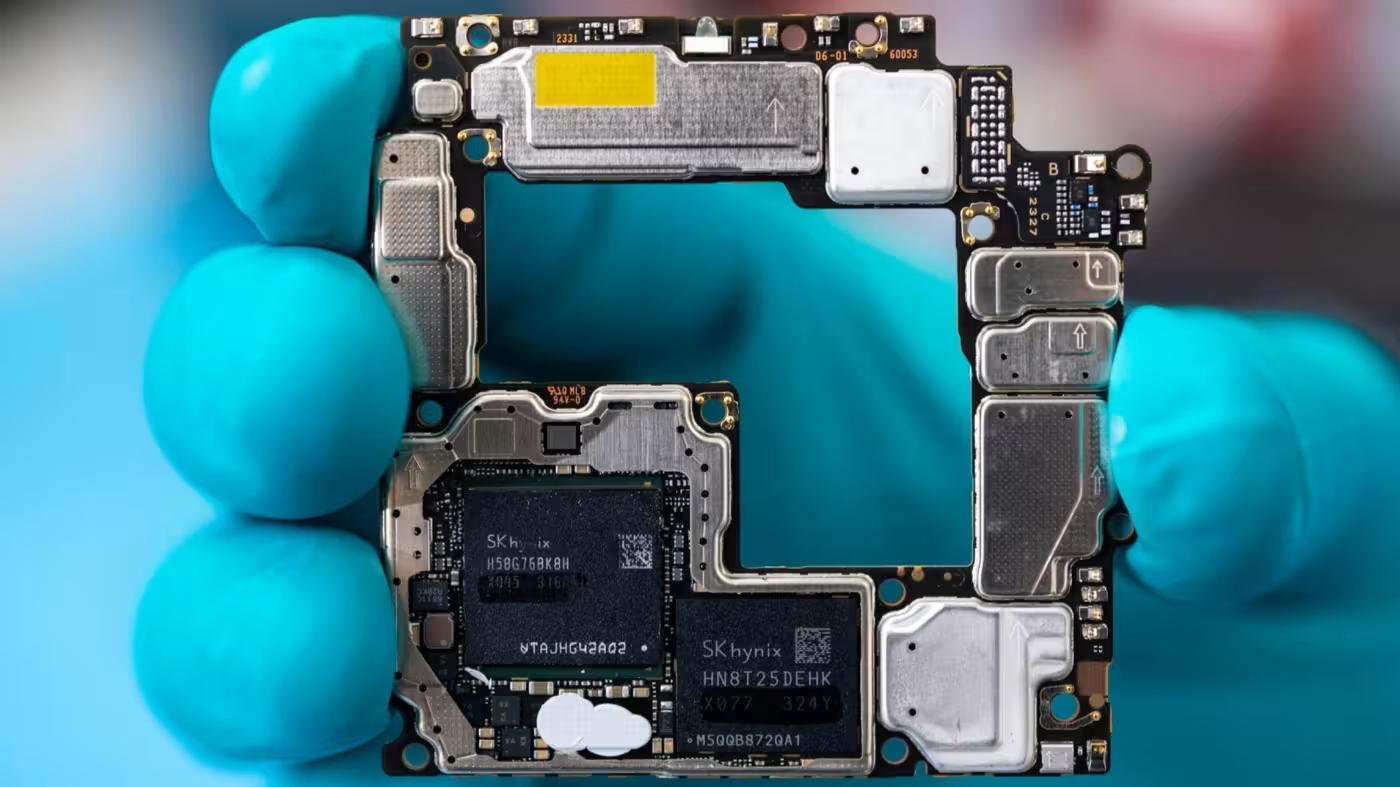
The latest Huawei-designed Kirin processor was a 7-nanometer chip made for it by SMIC that appeared in the Mate 60 Pro smartphone in August.
Enlarge / The latest Huawei-designed Kirin processor was a 7-nanometer chip made for it by SMIC that appeared in the Mate 60 Pro smartphone in August.
James Park/Bloomberg

China’s national chip champions expect to make next-generation smartphone processors as early as this year, despite US efforts to restrict their development of advanced technologies.

The country’s biggest chipmaker, SMIC, has put together new semiconductor production lines in Shanghai, according to two people familiar with the move, to mass-produce the chips designed by technology giant Huawei.

That plan supports Beijing’s goals of chip self-sufficiency, with President Joe Biden’s administration tightening export restrictions for advanced chipmaking equipment in October, citing national security concerns. The US has also been working with the Netherlands and Japan to block China’s access to the latest chip tools, such as machines from the Dutch maker ASML.

According to two people with knowledge of the plans, SMIC is aiming to use its existing stock of US and Dutch-made equipment to produce more-miniaturized 5-nanometer chips. The production line will make Kirin chips designed by Huawei’s HiSilicon unit and destined for new versions of its premium smartphones.

While 5 nm chips remain a generation behind the current cutting-edge 3 nm ones, the move would show China’s semiconductor industry is still making gradual progress, despite US export controls.

“With the new 5 nm node, Huawei is well on track to upgrade its new flagship handset and data center chips,” said one person familiar with the plans.

Huawei had surprised the industry and analysts with its advances when its Mate 60 Pro premium smartphone launched in August featuring a 7 nm processor. The phone helped it to increase shipments in China by nearly 50 percent in the fourth quarter, according to Canalys research, as it proved a big hit with consumers.

If production is judged successful enough for smartphones, Huawei’s most powerful artificial intelligence processor, the Ascend 920, will also be produced at 5 nm by SMIC, the two people said, narrowing the gap between China’s alternative AI chips and Nvidia’s highly sought-after graphics processing units.

Meanwhile, SMIC has increased its current 7 nm production capacity to make more Kirin chips and AI GPUs, said two people familiar with the matter.

Huawei’s 7 nm Ascend 910b chip is considered by analysts and industry experts to be among the most promising alternatives to Nvidia’s market-leading AI processors.

The move to create more advanced chips has incurred additional costs, however. Three people close to Chinese chip companies said that SMIC was having to charge 40 to 50 percent more for products from its 5 nm and 7 nm fabrication nodes than Taiwan’s TSMC does at the same nodes.

However, SMIC’s yield—the number of chips considered good enough to ship to customers—is also less than one-third of TSMC’s.

“Could this be just a demonstration by Huawei and SMIC to show the Chinese government it can be done?” said Douglas Fuller, an expert on China’s semiconductor industry. “If money is no object, then it might happen.”

Huawei declined to comment. SMIC did not respond to a request for comment.

The 7nm and 5nm chip fabrication lines comprise US machines stockpiled by SMIC before it was hit by the restrictions. Its fab also boasts ASML lithography machines shipped last year.

The Dutch government recently revoked an export license for some of the most advanced machines, which has blocked ASML from selling to China.

“SMIC is facing a more significant roadblock for production expansion after the US and its alliance tightened export restrictions on advanced chipmaking gear,” said one person close to the company.

“Still, the fate of China’s chip industry and its technological development in the coming years will depend on these production lines by SMIC.”

© 2024 The Financial Times Ltd. All rights reserved. Not to be redistributed, copied, or modified in any way.

https://arstechnica.com/?p=2001280


Mozilla targets scummy data brokers with Monitor Plus removal service

Illustration of Mozilla Monitor's identity leak scanning and protections

“You may be shocked to find,” the people-search websites pitch, that you or the other person you’re searching for “has a criminal record.” Other sites offer “millions of records that expose” a person for who they “really are.”

These kinds of “people search” sites are myriad. They copy from one another, and removing your information from them, while technically possible in fine-print fashion, could take days or weeks. Mozilla, the Firefox maker expanding into a suite of privacy-minded tools, has an alternative to clicking and hoping.

Mozilla Monitor Plus, just launched today, pledges to automatically monitor such “people search” sites, along with known data breaches, for your information and then take care of the removal process. The “Plus” version costs $14 if you go month by month, or $108 for a year’s subscription (about $9 per month). You can still get a free scan on Monitor to see the data breaches and data brokers where Mozilla finds your information (used with Mozilla’s fairly human-readable privacy policy).

[embedded content]
Mozilla’s Monitor Plus launch video.

There’s a bit of name and definition confusion in how Mozilla refers to background search or people-finding sites as “data brokers.” The term is also used to refer to companies that gather information not from public records and Internet history, but from the online traces left by account sign-ups, advertising, web browsing, and other things you do after clicking to agree to vague Terms of Service. Such data brokers—almost certainly working alongside the other “people search” variety—can have staggering amounts of data on nearly everybody and sell it to customers like the NSA and FBI.

One of the kinds of data-broker sites Mozilla Monitor aims to help you cleanse of your details.

Still, every bit helps. Monitor claims to have helped 10 million people be alerted when their data showed up in data breaches. Using Monitor Plus, removing your data from broker sites “typically takes 7 to 14 days,” according to Mozilla (though sometimes “within the hour”), with progress monitored and displayed. It’s a web-based product that doesn’t require Firefox to use, with a FAQ for more details.

Monitor Plus adds to Mozilla’s recent slate of privacy-focused offerings, including a VPN service (which we reviewed in 2020) and Relay, a phone and email masking service. You can bundle VPN and Relay for a notably discounted price, and we’d expect to see VPN, Relay, and Monitor Plus brought together in a privacy-focused bundle at some point.

https://arstechnica.com/?p=2001195


Google and Mozilla don’t like Apple’s new iOS browser rules

Extreme close-up photograph of finger above Chrome icon on smartphone.

Apple is being forced to make major changes to iOS in Europe, thanks to the European Union’s “Digital Markets Act.” The act cracks down on Big Tech “gatekeepers” with various interoperability, fairness, and privacy demands, and part of the changes demanded of Apple is to allow competing browser engines on iOS. The change, due in iOS 17.4, will mean rival browsers like Chrome and Firefox get to finally bring their own web rendering code to iPhones and iPads. Despite what sounds like a big improvement to the iOS browser situation, Google and Mozilla aren’t happy with Apple’s proposed changes.

Earlier, Mozilla spokesperson Damiano DeMonte gave a comment to The Verge on Apple’s policy changes and took issue with the decision to limit the browser changes to the EU. “We are still reviewing the technical details but are extremely disappointed with Apple’s proposed plan to restrict the newly-announced BrowserEngineKit to EU-specific apps,” DeMonte said. “The effect of this would be to force an independent browser like Firefox to build and maintain two separate browser implementations—a burden Apple themselves will not have to bear.” DeMonte added: “Apple’s proposals fail to give consumers viable choices by making it as painful as possible for others to provide competitive alternatives to Safari. This is another example of Apple creating barriers to prevent true browser competition on iOS.”

Apple’s framework that allows for alternative browser engines is called “BrowserEngineKit” and already has public documentation as part of the iOS 17.4 beta. Browser vendors will need to earn Apple’s approval to use the framework in a production app, and like all iOS apps, that approval will come with several requirements. None of the requirements jump out as egregious: Apple wants browser vendors to have a certain level of web standards support, pledge to fix security vulnerabilities quickly and protect the user’s privacy by showing the standard consent prompts for access to things like location. You’re not allowed to “sync cookies and state between the browser and any other apps, even other apps of the developer,” which seems aimed directly at Google and its preference to have all its iOS apps talk to each other. The big negative is that your BrowserEngineKit app is limited to the EU, because—surprise—the EU rules only apply to the EU.

Speaking of Google, Google’s VP of engineering for Chrome, Parisa Tabriz, commented on DeMonte’s statement on X, saying, “Strong agree with @mozilla. @Apple isn’t serious about supporting web browser or engine choice on iOS. Their strategy is overly restrictive, and won’t meaningfully lead to real choice for browser developers.”

Today, you can download what look like “alternative” browsers on iOS, like Chrome and Firefox, but these browsers are mostly just skins overtop of Apple’s Safari engine. iOS app developers aren’t actually allowed to include their own browser engines, so everything uses Safari’s WebKit engine, with a new UI and settings and sync features layered on top. That means all of WebKit’s bugs and feature support decisions apply to every browser.

Being stuck with Safari isn’t great for users. Over the years, Safari has earned a reputation as “the new IE” from some web developers, due to lagging behind the competition in its support for advanced web features. Safari has gotten notably better lately, though. For instance, in 2023, it finally shipped support for push notifications, allowing web apps to better compete with native apps downloaded from Apple’s cash-cow App Store. Apple’s support of push notifications came seven years after Google and Mozilla rolled out the feature.

More competition would be great for the iOS browser space, but the reality is that competition will mostly be from the other big “gatekeeper” in the room: Google. Chrome is the project with the resources and reach to better compete with Safari, and working its way into iOS will bring the web close to a Chrome monoculture. Google’s browser may have better support for certain web features, but it will also come with a built-in tracking system that spies on users and serves up their interests to advertisers. Safari has a much better privacy story.

Even though only EU users will get to choose from several actually different browsers, everyone still has to compete in the EU, and that includes Safari. For the rest of the world, even they don’t get a real browser choice; competing in the EU browser wars should make the only iOS browser better for everyone. The EU rules have a compliance deadline of March 2024, so iOS 17.4 needs to be out by then. Google and Mozilla have been working on full versions of their browsers for iOS for at least a year now. Maybe they’ll be ready for launch?

https://arstechnica.com/?p=2001030


Google will no longer back up the Internet: Cached webpages are dead

A large Google logo is displayed amidst foliage.

Google will no longer be keeping a backup of the entire Internet. Google Search’s “cached” links have long been an alternative way to load a website that was down or had changed, but now the company is killing them off. Google “Search Liaison” Danny Sullivan confirmed the feature removal in an X post, saying the feature “was meant for helping people access pages when way back, you often couldn’t depend on a page loading. These days, things have greatly improved. So, it was decided to retire it.”

The feature has been appearing and disappearing for some people since December, and currently, we don’t see any cache links in Google Search. For now, you can still build your own cache links even without the button, just by going to “https://webcache.googleusercontent.com/search?q=cache:” plus a website URL, or by typing “cache:” plus a URL into Google Search. For now, the cached version of Ars Technica seems to still work. All of Google’s support pages about cached sites have been taken down.

Cached links used to live under the drop-down menu next to every search result on Google’s page. As the Google web crawler scoured the Internet for new and updated webpages, it would also save a copy of whatever it was seeing. That quickly led to Google having a backup of basically the entire Internet, using what was probably an uncountable number of petabytes of data. Google is in the era of cost savings now, so assuming Google can just start deleting cache data, it can probably free up a lot of resources.

Cached links were great if the website was down or quickly changed, but they also gave some insight over the years about how the “Google Bot” web crawler views the web. The pages aren’t necessarily rendered like how you would expect. In the past, pages were text-only, but slowly the Google Bot learned about media and other rich data like javascript (there are a ton of specialized Google Bots now). A lot of Google Bot details are shrouded in secrecy to hide from SEO spammers, but you could learn a lot by investigating what cached pages look like. In 2020, Google switched to mobile-by-default, so for instance, if you visit that cached Ars link from earlier, you get the mobile site. If you run a website and want to learn more about what a site looks like to a Google Bot, you can still do that, though only for your own site, from the Search Console.

The death of cached sites will mean the Internet Archive has a larger burden of archiving and tracking changes on the world’s webpages.

https://arstechnica.com/?p=2000802


“Rasti Computer” is a detailed GRiD Compass tribute made from Framework innards

Penk Chen's Rasti Computer
Enlarge / Penk Chen’s Rasti Computer, built with 3D printing, Framework laptop internals, and a deep love for the first laptop that went to space.

If I had to figure out what to do with the insides of a Framework 13 laptop I had lying around after today, I might not turn it into a strange but compelling “Slabtop” this time.

No, I think that, having seen Penk Chen’s remarkable project to fit Framework parts into a kind of modern restyling of the Grid Compass laptop, I would have to wait until Chen posts detailed build instructions for this project… and until I had a 3D printer… and could gather the custom mechanical keyboard parts. Sure, that’s a lot harder, but it’s hard to put a price on drawing unnecessary attention to yourself while you chonk away on your faux-used future laptop.

The Rasti Computer, which Chen writes is “derived from the German compound word ‘Rasterrahmen’ (grid + framework),” has at its core the mainboard, battery, and antennae from the highly modular and repairable first-generation Framework laptop. It takes input from the custom keyboard Chen designed for the chassis, with custom PCB and 3D-printed keycaps and case. It sends images to a 10.4-inch QLED 1600×720 display, and it all fits inside a bevy of 3D-printed pieces with some fairly standard hex-head bolts. Oh, and the hinges from a 2012 13-inch MacBook pro, though that’s possibly negotiable.

Chen’s project derives from, and pays tribute to, the Grid Compass (styled “GRiD” by its maker, GRiD Systems Corp.). The Compass was probably (again, probably) the first clamshell-style laptop made. It saw use by NASA’s Space Shuttle program, as well as by military and other entities needing a laptop that was both compact and throw-it-at-a-wall durable. It had 256KB of memory by default (less than half the amount Bill Gates didn’t say you should ever need), a 320×240 pixel screen, and an Intel 8086 processor. Some models contained a 1,200bps modem. It cost more than $8,000 in 1982, or almost $25,000 today.

We have it on good word from some resident vintage computer collectors that the Compass remains a rare and expensive item to get. Rebuilding a Framework mainboard into a modern-day Grid-like doesn’t seem particularly cheap, depending on your 3D printer setup, or lack thereof. Nor is it likely to be easy, given a glimpse at how it goes together. But it will give you a unique portable and conversation piece, one that runs programs beyond Grid-OS.

You can read more about the Grid Compass at Cooper Hewitt, the firm where Compass designer Bill Moggridge worked as design director from 2010 until his 2011 passing. If you remember bubble memory, it’s a dip back into that genial trauma. Hackaday, where we first saw the Rasti project, wrote up a similarly Compass-inspired laptop, the GRIZ Sextant, with a Raspberry Pi at its core.

https://arstechnica.com/?p=2000774


New 6GB version of the RTX 3050 may be Nvidia’s first sub-$200 GPU in over 4 years

New 6GB version of the RTX 3050 may be Nvidia’s first sub-$200 GPU in over 4 years

Nvidia launched three new GPUs last month, part of a Super overhaul of the RTX 40-series designed to improve the value of the company’s $600-and-up graphics cards.

But today, the company is quietly doing something that it hasn’t done in over four years: launching a sub-$200 graphics card. As spotted by TechPowerUp, Nvidia partners like Gigabyte have begun officially announcing a 6GB version of the old RTX 3050 graphics card, albeit with less memory and memory bandwidth, fewer CUDA cores, and lower power requirements.

The announcement follows a few days of leaked retail listings, which generally point to an MSRP of roughly $179 for the new-old card. This would make it Nvidia’s first sub-$200 graphics card launch since the GeForce GTX 1650 Super came out in late 2019, a four-year gap caused partially by a cryptocurrency- and pandemic-fueled GPU shortage that lasted from late 2020 into mid-to-late 2022.

RTX 3050 6GB RTX 3050 8GB GTX 1650 Super GTX 1650 RTX 2060 6GB RTX 3060 12GB RTX 4060
CUDA Cores 2,048 or 2,304? 2,560 1,280 896 1,920 3,584 3,072
Boost Clock 1,470 MHz 1,777 MHz 1,725 MHz 1,665 MHz 1,680 MHz 1,777 MHz 2,460 MHz
Memory Bus Width 96-bit 128-bit 128-bit 128-bit 128-bit 192-bit 128-bit
Memory Clock 1,750 MHz 1,750 MHz 1,500 MHz 2,000 MHz 1,750 MHz 1,875 MHz 2,125MHz
Memory size 6GB GDDR6 8GB GDDR6 4GB GDDR6 4GB GDDR5 6GB GDDR6 12GB GDDR6 8GB GDDR6
TGP 70 W  130 W 100 W 75 W 160 W 170 W 115 W

We weren’t in love with the original 8GB version of the 3050—”weird,” “overpriced,” and “could’ve been worse,” we wrote of it during the depths of the GPU shortage in early 2022—and the 6GB version is cut down even further. Its 6GB of memory is attached to a narrow 96-bit memory bus. And while reports differ on exactly how many CUDA cores we can expect—TechPowerUp and Tom’s Hardware say 2,048, while Gigabyte’s 6GB 3050 product pages list 2,304—it’s clear that there are fewer than in the original RTX 3050, and their clock speed is lower to boot.

These specs should make it an OK card for 1080p gaming at medium to high settings, depending on the game. It should also be a decent fit for small-form-factor systems—one of Gigabyte’s versions is a low-profile card suitable for many office desktops—and its 70 W power requirement should mean that the cards can draw all the power they need from the PCI Express slot, without the need for an external power connector.

As a cut-down version of a 2-year-old card based on a 3.5-year-old last-generation GPU architecture, the RTX 3050 isn’t very exciting. But it gets more interesting once you consider that Nvidia’s partners are currently selling the old non-Super version of the GTX 1650 for around the same price. It’s difficult to predict how much the narrower memory bus will impact the 6GB 3050’s performance, but compared to the 1650, it has a significantly higher number of newer CUDA cores, ray-tracing support, another 2GB of RAM, GDDR6 instead of GDDR5, and support for Nvidia’s DLSS upscaling technology (albeit not DLSS Frame Generation, which remains exclusive to the 40-series).

The new card also complicates one of AMD’s selling points for its new Ryzen 8000G processors, which include reasonably capable 1080p integrated GPUs. AMD compared the cost of a $329 Ryzen 7 8700G favorably to the cost of a Core i5 CPU and a GTX 1650 GPU, which deliver similar performance for more money. But the RTX 3050 should decisively outrun the 8700G, and AMD’s pricing argument was already being undercut by the extra expense of socket AM5 motherboards and DDR5 memory.

Nice as it is to see at least some twitch of life in the entry-level GPU market, we’re still a long way from where we were in the mid- to late-2010s, when sub-$200 cards like the GTX 1050 Ti and the 1650 launched not long after the other cards in the same series and used the newest GPU architectures available at the time. There’s a laptop GPU in the RTX 4050 series, but a desktop version looks highly unlikely at this point—to say nothing of a desktop version at or under $200. But a belated, uninspiring improvement is an improvement nonetheless.

https://arstechnica.com/?p=2000798


YouTube Premium announces 100 million subscribers

YouTube Premium announces 100 million subscribers

Hot on the heels of Google’s “One” subscription plan obtaining 100 million users, YouTube is also hitting that big milestone, with 100 million people paying for Premium and YouTube Music. YouTube’s subscription data didn’t make it into the earnings call three days ago.

It’s hard to know what exactly is driving YouTube’s subscriptions. Premium gets you both ad-free YouTube videos and YouTube Music, and it’s easy to imagine people sticking to one or the other. Ad-free videos have been getting the most aggressive promotion lately, with Google cracking down on ad-block users by blocking video playback and displaying interstitial pop-ups. After warning users that ad blockers violate YouTube’s terms of service, the pop-ups show a big “try YouTube Premium” button. Premium also added an exclusive “enhanced bitrate” 1080p setting, although 2K, 4K, and 8K options have always been free.

There’s not much new on the music side of things. YouTube Music is free with ads and a more limited feature set, but subscribing gets you ad-free playback, background playback on phones, and access to YouTube Music streaming on Google’s various speakers. YouTube’s blog post highlights quotes from many big music industry CEOs celebrating the service.

Google’s announcement bundles together two different subscriptions. There’s the $13.99 per month YouTube Premium subscription, which gets you ad-free YouTube and YouTube Music, and a music-only “YouTube Music Premium” subscription, which is $10.99 per month (Google increased prices last year). If you’re a Spotify customer and don’t want Google’s music offering, the company doesn’t have a plan for you. From 2021 to 2023, Google had a music-free “YouTube Premium Lite” subscription plan available only in Europe, but the company killed the plan a few months ago.

https://arstechnica.com/?p=2000791


Google’s Pixel storage issue fix requires developer tools and a terminal

Google’s Pixel storage issue fix requires developer tools and a terminal

Google has another fix for the second major storage bug Pixel phones have seen in the last four months. Last week, reports surfaced that some Pixel owners were being locked out of their phone’s local storage, creating a nearly useless phone with all sorts of issues. Many blamed the January 2024 Google Play system update for the issue, and yesterday, Google confirmed that hypothesis. Google posted an official solution to the issue on the Pixel Community Forums, but there’s no user-friendly solution here. Google’s automatic update system broke people’s devices, but the fix is completely manual, requiring users to download the developer tools, install drivers, change settings, plug in their phones, and delete certain files via a command-line interface.

The good news is that, if you’ve left your phone sitting around in a nearly useless state for the last week or two, following the directions means you won’t actually lose any data. Having a week or two of downtime is not acceptable to a lot of people, though, and several users replied to the thread saying they had already wiped their device to get their phone working again and had to deal with the resulting data loss (despite many attempts and promises, Android does not have a comprehensive backup system that works).

The bad news is that I don’t think many normal users will be able to follow Google’s directions. First, you’ll need to perform the secret action to enable Android’s Developer Options (you tap on the build number seven times). Then, you have to download Google’s “SDK Platform-Tools” zip file, which is meant for app developers. After that, plug in your phone, switch to the correct “File transfer” connection mode, open a terminal, navigate to the platform-tools folder, and run both “./adb uninstall com.google.android.media.swcodec” and “./adb uninstall com.google.android.media.” Then reboot the phone and hope that works.

I skipped a few steps (please read Google’s instructions if you’re trying this), but that’s the basic gist of it. The tool Google is having people use is “ADB,” or the “Android Debug Bridge.” This is meant to give developers command-line access to their phones, which allows them to quickly push new app builds to the device, get a readout of system logs, and turn on special developer flags for various testing.

Google’s instructions will only work if everything goes smoothly, and as someone with hundreds of hours in ADB from testing various Android versions, I will guess that it will probably not go smoothly. On Windows, the ADB drivers often don’t install automatically. Instead, you’ll get “unknown device” or some other incorrect device detection, and you won’t be able to run any commands. You usually have to use the “let me pick from drivers on my computer” option, browse through your file system, and manually “select” (more like “guess”) the driver you need while clicking through various warnings. You can already see at least one user with driver issues in the thread, with Windows telling them, “Your device has malfunctioned,” when really it just needs a driver.

https://arstechnica.com/?p=2000532


Hulu, Disney+ password crackdown kills account sharing on March 14

<img src="https://rassegna.lbit-solution.it/wp-content/uploads/2024/02/hulu-disney-password-crackdown-kills-account-sharing-on-march-14.jpg" alt="Selena Gomez and Martin Short on the set of Only Murders in the Building on February 14, 2022, in New York City. “>
Enlarge / Selena Gomez and Martin Short on the set of Only Murders in the Building on February 14, 2022, in New York City.

Hulu and Disney+ subscribers have until March 14 to stop sharing their login information with people outside of their household. Disney-owned streaming services are the next to adopt the password-crackdown strategy that has helped Netflix add millions of subscribers.

An email sent from “The Hulu Team” to subscribers yesterday and viewed by Ars Technica tells customers that Hulu is “adding limitations on sharing your account outside of your household.”

Hulu’s subscriber agreement, updated on January 25, now states that users “may not share your subscription outside of your household,” with household being defined as the “collection of devices associated with your primary personal residence that are used by the individuals who reside therein.”

The updated terms also note that Hulu might scrutinize user accounts to ensure that the accounts aren’t being used on devices located outside of the subscriber’s residence:

We may, in our sole discretion, analyze the use of your account to determine compliance with this Agreement. If we determine, in our sole discretion, that you have violated this Agreement, we may limit or terminate access to the Service and/or take any other steps as permitted by this Agreement (including those set forth in Section 6 of this Agreement).

Section 6 of Hulu’s subscriber agreement says Hulu can “restrict, suspend, or terminate” access without notice.

Hulu didn’t respond to a request for comment on how exactly it will “analyze the use” of accounts. But Netflix, which started its password crackdown in March 2022 and brought it to the US in May 2023, says it uses “information such as IP addresses, device IDs, and account activity to determine whether a device signed in to your account is part of your Netflix Household” and doesn’t collect GPS data from devices.

According to the email sent to Hulu subscribers, the policy will apply immediately to people subscribing to Hulu from now on.

The updated language in Hulu’s subscriber agreement matches what’s written in the Disney+/ESPN+ subscriber agreement, which was also updated on January 25. Disney+’s password crackdown first started in November in Canada.

A Disney spokesperson confirmed to Ars Technica that Disney+ subscribers have until March 14 to comply. The rep also said that notifications were sent to Disney+’s US subscribers yesterday; although, it’s possible that some subscribers didn’t receive an email alert, as is the case with a subscriber in my household.

The representative didn’t respond to a question asking how Disney+ will “analyze” user accounts to identify account sharing.

Push for profits

Disney CEO Bob Iger first hinted at a Disney streaming-password crackdown in August during an earnings call. He highlighted a “significant” amount of password sharing among Disney-owned streaming services and said Disney had “the technical capability to monitor much of this.” The executive hopes a password crackdown will help drive subscribers and push profits to Netflix-like status. Disney is aiming to make its overall streaming services business profitable by the end of 2024.

In November, it was reported that Disney+ had lost $11 billion since launching in November 2019. The streaming service has sought to grow revenue by increasing prices and encouraging users to join its subscription tier with commercials, which is said to bring streaming services higher average revenue per user (ARPU) than non-ad plans.

Hulu, which Disney will soon own completely, has been profitable in the past, and in Disney’s most recent financial quarter, it had a higher monthly ARPU than Disney+. Yet, Hulu has far fewer subscribers than Disney+ (48.5 million versus 150.2 million). Cracking down on Hulu password sharing is an obvious way for Disney to try to squeeze more money from the more financially successful streaming service.

Such moves run the risk of driving away users. However, Hulu, like Netflix, may be able to win over longtime users who have gotten accustomed to having easy access to Hulu, even if they weren’t paying for it. Disney+, meanwhile, is a newer service, so a change in policy may not feel as jarring to some.

Netflix, which allowed account sharing for years, has seen success with its password crackdown, saying in November that the efforts helped it add 8.8 million subscribers. Unlike the Disney-owned streaming services, though, Netflix allows people to add extra members to their non-ad subscription (in the US, Netflix charges $7.99 per person per month).

As Disney embarks on an uphill climb to make streaming successful this year, you can expect it to continue following the leader while also trying to compete with it. Around the same time as the password-sharing ban takes full effect, Disney should also unveil a combined Hulu-Disney+ app, a rare attempt at improving a streaming service that doesn’t center on pulling additional monthly dollars from customers.

https://arstechnica.com/?p=2000510


Apple declares last MacBook Pro with an optical drive obsolete

A bulky-looking older Apple laptop
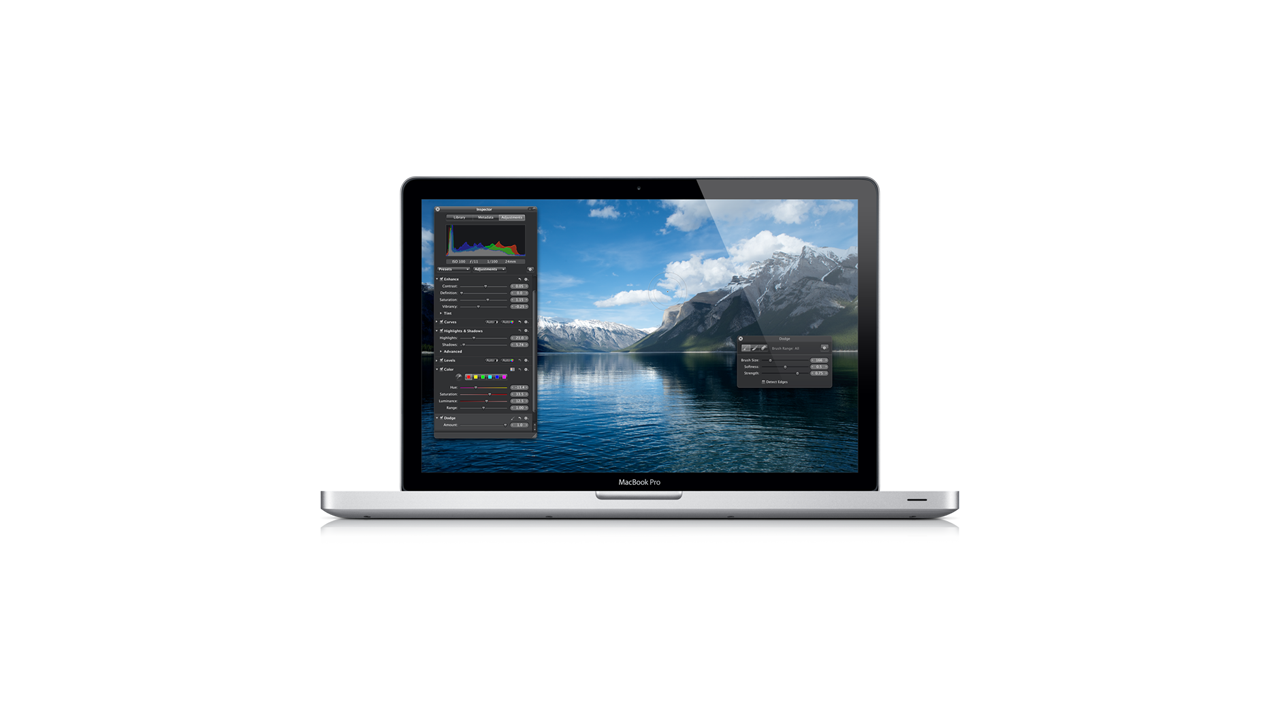
Enlarge / The 13-inch MacBook Pro from 2012.

Sometimes, it’s worth taking a moment to note the end of an era, even when that ending might have happened a long time ago. Today, Apple announced that it considers the mid-2012 13-inch MacBook Pro obsolete. It was the last MacBook Pro to include an optical drive for playing CDs or DVDs.

This means that any MacBook Pro with an optical drive is no longer supported.

Regarding products deemed obsolete, Apple’s support page on the topic says:

Products are considered obsolete when Apple stopped distributing them for sale more than 7 years ago… Apple discontinues all hardware service for obsolete products, and service providers cannot order parts for obsolete products. Mac laptops may be eligible for an extended battery-only repair period for up to 10 years from when the product was last distributed for sale, subject to parts availability.

Apple stopped selling the mid-2012 13-inch MacBook Pro in October 2016 (it was available for a while as the company’s budget option in the Pro lineup), so anyone doing the math saw this coming. Further, it’s been years since this particular Mac was supported by the latest Apple OS releases. Released in 2020, macOS Big Sur ended support for the device, though older versions of macOS continued to get security updates.

The exclusion of an optical drive in subsequent MacBook Pro models was controversial, but it’s now clear that whether Apple was jumping the gun at that point or not, optical drives have fallen away for most users, and many Windows laptops no longer include them.

Apple still sells an external optical drive it calls SuperDrive that can read and burn CDs and DVDs. However, it hasn’t been updated in ages; it still uses USB-A, which most Mac hardware no longer includes. So, even if you have Apple’s external CD/DVD drive, you probably need an adapter to use it with your modern Mac.

That’s a sign of just how relevant optical drives are for today’s users, but this seems like a good time to remember a bygone era of physical media that wasn’t so long ago. So farewell, mid-2012 13-inch MacBook Pro—honestly, most of us didn’t miss you by this point.

https://arstechnica.com/?p=2000360