BRINC’s new police drone uses Starlink, carries Narcan, chases vehicles at 60mph

“If you had Guardian playing a siren tone that was tuned to match the frequency of the speaker and a police car playing as the siren tone next to it, Guardian would be three times louder,” he said.

The Seattle-based BRINC makes drones currently used by over 900 American cities, including Laredo, Texas, and Chattanooga, Tennessee, as part of the growing “drone as first responder” (DFR) system.

Typically, cities pay a few hundred thousand dollars per year per drone—with contracts reaching into the millions with more drones and more capabilities. A year ago, Newport Beach, California, announced a $2.17 million, five-year contract with BRINC for seven drones. (According to Forbes, BRINC is valued at around $480 million as of last year.)

One existing customer, the Redmond Police Department in the state of Washington, told Ars that this new model was a “completely new and different airframe.”

“This is a huge step in DFR innovation and possibility,” emailed Jill Green, a police spokesperson.

Still, one longtime drone watcher and analyst, Faine Greenwood, wasn’t as taken with this news.

“Even if these claims are true (which I doubt at the moment), the speed/battery life is an incremental improvement over other comparable drone platforms,” Greenwood told Ars by email. “This is not a game-changer situation, and I don’t see it as really changing the calculus for police who are on the fence about drones.”

https://arstechnica.com/gadgets/2026/03/brincs-new-police-drone-uses-starlink-carries-narcan-chases-vehicles-at-60mph/


Reddit will require “fishy” accounts to verify they are run by a human

Reddit will require accounts that exhibit “automated or otherwise fishy behavior” to verify that a human runs them, Reddit CEO Steve Huffman said in a Reddit post today. The verification process aims to combat unwanted bots from flooding Reddit at a time when AI bots are poised to take over the Internet.

“As AI becomes a bigger part of the Internet, we want to make sure that when you’re on Reddit, you know when you’re talking to a person and when you’re not,” Huffman said.

Human verification will only occur if Reddit suspects that an account is a bot. This is “rare” and won’t apply to “most users,” Huffman emphasized. If the account cannot prove that it’s human, it “may be restricted,” he said.

Reddit will check if an account is run by a human by using third-party tools that Huffman said won’t expose users’ true identity, Reddit username, or Reddit activity. Current methods that Reddit is exploring include passkeys, which Huffman said are a great starting point but don’t provide any “proof of individuality or anything other than ‘a human probably did something.’”

Reddit is also looking into third-party biometric services, like World ID, which uses iris-scanning tech.

“I think the Internet needs verification solutions like this, where your account information, usage data, and identity never mix,” Huffman said.

A last resort may be third-party government ID services, which Reddit is already required to use in some geographies, like the UK. Huffman said this is “the least secure, least private, and least preferred” method for human verification on Reddit.

“When we are forced to do this, we design the integrations so that we never actually see your ID information, so your Reddit data cannot be tied to you,” he added.

https://arstechnica.com/gadgets/2026/03/reddit-will-require-fishy-accounts-to-verify-they-are-run-by-a-human/


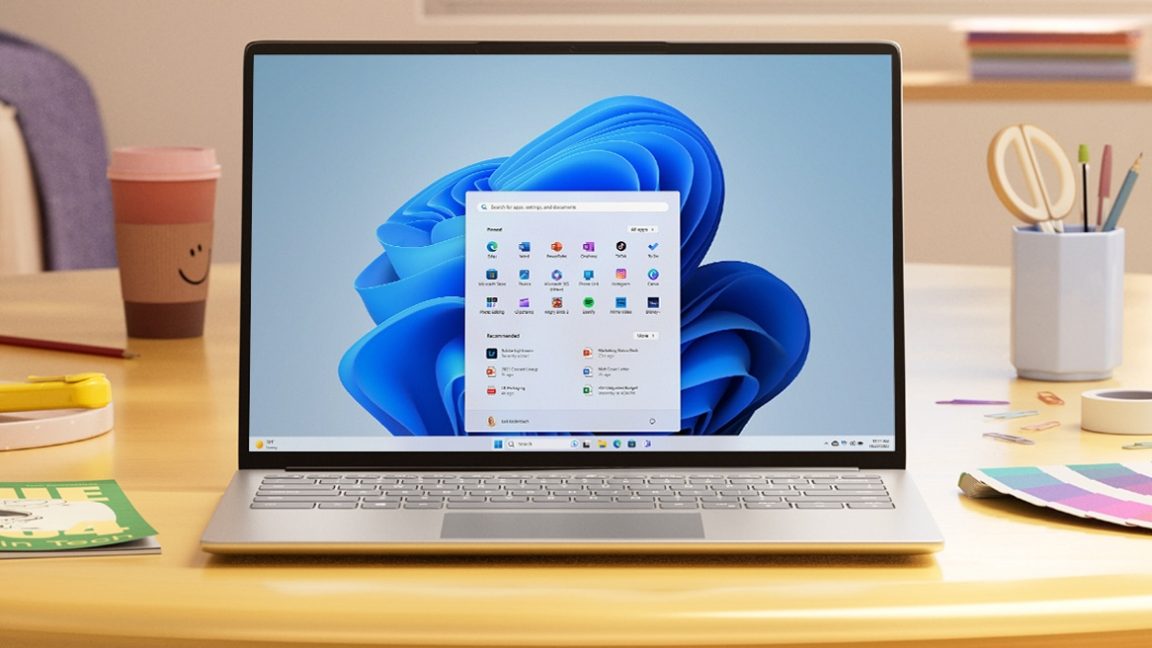
Microsoft keeps insisting that it’s deeply committed to the quality of Windows 11

AI skeptics may also be cheered to hear that the company is pumping the brakes on Copilot, which has made its way into everything from the keyboard to the humble notepad.exe over the last few years (even as the standalone Copilot app’s appearance and capabilities have changed pretty dramatically from iteration to iteration). Davuluri said Microsoft would be “more intentional” about where Copilot appears and how it works and specifically promised to “[reduce unnecessary Copilot entry points, starting with apps like Snipping Tool, Photos, Widgets, and Notepad.”

Davuluri also said Microsoft would begin testing less-disruptive Windows updates that would give users more opportunities to (temporarily) skip them; a “faster and more dependable File Explorer,” “quieter defaults” for the Widgets pane, and better descriptions for the various Windows Insider Program channels and improved mechanisms for sending feedback to Microsoft.

Beyond these specific short-term changes, Davuluri also listed a broader laundry list of goals, including more reliable operation for Bluetooth and USB peripherals, faster and more accurate search, reduced memory usage, and improving responsiveness and performance for bedrock Windows components like the Start menu, taskbar, and File Explorer.

These are all nice-sounding promises, though the specifics will matter a lot—being “more intentional” about Copilot, for example, still leaves room for Microsoft to intentionally force it into each and every one of Windows’ built-in apps. And one major annoyance, the mandatory Microsoft Account sign-in requirement, isn’t mentioned anywhere in this post. But Microsoft at least seems to be moving in the right direction.

Windows 10 has remained enduringly popular despite its October 2025 end-of-support date, and one year of additional free-ish security updates has given people who want to keep Windows 10 a way to do so without exposing themselves to security holes. But we’re already nearly halfway through that year, which means a Windows 11 upgrade is probably in your future one way or another. Hopefully, Microsoft’s repeatedly professed commitment to quality means the OS will be more welcoming by the time October rolls around.

https://arstechnica.com/gadgets/2026/03/microsoft-keeps-insisting-that-its-deeply-committed-to-the-quality-of-windows-11/


Amazon is reportedly developing an AI-centric smartphone

AI integration is a “key focus” of Transformer, per Reuters’ sources, who said that Amazon wants the phone to drive usage of Amazon’s AI products. The phone may use AI in lieu of app stores, the sources said, similar to the Light Phone, which the Transfomer development team is taking “inspiration” from, Reuters said, citing two of its sources.

Reuters’ report doesn’t explicitly mention “Alexa+,” the generative AI version of Alexa, but the subscription-based assistant would likely be central to Transformers’ reported goals.

Fire Phone, take two

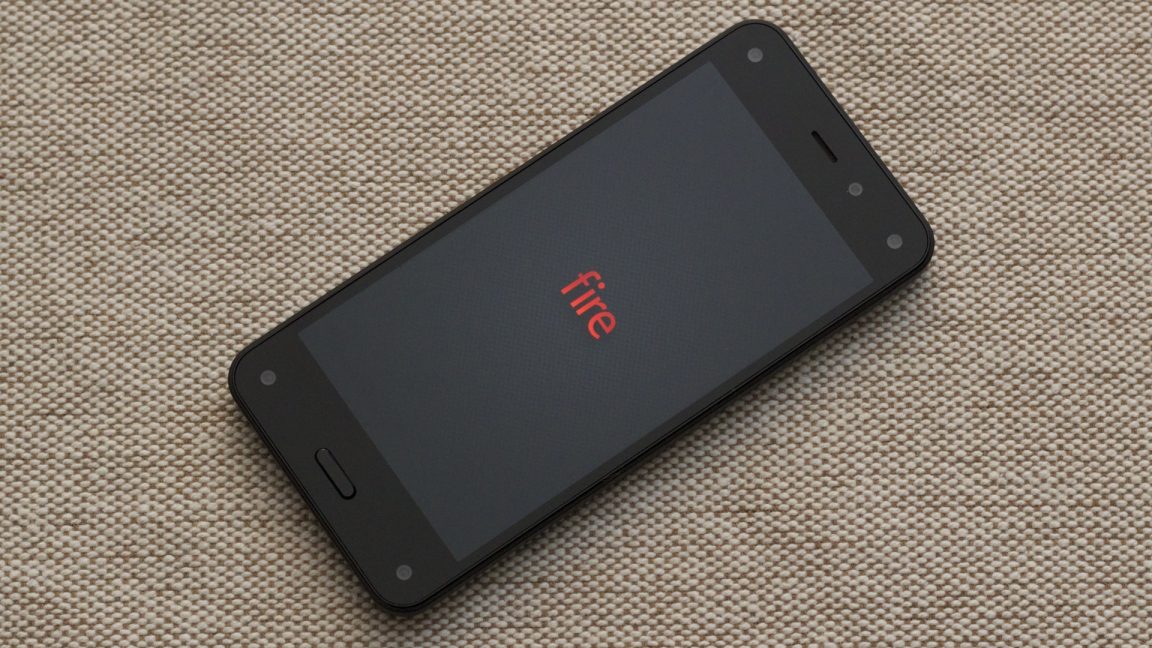
Amazon’s reported attempts to develop a new smartphone come at an interesting time. It’s been about 11 years since Amazon killed the FireOS-based Fire Phone, which sold for only about a year before it was discontinued due to poor sales. Meanwhile, Amazon’s devices division has reportedly struggled financially for years, largely because Alexa-based devices have failed to generate revenue.

A return to smartphones would pit Amazon against Apple and Samsung, which dominate the market and bring years of app ecosystems, hardware innovation, AI development, and loyal fanbases.

It’s unclear why Amazon thinks now is a good time to get back into phones. Even potentially low prices may not be enough to convince people to buy.

https://arstechnica.com/gadgets/2026/03/amazon-is-reportedly-developing-an-ai-centric-smartphone/


Major SteamOS update adds support for Steam Machine, even more third-party hardware

One of the key improvements for the Steam Machine and other desktop hardware is “greatly improved video memory management with discrete GPU platforms.” When we tested SteamOS on a range of generic PC hardware last year, we found that GPUs with 8GB of RAM could perform a lot worse in SteamOS than in Windows—a big issue for Valve since the Steam Machine is shipping with a Radeon RX 7600-caliber GPU that has 8GB of video memory.

We didn’t run into the same performance problems with 16GB GPUs or with integrated graphics that let games dynamically grab as much system memory as they need. We’ll need to run tests with this new SteamOS update to see whether and how much the situation has improved.

Other changes made with the Steam Machine in mind (but which should also benefit anyone rolling their own Steam Machine at home) include improved HDMI audio support, fixes for performance issues that affected Desktop Mode specifically, better support for HDR and variable refresh-rate displays, better default scaling behavior on TV screens, better support for rotated screens, and the ability to set different scaling modes for different screens in a multi-monitor setup.

We think the Steam Machine will be the most interesting as a console-like computer you connect to your TV, but Valve clearly expects that some users will want to use the system more like a traditional desktop PC, too.

People running a version of SteamOS 3.7 can get the new SteamOS 3.8 preview update by opening Settings, then System, and switching the System Update Channel to “Preview.”

Valve has said it still hopes to launch the Steam Machine in the first half of the year, but the company hasn’t announced specific details on pricing or availability.

https://arstechnica.com/gadgets/2026/03/major-steamos-update-adds-support-for-steam-machine-even-more-third-party-hardware/


Meta decides not to kill Horizon Worlds VR after all

The dream of the metaverse may have died for now, but Meta has decided it’s not completely giving up on the VR experience in Horizon Worlds, the virtual worlds service that it originally envisioned as the first step toward said metaverse.

The news was announced via the Instagram account of Meta CTO Andrew Bosworth. “We have decided, just today in fact, that we will keep Horizon Worlds working in VR,” said Bosworth in an AMA on the platform in response to someone who expressed disappointment at the previously announced plan to end support.

He went on to clarify that only games and experiences that already support VR will continue to do so, while new games will be exclusive to mobile, and the majority of the team’s development focus will be on mobile instead of VR.

In February, Meta announced that it would be “shifting the focus of Worlds to be almost exclusively mobile.” It also announced changes to how its marketplace for VR software works, putting all the emphasis on supporting third-party developers in lieu of major first-party development. Meta had laid off 1,000 employees of its Reality Labs division in January, mostly by shuttering teams that were making first-party software and content for the company’s Quest VR headsets.

https://arstechnica.com/gadgets/2026/03/at-the-last-minute-meta-decides-not-to-kill-horizon-worlds-vr-after-all/


TCL’s German QLED ban puts pressure on TV brands to be more honest about QDs

“Some products marketed as ‘QLED’ use conventional backlight architectures (standard phosphors, optical films, diffuser plates) and rely on picture modes or software tuning to create a more saturated ‘vivid’ look,” a January whitepaper by TÜV Rheinland and QD supplier Nanosys reads. The whitepaper, “Re-defining a ‘true’ Quantum Dot Display,” also points to devices that have QD material at “trace levels, or in packaging and integration designs that limit excitation and light extraction of certain wavelengths.”

“In these cases, the display may still achieve competitive headline gamut coverage, yet the measurable optical signature of an effective QD system is absent or minimal,” the whitepaper says. “The spectrum, color, volume behavior at high luminance, chromaticity stability, and temporal response can remain similar to those of non-QD LCD solutions.”

For now, the German ruling brings needed scrutiny to “QLED” and other potentially misleading display terms.

A clear understanding of what constitutes QD displays is also essential for QD-OLED displays and will only become more important if true quantum dot electroluminescent displays ever take off. (These displays, using a backlight-free technology, are also known as QDEL or QD-LED.)

“A quantum dot display should be defined by a combination of measurable material concentration and TV performance outcomes in terms of color purity, color gamut et cetera. Ideally, in a way that is understandable by consumers,” Virey said.

TÜV Rheinland and Nanosys’ whitepaper argues that QD displays should meet certain performance requirements that go beyond color gamut: “The display must deliver the optical advantages associated with quantum dots, including spectral precision, tunability and stability, improved color accuracy behavior across luminance (not just a single 2D gamut number), and, where applicable, temporal performance under backlight modulation.”

With TV marketing remaining murky—and often misleading—digging into detailed performance reviews remains the most reliable way to gauge how a display might perform in the real world.

https://arstechnica.com/gadgets/2026/03/tcls-german-qled-ban-puts-pressure-on-tv-brands-to-be-more-honest-about-qds/


Firefighting drones head to Aspen—can they suppress a blaze before humans arrive?

Similarly, California’s state-level wildfire agency, CAL FIRE, notes that six of the state’s most destructive wildfires have occurred within the last decade.

Two of these (the Palisades and Eaton Fires, which both took place in Los Angeles County) burned within the last 18 months. But it’s worth noting that during the first 12 hours of both blazes, the winds were so intense that no traditional firefighting aircraft could fly, much less drones.

In recent years, numerous wildfire agencies have expanded their use of cameras, infrared sensors, and mapping tools.

However, the act of putting out a blaze—“suppression,” in industry parlance—fundamentally remains a function of how many humans can quickly starve the fire of oxygen, heat, and/or fuel.

The basics behind fighting wildfires haven’t changed that much over the last century, and they primarily rely on manual labor: digging lines, removing fuel, and to a lesser extent, aerial drops of water.

Seneca founder Stuart Landesberg told Ars that his drones aim to supplement the equipment that wildland firefighters already have.

“The goal is: how do we supercharge what our firefighters are capable of?” he said. “We have this incredibly talented, incredibly devoted group of public servants. We want to give them the best technology in the world.”

Aspen Fire’s Chief Andersen added that, currently, his agency doesn’t have its own fleet of aerial resources. Calling in traditional aircraft from sister agencies can take hours.

“What we are getting is a trailer with five [drones, and we’ll drive it] as close as we can to the incident, and we will park and set up a little drone base,” he said, noting that if the initial tests are successful, he envisions permanent drone bases around the area.

“It would be ideal if we detect a fire and we can immediately launch one of these so we can investigate.”

https://arstechnica.com/gadgets/2026/03/firefighting-drones-head-to-aspen-can-they-suppress-a-blaze-before-humans-arrive/


Adobe settles DOJ cancellation fee lawsuit, will pay $75 million penalty

Canceling a software subscription is supposed to be easy—that’s what US law dictates. Adobe, however, has played fast and loose with its Creative Cloud subscriptions in the past. The company was sued by the Department of Justice in 2024 due to its practice of hiding hefty termination fees when customers signed up. The case has now been settled, with Adobe agreeing to a $75 million fine and matching free services to users of its products.

Turning software into a monthly subscription is all the rage these days, but Adobe was way ahead of the curve. The company began offering its suite of editing tools, like Photoshop and Illustrator, as a monthly subscription back in 2013, and most of its customers migrated to the new system.

It was easy for Adobe to get away with that shift because CS6, the last perpetual license offered for its editing tools, started at $700 and went up to more than $2,600 for all apps. By contrast, paying between $10 and $70 per month seems like a good deal, and it might be in the short term. Although anyone who has been paying monthly since the change has spent thousands of dollars on Adobe software. And when people noticed that and decided they wanted to cancel, many of them were frustrated with the outcome.

Core to the government’s complaint was Adobe’s practice of hiding cancellation fees for its subscriptions in the fine print or behind hyperlinks. Adobe charges 50 percent of the remaining subscription term when you cancel, which can be hundreds of dollars on annual plans. In addition, the company used labyrinthine phone trees to make canceling more difficult.

https://arstechnica.com/gadgets/2026/03/adobe-settles-doj-cancellation-fee-lawsuit-will-pay-75-million-penalty/


Subscribers to Amazon Prime Video with ads lose 4K support on April 10

Starting on April 10, Amazon Prime subscribers will pay $5 per month for ad-free Prime Video without ads, up from the current $3 per month on top of their Prime subscription, Amazon announced today.

On that date, Amazon will introduce a new ad-free Prime Video subscription tier called “Prime Video Ultra.” Amazon will also increase the number of simultaneous streams supported by the tier from three to five and the number of downloads permitted from 25 to 100.

Currently, Prime Video with ads is part of Amazon’s Prime membership, which starts at $15 a month. Today, ad-free Prime Video users can watch supported titles in 4K, but starting on April 10, a new Prime Video Ultra subscription will be required for 4K viewing.

You’ll also need Prime Video Ultra to use Dolby Atmos, though Prime Video’s cheaper subscription tier will include Dolby Vision, up to four simultaneous streams (up from three), and 50 downloads (up from 25).

For comparison, ad-free Netflix with 4K support is $25/month, and ad-free Disney+ with 4K is $19/month.

“Delivering ad-free streaming with premium features requires significant investment, and this structure aligns with other major streaming services while ensuring customers have the flexibility to choose how they want to watch,” Amazon’s announcement said.

Amazon first forced ads onto Prime Video for all Prime subscribers in January 2024 unless subscribers paid the extra $3 monthly fee. Since then, Amazon has been increasing the number of ads subscribers see. In June 2025, AdWeek reported that Prime Video’s ad load was six minutes per hour, compared to an industry average ad load of two to three-and-a-half minutes, per a January 2024 report from The Wall Street Journal, when the ad tier launched.

https://arstechnica.com/gadgets/2026/03/amazon-will-increase-ad-free-prime-video-prices-by-2-per-month-on-april-10/