The Cost of Cultural Ignorance: How Brands Can Get It Right


In the unfolding narrative of advertising’s cultural missteps, the recent Heinz ad controversy serves as a poignant reminder of the shadows cast by history. These ads resonate with the undertones of propaganda posters used to dehumanize and mischaracterize. They are relics of a time when images were manipulated to weave false narratives—narratives that continue to shape perceptions today.

This issue extends far beyond Heinz. Last year, KFC’s “Sorry, Utensils” campaign in Canada faced similar criticism for its depiction of Black individuals eating chicken, their exaggerated reflections in the unused utensils bordering on caricature. Coupled with the campaign’s slogan “finger lickin’ good,” seen by some as appropriating African American Vernacular English (AAVE), these choices weren’t simply oversights, these choices read as microaggressions that cut deep, reminding Black consumers that their identities are still subject to careless misrepresentation.

Consider the haunting imagery of Nazi propaganda, designed to marginalize and vilify, or the grotesque satire of African Americans during the Jim Crow era. These weren’t mere oversights; they were calculated attempts to distort reality, and their legacy persists. I think back to my visceral reaction in 2019 when Gucci released a balaclava eerily reminiscent of blackface minstrel makeup. It was a slap in the face, a stark reminder that even brands with massive resources can fall prey to these blunders. The Heinz ad, featuring a Black man with his mouth covered in red ketchup, evokes similar imagery.
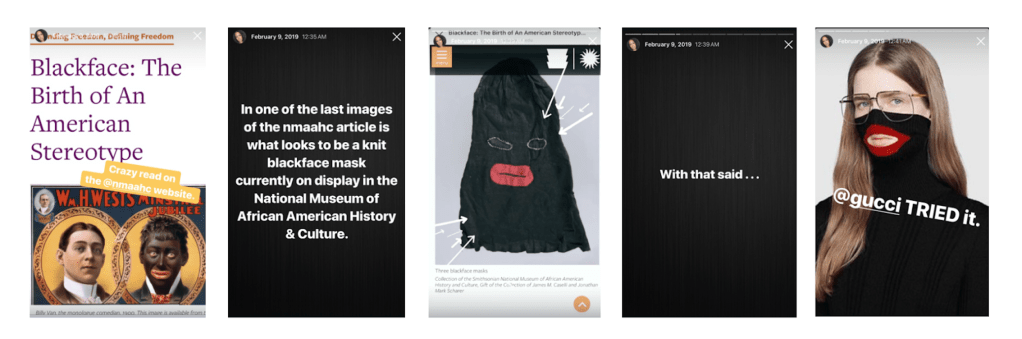
While these ads may not have intended to cause harm, they inadvertently echo visual tropes from a painful past used to dehumanize and marginalize Black individuals.

In today’s world, brands can’t afford to be tone-deaf. It’s not solely an ethical imperative, but a strategic one. These instances underscore the need for brands to be more mindful of the subtle messages their visuals convey. It’s an opportunity for us to collectively learn and evolve, recognizing that even unintentional missteps can perpetuate harmful stereotypes.

To break this cycle, brands must embrace a multifaceted approach. Here’s what brands can do today to be more nuanced in their ideation and planning stages.

Stop leaving money on the table and tap into diverse thinking 

If your brainstorming sessions look like a casting call for a 1950s sitcom, you’re doing it wrong. Diversity isn’t a trend; it’s the world we live in. At the heart of these recurring marketing blunders is a glaring absence of diverse voices. How does a brand as culturally ubiquitous as Heinz overlook such glaring insensitivities?

The answer lies in the homogeneity of those decision-making rooms. Without varied perspectives, ads are released into the world, only to be retracted amid justified public outcry. To effectively engage with multicultural markets, you need the richness of diverse life experiences.

Check yourself!

Diversity in creative teams is crucial, but it’s not enough. Even with diverse teams, unconscious biases can creep in. Integrate mandatory “cultural sensitivity checks” into every stage of the creative process. This means establishing review systems that rigorously assess whether content aligns with the cultural intricacies it seeks to depict. Disney’s establishment of a cultural consultants team serves as a commendable example.

Develop an internal checklist or audit tool, informed by data compiled from the communities your brands seek to engage. This goes beyond simple representation and delves into questions of power dynamics, historical context, and potential exploitation of cultural elements. It provides a structured framework for critical self-reflection, forcing teams to confront uncomfortable questions and justify their creative choices with a deeper understanding of cultural impact.

ERGs have ‘resource’ in the name

Employee resource groups (ERGs) should be leveraged not merely for cultural events but as integral participants in the creative process. They bring invaluable insight into community representation.

Instead of pitching a creative concept to a homogenous team, flip the script. Have members of your company’s ERGs (representing the cultures depicted in the ad) “pitch back” their interpretation of the concept. This provides immediate feedback on potential blind spots and unintended interpretations. It shifts the power dynamic, giving voice to those often spoken for, and forces the creative team to truly listen.

Keep it real

Authenticity is paramount. Not every brand needs to jump on every cultural bandwagon. Sometimes the most authentic thing you can do is be humble and sit down.

Brands must align their creative endeavors with their core values, ensuring that they contribute meaningfully to cultural dialogues. This involves introspection and a genuine assessment of whether their products truly serve the communities they wish to engage. Consumers, especially Gen Z and millennials, demand authenticity and social responsibility. Before trying to capitalize on the latest social justice movement, ask yourself: Do our core values align with this? Have we earned this community’s trust? Is this genuine or a money grab?

Know your lane.

Don’t let apologies become your brand story

Don’t let your brand become synonymous with reactive damage control; it erodes trust and makes any future attempts at cultural engagement feel performative. Instead, shift your focus to prevention. Before launching anything, dedicate serious time to brainstorming potential interpretations and reactions. Ask the tough questions: What if this image is misinterpreted? What if this language is offensive? What if this concept reinforces a harmful stereotype?

Don’t just rely on internal perspectives. Use focus groups, surveys, or online platforms to gauge reactions and identify potential blind spots. Proactive prevention is far more effective (and less damaging) than reactive apologies.

Ultimately, brands must learn from historical missteps and cultivate a future where cultural representation is approached with sensitivity and respect. Implementing diverse teams and instituting cultural checkpoints are not merely strategic moves—they are essential steps toward earning the trust and loyalty of diverse communities. It’s about more than just avoiding bad press; it’s about acknowledging the inherent beauty and complexity of our multicultural world and engaging with it in a way that honors its truth.

https://www.adweek.com/brand-marketing/the-cost-of-cultural-ignorance-how-brands-can-get-it-right/


The Story Behind The Game That Captivated Thousands of US Latinos


In 2017, I left my job as a creative in Hispanic marketing. I was tired of seeing brands push narratives that felt out of touch with my life and the lives of other young Latinos in the U.S. As an immigrant from Guatemala, I knew that the Latino experience here is diverse and nuanced. Yet, the advertising world often reduced our stories to oversimplified cultural markers. Campaigns repeatedly relied on the same tired clichés—soccer, tacos, abuelas (grandmothers), piñatas, and Cinco de Mayo—alongside a constant focus on multigenerational families and Spanish-only messaging.

While these are aspects of Latino culture, they represent only a narrow slice of who we are. I realized that brands were missing the chance to connect with young Latinos eager for representation that reflected their modern realities. That’s when I decided it was time to create something different. And so, Millennial Lotería was born.

Building a game that reflects us

When I started working on Millennial Lotería, my goal wasn’t to create a card game about Latino identity—it was to capture the experience of being a young person navigating life in the U.S.

For reference, Lotería (lottery in Spanish) is a traditional Mexican board game similar to Bingo. The game is played on a deck of cards instead of numbered ping-pong balls.

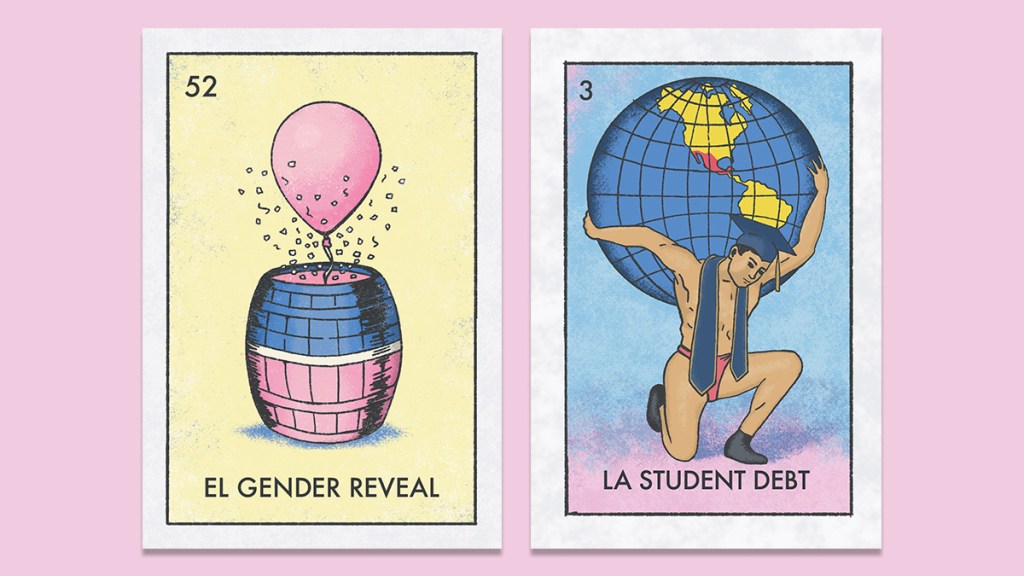
I began by posting updated versions of classic Lotería cards on Instagram, making them more relevant to today’s world. Instead of outdated stereotypes like “La Dama” (The Woman) and “El Borracho” (The Drunk), I introduced characters like “La Feminist,” “El Intern,” and “La Student Debt.”

Millennial Lotería was created to capture the experience of being a young person navigating life in the U.S.Millennial Lotería

It wasn’t about focusing on what made us different as Latinos, but on what made us the same as other young people. We face student loans, side hustles, dating apps, and social justice movements—just like everyone else. I wanted Millennial Lotería to capture that shared experience. By modernizing the game with humor, I was able to reflect both my Latino heritage and my life as a Millennial in America.

The response was overwhelming. Thousands of young Latinos started following me on social media, asking where they could buy the game. We’re now at over 400k followers across TikTok and Instagram. What began as a small project in my apartment quickly grew into a product now sold in thousands of stores across the U.S., from small Latino-owned businesses to retail giants like Target and Walmart.

The future of Latino influence in American pop culture

The statistics are clear: Latinos are the youngest major demographic in the U.S. According to the Pew Research Center, the median age of Latinos is 29.5 years, much younger than non-Hispanic whites (44.3 years), African Americans (34.6 years), and Asian Americans (37.5 years). Nearly 25% of all children under 18 in the U.S. identify as Latino.

Latino youth culture is already shaping mainstream U.S. culture in a big way. Genres like reggaetón, Latin trap, and regional Mexican music have become mainstream, with artists like Bad Bunny, Karol G, and Grupo Frontera leading the charts. This new wave of Latino influence appeals to both Latino and non-Latino youth alike.

Social media platforms like TikTok, Instagram, and YouTube have given younger Latinos a global stage. They are creating viral trends, memes, and challenges that resonate far beyond the Latino community. Content from these communities is often bilingual, blending cultural references that appeal to a diverse audience, reflecting the multicultural reality of modern America.

Recognizing the power of young Latinos

Brands need to wake up to the economic power of young Latinos. Nielsen reports that Latino purchasing power reached $2.7 trillion in 2021. This group’s youth and tech-savvy make them key drivers of digital trends, and they are highly responsive to online advertising and social media campaigns.

Marketers must understand the cultural and linguistic nuances of this demographic. While many younger Latinos are bilingual or primarily English-speaking, they maintain a deep connection to their cultural roots. Content that seamlessly blends both English and Spanish tends to resonate more deeply with this audience.

Below are a few key insights for marketers.

Go digital-first. Younger Latinos live online. If you want to reach them, you need to be where they are—on TikTok, YouTube, and Instagram.

Embrace bilingual and bicultural messaging. Campaigns that acknowledge the bicultural reality of young Latinos perform better. Don’t rely on stereotypical “Latino” themes. Instead, embrace the diversity of musical genres, TV shows, and movies that resonate with youth culture.

Prioritize cultural relevance over tokenism. Younger Latinos can spot inauthentic representation a mile away. Brands that meaningfully engage with Latino culture by collaborating with Latino creators will earn their loyalty.

Follow youth-driven trends. Latino youth are influencing trends in fashion, beauty, and beyond. Stay on top of street fashion, social media influencers, and emerging Latino designers shaping both mainstream and alternative cultures.

Millennial Lotería is proof that focusing on the issues young people care about—not identity politics or cultural clichés—can lead to success. As the Latino population continues to grow, and young Latinos take the lead, it’s clear that brands need to adapt. Latinos aren’t just a “niche” market; we are the future of the U.S. economy.

And that’s the story I set out to tell with Millennial Lotería; a story that’s only just beginning.

https://www.adweek.com/creativity/millennial-loteria-captivated-thousands-us-latinos/


Telenovelas and Reggaeton: The Myth of Latine Media Consumption


.article-native-ad { border-bottom: 1px solid #ddd; margin: 0 45px; padding-bottom: 20px; margin-bottom: 20px; } .article-native-ad svg { color: #ddd; font-size: 34px; margin-top: 10px; } .article-native-ad p { line-height:1.5; padding:0!important; padding-left: 10px!important; } .article-native-ad strong { font-weight:500; color:rgb(46,179,178); }

Drive business and brand growth with winning media strategies at Mediaweek. Hear from experts at TIME, Peloton, YouTube, Google and more, October 29-30 in New York City. Register.

Editor’s note: In this article, ADWEEK deviated from its style of using “Latinx” due to the writer’s preference. “Latine” is a gender-neutral form of the word Latino.

Early in my career, I sat in a job interview for an entertainment writer position when the senior editor hit me with a question I’ll never forget: “Do you have experience covering celebrities beyond Sofía Vergara and Jennifer Lopez?” It was the kind of moment that stays with you—not because it’s rare, but because it’s so painfully common. The assumption was clear: As a Latine, I must only consume Latine content. I must only watch telenovelas, only listen to Bad Bunny, only read about Latine celebrities.

Wrong.

This reductive view is exactly why platforms and brands often fail to connect with Latine communities. The numbers are there. We know our buying power, our influence—everyone does. Latines have the highest film attendance, accounting for 24% of ticket sales. According to SiriusXM, “Hispanic audiences are listening to 46 more minutes of audio compared to general audiences.”

We consume everything from digital platforms to print media at significant rates. So, if we have the numbers, why aren’t we seeing more successful Latine-driven content? Why are shows canceled after one season, brands missing the mark, and labels failing to reach this powerful audience?

The answer is simple: outdated myths about who we are and what we consume. To move forward, we need to debunk these myths and understand three truths: (1) We’re being spoken at rather than listened to, (2) we are nuanced—our interests span far beyond Latinidad—and (3) if you invest the time, we’ll show up—but trust is earned, not bought.

Stop trying to tell us about us

One of the biggest mistakes I see media companies and brands make is assuming they need to teach Latine audiences about themselves. Too often, content feels like a lesson on our own identities, wrapped in forced Spanglish or cultural clichés.

Leave those within our communities to educate one another. We live these experiences every day. What we’re asking for is authenticity. Let Latine actors and writers speak Spanglish if it’s natural for them, not because it checks a diversity box. Allow Afro-Latines to embrace both their Blackness and Latinidad without reducing them to one or the other.

Publications are guilty of waiting until a Latine celebrity reaches “mainstream” stardom before deeming them worthy of coverage. The solution? Let Latine collaborators and writers lead the conversation. We don’t need to be taught; we need to be trusted. If you want engagement, you must show you’re invested in our stories as we see them unfold, not when they’re trending.

We are nuanced

Yes, we’re Latine, but we’re also so much more than that. Our culture is important to us, but we’re much more than just our Latinidad. We’re multidimensional and layered, and our interests span across cultures. The assumption that we only consume Latine content is not only outdated, it’s wrong. We’re just as likely to be listening to Sabrina Carpenter as we are Bad Bunny, binging The Bear while sipping café con leche or a pumpkin spice latte. Brands need to understand that we aren’t confined to one box—we are general market consumers who engage with content and products beyond our heritage.

Take Glow Recipe, a non-Latine, Asian-founded beauty brand expanding to markets in Mexico and Brazil. Bad Boys: Ride or Die, which premiered this past summer, debuted with a $56 million domestic box office, with 26% of the audience being Hispanic and Latino. Despite not having a “Latine storyline” and the two leads not being Latine, the film resonated by including culturally relevant elements in a natural, unforced way.

Latine consumers are drawn to quality, innovation, and storytelling, no matter where it comes from. The key is to stop treating us like a multicultural afterthought. Once you see us as part of the broader market, you’ll find that what engages us is the same thing that engages everyone else—genuine connection and relevant content.

If you build it, we will come—but trust takes time

Time and time again, platforms and brands expect instant results with Latine audiences, and when they don’t see numbers skyrocket after one campaign or one season of a show, they pull back. But here’s the reality: Trust takes time. Our communities have seen this pattern too many times—promises made, excitement built, and then we’re left hanging when things don’t deliver overnight. Latine audiences, like any other, want to feel a genuine, long-term commitment, not a fleeting attempt to check a box.

If you want to build a lasting relationship with Latine audiences, you need to show long-term commitment. That means investing beyond a one-off effort, whether that’s in content, campaigns, or representation. I’ve been in newsrooms that ask why their Latine audience numbers aren’t growing after years of neglect. The answer is simple: We won’t trust you if you don’t put in the time.

Brands and platforms need to understand that engagement isn’t immediate; it’s earned through time, consistency, and respect. We want to know that we’re being valued, not just in Hispanic Heritage Month but every day of the year. When you prove that, we’ll show up—and we’ll show up big.

This article is part of a special Voice series, El Mainstream Chat, in partnership with Latinx publisher Remezcla. The series is designed to educate the modern marketer on the Latinx cultural nuances embedded in everyday American life.

https://www.adweek.com/media/telenovelas-and-reggaeton-the-myth-of-latine-media-consumption/


This Latina Entrepreneur Is Rebranding Finance Through Culture-First Fintech


Editor’s note: In this article, ADWEEK deviated from its style of using “Latinx” in the interviewee’s responses.

At age 50, Beatriz Acevedo was supposed to be scaling back the “hustle of the startup life.”

Her career had already seen multiple milestones. At age 8, she was a member of the union in Mexico for radio broadcasters. She’s written, produced, and hosted Emmy-winning shows, representing the 1% of showrunners in Hollywood who are Latinx. Her multiple startups catering to the Latinx audience in entertainment and media have proven to be more than successful—Mitú has become a leading media company that speaks to the “200% generation” (100% American and 100% Latinx) and has scored major investors.

But after seeing the community hit hard by the pandemic, both financially and physically, she used her “superpower” of raising capital through investors like Chingona Ventures and founded Suma, a wealth-building digital platform for the Latinx community via fintech, digital media, and soon a major experiential activation “Dinero Fest.”

Over the last three years, Suma’s year-over-year growth average exceeds 350%, and the app sees a monthly reach of 8 million unique users. Thirty percent of those users are not Latinx, which is in line with what Acevedo is doing—reimagining financial inclusion by making finance relatable and easy to understand through culture-first creative. To date, users have increased their savings 2.5 times over, compared to the national average.

Acevedo sat down with ADWEEK to discuss her work on rebranding finance for the Latinx community and beyond, why she is hyperfocused on connecting with the next generation, and her insights on cultural nuances that play a role in Latinx consumer behavior.

Her words have been edited for length and clarity.

Finance needed a reinvention

My father had a family foundation in Mexico that I wanted to bring to the U.S. After he passed away, I intended to run the foundation, sit on my boards, which I’m lucky to be asked to [be a part of], and do my social good.

Then the pandemic hit. In just looking at the data, our community took a hard hit, with not only deaths but economic hardship. I told my friend, [ImpactX Sports Group chairman and CEO] Xavier Gutierrez, I wanted to raise a fund and support Latina entrepreneurs. I was already an angel investor, but I wanted to do more. And he was like, “No, you don’t want to do this. You want to start a fintech company.” I said absolutely not. I know nothing about finance—there’s no way I’m gonna do it. He [reassured me I was] the right person because people who know about finance don’t know how to build companies at scale and engage audiences.

Finance needed a makeover, a reinvention. For younger generations—or even for older generations—finance is the topic that makes you very stressed. There are a lot of financial education apps that help you manage your money or grow your money. They’re great products—they’re just not built by Latinos.

I don’t want to dismiss my other CEO colleagues who run fintechs, but they tend to be focused on language. There’s a huge demo that is only Spanish-speaking; they’re older, they’re immigrants, etc. I wanted to focus on the youth—the impact is greater. That’s the key to moving the needle on closing the wealth gap. So [finance] had to be reinvented. It couldn’t be boring. It couldn’t be daunting. It needed to be culture first.

The ‘Safe to Spend’ feature displays the amount the user can spend daily without affecting their finances, i.e. without exceeding the threshold.Suma

I was scared to death—I enrolled in every single class. Fintech [at] Harvard, Stanford, Berkeley, Wharton; I was studying day and night, weekends, slept like for two hours [because I was just] absorbing everything. I said, I’m not going launch this and then be a fake; I was super privileged and lucky that a few investors [were interested], particularly female investors.

If this really scales, this means we’re going to make a massive impact on the community’s wealth. That excites me so much. I feel like I could die in peace.

The key to the next generation

It was a shock to me when I built Suma and tried to understand that the young generation, [who were] U.S.-born and spoke English, felt like “ni de aqui, ni de alla” [from neither here nor there]. Here they’re “not American enough.” When they go back to visit their parents’ countries of origin, they don’t speak perfect Spanish. They’re almost in no man’s land.

The moment you start speaking English, you are responsible for translating at the doctor, [for being] the legal person, etc. Navigating the American ethos, literally and figuratively, is what we do as Sherpas or navigators.

The youth that we serve today at Suma is managing the finances for three other family members, who tend to be older and Spanish. Being a sandwich generation puts a lot of stress on younger kids in our community, because they are responsible for their parents or responsible for their kids as they become parents themselves. And it’s really hard. Our parents did not plan for retirement. Or [there is this] perception that whatever [mom] had saved, she gave to her parents [and we are expected] to do the same. It’s a cycle of “you are my 401K.” So, when are we going to be able to build a generation of wealth if we’re always sort of catching up with whatever small wealth we build?

The other thing is that you are the first in your family to do many things and you don’t have anyone in your family to give you that advice. For example, you’re the first in your family to go to college. There’s very little that they could have helped you with, whether it was a college essay or how to navigate internships, getting a job, career advice, or asking for a raise. The system here [in the U.S.] is very different [from other countries]. So, you’re at a loss for information education.

A lot of these younger people are making more money than their parents and grandparents made in a lifetime. So, one, there’s a sense of guilt. Second, there’s a sense of worry, of “I don’t know how to manage this.” Third, there’s a sense of distrust. The parents didn’t trust the financial institutions. They don’t have a legacy financial institution that is the “Fabuloso of finance,” where everyone in the family uses Fabuloso, and everyone in the family can trust this financial institution.

If you know you’re responsible for your aging parents, and you’re eventually responsible for your kids and yourself, you have to start early. You have no choice. And hopefully, as you do that, the next gen will be set up because hopefully, your kids will not have to take care of you. That’s where there is an opportunity to advance in closing the wealth gap if we get to that point. So that’s why I’m hyperfocused on this generation that has that big burden on their shoulders, that needs that help and that support. Those are the ones that can make that change in generations to come.

The biggest opportunity with [this generation of] Latinos is to make them feel that they are “de aqui y de alla” [from here and there]. Not every brand does a great job with that. I’ve seen a lot of ones doing it now, and I’m glad that they’re catching up, but it’s not just English or Spanish. I fully believe in the power of culture. Lead with culture more than leading with language.

Leading with culture is everything

I go back to my Latinidad in everything I’ve done. So [on Suma] you’re going to see luchadores [Mexican wrestlers]. Paletas [Mexican frozen treats made from fresh natural fruits] instead of emojis. You are going to see arepas and gorditas [cornmeal cakes] to explain the difference between FICO and Vantage credit scores.

I always thought I was going to focus on English and culture because that’s my demo. But then I would get questions [from users]: Do you have this in Spanish for my mom, for my tía? And I’d be like, well, why don’t you go to these other fintechs that are only for Spanish people and Spanish-speaking people? And they would say no, it’s not fun, it’s not funny, it’s not cool, it’s not Suma. So, we’re now scrambling to make that [content] in Spanish, making all the education available as a resource for our core demo. Our core demo is not going to consume [our content] in Spanish. But again, we want to take off that weight on their shoulders that they’ve had their whole life, where they have to translate for their family members, and they want to recommend something that they like.

I want to build things where people feel that they belong. And if you think about Mitú and Suma, even though it wasn’t my experience growing up, I want to make sure that my kids are those kids [who feel like they belong]. My kids are U.S.-born. They speak perfect Spanish, but they speak perfect English. They’re proud to be Latinos. They’re proud to be American. They’re proud to be Jewish. There’s so much in their identity that they’re proud of, that I absolutely love, and I worked very hard for them to feel that way. So, I want to do the same for every other young person in America. I want them to feel that they belong, whether it’s in media or the money conversation. They deserve to build wealth, and they belong here.

Being a Latina is my superpower. I never feel less. I don’t feel small. I don’t feel inadequate. I see that there’s nobody there like me and I get to represent. And I come in and I take a lot of space. I come in with my embroidered shirts, my big hoops, and I speak with my hands. I’m loud, I’m passionate. I am unapologetically Latina, and that has helped me.

https://www.adweek.com/brand-marketing/this-latina-entrepreneur-is-rebranding-finance-through-culture-first-fintech/


Radical Independence: How Indies Are Ushering in the Next Era of Great Advertising


.article-native-ad { border-bottom: 1px solid #ddd; margin: 0 45px; padding-bottom: 20px; margin-bottom: 20px; } .article-native-ad svg { color: #ddd; font-size: 34px; margin-top: 10px; } .article-native-ad p { line-height:1.5; padding:0!important; padding-left: 10px!important; } .article-native-ad strong { font-weight:500; color:rgb(46,179,178); }

ADWEEK House is your house during advertising’s big week in NYC. Join us for content, to take a beat, recharge and make industry connections. RSVP to join us October 8-9 in New York City.

Sitting here drinking an AriZona iced tea, I find myself contemplating the value of independence.

First, you should know, I am not usually found with an AriZona iced tea—at least not since the days of chugging them post-hangover in college. But recently, I saw a story on the Today Show where the founder, Don Vultaggio, explained why they were keeping the drink at 99 cents, despite inflation and being able to charge more. For him, it was simple: “We’re successful, we’re debt-free, we own everything … Why? Why have people who are having a hard time paying their rent pay more for their drink? Maybe it’s my little way to give back.”

If you couldn’t feel it in that quote (“we’re successful … we own everything”), you could hear it in his delivery—there was more than a bit of rebellion that comes from independent ownership, a pride in being able to choose for yourself how your business operates. And for Vultaggio, that means doing his audience right.

And there you have the gift of independence: The value to determine the pathway for your business. The bets you will make. The sacrifices you need to make in order to make the bets. Ultimately, how your company values play out in your day-to-day. And how those values affect each one of your clients.

Importantly for many clients, since many indies are still founder-led, independence registers in a deep sense of partnership. We treat our client’s success with the utmost care. For founder-led indies, client success is a personal matter. When they win, we win.

Surely this is a leading factor behind recent wins that have received headlines, exciting times in which indies competed against the big guys and won: nice&frank winning Häagen-Dazs; Miramar winning Rocket Mortgage; Bandits & Friends winning Liberty Mutual.

See, coming to an independent shop doesn’t involve some kind of holdco “solution,” in which a brand is a tasty pork chop to be devoured. (Is it any wonder that our industry is complaining of being treated like “vendors”? That’s how this industry is acting.)

Instead, any indie that considers pitching or running your business is investing its most precious and limited resources to do so—time, energy, focus, and heart.

I cannot overstate the importance of that. Hiring an independent agency means you will hire the people who directly control the decision to work with you. There’s no corporate overlord poking with electric prods. Indies choose where we put energy, how to grow, what to spill blood, sweat, and tears on. 

When a leader from an independent sits across the table from you, they are essentially telling you they believe in you. You, the brand. You, the person running the brand. And they believe enough to bet on you.

It’s also bringing wild creativity and innovation because creative output isn’t in some codified, calcified rule book. You will not get rinse-and-repeat, recycled work in an independent, but instead a new solution tailored for your business problem and audience. You get surprise. The audience gets it, too.

Each day is brimming with invention, because as we all know, necessity is its mother, and independents crack new ways to solve big problems on the regular. Which means the solutions that help independents compete are built from client needs, not corporate needs. 

From developing new models, to experimenting with nontraditional creative playgrounds for deeper engagement, the future feels like it’s for anyone to make.

We’re seeing the fruits of this success. The larger indies dominated Cannes and are doing the same across other creative awards shows. And as I’ve mentioned above, independent shops are competing and winning against larger holding companies for AORs.

If you’re an advertising star—or even a rising star—and you look at this energy versus what’s happening with holdcos in the headlines, you feel the pull. Every day, we read about another ruthless mashing together of once-great agency brands. We hear about the selling off of key agency properties. It’s creating a cloudiness of vision and purpose. What do you put on a T-shirt when the agency name changes so much?

If you’re a brand wondering why your peers are investing so heavily in independents, here’s your answer: They want to get back to making advertising with partners who have the power to put them first. Like AriZona iced tea, but for big ideas.

https://www.adweek.com/agencies/independent-agencies-ushering-next-era-great-advertising/


4 Reasons Brands Should Invest More in Latin ‘Craft’ Creators


Editor’s note: In this article, ADWEEK deviated from its style of using “Latinx” due to the writer’s preference to use “Latin.”

The creator economy is expected to nearly double over the next five years, growing from $250 billion today to an estimated $480 billion by 2027.

Creators are now everywhere, in all forms. Cannes Lions, once solely for advertising creatives, producers, and marketers, is now filled with content creators, ring lights, and aesthetic influencer dinners. The Webby Awards even introduced a category for creators this year, with 26 subcategories ranging from Best Meme Creator to Best Dance and Best Prank.

Creators are clearly here to stay, but not all creators are made equal. Those who make, build, compose, design, and innovate—not for social media, but out of pure creativity and dedication to their craft—are the ones that deserve more attention from marketers.

First, let’s clarify the differences between these two types of creators. A content creator produces and shares videos, blogs, podcasts, photography, artwork, or social media posts across digital platforms to engage, inform, or entertain their online followers. In contrast, the creators I’m highlighting—what I’ll call “craft creators”—are defined by their artistry, not by content creation, follower counts, or brand partnerships.

These are the musicians, music producers, painters, illustrators, tattoo artists, fashion and streetwear designers, stylists, furniture makers, chefs, and stand-up comedians who haven’t yet reached celebrity status and are often overlooked as influencers or content creators in typical marketing strategies.

My role has revolved around immersing myself in the world of Latin craft creators and connecting them with brands. My Instagram feed is essentially my work newsletter. Through this work, here are four reasons why marketers should invest in craft creators.

Pioneers of culture-defining trends

Craft creators are often the originators of what becomes influential and enduring in culture, shaping the trends we later see on social media.

For example, take Chris “Spanto” Printup (RIP) and Alex/2Tone, founders of Born x Raised. They created a Mexican American love letter to Los Angeles through their streetwear brand, which became a blueprint for other Chicano streetwear brands. Similarly, Brenda Equihua turned the Mexican cobija blanket into a high-fashion statement piece that now appears in both music videos and museums.

Genuine connections vs. brand-hopping

Because craft creators rarely collaborate with brands, their partnerships feel more authentic. This is unlike influencers or content creators who frequently jump from one brand to another, making it harder to believe in a genuine connection between brand, creator, and audience.

With craft creators, engagement tends to be more positive. It’s even more heartening to see how their communities take pride when a major brand recognizes their work. For instance, MLB commemorated the anniversary of Roberto Clemente’s passing with a digital tattoo gallery called “Clemente x Siempre.” As part of the initiative, Puerto Rican tattoo artist Zuh Cordero was challenged to tattoo Clemente’s portrait on a baseball glove for auction. The response was incredible, with comments full of pride and fire emojis for Cordero’s work.

Amplify their craft while elevating your brand

Craft creators are deeply committed to their craft, often depending on it as their primary source of income. When brands support emerging talent, they help sustain these creators’ passions while expanding their reach. It’s a win-win: Creators gain visibility, and brands are elevated through authentic collaborations.

A perfect example is Teddy, a birria taquero, who received a free Super Bowl commercial on ESPN Deportes as part of a Remezcla campaign to promote its Spanish broadcast. The news went viral, and Teddy’s Red Tacos has since grown into a taco empire with 10 locations.

Broaden your brand with diverse perspectives

Collaborating with diverse talent not only demonstrates your support for the Latin community but also introduces fresh perspectives from individuals navigating life across multiple cultures, adding depth to your brand’s story.

Tecate beer did exactly that when it collaborated with Mexican American artists from LA—The Delirians, Katzù Oso, É Arenas, Ulises Lozano, and Mariachi Lindas Mexicanas—to reimagine the classic song “México Lindo y Querido” as “Los Ángeles Lindo y Querido,” reflecting their unique experience of blending cultural influences.

Brands must be more selective when choosing partners, and creators should ensure their values align with the brands they collaborate with. For marketers, it’s important to identify and curate professionals who resonate directly with your brand’s strategy. But that’s just the beginning. The real impact occurs in building authentic, meaningful connections between brands and creators.

The future of branding lies in these genuine collaborations, with Latin creators leading this cultural shift. Now is the time to invest in those dedicated to their community, passion, and culture.

This article is part of a special Voice series, El Mainstream Chat, in partnership with Latinx publisher Remezcla. The series is designed to educate the modern marketer on the Latinx cultural nuances embedded in everyday American life.

https://www.adweek.com/commerce/4-reasons-brands-should-invest-more-in-latin-craft-creators/


Making A Case for Fun In Public Media


.article-native-ad { border-bottom: 1px solid #ddd; margin: 0 45px; padding-bottom: 20px; margin-bottom: 20px; } .article-native-ad svg { color: #ddd; font-size: 34px; margin-top: 10px; } .article-native-ad p { line-height:1.5; padding:0!important; padding-left: 10px!important; } .article-native-ad strong { font-weight:500; color:rgb(46,179,178); }

Brandweek is coming up soon, this September 23–26! With C-suite leaders from iconic brands keynoting sessions, leading workshops and attending networking events, it’s the place to be for marketing innovation. Don’t miss out—Register now.

Public media knows it has a problem. Since joining the industry two years ago, the most common phrase we’ve heard is “We need to meet people where they are.” They’re right—we have a distribution problem.

But we’re skirting around a bigger issue. You can buy reach. You can put your show on social. But none of it matters if people don’t notice, care, or think about you at all.

Public media, known for its serious journalism and educational programming, wants so badly to be important that it often forgets to be engaging and entertaining. The challenge is, when we meet people where they are, we need them to want to be around us. In this crowded media landscape, it’s too easy to get lost and unnoticed, even with the best of intentions.

In a study by Oracle, 91% of people globally prefer brands to be funny and 88% of people are looking for new experiences to make them smile and laugh. Yet, 95% of business leaders fear humor in consumer interactions.

What if we tried being fun? Being funny? (I’d say, being human, but there are a lot of dull humans). And not just in a small TikTok-sized corner of the organization. We need to inject fun into everything; content and events, interactions with donors, and marketing.

Here are four ways KCRW is meeting the challenge and learnings along the way.

Social-first content is “important”

When public radio thinks of hiring show talent, we default to journalists. To change it up, KCRW collaborated with social media comedian Katherine Ellis, whose fictional character Concordia Shawarma McGraw gained fame with NPR voice impressions while explaining lyrics to popular hits like Snoop Dogg’s “Drop It Like It’s Hot” and Cardi B’s “WAP.”

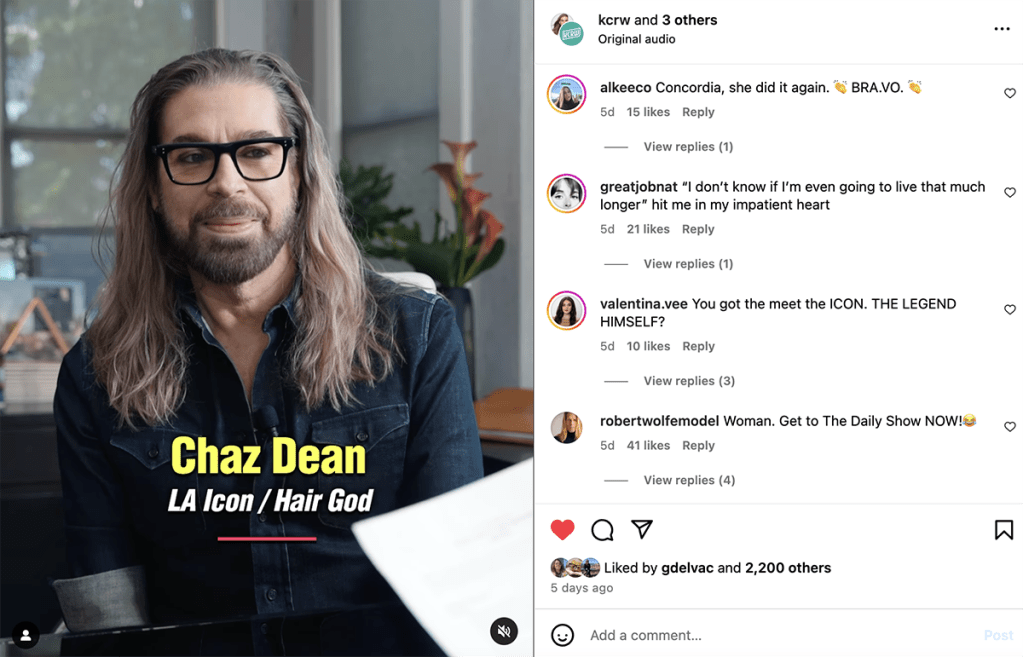
The social-first, satirical news show “Important Things of Great Importance” takes on LA stories in a goofy way while still teaching audiences something new. Guests include a puppet fox discussing a wildlife overpass over the 101 Freeway, LA billboard icon Chaz Dean talking about brand consistency, and our own KCRW climate reporter Caleigh Wells on algae-killing nanobubbles.

Important Things of Great Importance Ep 6: Sitting Down with The Dean himself.

Did we risk alienating our audience by poking fun at ourselves and our colleagues? We closely monitored and tracked audience reaction, tweaking the format as needed. The audience and content teams worked hand-in-hand to see this experiment through.

Its first six episodes on Instagram had two-to-three times more views, twice the interactions, and ten times more new followers per episode compared to KCRW’s average post. The show also consistently reaches a higher percentage of non-KCRW followers, averaging 70%, compared to KCRW’s other content, which typically reaches about 35% of non-followers. Zero paid spend, all organic.

The content isn’t just entertaining—viewers engage with each other’s comments, bonding over inside jokes and recurring themes, which creates a sense of community. They compare the show to programs like “The Daily Show” and “SNL,” stating Concordia’s character is “already an ICON of public radio parody.” KCRW is deep in the comments too. We challenge ourselves to have just as much fun as our viewers.

Marketing can be simplified

When we partnered with the comedic advertising agency Party Land, we knew we wanted a brand campaign that would be unexpected for public media. Most marketing communications stress the key marker of public media: Essential independent journalism. It’s true, but also boring.
We knew two things: KCRW is a lot of people’s first friend in LA, and KCRW makes you a more interesting person.

Our “Get LA’d” campaign was a risk, but that’s why we liked it. It’s simple, shareable, and coy.
Humor fosters community. Those who get it, get it. Those who don’t, at least crane their necks with curiosity. The billboards and digital ads are selfie-friendly, screenshot worthy, and elicit conversation between our audience and staff, increasing KCRW’s visibility with new audiences. There were a couple of grumps. But hey, at least they reacted.

Our Instagram Reel featuring one of the billboards had twice the interactions compared to the average KCRW Instagram post and the highest reach of any post that month, outside of “Important Things of Great Importance.”

Different events require different vibes

People in LA are noncommittal, especially if it means traveling across multiple freeways and finding parking. How can we expect people to show up to our events? Answer: Don’t call it a lecture series—naming matters.

Instead, we promise music, culture, and novelty.

Summer Nights with Chinatown ft. KCRW DJ Travis Holcombe.

Summer Nights, our popular event series, is our purest form of community building and attracts the most diverse audience across age, race, and neighborhood. We partner with iconic LA cultural hotspots to open their doors late and throw free dance parties featuring our KCRW DJs.

Each event has its own unique flavor, like vibing under the tree-lined laser show at Descanso Gardens, raging with confetti poppers and lion dancers in historic Chinatown, or dancing to cumbia at LA Plaza de Cultura y Artes. I’ve seen people shimmy through art exhibits, babies dancing with massive headphones, an entire crowd chanting Kendrick Lamar’s “Not Like Us,” several first dates, a proposal, and a couple canoodling too close to our merch tent. Everyone is welcome. If that isn’t a public service, I don’t know what is.

In 2023, we had over 100,000 RSVPs to our events, which includes our other free signature events like PieFest & Contest (yes, an entire festival dedicated to pie). This year we’re on pace to reach over 100,000 RSVPs for the Summer Nights series alone. These are 100,000 email addresses that we follow up with to keep the conversation going.

Membership: Text for the hookup

There’s a weird thing that happens when people become donors. All of a sudden, we get all institutional and transactional. Why do we stop being human after we hand them their thank-you tote bag? Why do we only engage when it’s time to ask for money again?

We are piloting a member-only texting service as a new way to consistently engage with our members and increase awareness of our member program and benefits. Knowing how annoying texts are, especially from brands (or political parties), we treat it differently.

First, no asking for money. Second, be yourself. In our case, Nick, our member engagement manager, needs to be himself. He has the member hookups. Free tickets to an upcoming concert. An exclusive track from a KCRW music performance just for members. First-to-know invites to a member-only party that would reach capacity within minutes. No need to be sales-y when you can be the most exciting text message they receive that day.

We currently have over 2,000 members who receive texts from Nick (and other friendly individuals from his team). We have a 99.94% retention rate for those who receive texts. Conclusion: if you text with us, you stay with us.

Throughout all of this, you may have some of the following questions.

What about covering the serious stuff?

It’s much easier to deliver serious news if you’ve already built a fond relationship. When the news is negative, wouldn’t you want it to come from a reassuring place that feels warm and familiar?

What if we illicit cringe?

Don’t get caught up in what is and isn’t funny. Think of humor as a way of being inviting. How do you welcome people in and make them feel comfortable? If a particular flavor of humor doesn’t feel authentic, your audience will notice. Cringe is when something feels forced.

How do I get my boss to greenlight my funny idea?

Use data as much as possible. Know that the public radio audience already trusts you. Surprise them by acting and sounding like a person they’d want to talk to.

Why does it matter?

The public media’s mission has not changed. We’re here to create a more informed, more engaged, more socially cohesive society. We can’t do this if we let the weight of the world’s drudgery bore people to apathy.

Fun is the gateway to curiosity—about each other, new ideas, and the world around them. Fun encourages participation and shared experience. Fun is how we get people to care. It doesn’t get more public service-y than that.

https://www.adweek.com/media/making-a-case-for-fun-in-public-media/


A (Long, Rewarding) Day In The Life Of An Ad Agency Mom


.article-native-ad { border-bottom: 1px solid #ddd; margin: 0 45px; padding-bottom: 20px; margin-bottom: 20px; } .article-native-ad svg { color: #ddd; font-size: 34px; margin-top: 10px; } .article-native-ad p { line-height:1.5; padding:0!important; padding-left: 10px!important; } .article-native-ad strong { font-weight:500; color:rgb(46,179,178); }

ADWEEK House is your house during advertising’s big week in NYC. Join us for content, to take a beat, recharge and make industry connections. RSVP to join us October 8-9 in New York City.

Nothing can really prepare you for motherhood or a career in corporate.

But what if being a mother helped you thrive as a manager? And what if your career instilled the soft skills to motivate your children?

For the president of entertainment and brand ad agency Mocean, Erica Coates, the demanding nature of both roles has equipped her with the skillset to become a leader in the ad agency that saw a 250% increase in its consumer brand business since 2019. Coates’ promotion from chief operating officer to president in 2023 was part of a major leadership shift in 2023 after the company experienced rapid business growth. Before Mocean, Coates worked in production within the entertainment landscape.

Coates sat down with ADWEEK to discuss what a day in the life of a C-suite exec and working mom looks like, the importance of working for a company that respects home life and why there is no such thing as a perfect work-life balance.

Her words have been edited for length and clarity.

A day in the life

I usually start my day at about 6 AM and I start with a spiritual devotional. That’s what keeps me grounded and fuels my inner being. At about 6:15 or 6:20, I check emails to see if any clients on the East Coast need my attention on anything or if there are any overnight developments. Then I switch into mom mode and make breakfast and lunch for my daughter. While she’s eating breakfast, I’ll drink my coffee and I’ll ask her what she’s anticipating for her day, and we talk through that. Then I drop her off at school; depending on what my schedule looks like that day, it’s probably between 8 and 9 AM. I try to get a workout in. And then I start my official workday between 9 or 9:30.

I start that by reading the trades—ADWEEK, Campaign, Little Black Book, Variety, Fast Company—not just in advertising, but business and tech and innovation as well. My official meetings start at about 10 AM. I try to save the lunch hour for business development and networking. In the afternoon, I review scopes from the team pitch proposals, provide feedback, and then answer a few more calls. Take a few more meetings. But I aim to create blocks of 15 to 30 minutes throughout the day so that I can just focus. You need to collect your thoughts, and it’s hard to do when you’re going from meeting to meeting or call to call.

Then I officially sign off between 6 and 6:30 to have dinner with my family. That’s important to me, especially [because] my daughter’s still in elementary school, so this is a young, formative time for her. Then I help her with her homework—I also share this duty with my husband.

I sign back on after my daughter goes to bed, usually about 8:30 or 9PM, to respond to any immediate needs that come in after six. I’ll draft presentations. That’s usually the quiet time when I’m uninterrupted, and I can build presentations or draft contracts, answer emails, etc. I will use this Outlook feature that has the ‘Time Send’ feature, which is excellent because I want to model balance; I want that for my team. If they get an email from me at 9:30 or 10 PM, they may feel inclined to answer it. But I can set that [email] to hit their inbox at 9 AM the next morning, so that I’m not interrupting their evening. I usually go to bed at about 11 unless there’s a major pitch or other deadline that needs my attention. But that’s usually my day.

I’m most effective when I’m organized. I’ll start to feel burnout. So being organized is very important. When I start slipping in that area, I realize that I’m not being as effective as I can be.

Family and career: it’s complicated

I feel overwhelmed when I start to compare. [For example] Should I be spending more time at home? Like that stay-at-home mom who makes fresh bread for her family, and they never eat out? Or that working mom who never misses a game?

If I let myself indulge in those kinds of thoughts, it can be crippling. Truth be told, the only obstacle is in my head. They say, ‘Comparison is the thief of joy,’ and it truly is. You have to prioritize what you need in your career and find a role that aligns with that; only you can determine what’s non-negotiable for your family and set those boundaries.

I could have been a mom in my 20s, but I intentionally chose to wait until both [my husband and my] careers were more established. We had more money. We were a little bit more settled. But I did contemplate that.

Women who were 10 or 15 years older, who I was witnessing in my 20s when I was entering the workplace—I saw sacrifice. And [I thought]—maybe I do need to take a break and find something else or take a break from the workforce [to start a family]. But then I saw that those same women also had a tremendously difficult time reentering the workforce.

I’ve benefited from the sacrifices of the generations before [me]. I was fortunate to work in some environments where there was an expectation that a healthy employee is a person who can contribute in a positive way in all aspects of their life. As an agency, you are your people. You’re not able to retain people because you’ve got high burnout. And dads need time off too. They want to spend time with their family. They need that flexibility as well.

Motherhood, the school of hard knocks

I had several interviews with the agency [Mocean]. And one of my last interviews was with the owner, Craig Murray. He saw that I had a wedding ring on and he said, ”Oh, do you have a family?” At first, I kind of hesitated to even answer the question because I’d had some not-so-positive experiences with that same question. And I said [to myself], if it’s going to be a problem, I’d rather know now. So, I shared with him (at the time I had a four-year-old daughter), and he said, “Well, she needs you, so we need to make sure we get you support so that you can be there for her when she needs you. And you can do the stellar job for us that I know you can.” I nearly cried in his office.

Organizations may sometimes shy away from being direct about what’s needed from a particular role. The employee will sense that and won’t understand where the flexibility may lie. And so, everybody’s holding their cards up, not out of deceit but from not understanding what’s expected or what’s desired. When you have these really transparent conversations, when you figure out giving Friday off actually isn’t helpful and [they] would rather start at noon and work until 8 PM—we [the company] can accommodate that. We’ll let the team know and make sure that we have you covered so clients don’t see a drop-off in service or things of that nature.

[The biggest misconception about working moms is] that women will underperform men, especially moms. I became the best delegator and multitasker out of necessity after becoming a mom, but also from having high standards and being competitive. I want to win that pitch. I want to get that new business. It also drove me to try to find paths toward excellence that allowed me to satisfy all my roles.

You can’t pick your kid’s personality and [in the workplace] you often can’t either, especially if you inherit a team. You have to figure out what motivates them. You know how to set boundaries for them. And hopefully, you don’t have to get to performance issues. But if you have a performance issue, help them course-correct.

Being a 30-something mom versus a 20-something mom helped prepare me because I had that experience of managing other people. Building patience. Having empathy for other new moms in the workplace—hopefully, my experience will help them carve their path. My path can’t be their path, but hopefully [it] gives them some insights into how to architect a life for themselves.

[There is] no such thing as perfect work-life balance. You’ll always have moments when you’re sacrificing one thing for another, but the art is making sure that you define a life that is fulfilling to you and meets your obligations. For me, it’s feeling as if I’ve given my all to attain the strategic goals of Mocean as its president, which includes happy clients and repeat clients, and that my daughter and husband know that they are my priorities.

https://www.adweek.com/agencies/a-long-rewarding-day-in-the-life-of-an-ad-agency-mom/


El Mainstream Chat: The Latinx Influence On American Culture


.article-native-ad { border-bottom: 1px solid #ddd; margin: 0 45px; padding-bottom: 20px; margin-bottom: 20px; } .article-native-ad svg { color: #ddd; font-size: 34px; margin-top: 10px; } .article-native-ad p { line-height:1.5; padding:0!important; padding-left: 10px!important; } .article-native-ad strong { font-weight:500; color:rgb(46,179,178); }

With C-suite leaders from iconic brands keynoting sessions, leading workshops and attending networking events, Brandweek is the place to be for marketing innovation and problem-solving. Register to attend September 23–26 in Phoenix, Arizona.

Saturday Night Live. The VMAs. The Super Bowl. These staples in American culture have been around for decades, but we are seeing a shift taking place.

We are seeing the Hispanic and Latinx audience active in the mainstream chat.

Making up more than 19% of the country, the Hispanic population continues to expand at a faster rate than the non-Latino population in the U.S., a growth that is largely driven by births, not immigration. Buying power is expected to exceed $2.5 trillion in the next two years. Younger Latinos continue to set up life in the U.S. and fuel the economy through major life events like homeownership and family life, according to the U.S. Latino Youth 2030 report conducted by Latino Donor Collective and Kantar.

This year for Hispanic and Latinx Heritage Month, ADWEEK has partnered with digital publisher, creative agency, and entertainment company Remezcla to take a closer look at the demographic’s influence on American culture. From beauty to creators to media, the following articles are designed to educate the modern marketer of the Latinx cultural nuances we see embedded in the fabric of everyday American life.

This will be a regularly updated list weekly. Click the images below to read them.

A Spotlight On Aesthetic and Identity in Latine Beauty Brands

Illustration of a red lipstick in a gold case against a pink background.
Major retailers such as Ulta Beauty, Target, and Sephora are dedicating shelf space and marketing resources to Latine-owned brands.

Remezcla Media Group VP of Hispanic Strategy Sonia Rioja shines a light on how Latine beauty, characterized by its vibrant and varied expressions, is not a fleeting trend.

https://www.adweek.com/brand-marketing/el-mainstream-chat-the-latinx-influence-on-american-culture/


A Spotlight On Aesthetic and Identity in Latine Beauty Brands


.article-native-ad { border-bottom: 1px solid #ddd; margin: 0 45px; padding-bottom: 20px; margin-bottom: 20px; } .article-native-ad svg { color: #ddd; font-size: 34px; margin-top: 10px; } .article-native-ad p { line-height:1.5; padding:0!important; padding-left: 10px!important; } .article-native-ad strong { font-weight:500; color:rgb(46,179,178); }

With C-suite leaders from iconic brands keynoting sessions, leading workshops and attending networking events, Brandweek is the place to be for marketing innovation and problem-solving. Register to attend September 23–26 in Phoenix, Arizona.

Editor’s note: In this article, ADWEEK deviated from its style of using “Latinx” due to the writer’s preference. “Latine” is a gender-neutral form of the word Latino.

New York City in 2013. That’s when I first realized the profound influence that Latine beauty could have on the industry.

After relocating to spearhead Hispanic media strategy and planning for L’Oréal Paris, I saw the immense opportunity for brands and marketers to delve deeper into the cultural narratives that define Latine beauty—to create more relevancy by honing in on products that addressed the unique needs of Latine consumers, along with brand ambassadors that took pride in their heritage.

From intersectionality to authenticity, brands and retailers can embrace the power and culture of the Latine beauty community and ensure an inclusive industry for all.

A driving force in the global beauty sphere

In our increasingly diverse world, the beauty industry has evolved from mere aesthetic expression to a powerful platform for cultural storytelling, identity affirmation, and community building. Notable figures like Becky G, who speaks to beauty as a Mexican American, and entrepreneurs like Julissa Prado, founder of Rizos Curls, are redefining beauty standards and proving that Latine beauty is not only here to stay but is also setting the agenda for what’s next.

Latine beauty, characterized by its vibrant and varied expressions, is not a fleeting trend. Instead, it’s a transformative force within the global beauty landscape. From skin care routines deeply rooted in natural remedies and generational traditions to bold makeup looks and defined brows, Latine beauty aesthetics are setting new standards. It is not only shaping norms but has also become a crucial element in the global beauty industry, influencing everything from product development to marketing strategies.

Beyond the trend

Latine communities represent over 19% of the U.S. population and wield purchasing power exceeding $3.2 trillion. This demographic is pivotal to the beauty industry, with women of color, including Latines, spending 78% more on beauty products and making beauty-related shopping trips nearly nine times a year. Such substantial purchasing power underscores the importance for beauty brands to engage meaningfully with Latine consumers.

Latine beauty’s influence goes beyond trends; it encompasses a deep cultural resonance. Our communities have been driving beauty innovations for decades, introducing global audiences to skin care practices that utilize natural ingredients like aloe vera, avocado, and chamomile. These elements, long cherished in Latin American households, are now featured prominently in products by global beauty brands, reflecting a growing emphasis on natural and sustainable ingredients.

A great example is Youth to the People, a brand that created Pro-Grade Vegan™ skin care with superfood ingredients such as papaya and organic cactus, backed by innovative science for powerful results. In six short years, the brand reached $50 million in sales and was acquired by L’Oréal in December 2021.

Latine entrepreneurship is also making waves across the beauty industry. Brands like Vive Cosmetics and Nopalera are leading the way with products that honor cultural traditions while addressing modern consumer needs. These brands, with their direct-to-consumer approaches, are not only serving Latine audiences but also creating meaningful connections through their offerings.

Major retailers such as Ulta Beauty, Target, and Sephora are recognizing the importance of inclusivity. They are dedicating shelf space and marketing resources to Latine-owned brands, signaling a broader commitment to diversity.

L’Oréal USA’s Inclusive Beauty Fund, which expanded in 2024 to support Latine beauty entrepreneurs, further exemplifies this shift. By providing grants and professional mentorship, L’Oréal USA is investing in the future of Latine beauty and supporting emerging talent. These brands and retailers are leading the charge in how to authentically engage with and support Latine beauty brands and consumers.

The power of intersectionality

As this multifaceted community grows, beauty brands and retailers must shift their approach from conventional marketing strategies to ones that embrace intersectionality to foster genuine connections.

Intersectionality is essential to connecting with Latine beauty consumers. From Afro-Latine individuals to indigenous descendants, the importance of embracing the complexity within this group and the range of nationalities, skin tones, languages, and cultural traditions can move beauty brands beyond surface-level marketing and transactional relationships. There is an opportunity to demonstrate a deeper commitment to inclusivity and become true partners in the personal and cultural journeys of Latine consumers.

Brands that will excel will understand it’s not enough to translate materials into Spanish and will approach this audience with cultural intelligence, respect, and empathy. Narratives that reflect lived experiences, showing that the beauty industry can be a catalyst for change rather than the perpetuation of narrow ideals, will show a true investment with this population.

Championing the Latine beauty community

While understanding Latine consumers is the first step, there must also be action behind it. With that knowledge, brands must be open to developing inclusive product lines and championing intersectionality in their branding by authentically reflecting beauty traditions and the rich diversity within the Latine community, addressing various skin tones and cultural backgrounds.

What’s a product launch without marketing behind it? Brands must also ensure their marketing campaigns are authentic and highlight the experiences and stories of Latine individuals. One-off campaigns just don’t cut it anymore; marketing efforts must be authentic and inclusive year-round.

Lastly, brands and retailers must recognize the power of community by investing in long-term partnerships and providing meaningful support to Latine-owned beauty brands and entrepreneurs with initiatives that promote long-term growth and success. Whether through mentorship programs, grants, dedicated retail space, co-branded initiatives, or marketing support, brands can be advocates for the Latine beauty community.

Celebrating Latine beauty means more than acknowledging its impact; it’s about embracing its authenticity and integrating it into every aspect of your brand’s identity. Beauty brands can expand their market share and contribute to a more inclusive and equitable beauty industry.

Championing the future of beauty through diversity with an always-on approach will unlock a brand’s full potential and foster loyalty among Latine consumers.

https://www.adweek.com/commerce/a-spotlight-on-aesthetic-and-identity-in-latine-beauty-brands/