Why the Edible Pop-Tarts Bowl Mascot Will Live On in Marketing


.article-native-ad { border-bottom: 1px solid #ddd; margin: 0 45px; padding-bottom: 20px; margin-bottom: 20px; } .article-native-ad svg { color: #ddd; font-size: 34px; margin-top: 10px; } .article-native-ad p { line-height:1.5; padding:0!important; padding-left: 10px!important; } .article-native-ad strong { font-weight:500; color:rgb(46,179,178); }

The evolution of digital marketing isn’t slowing down—and neither should you. Connect with a community of brand pros and content creators at Social Media Week to learn how to keep pace with the trends, challenges and technology. Register now to save 35%.

College football bowl games are steeped in history and tradition, a staple of the sporting calendar for more than a century.

But some fans are beginning to voice their displeasure from the sidelines, with the sheer number of games becoming a particular sticking point. The 2023-24 season boasts a whopping 43 bowl games, with many falling outside the national championship. Even the Rose Bowl, arguably the best-known of them all, is more famous for its parade than the game itself.

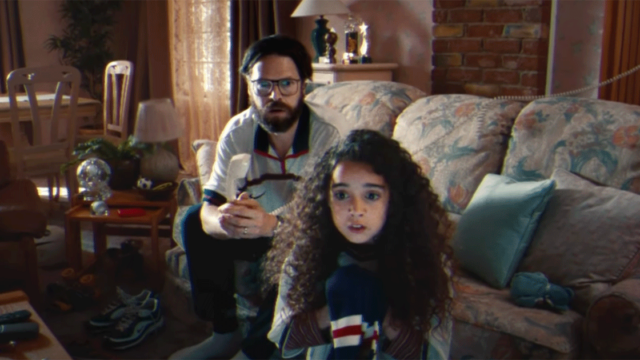
That all changed one cold December night last year when an anthropomorphized toaster pastry named Strawberry was lowered into a giant toaster at Camping World Stadium in Orlando, Fla. Cooked up by the marketing gurus at Pop-Tarts, this was the first-ever edible mascot in sports history, with the Kansas State Wildcats tearing into it after the game.

Pop-Tarts is no stranger to entertainment. The short-lived 1966 Batman Kellogg’s comics series helped the brand become a childhood favorite, and its sustained popularity has paved the way for a Jerry Seinfeld-starring Netflix film in the works, Unfrosted: The Pop-Tart Story.

Strawberry’s stunt catapulted Pop-Tarts into the mainstream once more. But the mascot’s short yet glorious life goes beyond simply a trending topic. The Pop-Tarts Bowl is a pop culture phenomenon that brought out the best of social media and, in doing so, baked the brand into football and marketing lore.

It’s a touchdown

Whether it’s Duke’s Mayo or Chick-fil-A Peach, the college football scene is a welcome home for food and drink sponsors. But a brand name alone isn’t enough to cut the mustard.

While whimsical, Strawberry wasn’t a random, shot-in-the-dark attempt at driving brand awareness. Pop-Tarts’ publicity stunt is forecast to earn the brand more than $12 million in exposure, which stems from following the well-known, well-worn recipe of The Hero’s Journey:

  • An ordinary, inanimate pastry hears the call to adventure and becomes Strawberry, now life-sized and full of life through supernatural aid
  • Strawberry’s transformation begins as challenges and temptations abound, like almost being licked by a football player
  • Strawberry meets the abyss, a martyr figure experiencing death at the hands and mouths of the victors
  • And finally rebirth, as a meme that will live on, finding new life as people make Strawberry’s story their own (and Pop-Tarts leaders hint we’ll see the mascot again soon)

The Pop-Tarts Bowl serves as a good reminder to trade in evoking emotion and connection; sometimes it’s the simple story templates and archetypes that pop.

Drawing up the perfect play

When a marketing campaign generates this much buzz, it’s only a matter of time before someone brings out the cookie cutter.

However, the luster was already lacking when Cheez-It unveiled its non-edible mascot on New Year’s Day. While the same agency and marketing minds might be behind both (Pop-Tarts parent company Kellanova is a spinoff of Cheez-It maker Kellogg’s), the reality is that the bit is already old.

Strawberry’s ascendance at the Pop-Tarts Bowl was pure. Nobody saw it coming. It followed the marketing mantra of my former boss, Odwalla and Califia Farms founder Greg Steltenpohl: Show up when and where you’re never expected to be. That’s why he used to run print ads for orange juice in fishing magazines in the ’80s.

Incongruity and absurdity run through the heart of the Strawberry fanfare. The mascot’s twisted facial expression, the implicit (somewhat tongue-in-cheek) agreement that he was going to “die” at the end of the game. Its nihilistic tone played a major part in the stunt catching fire among audiences.

Flip the coin, and it’s the absence of that “Are they really doing this?!” factor that made Cheez-It’s copycat attempt fall a little flat.

A quick glance at the stats reveals that Pop-Tarts’ bowl shenanigans generated oodles of social currency; ESPN’s TikTok of Strawberry has racked up more than 4 million views, and Kellanova’s CMO confirmed it’s the single biggest earned-media campaign the brand has had.
Time to run the option

The bowl season may be over, but brand marketers are already on the clock to come up with next year’s Strawberry.

Let’s hope we all remember the most poignant lesson Strawberry taught us: It’s in the end that many things become meaningful. So let it end and don’t be a copycat.

Instead, let’s ask: Does our brand have a play within its unique personality that can follow the recipe of equal parts absurdity and simplicity? Where can we go where we’re not expected to be?

https://www.adweek.com/brand-marketing/edible-pop-tarts-bowl-mascot-lessons-marketing/



One Team, One Dream: What Marketers Can Learn From Dove and Nike Partnership


.article-native-ad { border-bottom: 1px solid #ddd; margin: 0 45px; padding-bottom: 20px; margin-bottom: 20px; } .article-native-ad svg { color: #ddd; font-size: 34px; margin-top: 10px; } .article-native-ad p { line-height:1.5; padding:0!important; padding-left: 10px!important; } .article-native-ad strong { font-weight:500; color:rgb(46,179,178); }

The evolution of digital marketing isn’t slowing down—and neither should you. Connect with a community of brand pros and content creators at Social Media Week to learn how to keep pace with the trends, challenges and technology. Register now to save 35%.

Dove and Nike have teamed up to launch the Body Confident Sport program with a mission to boost girls’ body confidence in sports. The Body Confident Sport program is a first-to-market, providing a scientifically proven set of online coaching tools to build body confidence in 11 to 17-year-old girls.

It’s a match made in partnership heaven: Dove is one of the world’s largest providers of self-esteem and body confidence education and Nike is one of the world’s biggest champions of athletes and sports. Who better to team up then these two brands who have been on a journey to build more inclusive brands and communities?

It’s never easy to find the right brand partnership, where values and missions are aligned from the start, especially when considering what role brands can play in helping to tackle some of the biggest challenges facing society today. Marketers, using the Dove x Nike partnership as a blueprint, here are three questions to ask yourselves when considering whether this is the right partnership for your brand.

Why is this the right fit and partnership?

Both Dove and Nike have a long-term commitment to building more inclusive brands. They have both had their ups and downs on their journey and remain committed to solving societal problems affecting their consumers. By teaming up, they can have a bigger impact.

Dove has been equipping the next generation with tools to help build confidence and self-esteem. For over 15 years, Dove’s self-esteem project has been helping parents, mentors, teachers and youth leaders deliver self-esteem education, reaching over 60 million young people to date.

“Sports have the potential to make girls feel confident and strong, yet for so many, the judgment and criticism they face within the sports environment is damaging their confidence and limiting their self-belief. We are proud to team up with a like-minded brand like Nike to take action towards a more equitable future for girls—on and off the field,” says Alessandro Manfredi, chief marketing officer of Dove.

Nike also has a strong commitment to drive positive change for girls and their communities. Just last year, more than 375,000 girls accessed play and sport through Nike Inc. partners’ diverse programs. Nike has equipped more than 17,000 coaches with resources to create more inclusive experiences for kids.

“Globally, girls face complex cultural and social barriers, and they also enter sports later and drop out of sports earlier. Our partnership with Dove, and unique focus on coaching through body confidence, aims to change that. By shifting the conversation from what their bodies look like to what their bodies can do—so more girls can stay in sports and experience the benefits—we believe we’re creating the next generation of female leaders and changemakers who will move the world forward.” says Vanessa Garcia-Brito, VP and chief social and community impact officer of Nike, Inc.

Marketers, remember to ensure that you both enter a partnership with the same objectives in mind. For example, if your prospective partner doesn’t have a track record of committing to diversity, equity and inclusion efforts, why are they interested now? Are you better off tackling the problem alone? Or, in the case of Dove and Nike, is working together going to result in a bigger and better impact?

How can you tackle the problem together?

Dove and Nike embarked on the journey to develop Body Confident Sport by grounding themselves in research and understanding the consumer. They partnered with the Centre for Appearance Research and the Tucker Center for Research on Girls & Women in Sport. The brands co-developed this work for over two years, including input from girls and coaches globally in France, India, Japan, Mexico, the U.K. and the U.S.

According to the study commissioned by both brands, we now know that:

  • In the US, 48% of girls dropping out were told they don’t have the right body for sports.
  • 51% of girls dropping out were told that they were not good enough.
  • Yet 69% said they would be more body confident if they had stayed in sport for longer.

With these findings, the brands were able to embark on the impact they wanted to make together. Marketers, remember that partnering to find the right insights is critical for a successful partnership. Without aligning to key consumer insights you want to address, it will be difficult to bring this partnership to life.

How will you invest in bringing this partnership to life?

Both Dove and Nike were willing partners to invest in this partnership. The research they commissioned became the basis for what they would bring to the marketplace. Each brand brought key influencers to the partnership—Dove with Venus Williams and Nike with Laurie Hernandez.

Finally, the Body Confident Sport program is the culmination of the partnership. It provides coaches with the materials they need to increase girls’ body confidence, body image and self-esteem through sports. And keep girls from dropping out of sports. The program consists of three online interactive modules you can complete at your own pace: Introducing Body Image; Tackling Negative Body Image; Promoting Body Image. The brands aim to upskill any caring adult who is invested in helping young people succeed on and off the field. Coaches can include volunteers, teachers, parents, guardians, caregivers and siblings.

Marketers, remember that a successful partnership also means each party is willing to invest the time, money and resources to make an impact. Partnerships can’t be one sided, or a check-the-box initiative. Dove and Nike remind us of what great partnerships can look like, the power that can be unlocked when two industry titans come together to build a more inclusive world for sports for all of our girls.

https://www.adweek.com/brand-marketing/one-team-one-dream-what-marketers-can-learn-from-dove-and-nike-partnership/


It’s Complicated: Hollywood’s Long Relationship With Branded Entertainment


.article-native-ad { border-bottom: 1px solid #ddd; margin: 0 45px; padding-bottom: 20px; margin-bottom: 20px; } .article-native-ad svg { color: #ddd; font-size: 34px; margin-top: 10px; } .article-native-ad p { line-height:1.5; padding:0!important; padding-left: 10px!important; } .article-native-ad strong { font-weight:500; color:rgb(46,179,178); }

Save 50% on your Social Media Week pass! Join leading brands and agencies in NYC this April 9–11 to learn about emerging trends, tools and strategies. Register now—savings expire Dec. 11.

I don’t think my father knows what I do for a living. When I told him I had moved from film and television to branded entertainment, he looked at me with confusion and surmised, “Like The Carnation Hour?” I had to Google that—turns out he does know what I do.

The Carnation Hour was a radio series sponsored by Carnation Milk Company. It premiered in 1931 on the then-regional NBC network. The format ran for two decades until its final broadcast in 1951. The show gave platforms to entertainers like Buddy Clark and Dinah Shore, and was the earliest and most overtly branded form of entertainment I had ever seen.

That was until this year, when the Barbie movie transformed the real world into a pink fever dream. Although 70 years apart, these two references point to Hollywood’s longstanding relationship with branded entertainment. Here’s what we can learn from this rich history.

The roots of branded entertainment

The concept dates back to the 1950s, an era of broadcasting when radio and television programs were controlled by their sponsors and branded with company names. Shows like The Colgate Comedy Hour, Hallmark Hall of Fame and Westinghouse Studio One were simply part of the television genre.

[embedded content]

Out of these shows came stories and characters that were (not-so-secretly) brand-fueled. For instance, Columbo first appeared on television in a 1960 episode of the branded anthology series The Chevy Mystery Show. The term “soap opera” originated from the fact that serialized dramas were sponsored by soap manufacturers like Procter & Gamble to promote products to a mostly female, daytime audience.

Today the relationship between advertisers and studios looks very different. For so long we operated under the longstanding cultural agreement “give me Friends, OK I’ll watch your Gap commercial” until streaming came along. As a result of this shift, you have an entirely new audience who isn’t willing to watch commercials. This is problematic because recently, streaming platforms have built ad-supported networks to increase revenue and reach subscribers willing to trade their time for a lower monthly fee.

Netflix’s Q3 earnings report recently revealed its ad tier continues add users, with membership up almost 70% quarter over quarter. The majority of Peacock and Hulu sign-ups are ad-supported and, even though their overall subs fell, since launching ads late last year 40% of Disney+ new accounts have signed up for ads. With Amazon Prime Video set to kick off its ad-supported offering next year, we are now staring down the barrel of more ads at scale, something network television hasn’t been able to offer advertisers outside of sports in a very long time.

When you consider these two trends together—a commercial-averse Gen Z audience and an uptick in ad-supported streaming offerings—it begs the question: Who is going to watch all of these commercials that streamers are creating space for? “We imagine that Gen Z is going to take a lot of bathroom breaks just to reap the benefits of a lower subscription fee, which means a lot of ads will go unwatched. The opportunity to change that is now,” said SuperBloom House co-founder and CEO Briony McCarthy.

Could this mean a renaissance for branded entertainment? A recent YPulse survey found that 69% of 13- to 39-year-olds use streaming services to avoid ads, and the solution could be “having advertisers create their own content for the new on-demand services.” But what does that look like?

Give the people what they want

When we talk about branded entertainment, we’re not talking about sponsorship. This form of advertising emerged in the 1950s and allowed companies to get their goods and brand names out there without disrupting the stories. Ford gave the production of Rebel Without a Cause automobiles, which became an integral part of early car culture and product placement appeal.

Culture has historically driven product sales. Just recently, sales of white Vans were up a whopping 7,800% post-Squid Games. But this isn’t what we mean by brands playing in entertainment.

What we’re talking about in 2023 is the brands becoming studios. Telling stories that are born from what they stand for or how they want to be perceived. This content can live in a theater like Barbie did, on a streamer like Nike’s The Day Sports Stood Still, or simply can be shared on any of the other dozens of digital distribution mechanisms available to our eyeballs.

Recently brands like Nike, AB InBev and Saint Laurent have launched their own in-house entertainment studios to create stories that will reach audiences beyond a commercial break. Our clients are beginning to ask for it too. Mark DiCristina, vp of brand experience at Mailchimp Studios, launched the brand’s internal studio back in 2019 to work directly with production companies on branded content.

“Paid advertising is foundational to our success as a brand, but if it’s all we’re doing, then we only ever have people’s attention when we’re interrupting them from the thing they actually want to be doing—and we’re only interrupting them when we’re paying for the impression,” he said. “By making content people actually want to consume, we expand our relationship with our audience, and we expand the meaning of our brand.”

Success depends on a few things

One, the entertainment has to be good. For audiences to willingly gravitate to a brand-fueled movie or series, they need to be made by different types of creatives. Outside of the celebrity-backed companies, most ad agencies aren’t made up of people who are conventionally trained in entertainment development, packaging or longer-form storytelling.

Secondly, the brands need to get a lot out of their investment. This means you need an entirely separate engine of a company dedicated to executing their goals. This is a major opportunity because the brands have incredible global reach. If activated properly, they could really change the calculus of how something performs.

Imagine if HBO’s docuseries 100 Foot Wave were powered by a brand like Corona that has aligned with surf culture for decades. HBO would have had both a marketing partner and a passionate audience of beer drinkers, who make up 46% of the U.S. population. We have to imagine this is valuable to a streamer when they are working with decreasing marketing budgets and an abundance of content choices. A brand like Corona could really help a series break through the noise.

So how do we get more brands to see themselves as studios and get them excited about the ROI of making their own entertainment? We (the audience) already see them that way. I think of Stanley Tucci’s character’s quote in Devil Wears Prada: “What they created was greater than art because you live your life in it.” The same can be said for the brands we use and love because we have memories attached to them.

Let’s take those emotional touch points across sports, music, culture, food, fashion, comedy and social interest, and build entertaining stories that can become not a replacement but a more resonant alternative to commercials.

https://www.adweek.com/brand-marketing/hollywood-long-relationship-branded-entertainment/


Allyship With HBCUs Is More Than a Marketing Campaign


.article-native-ad { border-bottom: 1px solid #ddd; margin: 0 45px; padding-bottom: 20px; margin-bottom: 20px; } .article-native-ad svg { color: #ddd; font-size: 34px; margin-top: 10px; } .article-native-ad p { line-height:1.5; padding:0!important; padding-left: 10px!important; } .article-native-ad strong { font-weight:500; color:rgb(46,179,178); }

It’s no secret that collaboration is essential to growth, but the how of it isn’t always so clear—and it’s the understanding of how that is a true competitive advantage. Join Adweek X, a uniquely formatted event on December 4 in LA, to unlock fresh perspectives, true collaboration and growth.

Since the inception of Historically Black Colleges and Universities (HBCUs) in the 1800s, HBCUs have been a driving force in developing successful Black professionals in America. According to a White House report, HBCUs have produced approximately 40% of all Black engineers, 50% of all Black lawyers, 70% of Black doctors and 80% of Black judges. These prestigious colleges and universities have also produced close to 50% of the teachers in America, and many of the most accomplished names across the world of sports, business and entertainment are products of an HBCU.

Even many of the trends we see today, whether it be in fashion, music or social media, have been driven by some of the brilliant minds that have walked HBCU campuses. Collectively, these colleges and universities sit at the four-way intersection of authenticity, academia, culture and commerce. 

Markedly, HBCUs have accomplished all of these feats while being underfunded, so imagine the potential if they had meaningful support. Brands across America can bridge the gap, not only by showing up during key moments throughout the year but also making meaningful long-term investments in HBCU students and institutions.

Over the past five years, brands have begun to align themselves with HBCUs and diverse communities more often. However, it’s important that brands’ alignment transcend symbolic gestures in marketing campaigns, sponsored events and brand activations. Now is the time for brands to build a more meaningful relationship with HBCUs that nurtures campus life, professional development and talent pipelines that enhance the HBCU experience.

It’s not enough for brands to just be present—they must authentically engage with HBCU culture, their graduates, students at the university and its rich history, in an always-on approach that helps HBCUs overcome the obstacles of being underfunded for many decades.

One recent example of a brand authentically engaging with HBCU culture is when Flamin’ Hot partnered with Grammy award-winning artist Megan Thee Stallion to raise scholarship funds for HBCU students. Knowing the importance of homecoming season at HBCUs, Flamin’ Hot teamed up with the Houston rapper to launch Flamin’ Hot University, a fictitious university that offered online courses and limited-edition merchandise inspired by popular streetwear designer Melody Ehsani. 

The collection also included a Stallion Varsity Jacket and a Hot Girl Club sweater, which was inspired by Megan Thee Stallion. Proceeds from the collection went towards starting a scholarship fund of up to $150,000 at Texas Southern University, which is also Megan Thee Stallion’s alma mater. The partnership with Megan Thee Stallion was organic, the campaign was seamlessly integrated into HBCU culture and it left a meaningful impact on students at Texas Southern University. 

The campaign illustrated a successful and authentic way to engage with and invest in HBCU culture, so how else can brands tap into HBCU culture in meaningful ways?

Invest in campus infrastructure 

Long-term investments in infrastructure enable brands to be more present in the daily nuances of the HBCU experience. Financial support for infrastructure such as dorms, athletic facilities and classrooms enhances the college experience of HBCU students. These types of investments and partnerships allow brands to be authentically woven into the fabric of the everyday lives of HBCU culture and students who are pursuing their degrees. 

Empower students through mentorship

At the core, HBCUs are schools of higher learning that build leaders and some of the most esteemed professionals, not only in the Black community but in America—it’s important that brands understand this mission. Establishing mentorship programs at HBCUs seamlessly aligns with this assignment by providing students with the proper insight and guidance to help them secure jobs once they graduate. It also provides them with access to conversations with individuals who have once walked a similar path. This will not only accelerate their professional development but also help them build a strong network of professionals they can lean on to help navigate their academic and career journey. 

Build talent pipelines

Building a career pathway for students will also make a significant impact on bridging the gap for HBCUs. Create a calendar of events throughout the year that includes professional development workshops, panel discussions that provide career insight, and internship opportunities that are designed to establish clear pathways for students to have successful careers in their respective fields. Additionally, brands should also consider investing in curriculum development and campus career fairs in an effort to ensure that students are being prepared for what their respective industry looks like now, and in the future.

Allyship with HBCUs is more than just a marketing campaign. Marketing campaigns only represent a moment in time or in the world of advertising a “flight.” In an ever-changing world where budgets are getting tighter and the return on investment is more important than ever, one of the best returns on investment for a brand is investing in HBCUs. Not only are you showing up in front of an audience that is one of the driving forces behind trends for young people, but there is also an opportunity to help students become leaders in their respective fields, creating a sustainable pipeline to hire Black professionals and helping nurture the HBCU experience in a way that drives authenticity and allyship. 

This can be accomplished by forming apparel partnerships with HBCU athletic programs similar to Nike’s partnership with Florida A&M University, establishing internship and mentoring programs for HBCU students, creating unique brand activations at HBCU homecomings, hosting exclusive product launch events on HBCU campuses and by leveraging social media to engage with HBCU students in a way that lets them know you care. 

It’s one thing for brands to say that they care, but the impact comes from actions rooted in authenticity. 

https://www.adweek.com/brand-marketing/allyship-with-hbcus-is-more-than-marketing-campaign/


Industry Jargon Is the Silent Killer of B2B Marketing


In the realm of B2B marketing, a subtle but pervasive problem looms—ironically, one of the industry’s own creation. Clarity and meaning have become casualties in an ongoing war of words that often serve little purpose beyond filling content quotas or satisfying superficial engagement metrics.

As marketing professionals, we pride ourselves on our ability to craft compelling narratives, to turn the mundane into the extraordinary, yet in this endeavor we’ve inadvertently forged our own Achilles heel: an over-reliance on jargon and buzzwords that, rather than clarify, obscure our vision and deem our messaging virtually meaningless. It costs us our customers and, ultimately, our bottom line. 

This phenomenon isn’t merely a linguistic misstep. It represents a fundamental disconnect in how we communicate with audiences. In our quest for uniqueness and authority, we’ve encased our messages in layers of industry-specific vernacular, creating a barrier that only the initiated can penetrate. These words, while intended to showcase expertise and insight, often do the opposite, alienating the very customers we aim to engage. 

For executives, and particularly CMOs, this presents a unique challenge: How do we reconcile the need for specialized language with the imperative of deeper meaning and understanding?

Wrong words have consequences

Language can be complex or incredibly simple. Whatever language we choose, it wields immense power, shaping not only our brand’s perception but also its relationships and customer engagement.

Our industry has known this for a long time. In 2013, a McKinsey study provided insight into this phenomenon, revealing a stark disconnect between the core messages B2B companies emphasize and the attributes customers truly value. Often, companies get wrapped up in buzzwords like “innovation” and “global reach,” while customers prioritize practical aspects such as supply chain efficiency and specialist knowledge.

This misalignment, born out of a jargon-heavy approach, leads to a weakened perception of the brand as value propositions become shrouded in opaque language. 

In addition, a survey by Bospar and Propeller Insights reveals how jargon not only dilutes the clarity of communication but actively erodes trust and credibility. An overwhelming 88% of B2B decision-makers agreed that marketing clichés and overused buzzwords diminish a company’s credibility. Words like “disruptive” and “world-class,” intended to impress, often end up creating an impression of insincerity, which alienates potential customers and diminishes the genuine connection that effective communication can foster​.

The reasons for this communication style are not lost on me. In the ongoing debate about the use of industry-specific words in B2B, advocates argue that it demonstrates expertise—but while it may create a sense of community among insiders, this approach restricts broader engagement with crucial non-expert decision-makers. Jargon’s precision cannot override the necessity for clarity; as industries evolve, so does language, but it must remain inclusive.

The consequences of using the wrong words are twofold: They obscure the real value of products and services, and they weaken the foundational trust necessary for building robust business relationships. In a domain where clarity and authenticity are paramount, falling into the trap of using buzzwords can be a costly misstep, detracting from what we aim to deliver. 

Beyond marketing

The relentless spread of jargon across B2B organizations is not just an issue of poor communication; it’s a symptom of a deeper problem—the evasion of real innovation. Marketing is not a magic wand that can disguise mediocrity as excellence or turn features into entire product offerings. 

Analyst firms are one guilty party. While their insights are invaluable for defining market trends, their penchant for creating acronyms has led to an overabundance of specialized terms that, meant to categorize and clarify, has resulted in confusion and played a significant role in shaping industry language. It’s created a landscape where jargon overwhelms rather than aids, complicating communication in an area where clear, accessible information is crucial.

Innovation initiatives are also a culprit—a significant proportion of them fail, and companies generally lack confidence in their innovation abilities. A McKinsey study found that 84% of executives see innovation as an essential part of their growth strategy, but only 6% are satisfied with their innovation performance.

Often, marketing is not involved in the product development process until it’s too late, missing critical opportunities for input and commercialization strategies​​. It’s then expected that their message to the market focus on, even if it’s not in the product. This siloed approach leads to inefficient handoffs and a lack of integrated marketing thinking​​.

Moreover, many B2B companies, in contrast to B2C organizations, have thinner marketing departments, with innovation often led by engineering and sales​​. This underscores the imperative for marketing to be an integral part of the entire innovation process, not an afterthought, ensuring that products are not only technically sound but also resonate with customer needs and market realities. 

Strategies for clarity

In the world of B2B marketing, clear and meaningful communication is about embracing simple and relevant language thats resonates deeply with your audience. Look no further than IBM’s “Outthink” and Cisco’s “Internet of Everything” campaigns for prime examples of this approach in action.

“Outthink” is a master class in clarity and inspiration. By focusing on the synergy between artificial and human intelligence, IBM managed to communicate the vast capabilities of Watson in comprehensible and engaging language. Terms like “outthinking weather” and “outthinking crime” are not just catchy, they’re original and accessible, bringing the potential of technology to everyday scenarios. 

Similarly, Cisco’s campaign navigated the complex realm of connectivity with visionary yet relatable language; a phrase like “Tomorrow Starts Here” translates the intricate concepts behind its technology into a narrative. 

Drawing inspiration from these campaigns, B2B companies can adopt several actionable strategies to refine their communication.

Embrace clear messaging fundamentally: Focus on straightforward, jargon-free messaging that directly addresses your audience’s needs. Use language that anyone can understand, reserving technical terms for when absolutely necessary and always providing unambiguous explanations. Conduct workshops internally that emphasize the importance of a clarity-first approach to communication, encouraging all departments, especially product development and customer service, to adopt it.

Leverage story-driven creative: Stories connect people. Use narratives that echo everyday experiences or common challenges, making your offerings more tangible. Share customer success stories and case studies to demonstrate real-world applications and benefits. Strong imagery and innovative design are key, as they not only support but often drive a brand’s message. It’s important to remember that it’s these creative elements that truly engage and resonate with audiences, making a brand’s communication memorable. 

Seek regular feedback: Establish a feedback loop with your audience, employing a mix of media to reach them effectively. Use surveys, social media interactions and customer feedback to continually refine and enhance your messaging for maximum clarity and impact. Ensure your message remains consistent and clear across platforms to ensure it’s not just heard but understood and appreciated.

A brand’s voice should be a beacon of clarity, not a source of confusion; our stories should resonate and carry a weight that transcends the transaction. It’s time to strike that balance between elegance and simplicity.

What’s the next step? It begins with a unified commitment to valuing substance over superficiality. By distilling our messaging to its essence—what really matters to our customers and to our businesses—we can reconstruct our communication strategy with language that enlightens. In the end, the true measure of our success is not how well we can speak the language of our industry, but how well we can make our industry speak to the world. 

https://www.adweek.com/agencies/industry-jargon-silent-killer-b2b-marketing/


Take Time to Do the Painstaking Work of Building a Solid Marketing Plan


By now I’m willing to bet you’re tired of wasting your precious ad spend on suboptimal conversion rates. The way out lies in having a solid marketing plan. As annoying as it might be to hear, the success (or lack thereof) around your marketing is almost always tied to how developed and intentional your plan is. This may seem like a total “duh,” but you’d be surprised how often holistic planning is not considered. If you are feeling this, you’re not alone; read on for some tips on how to create super straightforward focus with your client or team.

Sure, paid media conversion might seem like an easy way out, but let’s be real—it’s nothing more than a quick fix to a long-term problem. A well-crafted plan that outlines goals, target audience, KPIs, a unique selling proposition and a content strategy seems basic but its often ignored. And taking the time to build a solid marketing plan trumps hasty paid media conversion any day.

In the ever-evolving landscape of advertising and marketing, it’s crucial for businesses to pause and reflect on the fundamental questions that underpin their strategies, and to do this often. Do you even need to advertise at all, or could your budget be better directed toward product development or enhancing existing offerings? Should you consider investing your budget toward a loyalty program? What if dollars for paid media simply aren’t available? Or your buying audience can’t be found and converted with a standard funnel? You can’t buy your way out of this. You need to get creative and make a plan.

Hasty conversion and its downside

Without a marketing plan that changes the conversation in your category, you run the risk of jumping straight into paid media conversion, where you may lose your audience’s attention and trust. You’ll also get subpar conversion rates, causing a negative return on ad spend. Why would you spend tons of money to draw people to your page, only for them to find that the brand’s core and foundation and community aren’t built out? It’s a waste of money if you ask me. Here’s why.

Potential loss of audience trust: When you engage in hasty conversion, you risk pushing out irrelevant ads to the wrong people. This process may lead your audiences to lose trust in your brand.

Suboptimal conversion rates: Without a clear understanding of your product, audience and message, it’s challenging to design effective ads that drive conversions. Suboptimal conversion rates mean that you’re not targeting the right audience, and the message is not resonating with them.

Wasteful ad spend: Investing in ads that do not deliver the expected returns depletes your resources. This strategy may lead to a waste of ad spend and leave your company with little ROI.

Benefits of a solid marketing plan

Now it’s worth looking at the flip side: why a solid marketing plan really does matter.

Efficient resource utilization: A marketing plan ensures that all resources are maximized. The plan helps the marketing team make the right decisions that drive ROI.

Better ROI: A sound marketing plan aims at delivering better ROI by increasing brand awareness, optimizing conversions and increasing customer retention.

Enhanced brand reputation: Focusing on brand awareness ensures that the company’s image is in sync with the target audience’s values and expectations. It builds a positive relationship between the company and the consumers—it builds community.

Long-term gains: A solid marketing plan sets the foundation for a long-term marketing campaign. It helps to establish a marketing strategy that caters to both short-term and long-term goals.

Building a marketing plan

Now what? Put your media where your mouth is. Don’t just allocate ad spend with the “big guys”—explore different approaches rather than competing with CPMs and hashtags. Here are some key points to consider and work through while building the plan.

Identify your target audience at the core: Every content marketing strategy needs to define its target audience. Yes, determine their age, gender and geographical location relevant to your product or service, but dig deeper. Get into their subconscious, even if it means doing a handful of one-on-one sit-downs. This knowledge enables you to design a whole ecosystem for your brand that will not only reach them more effectively but will connect with them long term. And have you ever met a board member that doesn’t love LTV numbers that increase in a quarterly business review?

Lead with creativity: To succeed, you must embrace creativity as your most potent weapon. Many brands rush into D2C sales and scaled distribution without respecting the creative process, often resulting in temporary success but long-term struggle. A successful marketing plan infuses creativity into every aspect, ensuring your brand’s narrative resonates deeply with your audience, forging lasting connections and thriving in the evolving marketing landscape.

Set realistic goals: Define and set specific, measurable, achievable, relevant and time-bound (SMART) goals. What do you want to achieve? By when? How will you measure success? These goals should not be all conversion-based.

Define your KPIs: Another critical element of creating a successful marketing plan is determining the key performance indicators that will measure progress toward set goals. Analyze what metrics you need to achieve the outcomes you want. Now, we’re talking conversion.

Outline your unique selling proposition: What makes your product or service unique from competitors? What benefits do you offer? You have to outline your unique selling proposition to negotiate the market terrain and a competitive edge. 

Create a content strategy: A content marketing strategy outlines how you’ll communicate with your target audience. Plan the content, format, frequency and channels of distribution. The content should inspire, inform and entertain your target audience.

Align distribution with digital marketing: To stand out in a content-saturated world, your marketing should be strategically placed where your target audience spends time. Your distribution channels should match your marketing campaign’s platforms and touch points, maximizing reach and impact, driving engagement, conversions and brand success.

Understanding your audience

Market research: Market research provides the data required to design a marketing plan. Research includes gathering customer data, information about the competition and business trends.

Building personas: Creating a buyer persona is a powerful way to communicate with your target audience more effectively. It makes it easier to connect with prospects, customers and clients.

Analyzing demographics and psychographics: Demographics and psychographics bring your audience’s characteristics to life. Knowing consumer demographics, such as age, gender and location, helps you design ads that target the right audience. Knowing psychographics like interests, motivations and preferences help create content that captivates and retains your audience.

Crafting a compelling content strategy

Kinds of content: Incorporate different kinds of content in your marketing plan, including video, blogs, podcasts, articles, infographics and social media posts. This approach ensures that your audience is actively engaged in your marketing campaign.

Creating a content calendar: A content calendar is crucial in maintaining a consistent flow of content. It helps to plan the type of content, the format and when to distribute it.

Maximizing social media: Social media platforms are evolving, and users consume more content than ever before. Leverage this opportunity to keep your audience engaged with relevant content, stay up to date with trends and—I’ll say it again—know your audience.

Let’s face it: When it comes to marketing, we all want to see results quickly. It’s tempting to dive into paid media conversion and hope for the best, but this hasty approach can actually do more harm than good. A solid marketing plan may require more upfront work, but it’s the foundation of a successful digital marketing strategy that cannot be compromised.

And remember, executing your test and learn plan is just the beginning. Pay close attention to audience feedback, become adept at listening and be unafraid to pivot when necessary. Adaptability is the key to lasting success. So put your plan into action, learn, listen and pivot. Failing fast and often when you’re learning within a framework is a good thing, but if you fail to plan holistically, you’re more likely to fail long term. 

https://www.adweek.com/media/take-time-to-do-the-painstaking-work-of-building-a-solid-marketing-plan/


This Year, Give Thanks for the Creatives


.article-native-ad { border-bottom: 1px solid #ddd; margin: 0 45px; padding-bottom: 20px; margin-bottom: 20px; } .article-native-ad svg { color: #ddd; font-size: 34px; margin-top: 10px; } .article-native-ad p { line-height:1.5; padding:0!important; padding-left: 10px!important; } .article-native-ad strong { font-weight:500; color:rgb(46,179,178); }

Save 50% on your Social Media Week pass! Join leading brands and agencies in NYC this April 9–11 to learn about emerging trends, tools and strategies. Register now—savings expire Dec. 11.

As our November holiday approaches, we find ourselves reflecting on the many things we’re thankful for. As a long-time veteran of the ad business, I’m thankful for the creative people in this industry, who breathe life into campaigns and brands on a daily basis, despite ever-changing client priorities and challenging economic environments.

While many of us account people, strategists and media folk are indispensable teammates in this crazy business we’ve chosen, creatives are the heart and soul of our industry. They’re the visionaries, the innovators and the problem-solvers who craft compelling stories that captivate consumers’ imaginations and drive results for brands. Their resilience and dedication are what make this industry flourish.

And in the face of the growing chatter of AI overtaking the creative process, I want to take a moment to appreciate what creatives have brought—and will continue to bring—to our industry.

Resilience, the creative spirit’s armor

In the advertising world, resilience is the lifeblood that courses through the veins of every creative professional. Think about the countless pitches and concepts that never saw the light of day, the sleepless nights refining ideas and the determination to stand back up after being rejected time after time. These gifted thinkers have the ability to bounce back from rejection, adapt to ever-changing trends and continue to push the boundaries of communication.

Yet, while the best creative thinkers have built up this resilience—always thinking there’s another, better idea out there—it’s up to all of us to hold a healthy respect for their output, even if we don’t like it or maybe even disagree with it. Because, as much as we try to separate “the work” from the person who made it, we all should understand that the creation is a part of them, too. So, before you start hacking away at an idea, take a breath and understand the personal implications of tearing it apart.

The real job of a creative is problem-solving

Creativity and problem-solving go hand in hand in the world of advertising. Most creatives see each project as a puzzle waiting to be solved, with unique challenges that require creative solutions. This dedication to problem-solving is what makes creatives so special.
It’s also why they’re so annoyed when they’re told what to do. When we do that, we’re wasting their ability to look at the world through a different lens, find inspiration in unexpected places and design a solution that solves the problem in a way we may not have considered.

In a world where success is often measured by the ability to evolve and adapt, creatives typically lead the push for change and are often impatient that change isn’t occurring briskly enough. They’re typically more graceful than many of us are in navigating the dynamic landscape of technology, culture and consumer preferences when too many of us are looking backward, clinging to what worked before.

Creatives also often take the lead in finding ways to address broader societal issues, using their talents to shed light on or clarify complex, important topics, from environmental sustainability to social justice. They aren’t just selling products; they’re helping to shape the cultural conversation, pushing for change and inspiring others to think critically about the world around them.

Maintaining humanness and breathing life into data

Finally, in a world where data and analytics play a significant role in our marketing, we must not forget the human perspective that creatives bring daily. Data may inform our strategies, but it’s creativity that breathes life into those strategies. The soul of our industry is in the stories we tell and the emotions we stir.

So this year, I’m giving a shout-out to creatives. I appreciate how your work makes people feel connected, inspired and understood, creating bonds between brands and consumers that transcend mere transactions, transforming them into enduring relationships. I appreciate how your resilience in the face of adversity and your dedication to problem-solving make our industry stronger.

And, finally, I’m just grateful that you’ve let me play along for all these years.

https://www.adweek.com/creativity/give-thanks-for-the-creatives/


From Reporting to Reduction: How Businesses Are Taking Action on Climate Change


.article-native-ad { border-bottom: 1px solid #ddd; margin: 0 45px; padding-bottom: 20px; margin-bottom: 20px; } .article-native-ad svg { color: #ddd; font-size: 34px; margin-top: 10px; } .article-native-ad p { line-height:1.5; padding:0!important; padding-left: 10px!important; } .article-native-ad strong { font-weight:500; color:rgb(46,179,178); }

Subscribe to Adweek’s Europe News Update for trending news, inspiring creativity and strategic insights every Thursday.

From wildfires raging in Canada to devastating flooding in large portions of the Northeast, the severity of natural disasters isn’t just inching up year over year; they’re shattering records at a rapid clip.

New legislation is emerging in response, with the Securities and Exchange Commission (SEC) proposing rules around mandatory emissions reporting for companies and California legislatures passed an act that would require companies with over one billion dollars in annual revenue to report their emissions. Here is what this kind of legislation means for those of us in Ad Land.

A closer look at emissions and how they vary

Carbon emissions from a company are broken down into scopes. Scope 1 is the direct output of pollutants by a company—think vehicle exhaust. Scope 2 is the pollution made by the energy a company buys like electricity to power the office. Scope 3 is all the other pollution linked to a company’s activities, but not directly created by them, like emissions from vendors. Both the SEC and California Legislature are targeting all three scopes of emissions.

Adland isn’t exempt from the legislation that’s coming down the pike, nor should we be. Studies from the U.K. found that the industry produces the same annual emissions as 47 coal-fired power plants, yet half (51%) of digital advertising businesses aren’t measuring their carbon emissions. This translates to an extra 28% of the annual carbon footprint for each person in the U.K.

What this means in advertising terms

Fortunately, initiatives like Ad Net Zero are forging paths to decarbonize the sector, starting with emissions reporting. And, this week, the 4A’s announced a partnership with London-based climate success platform 51toCarbonZero (51-0) to help our member agencies establish their carbon footprint.

Wondering what type of activities would go into your agency’s emission report? Here are a few examples:

Travel (Scope 1)

The globetrotting that makes our jobs so exciting is also a primary contributor to our huge emissions bill—whether it’s traveling to shoots, client meetings or industry events.

Productions (Scope 2)

Once the crew has arrived at the production, emissions continue to add up via electricity usage for lights and cameras, as well as heating and cooling for the building.

Digital Ads (Scope 3)

In post-production, ads require extensive computational power to create and display. Online advertising, in particular, leads to increased energy use from substantial data processing and transmission as well as powering the servers that host advertisements.

There is still a lot of ambiguity as to how all these new reporting requirements will ultimately be interpreted by courts when the inevitable legal challenges arise, how any gaps in Greenhouse Gas (GHG) protocol guidance might be bridged, as well as outstanding questions around the scope of coverage (in the U.S. at least). But one thing is becoming clear: it’s increasingly likely that your company will be doing business in some jurisdiction, now or in the future, where these new reporting requirements are in place.

In the midst of all these new emissions reporting laws, it’s worth keeping one very clear North Star in mind: all the emissions reporting in the world is completely meaningless if companies don’t act on the data to start reducing emissions. Reporting is not the end goal—reduction is. Think of reporting as table stakes to play, and reduction as winning. And then get started.

https://www.adweek.com/media/from-reporting-to-reduction-how-businesses-are-taking-action-on-climate-change/


Regional Mexican Music Goes Mainstream. Here’s Why Marketers Should Be Thinking Ahead


.article-native-ad { border-bottom: 1px solid #ddd; margin: 0 45px; padding-bottom: 20px; margin-bottom: 20px; } .article-native-ad svg { color: #ddd; font-size: 34px; margin-top: 10px; } .article-native-ad p { line-height:1.5; padding:0!important; padding-left: 10px!important; } .article-native-ad strong { font-weight:500; color:rgb(46,179,178); }

It’s no secret that collaboration is essential to growth, but the how of it isn’t always so clear—and it’s the understanding of how that is a true competitive advantage. Join Adweek X, a uniquely formatted event on December 4 in LA, to unlock fresh perspectives, true collaboration and growth.

There was a time—not so long ago, actually—when mentioning the artist Bad Bunny among a bunch of brand marketers would have elicited several confused-looking faces at best. But now? You’d probably get an obvious nod.

This major cultural shift is perfect evidence of just how reactive the marketing industry can be, oftentimes waiting for cultural waves to peak and then ride, as opposed to jumping in and creating the wave itself. And today the cultural shift that marketers may not see coming is the coast-to-coast impact of regional Mexican music, corridos in particular.

Mexican corridos is a music genre that uses instruments and lyrics based on the traditional style of Mexican folklore and includes storytelling that ends with a moral. The genre has been here for centuries, dating back to the early 1800s, and has been an integral part of not only Mexican culture but the surrounding Latin American countries that were introduced to it during the Golden Age of Mexican Cinema.

When it comes to the marketing industry, this isn’t an “I told you so,” sort of moment, but instead the perfect time for marketers to get ahead of the game.

The next Bad Bunny

One of the next, soon-to-be-household names that might still inspire a confused look, is Peso Pluma.

Like Bad Bunny, Peso Pluma is an artist whose meteoric crossover success has created a gateway for millions of young people in the U.S. to turn their attention to corridos and crossover tracks, which intentionally blend a couple of different genres, with Mexican regional melodies firmly in the driver seat. His hit single with Eslabon Armado, “Ella Baila Sola,” was the first regional Mexican song ever to enter the top five on the Billboard Hot 100 and reach number one on the Billboard Global 200.

Other appearances in mainstream culture: Peso Pluma was the first ever regional Mexican artist to perform on The Tonight Show Starring Jimmy Fallon and the first to perform corridos music at the 2023 Billboard Music Awards (also winning top Latin song for the aforementioned song), propelling him even deeper into pop culture. Additionally, performing at Coachella with Becky G gave avid music lovers the chance to experience him in person and add him to their playlists, which is another place he is breaking records as the number five most-streamed artist in the history of Spotify, hitting the Top 50 Global chart five times with his collaborations.

Some of the other well-known corridos artists are Armado, Natanael Cano and Fuerza Regida, while some of the classics are Banda El Recodo, Banda MS, Banda El Limón, Valentín Elizalde, Los Tigres del Norte and Los Tucanes de Tijuana. So, the musical revival is here, with a twist, and it’s continuing to gain ground and popularity.

Why marketers should care

A recent study by Orci and Think Now explores the impact that corridos and Mexican regional music are having on pop culture. Speaking to both US Hispanics and non-US Hispanics, the study sought to understand just who is listening to this previously niche style of music and what they really think of it. Here are a few applicable insights and lessons for marketers about the cultural shift behind corridos music.

The storytelling resonates

Despite what some may think about the niche nature of Mexican regional music, the study showed that this genre is very popular among both U.S. Hispanics and non-U.S. Hispanics, driven in large part by the fusion of styles. In fact, more than half (59%) of non-U.S. Hispanics enjoy “mixing new styles,”which is very telling of how new genres like the aforementioned Bad Bunny-fueled reggaeton revolution came to life.

Another reason for the increased interest in this music? Storytelling. Despite the language barrier, nearly two-thirds (64%) of non-U.S. Hispanics stated that they can “identify with/relate to the emotions conveyed in the songs.” This speaks to the broader importance of storytelling as a way to not only connect with younger generations, but provide meaningful content for them as well.

This is a big cultural moment

Both U.S. Hispanics and non-U.S. Hispanics see corridos and Mexican music as having an important impact on culture now and in the future. In fact, four-out-of-five (80%) of non-U.S. Hispanics say it “has the potential to break down cultural barriers.” So much so that when asked if the musical genre was a positive influence on young generations, 71% of U.S. Hispanics said it was a very positive influence, a point echoed by an even higher percentage (89%) of non–U.S. Hispanics.

The brand ambassadors the next-gen is looking for

While young talent, particularly in the music industry, can sometimes feel risky for brand associations, this research shows that 76% of non-U.S. Hispanics think Mexican regional artists “provide good models and spokespersons for brands.” While every brand has to take into consideration its own safety and alignment concerns, the data suggests that this genre as a whole is seen positively by young consumers.

What does this all mean?

For one, culture shifts quickly. Which in turn means that brands must always be thinking about the next thing—the next wave.

Given the rise of this emerging popularity around corridos music and culture, brands are doing themselves a disservice if they don’t proactively embrace these things now, as a means of demonstrating—even proving—that they have their pulse on culture. The opportunity to be a leader in this space and therefore lead with young consumers is now.

https://www.adweek.com/brand-marketing/regional-mexican-music-goes-mainstream/


The Skims and NBA Partnership Is a Masterclass in Brand Repositioning


.article-native-ad { border-bottom: 1px solid #ddd; margin: 0 45px; padding-bottom: 20px; margin-bottom: 20px; } .article-native-ad svg { color: #ddd; font-size: 34px; margin-top: 10px; } .article-native-ad p { line-height:1.5; padding:0!important; padding-left: 10px!important; } .article-native-ad strong { font-weight:500; color:rgb(46,179,178); }

Check out Commerceweek, Adweek’s destination for retail innovation. Enhance sales strategy across touchpoints with tips from top marketers. February 28-29 in NYC and virtual. Register.

In 2023, the sports apparel market is expected to generate more than $213 billion in revenue, with the men’s segment driving the highest market share.

A growing interest from consumers in pursuing more active lifestyles, along with health and fitness goals, has led to a demand for sports apparel, including athleisure wear. Sports culture has also influenced fashion trends and styles, which has helped expand the market. For example, brands like Nike and Adidas have been leveraging sports culture and partnerships for years to scale their reach beyond just sportswear and into mainstream fashion.

But there was one recent sports and fashion partnership that many did not see coming. Kim Kardashian-owned clothing brand Skims recently announced its partnership with the NBA, WNBA and USA Basketball to be the official underwear for the leagues.

What makes this partnership brilliant? Let’s take a closer look at Skims’ multi-phase approach behind the impactful partnership, and what marketers can learn about reshaping brand positioning.

A powerful kickoff

The partnerships with the basketball leagues gave Skims, a brand primarily known for being a women’s shapewear and loungewear company, an entry point into the lucrative sports apparel market. For the basketball leagues, it was a chance to project a more modern and inclusive image by partnering with a high-profile brand that has a young, diverse consumer group.

For all parties, this partnership bridges gaps between two seemingly disparate audiences and creates opportunities to scale the brands into new markets and demographics. It’s also a great example of authentic brand partnerships by brands that recognize overlapping interests and the power of diversification.

The week before the NBA partnership was announced, Skims launched its new men’s line. But the expansion into menswear isn’t what made headlines that week; it was the launch campaign featuring some of the most recognizable faces across the sports industry: soccer star Neymar Jr, 49ers defensive end Nick Bosa, and NBA player Shai Gilgeous-Alexander.

By partnering with these athletes, Skims established its men’s line as functional fashion. It’s not simply selling underwear—it’s marketing a lifestyle.

What is great about the launch marketing campaign is that it subtly prepared people for the larger collaboration that followed. Skims was no longer only a women-centric shapewear company; it had repositioned itself as a lifestyle brand for women, men, athletes and non-athletes alike.

The future of marketing and partnerships

This collaboration is an example of how brands are not limited to their initial markets. Skims positioned itself as a brand that could transcend new verticals.

While it’s too early to know how successful this partnership will be for the brands, the Skims menswear launch generated a lot of interest and buzz, which spilled over into its partnership announcement with the basketball leagues. What we can learn from their strategy is the need for brands to lean into trends and innovate. In order to be competitive, brands need to embrace new opportunities, take risks and develop campaigns and partnerships that go beyond the traditional and break through the clutter.

The Skims marketing playbook

Here are five lessons from Skims that marketers can learn from.

Recognize shared interests and opportunities

On the surface, a women’s clothing company and professional basketball leagues don’t seem to have a lot in common. But a closer look reveals shared values and interests. The brands embody inclusivity, aspiration and excellence. Skims recognized it, and leveraged it.

Reshape consumer perception strategically

Skims’ launch of its men’s line ahead of its sports partnership was strategic. It gave the company the opportunity to reshape consumer perception of what they thought the brand was and broaden its appeal. By the time the collaboration with the leagues was announced, Skims’ connection with sports felt more organic.

Be inclusive

More and more consumers are choosing brands that reflect their identities and align with their values. Through its collaborations with the NBA, WNBA and USA Basketball, Skims has established itself as a brand that celebrates and embraces diversity through race, gender and body inclusivity.

Ensure a real connection with brand ambassadors

Successful influencer campaigns are a result of authentic connections between the influencer, the brand and the content. One of the reasons why the Skims Men launch campaign made such an impact on consumers was because the brand sought to build a genuine connection with its star ambassadors by leaning into sports culture, style and humor, making their endorsements feel authentic and relatable.

Lean into cultural trends

Skims recognized the value and potential of tapping into the growing sports apparel market and bringing two cultural powerhouses together to broaden their appeal through an expected partnership.

The partnership between Skims and the basketball leagues is a masterclass in a well-thought-out strategic marketing plan. It is a great example of how to build impactful collaborations while embracing diversity and taking a forward-thinking approach to marketing.

.font-primary { } .font-secondary { } #meter-count { position: fixed; z-index: 9999999; bottom: 0; width:96%; margin: 2%; -webkit-border-radius: 4px; -moz-border-radius: 4px; border-radius: 4px; -webkit-box-shadow: 0 0px 15px 4px rgba(0,0,0,.2); box-shadow:0 0px 15px 4px rgba(0,0,0,.2); padding: 15px 0; color:#fff; background-color:#343a40; } #meter-count .icon { width: auto; opacity:.8; } #meter-count .icon svg { height: 36px; width: auto; } #meter-count .btn-subscribe { font-size:14px; font-weight:bold; padding:7px 18px; color: #fff; background-color: #2eb3b2; border:none; text-transform: capitalize; margin-right:10px; } #meter-count .btn-subscribe:hover { color: #fff; opacity:.8; } #meter-count .btn-signin { font-size:14px; font-weight:bold; padding:7px 14px; color: #fff; background-color: #121212; border:none; text-transform: capitalize; } #meter-count .btn-signin:hover { color: #fff; opacity:.8; } #meter-count h3 { color:#fff!important; letter-spacing:0px!important; margin:0; padding:0; font-size:16px; line-height:1.5; font-weight:700; margin: 0!important; padding: 0!important; } #meter-count h3 span { color:#E50000!important; font-weight:900; } #meter-count p { font-size:14px; font-weight:500; line-height:1.4; color:#eee!important; margin: 0!important; padding: 0!important; } #meter-count .close { color:#fff; display:block; position:absolute; top: 4px; right:4px; z-index: 999999; } #meter-count .close svg { display:block; color:#fff; height:16px; width:auto; cursor:pointer; } #meter-count .close:hover svg { color:#E50000; } #meter-count .fw-600 { font-weight:600; } @media (max-width: 1079px) { #meter-count .icon { margin:0; padding:0; display:none; } } @media (max-width: 768px) { #meter-count { margin: 0; -webkit-border-radius: 0px; -moz-border-radius: 0px; border-radius: 0px; width:100%; -webkit-box-shadow: 0 -8px 10px -4px rgba(0,0,0,0.3); box-shadow: 0 -8px 10px -4px rgba(0,0,0,0.3); } #meter-count .icon { margin:0; padding:0; display:none; } #meter-count h3 { color:#fff!important; font-size:14px; } #meter-count p { color:#fff!important; font-size: 12px; font-weight: 500; } #meter-count .btn-subscribe, #meter-count .btn-signin { font-size:12px; padding:7px 12px; } #meter-count .btn-signin { display:none; } #meter-count .close svg { height:14px; } }

Enjoying Adweek’s Content? Register for More Access!

https://www.adweek.com/commerce/skims-nba-brand-repositioning/