Introducing Adweek X: Collaborations, Connections and Convergence


.article-native-ad { border-bottom: 1px solid #ddd; margin: 0 45px; padding-bottom: 20px; margin-bottom: 20px; } .article-native-ad svg { color: #ddd; font-size: 34px; margin-top: 10px; } .article-native-ad p { line-height:1.5; padding:0!important; padding-left: 10px!important; } .article-native-ad strong { font-weight:500; color:rgb(46,179,178); }

Partnerships have defined success for our community for decades. Great minds from disparate backgrounds and disciplines come together to put great work into the world that increases awareness of, engagement with and, ultimately, purchase from brands—engendering trust and loyalty in the process.

Fast forward to today, and there has never been a time when partnerships—collaborations, connections and convergence—were more important to our industry.

That’s because the business of building brands today is incredibly complex, involving an increasing number of stakeholders outside the traditional industry boundaries. Understanding where and how the advertising, marketing and brand industry intersects with other industries—other businesses, other leaders, makers and thinkers—is not only critical to a successful campaign but to ensuring that marketing is a growth driver for the business. And these partnerships will become more vital as the pace of change in business and technology accelerates. 

Enter Adweek X. Adweek X is a new event developed for the express purpose of examining the incredible and often surprising collaborations, connections and convergence that make magic happen and drive game-changing growth for brands and their partners. 

In this one-day event, Dec. 4 in Los Angeles, we will spotlight the X—those instances of people, tech, data, platform, and brand collaboration that yield greater output, greater return, greater momentum—in an era where silos, factions, fractures and inconsistency have dominated. X represents intersection. X represents exceptional. X represents the exchange of knowledge.  

As an unprecedented resource and experience, Adweek X will leave attendees with new models, new empathy, new ways of thinking, and new strategies for driving outsized growth—not just for their brands, but for their businesses. 
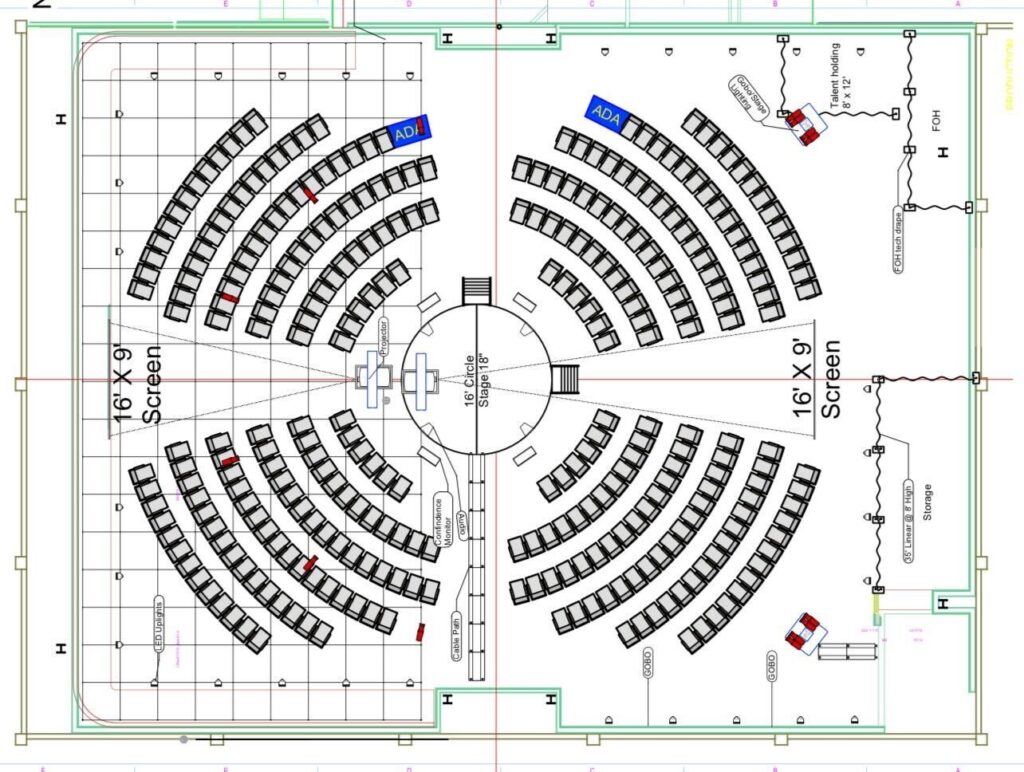
Diagram of planned stage configurationDeutsch LA

How Adweek X is different 

We’ll gather various teams, leaders and strategic thinkers to swap perspectives and priorities—often oppositional—on how we as brands, businesses and humans connect and collaborate to accelerate performance. The mashups are endless: Creators and brand marketers. B-to-B and B-to-C marketing leaders. CMOs and engineers. Artists and technologists. Entertainers and data scientists. CMOs and CFOs. Investors and startup founders. And on and on. 

To be sure, brand-side marketers have been prioritizing silo-busting internally for years now, recognizing that marketing is a cross-department practice that benefits from access to other thinkers and skill sets within an organization. Likewise, agencies have been breaking down walls to reflect the multiplatform realities of effective and seamless consumer engagement and experience.  

But that silo-busting now transcends internal walls and extends to the industry beyond. We all learn from each other—but more important, we learn from the dissimilar. We learn from the different. And given the dynamic, ever-changing realities of the advertising, marketing and media industry, and given that nothing is static, exposure to and connection with the different, even the opposing, is critical. That’s how real knowledge happens.  

At Adweek X, we’ll bring together business leaders and experts from within and outside our industry for a day-long symposium of thought and action. We’ll engage in conversation and debate. We will learn, confront and challenge. We will seek to understand one another. And we will leave attendees with new knowledge, new tactics, new approaches, and a new empathy to bring to their brands, clients, communities, and our world. 

A physical metaphor for the concept of Adweek X, this inaugural event will be held at a unique, open space at Deutsch LA, a blank canvas that will come to life through a different stage model: a circular stage at the center with attendees’ seats in the configuration of an X. This will make the audience feel just as much of the conversation as the people on the stage, with many opportunities for interaction and dialog themselves, creating a true whole-room participation experience. 

Programming will be varied too, with firesides and solo, TED-style talks, as well as opposing-view sessions, brand-mashup spotlights, conversations between academics and practitioners, mentors and mentees, poly-hyphenates and economists, CMOs and CFOs, creative thinkers and tech trailblazers, data analysts and storytellers, and more. CMOs who moonlight as startup investors. Startup founders who are celebrities. Celebrities who have changed the game—literally—by working with sports organizations. And of course, brand mashups, long a staple but increasingly unique and unexpected. 

Collaboration, connections and convergence power this industry now more than ever. They bring together diverse talents, foster creativity, spur innovation, facilitate agility, enhance efficiency and drive ROI. The increasing importance of digital marketing, cost efficiencies, data-driven decision-making and the need to adapt to evolving consumer preferences requires marketers to double-down on doubling up. 

Join us for this unique event as we seek to deconstruct the intersections of expertise, skills, thinking, viewpoints, visibility and metrics that power this industry forward. This will be the first of many moments throughout the year where Adweek will focus on this important dynamic.

.font-primary { } .font-secondary { } #meter-count { position: fixed; z-index: 9999999; bottom: 0; width:96%; margin: 2%; -webkit-border-radius: 4px; -moz-border-radius: 4px; border-radius: 4px; -webkit-box-shadow: 0 0px 15px 4px rgba(0,0,0,.2); box-shadow:0 0px 15px 4px rgba(0,0,0,.2); padding: 15px 0; color:#fff; background-color:#343a40; } #meter-count .icon { width: auto; opacity:.8; } #meter-count .icon svg { height: 36px; width: auto; } #meter-count .btn-subscribe { font-size:14px; font-weight:bold; padding:7px 18px; color: #fff; background-color: #2eb3b2; border:none; text-transform: capitalize; margin-right:10px; } #meter-count .btn-subscribe:hover { color: #fff; opacity:.8; } #meter-count .btn-signin { font-size:14px; font-weight:bold; padding:7px 14px; color: #fff; background-color: #121212; border:none; text-transform: capitalize; } #meter-count .btn-signin:hover { color: #fff; opacity:.8; } #meter-count h3 { color:#fff!important; letter-spacing:0px!important; margin:0; padding:0; font-size:16px; line-height:1.5; font-weight:700; margin: 0!important; padding: 0!important; } #meter-count h3 span { color:#E50000!important; font-weight:900; } #meter-count p { font-size:14px; font-weight:500; line-height:1.4; color:#eee!important; margin: 0!important; padding: 0!important; } #meter-count .close { color:#fff; display:block; position:absolute; top: 4px; right:4px; z-index: 999999; } #meter-count .close svg { display:block; color:#fff; height:16px; width:auto; cursor:pointer; } #meter-count .close:hover svg { color:#E50000; } #meter-count .fw-600 { font-weight:600; } @media (max-width: 1079px) { #meter-count .icon { margin:0; padding:0; display:none; } } @media (max-width: 768px) { #meter-count { margin: 0; -webkit-border-radius: 0px; -moz-border-radius: 0px; border-radius: 0px; width:100%; -webkit-box-shadow: 0 -8px 10px -4px rgba(0,0,0,0.3); box-shadow: 0 -8px 10px -4px rgba(0,0,0,0.3); } #meter-count .icon { margin:0; padding:0; display:none; } #meter-count h3 { color:#fff!important; font-size:14px; } #meter-count p { color:#fff!important; font-size: 12px; font-weight: 500; } #meter-count .btn-subscribe, #meter-count .btn-signin { font-size:12px; padding:7px 12px; } #meter-count .btn-signin { display:none; } #meter-count .close svg { height:14px; } }

Enjoying Adweek’s Content? Register for More Access!

https://www.adweek.com/brand-marketing/introducing-adweek-x-collaborations-connections-convergence/


The Multifaceted Latine Community and What Managers Can Learn


.article-native-ad { border-bottom: 1px solid #ddd; margin: 0 45px; padding-bottom: 20px; margin-bottom: 20px; } .article-native-ad svg { color: #ddd; font-size: 34px; margin-top: 10px; } .article-native-ad p { line-height:1.5; padding:0!important; padding-left: 10px!important; } .article-native-ad strong { font-weight:500; color:rgb(46,179,178); }

Editor’s note: In this article, Adweek deviated from its style of using Latinx due to the writer’s preference. Latine is a gender-neutral form of Latino.

In my career, I’ve worked for organizations where I was not the only Latina/e in the room. I have raised my hand to participate in projects that connect with my community because I self-identify as a translator of culture.

I grew up in a Spanish-speaking household in Chicago raised by Mexican-born parents who worked to afford an annual trip to Mexico to visit family. I recognize that the act of traveling to Mexico was a privilege for my family because so many immigrants left their homes without the option to travel back until they were able to obtain legal status. I also recognize that Chicago is home to a diverse Latine community that makes up 33% of the city’s population.

In contrast to how I self-identify, there are Latine professionals who prefer not to be labeled as part of a group and instead lead with other professional experiences or personal interests.

Or, simply, talking about cultural identity can be painful. This is especially true if a BIPOC professional grew up in a town that lacked diversity, where they were the only non-white student in school and/or their parents wanted to protect their kids by teaching them to not embrace their cultural roots.

However, if you have a Spanish name and/or look like you are Latine, regardless of your path, stories of tokenism are real on both sides.

From the perspective of a first-generation Mexican American raised in Chicago, here’s how managers can avoid tokenism and retain our nuanced talent.

The fastest-growing minority—except in advertising

Our impact is evident. Beyond national headlines and data like “Latinos account for over half of the country’s population growth,” our impact can be felt on the main stages and society has embraced us.

Seeing Diana Flores, a Mexican flag football players, featured in a Super Bowl ad made me beam with pride, especially as she spoke to her mom in Spanish. The movie A Man Named Otto beautifully depicted a Latine bilingual family as the main characters alongside Tom Hanks. Many elementary classrooms have better ethnic and diverse representation than our offices. I imagine children sitting next to each other with a tapestry of ethnic food as their lunch in the cafeteria.

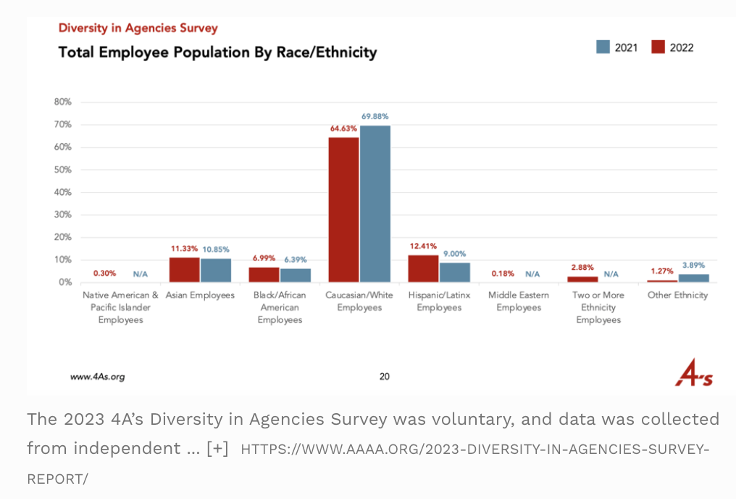
However, a recent report by the American Association of Advertising Agencies (the 4A’s) was a reminder that there is room for improvement both in hiring and retaining diverse talent.

Graph showing ethnicities in agencies.

Lack of action is at the heart of tokenism

To avoid tokenism, we need to see companies and leaders commit to talent for the long term. We don’t just want to be hired to fulfill a short-term diversity goal. Regardless of how we self-identify, we want active participation from managers to get to know our individual motives, values and nuanced professional experiences in order to guide our professional development.

Let Latine employees choose if they want to share their cultural identity, or lead with another area of interest. Managers can help by co-creating a space of belonging by allowing employees to self-identify as they choose versus making assumptions that can feed into negative stereotypes.

Seek to learn from multiple lived experiences

Ensure employees aren’t called to be a lonesome representative of their entire group. Teams strike gold when they have representation from multiple Latine lived experiences and perspectives versus having one or two perspectives in the room.

Make our contributions relevant all year. Work from within the community by tapping into your employee resource groups for feedback, or make time to learn from people in the communities you are trying to reach.

Conducting ethnography sessions in a respectful way in the neighborhoods you are trying to reach is a practice that should be a part of every marketing communications institution. It teaches us to actively listen, learn, and build perspective and character by putting a voice and name to our data.

Reward excellence with excellent compensation

The pay gap among talent of color is real, regardless of how one self-identifies. Motivate diverse talent to stay with equitable monetary compensation that reflects their contributions to the business. A level up is to build reward systems by way of leadership roles and ownership opportunities.

Once we start seeing more longevity in companies by seeing more Latine talent and holding C-suite positions, we will have made a dent in avoiding tokenism. Until then, companies risk being seen as organizations that extract our cultural contributions without proper compensation and recognition.

Author moments of praise for your diverse team

Encourage and coach your diverse team to show ownership of their work by having them speak about their contributions. There is no better feeling when one is able to deliver and share our work, and get credit for it. It helps build a positive reputation within the organization that will excite others to work and collaborate with us.

Each one of us has a story, a struggle and a unique path in how we self-identify and how we choose to lead in a professional setting. There are two sides to growing up as a first-generation Latine professional that is important for managers to know. Some of us lead with our cultural identity as a superpower while others lead with other traits. Our common goal is to not be tokenized.

.font-primary { } .font-secondary { } #meter-count { position: fixed; z-index: 9999999; bottom: 0; width:96%; margin: 2%; -webkit-border-radius: 4px; -moz-border-radius: 4px; border-radius: 4px; -webkit-box-shadow: 0 0px 15px 4px rgba(0,0,0,.2); box-shadow:0 0px 15px 4px rgba(0,0,0,.2); padding: 15px 0; color:#fff; background-color:#343a40; } #meter-count .icon { width: auto; opacity:.8; } #meter-count .icon svg { height: 36px; width: auto; } #meter-count .btn-subscribe { font-size:14px; font-weight:bold; padding:7px 18px; color: #fff; background-color: #2eb3b2; border:none; text-transform: capitalize; margin-right:10px; } #meter-count .btn-subscribe:hover { color: #fff; opacity:.8; } #meter-count .btn-signin { font-size:14px; font-weight:bold; padding:7px 14px; color: #fff; background-color: #121212; border:none; text-transform: capitalize; } #meter-count .btn-signin:hover { color: #fff; opacity:.8; } #meter-count h3 { color:#fff!important; letter-spacing:0px!important; margin:0; padding:0; font-size:16px; line-height:1.5; font-weight:700; margin: 0!important; padding: 0!important; } #meter-count h3 span { color:#E50000!important; font-weight:900; } #meter-count p { font-size:14px; font-weight:500; line-height:1.4; color:#eee!important; margin: 0!important; padding: 0!important; } #meter-count .close { color:#fff; display:block; position:absolute; top: 4px; right:4px; z-index: 999999; } #meter-count .close svg { display:block; color:#fff; height:16px; width:auto; cursor:pointer; } #meter-count .close:hover svg { color:#E50000; } #meter-count .fw-600 { font-weight:600; } @media (max-width: 1079px) { #meter-count .icon { margin:0; padding:0; display:none; } } @media (max-width: 768px) { #meter-count { margin: 0; -webkit-border-radius: 0px; -moz-border-radius: 0px; border-radius: 0px; width:100%; -webkit-box-shadow: 0 -8px 10px -4px rgba(0,0,0,0.3); box-shadow: 0 -8px 10px -4px rgba(0,0,0,0.3); } #meter-count .icon { margin:0; padding:0; display:none; } #meter-count h3 { color:#fff!important; font-size:14px; } #meter-count p { color:#fff!important; font-size: 12px; font-weight: 500; } #meter-count .btn-subscribe, #meter-count .btn-signin { font-size:12px; padding:7px 12px; } #meter-count .btn-signin { display:none; } #meter-count .close svg { height:14px; } }

Enjoying Adweek’s Content? Register for More Access!

https://www.adweek.com/agencies/retain-bipoc-talent-latine-managers/


Resetting the Client-Agency Relationship to Benefit Future Leaders


.article-native-ad { border-bottom: 1px solid #ddd; margin: 0 45px; padding-bottom: 20px; margin-bottom: 20px; } .article-native-ad svg { color: #ddd; font-size: 34px; margin-top: 10px; } .article-native-ad p { line-height:1.5; padding:0!important; padding-left: 10px!important; } .article-native-ad strong { font-weight:500; color:rgb(46,179,178); }

In an era of increasing reliance on data, automation and ultimately, AI, it is people that remain, and will remain, the driving force behind any successful business.

That said, the media and advertising industry is facing a recruitment crisis of its own. Acute talent and retention issues are commonplace in parts of our industry, underpinned by poor work/life balance, inadequate training and a perceived lack of purpose from marketing.

As advertisers, we must acknowledge that our business practices and behavior have an impact not only on the people on our teams, but also on the talent working on our behalf with our agency partners.

People and culture are now higher up on the agenda

Whilst advertisers look to allocate resources to nurture their in-house talent, too often, there is a disconnect between an advertiser’s interest in nurturing the talent of its agency partners. The responsibility to resolve talent issues is a joint one, working in partnership with our agencies.

After all, agencies serve their client’s needs and clients are king in their eyes. Consequently, the influence of advertisers to foster an agency relationship where talent can thrive should not be underestimated. It is these marketing professionals, working in our agencies, who have the potential to become the next marketing leaders in our business.

Earlier this year, the Global Media Board of the World Association of Advertisers (WFA) met in Istanbul to launch the 2023 Global Media Charter, the last of which was published in 2018. This Charter acts as a guide for media leaders to ensure that their corporate responsibility agenda is represented in the media decisions made, platforms invested in and partners selected.

For the first time, “People and Partners” was high on the agenda for this iteration, owing to the sense of urgency to address the wellbeing issues in our industry, evolving the way talent (in-house or outsourced) is recruited, trained, supported and developed.

An overhaul of client-agency processes

Behaviors that clients can adopt to have a positive impact on the people working for their business can be as simple as minor adjustments to the agency pitch process, often a period of extreme stress for agencies.

For example, at Danone, on a creative pitch we conducted recently, the brief was ready by the end of the year, but we released it to the agencies post the Christmas break to avoid agencies working on it during the holiday period. This might appear like a small thing, but for a pitch of this scale, it made the world of a difference for hundreds of people.

Of course, action from advertisers must go even deeper than this to fix some of the underlying structural issues that prevent the client-agency relationship from thriving in a way that cultivates talent.

This means overhauling the processes around clear and fair expectations, ways of working, governance and timelines. These can be as simple as streamlining approval and feedback processes to help free up time and headspace for agencies to do what they do best: being creative. Keeping lines of communication open (yet structured) and being respectful of communicating within acceptable working hours must become standard as part of the client-agency relationship. But too often, these lines are not respected.

Advertisers must also consider establishing stronger connections between their brands and agency partners through conducting regular brand immersion sessions and increased transparency on the context in which the business operates. This way, the relationship is less transactional and looks to overcome the perceived lack of purpose from marketing.

Ultimately, nurturing the agency relationship and helping develop its talent is a form of long-term investment, as those talents are key to helping advertisers build strong brands and grow their business.

.font-primary { } .font-secondary { } #meter-count { position: fixed; z-index: 9999999; bottom: 0; width:96%; margin: 2%; -webkit-border-radius: 4px; -moz-border-radius: 4px; border-radius: 4px; -webkit-box-shadow: 0 0px 15px 4px rgba(0,0,0,.2); box-shadow:0 0px 15px 4px rgba(0,0,0,.2); padding: 15px 0; color:#fff; background-color:#343a40; } #meter-count .icon { width: auto; opacity:.8; } #meter-count .icon svg { height: 36px; width: auto; } #meter-count .btn-subscribe { font-size:14px; font-weight:bold; padding:7px 18px; color: #fff; background-color: #2eb3b2; border:none; text-transform: capitalize; margin-right:10px; } #meter-count .btn-subscribe:hover { color: #fff; opacity:.8; } #meter-count .btn-signin { font-size:14px; font-weight:bold; padding:7px 14px; color: #fff; background-color: #121212; border:none; text-transform: capitalize; } #meter-count .btn-signin:hover { color: #fff; opacity:.8; } #meter-count h3 { color:#fff!important; letter-spacing:0px!important; margin:0; padding:0; font-size:16px; line-height:1.5; font-weight:700; margin: 0!important; padding: 0!important; } #meter-count h3 span { color:#E50000!important; font-weight:900; } #meter-count p { font-size:14px; font-weight:500; line-height:1.4; color:#eee!important; margin: 0!important; padding: 0!important; } #meter-count .close { color:#fff; display:block; position:absolute; top: 4px; right:4px; z-index: 999999; } #meter-count .close svg { display:block; color:#fff; height:16px; width:auto; cursor:pointer; } #meter-count .close:hover svg { color:#E50000; } #meter-count .fw-600 { font-weight:600; } @media (max-width: 1079px) { #meter-count .icon { margin:0; padding:0; display:none; } } @media (max-width: 768px) { #meter-count { margin: 0; -webkit-border-radius: 0px; -moz-border-radius: 0px; border-radius: 0px; width:100%; -webkit-box-shadow: 0 -8px 10px -4px rgba(0,0,0,0.3); box-shadow: 0 -8px 10px -4px rgba(0,0,0,0.3); } #meter-count .icon { margin:0; padding:0; display:none; } #meter-count h3 { color:#fff!important; font-size:14px; } #meter-count p { color:#fff!important; font-size: 12px; font-weight: 500; } #meter-count .btn-subscribe, #meter-count .btn-signin { font-size:12px; padding:7px 12px; } #meter-count .btn-signin { display:none; } #meter-count .close svg { height:14px; } }

Enjoying Adweek’s Content? Register for More Access!

https://www.adweek.com/agencies/resetting-the-client-agency-relationship/


Failure to Launch: Delta Delivered Bad News And Did It Poorly


.article-native-ad { border-bottom: 1px solid #ddd; margin: 0 45px; padding-bottom: 20px; margin-bottom: 20px; } .article-native-ad svg { color: #ddd; font-size: 34px; margin-top: 10px; } .article-native-ad p { line-height:1.5; padding:0!important; padding-left: 10px!important; } .article-native-ad strong { font-weight:500; color:rgb(46,179,178); }

As any journalist would, I should make my conflict of interest clear before you read on: I’m an absolute Delta Air Lines fanboy. I’m a Delta Million Miler and Diamond for about seven years running. When Delta is in the headlines, my community comes to me for comment.

Last week was no different when Delta announced the forthcoming changes it’s bringing to the SkyMiles program. But what is most concerning isn’t that Delta made these changes, it’s the way it fumbled the roll-out.

The dust has settled and here are a few takeaways on what marketers can learn from communicating tough business decisions.

Empathy should not be a disappearing act

In 2020, Delta chief marketing and communications officer Tim Mapes issued the following statement at the ANA Masters of Marketing Conference: “[Delta] is a brand that very much believes in empathy. It believes in humanity. It believes in connecting with people on an emotional basis…”

A noble aspiration. But that empathy, that humanity, was missing when Delta delivered the news that the program would be overhauled. A tangible outcome of Delta’s program changes would be the effective end of elite status for a plethora of loyal Medallions. Knowing that, it was shocking to see the lack of consideration for the way these loyalists would receive this information.

By the simplest definition, empathy means understanding and sharing the feelings of others. The brand held no space for those who would be on the receiving end of this news. Instead, it treated the announcement as a victory for all Delta passengers. But a more empathetic approach would have been as simple as saying, “We know these changes might not be what everyone wants to hear, but in order to keep delivering the premium product and reliable experience you have come to expect from us, we have to make some adjustments.”

Nobody likes radio silence

Sept. 13: Program changes leak across the travel blogosphere.
Sept. 14: Delta issues its official announcement to SkyMiles members.
Sept. 15: Crickets.

When people receive bad news, they have questions. When a doctor tells you that you might need surgery, she doesn’t just leave the room—she stays to answer your questions. When you find out you’re being laid off, the representative across the table from you is there to answer questions (even if you don’t like those answers) and hold space for your responses.

Delta delivered bad news to some of their most loyal customers and went MIA.

At the time of this writing, the brand’s last original post on the platform formerly known as Twitter came on Sept. 13 (though they’re very active in replies), posted once to LinkedIn, hasn’t addressed the issue on its Instagram feed and the Delta News Hub features two updates since, neither about SkyMiles.

While its social team is working around the clock with a carefully crafted (and likely vetted) response to customer complaints (and let’s remember to treat them with kindness), corporate has abdicated its responsibility to deliver on the values it claims are so central to the brand.

Avoiding the conversation only further entrenches the negative sentiment brewing amongst those customers who are displeased. It also leaves brand loyalists (though soon to be free agents) to fill the void, which they are very passionately doing.

Live by the FYP, die by the FYP.

The importance of taking accountability

“We have heard your feedback…”
“I’ve read your letters…”

In messaging these changes, Delta is patting itself on the back for listening to customer complaints and feedback. The brand’s position is that these changes are a response to customer comments regarding the confusing nature of earning status, concern over SkyClub crowding, a desire to be rewarded for “total engagement” with Delta and other such issues.

The implication of these communications: Delta is trying to earn a halo by claiming to be customer-responsive, stating that these changes are simply the manifestation of consumer demand. The reality is that it’s not. Customers are not in the boardroom—the decision-makers are.

Additionally, in its public comments on these program changes, Delta fails to mention the impact of program modifications it made during the pandemic, the effects of its partnership with American Express or any of the other business practices that can, and did, lead to an inflated and crowded SkyMiles program.

Businesses will make bad decisions. Businesses will make great decisions that have unexpected, adverse outcomes. But when a business blames the consumer for these outcomes rather than acknowledging their role in it, that’s a level of inauthenticity that many can see right through. This failure of accountability erodes any existing credibility and goodwill. Suddenly, an entire communications plan can be hijacked by a narrative no longer about the course of action, but about the messaging around it.

Up in the air

It’s important to consider what Delta could have done differently, especially because every decision a business makes is going to have winners and losers, advocates and attackers. It’s how we message them that can make these decisions a success or failure.

  1. When making a decision that’s going to frustrate a vocal and/or significant segment of your customers, don’t avoid discussing that outcome. Being seen and heard is a human need. Oftentimes simply acknowledging their experience is enough to ratchet down the emotion behind their response. Delta should have done more to acknowledge the Medallions who would be adversely impacted by these changes.
  2. Nature abhors a vacuum. Even if a brand misses the opportunity to pre-empt a negative response, a simple “we’re listening and we’ll have more to say soon” is worth more than silence.
  3. Take ownership. Even if a brand claims to be customer-driven, it is still senior leadership that is responsible for making decisions. Don’t deflect that. Choices can be informed or driven by customer feedback, but they should ultimately be communicated as coming from the brand.

One of the most tempting things for a brand to do is to live on the sunny side of the street. People are smiling, the grass is growing and everything’s coming up branded.

But in business, as in life, reality is a complex picture of outcomes. The more brands claim to be human-centric, empathetic and authentic, the more critical it becomes that a brand embraces what it actually means to be human: make mistakes, own failures, act with humility and speak honestly. When actions and words diverge, expect to see the type of consumer outrage Delta was on the receiving end of last week.

.font-primary { } .font-secondary { } #meter-count { position: fixed; z-index: 9999999; bottom: 0; width:96%; margin: 2%; -webkit-border-radius: 4px; -moz-border-radius: 4px; border-radius: 4px; -webkit-box-shadow: 0 0px 15px 4px rgba(0,0,0,.2); box-shadow:0 0px 15px 4px rgba(0,0,0,.2); padding: 15px 0; color:#fff; background-color:#343a40; } #meter-count .icon { width: auto; opacity:.8; } #meter-count .icon svg { height: 36px; width: auto; } #meter-count .btn-subscribe { font-size:14px; font-weight:bold; padding:7px 18px; color: #fff; background-color: #2eb3b2; border:none; text-transform: capitalize; margin-right:10px; } #meter-count .btn-subscribe:hover { color: #fff; opacity:.8; } #meter-count .btn-signin { font-size:14px; font-weight:bold; padding:7px 14px; color: #fff; background-color: #121212; border:none; text-transform: capitalize; } #meter-count .btn-signin:hover { color: #fff; opacity:.8; } #meter-count h3 { color:#fff!important; letter-spacing:0px!important; margin:0; padding:0; font-size:16px; line-height:1.5; font-weight:700; margin: 0!important; padding: 0!important; } #meter-count h3 span { color:#E50000!important; font-weight:900; } #meter-count p { font-size:14px; font-weight:500; line-height:1.4; color:#eee!important; margin: 0!important; padding: 0!important; } #meter-count .close { color:#fff; display:block; position:absolute; top: 4px; right:4px; z-index: 999999; } #meter-count .close svg { display:block; color:#fff; height:16px; width:auto; cursor:pointer; } #meter-count .close:hover svg { color:#E50000; } #meter-count .fw-600 { font-weight:600; } @media (max-width: 1079px) { #meter-count .icon { margin:0; padding:0; display:none; } } @media (max-width: 768px) { #meter-count { margin: 0; -webkit-border-radius: 0px; -moz-border-radius: 0px; border-radius: 0px; width:100%; -webkit-box-shadow: 0 -8px 10px -4px rgba(0,0,0,0.3); box-shadow: 0 -8px 10px -4px rgba(0,0,0,0.3); } #meter-count .icon { margin:0; padding:0; display:none; } #meter-count h3 { color:#fff!important; font-size:14px; } #meter-count p { color:#fff!important; font-size: 12px; font-weight: 500; } #meter-count .btn-subscribe, #meter-count .btn-signin { font-size:12px; padding:7px 12px; } #meter-count .btn-signin { display:none; } #meter-count .close svg { height:14px; } }

Enjoying Adweek’s Content? Register for More Access!

https://www.adweek.com/brand-marketing/delta-delivered-bad-news-and-did-it-poorly/


More Than a Taqueria: Tacombi Is Servicing Its Community


.article-native-ad { border-bottom: 1px solid #ddd; margin: 0 45px; padding-bottom: 20px; margin-bottom: 20px; } .article-native-ad svg { color: #ddd; font-size: 34px; margin-top: 10px; } .article-native-ad p { line-height:1.5; padding:0!important; padding-left: 10px!important; } .article-native-ad strong { font-weight:500; color:rgb(46,179,178); }

In the fast-paced, competitive food and beverage world, brands seldom masterfully blend business acumen with a genuine dedication to serving the community. Success is often attributed to innovative menus, exceptional customer service or celebrity-endorsed marketing.

We traditionally assume the content is king and put the community impact behind the bottom line. But while most are still trying to blend generosity with capitalism, Tacombi, the taqueria tour-de-force, has provided a blueprint worth studying.

Active participation

Tacombi is one of the fastest-growing restaurants in the country. Started by Dario Wolos in a VW Bus in Playa del Carmen, Mexico, Tacombi now has 15 restaurants in 5 cities, with ambitious plans of reaching 75 restaurants around the country. They’ve secured $27.5 Million in funding, recently opened a new food manufacturing facility and brought on board acclaimed Mexican “Master Chef” Carmen Miranda to lead culinary innovations for the company.

While these milestones make for great PR headlines, what’s not lost for Tacombi is the need to remain an active community member where their taquerias call home.

Through their Tacombi Foundation nonprofit, the brand partners with community organizations such as NICE, Miami Rescue Mission, Mixteca, LSA and Community Food Rescue to tackle the challenge of food insecurities in the communities they serve. They donate over 8,000 fresh meals weekly through these local partnerships and over 600,000 meals overall. Last year Cinco De Mayo alone raised over $320,000, leading to over 100,000 meals for various communities.

Tacombi is relationship-building in a way that comes with servicing your community as a part of your business model. Building stronger connections through active participation demonstrates a genuine commitment to the customer and alignment with values. When a brand aligns this way, people take notice and share their experiences with friends, family and social media communities. This strategy unleashes organic word-of-mouth marketing to attract new customers.

The payoff

An approach to business in this way also leads to developing a solid brand reputation. Servicing your community serves as a powerful tool for enhancing brand reputation. When brands engage in charitable activities, they’re seen as socially responsible entities.

How much stronger is that resonance when these philanthropic activities are a natural part of the brand’s process? According to a 2017 study by Cone Communications, 87% of consumers purchase based on values and 76% boycott based on values.

Today’s consumer is conscious of their economic support and places a high price on their loyalty. Harnessing goodwill through serving the local community will position any brand to be well-received by its target customers.

Tacombi’s perfect pairing of business and benevolence exemplifies what can be achieved when a brand combines sound business strategy with authentic community support. As companies compete for deeper consumer relationships, serving the community emerges as a secret ingredient that sets successful brands apart.

By actively engaging in community service initiatives, brands can build stronger connections, enhance their brand reputation and drive positive word-of-mouth. Socially conscious consumers are more likely to support brands prioritizing community welfare. As consumers’ lives become more conflicted, embracing community service is not just an ethical choice but also a strategic one for brands aiming to achieve long-term success.

.font-primary { } .font-secondary { } #meter-count { position: fixed; z-index: 9999999; bottom: 0; width:96%; margin: 2%; -webkit-border-radius: 4px; -moz-border-radius: 4px; border-radius: 4px; -webkit-box-shadow: 0 0px 15px 4px rgba(0,0,0,.2); box-shadow:0 0px 15px 4px rgba(0,0,0,.2); padding: 15px 0; color:#fff; background-color:#343a40; } #meter-count .icon { width: auto; opacity:.8; } #meter-count .icon svg { height: 36px; width: auto; } #meter-count .btn-subscribe { font-size:14px; font-weight:bold; padding:7px 18px; color: #fff; background-color: #2eb3b2; border:none; text-transform: capitalize; margin-right:10px; } #meter-count .btn-subscribe:hover { color: #fff; opacity:.8; } #meter-count .btn-signin { font-size:14px; font-weight:bold; padding:7px 14px; color: #fff; background-color: #121212; border:none; text-transform: capitalize; } #meter-count .btn-signin:hover { color: #fff; opacity:.8; } #meter-count h3 { color:#fff!important; letter-spacing:0px!important; margin:0; padding:0; font-size:16px; line-height:1.5; font-weight:700; margin: 0!important; padding: 0!important; } #meter-count h3 span { color:#E50000!important; font-weight:900; } #meter-count p { font-size:14px; font-weight:500; line-height:1.4; color:#eee!important; margin: 0!important; padding: 0!important; } #meter-count .close { color:#fff; display:block; position:absolute; top: 4px; right:4px; z-index: 999999; } #meter-count .close svg { display:block; color:#fff; height:16px; width:auto; cursor:pointer; } #meter-count .close:hover svg { color:#E50000; } #meter-count .fw-600 { font-weight:600; } @media (max-width: 1079px) { #meter-count .icon { margin:0; padding:0; display:none; } } @media (max-width: 768px) { #meter-count { margin: 0; -webkit-border-radius: 0px; -moz-border-radius: 0px; border-radius: 0px; width:100%; -webkit-box-shadow: 0 -8px 10px -4px rgba(0,0,0,0.3); box-shadow: 0 -8px 10px -4px rgba(0,0,0,0.3); } #meter-count .icon { margin:0; padding:0; display:none; } #meter-count h3 { color:#fff!important; font-size:14px; } #meter-count p { color:#fff!important; font-size: 12px; font-weight: 500; } #meter-count .btn-subscribe, #meter-count .btn-signin { font-size:12px; padding:7px 12px; } #meter-count .btn-signin { display:none; } #meter-count .close svg { height:14px; } }

Enjoying Adweek’s Content? Register for More Access!

https://www.adweek.com/brand-marketing/tacombi-is-servicing-its-community/


How to Make In-Housing Work for Your Company


.article-native-ad { border-bottom: 1px solid #ddd; margin: 0 45px; padding-bottom: 20px; margin-bottom: 20px; } .article-native-ad svg { color: #ddd; font-size: 34px; margin-top: 10px; } .article-native-ad p { line-height:1.5; padding:0!important; padding-left: 10px!important; } .article-native-ad strong { font-weight:500; color:rgb(46,179,178); }

Don’t miss Brandweek, Adweek’s ultimate experience for marketers, September 11-14 in Miami. Connect with peers and gain insights and inspiration from top brand marketers and industry icons at Glossier, Coca-Cola, Taco Bell and more. Register.

We are past the point that in-housing can be considered a trend. Today, in-house agencies are the norm, with most brands having brought core advertising functions within their walls as they look to increase agility, improve cost efficiency and gain greater control over their data. 

In a recent report by the Incorporated Society of British Advertisers (ISBA), 79% of brand respondents stated they are already in-housing to some extent, with a further 10% planning to do so soon.

#paywall-subscribe { margin:0; padding: 1rem 2.4rem; } #paywall-subscribe .holder { background-color:#eee; border:15px solid #f2f2f2; padding:30px; margin:0 auto!important; text-align:center; } #paywall-subscribe a.underline { color:#000; text-decoration:underline; } #paywall-subscribe img { margin-bottom:10px; width: 140px!important; height: auto!important; } #paywall-subscribe h3 { font-weight:bold; font-size:16px; text-transform:uppercase; width:80%; margin:0 auto; margin-bottom:20px; text-align:center; } #paywall-subscribe h3 span { display:block; font-size:14px; } #paywall-subscribe h2 { font-weight:800; font-size:24px; text-transform:uppercase; } #paywall-subscribe p { font-size: 16px; color:#000; padding: 0; } #paywall-subscribe .cta { margin-top:20px; margin-bottom:10px; font-size:14px; text-transform:capitalize; color: #fff; background-color: #E50000; border:none; padding:12px 28px; text-decoration:none; -webkit-transition: .3s ease; -moz-transition: .3s ease; -o-transition: .3s ease; -ms-transition: .3s ease; transition: .3s ease; } #paywall-subscribe .cta:hover { color: #fff; background-color: #181818; transform: scale(1.02); } #paywall-subscribe .already-a-member { font-size:14px; } @media (max-width: 1024px) { #paywall-subscribe .holder { border:12px solid #f2f2f2; padding:25px; } #paywall-subscribe img { width: 120px!important; } } @media (max-width: 768px) { #paywall-subscribe .holder { border:10px solid #f2f2f2; padding:20px; } #paywall-subscribe img { width: 100px!important; } #paywall-subscribe h3 { font-size:14px; } #paywall-subscribe h3 span { font-size:12px; } #paywall-subscribe h2 { font-size:18px; } #paywall-subscribe p { font-size:14px; } #paywall-subscribe .cta { font-size:12px; padding:10px 24px; } #paywall-subscribe .already-a-member { font-size:11px; } } AW+

WORK SMARTER – LEARN, GROW AND BE INSPIRED.

Subscribe today!

To Read the Full Story Become an Adweek+ Subscriber

View Subscription Options

Already a member? Sign in

https://www.adweek.com/agencies/how-to-make-in-housing-work-for-your-company/


Ask Yourself These Questions for a More Successful Rebrand


.article-native-ad { border-bottom: 1px solid #ddd; margin: 0 45px; padding-bottom: 20px; margin-bottom: 20px; } .article-native-ad svg { color: #ddd; font-size: 34px; margin-top: 10px; } .article-native-ad p { line-height:1.5; padding:0!important; padding-left: 10px!important; } .article-native-ad strong { font-weight:500; color:rgb(46,179,178); }

Don’t miss Brandweek, Adweek’s ultimate experience for marketers, September 11-14 in Miami. Connect with peers and gain insights and inspiration from top brand marketers and industry icons at Glossier, Coca-Cola, Taco Bell and more. Register.

The potential for any rebrand to become a time and money pit, rife with complexities and unknowns, can make for a daunting exercise. Organizations spend serious time and money developing the right brand strategy, creative expression and experience design—but few spend just as much time and attention developing a thorough and thoughtful strategy for brand implementation.

It requires much more than a public-facing change in aesthetic and philosophy. The full rebranding playbook—the time-consuming, labor-intensive work that goes beyond brand creation—is less an art than a detail-oriented science.

To devise a winning playbook for brand implementation, you need to start with a strong outline. Here are the questions to ask yourself so you can structure a plan, from the outset, that maximizes investment and puts your entire ecosystem in a position to achieve all of the strategic objectives of the rebrand.

What’s the problem you’re solving? 

Rebranding is driven by a variety of factors. Multi-siloed organizations spin off various units into their own separate brands. Traditional mergers and acquisitions involving two companies remain a driving force. Other corporations acquire so many disparate businesses that they must reimagine their entire brand architecture just to make sense of it all. More recently, the desire to modernize into a post-pandemic, consumer-focused landscape has inspired a number of major rebrands. 

To begin, you’ll need more than a dash of inspiration, a clever name and a vision for the future of your organization. Along with determining the what and the why behind a new brand, an organization must answer the trickier questions: Where will our new brand appear? How do we make the new brand activate within the organization? Who do we need to involve in the process? When will different assets roll out, and what do we prioritize? Last (but not least), how much will all of this cost, and how do we make everything we do more efficient? 

The answers will look very different from one organization to the next. That’s why implementation must be completely tailored to how an individual organization operates, what it owns and how it would deal with any sort of asset conversion. 

How soon do you want to rebrand? 

Would your organization rather spend $20 million to implement a full rebrand over the span of two years, or $40 million to implement in six months? What about $35 million to do the same two-year rebrand at better quality, consistency and impact? 

These are the kind of necessary questions that must be addressed early in the process and are difficult to answer without a robust frame of reference that independent consultants who specialize in brand implementation can provide. 

More than the typical Madison Avenue creative hub, a firm that specializes in brand implementation is a hands-on partner in making the new brand present wherever and however necessary. These firms can quickly grasp the full effort required for brand change and provide an accurate estimate of time and costs of the rebrand before it spirals out of an organization’s control.

With every stakeholder gathered, a thorough scenario-planning exercise can flesh out every variable to determine which are well-defined, immovable stakes in the ground, and which are variables to be modeled against. Only then can an organization optimize its approach to the rebranding effort by considering multiple approaches to time, prioritization, asset strategy and quality. 

Remember, this is not a theoretical exercise around brand valuation or projected market return. It’s a real, tangible exercise around what an organization does today, how they do it, who they do it with, what they spend on it and what they could gain year over year by simply managing their assets, vendors, resources, processes and technology differently in the future. A heavy upfront investment (in time and money) in this critical first step of the process will pay for itself as the rebranding process unfolds.

Who will be leading the rebrand?

One thing every rebranding effort has in common: a campaign to raise external awareness of the new brand, logo and philosophy. That’s why advertising and marketing should have a seat at the table from Day 1, even when rebrands originate outside the marketing department, such as with mergers and acquisitions, splits and other large-scale corporate transactions.

Only with a full understanding of the rebrand, corporate strategy and deal structure can they begin to estimate the necessary costs, control the process and outcomes, and adhere to their budget and deadlines. 

The CEO’s endorsement and leadership is a necessary foundation of any successful rebrand, while an organization’s chief marketing officer is a natural leader for tactical change. Successfully transitioning to a new brand means empowering the CMO to build out the strategy, oversee the project and ultimately act as an internal and perhaps external spokesperson for the change.

There will be plenty to oversee. Brand implementation and brand development are parallel-path initiatives. As an organization builds out its new brand elements, it should also be working on building out the project governance model and engaging workgroups in the detailed planning required. As they are developing their launch and advertising and communications strategies, they should be working on all of the preliminary surveys, production and other elements needed to ensure an impactful launch.

Not doing so will not only lead to a more costly and less impactful implementation, it will also leave a lot of opportunities on the table that could have been leveraged. 

Rebranding might be driven by marketing, but the functional side of getting departments to communicate their complexities to other groups needs to go through someone. Marketing will ask and answer the high-level questions throughout the rebranding process, but from an execution standpoint, some things will fall outside of their expertise.

Have you engaged the rest of the organization? 

Involving specific departments within an organization is essential to success in the implementation stage. This should be addressed during the initial scenario planning and modeling stage.

Various aspects of rebranding can be achieved in a host of ways that don’t require a CEO or CMO to inform the entire group that change is imminent—but it does require you to engage all functional areas of the organization to understand the scope of assets they control, the operational cycles that can be leveraged, resource capacity, vendors or agencies, and other factors that will influence planning. No organization rebrands all its products in a short window. 

Legal must walk through the time, costs and logistics of rebranding your business in different states or countries. Information technology must be prepared to update every affected URL and line of code. Facilities and real estate must oversee all changes in signage. A company’s public relations agency, media-buying agency, digital agency—all will have an integral voice in the implementation process. These units will probably be involved multiple times at different stages of the process. Logistically, some units will need more time. 

For example, real estate is a long lead item that requires a broad understanding of its scope of assets. How you might want to effect change is a major cost factor, a large opportunity in many cases, and something that needs to get into motion well before many other aspects due to the activities required. Permitting and other legal requirements might delay implementation regionally or globally.

Some business units—say, facilities maintenance—might seem less connected to the process than others, but even they will need a new ID badge, for example. Even in these lightly impacted areas, strong oversight is needed to ensure the bigger-picture objectives of the rebrand are achieved: investing in the products that make the most impact, minimizing scrap, etc. Everyone in an organization can play at least a small role in achieving these objectives.

Assessing all the required work

As a rebrand reaches its clearly defined objectives, a few key areas will need to remain in sharp focus: 

  1. Detailed inventories of physical and digital branded assets. This isn’t just about finding all things that have a brand on them. This is about understanding the ins and outs of every implication of brand change: What exists, what else is impacted, what is the operational cycle, who will rebrand them, what is their capacity, and what vendors or agencies are involved? 
  2. Financial estimates and budget projections. This is a powerful tool that can help the CMO remove all subjectivity and drive the organization to select the right implementation approach by having all facts on the table though the presentation of multiple scenario models. 
  3. Project governance structure and plans. What is the right level of centralized control for decentralized execution? What do we want to control, and how does the organization need to be supported in that? How will we control financials, tracking, reporting, approval processes, a help desk, etc.?
  4. Integrated planning, dependency and risk-modeling. Every single aspect of agency work, brand development and area of asset conversion all need to be integrated into one single plan—with all risks, dependencies, timing and resources considered to ensure project success. 
  5. The logistics of asset conversion. Every area within an organization will need a different level of support in converting its assets. Facilities, for example, may need support to develop technical specifications for signage, do site surveys and recommendation books, manage vendor RFPs and the vendors themselves through prototyping, production, permitting, shipping, installation and post-implementation punch lists. 
  6. Opportunities for operational improvement. Perhaps you have a decentralized organization and want to be more centralized. Perhaps you have processes or technologies that need to be addressed as a part of the rebrand. Perhaps you don’t have an agency or vendor standard operating procedure or a way to collect assets and data well—or you need to consolidate agencies or create an in-house agency for the first time. These and many other opportunities present themselves in a rebrand and offer an opportunity to integrate them into your planning and come out the other side simply operating that way. 

This won’t happen in a linear order. Rebranding means having multiple balls in the air at the same time, always. Some depend on other balls to get complete. Organization is as essential as any trait to a rebrand’s success.

.font-primary { } .font-secondary { } #meter-count { position: fixed; z-index: 9999999; bottom: 0; width:96%; margin: 2%; -webkit-border-radius: 4px; -moz-border-radius: 4px; border-radius: 4px; -webkit-box-shadow: 0 0px 15px 4px rgba(0,0,0,.2); box-shadow:0 0px 15px 4px rgba(0,0,0,.2); padding: 15px 0; color:#fff; background-color:#343a40; } #meter-count .icon { width: auto; opacity:.8; } #meter-count .icon svg { height: 36px; width: auto; } #meter-count .btn-subscribe { font-size:14px; font-weight:bold; padding:7px 18px; color: #fff; background-color: #2eb3b2; border:none; text-transform: capitalize; margin-right:10px; } #meter-count .btn-subscribe:hover { color: #fff; opacity:.8; } #meter-count .btn-signin { font-size:14px; font-weight:bold; padding:7px 14px; color: #fff; background-color: #121212; border:none; text-transform: capitalize; } #meter-count .btn-signin:hover { color: #fff; opacity:.8; } #meter-count h3 { color:#fff!important; letter-spacing:0px!important; margin:0; padding:0; font-size:16px; line-height:1.5; font-weight:700; margin: 0!important; padding: 0!important; } #meter-count h3 span { color:#E50000!important; font-weight:900; } #meter-count p { font-size:14px; font-weight:500; line-height:1.4; color:#eee!important; margin: 0!important; padding: 0!important; } #meter-count .close { color:#fff; display:block; position:absolute; top: 4px; right:4px; z-index: 999999; } #meter-count .close svg { display:block; color:#fff; height:16px; width:auto; cursor:pointer; } #meter-count .close:hover svg { color:#E50000; } #meter-count .fw-600 { font-weight:600; } @media (max-width: 1079px) { #meter-count .icon { margin:0; padding:0; display:none; } } @media (max-width: 768px) { #meter-count { margin: 0; -webkit-border-radius: 0px; -moz-border-radius: 0px; border-radius: 0px; width:100%; -webkit-box-shadow: 0 -8px 10px -4px rgba(0,0,0,0.3); box-shadow: 0 -8px 10px -4px rgba(0,0,0,0.3); } #meter-count .icon { margin:0; padding:0; display:none; } #meter-count h3 { color:#fff!important; font-size:14px; } #meter-count p { color:#fff!important; font-size: 12px; font-weight: 500; } #meter-count .btn-subscribe, #meter-count .btn-signin { font-size:12px; padding:7px 12px; } #meter-count .btn-signin { display:none; } #meter-count .close svg { height:14px; } }

Enjoying Adweek’s Content? Register for More Access!

https://www.adweek.com/brand-marketing/more-successful-rebrand-tips/


Japa to Prime Video: A Masterclass Campaign in Driving Local Relevance


.article-native-ad { border-bottom: 1px solid #ddd; margin: 0 45px; padding-bottom: 20px; margin-bottom: 20px; } .article-native-ad svg { color: #ddd; font-size: 34px; margin-top: 10px; } .article-native-ad p { line-height:1.5; padding:0!important; padding-left: 10px!important; } .article-native-ad strong { font-weight:500; color:rgb(46,179,178); }

Don’t miss Brandweek, Adweek’s ultimate experience for marketers, September 11-14 in Miami. Connect with peers and gain insights and inspiration from top brand marketers and industry icons at Glossier, Coca-Cola, Taco Bell and more. Register.

Amazon Prime Video is a popular streaming service that offers a wide variety of TV shows, movies and documentaries to its subscribers. In 2022, the company partnered with Insight Publicis to launch its services in Nigeria as part of Prime Video’s expansion plans across the EMEA region. The objectives: create awareness, increase customer subscriptions and make the brand appealing to a new range of consumers.

By tapping into cultural nuances, recognizable talent within the Nigerian community itself and local media buys, the “Japa to Prime Video” campaign was impactful in making the brand locally relevant and effectively established the platform as the only place to go when looking for quality curated content.

The strategy

Market and consumer research revealed that the market was at a nascent stage and there was a low adoption rate, which meant that switching was crucial. The consumer insights revealed that 71% of Nigeria’s population is under 35 years and the pressures on the average Nigerian consumer in this demographic (i.e.: inflation and unemployment).

The campaign idea was built around the insight of “escape,” locally known as “Japa,” a term that represents the reality of most Nigerian youth who are looking to travel to other countries for a better life. Through this idea, we demonstrated that Amazon’s Prime Video is a Swiss Army knife for those looking to escape; messaging encouraged consumers to choose better for themselves and established the platform as the go-to when looking for quality curated content.

“Japa to Prime Video” messaging played two roles. The first was convincing consumers to escape to the platform for quality content and the second encouraging consumers to switch over from competitor streaming platforms.

The execution

The campaign launched with an entertaining viral stunt using an unexpected Nigerian influencer, Davido, to spark a viral conversation on Twitter. Davido is one of Africa’s and Nigeria’s biggest Afrobeats musicians, known for his unique sound and connection with millennials and Gen Z. He’s arguably one of the most loved musicians in Nigeria because of his generosity and philanthropy. For reference, he has a famous quote: “We rise by lifting others.”

To increase brand visibility, Amazon Prime Video used a mix of digital and traditional advertising strategies, including social media, display ads and OOH deployment. The brand also leveraged the power of influencers of different scales, including nano, micro and Twitter army, to help drive massive conversation for the brand on launch day.

The results

The Amazon Prime Video launch in Nigeria was successful in creating awareness, increasing customer subscriptions and top-of-mind awareness amongst the target audience, especially with the ability to pay in naira using local cards and access to quality content without using VPNs.

The brand recorded 111.2M-plus impressions on social media. The campaign reached a total of 26.6M users with 48k video views, 43k engagements, 580k profile visits, 6.7k website taps, 3.5k brand mentions and gained 5.4K-plus followers on Twitter within three weeks of launch.

The most successful performance was display, which exceeded expectations, delivering twice the planned impressions. OOH deployment effectively dominated the OOH space in Lagos, controlling the share of voice, which led to increased brand visibility and talkability of the campaign. The campaign exceeded delivery goals on YouTube and Twitter.

Overall, the “Japa To Prime Video” message was seen as bold, relevant and audacious. It was audacious because it was unexpected for a global brand to speak in the local language. It was relevant because it tapped into the cultural zeitgeist of Nigerians who are looking for ways to escape the everyday. And it was clear in its intent, which was to position Prime Video as a platform that offers a unique and immersive viewing experience.

.font-primary { } .font-secondary { } #meter-count { position: fixed; z-index: 9999999; bottom: 0; width:96%; margin: 2%; -webkit-border-radius: 4px; -moz-border-radius: 4px; border-radius: 4px; -webkit-box-shadow: 0 0px 15px 4px rgba(0,0,0,.2); box-shadow:0 0px 15px 4px rgba(0,0,0,.2); padding: 15px 0; color:#fff; background-color:#343a40; } #meter-count .icon { width: auto; opacity:.8; } #meter-count .icon svg { height: 36px; width: auto; } #meter-count .btn-subscribe { font-size:14px; font-weight:bold; padding:7px 18px; color: #fff; background-color: #2eb3b2; border:none; text-transform: capitalize; margin-right:10px; } #meter-count .btn-subscribe:hover { color: #fff; opacity:.8; } #meter-count .btn-signin { font-size:14px; font-weight:bold; padding:7px 14px; color: #fff; background-color: #121212; border:none; text-transform: capitalize; } #meter-count .btn-signin:hover { color: #fff; opacity:.8; } #meter-count h3 { color:#fff!important; letter-spacing:0px!important; margin:0; padding:0; font-size:16px; line-height:1.5; font-weight:700; margin: 0!important; padding: 0!important; } #meter-count h3 span { color:#E50000!important; font-weight:900; } #meter-count p { font-size:14px; font-weight:500; line-height:1.4; color:#eee!important; margin: 0!important; padding: 0!important; } #meter-count .close { color:#fff; display:block; position:absolute; top: 4px; right:4px; z-index: 999999; } #meter-count .close svg { display:block; color:#fff; height:16px; width:auto; cursor:pointer; } #meter-count .close:hover svg { color:#E50000; } #meter-count .fw-600 { font-weight:600; } @media (max-width: 1079px) { #meter-count .icon { margin:0; padding:0; display:none; } } @media (max-width: 768px) { #meter-count { margin: 0; -webkit-border-radius: 0px; -moz-border-radius: 0px; border-radius: 0px; width:100%; -webkit-box-shadow: 0 -8px 10px -4px rgba(0,0,0,0.3); box-shadow: 0 -8px 10px -4px rgba(0,0,0,0.3); } #meter-count .icon { margin:0; padding:0; display:none; } #meter-count h3 { color:#fff!important; font-size:14px; } #meter-count p { color:#fff!important; font-size: 12px; font-weight: 500; } #meter-count .btn-subscribe, #meter-count .btn-signin { font-size:12px; padding:7px 12px; } #meter-count .btn-signin { display:none; } #meter-count .close svg { height:14px; } }

Enjoying Adweek’s Content? Register for More Access!

https://www.adweek.com/creativity/japa-to-prime-video-driving-local-relevance/


Nanoinfluencers Give Brands a Better ROI Than Kim Kardashian


.article-native-ad { border-bottom: 1px solid #ddd; margin: 0 45px; padding-bottom: 20px; margin-bottom: 20px; } .article-native-ad svg { color: #ddd; font-size: 34px; margin-top: 10px; } .article-native-ad p { line-height:1.5; padding:0!important; padding-left: 10px!important; } .article-native-ad strong { font-weight:500; color:rgb(46,179,178); }

Everybody knows Kim Kardashian. She has 334 million followers on Instagram and charges $1.69 million per post on the platform.

However, there’s a twist: According to our research, only 1% of her followers react to her posts by giving likes and leaving comments. The lower the engagement rate (ER), the fewer of her followers actually see what she posts. It means that only 15 million to 20 million people see her in their feeds and stories.

At the same time, fashion and lifestyle nanoinfluencers—social media users with followings ranging from 1,000 to 10,000—in the United States mostly have higher ER (12% on average) and are very likely to agree to several stories included in their contract. They are often considered experts or enthusiasts in specific niches. Consequently, it leads to them having a hyper-targeted audience, sharing the same passion for a particular subject and wanting to learn from them.

Due to their smaller followings, nanoinfluencers tend to engage in deeper conversations, build trust and establish a strong rapport with their subscribers. This authenticity often translates into higher engagement rates and a more efficient impact on the purchasing decisions of their audience. The real trick is knowing where to start.

Real endorsements by real people

A recent report by Influencer Marketing Hub shows that 39% of brands see nanoinfluencers as their preferred marketing partners. At the same time, only 19% of brands want to work with macro influencers (100,000 to 1 million followers) and just 12% prioritize collaborations with celebrity bloggers.

The pool of brands embracing influencers with smaller followings includes such big names as MAC Cosmetics and Dove. On Instagram, MAC eagerly reposts beauty bloggers with less than 10,000 followers if they use MAC products and tag the brand. This tactic allows nanoinfluencers to be seen and appreciated while rewarding their brand loyalty to MAC.

As for Dove, the beauty brand collaborated with nanoinfluencers when promoting the launch of its new Exfoliating Body Polish. It has become a huge part of Dove’s brand DNA to celebrate regular, non-celebrity women. The company’s partnering with nanoinfluencers is a natural step in that direction.

Another reason behind nanoinfluencers’ appeal to business is their cost-effectiveness. Rates are typically more affordable compared to macro or celebrity influencers. Thus, businesses can collaborate with multiple nanoinfluencers for the same budget that is usually needed to partner with one influencer who has a bigger following.

Nonetheless, to make the most out of your marketing campaign, choose nanoinfluencers to work with thoughtfully. Here are five steps to find the best nanoinfluencer for your business:

Identify nanoinfluencers focused on your niche

Nanoinfluencers are most often focused on a particular topic or interest as an enthusiast or expert, be it a specific industry, brand or something else. Search for the ones whose interests lie in the same sphere as your business. For example, a sportswear brand can turn to a fitness blogger, or go even narrower and opt for a devoted runner.

To start the process, do some research, either manually or with the help of specialized influencer marketing platforms that assess potential efficiency and campaign results.

Leverage micro communities and events

Take note of both online and offline micro communities or niche interest groups relevant to your business. These can take the form of book clubs, conferences, local markets, activist groups, thematic educational events, Facebook groups, etc.

In some instances, the nanoinfluencers are part of or even lead such an association. Attend or sponsor events related to your industry. There, you may meet nanoinfluencers who are active in the area of your business.

Evaluate engagement and authenticity

Nanoinfluencers may have a smaller following than macro influencers, but they should be assessed just the same prior to collaborating with them. Analyze their content, comments, likes and shares to gauge their authenticity and the level of interaction they have with their audience.

Genuine engagement is crucial for effective promotion. Look for nanoinfluencers who consistently receive meaningful interactions from their followers. It indicates their ability to influence and engage their audience effectively.

Be purposeful when working with influencer platforms

Agencies can provide great advice about collaborating with influencers that stems from hard-earned experience and expertise in the space. Remember, though, that it’s a partnership, and you still need to do some work for it to achieve the best results possible. Usually, it means delivering a clear brief with the objectives of your campaign, statement of work, description of the product and the target audience profile.

Measure KPIs

Collaborating with influencers is not just about creating pleasing and appealing content. It’s about numbers and efficiency as well. Don’t overlook the necessity of measuring and assessing key performance indicators.

KPIs are the same for influencers of all sizes. However, you may prioritize some of them above others depending on the goals of the campaign (awareness vs. engagement).

There are still individuals who are impressed by the big following of macro influencers and celebrity bloggers. But for businesses, nanoinfluencers may be a more beneficial asset due to better engagement rates and more reasonable fees. Besides, they are not yet spoiled by the attention of big brands and highly value each collaboration. It’s important, though, to find the ones that align with your business vision and goals in order to achieve the best results and avoid disappointment.

.font-primary { } .font-secondary { } #meter-count { position: fixed; z-index: 9999999; bottom: 0; width:96%; margin: 2%; -webkit-border-radius: 4px; -moz-border-radius: 4px; border-radius: 4px; -webkit-box-shadow: 0 0px 15px 4px rgba(0,0,0,.2); box-shadow:0 0px 15px 4px rgba(0,0,0,.2); padding: 15px 0; color:#fff; background-color:#343a40; } #meter-count .icon { width: auto; opacity:.8; } #meter-count .icon svg { height: 36px; width: auto; } #meter-count .btn-subscribe { font-size:14px; font-weight:bold; padding:7px 18px; color: #fff; background-color: #2eb3b2; border:none; text-transform: capitalize; margin-right:10px; } #meter-count .btn-subscribe:hover { color: #fff; opacity:.8; } #meter-count .btn-signin { font-size:14px; font-weight:bold; padding:7px 14px; color: #fff; background-color: #121212; border:none; text-transform: capitalize; } #meter-count .btn-signin:hover { color: #fff; opacity:.8; } #meter-count h3 { color:#fff!important; letter-spacing:0px!important; margin:0; padding:0; font-size:16px; line-height:1.5; font-weight:700; margin: 0!important; padding: 0!important; } #meter-count h3 span { color:#E50000!important; font-weight:900; } #meter-count p { font-size:14px; font-weight:500; line-height:1.4; color:#eee!important; margin: 0!important; padding: 0!important; } #meter-count .close { color:#fff; display:block; position:absolute; top: 4px; right:4px; z-index: 999999; } #meter-count .close svg { display:block; color:#fff; height:16px; width:auto; cursor:pointer; } #meter-count .close:hover svg { color:#E50000; } #meter-count .fw-600 { font-weight:600; } @media (max-width: 1079px) { #meter-count .icon { margin:0; padding:0; display:none; } } @media (max-width: 768px) { #meter-count { margin: 0; -webkit-border-radius: 0px; -moz-border-radius: 0px; border-radius: 0px; width:100%; -webkit-box-shadow: 0 -8px 10px -4px rgba(0,0,0,0.3); box-shadow: 0 -8px 10px -4px rgba(0,0,0,0.3); } #meter-count .icon { margin:0; padding:0; display:none; } #meter-count h3 { color:#fff!important; font-size:14px; } #meter-count p { color:#fff!important; font-size: 12px; font-weight: 500; } #meter-count .btn-subscribe, #meter-count .btn-signin { font-size:12px; padding:7px 12px; } #meter-count .btn-signin { display:none; } #meter-count .close svg { height:14px; } }

Enjoying Adweek’s Content? Register for More Access!

https://www.adweek.com/social-marketing/nanoinfluencers-brands-better-roi-kim-kardashian/


Social Media Manager Burnout Is Nothing New But It’s Escalating


.article-native-ad { border-bottom: 1px solid #ddd; margin: 0 45px; padding-bottom: 20px; margin-bottom: 20px; } .article-native-ad svg { color: #ddd; font-size: 34px; margin-top: 10px; } .article-native-ad p { line-height:1.5; padding:0!important; padding-left: 10px!important; } .article-native-ad strong { font-weight:500; color:rgb(46,179,178); }

Search “social media manager” on LinkedIn’s job board and these are just some of the role responsibilities you’ll find:

Run all social accounts for organic and paid initiatives (Twitter, Facebook, LinkedIn, Instagram, TikTok and YouTube) including creating, scheduling and publishing content to engage and delight our audience. Produce dynamic video and graphic content as well as writing engaging posts and curating YouTube channel content. Develop “in the moment” content (i.e. cover social live for special events, photo shoots, etc.) to complement pre-planned content. Devise, communicate and implement a comprehensive influencer and social marketing strategy, including KPIs, budget and calendar. Support digital marketing efforts by developing content for web, email, newsletters and other communications as needed.

Dig even deeper and you’ll find that many of these jobs (with a manager title, remember) require just two to three years of experience and come with salaries as low as $20 per hour.

Social media managers have been overworked and underpaid since the job came into being. Why are social media managers finally speaking up? Because the same industry that celebrates raw, honest, often unhinged social media content is the one that’s exploiting the employees in charge of that content.

A breaking point

I know what you’re thinking. Any industry has jobs that overwork, underpay and are targeted towards early-industry professionals looking to make their big break. So, why should social media managers be treated any differently?

Look to the NBA’s recent mishap of a previous employee’s post on the company’s Facebook page (with 40M followers) to understand why.

In the post, a previous employee took to the company’s platform to explain the unrealistic expectations and exhausting working conditions of being part of the social media team: working 14-hour shifts, having to wait 90 days to get health insurance coverage and dealing with negative mental health side effects. To anyone who’s worked in social media, this story isn’t shocking at all. However, the actions taken by the individual sent shockwaves across industries.

What’s even overlooked in the NBA ex-SMM’s rogue post is that the multibillion dollar organization has a team of social media professionals. In many rooms, social media management is simply another task added to the list of a marketing coordinator’s responsibilities. Consider yourself “lucky” if your job is only social media and influencer management.

This shouldn’t be the norm. If a company hired one salesperson to run all their sales accounts, it would be unheard of. Companies need to understand that the tasks they’re hiring for if done expertly and fully, require more than one person. At the very least, companies should be hiring separate graphic designers, photographers and videographers to capture content to be used across marketing channels.

Demanding this all of one person (or even two people) at a major company? That’s a swift road to burnout.

A different kind of ‘always on’

The challenging conditions placed on social media professionals are particularly troubling because these are often people on the front lines of a company’s brand. As seen with the NBA post, one tap of a social media professional’s finger can impact the public’s perception of a brand.

Take a similar yet different situation of Entertainment Weekly’s viral tweet (or X post) reply. When a Twitter troll replied to one of the brand’s posts, the social media manager broke the third wall with her reply, “I am a 31-year-old with student loan debt, a useless journalism degree and bills to pay. Just like the tweet and go.”

Similar sentiments, completely different execution and results. By leaning into the dark humor of the situation, the social media manager was able to co-opt the moment into a viral sensation with users cheering her on for her resilience and honesty.

Social media professionals being burnt out is nothing new. According to a 2023 Sprout Social study, 42% of marketers plan to stop working in social media within the next two years. Meanwhile, 63% of social media professionals are either experiencing burnout or have experienced it within one to three months.

Simply looking at the list of tasks required from a social media professional can reveal what a massive undertaking it is to cover a million different jobs in one. To show up every day with the pressure to be “always on.” To keep scrolling, keep consuming negativity, keep grinding. Even simply being called a “manager” without often being given many of the monetary and benefit perks of a managerial position is an exploitative practice within the role.

If you’re a company leader, take some time to reevaluate your social media positions. If you were in this position, how would you feel about your career? Would you feel valued or exploited?

What companies can do

These are not normal, healthy working conditions yet we’ve tried normalizing them for far too long. So, why are social media managers finally speaking up?

Because we’re finally growing as an industry beyond the hustle-hard culture. The old-school mentality of grinding until you’re physically spent never really resonated with many of us. But now, new generations are leading this industry that prioritizes rest, mental health and humanity.

We’re tired. We’ve been tired. But now companies need to listen and adapt. Heed the suggestions of my fellow Adweek writers and conduct regular check-ins with your team and assess team morale. Reevaluate the job descriptions for your social media positions and consider whether any of those responsibilities could be outsourced. Consider the implications and stress you may be unintentionally (or intentionally) placing on your employees. It’s social media, not saving lives.

While immediacy and timeliness are often key to positive social performance, humanity should come before everything else. If your brand can’t show up on social quickly without compromising the mental health of your employees, you’re doing it wrong.

If nothing changes, nothing changes. Stay the same destructive course and risk being outed as the next infamous brand exploiting social media professionals.

.font-primary { } .font-secondary { } #meter-count { position: fixed; z-index: 9999999; bottom: 0; width:96%; margin: 2%; -webkit-border-radius: 4px; -moz-border-radius: 4px; border-radius: 4px; -webkit-box-shadow: 0 0px 15px 4px rgba(0,0,0,.2); box-shadow:0 0px 15px 4px rgba(0,0,0,.2); padding: 15px 0; color:#fff; background-color:#343a40; } #meter-count .icon { width: auto; opacity:.8; } #meter-count .icon svg { height: 36px; width: auto; } #meter-count .btn-subscribe { font-size:14px; font-weight:bold; padding:7px 18px; color: #fff; background-color: #2eb3b2; border:none; text-transform: capitalize; margin-right:10px; } #meter-count .btn-subscribe:hover { color: #fff; opacity:.8; } #meter-count .btn-signin { font-size:14px; font-weight:bold; padding:7px 14px; color: #fff; background-color: #121212; border:none; text-transform: capitalize; } #meter-count .btn-signin:hover { color: #fff; opacity:.8; } #meter-count h3 { color:#fff!important; letter-spacing:0px!important; margin:0; padding:0; font-size:16px; line-height:1.5; font-weight:700; margin: 0!important; padding: 0!important; } #meter-count h3 span { color:#E50000!important; font-weight:900; } #meter-count p { font-size:14px; font-weight:500; line-height:1.4; color:#eee!important; margin: 0!important; padding: 0!important; } #meter-count .close { color:#fff; display:block; position:absolute; top: 4px; right:4px; z-index: 999999; } #meter-count .close svg { display:block; color:#fff; height:16px; width:auto; cursor:pointer; } #meter-count .close:hover svg { color:#E50000; } #meter-count .fw-600 { font-weight:600; } @media (max-width: 1079px) { #meter-count .icon { margin:0; padding:0; display:none; } } @media (max-width: 768px) { #meter-count { margin: 0; -webkit-border-radius: 0px; -moz-border-radius: 0px; border-radius: 0px; width:100%; -webkit-box-shadow: 0 -8px 10px -4px rgba(0,0,0,0.3); box-shadow: 0 -8px 10px -4px rgba(0,0,0,0.3); } #meter-count .icon { margin:0; padding:0; display:none; } #meter-count h3 { color:#fff!important; font-size:14px; } #meter-count p { color:#fff!important; font-size: 12px; font-weight: 500; } #meter-count .btn-subscribe, #meter-count .btn-signin { font-size:12px; padding:7px 12px; } #meter-count .btn-signin { display:none; } #meter-count .close svg { height:14px; } }

Enjoying Adweek’s Content? Register for More Access!

https://www.adweek.com/social-marketing/social-media-manager-burnout/