Yes, Brands Can and Should Still Partner With Actors


.article-native-ad { border-bottom: 1px solid #ddd; margin: 0 45px; padding-bottom: 20px; margin-bottom: 20px; } .article-native-ad svg { color: #ddd; font-size: 34px; margin-top: 10px; } .article-native-ad p { line-height:1.5; padding:0!important; padding-left: 10px!important; } .article-native-ad strong { font-weight:500; color:rgb(46,179,178); }

Don’t miss Brandweek, Adweek’s ultimate experience for marketers, September 11-14 in Miami. Connect with peers and gain insights and inspiration from top brand marketers and industry icons at Glossier, Coca-Cola, Taco Bell and more. Register.

Now that Hollywood’s actors have joined screenwriters in a dual strike seeking higher pay, restructuring of residuals and prohibitions on AI, brand-side clients have questions about how talent partnerships with brands and commercial work may be impacted. Not only are actors permitted to work in commercials during the strike, but this is a great time for brands to work with actors.

Here are six things to keep in mind should brands choose to move forward with commercial productions.

The SAG-AFTRA Commercials Contract has not expired. It is separate from the TV/Theatrical/Streaming contract currently being negotiated, so brands need not worry about undermining the actors in their collective bargaining efforts. SAG talent can continue to participate in commercial work during the strike, and there will be no union pressure on actors to abstain from participating. Furthermore, brands producing commercials with SAG talent will be making contributions on the talent’s behalf to the union’s P&H Fund, which provides health and retirement benefits to its members.

In the short term, we expect to see an uptick in interest from actors regarding brand collaborations, due to suddenly freed-up schedules and the desire for income at a time when TV/Theatrical/Streaming projects are at a standstill. Along with stepping away from all such productions, actors will not be permitted to take part in promotional work of any kind to promote TV/Theatrical/Streaming projects; this includes press tours, personal appearances, interviews, film and television festivals, premieres/screening and award shows.

Actors will, however, be able to participate in PR activities to promote brand partnerships, provided there is no cross-reference to past, present or future studio projects. We are working closely with talent publicists to ensure that media objectives for brand promotion are respectful of the strike restrictions.

This will entail finding non-work-related topics for talent to add to the discussion while promoting the brand partnership in an authentic manner. Charity work? That skincare line side hustle? A new passion for pickleball? Get ready to hear more about what these stars are doing in their spare time. Media has so far been very receptive to creative alternatives as producers will likely want to continue securing and featuring celebrity interviews and content, given their audience appeal.

Talent’s social media posts for brands will not be impacted by the strike. Talent can continue to create content and post about brands provided there is no cross-reference to TV/Theatrical/Streaming work. A lack of newly scripted network TV content for the fall, plus the ongoing absence of the late-night shows, may drive more audiences to places like TikTok, Instagram and Threads, which makes brand promotion on these social platforms a strategic place to be.

Shoot Locations. Clients should be advised to avoid scheduling commercial shoots on lots or locations affiliated with studios so that talent will not be forced to cross a picket line.

How long will the strike last? As with all things Hollywood, we can expect a few plot twists along the way to strike a resolution. While we hope the parties are able to reach a deal quickly, everyone seems to be preparing for a long haul, given there are such key issues at stake in this negotiation. Brands should be prepared for this to last many weeks if not months.

Meanwhile, yes, brands should still work with actors whenever they’re the right talent for the job.

.font-primary { } .font-secondary { } #meter-count { position: fixed; z-index: 9999999; bottom: 0; width:96%; margin: 2%; -webkit-border-radius: 4px; -moz-border-radius: 4px; border-radius: 4px; -webkit-box-shadow: 0 0px 15px 4px rgba(0,0,0,.2); box-shadow:0 0px 15px 4px rgba(0,0,0,.2); padding: 15px 0; color:#fff; background-color:#343a40; } #meter-count .icon { width: auto; opacity:.8; } #meter-count .icon svg { height: 36px; width: auto; } #meter-count .btn-subscribe { font-size:14px; font-weight:bold; padding:7px 18px; color: #fff; background-color: #2eb3b2; border:none; text-transform: capitalize; margin-right:10px; } #meter-count .btn-subscribe:hover { color: #fff; opacity:.8; } #meter-count .btn-signin { font-size:14px; font-weight:bold; padding:7px 14px; color: #fff; background-color: #121212; border:none; text-transform: capitalize; } #meter-count .btn-signin:hover { color: #fff; opacity:.8; } #meter-count h3 { color:#fff!important; letter-spacing:0px!important; margin:0; padding:0; font-size:16px; line-height:1.5; font-weight:700; margin: 0!important; padding: 0!important; } #meter-count h3 span { color:#E50000!important; font-weight:900; } #meter-count p { font-size:14px; font-weight:500; line-height:1.4; color:#eee!important; margin: 0!important; padding: 0!important; } #meter-count .close { color:#fff; display:block; position:absolute; top: 4px; right:4px; z-index: 999999; } #meter-count .close svg { display:block; color:#fff; height:16px; width:auto; cursor:pointer; } #meter-count .close:hover svg { color:#E50000; } #meter-count .fw-600 { font-weight:600; } @media (max-width: 1079px) { #meter-count .icon { margin:0; padding:0; display:none; } } @media (max-width: 768px) { #meter-count { margin: 0; -webkit-border-radius: 0px; -moz-border-radius: 0px; border-radius: 0px; width:100%; -webkit-box-shadow: 0 -8px 10px -4px rgba(0,0,0,0.3); box-shadow: 0 -8px 10px -4px rgba(0,0,0,0.3); } #meter-count .icon { margin:0; padding:0; display:none; } #meter-count h3 { color:#fff!important; font-size:14px; } #meter-count p { color:#fff!important; font-size: 12px; font-weight: 500; } #meter-count .btn-subscribe, #meter-count .btn-signin { font-size:12px; padding:7px 12px; } #meter-count .btn-signin { display:none; } #meter-count .close svg { height:14px; } }

Enjoying Adweek’s Content? Register for More Access!

https://www.adweek.com/brand-marketing/yes-brands-should-still-partner-with-actors/


‘Perfectly Imperfect’: Resurfacing the Soul of Social Media in the Era of AI


In recent years, we’ve seen advertisers increasingly take advantage of low-fidelity marketing, particularly on social media. This “perfectly imperfect” content, mostly known for its underproduced visual representation, can also manifest in inconsistent voiceover quality and low-effort copywriting that has no regard for punctuation or capitalization.

Lo-fi marketing at first appeared counterintuitive to many brands and advertisers—in an industry with a history of airbrushed, auto-tuned perfection, “trying less hard” just didn’t feel right. But more brands have been embracing the content style, initially out of the necessity arisen during the pandemic, which stripped advertisers of their conventional production capabilities, and eventually due to its evident benefits.

Leaning into lo-fi production has not only equipped brands and agencies to more effectively partake in fleeting trends and operate on tighter timelines, it also allowed them to speak on par with their audiences and form authentic connections through content that appears native in the context of social media platforms. However, the lo-fi surge isn’t the only change that marketers have to adapt to: Methods of more professional production are rapidly evolving as well. The advancements of the contemporary industrial revolution, fancily dubbed Industry 4.0, is becoming widely accessible, including in the form of generative AI.

With both the ends and the means of creative production transforming so swiftly, the fate of content—and the professionals who create it—is in question. Where will lo-fi content evolve? How should creators adapt to AI tools? And could one perhaps be the remedy for the other?

Keeping up with the speed of culture

The first reason marketers are trading in tens of thousands of dollars of production gear and state-of-the-art post-processing techniques for camera phones and wonky in-app green screen filters is agility. Brands are forced to compete with creators who don’t have to navigate corporate red tape and multiple rounds of revisions in an extremely fast-paced, culture-driven environment. Naturally, production and timeline economies allow marketers to better meet ephemeral cultural moments.

The second reason is authenticity. Lo-fi doesn’t mean low quality; in fact, it requires something very difficult to fake: a keen ear to the ground of ever-changing culture and genuine connection with community. Turns out brands had permission to step off their shiny pedestals and communicate with customers in an executionally amateur manner all along. Corporations like Wendy’s and Target have used this “social media vocabulary,” ranging from irreverent to insightful, to effectively cut through clutter and reach their consumers.

Finally, it pays to fit in. Ad men have been known to cleverly slip the product placement pill in the bologna of entertainment since the early days of print ads. Throughout the 20th century, print media marketers faced more competition among each other and from other media vehicles like radio and TV, which led to what’s now known as the Golden Age of print advertising. Promotion- and value-focused ads, akin to coupon clippings, eventually evolved into full-fledged editorials, using copy and images to soft-sell products through whimsical storytelling while blending in with the rest of the content. The same tendency has occurred with TV advertising: Since ads are mere interruptions to the content viewers are trying to consume, marketers have learned to masquerade their work as part of the native media to surpass the “innate ad blockers” of a jaded audience.

Promotional content is always evaluated in the context of surrounding content and the medium itself. With social media being the most democratized media vehicle since cave wall etchings—boasting an incredibly low barrier to entry—the visual quality of the content is expected to be low. As a result, lo-fi brand content appears so naturally alongside content generated by users, and it’s proven to enjoy on average 40% more views than hi-fi visuals.

The revolutionary lesson

While brands are being rewarded for leveraging lo-fi content, creating high-quality output becomes increasingly effortless thanks to the developments in technology. We ushered in the Fourth Industrial Revolution in 2018, when McKinsey and World Economic Forum established the Global Lighthouse Network, an initiative to unite manufacturers spearheading the next generation of technology tools. The next generation of value chain efficiencies—Industry 4.0—incorporates an array of technologies like renewable energy, robotics, cloud computing and, of course, generative AI—which, with unheard-of adoption rates, has become ubiquitous in just about six months.

What are the near fates of content and the professionals that create it? Perhaps the inkling of an answer can be found by going several industrial revolutions back—specifically, the Second Industrial Revolution of the late 19th century, where a series of critical technological advancements including the steam engine shifted the manufacturing paradigm. With long hours and skill no longer required to produce merchandise, the place of the artist and the craftsman became uncertain as machines replaced handwork. And yet, instead of extinction, craftsmanship experienced a renaissance.

Technology marked the end of the aristocracy’s monopoly on production and spurred interest toward traditional methods of art and manufacturing as custom-made production became scarce. Artists began intentionally leaving tool marks in wood and stone as proof of their handiwork. The Arts and Crafts movement that emerged among many other craftsmen’s guilds in the U.K., and later around the world, has largely informed contemporary art and design.

Lo-fi versus AI

GenAI will inevitably wipe out some jobs, just like any productivity tool ever has. It will not replace human creativity, but rather democratize it. One can already use AI to generate high-quality imagery, surpassing the learning curve it would require even a couple years ago. The access to unprecedented tools will empower creators to develop more content, faster, using saved time to delve deeper into the strategic aspects of their work and tell better stories.

Consequently, now that final creative product is easier to achieve, the process of creation itself and the story at the core of content becomes more important. That’s where lo-fi content wins. It allows us to strip creative of glamorous production techniques and breathe meaning into content by favoring the journey over the picture-perfect—boring—result. Think behind-the-scenes creative, livestreams and leveraging user-generated content.

The conventional social media networks, like Facebook and Instagram, started out as tools for people to connect with others, share with friends and family, and identify communities of like-minded folks. But as those platforms were monetized, they fell captive to brands, creators and publishers, who skewed the landscape toward entertainment. That, in turn, stripped social media of its original purpose and raised the expectations for content quality. While AI accelerates the content race, rapidly flooding our feeds, many users, perhaps unknowingly, revolt—some in the form of joining emerging platforms, others by sharing even less adulterated content.

What if the modern lo-fi sensibility of recognizable iPhone photo quality, abrupt storytelling and photo dumps are the craftsman’s marks of our time—a token of value and authenticity in the age of mass content production? In this case, lo-fi creative may well be the answer to the content overload ailing social media dwellers, a way for marketers to AI-proof their efforts and zag in the age of content automation. We should expect brands and advertisers to lean further into perfectly imperfect marketing, focusing on more meaningful stories.

.font-primary { } .font-secondary { } #meter-count { position: fixed; z-index: 9999999; bottom: 0; width:96%; margin: 2%; -webkit-border-radius: 4px; -moz-border-radius: 4px; border-radius: 4px; -webkit-box-shadow: 0 0px 15px 4px rgba(0,0,0,.2); box-shadow:0 0px 15px 4px rgba(0,0,0,.2); padding: 15px 0; color:#fff; background-color:#343a40; } #meter-count .icon { width: auto; opacity:.8; } #meter-count .icon svg { height: 36px; width: auto; } #meter-count .btn-subscribe { font-size:14px; font-weight:bold; padding:7px 18px; color: #fff; background-color: #2eb3b2; border:none; text-transform: capitalize; margin-right:10px; } #meter-count .btn-subscribe:hover { color: #fff; opacity:.8; } #meter-count .btn-signin { font-size:14px; font-weight:bold; padding:7px 14px; color: #fff; background-color: #121212; border:none; text-transform: capitalize; } #meter-count .btn-signin:hover { color: #fff; opacity:.8; } #meter-count h3 { color:#fff!important; letter-spacing:0px!important; margin:0; padding:0; font-size:16px; line-height:1.5; font-weight:700; margin: 0!important; padding: 0!important; } #meter-count h3 span { color:#E50000!important; font-weight:900; } #meter-count p { font-size:14px; font-weight:500; line-height:1.4; color:#eee!important; margin: 0!important; padding: 0!important; } #meter-count .close { color:#fff; display:block; position:absolute; top: 4px; right:4px; z-index: 999999; } #meter-count .close svg { display:block; color:#fff; height:16px; width:auto; cursor:pointer; } #meter-count .close:hover svg { color:#E50000; } #meter-count .fw-600 { font-weight:600; } @media (max-width: 1079px) { #meter-count .icon { margin:0; padding:0; display:none; } } @media (max-width: 768px) { #meter-count { margin: 0; -webkit-border-radius: 0px; -moz-border-radius: 0px; border-radius: 0px; width:100%; -webkit-box-shadow: 0 -8px 10px -4px rgba(0,0,0,0.3); box-shadow: 0 -8px 10px -4px rgba(0,0,0,0.3); } #meter-count .icon { margin:0; padding:0; display:none; } #meter-count h3 { color:#fff!important; font-size:14px; } #meter-count p { color:#fff!important; font-size: 12px; font-weight: 500; } #meter-count .btn-subscribe, #meter-count .btn-signin { font-size:12px; padding:7px 12px; } #meter-count .btn-signin { display:none; } #meter-count .close svg { height:14px; } }

Enjoying Adweek’s Content? Register for More Access!

https://www.adweek.com/social-marketing/perfectly-imperfect-resurfacing-the-soul-of-social-media-in-the-era-of-ai/


So Your Brand Wants Cultural Relevance? Your Marketing Playbook Needs To Change


.article-native-ad { border-bottom: 1px solid #ddd; margin: 0 45px; padding-bottom: 20px; margin-bottom: 20px; } .article-native-ad svg { color: #ddd; font-size: 34px; margin-top: 10px; } .article-native-ad p { line-height:1.5; padding:0!important; padding-left: 10px!important; } .article-native-ad strong { font-weight:500; color:rgb(46,179,178); }

Don’t miss Brandweek, Adweek’s ultimate experience for marketers, September 11-14 in Miami. Connect with peers and gain insights and inspiration from top brand marketers and industry icons at Glossier, Coca-Cola, Taco Bell and more. Register.

Cultural relevance cannot be achieved with major rebranding efforts and media and PR blitzes. It needs to be organically grown and fostered throughout the organization.

The question is, how?

I have worked in cultural branding for more than two decades. Through my experience, I believe marketers must understand four interrelated concepts especially well in order to rewrite their marketing playbook for greater cultural relevance.

Cultural relevance

Let’s start with the objective itself. Cultural relevance refers to a brand state when people feel compelled to talk positively about that brand and advocate for it, at any time (and not only during the campaign cycle) because it deeply connects with them within the context of what is happening in the world. This connection is established when your brand makes a positive impact on and with their communities and engages with them credibly, meeting them how and where they are.

Cultural marketing

It’s also important to take a step back and define cultural marketing.

Cultural marketing is marketing. Even before 2020, global cultural shifts—the climate emergency, technological advancements and political influences—began shifting audience behaviors and mindsets and challenging big brands to embrace cultural relevance as an opportunity. In our post-2020 world characterized by uncertainty, complexity and a new financially empowered generation that values privacy (impacting third-party data), traditional marketing-funnel strategies are no longer sufficient for reaching and engaging audiences. The new generation seeks meaningful relationships and shared values with brands.

Knowing how to read and analyze cultural shifts specific to consumers, then adjust brand plans accordingly, is how a company can drive reach and relevance, hype and depth, numbers and nuance. This is modern marketing.

Cultural positioning

To be truly culturally relevant, you must rethink your entire approach to product, culture, consumer and commerce. Realign your brand to discover its special role and place in the world for your audience and community. It’s a role only your brand can fulfill, addressing or navigating the global shifts affecting the target audience and positively impacting that much-desired brand differentiation score. If executed correctly, this can put companies on the path to sustainable, equitable and meaningful business success.

[embedded content]

Latent audiences

One important byproduct of cultural positioning work is the identification of “latent audiences.” These are communities and consumers who already engage with, purchase products and services from and even possibly love a brand, but who are currently not part of the brand’s traditional target audience.

In many cases, the brand may not even be aware of these audiences. Think Timberland with Hip-Hop culture in the 1990s. Or sportswear brands and/or music artists in gaming culture today.

Cultural relevance does not happen in a single moment. It is earned through positive contributions to communities and genuine connections with consumers over time. It comes not from new mission statements or isolated social initiatives, but through a continuum of strategic, creative and operational decisions to address the global shifts affecting a target audience.

Tapping into and resonating with latent audiences creates previously additional and unconsidered business growth opportunities and can facilitate curiosity and an innovation mindset internally. Respectful acknowledgment of latent audiences and support can give a brand true credibility in that culture or with those communities.

For an illustration of how these concepts interconnect, consider the case of Guinness UK.

How Guinness found its flava

In 2020, the 250-plus-year-old beer maker sought Platform13’s help to become more culturally relevant and meaningful to consumers outside the brand’s traditional target audience of older white males.

Guinness had been exported to Africa and the Caribbean since the 1800s. In the UK, the movement of people from the colonies (West Indies, Africa and Southeast Asia) in the 20th century shaped the multicultural demographic that exists today. These latent communities brought with them their cultural expressions, including food, art, music and fashion, alongside their beloved Guinness.

Among the insights we gathered, one statement from a Jamaican record label owner stood out: “I thought Guinness was Jamaican. I had no idea they were Irish.”

Culturally, Jamaican culture has a massive influence on the world and on Black British culture, particularly in music and food. Given Guinness’ history in the Caribbean and West Africa, we had a unique opportunity to celebrate the stories and heritage of the elders in a way that resonated with the current generation—a reflection of the ongoing cultural and global shifts.

We launched the series by telling the story of Original Flava; a pair of brothers born in a London suburb, Croydon, who transformed their passion for flavorsome Caribbean cooking into a unifying platform that blended British and Caribbean cultures through food and flavor, with many recipes taught to them by their incredible grandmother, including the iconic Jamaican Guinness Punch.

The Guinness campaign we launched targeting the Caribbean community took place on the last long weekend of August 2021, coinciding with the end of summer and Notting Hill Carnival, an annual celebration of Caribbean culture (which had been postponed due to Covid that year) which attracts over a million attendees.

A citywide OOH campaign featuring Nanny and the Original Flava brothers, along with social content on how to make Nanny’s Guinness Punch and Original Flava’s Guinness Jerk chicken, received an overwhelmingly positive response from the Caribbean community.

The comments we received from these long-term latent audiences were truly goosebump-inducing, as for the first time, this community felt seen, heard and celebrated by a brand that was already deeply embedded in their culture. Added to that was how the project surpassed the traditional metrics and benchmarks, achieving 59% over planned reach, which was the main brand-set KPI for the campaign. The results are clear, a brand can have both reach and relevance; this is where culture marketing wins.

Cultural relevance as a growth driver

Now imagine if this approach moved from marketing activity to business strategy.

Your employees are also part of cultures and communities. We know the new generation of incoming intersectional talent wants to work for brands and companies that have a point of view on the world and stand up for what they believe.

Done right, cultural relevance will foster curiosity about what is happening in the world and the credible role that the brand has to play in it. It will encourage creative new ways of working and drive innovative ideas, updating processes and systems to make them fit for purpose for the 21st century to build resilience (can help in decision paralysis and concern around call-out culture). And lastly, it will achieve resonance by credibly engaging with existing, latent and employee communities and consumers.

Such an approach could ultimately future-proof the business and the brand.

But it’s not enough to simply add the word cultural to your title. It can only work if you know how to or bring the right people in to help evolve the traditional marketing and business playbook to make it fit for purpose today.

It’s time to embrace cultural relevance as a powerful force that can shape the trajectory of brands in the 21st century.

.font-primary { } .font-secondary { } #meter-count { position: fixed; z-index: 9999999; bottom: 0; width:96%; margin: 2%; -webkit-border-radius: 4px; -moz-border-radius: 4px; border-radius: 4px; -webkit-box-shadow: 0 0px 15px 4px rgba(0,0,0,.2); box-shadow:0 0px 15px 4px rgba(0,0,0,.2); padding: 15px 0; color:#fff; background-color:#343a40; } #meter-count .icon { width: auto; opacity:.8; } #meter-count .icon svg { height: 36px; width: auto; } #meter-count .btn-subscribe { font-size:14px; font-weight:bold; padding:7px 18px; color: #fff; background-color: #2eb3b2; border:none; text-transform: capitalize; margin-right:10px; } #meter-count .btn-subscribe:hover { color: #fff; opacity:.8; } #meter-count .btn-signin { font-size:14px; font-weight:bold; padding:7px 14px; color: #fff; background-color: #121212; border:none; text-transform: capitalize; } #meter-count .btn-signin:hover { color: #fff; opacity:.8; } #meter-count h3 { color:#fff!important; letter-spacing:0px!important; margin:0; padding:0; font-size:16px; line-height:1.5; font-weight:700; margin: 0!important; padding: 0!important; } #meter-count h3 span { color:#E50000!important; font-weight:900; } #meter-count p { font-size:14px; font-weight:500; line-height:1.4; color:#eee!important; margin: 0!important; padding: 0!important; } #meter-count .close { color:#fff; display:block; position:absolute; top: 4px; right:4px; z-index: 999999; } #meter-count .close svg { display:block; color:#fff; height:16px; width:auto; cursor:pointer; } #meter-count .close:hover svg { color:#E50000; } #meter-count .fw-600 { font-weight:600; } @media (max-width: 1079px) { #meter-count .icon { margin:0; padding:0; display:none; } } @media (max-width: 768px) { #meter-count { margin: 0; -webkit-border-radius: 0px; -moz-border-radius: 0px; border-radius: 0px; width:100%; -webkit-box-shadow: 0 -8px 10px -4px rgba(0,0,0,0.3); box-shadow: 0 -8px 10px -4px rgba(0,0,0,0.3); } #meter-count .icon { margin:0; padding:0; display:none; } #meter-count h3 { color:#fff!important; font-size:14px; } #meter-count p { color:#fff!important; font-size: 12px; font-weight: 500; } #meter-count .btn-subscribe, #meter-count .btn-signin { font-size:12px; padding:7px 12px; } #meter-count .btn-signin { display:none; } #meter-count .close svg { height:14px; } }

Enjoying Adweek’s Content? Register for More Access!

https://www.adweek.com/brand-marketing/brand-cultural-relevance/


GenAI Will Force a New Business Model for Agencies


.article-native-ad { border-bottom: 1px solid #ddd; margin: 0 45px; padding-bottom: 20px; margin-bottom: 20px; } .article-native-ad svg { color: #ddd; font-size: 34px; margin-top: 10px; } .article-native-ad p { line-height:1.5; padding:0!important; padding-left: 10px!important; } .article-native-ad strong { font-weight:500; color:rgb(46,179,178); }

Don’t miss Brandweek, Adweek’s ultimate experience for marketers, September 11-14 in Miami. Connect with peers and gain insights and inspiration from top brand marketers and industry icons at Glossier, Coca-Cola, Taco Bell and more. Register.

Until quite recently, the communications industry was a laggard when it came to adopting advanced tech; gut instinct led the way for decades. As such, many agencies have been operating in antiquated fashion for years now. Most agencies use time- and materials-based billing models, which essentially incentivize them to work the long way—the longer a project takes, the more money an agency stands to make. Though this may benefit agencies in the short term, it can be at the expense of long-term success with clients. 

Time-based billing also leads to tension around overservice. Agencies often find themselves in spirals trying to meet unrealistic client expectations, falling short and ultimately exceeding hours they’re unable to bill for to begin with. As part of that model, junior- to mid-level employees are often overworked and underpaid. This dynamic leads to high turnover, lower-quality work, frustrated clients and countless other pitfalls—but generative AI tools hold promise for alleviating these pain points. 

It’s no secret that agencies often earn more profit margin off junior employees. As such, many agencies are built to be about 70% junior- to mid-level employees and 30% senior employees. But as many junior employees in this structure burn out, what will happen to the bottom half of the triangle? 

Currently it gets backfilled with more junior people; it’s a vicious cycle. With the adoption of GenAI-powered comms tech tools, I foresee agencies shifting to an upside-down triangle model—or a nabla. With this new model, we’ll see fewer people with less experience at the bottom, albeit empowered by technology to work faster and smarter. To be clear, this does not mean GenAI will replace junior people—it means GenAI will change the roles of junior people, and yes, there will be fewer junior- to mid-level people in agencies, but the ones who stay will be doing more meaningful, productive work. 

A move to value-based billing

When leveraging the efficiencies of GenAI, agencies will be able to make the switch to value-based billing, which, as opposed to time-based billing, can give clients more confidence that they’re receiving quality work in a timely manner without overpaying. A confident client is often a happy one; agencies will be incented to work faster and smarter as they are compensated for results, not activities. 

The advantages of GenAI will be profound for agencies and clients, but individual workers will also reap the benefits. Sophisticated tools have the potential to upskill staff, enabling industry pros to expand their skillsets in a variety of ways and earlier on in their careers. For example, writers can now become visual storytellers thanks to platforms like Midjourney making graphic design more accessible; on the flip side, creative or account teams can become stronger writers with text generation tools. Additionally, GenAI may usher in more objective methods for assessing employee performance, keeping internal politics from playing a role in reviews or staffing decisions and possibly creating transparency around influencer pay equity in an otherwise opaque supply chain.

Ultimately, as agencies invest in their comms tech stacks, they’ll be able to expand the range of their offerings. The more needs that agencies can service, the less distinction there will be between types of agencies—so instead of getting hung up on the semantics, we’ll see a more holistic approach that places a greater focus on key differentiators, which will become increasingly attractive to clients. Eventually, procurement departments on the client side can vet agencies based on the makeup and performance of their tech stacks. 

Making the shift 

Amid the GenAI hype, fears around job displacement and other dangers are understandable but often lack the full perspective. This sort of fearmongering has prevented many industry pros—and agencies—from fully considering the possibilities that GenAI can unlock for them. Make no mistake: GenAI tools are not perfect and never will be, nor will they ever be able to completely replace human intelligence. But by and large, the potential pros of GenAI outweigh the potential cons for communicators. GenAI tools are already turning two-hour tasks into two-minute tasks, and the crazy part? They’re only going to get faster and better. 

One of GenAI’s greatest efficiencies will be eliminating the mundane, “grunt work” tasks often owned by junior employees. From admin work like sending agendas and conducting research to tedious tasks like drafting client updates and reporting campaign metrics, GenAI tools decrease the drudgery, enabling industry pros at all levels to spend more time on high-value, strategic tasks and less on bureaucratic BS. 

Of course, these changes can’t happen overnight, and every agency’s evolution and journey will be unique. To start making the shift to value-based billing, agencies should consider the following steps.

Productize your offerings. Create a detailed menu of all of the services the agency could possibly provide and categorize them by basic, medium and premium offerings. Draft detailed scopes of work and time commitments for each task to stave off possible scope creep.

Do the math. Figure out what each task, offering or service provided actually costs on average using a basic formula of compensation plus fringe plus overhead. Then, mark up lower-value tasks at a lower percentage (10-15%), higher-value tasks at a higher percentage (15-25%) and premium tasks above 25%. Determine average costs modeling your high-performing staff—that way, the agency will be forced to use only top talent and top technology to meet margin goals.

Get procurement on your side. The shift to value-based billing will not work unless you bring procurement over the wall and convince them that there’s savings for the client because you’ll be compensated for the work itself and for the value of the work based on the task at hand, not how long it takes to do the work. 

This shift will undoubtedly be smoother for small- to mid-sized agencies. After all, they’re always looking for a competitive edge, which smart tech can provide. And compared to large agencies, they’re more agile with adopting new technologies and changing their models. When building their tech stacks, agencies will need to decide whether to develop their own tools or use outside partners. Industry pros aren’t typically known for their STEM expertise, so agencies that develop their own tools will need to hire software engineers, data scientists, front- and back-end developers, and UI/UX developers to bring their vision to life. 

Most importantly, agencies integrating GenAI will need to embrace a culture of rapid prototyping. Agencies will need to try different models and recognize that no one platform is going to be able to do everything; you need multiple tools working in tandem, each completing a piece of the puzzle. 

What’s next? 

While this feels like a new frontier, it’s likely to take form faster than we realize. GenAI’s place in communications will continue to evolve exponentially, and agencies that truly want to remain competitive will need to keep a watchful eye. 

Agencies shouldn’t sit on the sidelines forever, but there is some merit in spectating. Agencies that redesign business models with GenAI early on can serve as case studies, either as blueprints for success or as roadmaps for what to avoid. But the bold agencies that succeed early with GenAI are poised to gain a major competitive edge. Ultimately, those agencies will be the trailblazers moving our industry into the future. 

Although adopting and developing GenAI can feel like a race, it’s important to remember that it shouldn’t be. Agencies should absolutely be excited and open-minded about GenAI, but they still need to be mindful about how and why they’re using it. Agencies shouldn’t adopt GenAI “just because;” rather, GenAI usage should always be strategically connected to the agency’s goals and values, ensuring better outcomes for both clients and employees. 

.font-primary { } .font-secondary { } #meter-count { position: fixed; z-index: 9999999; bottom: 0; width:96%; margin: 2%; -webkit-border-radius: 4px; -moz-border-radius: 4px; border-radius: 4px; -webkit-box-shadow: 0 0px 15px 4px rgba(0,0,0,.2); box-shadow:0 0px 15px 4px rgba(0,0,0,.2); padding: 15px 0; color:#fff; background-color:#343a40; } #meter-count .icon { width: auto; opacity:.8; } #meter-count .icon svg { height: 36px; width: auto; } #meter-count .btn-subscribe { font-size:14px; font-weight:bold; padding:7px 18px; color: #fff; background-color: #2eb3b2; border:none; text-transform: capitalize; margin-right:10px; } #meter-count .btn-subscribe:hover { color: #fff; opacity:.8; } #meter-count .btn-signin { font-size:14px; font-weight:bold; padding:7px 14px; color: #fff; background-color: #121212; border:none; text-transform: capitalize; } #meter-count .btn-signin:hover { color: #fff; opacity:.8; } #meter-count h3 { color:#fff!important; letter-spacing:0px!important; margin:0; padding:0; font-size:16px; line-height:1.5; font-weight:700; margin: 0!important; padding: 0!important; } #meter-count h3 span { color:#E50000!important; font-weight:900; } #meter-count p { font-size:14px; font-weight:500; line-height:1.4; color:#eee!important; margin: 0!important; padding: 0!important; } #meter-count .close { color:#fff; display:block; position:absolute; top: 4px; right:4px; z-index: 999999; } #meter-count .close svg { display:block; color:#fff; height:16px; width:auto; cursor:pointer; } #meter-count .close:hover svg { color:#E50000; } #meter-count .fw-600 { font-weight:600; } @media (max-width: 1079px) { #meter-count .icon { margin:0; padding:0; display:none; } } @media (max-width: 768px) { #meter-count { margin: 0; -webkit-border-radius: 0px; -moz-border-radius: 0px; border-radius: 0px; width:100%; -webkit-box-shadow: 0 -8px 10px -4px rgba(0,0,0,0.3); box-shadow: 0 -8px 10px -4px rgba(0,0,0,0.3); } #meter-count .icon { margin:0; padding:0; display:none; } #meter-count h3 { color:#fff!important; font-size:14px; } #meter-count p { color:#fff!important; font-size: 12px; font-weight: 500; } #meter-count .btn-subscribe, #meter-count .btn-signin { font-size:12px; padding:7px 12px; } #meter-count .btn-signin { display:none; } #meter-count .close svg { height:14px; } }

Enjoying Adweek’s Content? Register for More Access!

https://www.adweek.com/agencies/genai-will-force-a-new-business-model-for-agencies/


Why Isn’t Anyone Talking About Non-Competes?


.article-native-ad { border-bottom: 1px solid #ddd; margin: 0 45px; padding-bottom: 20px; margin-bottom: 20px; } .article-native-ad svg { color: #ddd; font-size: 34px; margin-top: 10px; } .article-native-ad p { line-height:1.5; padding:0!important; padding-left: 10px!important; } .article-native-ad strong { font-weight:500; color:rgb(46,179,178); }

Don’t miss Brandweek, Adweek’s ultimate experience for marketers, September 11-14 in Miami. Connect with peers and gain insights and inspiration from top brand marketers and industry icons at Glossier, Coca-Cola, Taco Bell and more. Register.

In December 2022, I was made redundant. Citing financial challenges, my employer eliminated several roles across the company. I was ten months into leading the Marketing team and about to start my Christmas break.

It stung. Additionally, almost six months later, I’m still waiting out my non-compete.

It raises the question: When faced with an arbitrary set of restrictions, what becomes of the worker? And by its very definition, if redundant means not or no longer needed, how can a former employer exercise such control over an individual’s right to employment?

In this scenario, no one wins. Brands are deprived of talent, while professionals lose out on multiple fronts. For creative industries to thrive, we need to move on from antiquated hiring practices and allow the people behind the work to have access to opportunities without limitation.

The global picture

In January 2023, the U.S. Federal Trade Commission announced a notice of proposed rulemaking that would outright ban non-compete clauses from employment contracts. The agency suggests these measures stifle GDP growth, hamper innovation and impair entrepreneurial activity. Should the ban go ahead, it will take effect retroactively, impacting roughly one-fifth of workers in the U.S. who signed contracts contingent on accepting a non-compete. The FTC claims the withdrawal of non-competes could increase wages by $300 billion per year.

This follows a similar consultation launched back in December 2020 by the U.K. government’s Department for Business, Energy and Industrial Strategy. The call for evidence set out to gather feedback on two motions; to make non-compete clauses enforceable only when the employer provides compensation during the term of the clause and to make post-termination non-compete clauses unenforceable.

Following the consultation, the U.K. government announced a plan to limit non-compete clauses’ duration to three months. A timeline for when this comes into effect is currently unknown.

The picture varies dramatically across labor markets. In Chile, India, Mexico and Vietnam, post-employment non-competes are void. Countries like Poland, France and Germany mandate a proportion of the terminated employee’s salary be paid through the non-compete period.

In other EU countries like Italy and the Netherlands, no such provisions exist. Workers’ rights have historically been governed by each EU member state, but spurred on by the FTC’s motion, the European Parliament could decide to run its own consultation into anti-competitiveness within labor markets.

Limiting movement within the sector

Though the impetus may be vastly different, one thing these consultations seem to agree on is innovation being hampered when we limit competition.

Ingenuity is the lifeblood of our industry. It’s what powers the flywheel that attracts the brands who want to work with us and, in turn, the audiences who enthusiastically respond to creative outputs.

Claiming IP rights when using a non-compete can be stifling to human ideas. It limits movement within the sector, deprives knowledge workers of economic opportunities and kills entrepreneurial ambitions. The laws protecting trade secrets and proprietary data will forever safeguard the company’s interests.

In the absence of challenger brands, it’s consumers who lose out. This has been proven time and time again when disruptor brands or new agencies enter the market delivering something new and exciting.

Reasons to ditch the non-compete

A 2022 study published by the UK Advisory, Conciliation and Arbitration Service estimates that 19 percent of employees in the UK are likely to face redundancy over the next 12 months. As of April 2023, year-to-date job cuts in the U.S. have soared to 270,416, an increase of 396% from the same period in 2022.

We are amidst one of the toughest employment climates of our lifetime. As regulations start to change, employers must reconsider their position on what this could mean for them moving forward.

Losing out on talent
Employees—especially those with tenure—are now much better informed when it comes to understanding the restrictions that come with a non-compete. All the investment made in getting the candidate to the final stage could amount to nothing once a non-compete is presented.

Brand positioning is affected
The marketing ecosystem is intimately acquainted with one another. We’re all using the same platforms, technologies and partners to get the job done. Individuals regularly crisscross companies, jumping from agency to agency, to client-side and back again. If you think in the context of optics, it would be wise to ensure employees have a satisfactory experience with the company from beginning to end.

Cause and effect
There’s a beginning, middle and end to the cycle of employment. You court candidates to get them through the door. Once they join, you assign interesting projects, encourage them to achieve great things and hope they stick along for the ride. If the relationship ends by no fault of the employee, you still have a duty of care to safeguard the individual.

Layoffs have sadly become all too common these days. Rather than being the source of anxiety and financial distress, be magnanimous and have a policy in place for how the company rallies behind displaced employees.

Employer branding matters
In tech industries, it’s not uncommon to require an extensive notice period when a senior employee announces their departure. It can ultimately work to the employee’s advantage in a termination scenario, as a former FAANG colleague found out recently. Not only was she compensated for the 6-month notice period required, but she was also relieved of her non-compete obligations and given continued benefits coverage. Her departing words to me were, “Despite everything that went down, I will never allow anyone to speak ill of company X.”

Our industry is built on relationships. The networks we create with agencies, the partnerships forged and the trust we establish with customers are only made possible by the people powering the industry. We must acknowledge that when you stonewall part of the community who are responsible for keeping business flowing, the whole system runs the risk of getting hurt, and we all ultimately suffer.

It’s time for the marketing industry to accept that behavioral change is required. Let’s start doing things differently.

.font-primary { } .font-secondary { } #meter-count { position: fixed; z-index: 9999999; bottom: 0; width:96%; margin: 2%; -webkit-border-radius: 4px; -moz-border-radius: 4px; border-radius: 4px; -webkit-box-shadow: 0 0px 15px 4px rgba(0,0,0,.2); box-shadow:0 0px 15px 4px rgba(0,0,0,.2); padding: 15px 0; color:#fff; background-color:#343a40; } #meter-count .icon { width: auto; opacity:.8; } #meter-count .icon svg { height: 36px; width: auto; } #meter-count .btn-subscribe { font-size:14px; font-weight:bold; padding:7px 18px; color: #fff; background-color: #2eb3b2; border:none; text-transform: capitalize; margin-right:10px; } #meter-count .btn-subscribe:hover { color: #fff; opacity:.8; } #meter-count .btn-signin { font-size:14px; font-weight:bold; padding:7px 14px; color: #fff; background-color: #121212; border:none; text-transform: capitalize; } #meter-count .btn-signin:hover { color: #fff; opacity:.8; } #meter-count h3 { color:#fff!important; letter-spacing:0px!important; margin:0; padding:0; font-size:16px; line-height:1.5; font-weight:700; margin: 0!important; padding: 0!important; } #meter-count h3 span { color:#E50000!important; font-weight:900; } #meter-count p { font-size:14px; font-weight:500; line-height:1.4; color:#eee!important; margin: 0!important; padding: 0!important; } #meter-count .close { color:#fff; display:block; position:absolute; top: 4px; right:4px; z-index: 999999; } #meter-count .close svg { display:block; color:#fff; height:16px; width:auto; cursor:pointer; } #meter-count .close:hover svg { color:#E50000; } #meter-count .fw-600 { font-weight:600; } @media (max-width: 1079px) { #meter-count .icon { margin:0; padding:0; display:none; } } @media (max-width: 768px) { #meter-count { margin: 0; -webkit-border-radius: 0px; -moz-border-radius: 0px; border-radius: 0px; width:100%; -webkit-box-shadow: 0 -8px 10px -4px rgba(0,0,0,0.3); box-shadow: 0 -8px 10px -4px rgba(0,0,0,0.3); } #meter-count .icon { margin:0; padding:0; display:none; } #meter-count h3 { color:#fff!important; font-size:14px; } #meter-count p { color:#fff!important; font-size: 12px; font-weight: 500; } #meter-count .btn-subscribe, #meter-count .btn-signin { font-size:12px; padding:7px 12px; } #meter-count .btn-signin { display:none; } #meter-count .close svg { height:14px; } }

Enjoying Adweek’s Content? Register for More Access!

https://www.adweek.com/agencies/why-isnt-anyone-talking-about-non-competes/


Immersive Advertising Is the Key That Unlocks the Attention Economy


.article-native-ad { border-bottom: 1px solid #ddd; margin: 0 45px; padding-bottom: 20px; margin-bottom: 20px; } .article-native-ad svg { color: #ddd; font-size: 34px; margin-top: 10px; } .article-native-ad p { line-height:1.5; padding:0!important; padding-left: 10px!important; } .article-native-ad strong { font-weight:500; color:rgb(46,179,178); }

The brightest minds in marketing and tech converge at NexTech, Nov. 14–15 in NYC. Get your pass for the latest on generative AI, gaming and more.

Immersive advertising isn’t just a game anymore.

That’s true on several levels since the drive to “immersion” in media intersects with several trends upending the advertising landscape. There’s the slow death of cookies and the rise of artificial intelligence, both of which are poised to reduce search-driven impressions. And as content owners and publishers view subscriptions as the best revenue driver, there’s a recognition for the need to give users a reason to spend more time on gaming sites.

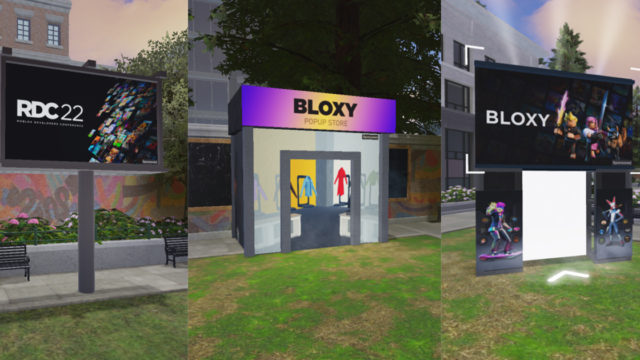
The immersive ad format, as leveraged by the likes of Roblox and Snapchat, is typically known for infusing in-game marketing with multidimensional uses of virtual reality, augmented reality or mixed reality (or “spatial computing,” as Apple coined the term in its preview of its headset during the company’s development conference in early June).

And at a time when consumers have collectively said “enough!” to the bombardment of targeted ads, a proven ability to attract rather than pull people to your marketing messages appears to be the best road to take as digital ad growth slows.

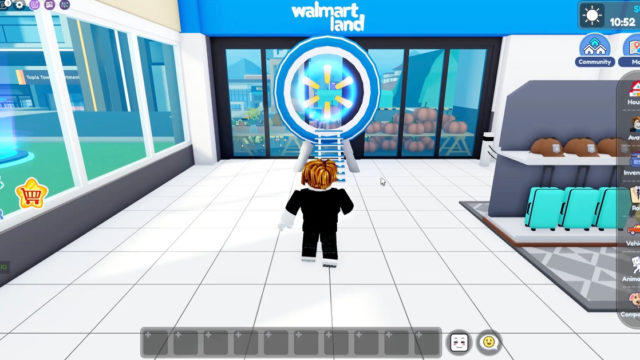
For many brands and agencies, Roblox and Snapchat have been lighting the path to immersive experiences for years. The first real sign that major marketers were ready for the “full immersion” occurred when Walmart explored the metaverse with Roblox for six months last year. The immersive experience they collaborated on was dubbed Walmart Land, which lived inside the gaming platform’s virtual city-state, Livetopia.

The bellwether retailer put real dollars inside Livetopia which paid off, with the Roblox metropolis garnering 2.5 billion visits and more than 31,000 active users.

Meanwhile, Snapchat has been making steady advances in defining immersive advertising. At a time when TikTok’s stance as the primary social media attraction for younger consumers and the brands that want to reach them had begun to look increasingly precarious, Snapchat is now poised to recapture some of its early promise in this shifting landscape.

At the moment, Roblox is spearheading new forms of creativity by inspiring greater experimentation with immersive experiences by dominant advertisers.

Immersive grows up

While children’s media advocates criticized the commercial appeals to children manifest in the Walmart presence, Roblox has since shifted to attracting 17-to-24-year-olds. Roblox saw that group grow by 33% year over year, according to its February earnings report, which added that this demographic comprises 22% of all its users. (Overall, 55% of Roblox users are older than 13.)

As Roblox and other platforms continue to attract more grown-up consumers, the numbers for immersive advertising reflect that appeal: immersive display ads saw an increase in brand recall by as much as 70% and conversion rate by up to 80%, according to a Feb. 2023 analysis by streaming app platform CamOn. This is because Immersive Display Ads greatly improve the online shopping experience which leads to a higher chance of purchase.

Beyond Roblox, Apple’s forthcoming $3000 Reality Pro headset has been described as a potential “game-changer” in the space despite the exorbitant price. Whether it’s an immediate hit or a bomb, Apple’s big bet on mixed reality is sure to spur the move into this territory.

What’s so immersive about it?

Immersive advertising is a type of ad unit that invites consumers to engage with a product or marketing concept directly within the ad, all in real time.

Typically, immersive ads incorporate 3D visuals. Examples can be found through those “anamorphic billboards” featuring 3D optical illusions, which have lately transformed out-of-home advertising. More commonly, though, users have encountered 3D advertising via virtual reality headsets, such as in a gaming environment.

These ads can also rely on augmented reality mobile apps, which layer digital animation on top of the user’s “real” physical world. Think Niantic’s Pokémon Go game and Snapchat filters that present mixed reality interactions.

The idea is that the viewer feels like they’re inhabiting a fantasy world—or one that blends fantasy and reality simultaneously and interactively. But the one thing that separates immersive advertising from other forms of passive, if technologically advanced, marketing is that it depends on the active participation of the consumer.

The metaverse branding issue

The metaverse and other web3 concepts have been the target of incessant derision the last few months, as much-hyped projects by Meta and Disney were derailed in by inflationary pressures mixed with shareholder impatience over a lack of tangible uses.

The metaverse concept has suffered some branding issues as a result. It was no surprise that Apple eschewed the word during its Vision Pro demo, when executives described its new system as spatial computing to avoid any advanced naysaying following the rejection of the metaverse as an overarching digital/physical realm. A part of it was a hurried, often ad hoc approach.

There was too much reliance on expensive VR headsets, for one thing. While Apple’s initial device is pricey, it’s worth noting that the first iPhone arrived with comparative sticker shock before consumers priced it in and brands got on board.

Attention-getting use cases have tended to be aimed at a more upscale audience, like the 2021 collaboration between Gucci and Roblox. The big news was that a virtual Gucci Dionysus handbag sold online for 350,000 Robux — the Roblox equivalent of $4,115. In the “real world,” that same bag was a relative discount, selling for $700 less. Examples like that set negative coverage as the economy became more uncertain.

But more recently, Nike and Tiffany & Co.’s cross-promotion sneaker drop indicated that high-profile branding and hybrid digital/physical marketing can do more than capture social media buzz. At this moment, the term “metaverse” has been eclipsed by Apple’s coming “spatial computing.” But the Nike x Tiffany collaboration exemplifies the commercial potential of virtual product by using a NFT’s as a loyalty currency that pays in both digital and physical environments.

The social media excitement generated over Nike Air Force 1 Low Tiffany & Co. “1837” (aka “Air Force 1”) connected sneakerheads with the fashion, design and retail worlds. It appeared to be a turning point for web3-based marketing that immersive advertising is such an inherent part of.

You can’t force engagement

Brand powerhouses like Nike and Tiffany recognize the need to move on from reliance on ad units that interrupt online and offline activities.

To these marketers, the promise of immersive advertising is clear: invite direct, emotional connections between brands and consumers and don’t get in the consumer’s way with interruptions that annoy instead of inspire.

Snap’s statistics bears that out. Using smartwatches to pinpoint survey participants’ “neurological reactions” to immersive experiences from AR, Snap found that it can predict consumer behavior and business outcomes with “80% accuracy.” It’s a bold claim. But given the current “either you’re in it or you’re not” state of immersive advertising, Snap’s claims hold up.

Out of immersive

Immersive advertising’s appeal to marketers is due to several factors converging across media right now: online advertising fatigue has become deeply ingrained among everyone, especially younger demographics.

Gradual cookie deprecation and ad blockers have rendered traditional ad formats less valuable. As if that weren’t enough, digital advertising measurement challenges continue to be exacerbated by bots.

Conversely, these issues have forced marketers, agencies and publishers to ask how to measure engagement relative to other metrics. Advertisers and agencies are partnering with attention-tracking vendors to find solutions, but that may be a ways off. The gaming world has always presented unique barriers to effective advertising, though players like Roblox and major brands are assiduously trying to measure in-game advertising’s clear impact.

Meanwhile, the immersive format has begun to infiltrate other forms of advertising, including one of the old types of mass communication.

For years, analysts have been warning that digital media was a “push” format like the first four decades of linear TV. In the past, advertisers could interrupt the programming. But brands’ ability to access “attention-on-demand” is long gone.

As Cathy Oh, global head of marketing for Samsung Ads, has noted, gaming’s gains are only starting to influence brands. But the potential is being realized that for advertising to truly “work,” it needs to be part of the show. Immersive ads are the next big show.


.font-primary { } .font-secondary { } #meter-count { position: fixed; z-index: 9999999; bottom: 0; width:96%; margin: 2%; -webkit-border-radius: 4px; -moz-border-radius: 4px; border-radius: 4px; -webkit-box-shadow: 0 0px 15px 4px rgba(0,0,0,.2); box-shadow:0 0px 15px 4px rgba(0,0,0,.2); padding: 15px 0; color:#fff; background-color:#343a40; } #meter-count .icon { width: auto; opacity:.8; } #meter-count .icon svg { height: 36px; width: auto; } #meter-count .btn-subscribe { font-size:14px; font-weight:bold; padding:7px 18px; color: #fff; background-color: #2eb3b2; border:none; text-transform: capitalize; margin-right:10px; } #meter-count .btn-subscribe:hover { color: #fff; opacity:.8; } #meter-count .btn-signin { font-size:14px; font-weight:bold; padding:7px 14px; color: #fff; background-color: #121212; border:none; text-transform: capitalize; } #meter-count .btn-signin:hover { color: #fff; opacity:.8; } #meter-count h3 { color:#fff!important; letter-spacing:0px!important; margin:0; padding:0; font-size:16px; line-height:1.5; font-weight:700; margin: 0!important; padding: 0!important; } #meter-count h3 span { color:#E50000!important; font-weight:900; } #meter-count p { font-size:14px; font-weight:500; line-height:1.4; color:#eee!important; margin: 0!important; padding: 0!important; } #meter-count .close { color:#fff; display:block; position:absolute; top: 4px; right:4px; z-index: 999999; } #meter-count .close svg { display:block; color:#fff; height:16px; width:auto; cursor:pointer; } #meter-count .close:hover svg { color:#E50000; } #meter-count .fw-600 { font-weight:600; } @media (max-width: 1079px) { #meter-count .icon { margin:0; padding:0; display:none; } } @media (max-width: 768px) { #meter-count { margin: 0; -webkit-border-radius: 0px; -moz-border-radius: 0px; border-radius: 0px; width:100%; -webkit-box-shadow: 0 -8px 10px -4px rgba(0,0,0,0.3); box-shadow: 0 -8px 10px -4px rgba(0,0,0,0.3); } #meter-count .icon { margin:0; padding:0; display:none; } #meter-count h3 { color:#fff!important; font-size:14px; } #meter-count p { color:#fff!important; font-size: 12px; font-weight: 500; } #meter-count .btn-subscribe, #meter-count .btn-signin { font-size:12px; padding:7px 12px; } #meter-count .btn-signin { display:none; } #meter-count .close svg { height:14px; } }

Enjoying Adweek’s Content? Register for More Access!

https://www.adweek.com/media/immersive-advertising-is-the-key-that-unlocks-the-attention-economy/


A Rebrand Gone Wrong: Saying Goodbye to My eX


.article-native-ad { border-bottom: 1px solid #ddd; margin: 0 45px; padding-bottom: 20px; margin-bottom: 20px; } .article-native-ad svg { color: #ddd; font-size: 34px; margin-top: 10px; } .article-native-ad p { line-height:1.5; padding:0!important; padding-left: 10px!important; } .article-native-ad strong { font-weight:500; color:rgb(46,179,178); }

Don’t miss Brandweek, Adweek’s ultimate experience for marketers, September 11-14 in Miami. Connect with peers and gain insights and inspiration from top brand marketers and industry icons at Glossier, Coca-Cola, Taco Bell and more. Register.

Over the weekend, Elon Musk announced a major change for Twitter. We all hoped it was a joke, that he wouldn’t actually change the name of such a well-established brand. But as we’ve all come to see, he was quite serious.

With the support of CEO Linda Yaccarino, Musk has changed the name of Twitter to X.

While opinions about the rebrand ranged from confusion to annoyance, it seems like no X users, or those on its competitor Threads, is a fan of the rebrand, and for good reason. Not only was the change unnecessary, it also disregarded the years of brand work that had been done.

Some platform that I used to know

Since Twitter’s debut in 2006, a certain vocabulary associated with the brand (retweets, tweeps) along with its recognizable blue bird logo, were rapidly adopted by users. That type of brand advocacy usually takes years to build. Yet within 24 hours, it was all gone… for a single letter.

Over the past few months since the ownership transition in October, we’ve all seen the change in the site’s advertisers. Gone are the Diet Coke, Express and upcoming rom-com ads I was often served in my feed; instead, it’s filled with obscure brands that do not fit my personal buyer persona. Rather than being served a Barbie ad in my feed this weekend, I’ve been served ads for obscure credit cards and b-to-b cybersecurity companies.

Ditching the brand equity of Twitter overnight makes users and advertisers question the decision-making of the brand. Was there a well through-out plan? It’s hard (or easy) to tell by the lack of updates across the platform; even a Google search performed at 4:30 p.m. on Monday still showed Twitter as the main domain. (Not to mention that the Twitter sign on the platform’s headquarters couldn’t even be taken down on Monday due to a lack of a permit.)

Most rebrands begin with an introduction to the name, the story behind it and where the information came from to inform the change. What led to the new name, and why does it reflect who the company is today vs. years ago? And, perhaps most importantly, how does it represent the community that it serves?

When I think of Twitter, I think of a community of people who come together to chat about specific topics. It represents relationship-building and how online followers can become IRL friendships (seriously, I’ve met a number of friends over Twitter).

The bird and the language around Twitter all represented that community in some way. The name and branding of X feel incomplete—consider another controversial rebrand, dropping the HBO from streaming service HBO Max, that had a rollout, providing an explanation of the changes.

The straw that broke the brand’s back

The pattern of hastily made decisions since Musk’s takeover has shaken users’ trust and led advertisers to question whether this is a platform where they want to keep spending precious marketing dollars.

The number of U.S. users has dropped since the change in leadership. I personally see fewer of my peers and friends tweeting than previously. Even the number of advertising-related #TwitterChats has decreased.

In comparison, despite their own missteps, Facebook and Instagram feel more stable. With the recent addition of Threads, a direct rival to Twitter, to Mark Zuckerberg’s social empire, I would rather put money into those platforms or other advertising executions.

At the end of the day, this all feels like it’s more about the ego of the company’s owner than what the target audience truly wants. A short list of those requests: an edit button, less hate speech, more user protection, a chronological feed and suggested users based on our own usage of the platform. And as we all know, a brand is about more than the owner, CEO or any stakeholder within the company. It’s about how the public (your target audience) sees you.

For the first time in months, it feels as though Twitter (or X) is truly no longer going to be the platform that it was even two years ago: a place where you can find reputable news updates, get information on a product or service, build a community of like-minded individuals via Twitter chats or engage in a fun way with a brand (as I loved to do during the Super Bowl every year).

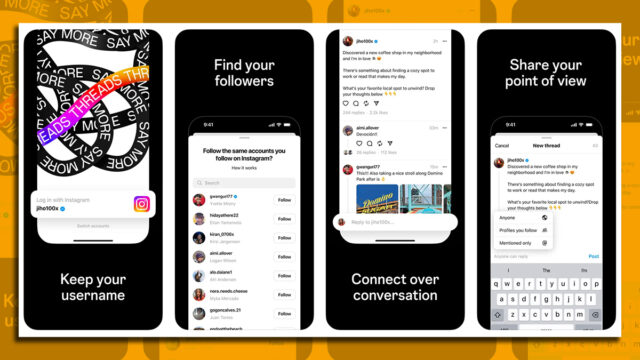
While I may still lurk on the platform (I am in marketing and advertising after all), I have to say goodbye to the eX at this point. See you soon, Threads.

.font-primary { } .font-secondary { } #meter-count { position: fixed; z-index: 9999999; bottom: 0; width:96%; margin: 2%; -webkit-border-radius: 4px; -moz-border-radius: 4px; border-radius: 4px; -webkit-box-shadow: 0 0px 15px 4px rgba(0,0,0,.2); box-shadow:0 0px 15px 4px rgba(0,0,0,.2); padding: 15px 0; color:#fff; background-color:#343a40; } #meter-count .icon { width: auto; opacity:.8; } #meter-count .icon svg { height: 36px; width: auto; } #meter-count .btn-subscribe { font-size:14px; font-weight:bold; padding:7px 18px; color: #fff; background-color: #2eb3b2; border:none; text-transform: capitalize; margin-right:10px; } #meter-count .btn-subscribe:hover { color: #fff; opacity:.8; } #meter-count .btn-signin { font-size:14px; font-weight:bold; padding:7px 14px; color: #fff; background-color: #121212; border:none; text-transform: capitalize; } #meter-count .btn-signin:hover { color: #fff; opacity:.8; } #meter-count h3 { color:#fff!important; letter-spacing:0px!important; margin:0; padding:0; font-size:16px; line-height:1.5; font-weight:700; margin: 0!important; padding: 0!important; } #meter-count h3 span { color:#E50000!important; font-weight:900; } #meter-count p { font-size:14px; font-weight:500; line-height:1.4; color:#eee!important; margin: 0!important; padding: 0!important; } #meter-count .close { color:#fff; display:block; position:absolute; top: 4px; right:4px; z-index: 999999; } #meter-count .close svg { display:block; color:#fff; height:16px; width:auto; cursor:pointer; } #meter-count .close:hover svg { color:#E50000; } #meter-count .fw-600 { font-weight:600; } @media (max-width: 1079px) { #meter-count .icon { margin:0; padding:0; display:none; } } @media (max-width: 768px) { #meter-count { margin: 0; -webkit-border-radius: 0px; -moz-border-radius: 0px; border-radius: 0px; width:100%; -webkit-box-shadow: 0 -8px 10px -4px rgba(0,0,0,0.3); box-shadow: 0 -8px 10px -4px rgba(0,0,0,0.3); } #meter-count .icon { margin:0; padding:0; display:none; } #meter-count h3 { color:#fff!important; font-size:14px; } #meter-count p { color:#fff!important; font-size: 12px; font-weight: 500; } #meter-count .btn-subscribe, #meter-count .btn-signin { font-size:12px; padding:7px 12px; } #meter-count .btn-signin { display:none; } #meter-count .close svg { height:14px; } }

Enjoying Adweek’s Content? Register for More Access!

https://www.adweek.com/brand-marketing/a-rebrand-gone-wrong-saying-goodbye-to-my-ex/


Barbie Marketing 101: The Road to Inclusion Doesn’t Happen Overnight


.article-native-ad { border-bottom: 1px solid #ddd; margin: 0 45px; padding-bottom: 20px; margin-bottom: 20px; } .article-native-ad svg { color: #ddd; font-size: 34px; margin-top: 10px; } .article-native-ad p { line-height:1.5; padding:0!important; padding-left: 10px!important; } .article-native-ad strong { font-weight:500; color:rgb(46,179,178); }

Don’t miss Brandweek, Adweek’s ultimate experience for marketers, September 11-14 in Miami. Connect with peers and gain insights and inspiration from top brand marketers and industry icons at Glossier, Coca-Cola, Taco Bell and more. Register.

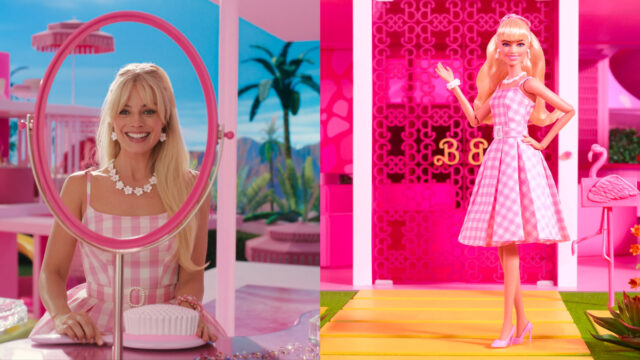
Our world has exploded in pink and Barbiemania has officially taken over.

Mattel’s bet that Greta Gerwig’s new film Barbie can help re-energize the 64-year-old brand is paying off: the film sold an estimated $155 million in tickets at U.S. theaters. Barbie also collected an additional $182 million overseas. And the cherry on top: it is the biggest box office opening on record for a woman director.

Barbie has been on a journey to reinvent itself and become more relevant to today’s audience. Here are lessons marketers can take from Barbie on how to re-energize a legacy brand to reflect today’s world while staying true to the brand’s mission and story.

Drive inclusion in the product’s evolution

Today, Barbie is one of the most diverse and inclusive doll lines in the market. Barbies represent over 35-plus skin tones, 94-plus hairstyles and 9-plus body types. Barbie has also strived to inspire girls to pursue careers in fields traditionally represented by men (pilot, astronaut, firefighter, paleontologist and president).

Mattel brought Barbies to the marketplace that reflected permanent disabilities, including a doll with a wheelchair and prosthetic leg, also offering a Barbie dream house with a wheelchair-accessible elevator. Mattel has also pledged that as part of Barbie’s Role Model series, more than 50% of the dolls honored will be Black, indigenous or women of color.

The brand’s vision to become more inclusive has not been without its share of controversy over the years. They launched an Oreo Barbie, who was Black (oreo is a racial slur that can be targeted to Black individuals, as author Petiri Ira describes being called “Black on the outside, white on the inside). They launched Mexican Barbie, which was criticized for perpetuating stereotypes. And finally, Barbie was slammed for promoting its 2020 Summer Olympics collection that didn’t include a doll who appeared to be Asian.

This is an important reminder for marketers: the road to driving inclusion in products doesn’t happen overnight. Mistakes will be made along the way. The U.S. multicultural consumer spending power is now over $5 trillion, and the spending power of the LGBTQ+ community and individuals with disabilities is also too often overlooked. If you want to re-energize your brand, it’s time to look up and realize that the world around us continues to change.

Reimagine the stories to portray today’s world

Mattel’s stock has been struggling. Mattel CEO Ynon Kreiz is pivoting the company away from only toys to banking on filmed entertainment as a driver of growth. And the Barbie film was clearly a cultural moment, a summer of pink. It took over our social media feeds, movie theaters and even our grocery store aisles. Goldman Sachs predicts that the movie can drive material upside for the company.

When it came to casting for the Barbie film, Margot Robbie, who plays Barbie, said “I don’t think I would have wanted to attempt to make a [non-diverse] Barbie film. I don’t think you should say, ‘This is the one version of what Barbie is, and that’s what women should aspire to be and look like and act like.’”

The diverse cast includes Kate McKinnon, Hari Nef, Dua Lipa, Issa Rae, Alexandra Shipp, Sharon Rooney, Ana Cruz Kayne, Nicola Coughlan, Rita Arya and Emma Mackey who all appear as Barbies. Ryan Gosling, Kingsley Ben-Adir, John Cena and Simu Liu appear as Kens. Both America Ferrara (who plays a human and a Mattel employee) and Issa Rae (who plays the President) have publicly said they agreed to be part of the film which represented a more inclusive view of Barbie.

And yet there seems to have been a missed opportunity to cast Barbie or Ken with an actor of color in the lead role, versus having just a diverse cast of supporting characters. The casting in new content like The Little Mermaid, The Lord of Rings, Snow White is intentionally shattering stereotypes of who we have been conditioned to believe can play lead roles and won’t back down from the racist backlash online.

This is another important reminder for marketers: creating entertainment for the big screen can help expand your audience and bring back those who are nostalgic for your brand. It’s our responsibility to shatter stereotypes and reimagine how we tell stories and who we choose to center them around.

Give your consumers the spotlight

For decades, Barbie didn’t speak to consumers like me. I didn’t see myself reflected in the brand. And the simple social media Barbie self-generator filter released in advance of the movie allows everyone to participate with the “This Barbie is …” slogan started to change that. We can all see ourselves reflected in Barbie now.

The promo posts for the film showcased “This Barbie is President” for Issa Rae, “This Barbie is a diplomat” for Nicola Coughlan and “This Barbie is a mermaid” for Dua Lipa and many more. User-generated content from the filter soon started reflecting relatable content: This Barbie is “a mother,” “out of your league,” “purposed to be powerful,” “a doctor,” “a hot mess,” “an award-winning journalist” and more. The filter took social media by storm, making everyone feel like they had their own place as Barbie in a Barbie world. It was a moment to feel like we were all in fact Barbie.

For marketers, this is an important reminder to give your consumers the spotlight. Remember that a brand doesn’t belong just to us marketers. It belongs to all of us, including your community who wants to feel they belong and that the brand understands and recognizes them. Particularly, if they haven’t felt included, or have been ignored by the brand over the many years, think about how you can re-introduce and re-engage them with your brand.

Barbie reminds us that re-energizing a 64-year-old brand to be more inclusive doesn’t happen overnight. It takes commitment and not wavering, despite the mistakes we may make along the way. Barbie has certainly evolved into a doll I am proud for my kids to play with and I hope is around for their kids to play with it as well.

.font-primary { } .font-secondary { } #meter-count { position: fixed; z-index: 9999999; bottom: 0; width:96%; margin: 2%; -webkit-border-radius: 4px; -moz-border-radius: 4px; border-radius: 4px; -webkit-box-shadow: 0 0px 15px 4px rgba(0,0,0,.2); box-shadow:0 0px 15px 4px rgba(0,0,0,.2); padding: 15px 0; color:#fff; background-color:#343a40; } #meter-count .icon { width: auto; opacity:.8; } #meter-count .icon svg { height: 36px; width: auto; } #meter-count .btn-subscribe { font-size:14px; font-weight:bold; padding:7px 18px; color: #fff; background-color: #2eb3b2; border:none; text-transform: capitalize; margin-right:10px; } #meter-count .btn-subscribe:hover { color: #fff; opacity:.8; } #meter-count .btn-signin { font-size:14px; font-weight:bold; padding:7px 14px; color: #fff; background-color: #121212; border:none; text-transform: capitalize; } #meter-count .btn-signin:hover { color: #fff; opacity:.8; } #meter-count h3 { color:#fff!important; letter-spacing:0px!important; margin:0; padding:0; font-size:16px; line-height:1.5; font-weight:700; margin: 0!important; padding: 0!important; } #meter-count h3 span { color:#E50000!important; font-weight:900; } #meter-count p { font-size:14px; font-weight:500; line-height:1.4; color:#eee!important; margin: 0!important; padding: 0!important; } #meter-count .close { color:#fff; display:block; position:absolute; top: 4px; right:4px; z-index: 999999; } #meter-count .close svg { display:block; color:#fff; height:16px; width:auto; cursor:pointer; } #meter-count .close:hover svg { color:#E50000; } #meter-count .fw-600 { font-weight:600; } @media (max-width: 1079px) { #meter-count .icon { margin:0; padding:0; display:none; } } @media (max-width: 768px) { #meter-count { margin: 0; -webkit-border-radius: 0px; -moz-border-radius: 0px; border-radius: 0px; width:100%; -webkit-box-shadow: 0 -8px 10px -4px rgba(0,0,0,0.3); box-shadow: 0 -8px 10px -4px rgba(0,0,0,0.3); } #meter-count .icon { margin:0; padding:0; display:none; } #meter-count h3 { color:#fff!important; font-size:14px; } #meter-count p { color:#fff!important; font-size: 12px; font-weight: 500; } #meter-count .btn-subscribe, #meter-count .btn-signin { font-size:12px; padding:7px 12px; } #meter-count .btn-signin { display:none; } #meter-count .close svg { height:14px; } }

Enjoying Adweek’s Content? Register for More Access!

https://www.adweek.com/brand-marketing/barbie-marketing-101-the-road-to-inclusion/


Reimagining Celebrity Partnerships: Activism With Influential Parents


.article-native-ad { border-bottom: 1px solid #ddd; margin: 0 45px; padding-bottom: 20px; margin-bottom: 20px; } .article-native-ad svg { color: #ddd; font-size: 34px; margin-top: 10px; } .article-native-ad p { line-height:1.5; padding:0!important; padding-left: 10px!important; } .article-native-ad strong { font-weight:500; color:rgb(46,179,178); }

Don’t miss Brandweek, Adweek’s ultimate experience for marketers, September 11-14 in Miami. Connect with peers and gain insights and inspiration from top brand marketers and industry icons at Glossier, Coca-Cola, Taco Bell and more. Register.

Why would a celebrity with millions of followers want to bare all (quite literally) to work with a formula company? The answer is radically simple: There is nothing more universally humbling than feeding a baby.

For those who aren’t familiar, the contentious space of baby formula is a category riddled with parent-shaming opinions on what should or should not be said, posted, allowed, supported or marketed. Essentially, it’s a category with “shoulds and shouldn’ts” mandated by outdated guidelines.

As the first new infant formula company to launch in the U.S. in seven years, we knew we needed a new approach to turn an industry on its head and disrupt the aisle.

Starting the right conversation

We needed a new way of building the brand in favor of a more ethical, honest approach than the legacy conglomerates who dominated the category. How would we do it?

First and foremost, we knew we needed to start a new conversation around formula. And that meant a celebrity could never be a simple swipe up or a single social post. We needed a bigger, better, bolder and more—well, Bobbie—approach.

Enter the Bobbie MotherBoard. We bypassed the influencer agency, the codes and the superficial C-suite titles, and went full throttle on establishing a diverse collective of modern parents, leaning into emotive storytelling, fierce activism and bringing these well-known faces shoulder-to-shoulder with our community of parents in their reality: the winding road of feeding and raising babies in America.

It all started just six months after we hit the market with our first national brand campaign, “How Is Feeding Going,” launched during National Breastfeeding Month, a triggering time for parents who can’t breastfeed. The campaign video asked viewers to pledge to create a different kind of conversation around feeding by asking, “How is feeding going?” rather than assuming any new parent would breastfeed.

We won two Webby Awards for our work. The campaign had nothing to do with selling infant formula and everything to do with evolving the cultural conversation around how we choose to feed our babies.

Finding the right voices

The campaign featured intimate, first-person stories from Lesley Anne Murphy, a double mastectomy previvor who could not breastfeed her baby; Tan France, a new dad via surrogacy who could not source donor breast milk; Kelly Stafford, a mom of four who chose to go straight to formula with her fourth baby to salvage her mental health; and Hannah Bronfman, a new mom who set a six-month breastfeeding goal but had to deal with the disappointment and guilt of not meeting it.

And then we took it one step further with our inaugural MotherBoard. The collective included Tan France, Laura Dern, journalist and author Elaine Welteroth, and supermodel Ashley Graham; these powerhouse parents helped build the advocacy plane as we flew it in year one. Graham created history on the first-ever combo feeding billboard and shared the internal struggles of trying to nourish twin boys from her breasts alone and the guilt she felt after being such a “successful breastfeeder” for turning to formula. It was one of her most engaged video posts to date.

Welteroth’s story came to life in real time. Her own birth plan took last-minute pivots; as a Black mother in America, she felt the implicit bias of the medical system, a factor many that attribute to the maternal mortality crisis where women of color are four times more likely to die from a pregnancy-related cause than white women. She evolved from TV host to staunch advocate for this issue, activating the internet, telling her story with Bobbie, advocating for midwifery care as a solution to the maternal crisis and hitting the Hill in Washington, D.C. with a team of lobbyists to reintroduce the Black Maternal Health Momnibus Act.

It’s since been put back on the table and, even after finishing her stint on the MotherBoard, Welteroth has stepped up to help us reach 100 million people across social media with a viral activism moment (#PassMomnibusNow). She helped us officially launch our social good and policy arm of the business, Bobbie for Change.

A natural extension of brand identity

Make no mistake—activism is woven deeply into our DNA, and none of this is pure happenstance. It is a natural extension of our identity as an activist brand and how we operate in the world.

So when these celebrities align with Bobbie, we don’t look at their value through the lens of “How can you help us sell formula?” but rather “What issue are you passionate about that is impacting parents across the country, and how can we get loud about it together?” Bold attracts bold. And we can create change together.

These icons have something else in common with our team of moms and community of parents: We are all collectively pissed off about the same policies and problems that impact families in America. Together, with our VC-backed resources and their combined voices and reach, we can make a tangible impact.

We operate in a way that acknowledges we are much more than a powdered milk company, but rather a fired-up group of well-educated mothers who understand the power of community and believe in investing in generational change. Our Irish-born mom of three CEO, Laura Modi, set this tone from day one.

More than a famous face

This year, our second MotherBoard is beyond anything we ever imagined: Meghan Trainor, Naomi Osaka, Karlie Kloss, Emily Oster, Gabrielle Union and Tan France, who is affectionately referred to as our MotherBoard GodFather and back with his second baby. Each of them is more than a famous face; they are parents using their platforms and personal journey into parenthood to reshape the narrative of what it means to feed a child and parent in America today.

The best part is that we have no idea whether any of our new MotherBoard members will even use Bobbie for their babies (all due this summer!) They may blissfully breastfeed for a year or need a specialty formula that we don’t make. And if that’s the case, we’re proud to invest in and share those stories as well.

It’s not about a predetermined product deliverable; it’s about connecting their raw and real-time stories to those same shared experiences of being a parent in America in 2023 and advocating for change along the way. What are we asking them to influence? Paid leave. An end to the maternal mortality crisis. Equitable feeding. Less shame. Better maternal mental health. Confidence over comparison. Postpartum support. Fewer unsolicited opinions, more science-backed insights. Frankly, none of it is explicitly tied to selling products, and we intend to keep it that way.

So why did we create the MotherBoard? You might say, our babies made us do it.

https://www.adweek.com/brand-marketing/reimagining-celebrity-partnerships-activism-with-influential-parents/


Social Media Is Dead. Welcome to the Swipe Era


.article-native-ad { border-bottom: 1px solid #ddd; margin: 0 45px; padding-bottom: 20px; margin-bottom: 20px; } .article-native-ad svg { color: #ddd; font-size: 34px; margin-top: 10px; } .article-native-ad p { line-height:1.5; padding:0!important; padding-left: 10px!important; } .article-native-ad strong { font-weight:500; color:rgb(46,179,178); }

Introducing the Adweek Podcast Network. Access infinite inspiration in your pocket on everything from career advice and creativity to metaverse marketing and more. Browse all podcasts.

Eras used to span millions of years, but today they come and go in a swipe. Amid this culture churn, hot takes about what brands should do go stale almost instantly. There is no time to hypothesize when we’re all too busy trying to catch up on whatever-core. Thanks, relentless scrolling, for eviscerating society’s attention span—your 15 minutes of fame is now 15 seconds. 

But within the swirl, we also see opportunities to surf, moments where brands can benefit from closer connections to their core customers. 

It’s the end of social media as we know it, an era that lasted from “The Facebook” to “The ‘Gram.” An era that changed the world, for better and for worse. But a new era is upon us, and for brands, being ready for what’s next is critical. To better understand where we’re going, let’s run back the clock and replay how we got here. 

From social media to culture media

Over the past decade, as we’ve spent more of our lives gawking at our phones, brands invested more in the platforms that came to define the era: Instagram, Facebook, Twitter and Snap. Brands became convinced that joining in on trending conversations would unlock cultural resonance. Agencies hired tweens to tweet the right combo of emojis and internet slang. The influencer economy boomed as brands bought platform reach and relevance. With the right bump of paid social, campaigns racked up views, and everyone high-fived each other. 

Only nah. Not really. Not anymore. All eras must come to an end—even for brands who say “bae.” Evidence of this era’s demise surrounds us: the death spiral of Meta and Musk; mass layoffs across the tech industry; the surgeon general’s warning in May that social media can be harmful to children. But as well as something ending, it also feels like something is beginning. 

Your first taste of the new era came when a TikTok video popped up in your feed and spoke directly to your core—more than any existing social media platform or TV commercial ever did. That first sweet hit of algorithmic dopamine hits different. Forget your friends—this was about you. A “For You” video feed that gets better the more you’re on it, through machine learning analysis of your data set. It literally knows what u ❤️ before u even ❤️ it.

In this new era, content media has evolved from a network of “friends” into a living database of your own personal identity, tailored to the fluid way you see the world and the communities you see yourself in. The content machines now understand what you’re obsessed with and, even more impressively, what you will likely become obsessed with. Cultural zeitgeist as we know it faces an existential threat—shared monoculture is splintering into a bazillion algorithmically curated subcultures. Identity is no longer confined to where people live or what your IRL circle is talking about at the lunch table. You can now obsess over anything you want, wherever, whenever, however you want.

No clearer is this example illustrated than with the launch of Threads, Meta’s unbridled effort to take down Twitter at its weakest moment. Threads has made a remarkable entrance into the social media landscape, luring in reluctant users from Twitter and Instagram and amassing a staggering 100 million users within its first week. We didn’t know we needed another social platform, even one built as progressively as Threads, and yet we can’t help ourselves when another opportunity is provided to swipe deeper into our interests.

Threads hopes to succeed where Twitter ultimately struggled, orienting its community building around our desire to see more from creators we already follow. Only time will tell if Zuck will finally deliver Twitter’s death knell, but early signs are looking strong, and Musk is not happy—we just may get that cage match after all.

Get obsessive

What it takes to win in this new era is a shared obsession. Ask yourself: What is it that our customers are *really* obsessed with, and how can we share those obsessions in ways that will make our customers feel seen? 

The opportunity for marketers is clear: Speak, create and nurture these new subcultural realities, and you’ll find audiences that want to grow and co-create with you. To communicate effectively in this new era, brands must speak truth to more specific audiences in a language they understand, sharing artifacts and beliefs that create a unified respect of the culture we share. 

In our work, it looks like Nike empowering everyday athletes. For McDonald’s, it’s loving your order. For Visa, it’s ensuring that anyone can make it. For Samsung, it’s technology improving quality of life.

Gone are the days of brands simply tossing out influencer content and seeing significant engagement. You can always pay for views, but it’s much harder to convert those into likes, shares, comments, follows and fandom. There’s too much content that people are actually interested in for them to care about ads. They need to see something that moves them. 

Machine learning media platforms are, ironically, forcing brands to think deeper about human connections and genuine community artifacts over automated platform best practices. Brands who know their audience and share their obsessions can show up and be welcomed in spaces where marketing is usually swiped away on sight. Creating authentic storytelling from those places is an earned opportunity they can capitalize on every day.

The idea is to stop throwing darts at an unfathomable board. Aim instead for the bullseye: your niche communities, the nooks and crannies of your brand’s fandom where you’d be welcomed as a guest, not an intruder. And when you find them, gin up the courage to speak directly and authentically to them with something meaningful and interesting to say. Show them you understand and are working hard to make it better, whatever it is (and hopefully for good, not evil). 

Brands who’ll succeed in this new era are those pursuing marketing approaches that prioritize specialized subcultures and communities over blindly targeting mass audiences. It’s not easy to start thinking about specific markets and micro-influence, especially for brands who’ve been used to measuring success by scale and mass influence. But when it’s done well, the impact can be significant: Nike standing behind Kaepernick. McDonald’s releasing adult Happy Meal toys with Cactus Plant Flea Market. Teyana Taylor celebrating Harlem for Jordan Brand. Delta being styled by Issa Rae. 

By engaging with particular subcultures, and devoting dollars to providing value to them, marketers can build genuine connections, foster brand loyalty, drive valuable relationships that contribute to long-term business objectives and achieve more effective marketing results. 

https://www.adweek.com/social-marketing/social-media-is-dead/