How to Manage 6 Generative AI Weaknesses That Impact Brand Experiences


.article-native-ad { border-bottom: 1px solid #ddd; margin: 0 45px; padding-bottom: 20px; margin-bottom: 20px; } .article-native-ad svg { color: #ddd; font-size: 34px; margin-top: 10px; } .article-native-ad p { line-height:1.5; padding:0!important; padding-left: 10px!important; } .article-native-ad strong { font-weight:500; color:rgb(46,179,178); }

The brightest minds in marketing and tech converge at NexTech, Nov. 14–15 in NYC. Get your pass for the latest on generative AI, gaming and more.

No CEO wants to lose $100B of market value because of an AI mishap. Is now the right time for brands to jump in and fully invest in ChatGPT and other generative AI experiences?

To make that decision, brands should consider the six weaknesses of generative AI and to what extent these disadvantages impact brand goals.

The 6 Weaknesses

Misinformation

ChatGPT has the potential for misinformation, depending on the data source used or the topic in question. One example may be due to a lack of data freshness (i.e: a stroller recall). This information may not be factored in if the LLM is trained on 2021 data sources. For brands where consumer safety is dependent on current information, this can be a deal-breaker.

Hallucinations

In AI, a “hallucination” refers to information that the LLM perceives to be true, but in reality fabricated or nonsensical due to the bot’s lack of real-world understanding. One example is with targeted advertising, where an AI algorithm may incorrectly assume a user’s interests based on their online behavior or search history.

For instance, an AI algorithm may associate a person’s online searches for camping gear with an interest in hunting, even if the person has never searched for hunting-related content. As a result, the algorithm may display ads for hunting equipment, which may not be relevant…and could even be offensive.

Questionable ethics and legal liability

Generative AI has the potential to revolutionize the way content (text, images, videos, computer code, legal contracts and architectural drawings) is created, but it also comes with several risks, including plagiarism and infringement of copyright, which is particularly important when it comes to intellectual property (IP) rights. While plagiarism is an often-cited concern with regard to generative AI tools, another area of questionable ethics is misleading vulnerable customers.

Information may be influenced by biases that are present in the training data, resulting in a customer purchasing items that don’t align with their beliefs or philosophies. Think misleading responses to product questions on sustainability, animal rights/testing, etc. Whether these responses could be made as purposely misleading and blamed on AI remains a gray area.

Expensive training costs

Training AI models is time-consuming and costly. The cost of a single training session for GPT-3 is estimated to be around $1.4 million and, for some larger LLMs, the training cost ranges from $2 million to $12 million. Even in basic scenarios, ongoing training of AI models requires infrastructure that supports ingesting and feeding the right context into LLM models so they can generate high-quality answers while remaining cost-effective at a large scale.

This can be a challenge, especially for smaller brands. Think about how often your product SKUs are updated, the new iPhone launches and the new line of Nike’s. Keeping up isn’t as easy as you may think.

Lack of personalization

LLMs are not designed to get to know customers better over time. In an in-store scenario, a sales clerk can “read” the customer’s intent based on the choices they make and what items they are gravitating towards in a store. Some of these can even be nonverbal signals, such as the shopper’s facial expression or body orientation during the selection process.

Generative AI tools may be stumped by complex problem-solving situations, such as a distressed customer, but beyond that, they also cannot factor in the history of the customer’s interactions to make contextually relevant recommendations. LLMs have a vast amount of linguistic knowledge, but they lack behavioral data, which can result in opportunity costs or be off-putting. Unless a shopper specifically shares their preferences, there is bound to be a lack of personalized interactions, which can negatively affect the brand experience.

Privacy and security vulnerabilities

Customers may be sharing sensitive information, such as personal or financial information in an ecommerce interaction. Where is the shared information stored? Where might it pop up next?

A lot can go wrong here if the proper data protection measures aren’t taken. A company would need to have the right security infrastructure in place (i.e.: a cloud play with a common data source, ingestion and secure framework).

A cautious balance of pros and cons

So, how should brands weigh these downsides in the context of making decisions to leverage what generative AI has to offer their customers?

Consider the sensitivities in your brand’s space. If your brand has to contend with strict standards, regulations and other elements where sudden changes can impact customer safety (i.e.: medication, safety equipment, etc.), it is important to consider the lack of data freshness seriously in your decision-making about generative AI tools. An antique jewelry company may find the freshness of information less critical than an aircraft or car parts manufacturer, though both could theoretically utilize the LLM’s linguistic abilities for customer service without relying on their internal memory.
Identify your ideal use cases for generative AI interactions. Whether generative AI will be used largely in customer support, commerce, website, workplace search or in some other way, is a key determining factor for whether it makes sense for a brand to jump in early or wait.

If the use case can tolerate the potential for hallucinations and fabrications, perhaps with a layer of human-guided reinforcement learning applied post-op to teach the model and/or coerce it into compliance with your business rules and objectives, then this use case is worth considering.

Assess the risk of your IP or other sensitive information leaking out into the public domain. There is always a possibility that sensitive information (i.e.: IP, personally identifiable customer data) could emerge online via security breaches, but now there’s another avenue for that with the use of company content to “train” chatbots. LLMs are certainly susceptible to data extraction attacks but also there’s a degree of uncertainty with regard to responses that may deviate from the company’s official position on various matters, despite their access to extensive repositories through training data.

Brand decision-makers may not feel comfortable experimenting with AI until the unknowns have been addressed. And this technology is evolving daily, most recently with OpenAI adding new privacy options to avoid information being used to train their public models.

It’s no wonder that there has been so much buzz around generative AI; it has created a true paradigm shift, providing the business world with incredible potential. As more brands and technology companies dabble in this realm, it’s entirely possible that we will find new ways to address the brand experience challenges that are currently inherent in generative AI. This will open up the arena to more brands in industries where the challenges are presently prohibitive.

Ultimately, a focus on relevance, accuracy and security will empower brands to take the leap.

https://www.adweek.com/media/how-to-manage-6-generative-ai-weaknesses-that-impact-brand-experiences/




Effective Generational Marketing Is About Telling the Right Story


.article-native-ad { border-bottom: 1px solid #ddd; margin: 0 45px; padding-bottom: 20px; margin-bottom: 20px; } .article-native-ad svg { color: #ddd; font-size: 34px; margin-top: 10px; } .article-native-ad p { line-height:1.5; padding:0!important; padding-left: 10px!important; } .article-native-ad strong { font-weight:500; color:rgb(46,179,178); }

Join the brightest minds in marketing at Brandweek in Miami this September 11–14. We’ll explore the promising trends, proven solutions and pressing challenges facing the industry. Register now to save 20%.

In 2023, there is no shortage of marketing messages. Truth be told, there’s a torrential flood. But if you’re savvy enough to tailor your storytelling to unique cohorts, your content strategy can soar above the rest.

The psychology behind marketing matters, and companies must move from telling to storytelling to put muscle behind their message.

Memorable storytelling helps a brand access more key regions of the human brain than simply presenting distilled information about a product. For master marketers like Nike, Kia, Apple and Dove, infusing persuasive psychology into the mix elevates consumers’ feelings of fondness, familiarity, recall and intent to purchase.

That said, not all content packs the same punch.

While some stories are universal and transcend time, messages don’t always resonate across cultures or demographics. As marketers, it’s our charge to understand why. How deep we dive—and how much we allow psychological insights to help shape stories—determines whether our messages are remembered for a lifetime or discarded as background noise in an information-saturated world.

Marketing through the ages

Broadly speaking, age differences among generational cohorts and their associated stages of life will steer how marketing and storytelling are perceived.

For example, studies suggest that emotional intelligence—the ability to identify, understand and manage emotions—tends to increase with age. Trends show older adults are more likely to prioritize positive narrative elements as way to regulate and uplift their emotional state. In contrast, younger adults tend to prioritize informational stories, which satisfies their elevated desire for knowledge in a digital and data-driven culture. Younger consumers also tend to be more distracted by negative information in marketing messages.

While negative impressions we’ve gleaned from stories across our lifetime become increasingly difficult to change as we age (the negativity effect), psychology’s Socioemotional Selectivity Theory demonstrates that our pursuit of meaningful goals increases. Likewise, so does our preference for more positive storytelling and disregard of messages with a negative slant (positivity bias). Other generational trend research suggests older adults are more attuned to the specifics of when a story occurred, while younger adults are more attuned to why a story took place.

You may be thinking, “Aren’t these minute details?” The answer is no—understanding generational diversity and how to uniquely tailor messages is key in marketing-based storytelling. Each major generation filters marketing messages differently, shedding light on how psychology drives impactful storytelling for each group.

Baby boomers

Baby boomers, born 1946-1964, are often associated with traditional media consumption and tend to value narratives that resonate with their personal experiences and provide a sense of nostalgia. Research suggests that this cohort responds to emotionally driven narratives that tap into their aspirations, ideals and core values.

Additionally, linear storytelling formats, like television shows or movies with clear plot lines, resonate with them. To enhance comprehension and recall, marketers targeting this cohort can incorporate familiar cultural and historical references and use clear, straightforward messaging techniques. Here’s a great example from Whole Foods.

Whole Foods

Storytelling tactics: Since baby boomers engage on mobile as well as print, TV and direct mail, how you frame information is more important than where. Having amassed wealth, they need messages that clarify the benefits their spending will provide. Value-based, easy-to-follow stories—with nods to cherished pastimes—are great for this group.

Gen X

Sandwiched between baby boomers and millennials, Generation X, born 1965-1980, is often drawn to messages that reflect their independence, resilience and skepticism toward invasive advertising techniques. As the smallest and oft-cited “forgotten” generation, marketers should avoid neglecting this cohort in favor of their generational neighbors; Gen Xers carry impressive buying power at about 31% of the country’s total income.

Companies should showcase personal growth, overcoming obstacles and the transformative power of their products and services—like how Target acknowledged Gen X and incorporated a touch of nostalgia in their Star Wars merchandise promo. Gen Xers also respond well to interactive content, utilizing digital platforms and social media to share experiences and connect with brands they trust.

Storytelling tactics: Keep it frank (no sales speak) and lean on real-world scenarios. Gen Xers may be busy juggling careers, children and caretaking of older family members, so brand content must be instantly recognizable and easily digestible: Consider creating snippets and combining audiovisuals to make your message accessible.

A recent Nielsen report shows both men and women of this age group are particularly motivated by TV ads that depict everyday domestic life, so video and streaming are prime channels to target. Since this generation straddles the line between pre- and post-digital worlds, consistency is vital, not only within your brand story but also across the platforms through which you convey it.

Millennials

Born 1981-1996, millennials (aka Generation Y) came of age in a digitally interconnected world. They are highly receptive to narratives that reflect their values of inclusivity, social responsibility and authenticity. Consider the “We Are What We Do” campaign by socially conscious shoe brand Toms.

Toms

Millennials don’t necessarily move through life stages traditionally as previous generations have: They purchase fewer homes, start families later and may hold numerous jobs across their careers. Value-based storytelling that aligns with their individual lifestyles, passions and beliefs shows you truly understand them.

User-generated content (UGC), influencer collaborations and interactive elements trend strongly with this group; they can also be drawn to serialized narratives that unfold gradually across platforms, creating a sense of engagement and immersion. For example, brands like Nike, Denny’s and Kohl’s have debuted long-form video content on YouTube that extends each company’s online and mobile presence. 

Storytelling tactics: Your brand’s content must be optimized for mobile: Nine out of 10 millennials surf the web while watching TV, digesting an average of 5 hours and 39 minutes of online video per week. You’ll earn high scores with digestible video content and a strong YouTube, Instagram and Facebook presence. Millennials also appreciate two-way dialogue and join the conversation via UGC or by providing feedback. Storytelling is an opportunity to be transparent, personable and give your brand a human face.

Gen Z

Generation Z, born 1997-2012, the first true digital natives, seek personalization and experiences that align with their diverse and socially conscious values. Short-form content, such as videos, GIFs and micro-stories, are particularly effective in capturing Gen Z’s gaze. Marketers targeting this cohort should leverage social media platforms, influencers and UGC to craft relatable, shareable narratives tailored to individual preferences, such as Instagram’s “We Make Today” campaign.

Instagram

According to research from McKinsey, the main driver for this generation is the search for truth. Similar to millennials, stories grow legs with Gen Z when they’re able to witness the people and values behind the brand. Don’t hesitate to elevate stories that emphasize your brand’s ethos while inviting this audience of content creators to participate in molding the narrative.

Storytelling tactics: While they appreciate short-form content platforms that cater to brief attention spans, Gen Z prefers companies that know how to use each social media platform uniquely, just as they do. Customize content that you share on TikTok with the platform’s audience in mind, then do the same for Snapchat (everyday moments), LinkedIn (career-centric), Instagram (aspirational), Twitter (news) and so on. Depicting authenticity with bloopers, behind-the-scenes videos or interviews with staff can showcase brand personality. And remember, influencers still hold sway: A recent report shows 24% of Gen Z women and 16% of men are guided by influencers when it comes to purchasing decisions.

Stories make the world go round, transcending time, place, and cultural and emotional boundaries. But executing the right story in a way that creates lasting impressions means understanding the psychological depth of your target audience.

No matter which generation consumers fall into, the average person is exposed to 4,000 to 10,000 advertisements per day. Recalibrating your storytelling, adapting messaging techniques and tapping into the psychological insights of each unique generation is how marketers cut through the clutter and punch above our weight.

https://www.adweek.com/brand-marketing/effective-generational-marketing-is-about-telling-the-right-story/


From Roblox to Stanford: The College Essay of Fashion Designer Rush Bogin


.article-native-ad { border-bottom: 1px solid #ddd; margin: 0 45px; padding-bottom: 20px; margin-bottom: 20px; } .article-native-ad svg { color: #ddd; font-size: 34px; margin-top: 10px; } .article-native-ad p { line-height:1.5; padding:0!important; padding-left: 10px!important; } .article-native-ad strong { font-weight:500; color:rgb(46,179,178); }

The brightest minds in marketing and tech converge at NexTech, Nov. 14–15 in NYC. Get your pass for the latest on generative AI, gaming and more.

Editor’s Note: The following is the college application essay of 18-year-old fashion designer and creator Rush Bogin, best known for his now multimillion-dollar business and success with UGC and fashion designs on Roblox. He leveraged this early success to get accepted to Yale, Harvard and Stanford and has formally accepted his offer to go to Stanford in the fall.

This essay has been lightly edited for clarity. Though the essay is from the 2022 college application timing, it contains lessons about creating for the metaverse from the Gen Z perspective as the advertising and marketing community grapples with seeing success in the space.

My friends joke that I’m a nerd who plays video games most of them haven’t touched since their single-digit years. They’re right, sort of. I’m a virtual fashion designer for the online platform Roblox, which means I spend my time pouring over TikToks, fashion mags and Instagram; whatever it takes to figure out what teens like when it comes to accessorizing their virtual avatars.

I first started playing Roblox when I was seven, loving that, as my avatar, I could pretend to be anyone. In real life, I wore Target tees and ripped jeans. But on Roblox, I rocked a top hat, a three-piece suit and a pirate leg. That’s when my fascination with virtual fashion began.

Over six years, I taught myself to 3D model, created a successful game and was eventually contracted by Roblox to make fashion accessories for their virtual catalog. Having grown up playing Roblox, I thought I knew exactly what the community wanted. But my first few creations flopped … big time! I wanted to quit.

Then one day I met a Brazilian creator named Caio in a Roblox server. We hit it off, and when I asked him why my accessories were failing, he bluntly told me my creations were bad. He said I could 3D model, but I lacked finesse. That summer, Caio taught me how to make more detailed 3D models and textures.

To be successful I also had to understand what items teenagers actually wanted to wear. I immersed myself in social media and came across a popular meme: a twenty-something in a cozy coat, sipping a latte and wearing a beanie. It was my first attempt to bring a real-world trend to Roblox. I released the “Cute White Winter Beanie” at midnight. By the time I woke up in the morning, it was the number one item in the catalog. Eventually, it seemed almost every creator on the platform was making some sort of beanie.

I started to fear I would never make another successful item. My entire reputation revolved around one beanie. I again scoured social media for trends that would appeal to Roblox users. I found lots of “goth” fashion items and a viral TikTok of a teenager in a plush bunny hood. I created a classic white bunny hood and a black goth version with chains, safety pins and rings. Within days, both hoods rocketed to the top of the catalog.

I was recently hired by supermodel and entrepreneur Karlie Kloss to be her chief Roblox consultant for her upcoming fashion experience. Karlie knows real-world fashion like the back of her hand-made Jimmy Choos, but she relies on me to explain how to monetize trends on Roblox.

For example, her team was just about to release a virtual Carolina Herrera designer dress. The team wanted to put it on sale for 24 hours and advertise in advance that it was going to be a “limited” item. I explained that the dress would fail if they followed this plan. Instead, I told them not to advertise it at all, and to take it off the market once it hit a few hundred items in sales.

The dress was released on a Monday morning and sold for 500 Robux (about $5). We took it off sale four hours later. By that night, the dress was reselling for 200K Robux. The team was blown away. Vogue Business even did a story about it eventually reselling for the equivalent of $5,000.

Because of my success on the platform and work with Kloss, I’ve been approached by the NFL, NASCAR, Sony Music, the MLB and even Sir Elton John to both consult and design items to bring their brands successfully to Roblox. Would I one day like to learn how to make virtual fashion that appeals to all ages? Of course! Maybe that’s what college is for?

https://www.adweek.com/media/from-roblox-to-stanford-the-college-essay-of-fashion-designer-rush-bogin/


What Moderna Has Learned About Maintaining Brand Relevance


.article-native-ad { border-bottom: 1px solid #ddd; margin: 0 45px; padding-bottom: 20px; margin-bottom: 20px; } .article-native-ad svg { color: #ddd; font-size: 34px; margin-top: 10px; } .article-native-ad p { line-height:1.5; padding:0!important; padding-left: 10px!important; } .article-native-ad strong { font-weight:500; color:rgb(46,179,178); }

Brandweek will feature live discussions with marketing pros at Dakota Media, Converse, UPS and more. Meet us in Miami Sept. 11–14 to boost your business and elevate your brand.

Healthcare and pharmaceutical companies are not well known for strong enterprise branding, as historically, most of the focus was on branding the products. Only recently have pharma companies increased their focus and spend on their enterprise brands. The industry tends to activate around a product, relying on a consistent format for television commercials, celebrity endorsements and, commonly, non-branded content and advertising as well.

This traditional model of branding healthcare products has worked until we saw what happened with Covid-19, when everyone learned the name of our company overnight. We became very relevant to consumers around the world who wanted to get back to their lives. This lesson on relevance can be applied to companies across the health continuum—health affects everyone, as we saw in the pandemic so clearly.

So how can pharmaceutical and healthcare brands stay relentlessly relevant with consumers and other audiences? Brand leaders have a timely opportunity to reimagine and uplift their enterprise brands, and more so than has been done in the past.

Relentless relevance means keeping an enterprise brand front and center over time and beyond any one milestone or event. It’s the opportunity for consumers to think of a brand as accessible, trustworthy and responsible, beyond any one product, and certainly beyond the pandemic. This is especially important for us now, as Moderna has new data coming out about our investigational mRNA medicines, from oncology to RSV to flu, and we expect several product launches in the coming years. In preparation, we need our customers to build familiarity and trust with Moderna and our mRNA technology, beyond Covid-19 and across disease categories.

That’s why we’ve employed a strategy to demonstrate the ongoing relevance of our brand that we believe other marketers can benefit from—and also why you may have seen Moderna show up in surprising places. The following are a few ways we’re keeping our enterprise brand top of mind and branding “outside the box” of traditional healthcare and pharma. 

Consider all diverse audiences and ‘go there’

We really think about all the different audiences that interact with Moderna: the people who have already received our vaccine; the people who know about our brand but don’t know much about mRNA technology; the people who are super interested in mRNA and want to know more. While another brand might have stopped at the sheer magnitude of how many people first learned about Moderna in the pandemic and market broadly, we are dissecting and segmenting every audience familiar with our brand and employing strategies to reach them all. 

Through our research and inquiry, we know that our different audiences are interacting with and absorbing information about our brand in myriad places. We aim to understand each segment’s behavior and find them where they are, not where traditional biopharma would be. A great example is our sponsorship last summer of the U.S. Open, where we held a booth on-site and partnered with Billie Jean King to celebrate her as a changemaker in sports.

We’ve also shown up at the Consumer Electronics Show, where we sponsored a Digital Health Studio which captured in-depth discussions on what changes are happening as a result of new digital innovations in healthcare technology. At CES, we stood out as one of a few enterprise healthcare companies with a strong presence, and we’re continuing to find ways to “go there” and go where all of our diverse audiences choose to be.

Leverage education to build trust and go a layer deeper

Post-pandemic, we’re seeing a trend of consumers wanting to better understand how medicines are made and care is conducted. People are seeking out more information, wanting and willing to know more about technologies like mRNA, which historically might have felt too “high tech” for the average person. You can see this with the way people are talking about and interacting with ChatGPT and generative AI. Rather than assuming people won’t understand our technology, we instead belabor the words and channels we use to get information to them, like how we use short videos and polls about mRNA on Instagram. This is an opportunity to educate everyone and go a layer deeper than our direct buyers—the healthcare professionals.

While consumers aren’t the primary purchasers of our vaccines, their understanding of mRNA and questions around it does impact and inform what healthcare providers and pharmacists think about it, too. We know this from our internal market research—that healthcare professionals and consumers are generally aligned on the key points about mRNA and interest in being educated on it more. Our latest advertising campaign, “Welcome to the mRNAge,” has been well received by providers and consumers alike and is a launching pad for more on this topic.

Establish strategic alliances with those who share your vision and values

It’s important to align with the changemakers advancing more than just medicine—a future that is more diverse, healthy and globally connected.
 
I moderated a panel at SXSW this year where I interviewed changemakers who use their platforms for good and, in doing so leverage their brands to solve social issues at scale. We featured Kathryn Finney, the Genius Guild’s Venture Fund managing general partner, and Jacqueline Jones, LinkedIn’s head of strategic partnerships for diversity, inclusion and belonging. This type of panel was a departure from what you might expect from our industry but reflected fierce women who value access, innovation and an entrepreneurial mindset. It was such a stirring conversation, and I’m looking forward to more Moderna-led initiatives like it.

By putting more emphasis on the enterprise brand, considering all audiences, engaging them in educational content and creating strategic alliances with like-minded brands, there is a sustained opportunity to build reputation, loyalty and trust with customers. This comes at a time when many consumers are doubting health institutions altogether. It would be wise, then, to switch up the model we’ve always used and brand differently. Consumers are growing allergic to the old way of doing things; they want more education and access.

Outside of healthcare, these relentless relevance tactics are applicable to all industries. When we bring consumers along on the journey—not holding back or waiting for a product launch—it not only keeps your brand relevant but makes it a beacon for all segments of your audience. For us, that’s meant working to unpack the future of health and medicine, a field that continues to innovate faster than ever before.

https://www.adweek.com/brand-marketing/what-moderna-has-learned-about-maintaining-brand-relevance/


3 Questions Marketers Should Be Asking About Alternative Currencies


You can’t invest in what you can’t measure. And in TV advertising, rarely has there been a more dynamic time for measurement. 

New currencies—agreed-upon units of value with which media buyers and sellers transact—are gaining traction in the market. On the heels of TV upfront season, here are three key questions marketers should ask to make sure they are getting the most out of new audience currencies.

Does your big data start with identity? 

Measurement outputs are only as good as their inputs. As the industry converges on big data for cross-screen measurement, we need to ensure big data starts with a direct consumer relationship. This means prioritizing data from real people in a privacy-centric way. However, today many big data sets lack a tie to actual identity data. They rely heavily on second-hand identifiers like IP addresses and modeled device graphs, limiting their accuracy and life span. If there is no connection to the customer, it will be difficult to accurately identify customer consumption habits. 

Accurate data collection requires trust, privacy and verification. Consumers must see the merit in sharing information—a reason to complete profiles accurately, an understanding of opt-ins and privacy policies, and respect for the data value exchange. Consumers deserve to know who to call with a concern or to request an update on their information. Without a direct consumer relationship, big data breaks down when attempting to measure audience reach for our industry. New currency solutions should be grounded in consumer trust.

How does panel data represent cordless homes? 

For many new audience currencies, big data is married to panel data as a grounding source of truth. But are today’s panels still truth sets of an increasingly fragmented audience? A decade ago, 82% of American homes had pay TV—today, it is less than half. This rapid acceleration of cord cutting requires a reassessment of panel response biases. 

All demographics equal, are cordless homes less likely to agree to join panels than their peers? We don’t yet know. A thorough research agenda across the industry to understand data quality will help increase trust in panel-backed audience measurement.

Additionally, many panels exclude homes that are valuable to media buyers and sellers. For instance, some panels do not measure secondary homes, temporary living or vacation homes—all residences that frequently lack pay TV and remain important for brands. These gaps leave marketers and content owners guessing how to reach and engage audiences, no matter where they are. New currencies should help close this gap.

Can your currency link reach measurement with outcomes?

Marketers no longer need to choose between upper funnel and lower funnel KPIs. Leading brands are focusing on the full consumer funnel—from the moment a consumer sees an ad on their TV to the purchase with their remote for delivery. This is an exciting opportunity for audience measurement. Marketers can activate from reach to reaction, and they’re now seeking closed loop measurement. In streaming, many brands are buying on audience and performance, transacting off cost per acquisition just like they do in search and social.

Philosopher and economist David Hume called causality, the relationship between cause and effect, “the cement of the universe.” It should now be the cement of new currencies too. Marketers deserve to understand how specific demographic audiences reached also drive incrementality and sales. This includes currency interoperability—making it easy to connect audience data with outcome data through APIs, clean rooms and server-to-server connections.

Ultimately, it’s an exciting time for the TV industry. Together, we have an opportunity to make measurement more accurate, useful and straightforward. Starting with data grounded in direct consumer relationships, shining a light on how the shift to streaming is impacting panel data and bringing together the full funnel can help make marketing work harder, and we can do it together.

https://www.adweek.com/convergent-tv/questions-marketers-should-be-asking-about-alternative-currencies/


AI Is Reminding Us of What We’ve Lost—and What We Can Have Again


.article-native-ad { border-bottom: 1px solid #ddd; margin: 0 45px; padding-bottom: 20px; margin-bottom: 20px; } .article-native-ad svg { color: #ddd; font-size: 34px; margin-top: 10px; } .article-native-ad p { line-height:1.5; padding:0!important; padding-left: 10px!important; } .article-native-ad strong { font-weight:500; color:rgb(46,179,178); }

Brandweek will feature live discussions with marketing pros at Dakota Media, Converse, UPS and more. Meet us in Miami Sept. 11–14 to boost your business and elevate your brand.

The 2023 edition of the Cannes Lions International Festival of Creativity may be remembered as the “disconnect show.” There’s the beer brand whose inclusive, award-winning marketing campaign prompted a devastating boycott. There’s the technology sector, whose pull-back on marketing spend and headcount is being cheered by Wall Street. But the biggest disconnect at Cannes is playing out mostly in between sessions—the one that pits human creators against AI.

The rise of ChatGPT, Midjourney and other AI platforms are forcing a reckoning in creative industries, and for good reason. They do a lot, and a lot of what they do can be construed by the undiscerning eye as “creative work.” But if we’re being honest with ourselves, we need to acknowledge that creativity has been hurting for a long time. Having judged past editions of the Cannes Lions, I’ve seen my share of remarkable, inspiring work. But I’ve also seen an industry struggling to innovate. Best practices are accepted without question, and few are brave enough to pioneer new ones. Instead we resign ourselves to apply the brand playbook to the deliverable and collect our check. Where did the wild, experimental thinking that drew us to this work go? Is that even the right question? 

Rather than get depressed, I’ve simply moved on, both in my practice and in how I lead my team. And the thing that’s liberated us—that saves us from dwelling in the past, applying the same tired approaches to profound new challenges—is the same thing that got Cannes so worked up: AI. 

Generative AI is prompting a lot of fear—both for designers’ livelihoods and brands’ IP. But again, let’s be honest with ourselves: If we feed prompts into ChatGPT, does it give us a new product idea? If we do the same in Midjourney, do we get a new brand identity? AI makes me hopeful, not fearful, because it doesn’t give me the answer. It does, however, help me and my team arrive faster at provocations we can then interrogate and explore to get at our answer—it frees our minds to do the real creative work. AI is the breakthrough of our time, if not of all time, and we’d be bad partners if we deprived clients of its promise.

What can we do to make AI feel not just more vital, but approachable? I take the long view, drawing inspiration from the art world’s reaction to the camera obscura. Previously, artists were judged on how exactingly they replicated the physical world. Photography forced artists to approach their subject in a new way. Suddenly it wasn’t about perfection, but about interpretation. Did Monet throw his brushes away because the camera devalued his skills? 

We’re at a similar inflection point with AI. Yes, it will disrupt the more easily commoditized parts of our business—the wireframing, the templatizing, the taxonomic aspects of design system building. But it’s already forcing us to reconsider our subject. Do we throw away our brushes, or do we embrace this once-in-a-century chance to apply them in unprecedented ways? 

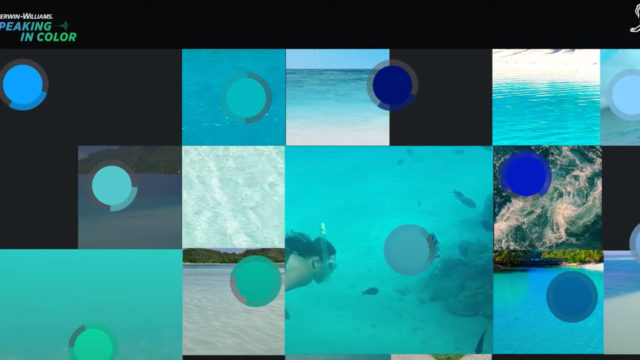
For the past four years, Huge has partnered with Pantone to launch its Color of the Year. In 2023, we decided to invite Midjourney along for the ride. When the AI arrived at a static image, our motion designer began feeding it more prompts, then used their skills to manipulate the movement further in After Effects. Sure enough, the result blew what little remained of our minds. This wasn’t an experiment for experimentation’s sake; our approach gave Pantone an opportunity to pair its color of the year with the technology of the year, helping fuel over 50 billion media impressions and the most successful Color of the Year launch since the initiative’s birth in 1999.

It’s important to note what AI did and didn’t do in a project like this. It generated imagery, but the Pantone and Huge teams ultimately manipulated it to create the emotional impact. We went deep with it, then collectively shaped the output through a human lens. As a creative, you’re still in your editing suite, making the raw concept sharper. Your mastery of craft, saying nothing of your bravery and empathy as a designer, are still fundamentally important. And to use generative AI effectively, you still need to have very good taste. 

You also need to have good sense. As with any technology adoption, usage principles must be defined and upheld. Generative AI helps us get to the insights faster, but we must interrogate the outputs closely to ensure we’re upholding people’s privacy and security; respecting creativity; ensuring cultural relevance; and identifying and combating biases that these tools can perpetuate. At Huge, we’re using AI to support research synthesis, insight generation and rapid prototyping. This is how most technological revolutions start: in controlled, responsible, low-risk environments, with the client’s blessing and collaboration. A login to Midjourney, Bard or ChatGPT is not a ticket to an all-you-can-eat buffet. Moderation and enterprise-level protocols are critical. 

With those safeguards in place, the play can begin. The ironic thing is, though AI tools invite wild experimentation, they make our entire organization work smarter. For example, we’re finding that our data analysts, strategists and creatives are aligning sooner. When they all use these tools, they can cross-pollinate their discoveries earlier in the engagement. This is perhaps the greatest unlock for our business: When analytical and strategic rigor are baked into the creative concept from day one, we’re better positioned to help our clients grow faster, sooner. 

Of course, speed is one of generative AI’s most alluring value propositions. But let’s be clear: AI is not an efficiency play. It’s about being more creative, more effectively, than ever before. It will allow us to help our clients redefine their businesses. A new world of opportunity is opening, one where the brief changes from building an app or a website to making an argument for different answers. Generative AI will never reveal these to us, but through experimentation and refinement, it will help guide us toward the ones that create real, sustained growth—for ourselves and our clients.

https://www.adweek.com/creativity/ai-is-reminding-us-of-what-weve-lost-and-what-we-can-have-again/


Vulnerable Leaders Are the Strongest in the Business


.article-native-ad { border-bottom: 1px solid #ddd; margin: 0 45px; padding-bottom: 20px; margin-bottom: 20px; } .article-native-ad svg { color: #ddd; font-size: 34px; margin-top: 10px; } .article-native-ad p { line-height:1.5; padding:0!important; padding-left: 10px!important; } .article-native-ad strong { font-weight:500; color:rgb(46,179,178); }

Leaders from Colgate, TikTok, Amazon and more will gather at Commerceweek to discuss how to leverage new strategies, trends and tech to drive ROI and growth. Join us July 11–12 in NYC.

It was the most traumatic and emotional experience of my life. As the rumors swirled last January insinuating Russia could invade Ukraine, I and many others thought they were just that—rumors. Media hype to fulfill global news coverage holes. This wasn’t going to happen. There was no way this could happen. My birthday was in February. It should have been a time of celebration with loved ones, but fear and uncertainty were set to erupt.

“It started.” The two frightful words my boyfriend told me at 6 a.m. It left me unable to comprehend anything else. Thursday, Friday, Saturday, Sunday—the days were overlapping. I cried and had a lingering migraine. I frantically tried to check in with my team. 

It was Monday. I washed my face with cold water and said, “OK. We’re going to work through this.” Then I packed my bags, not knowing if or when I would ever be back to the place I was born, grew up and called home for over 30 years. I still haven’t been back since. Europe was quickly closing its airspace and borders to Russians. We realized we had to move quickly, or it would be too late.

Planning such a traumatic and difficult evacuation—moving quickly through war, forced evacuation and business as usual—we never lost sight of the fact that we are working with human beings. What we were about to do would completely change our team’s lives around in one day—communication and empathy became crucial.

Trust propelled us

Once war was imminent, we were overwhelmed by the obstacles that lay ahead. Worrying about the welfare of our families and friends, banks closing, fears of enlistment—the chaos sunk in. Working in tech, there was no telling if the war would limit access to the internet, email or social media, which were crucial for our day-to-day operations. 

In those moments of uncertainty, one thing was clear: It was critical for my team to know their safety wouldn’t be in further jeopardy. Data has shown that only one in three employees trusts their leaders, which paints quite a negative picture. I may have been unprepared, but I had the trust of my team, which allowed us to work together in a highly stressful situation and achieve a successful outcome with little impact to our work and deliverables. 

The team had developed trust given past proof of delivering on promises and demonstrating empathy in key moments. In this time of crisis, we decided investing in our people was the only goal. Money was not going to be an obstacle; profit-making and bookkeeping was not a consideration. As such, we did not have a specific budget but focused on getting everyone to safety as quickly as possible while making sure we were relocating to a place that was comfortable and welcoming.

Options were becoming more and more limited by the hour. We consulted with the best legal and immigration experts to act swiftly and decisively. We decided that Dubai was the best option in the short term while we looked for another longer-term option. Why Dubai? We determined the city was accepting of Russians, multicultural and relatively open when it came to visas. While it was not the cheapest option, it was the quickest and safest for the time being. We organized all travel, airfare and accommodations and contracted a third-party relocation group that would help ensure paperwork was fast-tracked and that we had expert advice on next steps.

Part of our team then spent a few weeks in Dubai but did not feel comfortable settling there long term for cultural and practical reasons. We decided that going back to Europe would be best for us. After looking at our options, which included Portugal, Serbia and Cyprus, we opted for the latter. Once again, we took care of all airfare, healthcare, visas and housing and rented an office on the Mediterranean island. Our team has been living in Cyprus for a year now, and we have slowly been repatriating our Russian team at their own cadence based on their personal needs.

A new understanding of connection

When I reflect on my own experience, I find that empathy and compassion were at the core of my ability to connect with my team—vulnerability was never a sign of weakness. We were all going through a difficult situation together, and while I focused on keeping my cool when communicating, I did share with my team how I was feeling: scared, excited, determined, confused. We were going through it together.

Vulnerability, in particular, has been characterized as a negative leadership trait. Leaders are supposed to be strong, and being vulnerable opens a leader to being perceived as weak or tested. I know this to be false, as I have seen vulnerability and empathy go hand in hand. I view my ability to empathize with my team as a personal strength, and as an important tool to be used by leaders to connect and build trust. During the height of our difficult journey, this trust was at the root of our successful outcome.

Authenticity is another key element to building trust—something 88% of consumers say they value. But less than half of marketers actually believe their brand messaging has a significant impact. This is a visible disconnect full of missed opportunities. If we want to enhance loyalty, retention and acquisition among customers and employees alike, we need to invest in understanding their values and developing strategies that allow us to live and evolve alongside them. That ultimately builds trust, which is at the heart of buying decisions.

For any brand, or anyone, that wants to be a leader today, it’s important to understand that the traditional rules we used to live by are outdated. The path to establishing trust among key stakeholders—including employees and consumers—are critically important. Know your value, tap into your emotional intelligence and embrace a certain vulnerability to heighten that connection of trust. 

https://www.adweek.com/agencies/vulnerable-leaders-are-the-strongest-in-the-business/


Why Big Tech Is Embracing Neutral Buy-Side Infrastructure


.article-native-ad { border-bottom: 1px solid #ddd; margin: 0 45px; padding-bottom: 20px; margin-bottom: 20px; } .article-native-ad svg { color: #ddd; font-size: 34px; margin-top: 10px; } .article-native-ad p { line-height:1.5; padding:0!important; padding-left: 10px!important; } .article-native-ad strong { font-weight:500; color:rgb(46,179,178); }

The brightest minds in marketing and tech converge at NexTech, Nov. 14–15 in NYC. Get your pass for the latest on generative AI, gaming and more.

The clamor for regulatory reforms targeting Big Tech companies stems from a fundamental issue deeply embedded in the advertising industry. Within this complex landscape, tech giants such as Google, Facebook and Amazon reign supreme, wielding control over data, platforms and buy-side ad tech.

However, the very nature of their dominance poses a challenge, as they find themselves facing conflicts of interest. The imbalances they helped create have sparked the neutrality debate surrounding buy-side infrastructure, driving calls for change. 

Grading your own homework 

Talk about a stacked deck. These companies’ walled gardens are designed to collect and activate audience data. But by owning the data, the platform and the buy-side ad tech, these Big Tech players are grading their own homework.

Buy-side and sell-side are fundamentally at odds: Buyers want to maximize return on ad spend, while sellers want to maximize yield. There is no fair way to play on both sides simultaneously, and the intensifying regulatory pressure on Big Tech makes neutrality an existential question for these companies.

Several years ago, Big Tech bought up all their own ad-serving technology and with it, the mechanisms for reporting on viewability and verification. In the vacuum created by that consolidation, a trifecta of companies created what became a multibillion-dollar market just to handle brand safety and verification, because these checks can only be provided by an impartial third party.

Brands have come to appreciate that the same is true of other core capabilities, everything from ad serving to identity solutions to dynamic creative and audience intelligence. With ongoing fragmentation in supply, omnichannel marketers need these essential tools to be centralized under their control.

As it turns out, Big Tech is feeling the same way and increasingly embracing the idea of media-neutral buy-side infrastructure.

The incentives to do so are strong. First, it’s just what marketers need. Dollars will flow where advertisers can target their audiences and track their investments, and walled gardens still need those dollars. Second, there is an increasing demand on Big Tech to connect third-party ad tech to owned supply.

The walled gardens know they need a healthy independent ecosystem in order to survive, and they are becoming better partners in building it.

The case for independent tech

Here are some key reasons an independent buy-side solution remains an essential part of the mix, regardless of whether marketers also rely on Google, Amazon and Facebook: 

  • Transparency. Marketers will not backtrack on decades of innovation in data-driven marketing practice. They want insights, data and transparency into fees and access to unbiased measurement. Nobody should grade their own homework.
  • Consolidation. Marketers would prefer to work with fewer, more strategic partners. A multinational brand that has 13 agencies in 10 markets doesn’t want 13+ dashboards to rationalize. They want reporting and they want real-time results, not waiting a few months to see what’s happening in markets. An independent third party that works across walled gardens can offer that. 
  • Fragmentation. Consumer attention and inventory supply are fragmented across channels and devices. The shift toward omnichannel media consumption has forced marketers to seek new ways to plan, buy and measure media with a single view of their audience.
  • Creative. Creative personalization and optimization represent one of the last great value plays in advertising. After more than a decade of focusing on targeting, planning and measurement (all worthwhile), a new set of AI-enabled capabilities are returning marketers’ attention to what can be done with creative personalization. These tools can only be leveraged effectively when they are communicating with contextual and behavioral signals.

Marketers want the best tech to move dollars fast and reduce friction, and that’s reason enough for Big Tech to open its doors and take a more collaborative approach with neutral buy-side tech. But, as mentioned, the big three are not the only ones.

Tightening the screw

The goals and incentives of the buy side (to maximize return on ad spend) are fundamentally at odds with those of the sell side (to maximize yields). To date, Big Tech has gotten around that conflict by virtue of sheer scale, good campaign performance and unrivaled data, but the conflict is still there.

Now that the DOJ is aiming specifically at these conflicts within Google’s ad-tech business, and with serious talk about divestiture and breakups, all the Big Tech players in advertising are looking at things differently.

For them, it appears increasingly that embracing an independent ecosystem is imperative for resolving the conflicts of interest now at the center of the regulatory debate. The question for Big Tech is less whether or not to embrace it, but how to control the process so that it isn’t done for them by the state.

It wasn’t long ago that Big Tech and independent tech were pitted on either side of an issue, but things change quickly in a fast-paced environment. Today and moving forward, neutral buy-side infrastructure is more of a common cause for the industry.

https://www.adweek.com/programmatic/why-big-tech-is-embracing-neutral-buy-side-infrastructure/


If You Give a Damn About Your Brand Reputation, Get Back Into News


.article-native-ad { border-bottom: 1px solid #ddd; margin: 0 45px; padding-bottom: 20px; margin-bottom: 20px; } .article-native-ad svg { color: #ddd; font-size: 34px; margin-top: 10px; } .article-native-ad p { line-height:1.5; padding:0!important; padding-left: 10px!important; } .article-native-ad strong { font-weight:500; color:rgb(46,179,178); }

The brightest minds in marketing and tech converge at NexTech, Nov. 14–15 in NYC. Get your pass for the latest on generative AI, gaming and more.

As far as big-brand Pride campaigns go, The North Face’s latest was fairly innocuous: drag queen Pattie Gonia inviting viewers to “come out” into the wilderness as part of its Summer of Pride campaign. “Nature lets you be who you are,” The North Face cheerfully posted on Instagram. 

What followed was a chorus of stories from right-leaning sites claiming The North Face was pushing a lifestyle on kids, causing gender confusion and turning Pride month into a whole summer. Partisan sites on the left jumped in to defend, praising the brand for “standing up to hate” and calling objectors “conservative cry babies.”

Pride month had barely begun, and we’d already seen this pattern play out several times: Bud Light, Target, the Los Angeles Dodgers, Kohl’s and PetSmart.

Big brands have supported Pride in various ways for years, but in 2023 any brand putting out rainbow merchandise risks backlash. And while some of this is a symptom of the political moment we’re living through, we cannot look past the role of hyper-partisan ad-supported media in making the outrage cycles worse, particularly around LGBTQ+ issues.

While there are examples of extreme vitriol on both the right and left, that doesn’t mean the instances are exactly equal and opposite. You probably have a very strong opinion of which side bears the most blame—and half the country believes the exact opposite.

What matters for brands is that enough people are convinced that their political opponents are literally threatening the bodies and lives of their children, and they are worked up enough to boycott, counter-boycott and affect the market cap of any brand.

And the outrage cycle has consequences: Just ask Bud Light, which was just unseated after two decades as America’s top-selling beer brand. 

There is a thriving online ecosystem of websites that sort of look like news whose content is hyper-partisan and so highly opinionated that it regularly crosses the line into propaganda and misinformation. Some telltale signs that you’re on one of these sites are that they tell you it’s specifically for your side, and the content is short, biased, angry and lacks journalistic effort. 

Media professionals and journalists rightfully recoil at the term “fake news,” which is pejorative and unhelpful. But that doesn’t mean we shouldn’t have an honest discussion about media bias, which we all know is real and can be measured.

When I founded Ad Fontes Media and started tracking bias five years ago, I found the more biased the media, the more likely the media to be non-fact-based and unreliable—in practical terms, the more likely it is to slap a headline on a “story” that is nothing more than bashing or praising of a Marjorie Taylor Greene tweet. 

But Madison Avenue also played a huge role in creating this world when it launched an industry around the concept of brand safety within the last decade.

The rationale for it made sense at the time: As advertising moved online and was increasingly bought indirectly through tech platforms, marketers wanted assurances that their ads would not appear next to broadly defined “inappropriate” content. But in practice, brand safety has been implemented by the blunt force tool of keyword-blocking news topics, which effectively leads many advertisers out of the news category altogether.

An estimated 80% of brand ad dollars have left news over a 20-year period leading up to the pandemic, and 28% of newsroom jobs have vanished since 2008, according to the Pew Research Center. Much of that shift away from news coincided with the rise of Facebook and Google.

Ad dollars leaving news, combined with distribution through Facebook, Twitter and other social platforms, forced the media to increasingly chase more scarce revenue with more partisan headlines that appealed to emotion and outrage. It didn’t help that on Facebook, articles were stripped of context and pretty much looked the same, making it more difficult to discern quality news from the partisan sites that today manufacture and perpetuate controversy after controversy. 

Brands have been trained to believe that news is inherently risky—that their ads next to bad news or controversial topics are somehow the biggest threat to brand safety. But that’s simply false: Real news is actually an opportunity for brands. What’s risky is extreme partisanship.

So while marketers sponsor Pride based on widely held notions that equality for the LGBTQ+ community is important, they also helped create the conditions that allowed partisan sites to flourish, inadvertently fueling culture wars and creating financial incentive to create more divisive content.

It doesn’t have to be this way. There’s nothing inherently wrong with bias, but in order to build a better news ecosystem, we must acknowledge it exists, as well as our own role in creating the incentives that helped get us where we are today. Marketing alone cannot fix journalism, but we can be part of the solution by directing investment to news organizations doing vital reporting in Ukraine, Washington, D.C. and in local communities, and by starving those that pander to craven political interests and stoke culture wars for profit. 

What can brands do? First, they can come back to news, not just to reach its affluent and engaged audiences but to support a healthier news ecosystem that serves our economy and our democracy. One way to do that is to consider bias and reliability of news sources in buying decisions; this data already exists and can be used for planning, executing and reporting ad campaigns.

Does this mean avoiding biased news sites? Not necessarily; there is plenty of informational value on both the left and the right. Bias itself is not bad, but you need to understand and measure it to make sure your ad dollars are aligned with business goals and risk tolerances, whatever they happen to be. 

One thing we cannot do is sit on the sidelines and hope that ignoring the news will keep our brands safe. As corporations branded as “woke” now must accept, the status quo of trying to ignore or block the news is not a sustainable strategy. In a partisan news ecosystem, sooner or later, the culture wars come for you. 

https://www.adweek.com/media/partisanship-not-news-killing-brands/


Confronting Sexual Harassment at Cannes


.article-native-ad { border-bottom: 1px solid #ddd; margin: 0 45px; padding-bottom: 20px; margin-bottom: 20px; } .article-native-ad svg { color: #ddd; font-size: 34px; margin-top: 10px; } .article-native-ad p { line-height:1.5; padding:0!important; padding-left: 10px!important; } .article-native-ad strong { font-weight:500; color:rgb(46,179,178); }

Leaders from Colgate, TikTok, Amazon and more will gather at Commerceweek to discuss how to leverage new strategies, trends and tech to drive ROI and growth. Join us July 11–12 in NYC.

It’s that time of the year again: the Cannes Lions International Festival of Creativity. A time for us to come together and celebrate all the outstanding creative work of our peers from the past year. A time to reconnect with the people who inspire us and give us the fuel to keep creating well into next year. It’s also, unfortunately, a time for us to reflect on an ongoing, real problem of sexual harassment at the festival.

An unwanted and scary advance in a restroom. A proposition in a cab, initially offered in good nature. A display of an unmentionable part of the anatomy. These were three stories of sexual harassment at Cannes that were fired off in less than a minute in conversation with a colleague. With the recent All In Census revealing that the number of people experiencing sexual harassment in adland has dropped from 5% in 2021 to 2% in 2023, these stories serve as a stark reminder that this behavior still exists. And that while this is progress, until that number is zero, we all still have work to do.

While this goes on at every industry conference, the “away from home,” “drunken fun in the sun” element of Cannes makes it a breeding ground for this behavior—when in actual fact, it should be a proving ground. The five-day festival is the largest gathering in the creative marketing community; it can be the litmus test of how far we’ve come, home to not just the best creative in the world but also the most up-to-date thinking on the most important issues of the industry. We need to become ambassadors of change, inspiring others to follow suit and collectively work toward eradicating sexual harassment.

Get educated and trained

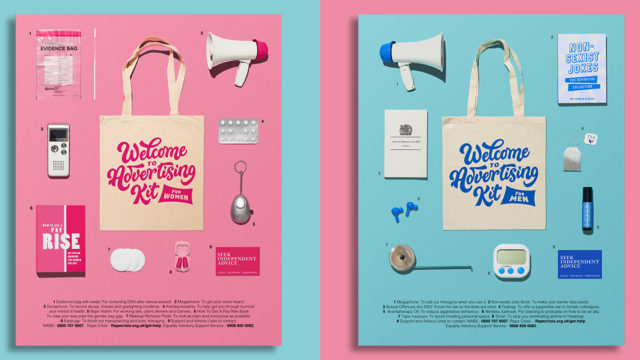
One of the first steps is to complete the timeTo training—I have taken it and would encourage all senior leaders to do the same. TimeTo is an initiative set up by NABS, The Advertising Association and a few other senior industry figures in the U.K. to help tackle sexual harassment in advertising. It provides regular, interactive and educational training for agencies and employees, delivered by an expert trainer in a two-hour session, that gives practical guidance on stopping sexual harassment and increases understanding on what is and isn’t acceptable in the workplace. Completing this training means we can be equipped to navigate complexities, recognize signs of potential harassment and take immediate action to address and prevent it, in Cannes and beyond.

But the work should have started long before anyone has even thought about packing the sunscreen. As senior leaders we need to demonstrate a commitment to creating a safe and respectful workplace culture all year round. This starts from our own actions: We need to model appropriate behavior, adopt an open culture and address any reports of harassment promptly and impartially. This requires ongoing commitment, awareness and active engagement from all people in leadership positions.

This also means looking outside our own businesses at what we can offer and looking at supporting and utilizing resources like timeTo and NABS: These organizations provide education as well as confidential support to individuals who experience and witness sexual harassment. We should be sharing this information with staff, letting them know the training is available, and everyone should have this education as well as the knowledge that there’s support and it’s important to seek help when needed.

Once you have done the above, you can start providing resources and educational materials that raise awareness about sexual harassment, consent and bystander intervention. Offer guidance on how to recognize and respond to potential harassment situations.

Create a safe space for safe talks

It is vital that you encourage open dialogue; without this, people will continue to be too confused or too scared to come forward. Create opportunities for open conversations about workplace culture, boundaries and respectful conduct. Ensure employees feel comfortable discussing their concerns or seeking guidance without fear of judgment and regularly communicate your commitment to maintaining a safe and inclusive work environment.

This has to run though the entire business and cannot be a top-down approach. Empower HR teams to enforce your sexual harassment policy. If this isn’t joined up, it quickly falls apart. Ensure HR professionals are equipped with the necessary resources, training and support to handle complaints effectively and impartially.

Be an advocate for employees

One of the biggest issues and drivers around sexual harassment is alcohol consumption, which is high on the list at Cannes. Acknowledge that alcohol consumption can sometimes contribute to situations where boundaries are crossed or harassment occurs. Encourage responsible drinking and remind employees of the importance of maintaining personal boundaries, consent and respectful behavior while attending social events or parties during the festival.

Remind staff to not let their guard down simply because it’s Cannes. Encourage them to do the opposite and be more vigilant; this includes not walking home alone, prearranging home transport and getting taxis. Empower your people to look out for others who may be in distress. Encourage them that if they see something that’s not right, report it and help people if they look like they are in an uncomfortable situation by simply asking if they are OK.

Similarly, teach setting personal boundaries. If they feel even slightly uncomfortable in any situation, reassure them they can remove themselves without the worry of creating awkwardness or upsetting others, especially senior people. As leaders, we have to acknowledge everyone has different comfort zones and levels for what is and is not acceptable.

We hold the power to shape the work environment. This can significantly impact our people. It’s on us to ensure all the measures are in place and that our people will feel supported, protected and able to fully immerse themselves in the joy of Cannes. Together, let us practice a culture of respect and inclusivity, making Cannes a celebration of safety and empowerment in the advertising industry as well as a celebration of great work.

https://www.adweek.com/agencies/confronting-sexual-harassment-at-cannes/