Business Dinners Are Too Long and Boring. Here’s How to Make Them Work.
This article is part of ADWEEK’s Marketing Vanguard program and was written in collaboration with one of its members.

A few years ago, I invited an intern to join a group of us for dinner with another company we were working closely with. 

I was excited to expose her to this side of corporate America in her first-ever business meal, and when dinner ended and it was only our team around, I eagerly asked her to rate the night. 

She was blunt: “It was long. Sometimes you all talked about interesting stuff. And other points you talked about things that do not matter. At all.” 

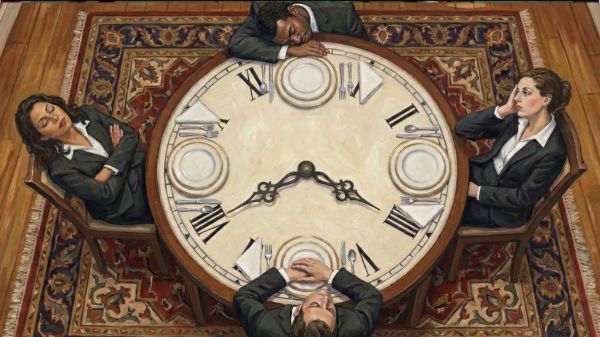
She was right. Last year during TV Upfronts week, the typical business dinner I attended was four and a half hours. With a good tailwind, that’s the same amount of time it takes to fly from the West Coast to the East Coast.

At least on that flight, you’re going somewhere!

We need to end the long, drawn-out, overly formal business dinner. Because while I absolutely believe in the value of spending time outside the office with prospective partners, current partners, teammates, agencies, and more—frankly, I’d rather do it over quesadillas.

Here’s how to make it better.

90 minutes—no more 

It’s diminishing returns after that. As both the dinner inviter and dinner invitee—share your expectations around timing with one another in advance and again at the start of the meal. 

Curate a list of restaurants that set you up for success 

This starts with a table where one, unified conversation can be had. Because we’ve all felt the avalanche of despair when small talk with the person next to you runs dry and you glance longingly at the other end of the table that enviably seems to be a total party. There are two restaurants in Los Angeles—Fia in Santa Monica and The Strand House in Manhattan Beach—that my team and I like because they have private rooms with the perfect large square table that lends itself to a singular group conversation. It’s by design that we researched and discovered these spots and continue to frequent them. 

I also wasn’t kidding about casual food

The default shouldn’t be Michelin-star dining, elaborate tasting menus, or the much overplayed small plates premise with a never-ending parade of food that is shared.

Let’s be honest—does anyone really enjoy sharing in these settings? We all work hard and on top of our 9-to-5, committed to an after-hours hang by saying yes to a business dinner. The absolute least we can do to reward ourselves is our very own entrée. 

And does it have to be dinner?

Of course not! Breakfast, lunch, coffee or early evening drinks. I recently went for a hot chocolate with a partner of ours. 10/10. 

And who says it must involve food or alcohol? 

Sporting events and the golf course have long been substitutes for the business dinner. What else can we add to this list? If the pandemic taught us about the benefits of a walk-and-talk one-on-one, why not make that the activity. I know what you’re thinking: you can’t take 12 people on a walk. Good. That’s the point. I guarantee more ‘real talk’ will be shared in this setting and with a better end result. 

Or consider a musical or play. If you catch up while walking to the theater, during intermission, and on your way out of the theater, that is likely enough time to discuss the business issues at hand. And you get to take in some culture!

If it has to be a long dinner, put a personality in charge

Curb Your Enthusiasm fans will recall the episode centered around Larry being a good “middler,” the person who sits in the middle of a big table and has a vital job: keep conversation flowing. 

At one especially long business dinner I attended, the “middler” was great and posed to the table the absolute best sports trivia question I’ve ever heard. (Name the nine sports figures that graced the cover of these four magazines: Life, People, Newsweek, Time)

It got everyone talking and working together. Which genuinely kept spirits up and distracted us from the fact that we were going on minute 97 waiting for our salt-encrusted entire bone-in fish—to share, of course.  

I have some go-to out-of-left-field questions I’ll ask during lulls. Like name a classic movie you’re embarrassed to admit you’ve never seen. My answer is The Shawshank Redemption. And at this point in my life, I’m not sure I’ll ever watch it since it elicits such a response from people when I disclose that.

I’m hopeful that shorter, curated points of connection (and quesadillas) can lead to talking about—in the words of my sage intern—more “interesting stuff.”

https://www.adweek.com/brand-marketing/business-dinners-are-too-long-and-boring-heres-how-to-make-them-work/


Why I Returned Six-Figures in Media Rebates To Clients In 2025


I just paid 53 clients of my agency, Acadia, their share of the six figure sum in rebates we received for media purchased in 2025.

Not all of Acadia’s clients were repaid; they had to qualify based on a rubric that includes timing of the buy, amount spent, the date the client was onboarded, among other factors.

But I did this to make a statement at a time when an uncomfortable portion of agency margin is coming from pocketing media rebates that belong to our clients. 

Industry studies estimate that rebates and “non-transparent incentives” represent 3% to 10% of total spend on digital media globally, which now exceeds $600 billion. That sizes the rebate economy at $40 billion, roughly equal to the U.S. linear TV market. 

Rebates, however, are earned by client spending volume—and should go back to them, or at the very least be disclosed to them transparently. 

The silent rebate economy

As media fees have compressed over the past decade, rebates have quietly become a backdoor margin engine which that agencies have become structurally dependent on. 

Agencies aggregate millions to billions of dollars in client media spend and deploy that capital across platforms and publishers. In return for that scale, publishers often extend rebates, incentives, or volume-based credits. 

Industry benchmarks put average agency operating margins at 8% to 12%. Yet rebate income can account for 10% to 30% of total agency profit. 

At the holding company level, that can add up to several hundred million dollars a year. Even a mid-sized agency managing $500 million in billings could generate as much as $25 million a year in rebate-driven margin.

Publishers are allowed to offer rebates; it’s good business practice. What’s bad business practice at best is when agencies keep those givebacks as profit—without disclosing them to clients. 

That’s not optimization. It’s appropriation.

Opaque by design

Clients often don’t know this is happening, because the system is intentionally opaque.

Contracts are vague. Language is “commercially flexible.” Procurement teams focus on fees, not incentives. Marketers assume their agencies are acting in their best interest. And few clients ever ask publishers directly whether their spend is part of a rebate pool.

But clients can’t afford to have their rebates pocketed by agencies. They are under relentless pressure to prove ROI and justify every incremental dollar spent. 

Agencies can’t afford it, either. We face unprecedented credibility challenges, and our future depends on trust, transparency, and true partnership. 

We must change

I’m calling on the industry to once and for all move away from the rebate system. Here’s how we can do it:

Brands demand their share. Marketers must ask: Are my agency dollars contributing to any rebate, incentive, or volume-based benefit? If so, where does that value go? The only acceptable answer is, “back to you.” 

Contract language gets tighter. Contracts should explicitly state that client funds may not be included in any rebate or incentive pool without full transparency—and that any such benefit must be returned to the client on a pro rata basis. Brands should also reserve the right to verify this directly with publishers.

Agencies honor their role. Agencies exist to serve clients, not arbitrage them. As stewards of client capital, we’re fiduciaries in the same way financial advisers are. Any reward we get for spending clients’ money needs to go back to those clients. 

We return to fair, honest, and open compensation. The fact that some agencies would fold without rebate profit isn’t justification; it’s an indictment. It means both the client’s payment and the agency’s models are broken. That’s the vexing, underlying problem we need to finally confront head-on. 

Some will claim it’s hopelessly complicated to untangle individual client totals from pooled investments. Don’t believe them. We have the analytical power; all it takes is the will to do what’s right. 

The rebate economy didn’t emerge overnight, and it won’t disappear instantly. But as marketers demand accountability and regulators scrutinize media practices, the days of hidden profit pools are numbered.

We can lead change, or be forced into it.

https://www.adweek.com/agencies/why-i-returned-six-figures-in-media-rebates-to-clients-in-2025/


10 AI Marketing Trends for 2026: Agentic AI and Search Shifts

CES, Davos, and the messaging in the Super Bowl ads this year made it clear: AI is no longer a capability story. It is an operating model story. 

These are 10 trends I see converging now, drawn from hundreds of conversations with CMOs and their teams, product and tech leaders.

1. Work identity will break before org charts do

AI is eroding the middle layers of marketing faster than most leaders admit. The damage will not show up as mass layoffs immediately, but as role confusion, eroding confidence, and quiet disengagement among product marketers, strategists, creatives, media planners, and analysts.

You can see the tension in how brands are talking about “AI-first” work while still rewarding old signals of seniority such as headcount managed, decks shipped, or meetings attended. When an AI agent can draft a launch narrative, pressure test positioning, and spin 10 campaign variants before lunch, the question is not “will people be replaced?” but “what does human expertise mean now?” 

2. Artificial Intelligence is no longer abstract, but planning still is

In conversations at the World Economic Forum in Davos this year, the undertone was less awe and more urgency. AI capability is compounding, regardless of disagreements among technologists about the timeline to artificial general intelligence. 

Yet, marketing organizations are still planning as if change is incremental, a tooling upgrade, another martech stack update, or a set of training. Meanwhile, AI systems are already outperforming humans on speed, scale, creativity, and synthesis in many domains. Many people are overestimating how much time they have left to adapt. 

3. Brands will inherit ethical risk without asking for it

As AI interfaces feel more human, marketing becomes the first point of ethical exposure. Legal frameworks will lag, but brand accountability will not. 

The clearest way to see this is to watch what happens when monetization collides with trust inside a conversational interface. 

OpenAI’s February 2026 rollout of ads in ChatGPT marks a pivotal shift in the AI trust contract, forcing people to distinguish between organic and sponsored AI recommendations.

Marketing will be the function held accountable when customers ask what is organic, what is paid, and whether AI is serving their interests or just the brand’s.

4. Most companies will stall in the middle of AI maturity

This year, marketers and their organizations will rush to declare “Mission Accomplished.”

Tools will multiply, yet workflows, incentive structures, decision rights, and true productivity will remain unchanged. 

This is where AI-native competitors will quietly widen the gap. They do not “use AI more,” but organize around it. They treat autonomy, data flows, and decision latency as competitive advantages.

5. AI-native creative will flood the market and devalue good ideas

Content volume, speed, and variation are becoming close to free, meaning “good enough” creative collapses in value. What becomes scarce is taste, direction, restraint, cultural relevancy and the ability to create something that does not look like it came from the same statistical blender as everyone else.

Just look at the immediate and unsurprising industry debate around Svedka’s AI-generated Super Bowl ad.

The uncomfortable truth is that AI does not kill creativity. It kills the pricing power of good ideas. 

6. Answer Engine Optimization (AEO) and GEO will disrupt discovery arbitrage

AI-mediated answers are increasingly replacing search-driven discovery. 

The last six months produced hard evidence that marketers can no longer treat search click-through as stable, predictable and repeatable. Analysis of Google AI Overviews showed significant CTR declines for queries where AI summaries appear, and the broader message is clear that fewer clicks are fewer opportunities to “win the first page listing,” and more value accruing to being the source the model cites, not the page that ranks third.

7. Smart Marketers will shift from discrete AI tools to connected workflows

“AI in the stack” is the wrong mental model. The shift is toward coordinated systems that plan, execute, and optimize campaigns with limited human intervention unless desired.

Humans supervise. Agents operate.

If you run marketing like a relay race between specialized teams, you will be outperformed by organizations that run it like a control room overseeing Agentic-AI workflows. 

8. Leadership quality will become the largest performance variable

As AI scales execution, leadership judgment becomes the primary differentiator. 

You can see this emerging in how leaders talk about monetization and trust. At Davos, Google DeepMind CEO Demis Hassabis publicly emphasized that Google has “no plans” for ads in Gemini, explicitly framing advertising in AI assistants as a trust risk. 

Whether you agree or not, leadership strength is going to be evaluated based on what trade-offs are you willing to make, and how fast is what will determine whether you win in the AI Era or not. 

9. CMOs will be forced into fewer, harder strategic bets

Boards and CEOs will push CMOs into sharper choices such as build versus buy, optimization versus differentiation, pilots versus transformation, where humans stay essential versus where automation becomes default.

The era of hedging with endless experiments is ending, because experimentation is no longer a strategy, and there won’t be enough resources or patience for it. Strategy and brand differentiation will matter again because everything else is rapidly commoditizing. 

10. Jagged AI capabilities will create new, invisible failure modes

AI will work brilliantly in some contexts and fail unpredictably in others. Over-trust and under-trust will coexist inside the same organization and often within the same team. The most dangerous failures will not be obvious. They will be quiet, inconsistent, and driven by misplaced confidence.

Some brands have started leaning into human-ness as a deliberate contrast to synthetic sameness, tapping into rising skepticism and fatigue. That too is a mistake, as those leaders won’t take advantage of AI capabilities that will advantage their teams.

https://www.adweek.com/brand-marketing/10-ai-marketing-trends-for-2026-agentic-ai-and-search-shifts/


Bad Bunny’s Super Bowl Halftime Sold the World on Puerto Rico


For 15 minutes on Sunday, more than 130 million people were on the edge of their seats, watching Bad Bunny transform the Super Bowl 60 Halftime Show into the biggest party of the year, all while speaking and singing entirely in Spanish.

The Puerto Rican artist filled Levi’s Stadium in San Francisco, California with visual and sonic references of his homeland, from images of sugarcane fields, a cornerstone in Puerto Rico’s economy until the 20th century, to a real wedding that portrayed a variety of moments traditional of a Latin celebration.

Contrary to expectations, the artist refrained from overtly promoting specific brands, instead focusing on elevating Puerto Rican culture and Latino community on one of the most important stages in advertising.

Wearing a collared shirt and tie carrying the No. 64 designed by the Spanish brand Zara and launching a new custom sneaker with Adidas, the BadBo 1.0 in white, the artist did make some subtle nods to brand partners in his performance. 

But more than anything, his halftime show sold millions of viewers on Puerto Rico itself, defining its history, creativity, and identity in a way that emotionally connected with a global audience.  

Voy a llevarte pa’ PR

Bad Bunny anchored his performance with reggaetón hits like “Yo Perreo Sola,” “Safaera,” and “Voy a Llevarte pa PR” in his iconic casita, where Latin artists including Cardi B, Jessica Alba, Pedro Pascal, Karol G, and others joined the celebration.

To the Afro-Caribbean rhythms of “Titi Me Preguntó,” he launched a visual journey celebrating numerous moments of daily Caribbean life, from street food vendors to domino games and women getting their nails done at the salon.

“You’re listening to music from Puerto Rico,” he said in Spanish while standing in the casita, a set piece reflecting rural life on the island, which has become a centerpiece of his latest tour, transitioning into a section that paid tribute to key songs that helped elevate reggaetón to a mainstream musical genre.

The economic impact of Puerto Rican culture had already manifested from his concert residency on the island, generating an estimated $400 million for the country. But with this celebration of his homeland experienced by millions, Bad Bunny’s halftime show was a lesson in cultural storytelling marketers can learn from.

Despite the party, his portrayal of Puerto Rico didn’t shy away from the island’s challenges, like the energy crisis caused by decades of underinvestment in the power grid and the imposition of Americanization, both recurring themes in his work. His performance addressed these issues directly, as he performed from light poles while singing “El Apagón,” and as Ricky Martin, one of the first Puerto Ricans to break into the Anglo market, performed “Lo que le pasó a Hawáii,” a song that critiques the island’s colonial status.

In this way, the halftime show reimagined Puerto Rico as the author of its own story: a place shaped by colonial violence and resource extraction, but driven by an uncompromising cultural lineage that continues to influence the world beyond the island’s coastline.

From PR to the globe 

In an unexpected moment, Lady Gaga took center stage amid a real wedding, performing a salsa-infused version of “Die with a Smile,” before joining Bad Bunny to dance to the hit “Baile Inolvidable.” Wearing an ensemble in the light blue associated with Puerto Rican independence and a red flor de maga, the island’s national flower, the artist’s appearance bridged Puerto Rican and American culture and stood as an allegory for Bad Bunny’s transcendence on the global stage. 

Acknowledging New York City as the original epicenter of salsa, the artist performed “NuevaYol” while dancers moved through bodegas, barber shops, and everyday community scenes, including a representation of “Toñitas,” one of the few remaining Puerto Rican Social Clubs in the city — spaces that have been fundamental to the identity of many Latino immigrants in the United States.

This scenery follows Bad Bunny’s appearance in the Grammys last week when he declared “ICE out.” That political message continued as he handed his Grammy for Album of the Year to a child watching the historic moment with their family on television.

To the rhythms of plena, accompanied by the local group Pleneros de la Cresta, Bad Bunny closed the show with a parade of flags representing every country in the Americas, calling out each nation by name. 

The imagery woven throughout his performance bring together cultural affirmation for Puerto Ricans while serving as a point of recognition for broader Latin American audiences and an educational entry point for viewers unfamiliar with the island’s history.

By placing Puerto Rican musical genres at the center of the narrative, Bad Bunny demonstrated these rhythms as exportable cultural assets. When he said “We’re still here” in Spanish, he affirmed the continent’s cultural and linguistic diversity on a national stage. 

Nonetheless, the world’s most-watched entertainment stage also became a showcase for Puerto Rico, using every element to project the island as a recognizable and authentic identity to millions of viewers.

https://www.adweek.com/brand-marketing/bad-bunnys-super-bowl-halftime-sold-the-world-on-puerto-rico/


Bad Bunny’s Halftime Show Wasn’t a Gamble. It Was an NFL Growth Strategy.

It was a tale of two Sundays.

Last week, Bad Bunny stood on stage at the Grammys and said “ICE out” before thanking God for his success. 

The following Sunday, he headlined the most widely viewed concert in the world at the Super Bowl, an energizing performance that celebrated Puerto Rican culture (and even had a real wedding!) with cameos from Ricky Martin and Lady Gaga.

Few artists today spark as much conversation as Bad Bunny. He is polarizing, whether intentionally or not. But the NFL is no stranger to a controversial halftime performer. From Prince’s provocative silhouette to Shakira and J.Lo’s celebration of Latin culture to Rihanna’s pregnancy reveal, the league has repeatedly selected artists who spark conversation and connect to the cultural moment. 

But the Bad Bunny selection was a carefully planned chess move in service of global and Latino audience growth, despite rising anti-immigrant sentiment among parts of the U.S. audience.

The Super Bowl is for everyone in different ways. The game is for die-hard NFL fans. The halftime show and commercials are for a broader audience of people tuning in for entertainment and spectacle. 

Immediately following the halftime show, we surveyed more than 2,000 viewers across the U.S., Mexico, and Puerto Rico to understand how the performance actually landed.

The topline response was overwhelmingly positive. In the U.S., over half (57%) of viewers said they “liked” or “loved” the show, compared to just one-in-five (20%) who “disliked” or “hated” it. In Mexico, approval was even stronger: 74% liked or loved the performance, versus only 10% who reacted negatively. 

But the real story emerges when you look at who it spoke to most powerfully.

Among Hispanic audiences in the U.S., the halftime show created a sense of meaning and belonging. More than half (54%) said the performance felt meaningful to them, compared to just 30% of non-Hispanic viewers. Nearly half of U.S. Hispanic respondents (49%) said they loved the show, versus 27% of non-Hispanics.

For Puerto Rican consumers, the show was a representation of their culture on a global stage. 88% of those surveyed said the performance felt meaningful for them, while 91% said the use of Spanish and Latino cultural references made the performance more enjoyable. Mexico showed a similar pattern, with 83% saying those cultural elements made the performance more enjoyable.

Bad Bunny’s expansive performance, underscored with messages of love and acceptance, translated into a perception lift for the NFL as a whole. 

Nearly a quarter of U.S. viewers said the show made them feel more positive about the league. The positive effect was also significantly stronger in Mexico (35%) and Puerto Rico (47.5%), especially among younger, female, and Hispanic audiences.

The NFL is thinking far beyond a single Sunday or even a single season. Long-term growth won’t come from appealing only to existing football fans in the U.S., but from converting sports fans around the world into American football fans – and from making those audiences feel seen, included, and connected to the brand.

Category expansion rarely comes with a playbook. 

Marketers frequently wrestle with whether to play it safe and optimize for the broadest appeal, or to lean into cultural specificity. There’s no perfect answer. Where to land comes down to understanding your base and balancing that with who you want to reach. 

But having connected insights into who your consumers are today, and who you’re building for tomorrow, and the conviction to accept the trade-offs that come with those choices is what separates marketing from legacy-building.

https://www.adweek.com/media/bad-bunnys-halftime-show-wasnt-a-gamble-it-was-an-nfl-growth-strategy/


Bad Bunny’s Super Bowl Spectacle Showcased the Unifying Force of Culture


Bad Bunny DID THAT. Se la rifo! 

Bad Bunny’s Super Bowl halftime show arrived at a moment when most cultural conversations in the U.S. feel fragmented. Different feeds, different audiences, different realities depending on who you ask.

For 13 minutes in the middle of the Big Game, in front of 140 million viewers, that fragmentation paused. Millions of people, across hundreds of languages and thousands of backgrounds, reacted to the same moment at the same time.

Have a quick look at X, TikTok, Facebook, your WhatsApp group chat, or even a pit stop at the office watercooler, and you’ll find people discussing the symbolism in Benito’s love letter to Puerto Rico, translating lyrics for friends, and sharing what the performance meant to them.

This kind of collective cultural response has become rare. And that’s exactly why it matters.

A Spanish-language global artist headlining the halftime show reflected a cultural read of the moment: authenticity now scales further than neutrality ever could. The result was historic, the most-watched halftime performance ever, drawing record-level global viewership and sparking nonstop online conversation that extended far beyond the broadcast itself.

However, the significance of Bad Bunny’s show goes beyond ratings or headlines. What stood out most was the way communities participated. Viewers felt like they were part of the performance; they interpreted it, explained references, shared emotional reactions, and invited others into the experience.

Latino audiences saw themselves reflected on one of the world’s largest stages, while those outside the culture leaned in with curiosity rather than distance.

What emerged was a rare collective experience. In the hours since Bad Bunny took the stage, people have been connecting through culture, rather than through isolated algorithmic bubbles.

For brands and creative leaders, this Super Bowl moment offers several lessons.

1. Culture creates connections faster than messaging ever will.

Marketers often attempt to manufacture unity through campaigns built around togetherness, but connection rarely starts with slogans. It begins in cultural moments that people already care about. When brands understand where those moments are happening and participate with respect, the connection happens organically.

2. Authenticity expands the audience.

The Apple Music-sponsored performance didn’t attempt to translate itself for mainstream comfort. It operated confidently in its own language, symbolism, and creative identity. That confidence widened its appeal. Audiences outside the culture leaned in to learn, with demand for Spanish lessons soaring 35% on Duolingo. Elsewhere, those inside the culture felt recognized. 

3. Community amplification is the real multiplier.

The reach of the halftime show extended far beyond the broadcast because millions of people became interpreters of the moment, explaining meaning and sharing context across their own networks. The most powerful distribution today often comes from audiences themselves, not media budgets.

What was once labeled “multicultural” is increasingly shaping mainstream culture itself. The audiences historically treated as segments are now driving sound, style, language, and global attention at scale.

My personal favorite moment came near the end of the performance.

Flags from across the Americas filled the stage as a message appeared on a giant display in Levi’s Stadium, reading: “The Only Thing More Powerful Than Hate is Love”, before the show closed with a football bearing the words “Together, We Are America.”

At a time when national conversations often feel defined by division, the message landed as a reminder that unity is still possible and that culture often says what politics cannot.

The reaction online mirrored that feeling.

People across backgrounds, languages, and communities shared the same moment, the same pride, and the same sense of connection.

For a few minutes, the loudest message in the country wasn’t about what separates us, but what still brings us together.

Moments that generate collective emotional response at a global scale are becoming less common. When they happen, they remind us of something simple: shared cultural experiences still carry the power to bring people together.

For brands, the takeaway is to recognize where cultural energy is already forming and to have the conviction to invest early, support it respectfully, and build with communities rather than trying to take over the moment later.

¡Sigamos para adelante, mi gente!

https://www.adweek.com/brand-marketing/bad-bunnys-super-bowl-spectacle-showcased-the-unifying-force-of-culture/


Beyond the Spot: How Today’s Brands Can Win the Super Bowl

The biggest Super Bowl moments don’t always happen on TV. 

That’s not a diminishment of the broadcast’s power. Instead it’s an expansion of the creative canvas around it.

Super Bowl 60 is primed for a massive creative reframing—one where relevance, proximity, and participation are increasingly gaining momentum. Culture moves faster than a single broadcast, and the brands that win on Sunday aren’t just the ones that show up during the game. They’re the ones that understand how to show up around it, and are designing quieter campaigns for the right people, in the right places, at the right time. 

Brands that succeed here start by identifying where their desired cultural attention actually shows up––in the host city of San Francisco, a specific platform, or a community—and showing up with intent rather than sheer scale. The work is quieter, but often more precise. 

Challengers that won around the fringes

Challenger brands have embraced this approach because they’ve had to. Without the budget or legacy presence, they look for the white spaces others often overlook or avoid. While some iconic Super Bowl ads trade on familiarity and repetition, which can be the right strategy for some brands, challengers have the unique opportunity to take smarter risks by showing up big in unexpected places.

Last year, Duolingo used their social accounts to comment on the program in real-time, from translations that threw shade at bad plays to dropping a music lesson on A minor to match up with Kendrik Lamar’s halftime performance. 

It resulted in a ton of posts that were hitting product RTBs while making a cultural statement on the moment, leading to 41 million impressions and zero ad spend.

Although Liquid Death ran a Super Bowl ad last year and will again this year, back in 2022, it ran a regional ad that was so impossible to ignore they knew the talk value would make up for the lack of a national media buy. Intentionally controversial, it racked up over 300,000 views in conversations on X, but received over 4 million views via people reacting to it in places like TikTok.

And an earlier use of this tactic is also one of the most effective.

In 2015, Volvo asked fans to tweet the hashtag #VolvoContest every time any other car commercial aired to nominate someone for a new XC60, activating an already engaged fan base and offering them something tangible. This led to a 71% sales jump and earned roughly $44 million in organic media coverage.

What people remember on Monday morning

For creative leaders, the biggest shift isn’t about abandoning the Super Bowl spot, but about reframing it. That means creative today has to be built with flexibility in mind. 

That doesn’t mean being impulsive or chasing every trend. It means planning for responsiveness, which can look like setting up creative frameworks, empowered teams, and clear guardrails so you can move quickly without losing your voice. 

That willingness to operate outside of airtime can give brands an edge. 

What people remember on Monday morning aren’t always the most extravagant traditional spots, but the ones that made people laugh, think, or feel seen. It’s ads that were clever, authentic, and self-aware. Audiences can spot overproduction, forced relevance, and opportunism from a mile away—and ideas last far longer than spectacle. 

Ultimately, non-traditional executions can work because they feel human. When brands show up without an explicit sell, they create space, where participation turns into connection, and connection turns into loyalty.
These ideas may never top the ad meters, and that’s kind of the point. Success here isn’t always measured in immediate recall or next-day rankings. It shows up in conversations, earned media, social trends, and long-term affinity.

https://www.adweek.com/agencies/beyond-the-spot-how-todays-brands-can-win-the-super-bowl/


Starbucks Chief Brian Niccol Might Just Be the Best CEO in America

It didn’t start well. 

Even Brian Niccol would surely accept that the optics of his first few weeks at Starbucks back in the summer of 2024 were hardly ideal. 

First, there was the messy scrap about wanting to work from home while leading a company insisting its managers return to the office. When your California abode is a thousand miles from headquarters, accusations of executive hypocrisy are inevitable. 

Then there was the salary: $96 million for his first four months’ work. That’s 6,666 times more than the median Starbucks barista earns. A multiple that followed him around like a corporate albatross.

And then something unexpected happened. Starbucks’ new CEO started fixing stuff. 

He had brought good people with him. Very good people. Tressie Lieberman from Chipotle as chief brand officer. He recruited Cathy Smith, the former CFO of Target and Walmart International, to run finance. He installed new leadership across all his stores. 

And he brought brutal simplification. At Taco Bell, Niccol had learned that complexity kills. At Chipotle, he perfected the art of cutting corporate noise. His predecessor at Starbucks, Laxman Narasimhan, had unveiled a strategy called “Triple Shot Reinvention with Two Pumps.” When asked about it, Niccol was characteristically blunt: “I don’t know what that means.” 

He replaced it with three words: “Back to Starbucks.”

Say what you mean, mean what you say

It’s here where Niccol and his team have particularly excelled. Not just simplifying operations but articulating the brand’s very reason for being. Consider the old mission statement: “With every cup, with every conversation, with every community—we nurture the limitless possibilities of human connection.” Overwritten. Vague. It reeks of the overstated era of Big Positioning in which so many marketers lost the strategic plot.

Too many brands are run by people who think positioning is an end in itself—one that requires a big societal purpose followed by a verbose set of statements and concepts. Positioning became a PowerPoint deck of overly complex ideas. 

It has to be simpler than that. Tighter. Humbler. Even the biggest brand has only a few of its consumers’ brain cells to operate with. Positioning became messy rather than the means to a more simple, prosaic end: salience and differentiation.

Niccol’s new position took less than a paragraph and returned the Starbucks brand to Earth: “A welcoming coffeehouse where people gather, and where we serve the finest coffee, handcrafted by our skilled baristas.” When Howard Schultz heard the new positioning, he reportedly did a cartwheel in his living room.

Remind people why they love you

An ostentatious, slightly absurd brand position won’t kill a company, but it sure as shit does not help much. 

I’ve worked on the positioning of many of the world’s biggest brands, and it’s been apparent throughout my career just how transformational a proper, tight position can be for a company. You clear the noise. Choices become obvious. It’s as if lights emerge from the ceiling and illuminate the things that are important, and go dark around the things that no longer matter. 

Working from the new position, Niccol cut 30% of the menu. Gone were drinks deemed too complex, too similar, or too niche. He brought back handwritten names on cups—200,000 Sharpies ordered. Restored condiment bars. Reintroduced ceramic mugs. Removed the extra charge for non-dairy milk. Each decision flowing from one idea: We are a community coffeehouse, not a mobile-ordering assembly line.

Then came Green Apron Service—the largest operating standards investment in Starbucks’ 54-year history. The $500 million program is built around five customer moments: greeting, glassware, a message on the cup, connection at handoff, and a clean café. Service choreography, not rocket science. But the 650 pilot stores outperformed the fleet by 200 basis points. 

He killed discounts. Starbucks had been drowning in promotions: half-price Frappuccinos, BOGO lattes, loyalty multipliers. Niccol shifted spend toward brand experience. Classic brand building: Stop bribing customers and start reminding them why they love you instead.

The proof is in the latte

On Jan. 28, the numbers confirmed what stores were already showing. Starbucks beat analyst estimates across the board for Q1. Global comparable sales rose 4%—nearly double Wall Street’s forecast. U.S. comps also climbed 4%, driven by a 3% rise in transactions, the first U.S. transaction growth in eight quarters. 

After two years of customers walking past the green mermaid, now they’re walking back in. Revenue hit $9.9 billion, up 6%. Rewards members reached a record 35.5 million. Both loyalty members and non-members grew their visits for the first time since early 2022. Niccol declared his “Back to Starbucks” plan as “working and ahead of schedule.” The company reinstated guidance for the first time in over a year. This is a turnaround with genuine, transaction-led momentum.

Niccol has a long tenure ahead, with his turnaround plan stretching into 2027 and beyond. Critics will keep pointing at the corporate jet, the Newport Beach office, and that $96 million number. But Starbucks stock now trades around $92, up from $76 the day before his appointment was announced. That’s roughly $18 billion in shareholder value. Or about $35 million for every day Niccol has been on the job. For once, the big salary is justified.

Just one more thing

Maybe, in Brian Niccol, Starbucks has the best CEO in America. A leader who understands that a brand’s position must be simple enough to execute, not grand enough to frame. A man who moves logically from the strategy of a new position to execute it tactically not just in superficial advertising, but across all the key touch points. A leader who knows that when you know what a brand stands for, everything else follows. 

The only remaining question is whether someone can convince him to move to Seattle. Because there is no amount of strategic genius, operational excellence, or shareholder value that excuses a grown adult choosing to live in Newport Beach. A city without seasons, any distinguishable culture, or a decent cup of coffee. 

Fix that, Brian, and the turnaround truly will be complete.

https://www.adweek.com/brand-marketing/starbucks-chief-brian-niccol-might-just-be-the-best-ceo-in-america/


8 Lessons Brand Marketers Should Take From Heated Rivalry

You don’t need to be chronically online to have your social media feeds overtaken by TV’s Heated Rivalry. My 21-year-old niece, multiple work Teams chats, Donatella Versace, hetero hockey podcasters, Helen Hunt, the NYC mayor’s Snow Day counsel, the Olympic torch relay committee and Naomi Fry in The New Yorker have all declared their intention to “come to the cottage.”  

As a gay Canadian who never fully got into hockey but has devoured more than two dozen (mainly hockey-based) MM romances (receipts in my Goodreads), my excitement began with the first announcement last year. (Full disclosure: I attended the same Montreal high school as the show’s writer/director, Jacob Tierney, though our paths since our star turns in a senior production of Fiddler on the Roof have diverged significantly.)

The show’s virality is staggering. Across Youtube, TikTok, Instagram, and Facebook, there have been more than 6,000 dedicated videos uploaded between Nov 15 and Jan 12 averaging 80,000 views each, with more than 6,200 engagements, according to research from the Weber Shandwick Analytics & Insights team using Tubular. A New York Times headline calls the “popularity of ‘Heated Rivalry’ a surprise even to TV executives.” Hits like these also often surprise marketers, who are left flat-footed. Case in point: no one at Harlequin Books foresaw the uptick in demand for Rachel Reid’s Game Changers novels, which are still frustratingly backordered on Amazon until the end of January.

It can be tempting to dismiss such cultural phenomena as flukes, but marketers have much to learn from successes like Heated Rivalry. Here are eight key lessons:

1. Community insights over trends

What is the point of IP if you’re not respecting the people that made the IP valuable, which is the fans?Jacob Tierney (Writer/Director)

To say Heated Rivalry came out of nowhere is to ignore its foundation: a devoted fanbase. The six-novel series sold 650,000 copies before the show premiered, bolstered by active message boards, online reviews, and fan fiction. Tierney, who DMed author Rachel Reid directly to acquire the rights, recognized not just the quality of the material but the fervor of its fans. Marketers too often chase trends instead of tapping into communities with deep engagement. Niche stories can ignite mainstream excitement when handled with care. Heated Rivalry fans have been rewarded for their loyalty, creating a cycle of excitement between long-time readers and new viewers.

2. Passions, not demographics

“You’d never think it, but the baked-in audience for this is women. It’s wine moms. They love this stuff.”Jacob Tierney

Streaming minutes for Heated Rivalry exploded from 30 million at launch to 327 million during its finale. This growth was driven by cisgender heterosexual women, who make up two-thirds of its audience. This shouldn’t be shocking. Female readers have always dominated the male/male (MM) romance book genre, citing its ability to equalize relationship dynamics and remove patriarchal tropes. Marketers often assume audiences must see themselves in characters. Instead, we must focus on connecting with their values, passions, and interests — not just gender or demographics.

3. Take more shots

It is clearly a word-of-mouth sensation.Casey Bloys, chairman and CEO of HBO and HBO Max 

Heated Rivalry was made on a modest budget with relatively unknown actors, filmed in Canada, and supported by limited marketing. Its success proves cultural momentum and fan engagement outweigh flashy spending. Marketers often aim for “too big to fail” projects, diluting creativity to “hit every quadrant.” But taking more creative risks on smaller, targeted stories allows for authentic content with universal appeal.

4. Trust your creators

“They clearly know what they’re doing.”Casey Bloys

Tierney credits Crave’s Canadian executives for funding the series without “death by a thousand studio notes.” And rightfully so. One potential collaborator reportedly suggested adding a female protagonist to broaden appeal. Too often, marketers micromanage creators instead of trusting their expertise. Tierney has proven success with Letterkenny and Shoresy.  It’s also a two-way street, and Tierney has confirmed that Heated Rivalry’s Season 2 budget will remain modest, ensuring he can retain creative control.

5. Real, complex inclusion

Heated Rivalry’s Shane is autistic. If you didn’t notice, that’s the point.” – CBC Headline

Heated Rivalry doesn’t just focus on LGBTQ+ themes—it reflects intersectional stories. It portrays a Russian immigrant’s struggles, the lack of Asian representation in hockey, and includes Black, trans, and Latinx characters. The main character Shane is coded as autistic, but it’s never explicitly stated. For some, it’s deeply resonant; for others, it goes unnoticed. Inclusion feels natural, not performative—a model for marketers looking to connect with wider audiences. And it’s effective: one out of every dozen comments on Twitter/Reddit (via Tubular/WS A&I) includes a mention of “inclusion,” “representation,” and “feeling seen.”

6. Provoke, but follow through

“Come for the hot sex, stay for the warm love.” – Hudson Williams (Actor)

Headlines have underlined the show’s spice and nudity level, but it’s hardly racier than Bridgerton, Industry, or Outlander. It’s just different. Importantly, intimacy is not gratuitous but central to a plot that culminates in a satisfying happily ever after. Similarly, in marketing, you can lead with bold or provocative elements, but meaningful substance and a connection to your story is what drives long-term engagement.

7. The need for — and value of — joy

“This show is queer joy for adults.” – Jacob Tierney

In a bleak world, Heated Rivalry has been a balm for audiences, unabashedly embracing love and joy. Marketers often see value as transactional—solving problems—but joy itself is a value that enriches lives and strengthens emotional connections with brands.

8. Embrace the memes

“It’s very flattering to be on the receiving end of so much copyright infringement.” – Jacob Tierney

Fans have embraced Heated Rivalry with hilarious memes, song remixes, watch parties, fan edits, and homemade merch. Even the Canadian Olympic team is weighing in. Rather than shut it down, its creators are leaning into it, amplifying fandom instead of policing it. For marketers, co-creating with fans and empowering them to evangelize your brand is the way forward.

My genuine fear is that networks and producers are focused on replicating a ‘gay sports-themed show’ rather than uncovering the next underrepresented niche, where not just the quantity of people talking but the quality and intensity of their conversation have the power to fuel mainstream excitement and a viral hit. Marketers too have a similar chance to rethink how we approach culture, creativity, and community. Ignore these lessons, and you risk being frozen out—or stuck in the penalty box. 

https://www.adweek.com/brand-marketing/8-lessons-brand-marketers-should-take-from-heated-rivalry/


What the Agentic Web Means for Brands

OpenAI’s recent launch of Atlas marks a pivotal moment for digital marketing, and for the evolution of the internet itself. Atlas showcases the rise of the agentic web, an internet in which AI completes tasks on users’ behalf and actively represents them.

For marketers, this means algorithms will increasingly mediate how people discover, evaluate and interact with brands. The path forward lies in diversification and data: Expanding how we reach audiences and unifying how we measure performance across every screen. 

The Diversification Imperative

First, we have to acknowledge that AI is already reshaping online behavior. Gartner predicts that by 2026, traditional search traffic could decline by as much as 25%, largely due to the proliferation of AI-driven tools and intermediaries. For marketers, this means fewer touchpoints, increased competition for attention and greater urgency to diversify beyond search-centric strategies, as the traditional web is no longer the only (or even the primary) place for digital discovery. 

The good news, however, is that the broader, open internet—which includes mobile, connected TV (CTV), and beyond—is more measurable and performant than ever. 

Take, for example, the fact that consumers spend nearly 90% of their time on mobile within apps (a channel largely shielded from the volatility of search engines), generating more than $935 billion in annual revenue globally. Paired with other, high-attention environments, like CTV and digital out-of-home, mobile can help marketers maintain connection with consumers wherever they spend time. These environments also tend to offer greater engagement and measurement, allowing brands to connect media with storytelling in one continuous loop and build more resilient, diverse portfolios in the process. 

Data as the Demand-Side Advantage

Of course, diversification without data is just more noise. From the perspective of a demand-side platform like Nexxen, the most effective advertisers are going a step beyond diversifying channels and integrating data to inform every decision, including bid optimization and creative conquesting. 

To identify quality environments, track incremental reach, and optimize for outcomes that matter most to their businesses’ bottom lines, brands need to start crafting open, privacy-led data strategies that link mobile, CTV, and other channels into one cohesive framework. Put differently, we need to treat data as the connective tissue and infrastructure, rather than a campaign byproduct, to excel. 

Ultimately, by approaching campaigns with diversification and data top-of-mind, we can turn disruption into discovery—building brand value in places algorithms can’t define. The rules of online engagement may be changing, but we now have the chance to rewrite them on our terms, for good. 

https://www.adweek.com/brand-marketing/nexxen-ben-kaplan-what-agentic-web-means-for-brands/