Marketers Need to Fight the Ways Colorism Shows Up in Our Industry


.article-native-ad { border-bottom: 1px solid #ddd; margin: 0 45px; padding-bottom: 20px; margin-bottom: 20px; } .article-native-ad svg { color: #ddd; font-size: 34px; margin-top: 10px; } .article-native-ad p { line-height:1.5; padding:0!important; padding-left: 10px!important; } .article-native-ad strong { font-weight:500; color:rgb(46,179,178); }

Learn how the creator economy is transforming the marketing landscape, and how to cultivate partnerships to grow engaged communities at Social Media Week: The Creatorverse, May 16–18 in NY. Register now to secure your early bird pass.

Colorism still permeates so much of what we do in the marketing ecosystem. From who we cast to the products we create, many marketers knowingly or unknowingly cling to the white standards of beauty: blonde hair, blue eyes, light skin. It’s an archaic standard that tells the rest of us we don’t belong, this brand is not meant for us.

As a marketer who’s a dark-skinned woman, I have seen colorism show up too many times to count. Earlier in my career, I didn’t always have the language, the power or the mental energy to confront colorism head on. But now I know I have a responsibility to educate and the power to help brands make different decisions. We need more marketers to come to this realization and be a catalyst for change.

Start educating your teams on colorism

Colorism upholds and values white standards of beauty and is a product of racism. It continues to be pervasive, whether we’re aware of it or not. The preference for lighter skin over darker skin is still prevalent in white, Black, Latinx and Asian communities and is not often openly discussed.

As a South Asian woman, I was aware from a very young age that I was smart but not pretty—I was too dark to be pretty. I was bombarded with recipes for homemade turmeric face masks, brightening, lightening and whitening creams and lotions, and endless tips and reminders for staying out of the sun so I wouldn’t get any darker. Colorism has significantly impacted my life, and I am not alone.

According to Web MD, a recent U.S. survey of Latinx adults revealed that colorism had significantly impacted their lives as well. 62% believed that having darker skin hurts their ability to get ahead in the U.S., and 59% believed having lighter skin was an advantage. Over 50% said their skin color impacts their daily life.

For marketers, you can’t stop colorism if you aren’t aware of it or don’t understand it. Educate your teams on what colorism means and how it can show up in our marketing ecosystem. Be open, honest and brave about how colorism could be impacting your creation of content, products and campaigns, or members of your team.

Stop casting racially ambiguous models

Historically, as the demographics of the U.S. shifted, casting racially ambiguous models became a way to try and resonate with multicultural audiences without alienating white (“general market”) consumers. I can recall a number of occasions where I was told to put “racially ambiguous” on the creative brief to the agency. “Neutral,” one creative director said to me, justifying the selection of images to our brand team.

This was in response to me pushing back on our focus on racially ambiguous models. “We want a neutral look, not too ethnic. So that means the hair, the nose, the eyes, the skin, it all matters. Remember, a look that will be desirable and appealing to all.”

As marketers, we can’t fight colorism if we won’t stop casting and using the language of “racially ambiguous.” We must ask ourselves what it means for someone to look too ethnic and what biases we are holding onto. We have the power and responsibility to include darker-skinned models and portray them as desirable, appealing and resonant with our consumers as they actually are.

Start being inclusive of darker skin tones

In the U.S. alone, multicultural buying power is now more than $5 trillion, which includes Black, Latinx, Asian, Pacific Islander, Indigenous, multiracial and multiethnic communities. Inclusion is a driver of business, and those brands who continue to ignore these communities will be left behind.

As marketers, it’s our job to advocate and be inclusive of darker skin tones. This means intentionally casting and featuring dark-skinned models, actors and influencers in your content and programming. This means also having products that work on darker skin tones—in the beauty world, not just checking the box with foundations but also having eyeshadows, lip glosses, blushes and more that work on darker skin tones.
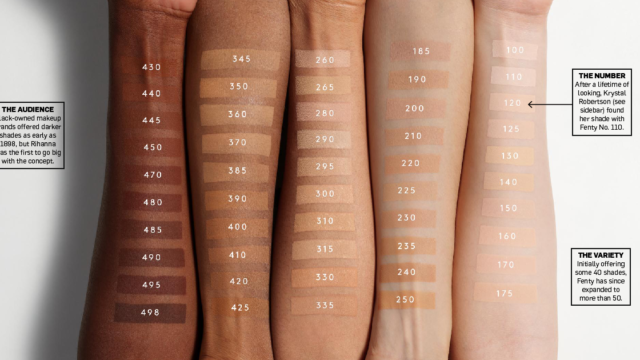
And don’t default to stock photography; be intentional about who is behind the camera and capture product shots that show darker-skinned hands.

We have a responsibility to fight colorism and be advocates for societal change. We must challenge our industry standards and do better for the next generation of marketers and for our consumers.

https://www.adweek.com/creativity/marketers-need-to-fight-the-ways-colorism-shows-up-in-our-industry/


What the Data Tells Us About Making a Great Super Bowl Ad


.article-native-ad { border-bottom: 1px solid #ddd; margin: 0 45px; padding-bottom: 20px; margin-bottom: 20px; } .article-native-ad svg { color: #ddd; font-size: 34px; margin-top: 10px; } .article-native-ad p { line-height:1.5; padding:0!important; padding-left: 10px!important; } .article-native-ad strong { font-weight:500; color:rgb(46,179,178); }

Learn how the creator economy is transforming the marketing landscape, and how to cultivate partnerships to grow engaged communities at Social Media Week: The Creatorverse, May 16–18 in NY. Register now to secure your early bird pass.

Super Bowl ads are some of the most watched and talked-about marketing in the world. Every year, more than 100 million people tune in to watch athletes in their prime square off on the gridiron—and 43% say they tune in just to see the ads. We all want to see which unique, creative and potentially iconic TV commercials will be in the Big Game—the Super Bowl is a cultural touchstone for Americans where creativity and triumphant storytelling converge.

But what makes a Big Game ad successful? Which ads create that magic tipping point for viewers where interest develops into intent? How does one 30-second airing stand apart from a crowd of nearly 100 spots to become a topic of conversation the morning after—and for some, years to come?

It’s the transformational declarations that drive talk of the future, or heroes provoking a thoughtful smile or unexpected laugh. And sometimes, it’s a nostalgic nod to the past that evokes a warm memory. 

EDO has measured the performance of every Super Bowl ad since 2016—as well as over 400,000 unique TV ads across more than 126 million airings. By connecting ad airings to consumer engagements—that magic moment where awareness becomes intent—brands can know within minutes if an ad is moving the needle for their business and the hearts and minds of consumers. 

So let’s unpack—with EDO’s performance data—which ads stand the test of time and portend trends for future Super Bowls.

The Sunday when the past turns present

We all yearn for a simpler time, which is why Super Bowl ads that give a whiff of nostalgia are so powerful. They allow viewers to reminisce about a person, place or thing remembered fondly. 

Cheetos

Perhaps it’s a song—like the Cheetos’ Super Bowl 55 spot featuring Mila Kunis, Ashton Kutcher and Shaggy, who gave a brilliant cheese-fingered cover of the ’90s classic, “It Wasn’t Me.” The spot topped EDO’s ranker that year (2020), outperforming the median ad by 247%. The brand had a similar strategy that paid off during Super Bowl 54, where Cheetos featured MC Hammer in his signature parachute pants and shuffle dance, which performed in the top 20 most engaging Big Game ads of 2019.

Verizon

Or maybe it’s your favorite pop culture character, who may have aged about 20 years but is just as funny as the last time you saw them. Last year, for example, Verizon’s Cable Guy spot with Jim Carrey outperformed the median Super Bowl ad by 365%, securing a spot in the top 20 most engaging ads of the night.

General Motors

General Motors also reintroduced Dr. Evil (Mike Myers) and a cast of characters played by Rob Lowe, Seth Green and Mindy Sterling. The spot was full of Dr. Evil’s usual gags, including nearly dropping his son and business partner into a pit of hungry sharks, quippy one-liners and, of course, a plot to take over the world—but not before promoting General Motors’ new fleet of electric vehicles.

There are an infinite amount of combinations that can resurrect memories long forgotten and bring your brand in line with some of the best moments of your target audience’s life. Interestingly enough, most of those combinations will include a celebrity.

Super Bowl ads: Now starring your favorite sports, reality or Hollywood star

Have you ever noticed that the celebrity you see everywhere or the celebrity you haven’t seen in a while is suddenly the main character in a Super Bowl ad?

It’s by design. Companies across industries—like Salesforce, Nintendo Switch or Hyundai—know that featuring a popular, familiar face will increase the likelihood of a viewer engaging with their brand online. And in the past three years, Super Bowl ads with celebrities have performed 25% better than ads without a celebrity, proving that endorsements really work. 

Salesforce

That means that when Matthew McConaughey tells us it’s time to build trust with Salesforce, we listen. When Serena Williams shows us gaming with the Nintendo Switch really is for all ages, we believe her. When Jason Bateman’s dry sense of humor underscores how difficult it is to do anything, except buy Hyundai, we start thinking about the mileage on our own automobiles.

The point is: A powerful Super Bowl ad that evokes a viewer’s emotions is great, but a Super Bowl ad featuring a celebrity evoking those emotions? Even better. 

For some Super Bowl ads, the ‘you’ before and after you see it are two different people

The most engaging Super Bowl ads jumpstart the adoption curve for forward-thinking categories. Consider the giant rainbow QR code bouncing around the screen like the DVD logos of yesteryear in Super Bowl 56—I haven’t mentioned the brand yet, but you may already know it’s Coinbase. 

Coinbase

This ad not only crashed the Coinbase app but underscores one element that makes a great Super Bowl ad: the ability to shift our way of thinking and usher in a new era of innovation.

It wasn’t the first commercial to use a QR code, nor will it be the last—for 2023, Avocados From Mexico is already making pregame waves with a campaign that will feature both a QR code and a ChatGPT social post generator. But on advertising’s biggest stage, Coinbase played directly to its audience with a fun, hardly branded 60-second ad that performed eight times better than the median Super Bowl ad last year. 

But Super Bowl advertising isn’t just about the small shifts. It’s about the big ones. Before Super Bowl 56, cryptocurrency was for early adopters. With high-profile spots from Crypto.com, FTX, eToro and Coinbase, suddenly after the game, it was for everyone. Before Super Bowl 55, viewers may have known about SpaceX, but afterward, we all went to sleep dreaming about a day when we’d wave to friends and family orbiting above us—and potentially have a chance to go ourselves. 

These are the moments that take Super Bowl ads from a moment of entertainment to an unforgettable experience. These are the advertisements that break through, inspiring us to think differently about ourselves and our world. To be bold, to take chances, to lead with empathy.

Which spots will win in 2023?

As you gather around the biggest screen you can find this Super Bowl Sunday, keep track of the ad that resonates with you the most and ask yourself why. Are they making you think a little bit differently about something? Did it feature one of your favorite celebrities who just can’t miss? Or did it take you back to a more exciting time when the world for you was perfect?

Don’t go big for big’s sake. Tell your audience a great story that evokes fond memories and emotions. We have a feeling that’ll be an ad worth remembering. 

Editor’s note: EDO and Adweek are partnering to deliver morning-after Super Bowl insights. Check back here on February 13 for the top-performing ads and celebrities the day after the Big Game.

https://www.adweek.com/creativity/what-the-data-tells-us-about-making-a-great-super-bowl-ad/


3 Super Bowl Advertisers Winning the Digital Content Game


.article-native-ad { border-bottom: 1px solid #ddd; margin: 0 45px; padding-bottom: 20px; margin-bottom: 20px; } .article-native-ad svg { color: #ddd; font-size: 34px; margin-top: 10px; } .article-native-ad p { line-height:1.5; padding:0!important; padding-left: 10px!important; } .article-native-ad strong { font-weight:500; color:rgb(46,179,178); }

Learn how the creator economy is transforming the marketing landscape, and how to cultivate partnerships to grow engaged communities at Social Media Week: The Creatorverse, May 16–18 in NY. Register now to secure your early bird pass.

Early this football season, the National Football League began shifting tactics to engage younger fans on social media as people reallocate their attention from TV to digital content that is fun, snackable and highly visual.

With Super Bowl 57 quickly approaching, Big Game advertisers—who spent up to a record-breaking $7 million for 30-second spots this year—want to maximize their investment in line with this trend, with their in-house social teams and marketing agency partners doubling down on digital content. 

Another sign of the times: Many brands with an in-game Super Bowl spot will not buy Twitter ads like in past years due to new brand safety concerns on the platform. This means brands will be counting on their organic social media more to drive millions of additional impressions, supplementing the approximately 110 million viewers expected to tune in to the Big Game on Feb. 12. 

This year, three advertisers in particular are doing stellar work to power their visual campaigns with creative digital content. Let’s take a closer look.

M&M’s sketches a winning play 

Marketers for the Mars-owned candy brand seemingly benefitted from unusual publicity in the days leading up to its 30-second Big Game spot: In mid-January, M&M’s drew the ire of well-known media members yet again and responded by putting its squad of spokescandies—animated versions of M&M’s—on “indefinite pause.” This comes after a January 2022 redesign meant to be more inclusive across gender identities. 

That’s not to say it wasn’t all part of M&M’s Super Bowl stunt. Shortly after the media chatter heated up, M&M’s revealed former Saturday Night Live cast member and actor Maya Rudolph as its new spokesperson, at least temporarily. The brand then activated its digital content to support the effort, even renaming the candies “Ma&Ya’s” after Rudolph and starting a new Twitter handle, which gained close to a quarter million followers in its first two weeks. It also launched videos on YouTube, TikTok and Facebook. 

On the design front, M&M’s created a logo featuring a sketch of Rudolph from the shoulders up, satirically suggesting the Ma&Ya’s brand is here to stay. The logo is also imprinted on the pieces of candy in limited-edition packages that can be purchased leading up to the Super Bowl.

What M&M’s does right: The candy brand stayed above the media fray with engaging digital content that serves as breadcrumbs leading up to its Big Game ad. 

In the online videos, Rudolph’s M&M’s character shows the audacity to believe the popular candy needs her face on it, deftly meshing with the mindset of the billionaire divorcee she plays on the Apple TV show Loot. It’s great casting by the candy’s ad agency, BBDO New York, which uses simple visuals that combine core colors and brand cues.

Its digital content series entertains viewers as they wait until Feb. 12 to discover how the brand will connect the dots between Rudolph’s role with the M&M’s’ spokescandies.

This visually smart campaign has been perhaps the buzziest among Super Bowl advertisers: M&M’s four tweets since the Rudolph reveal have collectively garnered more than 53 million views on Twitter alone. The same four posts generated millions more impressions across social and inspired 69,000 Instagram likes, representing 331% more engagement than M&M’s previous four posts on the social platform.

Michelob Ultra zeroes in on golfers 

This low-calorie beer brand has themed its entire episodic Super Bowl campaign around a sport other than football. To bolster the effort with star power, Michelob enlisted an impressive cast: tennis legend Serena Williams, popular Mexican boxer Canelo Álvarez, former NFL quarterback and CBS football announcer Tony Romo, soccer star Alex Morgan and Scottish actor Brian Cox. 

So far, the sports and entertainment notables have appeared in a trio of social ads for Michelob Ultra’s fun motif that embraces the iconic 1980 comedy film Caddyshack. Leaning into Instagram and Twitter, the brand’s campaign is dubbed #UltraClub and takes those celebrities to Bushwood Country Club, Caddyshack’s fictional golf course. The characters dress the part, including purple plaid pants, pink polo shirts and retro golf hats that befit the leisure fashion of 40-plus years ago. 

What Michelob Ultra does right: The brand’s videos open with a refreshing wide shot of sprinklers on a sunny, serene golf course. It’s a perfect visual for establishing the continuity of an episodic ad series, encouraging viewers to think of the casual habit beer commercials intend to inspire.

It’s also interesting that Michelob is using its Big Game ad to bolster its broader commitment to golf, finding a way to make that core marketing strategy fit on the NFL’s stage.

While more Michelob Ultra videos could emerge heading into the Super Bowl, the scene has been set for the final episode on Game Day to bring the campaign’s story to a close. Michelob Ultra has already accrued millions of video views via social channels (5.9 million on YouTube alone), but given Caddyshack’s generation-defying appeal, its marketers should see the biggest buzz during the game when the 30-second ad airs. 

Downy Unstopables uses memorable ‘masking’

While candy and beer are natural for a party-driven event such as the Super Bowl, Downy Unstopables proves that fabric softeners can have fun, too, having started its Big Game content initiative two months in advance on Dec. 12.

Across social media, the brand rolled out a series of sneak peek videos for its “Believe” campaign, which revolves around a masked celebrity in his laundry room who doubts Downy Unstopables’ scent-changing abilities and whose identity will be disclosed during the brand’s Super Bowl commercial. 

In Downy’s social posts, the celebrity’s face and shoulders are covered by a blue hooded sweatshirt, providing viewers with a visual reference for the series’ other pieces of content. The pitch: Downy Unstopables’ scent-booster beads can hold up against odor for several weeks. 

What Downy does right: The blue hooded sweatshirt is seen in every video episode, serving as a strange-but-effective visual focal point for Downy’s storyline and driving curiosity around his identity. The brand on Twitter even had fun with media speculation that its actor could be Meta CEO Mark Zuckerberg.

Interestingly, Downy Unstopables did not have an Instagram account before this campaign and is devoting the channel to the Super Bowl. The Meta-owned platform is a powerful platform for visual branding. And while Downy has attracted thousands of followers six weeks, its audiences on Facebook (1.5 million fans) and Twitter (99,000 followers) were already established and have garnered millions of likes, shares and comments.

Stay tuned for the final episode 

Overall, M&M’s, Michelob Ultra and Downy show that digital content needs to be strategically employed to work with Super Bowl ads. And as marketers today have visual communications tools at their fingertips like never before, it’s a reminder of what’s possible in cross-channel campaigns.

With Rudolph and the spokescandies, the Caddyshack motif and the mystery celebrity tending to his laundry, the conclusions to these episodic campaigns could indeed be epic. Stay tuned and enjoy the commercials—as well as the game! 

https://www.adweek.com/social-marketing/super-bowl-advertisers-winning-the-digital-content-game/


Cultural Literacy Belongs in Every Advertising Classroom


.article-native-ad { border-bottom: 1px solid #ddd; margin: 0 45px; padding-bottom: 20px; margin-bottom: 20px; } .article-native-ad svg { color: #ddd; font-size: 34px; margin-top: 10px; } .article-native-ad p { line-height:1.5; padding:0!important; padding-left: 10px!important; } .article-native-ad strong { font-weight:500; color:rgb(46,179,178); }

Convergent TV Summit returns March 21-22. Hear timely insights from TV industry experts virtually or in person in NYC. Register now to secure your early bird pass.

Advertising plays a major role in shaping how we interpret and experience the world around us. That makes the people who create it powerful—and the people who teach them even more so. 

Recently, LinkedIn’s advertising community got a jarring wakeup call about how that power needs to be wielded, and the damage that’s done when we fall short. 

When Tom Christmann, co-dean of Adhouse Advertising School, was approached by a teacher, he was initially excited about sharing the below piece of student work on social media:

image

“One of the things I’ve been pushing for is to get more student work out there,” Christmann told me. “I saw it as more of an ‘in your face’ to the people that use the phrase White Lives Matter, so I said, ‘OK, let’s post it.’ … I just missed it. I completely missed it.”

While Christmann removed the post from the Adhouse account and ultimately issued an apology, what he wasn’t aware of was that the teacher who initially called the work “brilliant” had been defending his position for a full week on his personal page until industry activist and VMLY&R chief experience design officer Walter Geer got involved, at which point he deleted the post. 

Like many who engaged in the conversation from there, a question continued to play in my mind: How many creatives, entrusted to create responsible, compelling work by the world’s most resourced brands, were taught to do so by someone with such unchecked blind spots, and what can we do about it?

Train those who teach, even volunteers 

If you ask those in the know, the only real qualifications one needs to teach at many of the prominent ad schools is a desire to be in front of a classroom and a connection with someone who has the power to put them there. 

Of course, this is a problem. City College of New York advertising professor Rebecca Rivera confirmed this flaw in the system without mincing words. 

“In this community, most professionals are invited into the classroom. If they like it, they get the bug. They keep teaching, but they’re not necessarily prepared,” she said. 

“If you’re going to walk into a classroom and shape young minds, it’s your responsibility to figure out how to deliver the best practices, and that includes social responsibility. Don’t just invite your pals into the classroom because they think it’ll be a fun lark,” Rivera added.

In my discussion with Christmann, the question of what’s fair to demand from instructors earning only around $350 per student for a 10-week course—just half of the $699 each student pays—came up as a concern, but Rivera had an excellent counterpoint: Even for purely volunteer initiatives like her board position with 100 Roses From Concrete, “that doesn’t mean you take everyone.”

Like with all worthy endeavors, resources are required to do a job responsibly. Ad schools must make it an imperative to ensure any instructor trusted to steward a classroom understands the importance of de-centering their own lived experiences to cultivate creative professionals trained to do the same. 

Diversify the front of the classroom

While ad schools have made strides in ensuring students from historically excluded communities have accessible opportunities to learn the business, Adrienne Lucas, global director of DEI at The One Club for Creativity emphasized the importance of ensuring those in front of the classroom reflect those students’ lived experiences, too. 

“Blackness is celebrated at ONE School,” Lucas said. “The majority of tutors, lecturers and mentors are Black. Students are encouraged to lean into their cultural backgrounds and interests to create authentic work. With each graduating class, ONE School is creating a pipeline of Black talent into the industry. We’re also working to provide DEI and cultural competency training to all of our sponsoring agencies.”

Pam Yang, DEI advocate and co-founder of Agency DEI, is working to create much needed accountability across the marketing and advertising landscape, and ad schools are no exception.

“Be transparent about who your leaders and teachers are by sharing data … to show prospective students and partners how you’re reflecting consumers’ broad array of experiences,” she advised. 

Answering Yang’s call to action couldn’t be less complicated. Ad schools, agencies and in-house marketers committed to transparency are invited to share their stats with her organization here—a move likely to create a powerful competitive advantage for those prioritizing diversity and a powerful incentive to do so for everyone else. 

Make cultural literacy part of every curriculum 

How many of the top ad schools even offer a course on inclusive marketing, marketing responsibly or anything along those lines, much less require one? Even for professors like Rivera and at institutions like ONE School, the mandate to make cultural literacy part of the curriculum is self-imposed. 

“Every course that I teach, whether it’s copywriting, marketing research, media studies or portfolio development, I make sure to weave in cultural literacy. I make sure my students understand that there are ethics involved,” said Rivera. 

As Yang insightfully added, “Ultimately, the foundations of marketing are rooted in empathy and consideration for the people you want to reach. But for cultural literacy, it’s empathy and consideration for the people who may be impacted.” 

Considering consumer impact alongside consumer engagement takes a nuanced understanding of the difference between the two. If an ad school can’t confidently confirm its instructors are willing and able to impart this lesson, all the good intentions in the world don’t change the fact that they’re actually doing far more harm than good.

Listen to your critics 

A new year may be upon us, but there’s a reason we’re still talking about so many of the same things. From those in charge of the most influential ad schools to those who wield power across the industry at large, there remains a pervasive unwillingness to acknowledge the reality that lived experience is exclusive expertise.

Until each and every one of us reframes our responsibility to prioritize cultural literacy, we will continue to fall short of where we need to be, blaming the scarcity of time and money for our own complicity in preserving the status quo. 

Time and money are only scarce in adland for things we don’t deem of much consequence. But if we truly want to move past the perils of mediocrity, cultural literacy is anything but inconsequential—it’s the key to clearing the exponentially ascending bar that will define the creative excellence every brand’s success will demand. 

https://www.adweek.com/creativity/cultural-literacy-belongs-in-every-advertising-classroom/


An Inflection Point for Marketers—and Adweek

In my first six months as chief content officer at Adweek, I’ve reflected a lot on the role of the marketer in the global economy and the future of our company’s business.

Given the state of the world and our industry, it’s easy to explain why. In 2022, chief marketing officers and their organizations have faced one crisis after the next: supply chain shortages, persistent inflation and geopolitical risks, all while the trajectory of climate change grows ever more distressing. Factor in the new threats to brand safety posed by the uncertainty surrounding social media platforms, and it’s clear the job of the marketer is massive and getting more challenging every day.

Watching these developments closely, I’ve marveled at the resiliency of our community. The last several years of the pandemic have demonstrated the power of marketing to not only manage customer journeys but be a catalyst for business change, an engine for growth and a driver of business transformation. Though the CMO’s role has been the subject of constant reinvention for much of the past decade, it was the CMO that emerged from the early pandemic with a broader remit than arguably any other C-suite member. When economies shuttered and people were stuck in their homes, marketers got to work creating new value for customers and using new technologies to transform the customer experience. And despite all the challenges of 2022, that essential work they do continues today, more boldly than ever before.

Now, as we look to 2023 and a possible recession, marketing budgets are under attack—again. We’ve seen this story play out before. It seems that every time we experience an economic downturn, marketing budgets are the first to be cut. When this happens, marketers must do more with less, amid turbulence and volatility.

For all these reasons and more, Adweek must recommit itself to serving the marketer.

Especially in these times of economic upheaval, Adweek must continue to be a critical resource for marketers. We must go beyond just reporting on the news of the day. We must provide marketers with practical insights, advice and connections across the community to help them grow their business and careers. We must help marketers stay ahead of the velocity of change.

Importantly, we must continue to focus on people. I often have to remind myself that it’s not the company that makes the decision—it’s a person working at a company who makes the decision. Which is why we need to humanize marketing again by focusing on the stories of real people doing real marketing. One thing my career in publishing has taught me is that people want to read about other people. The more radically human, the better.

In this spirit of getting back to fundamentals, we will be fearless about how we cover our industry. Marketers are constantly trying to innovate to grow their businesses. It defines our industry: the drive to bring breakthrough ideas to the world. But not everything works, and we have to be honest and transparent with ourselves and readers about that so we can all learn from it together. There are always important lessons to be learned from what went wrong. At Adweek, we will focus on what didn’t work with the same rigor as we focus on what did work.

How we will serve marketers

Adweek’s mission is to “inspire, connect and guide the global marketing community to navigate the future.” But just as with any global marketing campaign, our success in making this mission statement a reality hinges on execution. So just how will we serve marketers?

With disruption being a permanent reality, we will focus on the people, technologies and strategies that are upending the status quo to uncover new pockets of opportunity and business growth. We will bring our community the latest trends, developments and insights that can be translated into actionable information to help them conquer disruption and be the disrupters themselves.

In times of duress, unlikely partnerships and alliances can be a lifeline. We will focus on how CMOs and other component parts of the marketing industry are collaborating to effect real, meaningful and lasting change.

With marketing budgets in jeopardy, the progress we have made as an industry in diversity, equality, inclusion and accessibility (DEIA) could be erased if we are not careful. As Lewis Williams, head of brand impact at Weber Shandwick, told me recently, “We are beginning to go backward again.” This is gravely concerning. Imagine if DEIA gets deprioritized in marketing organizations? The impact could be catastrophic. That’s why we will focus even greater editorial attention and rigor on the marketing practices that ensure equal access to information, resources and opportunities to everyone, especially those who are marginalized. Through our coverage, we will not just report on new initiatives; we will provide readers with an actionable blueprint for advancing their own DEIA agendas during tough economic times.

Speaking of marketing budgets, we will focus more on the measurement of people and processes and the new data, tools and research that define success in our industry. With chief financial officers, chief operating officers and chief executive officers demanding greater clarity on marketing spend, we will work to deliver the latest trends and insights to help marketers innovate in how they measure what they do.

Of course, at the apex of everything is growth. When we focus on marketers, we also focus on business growth. With intentionality and diligence, we will delve into our industry’s practice of driving brand and business momentum that yields financial gain. And with the same ethos, we will chronicle the impact that marketing and marketers make on their companies and society.

In this way, our focus on marketing is really on business itself. Peter Drucker, famed business consultant, once said, “Because the purpose of business is to create a customer, the business enterprise has two—and only two—basic functions: marketing and innovation. Marketing and innovation produce results; all the rest are costs.”

“Marketing is the distinguishing, unique function of the business,” he added.

Challenges and all, I am privileged to be guiding Adweek’s content strategy during this time. What makes me most excited about what’s to come is the community surrounding me. The year ahead and beyond will require new models of leadership, playbooks for success and, most of all, strong connections and collaborations across our industry. I look forward to the journey with all of you.

https://www.adweek.com/media/an-inflection-point-for-marketers-and-adweek/


As Consumers Crave Rebellion, Turn to the Carnivalesque


.article-native-ad { border-bottom: 1px solid #ddd; margin: 0 45px; padding-bottom: 20px; margin-bottom: 20px; } .article-native-ad svg { color: #ddd; font-size: 34px; margin-top: 10px; } .article-native-ad p { line-height:1.5; padding:0!important; padding-left: 10px!important; } .article-native-ad strong { font-weight:500; color:rgb(46,179,178); }

On Jan 25, join experts at Adweek Outlook 2023, a live virtual event, for trend forecasting, tips and tools. Register Now.

After three years of pandemic-driven anxiety, societal division and occupational burnout, consumers are eager to buy brands and relish in experiences that offer inclusive escape, freedom and joyful rebellion.

Indeed, consumers are embracing irreverent and playful brands like Liquid Death, which promises to “murder your thirst” with its canned water and recruited a porn star to remind people not to “f*** the planet” in a sustainability campaign. They’re celebrating iconoclastic artists like Lil Nas X, known for camp fashion and scandalous performances like giving Satan a lap dance in his music video for “Montero.” They’re gathering at events such as the anti-consumerist Burning Man festival, the music and arts festival Coachella, and vibrant Pride parades.

Tarot cards, crystals, and themes of witchcraft and astrology are increasingly permeating consumer goods and branding. And carnivalcore—an aesthetic associated with neon signs, bright colors, tacky art and joyful atmospheres—is the new interior design trend, displacing the coziness of cottagecore.

What exactly is carnivalesque?

The concept of the carnivalesque was first described by the Russian philosopher Mikhail Bakhtin in the 1960s. Bakhtin originally described carnivalesque experiences as gatherings characterized by grotesque realism, transgressive resistance, laughter, play and sexuality. At the carnival, attendees flout social norms, turn hierarchies upside down, freely express sexual desires and confront taboo subjects head-on, often through humor, mockery or satire. Fun and debauchery reign supreme.

However, while this may give you some idea of what carnivalesque experiences look and feel like, the concept has yet to be well-defined or crystalized in the area of marketing and branding, making it difficult for brand managers and experience designers to identify the specific ingredients for creating an authentic carnivalesque experience.

However, through consumer research conducted with colleagues at the Wharton School at the University of Pennsylvania, we have developed a more precise understanding of what constitutes the carnivalesque, distilling the concept down to four defining features: rebellious, fun, nonjudgmental and sexual.

We observed a positive relationship between feelings of anxiety, boredom and loneliness, and interest in carnivalesque brands and experiences.

The rebellious aspect relates to brands being anti-authority and boundary-pushing. Fun captures the silly, jokester aspects of the carnival. The nonjudgmental aspect encompasses whether a brand feels welcoming and inclusive. And the sexual dimension describes the extent to which a brand or experience feels naughty, suggestive or has sensual overtones.

When these four features come together, carnivalesque emerges. Thus, while different brands and experiences may express the carnivalesque in unique ways, they typically share these four essential features, even if certain dimensions are more or less exaggerated across instances.

Why the carnivalesque now?

Bakhtin and subsequent writers suggested that part of the appeal of carnivalesque experiences is the temporary freedom they offer from rigid social expectations and stress stemming from cultural, political and religious pressures. The carnivalesque, Bakhtin mused, represents an escape, liberation and ecstasy from an otherwise oppressive and dull society.

Through our research, we found evidence in support of this hypothesis. Specifically, we observed a positive relationship between feelings of anxiety, boredom and loneliness, and interest in carnivalesque brands and experiences.

Consumers who view the world as dangerous, and those who desire autonomy, also showed a stronger preference for carnivalesque brands and experiences compared to consumers who see the world as safe or have a lower need for autonomy. The more consumers feel trapped, the more they pine for release.

Thus, some brands trying to connect with consumers who are feeling stressed, frustrated or lonely may be wise to consider integrating carnivalesque themes into messaging and experiences. Does your target market or consumer community feel chronically anxious or bored?

Determine your brand archetype: Do consumers see you as a caregiver, an explorer or an expert resource? If so, a carnivalesque experience may not be the right fit for your brand image. On the other hand, if consumers view your brand as an outlaw or an everyman, the carnivalesque may be a better fit.

For example, Savage X Fenty—Rihanna’s lingerie line known for confidence-inspiring inclusivity—has created effective, brand-aligning experiences that tap into the four features of the carnivalesque, such as its Savage in the Streets event. This works because both Savage X Fenty and carnivalesque experiences celebrate inclusion, authenticity, rebellion and embracing one’s sensuality.

If you think carnivalesque is the right fit for your brand, consider how to embody its pillars through the lens of your brand image. Ask yourself: How can the different pillars of the carnivalesque be best brought to life through the perspective or values of my brand and what my customers expect from it?

Crocs, for example, often fosters a carnivalesque tone through its marketing and social presence, but in a way that aligns with its positioning and image. In terms of rebellion, Crocs frequently creates polarizing and surprising product collaborations with partners such as KFC, Post Malone, General Mills and Justin Bieber. The defiantly authentic nature of the shoes allows Crocs wearers to feel a sense of liberation from social expectations and norms.

Meanwhile, Crocs embraces fun through these loud, colorful, playful and imaginative product designs and surrounding digital content. It promotes the inclusive and nonjudgmental aspect by leaning into the idea that everyone should feel welcome to use the shoes (and accompanying Jibbitz) as a form of self-expression—even if many people wouldn’t be caught dead wearing them. In fact, the notion that many consumers don’t want to wear Crocs because they see them as ugly or different reinforces the rebellious and playful nature of the carnivalesque product experience.

While the sexual is less emphasized in Crocs marketing and social media—because it is not as clearly aligned with the brand image—some elements can be discerned in certain collaborators such as Nicki Minaj, who posed wearing little else besides her hot pink Crocs in promotional images.

Crocs takes the pillars of the carnivalesque but reinterprets and conveys them in a way that makes sense for its brand. As a result, carnivalesque marketing at Crocs looks decidedly different than, say, Liquid Death or Savage X Fenty, while offering the same feelings of liberation, release and freedom from hierarchies and rigid social expectations.

This is how brands should think about creating carnivalesque experiences for their consumers, using the four pillars as a strategic guide to shape their voice and image.

https://www.adweek.com/brand-marketing/consumers-crave-rebellion-carnivalesque-branding/


Empathy-Driven Messaging Is Out. Consumers Need Value-Based Innovation

By now it’s clear that anyone betting on the post-Covid inflationary period being a short-term blip rather than the beginning of a long spate of hardship has resolutely lost. Consumer sentiment is increasingly moving from nervousness to existential fear as the “heat or eat” dilemma looms ever larger this winter.

As expected, most early responses from brands regarding soaring inflation and price hikes have been limited to messages of empathy, transparency and understanding. But as the crisis persists, these communications appear hollow or even insulting to intended audiences.

Empathy alone is no longer enough

When Danish butter brand Lurpak hiked prices by 33% in July, it tried to quell consumer frustration by citing rising raw material prices and the need for farmers to receive fair pay. However, consumers were not convinced, taking to social media to protest. Supermarket chain Asda exacerbated the angst by placing security tags on the packs, and a media feeding frenzy ensued.

One reason the old standby brand messages around empathy aren’t landing today is that this isn’t just another inflationary period. Younger consumers and families haven’t lived through similar crises and don’t have a cyclical frame of reference or any historical perspective to believe things will improve. If brands understood this better, they’d be more careful about what they say and do.

Flashback to spring 2020. During the height of the Covid-19 pandemic, entire industries mobilized at speed to feed the vulnerable, move essential items, create PPE and build ventilators. At that time, many businesses pivoted sharply to address real human needs, from changing store hours to deferring payment requirements to retooling manufacturing output. The assistance was palpable and truly helpful, and many brands took their actions directly to the brand equity bank.

However, in early 2022, as inflation started hitting highs not seen in decades, taking the cost-of-living indices with it, we’ve seen little evidence of brands demonstrating the duty of care shown during the pandemic.

Instead, what we’ve seen from brands in the best cases has been the use of canned empathetic messaging—and in the worst cases, a smattering of insensitive ads about things like cuddling your pet to keep warm in the face of rising heating costs.

Where are brands going wrong?

Aside from falling back to antiquated inflation- and recession-focused marketing toolboxes, the big miss here has been a fundamental lack of understanding of consumers’ frame of mind.

Not knowing what is truly important to consumers, or what “value” means to them, makes it likely that even the most well-meaning messages will miss their marks. It may seem obvious, but many brands are missing the point that relevance starts with understanding consumers on deeper psychological and behavioral levels like their drivers, fears and needs.

Armed with this knowledge, brands can go beyond pithy and worn-out communications to deliver actions that truly resonate, which positively impact customers and are in line with the brand’s broader business promises. This is what we call value-based innovation.

What good ideas look like now

As we enter the final throes of 2022 and economies worldwide continue to worsen, people are growing more afraid of the future. They’re not looking to the brands they use for sympathy; they need meaningful action.

There are some signs that companies are finally starting to get it. For example, skin care brand Deciem demonstrated a consumer-focused approach when increasing its prices. It explained the hikes were needed to ensure the business remained sustainable, and gave two weeks’ notice before the changes were implemented to allow consumers to stock up.

Similarly, to get a better understanding of their customers’ current mindset, British supermarket chain Sainsbury’s learned that some consumers fear the potential embarrassment of not having enough funds to pay for their groceries. In response, the retailer launched its SmartShop app, which provides a running update on customers’ spending as they shop to help them avoid checkout shock and give them a sense of control.

See you on the other side

Some businesses will wonder how or why they should balance costly meaningful actions with shareholder value. But studies have shown that, historically, in times of uncertainty, companies that invest in building consumer trust and brand equity bounce back far faster than those that don’t.

Ultimately, when the current financial crisis resolves itself, the brands that invest in providing meaningful value to consumers now will be better set for growth in the future. Those that don’t will be remembered, too—but for very different reasons.

https://www.adweek.com/brand-marketing/empathy-messaging-inflation-consumers-value-based-innovation/


Brands, You Might Be Putting Up Your Own Barriers to Diverse Creators


The creator economy has always challenged the status quo around who can have influence, whose voice can be heard, who gets to work with brands and who gets to be a brand.

With this disruption, there have come more opportunities for people from historically excluded communities to monetize their creative talents and perspectives, establish influence and break into rooms and industries where their communities have been underrepresented.

Despite this, for diverse creators, the creator economy can mirror some of the same inequities we see across industries and in the broader global economy: pay inequity, lack of equal representation and processes that don’t consider the unique barriers and needs of different lived experiences.

Brands, here are three ways you can amp up your creator inclusion strategy to make the space more inclusive and more equitable.

Develop a mission statement

Why is it important for your business to build meaningful partnerships with creators from underrepresented communities? Why is diverse representation important to your influencer marketing efforts? How do inclusive creator partnerships allow your brand to better serve your audiences?

If the answers to these questions are unclear, pause. You need clarity to drive impact.

A mission statement helps empower your brand to shift from just following what you see from other businesses to doing what truly works for you and your creator partners. It will also help set the tone for how your teams come together to advocate for diverse creators.

While establishing your mission statement, also consider how your industry has contributed to barriers for historically marginalized communities in the past and present day. By taking into account the historical context of how marginalized communities have experienced your brand or your industry, you can make more strategic and inclusive decisions regarding your creator partnerships.

For example, imagine that you have a sustainable retail brand that wants to focus on increasing awareness around sustainability. Your first instinct might tell you to start by looking for creators who are passionate about environmentalism. But, when you take a step back and look at the historical context of environmental racism and how climate change disproportionately impacts communities of color, you may find that you should focus specifically on amplifying stories from creators of color whose communities are most impacted by climate change.

Relinquish creative control

It’s crucial to let creators tell their stories the way they want to tell them. And if it’s not possible to relinquish some control on a specific campaign, then it might not be the best fit for working with creators.

That’s not to say that brands shouldn’t have any say in the creative process—obviously, they should. But the goal should be to look at creators as your creative partners; the process should be collaborative, and there should be room for some creative negotiation.

This is particularly important for creators from marginalized communities, because all in all, a seat at the table isn’t enough. Brands need to create space for these creators to have equal stakes in the output of the content created. Otherwise, you run the risk of perpetuating an experience that says your brand wants to benefit from the proximity to this creator, and their community, but doesn’t want to engage with the creator’s full self and the impassioned viewpoints that come with it.

Try establishing a set of creative guidelines before you kick off the campaign. This should include all mandatories while leaving enough leeway and freedom for the creator to insert their own ideas and voice. Spend time aligning on these creative guidelines with your team, then share these guidelines with the creator and ask if they are aligned and if they have any guidelines to add as well. Use the guidelines as a tool when you feel your team is having trouble relinquishing creative control.

Interrogate whether ‘due diligence’ is creating barriers to entry

It’s common to see agencies and brands require that media, advertising and production dollars go to certified minority-owned, women-owned, LGBTQ+-owned, veteran-owned or disability-owned businesses.

Getting certified comes with great benefits for businesses. However, for some small businesses, those just starting out or even independent contractors—as many creators are—there can be barriers that prevent them from being certified.

For example, some organizations require proof of business address or a rental or mortgage agreement if the business is home-based. Owning or renting property can have barriers in itself. What if a creator is subletting and doesn’t have access to a renter’s agreement?

Other organizations may require a business bank account, a nonrefundable application fee or multiple years of tax returns to be considered—items that require monetary resources, time and a certain level of financial education, which might not be readily accessible for creators from low-income or working-class socioeconomic backgrounds.

Often, systems or processes that we view as mechanisms that help us do our due diligence also contribute to more hurdles for diverse creators. Let’s challenge ourselves to revisit and think critically about how systems might inadvertently make opportunities out of reach for the very creators that they are meant to amplify.

In many ways, a brand’s impact is only as strong as the operational structures behind its initiatives and statements. By taking stock of your processes and interrogating your assumptions about how people experience these processes, you can find strategic ways to remove barriers and mitigate against inequities.

You may not get it right 100% of the time, but we need to continue to set new standards and strive for inclusion, equity, and accessibility as a baseline for success.

https://www.adweek.com/creativity/brands-you-might-be-putting-up-your-own-barriers-to-diverse-creators/


Dear Swifties: Ticketmaster Doesn’t Care That You Hate Them


On Tuesday, Ticketmaster enjoyed their largest ticket sales day ever, selling over 2 million tickets to Taylor Swift’s upcoming The Eras Tour.

This could have been a quiet victory for the company. Instead, it was the beginning of a week filled with mass vitriol as “Swifties” took to the internet against Ticketmaster and its parent company, Live Nation. 

Angry tweets started early in the day as Ticketmaster began glitching and booting fans out of online ticket queues. Fans had to jump through loopholes to prove they weren’t bots trying to scalp tickets for resale.

But perhaps the worst was reserved for fans who waited more than six hours for their chance to buy, only to meet an error screen while entering their payment information—kicking them back to the start of the queue. Ticketmaster paused multiple queues for hours to try and get the situation under control and postponed West Coast presales for five hours.

The situation was so dire that a presale for Capital One card holders, scheduled to begin at 2 p.m. local time on Tuesday, was pushed to Wednesday. Ticketmaster’s website again crashed that day.

But that was just the presale for verified fans, which required a code sent by Ticketmaster. Many fans held out hope for the possibility that these glitches might be fixed by Friday, when general tickets were scheduled to be sold.

Yesterday, Ticketmaster revealed that the entire situation was worse than anticipated. During the glitchy Tuesday presale event, Ticketmaster had effectively sold the entire inventory of The Eras Tour. Friday’s ticket sales event was canceled, meaning only verified fans or Capital One cardholders had the opportunity to try and buy tickets.

As the anger boiled over, politicians like Alexandria Ocasio-Cortez publicly named the source of the whole disaster: 12 years ago, two of the biggest event companies in America, Live Nation and Ticketmaster, became one.

Today, Live Nation Entertainment has a reputation for holding a monopoly on online ticket sales. Its secret? A chokehold on access to top venues across the country.

Monopolistic control

“Ticketmaster controlled over 80% of the market before the merger,” wrote David Dayen earlier this year, “and that holds true of Live Nation today, buttressed by its role as the nation’s largest concert promoter and owner of over 200 venues.” With exclusive access to most of the largest venues in the country, there’s no reason Ticketmaster should prioritize the ticket-buyer experience. 

Over the years, Ticketmaster has been fined millions for monopoly-like behavior by multiple governments including the U.S. and Canada. It’s been scrutinized by journalists and politicians since before the merger. But they have a long history of dodging these accusations. 

If Ticketmaster is indeed a monopoly, then by definition they have no reason to try to impress customers through an improved ticketing user experience. Monopolies can get away with meeting the bare minimum, such as not investing in better technology until absolutely necessary. After all, who’s going to make them? 

The result is a company with no reason to care about whether you’re delighted, indifferent or angry towards them. People put up with a bad, glitchy user experience because it is their only real option.

You are not the real customer

Earlier this year, Ticketmaster was the subject of one of John Oliver’s famous corporate takedowns. During the episode, Oliver drew attention to Ticketmaster as a monopolistic company making the live event industry more expensive through dynamic pricing, enabling customer bidding wars and tacking on exorbitant fees. 

Oliver showed a clip featuring Ticketmaster’s former CEO Irving Azoff. Azoff explained Ticketmaster’s business model to members of Congress: “Ticketmaster was set up as a system that took the heat for everybody” in the event industry.

Put another way, Ticketmaster exists to handle sides of the event industry that most artists and venues don’t like: ticketing, digital operations and logistics. Ticketmaster’s primary customers are artists and venues, not ticket shoppers. 

Ticketmaster performs a hard and unglamorous job on behalf of the venues. It requires some serious technological heft to create a ticketing system that handles the sort of web traffic generated by major events. The problem is that these major event centers arguably only have one real option for outsourced ticketing: Ticketmaster.

So, if venues and artists are Ticketmaster’s customers, what does that make Swifties? 

One way to understand Swifties in all this is to compare Ticketmaster to another company that people love to hate: Facebook. 

Facebook’s customers are advertisers. Facebook users are the product. As long as Facebook delivers the bare minimum effort to keep users on their platform, then advertisers will keep buying. Advertisers are mostly apathetic to how delighted, indifferent or angry users are against Facebook—as long as users stay on the platform.

This week, all Ticketmaster had to do was make sure everyone was satisfied enough to keep their ticketing frustrations to themselves. That’s where this ticketing fiasco may actually hold power to affect change. 

The good news: Swifties pulled the alarm

Ticketmaster may not usually care that you hate them. But they do care about their business staying under the radar. Ticketmaster wins when we all simply put up with them in quiet disdain. They can go on silently making their millions without serious opposition. 

But after this week, Ticketmaster, now up against the wall, will face deeper investigations from the Justice Department. At the very least, the fear of the Justice Department may push them to invest in better tech to get themselves off the hook.

Both outcomes would be a win for Swifties and ticket buyers everywhere.

image
aylor took to Instagram to address the situation to her loyal fansInstagram

Swifties are some of the most vocal and loyal fans in music—Ticketmaster may have finally met its match.

https://www.adweek.com/brand-marketing/dear-swifties-ticketmaster-doesnt-care-that-you-hate-them/


Publishers Are Moving Away From Open Auctions. Advertisers Must Follow


Publishers often express concerns about the programmatic open market, but Bloomberg Media took a more decisive step recently. The company said it would stop serving open-market third-party programmatic display advertising on its website and mobile app when the new year begins.

Publishers, advertisers and ad-tech players should pay attention to this development because it validates concerns and signals where the rest of the supply side is heading: Publishers are going to move away from the programmatic open market and double down on direct sales capabilities.

Bloomberg cited the user experience and brand safety concerns as the main driver of its decision.

Why publishers will leave the open market

Publishers generally use the programmatic open market to fulfill remnant inventory—media they have not sold upfront through direct sales. This comes with some financial benefit, eliminating unused media, but it also comes at the cost of exposing the publisher to advertisers with whom it might not prefer to do business.

Letting a wide array of advertisers onto a site potentially compromises the user experience. For example, readers of a premium site like Bloomberg or the New York Times may not want to see ads for quick fat loss schemes or dubious supplements. This infringement on UX can then scare off not only readers but also advertisers who do not want to be associated with bad or disreputable actors.

Open-market targeting also comes with privacy concerns. The programmatic open market has historically relied on third-party audience data, especially from technologies like the third-party cookie. By relying on it, publishers allowed ad targeting on their site to be dictated by often probabilistic, inaccurate data culled and monetized without consumer knowledge. These practices risk undermining the reputation of the publisher and even introducing regulatory exposure.

Finally, while selling remnant inventory is a strong use case for the programmatic open market, relying too much on it as a fail-safe can lure publishers into a sense of complacency that takes away from needed attention to a much more lucrative sales channel over which the publisher has more control: direct. By leaning away from the open market and into direct, publishers can regain control over the advertisers with whom they do business, resolve privacy concerns and protect the user experience.

How publishers can capitalize on the shift to direct

For publishers, giving up the open market may introduce short-term challenges such as a loss in revenue earned from remnant inventory. But for those, like Bloomberg, prepared to handle those losses, a renewed focus on direct sales can bring greater and happier readership, unencumbered by low quality ads as well as the high-value advertisers who want to reach that audience.

The key for publishers is to set up the infrastructure required to reach premium advertisers at scale, thereby fueling a strong direct sales operation. This means building out the ad products and salesforce required to execute programmatic guaranteed and private marketplace transactions. It also means displaying direct products, inventory and pricing at scale to increase competition for them among premium buyers.

It’s this pursuit of scale that has led many publishers to depend on the open market—but the same can be accomplished via direct with the proper technology and personnel.

How advertisers benefit from more direct sales

Advertisers should welcome premium publishers’ shift away from the open market. A focus on direct sales offers advertisers preferred deal conditions such as guaranteed impressions and greater transparency into audiences.

The dip in programmatic transactions with obscure buyers should also assure advertisers that, when they buy from publishers who focus on direct, they are buying high quality media in a trusted content environment. Their ad will not show up next to spam or unseemly content.

But for advertisers to take full advantage of what will become an industry-wide movement toward direct deals, they need to ensure their media buying partners, such as agencies and DSPs, have the power to discover and transact at scale on premium inventory that is only being sold via direct channels—this should become a common question for advertisers to pose when vetting media partners. Gaining access to that inventory will be especially crucial on hot channels like CTV.

The digital media industry has been transforming, opting to sacrifice the easy scale of the programmatic open market in favor of brand safety, premium deal conditions and first-party audience relationships. Bloomberg’s move is one big step in that direction. Publishers and advertisers should expect the rest of the industry to follow—and prepare accordingly.

https://www.adweek.com/programmatic/publishers-are-moving-away-from-open-auctions-advertisers-must-follow/