With an Intentional Communications Strategy, Cultural Sensitivity Is Built In


With KFC’s recent social media firestorm surrounding an automated promotional message, it’s important for brands and agencies to reflect on how to prevent communication missteps.

All across the advertising world, teams are under pressure to always be creating content, whether it’s to satisfy ever-changing and often capricious algorithms on platforms or to juice more engagement out of their audience to help prove their jobs are valid to the powers that be.

This never-ending need for content and to consistently be present has led to an increase in “celebratory” days and users’ phones and feeds being flooded with content created so brands can participate—but that often isn’t adding value or encouraging meaningful engagement (and, in turn, affinity) for the brand.

Instead of simply working on autopilot and going through a calendar to create content for each holiday and “national” day, agencies should be guiding their brands to value quality and alignment with goals—and examine whether they should participate at all.

If social or content teams are given the space and autonomy to take a step back from the daily grind, the impact on the work produced would more than likely lean toward the positive, with consumers genuinely interacting with the brand.

This approach could have helped the team behind KFC’s automated message to think more critically about the significance of the day being highlighted for the promotion, rather than flippantly suggesting adding more cheese to customers’ chicken sandwiches.

So where do you start to be more aware and intentional about how you’re showing up around holidays?

First, go back to the troves of research and audience data that many brands are sitting on: What makes your customers tick? Having a handle on the things that matter to them and how they are expecting brands to show up could potentially release teams from the pressure to always show up. Many consumers, especially younger ones, are looking for brands to be authentic and give a collective eyeroll when their feeds, emails and push notifications are flooded with empty commemorative day messages.

Connect with your social media team to better understand the trends your audience is talking about and participating in. Then identify if you’ve got a right to participate or contribute to the trend—you may find that you can build something that resonates more than a simple “celebrate X holiday with our product” by paying attention to the ways your audience is using various platforms and choosing to engage with your brand and each other. 

Finally, make sure you understand the significance outside of marketing for any dates you want to align with. Could there be a risk in not acknowledging a specific memorial date or day of remembrance from your brand channels? Potentially—but I’d venture the number of comments from people challenging your brand will be few and far between.

Understand and assess the risks associated with potentially not saying anything, and devote time and resources to the times where you can shine for the right reasons.

https://www.adweek.com/social-marketing/intentional-communications-strategy-cultural-sensitivity-built-in/


Automation Can Never Replace Human Ownership of Social Media


If you’ve ever worked in social media or digital marketing for a brand, chances are you’ve had your fair share of moments when panic sunk in as you’ve realized something that should not be live on your channels was published.

As someone who has worked in the space for 14 years, I can tell you those moments are some of the worst, especially when the messaging is something that negatively affects your consumers and can lead to breaking their trust in your brand.

That’s exactly what happened recently when KFC sent out a promotional alert on its app telling their customers in Germany to treat themselves to commemorate Kristallnacht—the 1938 Nazi-led pogrom widely considered to be the beginning of the Holocaust.

KFC sent out a message soon after, apologizing and stating that the unapproved message was sent in error through a semi-automated push notification on its app linked to calendars that include national observances. By that point, however, it had already received backlash on social media.

The bottom line is someone should have reviewed the calendars to make sure the content being distributed was appropriate and relevant to intended audiences. If someone had done their due diligence, they would have flagged it as inappropriate.

But this incident raises a couple other points that all brands with a digital footprint should consider when building their strategy, such as the drawbacks of scheduling social and digital posts, and what happens when there is a lack of human quality control over editorial calendars.

Unfortunately, we continue to see many companies that still don’t consider social media as important as other marketing jobs or one that requires more than a one-person team. Many brands are becoming more reliant on automated tools to do a lot of the critical editorial development, therefore lacking strategic planning around their calendars.

While there are benefits and needs for companies to schedule some posts, there are also pitfalls, especially with automated pushes, so it’s crucial for brands to assess the systems and processes they have in place.

Breaking brand trust

Sometimes when you are scheduling several days’ or weeks’ worth of activity at once for various pages, things can get mixed up. A post may end up on the wrong channel, with the wrong messaging or scheduled for the wrong day or time, and you won’t know until the post goes live and, you guessed it, your customers flag it to you first online.

But if that message is offensive, it will not only make your brand seem inept and insensitive—it will make your brand come off as impersonal, and customers will notice right away, especially when prescheduled posts are irrelevant to the intended audience or to current or breaking news.

I can’t count the number of times I’ve seen brands go live with posts about product launches or premieres in the middle of tragic breaking news, all because posts had been scheduled and teams had forgotten to pause them.

That is why it’s especially important for brands to have a team who knows what content is being distributed and where, and ensuring it is appropriate. You can’t rely on machines or tools to do that for you.

Coming off as out of touch

When something like the Kristallnacht message goes out because of an automated process, and you don’t have a team checking editorial calendars for multiple pages and markets, brands risk coming off as out of touch, negatively affecting their brand equity.

Another issue that contributes to appearing out of touch is when scheduled key posts or messages go live at a time when no one from the team will be available to notice activity from their audience and not being able to respond in real time.

There are benefits to companies that choose to schedule promotional posts, but it doesn’t take away from the fact that automating the function comes with a lot of risks that might outweigh those benefits.

Reaching audiences

When done with the necessary checks and processes in place to review editorial content and strategies before publication, scheduling posts can be beneficial to companies looking to reach customers in different markets and time zones at peak times to maximize media consumption and awareness. This still requires a level of human nuance—what is relevant to one audience is not necessarily relevant to another.

Saving time

Creating and pushing out promotional posts can be time-consuming, especially those with lean social and digital teams. Scheduling posts ahead can open up critical time for teams to work on other aspects of their jobs that help drive impact and growth for the company. That said, having human quality control and making sure that someone is actually reviewing content and messaging is crucial.

There is a lot of work and time that go into managing social and digital spaces for companies. Those who think scheduling and automated tools will help to better manage efficiencies should also consider the potential pitfalls when assessing their best approach to building out their digital strategy.

Whichever direction brands decide to take, they need to have a process in place to make sure their editorial content strategy is always relevant and resonates with their intended audience.

https://www.adweek.com/social-marketing/automation-can-never-replace-human-ownership-of-social-media/


Awareness Isn’t Cutting It for Cannabis Anymore


.article-native-ad { border-bottom: 1px solid #ddd; margin: 0 45px; padding-bottom: 20px; margin-bottom: 20px; } .article-native-ad svg { color: #ddd; font-size: 34px; margin-top: 10px; } .article-native-ad p { line-height:1.5; padding:0!important; padding-left: 10px!important; } .article-native-ad strong { font-weight:500; color:rgb(46,179,178); }

Today’s cannabis retail landscape—defined by striking consumer brands and increasingly mainstream marketing strategies—is nearly unrecognizable compared to the industry’s earliest innings. However, as more adult-use states reach a point of market saturation, cannabis brands must learn to holistically reach their target audiences to maintain and grow market share. 

On the surface, industry sales appear to outpace record performance from previous years. But in reality, annual sales are rising at a decreasing rate. Projected domestic sales are expected to surpass $33 billion in 2022, which translates to 32% year-over-year growth—down from 40% and 46% retail growth in the previous two years. 

New and established brands can no longer rely on awareness to drive sales, especially in mature markets where consumers are inundated with choices. This is where performance marketing can provide forward-thinking brands with a competitive advantage. These integrated marketing approaches—which are still relatively untapped in the cannabis space—create novel customer conversion opportunities tailored to each brand’s needs and strengths. 

Industry fragmentation

Much like the industry’s business landscape and ongoing legalization movement, cannabis marketing is still remarkably fragmented. Until recently, most brands could only choose between branding or digital advertising agencies to fulfill their marketing needs. However, both options primarily focus on top-of-funnel marketing, which drives consumer awareness, not conversion. 

Brands must now simultaneously target each level of the marketing funnel, particularly the middle and bottom stages that can make or break lifelong consumer relationships. This is especially important considering how heavy and frequent consumers, who are mainly interested in promotions and demonstrate minimal brand affinity, account for roughly 60% to 70% of all cannabis consumption. Thus, cannabis marketers are vying for a fraction of the total consumer market, despite rising adoption rates.

In response, cannabis companies are prioritizing initiatives that bolster their ability to eventually own the entire customer journey. While this reality isn’t feasible yet, companies can proactively enhance their brand positioning through foundational performance marketing strategies. This often entails researching target customers’ preferences, clearly articulating the brand’s value proposition, and setting applicable behavioral triggers for all SMS and email marketing messages. Adopting these methods early on can alleviate existing marketing gaps and allow brands to pursue multiple inroads to long-term customer acquisition.

Own your customer journey

Mainstream retail brands have the luxury of leveraging numerous social media platforms to direct consumers to their dedicated ecommerce pages. Due to cannabis’ federal status as a Schedule I substance, regulated brands are limited to a handful of compliant advertising channels—one of the most effective being third-party menus and marketplaces such as Weedmaps, Jane, Ginger, Proper and springbig. 

Placing targeted ads on popular cannabis ecommerce drives conversion by reaching customers already on their way to the bottom of the marketing funnel. Still, a considerable amount of legwork is required to lead customers to the checkout page. This is where cannabis-specific performance marketing agencies can identify the optimal combination of conversion strategies spanning email and SMS, influencer marketing, media buying and retargeting organic social media to reach future customers at every turn.

Performance marketing is not a one-size-fits-all solution, which is why brands also turn to these agencies to overhaul branded content and visual assets. Doing so ensures that static images, user-generated content and blog posts purposefully address target customers’ lingering questions or concerns.

Creating synergies between branding and digital marketing tools lays the groundwork for brands to eventually establish an ironclad direct-to-consumer pipeline. The current retail model, which primarily caters to canna-curious consumers gaining a basic understanding of products at their local dispensaries, no longer supports individual brands trying to cultivate lifelong customers.

In fact, the number of choices and promotions available at dispensaries can impede customer stickiness among more experienced consumers. This potential flight risk is one of the reasons we’ve seen conspicuous brands like Nike recently pull products from longtime distribution partners. 

Ultimately, the rise of cannabis performance marketing has empowered more brands to meticulously track critical KPIs—including cost per impression, clickthrough rate, conversion rate and customer lifetime value—from engagement to conversion. Having a clear understanding of these KPIs also allows cannabis companies to decisively determine their media buying strategies on industry-specific and mainstream publishers.

For now, brands are largely benefitting from placing ads on outlets where mid-funnel consumers are conducting extensive product research, such as mg Magazine, Fresh Toast, Cannabis.net and Benzinga.

Honing effective media buying practices enables brands to swiftly deploy effective campaigns once mainstream lifestyle outlets like Condé Nast allow cannabis businesses to join their advertiser network. In the near future, brands can generate additional customer touch points and seamlessly navigate what many industry stakeholders consider the holy grail of advertising opportunities.

Prioritize initiatives with conversion and loyalty in mind

Granted, not every cannabis company is ready for these advanced marketing solutions from the outset. The success of performance marketing campaigns still hinges on a brand’s innate ability to keep customers informed and engaged.

Performance marketing may have the power to drive customer traffic from the top of the sales funnel to conversion, but brands are also responsible for truly understanding their target demographics while providing educational and entertaining content that directly speaks to mid-funnel customers still considering the brand’s value proposition.

While the industry has yet to see a specific brand fully own its customer through dedicated direct-to-consumer channels, companies at all stages of growth can prepare for the next retail boom by strategically investing in branded webpages and omnichannel engagement initiatives. Coveted brands like Cann and Cookies have mastered this technique by generating hype through exclusive product launches and collaborations, distinctive social media content and community-building initiatives that purposefully cater to their core customers’ concerns and tastes. 

When paired with a cannabis-specific performance marketing partner, these strategies position brands to drive high ROI from the get-go and effectively overcome the myriad of industry-specific marketing challenges. Soon enough, cannabis brands can finally achieve the mainstream gold standard of directly interacting with and retailing to everyday consumers.

https://www.adweek.com/performance-marketing/awareness-cannabis-brands-performance-marketing/


For Retailers, Experiential Brings All Parts of the Brand Together


.article-native-ad { border-bottom: 1px solid #ddd; margin: 0 45px; padding-bottom: 20px; margin-bottom: 20px; } .article-native-ad svg { color: #ddd; font-size: 34px; margin-top: 10px; } .article-native-ad p { line-height:1.5; padding:0!important; padding-left: 10px!important; } .article-native-ad strong { font-weight:500; color:rgb(46,179,178); }

Uncover bold strategies from global marketing leaders at Brandweek Europe, 10 Nov. in London. In-person and virtual passes are available. Register now.

Once reserved for retail experiences at Apple stores and Disney parks, experiential retail is becoming an effective mainstream brand-building activation strategy.

Retail is the physical space for brands to connect with consumers in an omnichannel world, creating memorable experiences. Experiential retail considers humans as connected beings, creating spaces for them to gather around a shared interest and explore through their senses—complementing the one-dimensional, fast-paced online experience and transcending transaction. Connected retail experiences begin with data from digital touch points to create personalized physical experiences that consumers bring back to digital via social media.

Marketers worldwide agree: According to the 2022 Future of Commerce report from Shopify, 40% of brands say that experiential retail is a top priority, and 32% of consumers indicate that they plan to engage in experiential retail in the coming year.

So, what does this mean for marketers who want to take advantage of the 81% of Gen Z consumers who prefer to discover new products in store?

For brands with equity in the digital world, integrating experiential retail takes careful planning. Start by merging what you know about consumers’ online behavior to create a personalized and impactful offline solution.

Next, determine how the physical retail space can connect consumers, create community, activate brand ambassadors and ultimately bring consumers closer to the brand. Design memorable retail experiences that encourage consumers to return time and time again. Unlike nimble digital strategies, experiential retail has permanence and requires getting it right the first time.

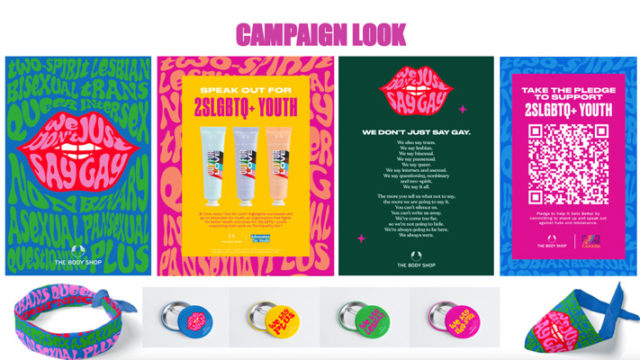
The Body Shop exists “to fight for a fairer, more beautiful world.” As a registered B Corp, The Body Shop balances its financial goals with people and purpose—the brand is built around activism, empowerment of women and girls, sustainability and fair trade. It has roots in a commitment to all living things, with a brand promise to never test or exploit a living being.

In its next step toward being the change it wants to see in the world, The Body Shop designed retail workshop stores that bring its brand and purpose to life: Enter a Body Shop changemaking workshop, and you can try ethically sourced products with natural ingredients packaged in reusable containers. Repeat customers are encouraged to return with their original packaging to a refill station to stock up on their favorite products while reducing waste and participating in a closed-loop, environmentally friendly system. Sustainable fixtures greet customers throughout the store in a small-footprint, environmentally conscious activation.

In addition, the workshop store brings its activist roots to retail through an “Act” area of the store where customers can connect with like-minded activists, discover campaigns for social change and take steps toward making that change.

The Body Shop has leveled up its omnichannel strategy to take their ecommerce platform to an in-store experience that reinforces its brand purpose. This example of experiential retail is successful because it is brand-congruent and integrated: The retail strategy reinforces 46 years of brand heritage.

The workshop stores are designed around experiences that are important to the consumer and do more than sell products. The environment reflects The Body Shop’s values through its design choices, use of space and immersive activities. All of this works in concert to facilitate a brand relationship between The Body Shop and its customers.

https://www.adweek.com/commerce/for-retailers-experiential-brings-all-parts-of-the-brand-together/


The Future of Access at Twitter Is in Jeopardy


.article-native-ad { border-bottom: 1px solid #ddd; margin: 0 45px; padding-bottom: 20px; margin-bottom: 20px; } .article-native-ad svg { color: #ddd; font-size: 34px; margin-top: 10px; } .article-native-ad p { line-height:1.5; padding:0!important; padding-left: 10px!important; } .article-native-ad strong { font-weight:500; color:rgb(46,179,178); }

Which social media strategies are winning long-term loyalty and how can your brand build memorable and shoppable moments in the space? Find out at Social Media Week Europe, 7–9 Nov. in London. Virtual passes also available. Sign up today.

Ever since Elon Musk decided to buy Twitter, accessibility advocates have been preparing for the possibility that the platform’s Accessibility Experience Team would suffer losses. Many were hopeful that someone, literally anyone, with power at Twitter would make a strong enough argument to the new chief twit about the importance of access and save the numerous people who have worked tirelessly for years now to make the platform more accessible for disabled users.

Sadly, all that hope was in vain.

On Friday, Nov. 4, the Accessibility Experience Team, and many others who worked closely on accessibility features for Twitter, were let go as part of mass layoffs that have gutted most of the platform’s global workforce. This is a huge blow for the future of access on Twitter, an area the platform has been making significant progress in.

In 2020, Twitter released a statement promising that it would be making a more dedicated effort when it came to accessibility on the app. The statement was in response to backlash and feedback the platform received from the disabled community after the beta launch of voice tweets proved to be inaccessible for some users.

Before that, the last significant accessibility update Twitter made was in 2016 when it introduced alt text for images, so a lot of people were understandably skeptical that anything on the app would actually change.

Thankfully, Twitter was eager to prove everyone wrong. A few months after its renewed dedication to accessibility, Twitter made it so the ability to write alt text for images was automatically available to all users and not something that needed to be turned on in Settings. In July 2021, captions were added to voice tweets followed by auto-captions for all video uploads in December.

The Twitter Accessibility Experience Team continued to power ahead with new updates in 2022, rolling out the visible alt text badge and a new closed captions button in April. A few months later in September, the highly anticipated alt text reminder was launched globally followed by updated app sounds and updated app icons in October.

All that progress has more than likely come to a screeching halt with the Accessibility Experience Team being forced into unemployment. The @TwitterA11y account was able to post its monthly update on Nov. 1, but it’s unclear how any of those projects will continue without the people who made them possible in the first place.

What is clear, however, is that Twitter’s new leadership does not value its employees, access or the experience of people with disabilities.

If users want to emphasize how important the continued prioritization of accessibility actually is, we need to lean into one of the best parts about Twitter: how easy it makes it to amplify a cause.

Disabled and abled users need to be incessant about their disappointment in the decision to remove the Accessibility Experience Team. Tweet about it, blog about it, devote whole podcast episodes to it. Tag remaining Twitter leadership in every single post and point out how much accessibility impacts the platform.

The World Health Organization estimates that roughly 15% of the global population has some sort of disability, so it stands to reason that a similar percentage of Twitter users are disabled. Members of the disabled community deserve equal access to information just like everyone else online, and abled allies need to back them up.

Accessibility also affects the marketing and advertising industry. Accessible content can result in more leads, better sales, and new customers, all because more people can actually access the information being advertised to them.

Money is already a concern for the bird app, with Musk voicing his desire to turn Twitter back into a profitable platform. If Twitter is truly desperate to bring advertisers back to the platform, prioritizing access could really impact their bottom line.

Advertisers should be demanding that Twitter continue improving its accessibility features or threaten to pull their Twitter budgets. Afterall, there are plenty of other social media platforms where marketers can spend their money.

The future of accessibility—and most areas of diversity equity and inclusion—at Twitter has seemingly been put on the back burner in the name of capitalism, pettiness, and a misguided understanding of free speech. Hopefully, the voices of the remaining Tweeps and Twitter users can help bail out a sinking ship and keep the platform an accessible place for everyone.

https://www.adweek.com/social-marketing/the-future-of-access-at-twitter-is-in-jeopardy/


Learn From Adidas’ Mistake—Act Fast

.article-native-ad { border-bottom: 1px solid #ddd; margin: 0 45px; padding-bottom: 20px; margin-bottom: 20px; } .article-native-ad svg { color: #ddd; font-size: 34px; margin-top: 10px; } .article-native-ad p { line-height:1.5; padding:0!important; padding-left: 10px!important; } .article-native-ad strong { font-weight:500; color:rgb(46,179,178); }

Give our readers an inside look at your brand’s marketing approach by joining the Adweek Columnist Network. If you’re a VP or above, submit your pitch.

Adidas finally announced that it is parting ways with Ye, also known as Kanye West. The pressure had been mounting for weeks for Adidas to act, as Ye continued to use anti-Black and antisemitic hate speech in his social media channels and other outlets.

https://www.adweek.com/brand-marketing/learn-from-adidas-mistake-act-fast/


4 Questions CMOs Should Ask Their Next Agency Partner

.article-native-ad { border-bottom: 1px solid #ddd; margin: 0 45px; padding-bottom: 20px; margin-bottom: 20px; } .article-native-ad svg { color: #ddd; font-size: 34px; margin-top: 10px; } .article-native-ad p { line-height:1.5; padding:0!important; padding-left: 10px!important; } .article-native-ad strong { font-weight:500; color:rgb(46,179,178); }

Hosted by AMA Marketing Hall of Fame inductee Antonio Lucio, the Adweek Home / Work podcast breaks down the good, bad, ugly and extraordinary of balancing life and work. Tune in.

From declining sales to increased competition and consolidation, some of the world’s biggest brands right now are on the hunt for new agency partners.

https://www.adweek.com/agencies/4-questions-cmos-should-ask-their-next-agency-partner/


The Real Difference Between Multicultural and Inclusive Marketing

.article-native-ad { border-bottom: 1px solid #ddd; margin: 0 45px; padding-bottom: 20px; margin-bottom: 20px; } .article-native-ad svg { color: #ddd; font-size: 34px; margin-top: 10px; } .article-native-ad p { line-height:1.5; padding:0!important; padding-left: 10px!important; } .article-native-ad strong { font-weight:500; color:rgb(46,179,178); }

Give our readers an inside look at your brand’s marketing approach by joining the Adweek Columnist Network. If you’re a VP or above, submit your pitch.

The future of marketing is inclusive marketing. A lot of brands still develop “mass” market strategies for the mainstream, but it’s important to note that the general market is now multicultural.

https://www.adweek.com/brand-marketing/the-real-difference-between-multicultural-and-inclusive-marketing/


Mix, Message and Measure to Start Thinking Like a ‘Big Brand’

.article-native-ad { border-bottom: 1px solid #ddd; margin: 0 45px; padding-bottom: 20px; margin-bottom: 20px; } .article-native-ad svg { color: #ddd; font-size: 34px; margin-top: 10px; } .article-native-ad p { line-height:1.5; padding:0!important; padding-left: 10px!important; } .article-native-ad strong { font-weight:500; color:rgb(46,179,178); }

Uncover bold strategies from global marketing leaders at Brandweek Europe, 10 Nov. in London. In-person and virtual passes are available. Register now.

Les Binet and Peter Field pioneered research on the value of a 60-40 spend on brand building versus sales activation messaging. This mix has shown the right balance of driving short-term sales for growing the brand as a whole and can lead to sustained revenue growth and acquisition of new markets while simultaneously keeping a brand from tapping out a single customer base.

https://www.adweek.com/performance-marketing/mix-message-and-measure-to-start-thinking-like-a-big-brand/


5 Lessons B-to-B Marketers Can Learn From an Island Resort

.article-native-ad { border-bottom: 1px solid #ddd; margin: 0 45px; padding-bottom: 20px; margin-bottom: 20px; } .article-native-ad svg { color: #ddd; font-size: 34px; margin-top: 10px; } .article-native-ad p { line-height:1.5; padding:0!important; padding-left: 10px!important; } .article-native-ad strong { font-weight:500; color:rgb(46,179,178); }

Give our readers an inside look at your brand’s marketing approach by joining the Adweek Columnist Network. If you’re a VP or above, submit your pitch.

A secret ingredient to better marketing that I’ve only just rediscovered: a good vacation.

https://www.adweek.com/brand-marketing/5-lessons-b-to-b-marketers-can-learn-from-an-island-resort/