Amazon’s Rufus Is Just the Beginning of AI Shopping


As we saw on Black Friday, Amazon’s AI assistant, Rufus is reshaping consumer behavior. Sessions that led to purchases doubled for Rufus users, compared with only a 20% increase for shoppers who didn’t use it. 

That shift isn’t siloed to Rufus either. Seventy-three percent of consumers use AI assistants to help them shop, 58% use AI for holiday gifts, and 70% are comfortable letting AI complete their transactions, according to an October Riskified survey of 5,400 people.

The future of AI shopping is likely to follow one of three paths, each with very different implications for retailers:

Merchant-led ecosystem: Some companies will keep AI shopping native to their own platforms, blocking external tools. Amazon’s Rufus is the prototype of this approach. This model preserves control over pricing, customer relationships, and brand experience while allowing fraud teams to maintain the behavioral signals they rely on. The trade-off requires significant investment in AI capabilities to remain competitive.

Collaborative ecosystem: Others will embrace partnerships with third-party AI shopping tools using open protocols such as ACP, AP2, and Visa VIC. Retailers retain some control over pricing and brand presentation while benefiting from AI-driven traffic. These frameworks also allow verification of both consumer and AI interactions, sharing intelligence to reduce fraud and disputes. Google’s AP2 announcement in September 2025, backed by Mastercard, American Express, and PayPal, signals that the industry is moving in this direction. Open standards give retailers a seat at the table and prevent full disintermediation.

Decentralized shopping: The most disruptive path is one in which third-party tools like ChatGPT become the primary interface for consumers. Retailers risk being reduced to undifferentiated inventory suppliers competing on price and fulfillment. Autonomous AI can lead to increased disputes, friendly fraud, and chargebacks, particularly when accounts are compromised. A single hijacked profile can execute fraudulent purchases across multiple stores — a scenario we refer to as “Compromised AI-as-a-Service.”

This agentic evolution is transforming the entire commerce funnel. 

Even well-intentioned AI can miss shipping or return policies, generating non-fraud disputes. AI that scans multiple sites for the lowest price can escalate pricing competition. And, with payment security topping consumers’ concerns, retailers can’t afford to be passive.

Fraud is evolving faster than ever, as AI shopping tools can automate credential stuffing, phishing, and mass order execution at scale. Distinguishing between legitimate AI-assisted consumers and malicious activity is also becoming more difficult as traditional identity signals vanish.

Retailers can take steps today to prepare: credential the AI itself, demand transparency from platforms on device and behavioral data, leverage shared intelligence across networks, and actively participate in standard-setting protocols that define liability and secure transactions. 

Amazon’s Rufus shows what is possible today, and the broader AI shopping revolution is only beginning. 

Retailers who prepare for these three trajectories, controlling AI within their own platforms, collaborating with trusted tools, or safeguarding against a decentralized future, will gain efficiency and conversion while minimizing exposure to disputes and fraud. Those who wait risk being left behind or exposed to fraud that moves faster than any human can respond.

https://www.adweek.com/commerce/amazons-rufus-is-just-the-beginning-of-ai-shopping/


Marketing’s Obsession With the 10% Comes at the Expense of the Other 90%

This article is part of ADWEEK’s Marketing Vanguard program and was written in collaboration with one of its members.

When I look at consumer spending patterns in this country, one statistic hits hard: the top 10% of households – those earning $250,000 or more annually—account for nearly half of all consumer spending. This isn’t just a number; it’s a reflection of a system that too often leaves communities on the margins.

This leads to a question that’s both uncomfortable and urgent: As stewards of brand growth, are we feeding the wealth divide?

For decades, marketing has been built to chase the “high-value” consumer. Luxury goods, aspirational brands, and premium services dominate campaigns aimed at affluent audiences. 

It makes sense from a business standpoint. These households have the disposable income to drive revenue now. 

But the consequence is insidious: by consistently prioritizing those at the top, we risk alienating the majority, particularly consumers from communities historically excluded from economic privilege. When everyday brands tier products into “premium” or “value,” it’s not just about choice – it’s about signaling who belongs and who doesn’t.

I see this in my own life, in my family, and in the communities I care about. Marketing decisions subtly shape identity and aspiration. Over time, they define not only what a brand is, but who it is for. If the messaging consistently speaks to wealth, exclusivity, and aspiration unattainable for most, many consumers begin to feel invisible. They’re not just excluded from a product—they’re excluded from the conversation.

But here’s the truth: this isn’t just a social observation—it’s a strategic opportunity. Today, AI and advanced analytics give brands unprecedented precision, but only if the data is representative. 

Skewed datasets favoring affluent consumers drive campaigns that may miss the mark, wasting promotions on audiences for whom they aren’t relevant. Meanwhile, value-seeking consumers may be overlooked, leaving untapped revenue and loyalty. The most innovative brands ask: “Is our data diverse enough to capture the full spectrum of our audience and deliver the right offer to the right consumer?” 

Precision in both targeting and messaging isn’t just ethical, it’s profitable.

Unfortunately, DEI programs have sunsetted in recent months; marketing should not be a place where brands scale back efforts. Simply put – you’re leaving money on the table. Backed by evidence-based tools, industry standards, and common sense, the ANA recently announced its SeeAll Marketing Alliance (SAMA) to help brands unlock new pathways to reach every consumer.

By ignoring the broader consumer base, brands miss opportunities to innovate, to build loyalty, and to remain culturally relevant. Inclusivity in marketing, in product design, and in pricing isn’t just ethical, it’s smart business. Brands that embrace this approach expand their reach and, more importantly, their resonance.

I’ve seen companies that get it – GAP and Dove – that offer both premium and accessible options, celebrate diverse stories, and acknowledge communities long overlooked. These brands aren’t just driving revenue, they’re cultivating a sense of belonging. They’re showing that aspiration and access can coexist, that growth doesn’t require exclusion.

Being intentional about who we market to, how we price, and whose stories we tell doesn’t mean abandoning profit. It means redefining it. Profit today is tied to purpose, cultural resonance, and inclusivity. The brands that thrive will be those that expand the pie, growing revenue and loyalty while creating access and belonging for more consumers.

The wealthiest 10% will always command attention, but the future belongs to brands that grow the market, not just chase spending power. The question isn’t whether we can serve everyone. It’s whether we choose to create a marketplace where all consumers have a seat at the table.

https://www.adweek.com/brand-marketing/marketings-obsession-with-the-10-comes-at-the-expense-of-the-other-90/


Brandweek Threw the Doors Open—and Marketers Stepped Through


“Do not punish your team for suggesting doors that would violate existing doors. Look for opportunities to be collaborative and creative.”

This simple advice from podcaster Jonathan Fields, which he shared in a session at Brandweek last week in Atlanta, was not just a helpful tip for every leader in the room; it was symbolic of the entire three-day event, which felt like a real re-set of the industry’s tone. 

The session, called “Navigating Uncertainty,” was a funny, informative, and deeply human presentation on how to help your team stay optimistic and inventive in difficult times. This was a theme present throughout the conference. 

I was fortunate to speak at Brandweek this year. Usually, my schedule requires me to zoom in and zoom out of events. This year, I intentionally carved off a bit of space to stay, listen, observe, and meet after my session. Something told me that I’d find something worth bringing home here. 

The truth is, I found something pretty rare in our industry these days: unbridled optimism. At the end of Brandweek, I felt not just better prepared for the future; I felt even more excited to greet the coming years with the energy of an innovator’s spirit. 

The shifting sands of AI, consolidation, and cultural uncertainty have left all of us feeling a little jumpy. (That might be the understatement of the year.) But while Brandweek acknowledged those shifts, it made them feel more like doors opening than doors closing. 

I felt creativity in every conversation, every encounter, every talk I attended. It was the best kind of creativity—explosive, curious, the kind that looks at what is, and then, with a mischievous smile, proposes what could be. 

Pumping up ATL

I was surprised to find that one of my favorite sessions was a shameless pump up show for Atlanta. 

Featuring Jason Ippen from Georgia Pacific, Alex Ames from Coca-Cola, Tonya O’Connel from IHG, and moderated by Paul Carpenter of AMA Atlanta, the session focused on the power of Atlanta’s creativity. Here was a panel of four, high-level marketers arguing why the city they loved was well on its way to being the next breakout. 

Why Atlanta Now AMA Atlanta at Brandweek
Ivan Piedra

Their excitement was infectious. They cited the robust local college system that gives Atlanta access to emerging talent. They talked about the tax incentives of shooting in town, which brings Hollywood to their doorstep. They dove into the community of creatives who moved on from Turner to spread their energy and knowledge through the industry. 

Diversity. Drive. Kinship. One of the panelists said, “Creativity requires humanity, and that’s where we have an advantage.”

In front of an audience of hundreds, I saw Atlanta GOING FOR IT. Taking a chance to re-imagine itself as the next creative capital of the world. Doors. Wide. Open.

Doors Open

Elizabeth Banks and her partner, the impressive Marian Leitner-Waldman, discussed identifying a hole in the marketplace—easy, single-serve wine formats—and being rigorous about delivering it with Archer Roose Wines.  

When I saw a movie star argue for things like brand fidelity, velocity over volume, or distributing the product more like a beer, it made me realize anything was possible in 2025’s landscape. Doors open.

Allyson Felix and her brother Wes Felix talked about creating the Pampers Nursery at the 2024 Olympic Games. They asked: What role can the brand credibly play at the Olympics? challenging the company to do something authentic. It felt more like a mantra you’d hear from a career marketing team than two professional athletes. Doors open.

In my session, we discussed the chances we took with our client Brawny to evolve legacy IP for modern times. By re-casting the Brawny Man with an improv actor, we were able to flesh out the character beyond the 2-D and bring him to life in short bursts of social media entertainment. His improv chops help us make chunks of assets in less time, and react to emerging trends with a laugh. Who knew, the Brawny Man is actually adorably funny? Doors open. 

There were even creatives flocking to panels to learn about deep data analytics. That includes me, but I also saw an executive producer and an in-house creative friend of mine observing the same panel. When creatives learn data, who knows what’s possible?  

I left Atlanta reminded that creativity isn’t just what we do—it’s how we move forward. When we choose to open doors instead of guard them, we create space for something extraordinary. We create space for possibility. 

https://www.adweek.com/brand-marketing/brandweek-threw-the-doors-open-and-marketers-stepped-through/


OpenAI Just Flunked Marketing 101


OpenAI’s recent ads for ChatGPT were everywhere—NFL Primetime, streaming platforms, outdoor, and beyond. Press coverage hailed the AI company’s biggest marketing push yet as a new chapter of AI brand building. 

But few pointed out just how incredibly poor the ads were.

Set aside the irony of an AI company relying on traditional media to promote its product. Focus instead on the dire creative quality of the two TV spots, Pull-Up and Dish. 

Research firm System1 tested both ads with a representative panel of U.S. consumers. The results confirm that while AI tech bros continue to kill it with product development, they’re lightyears behind on the rest of the marketing challenge.

Both ranked in the lowest quintile for long-term growth and short-term sales impact. That’s incredibly bad, even for the tech category, which always underperforms. 

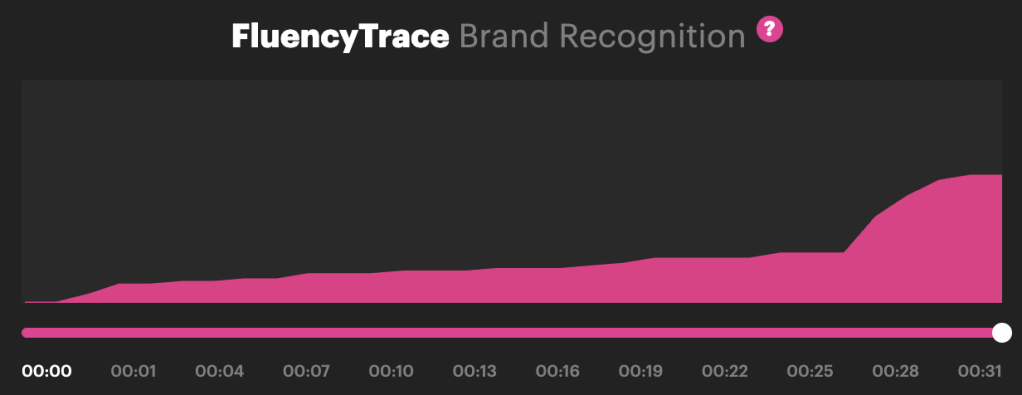
Worse, both scored dismally on fluency—System1’s measure of whether consumers actually know which brand is being advertised to them.

Source: System1 FluencyTrace real time testing of “Pull-Up”
The Pull-Up ad managed a fantastically bad fluency score of 59. That means only 59% of viewers–who were being paid to watch the ad with their full attention–knew what was being advertised. In System1’s real-time assessment above, you can see a black ocean of ignorance engulfing the audience. A disappointingly small hump of pink recognition kicks in two seconds before the end, when ChatGPT’s logo appears. 

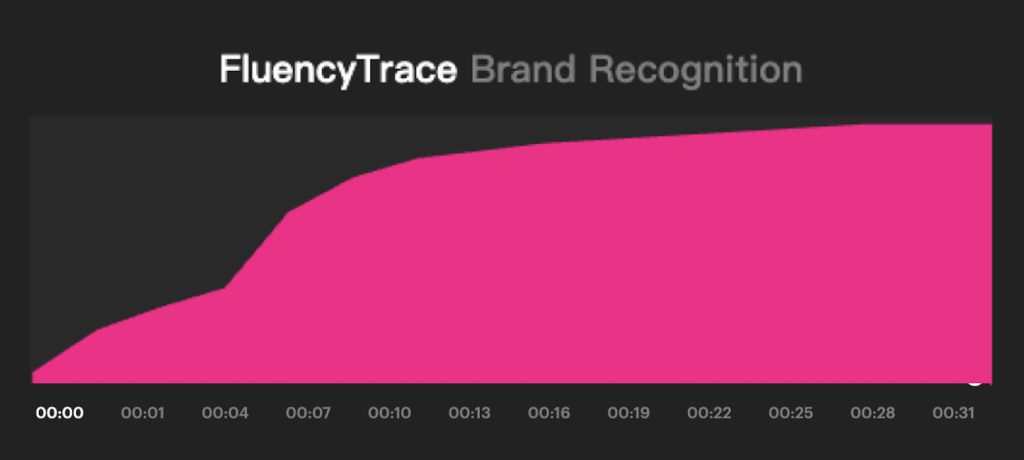
This is the definition of bad advertising, standing in rude contrast to the sea of pink when KFC or Apple or Mars ads are tested.

Source: System1 FluencyTrace real time testing of Twix “Two Bears” Ad

And that’s just real-time fluency, not the tougher and more important metric of branded recall among unpaid, inattentive audiences with a memory-shredding delay before being quizzed. Most studies conclude that just around half of all advertising achieves branded recall. 

Now back to the killer ratio: half of the ads aired in America can’t even communicate what product they are selling.

There’s a simple explanation: Most marketers are too involved in their product. Most agencies are too interested in their storytelling. Both miss market orientation. 

They don’t realize that consumers don’t care about their product, don’t focus on advertising, and have a bazillion more important things to think about. This total lack of involvement contrasts directly with professionals spending eight hours a day fixated on one brand and a thirty-second masterpiece. We make ads in exact inversion to how they’re consumed.

Bad advertisers assume a single whiff of a logo at the end is enough—like a Hitchcock movie revealing its triumphant conclusion in the final frames. Brands with a more advanced grasp of effectiveness know better. They use distinctive assets from the outset to ensure immediate recognition at the start, throughout, and after. They squeeze value from every pixel they paid for.

Andrew Tindall’s “Rule of 7” is instructive here. His analysis of a giant Effie database suggests a brand needs seven distinctive assets in a thirty-second ad to achieve 100% branded recall. Not seven different assets—just seven repetitions of the colors, shapes, and other elements in your asset palette. And no, that doesn’t limit creativity. It challenges it to work harder toward its true purpose: advertising effect and sales.

Achieving branded recall and maintaining distinctiveness is crucial for all brands. But it’s especially critical for AI brands like ChatGPT, which are incredibly generic. They all look the same, operate the same, work off each other, launch innumerable product iterations, and fall blandly into a big, gray AI bucket.

While AI awareness is near-universal among Americans, most people don’t see any difference between AI providers. Menlo Ventures found that “most people don’t distinguish between older assistants like Alexa and Siri and newer large language models like ChatGPT and Claude. It’s all the same.” I don’t know which AI models I’m currently subscribed to. Do you?

Distinctiveness will be crucial in the next chapter of AI. There are too many competing brands. The two or three that survive won’t necessarily carve a differentiated position, but they’ll come to mind first by standing out. The route to that escape starts with making ads that don’t score a 59 for fluency.

Perhaps the geniuses at OpenAI should have asked their own chatbot for advice. When I did exactly that yesterday, ChatGPT—unlike the company behind it—played it perfectly:

Prompt: Assess the new Pull-Up ad from ChatGPT against the laws of advertising effectiveness and score it out of 10.

ChatGPT-5: Pull-Up is strategically on-brief and nicely made, but it underweights distinctive assets and mid-ad branding, so it risks becoming a likeable, generic “AI-helped me” story rather than a memorable ChatGPT ad that builds future sales.

Score: 5/10

Mark Ritson is a former marketing professor, brand consultant and award winning columnist. He is the founder of the MiniMBA in Marketing, which teaches all the many laws of advertising effectiveness as part of its outstanding syllabus. 

https://www.adweek.com/brand-marketing/openai-just-flunked-marketing-101/


Columbia Sportswear’s ‘Unhinged’ Ad Is a Breath of Fresh Mountain Air


Columbia Sportswear’s latest campaign, “Engineered for Whatever,” feels like a breath of fresh mountain air—the kind that slaps you in the face mid-adventure and reminds you you’re alive (and maybe slightly underdressed).

It’s a bold new platform that doesn’t just showcase product performance; it wraps it in the brand’s signature irreverence and chaotic charm.

The work, created by adam&eveDDB, is weird. Delightfully over the top. Equal parts absurd and effective. And that’s what makes it stick. In a sea of outdoor brands earnestly whispering about peak performance and rugged resilience, Columbia is shouting from the mountaintops—in a snowstorm, with a goat, wearing a jacket that may or may not have been tested in space.

And it works.

This campaign is a cheeky callback to the brand’s maverick DNA, the days of “Tough Mother” grit and humor that set Columbia apart in the ’80s and ’90s. There’s something nostalgic here, but it’s not stuck in the past. It feels like a confident evolution: smartly engineered products paired with storytelling that doesn’t take itself too seriously.

The durability demos are ridiculous in the best way—part product proof, part fever dream. While it’s chaotic, there’s precision in the madness. The humor never undercuts the gear’s credibility; it enhances it. You believe this stuff can take a beating—and you’re entertained while finding out.

Visually and tonally, the campaign is refreshingly unpolished, a curated mess that feels purposeful, not precious. It’s confident. It’s fun. And it doesn’t try to be cool in the usual outdoorsy way, which somehow makes it even cooler.

In a category often stuck in stoic, sepia-toned sameness, Columbia is carving out its own weird, wonderful trail. “Engineered for Whatever” is more than a tagline—it’s a mission statement with a wink.

I give it a solid 4 out of 5 and can’t wait to see where they take it next. Hopefully somewhere unexpected and slightly unhinged.

https://www.adweek.com/creativity/columbia-sportswears-unhinged-ad-is-a-breath-of-fresh-mountain-air/


With Celebrity Campaigns, Risk Management Matters More Than Reach‬


Outrage spreads faster than joy‬‭. So it makes sense‬‭ that we’ve seen a recent uptick in‬ celebrity-driven campaigns generating not just attention, but firestorms.

Sometimes the‬ outrage is deliberate. Sometimes it’s collateral damage. Either way, one outcome is the same:‬ free reach, fueled by algorithms that reward high-arousal emotion.‬

‭The rage-bait playbook is simple: Elicit a strong emotional reaction, watch comments and‬ stitches flood in, and enjoy millions of impressions … for better or worse.‬

Many brands hope that controversy will be good for business. But outrage is a dangerous‬ currency. Sometimes it pays off. Sometimes it doesn’t.‬

‭Why rage travels faster‬

‭Behavioral science tells us‬‭ humans are wired to notice‬‭ threats more than rewards‬‭. Anger sticks‬ because it keeps us scrolling, sharing, and reacting.‬‭

Platform algorithms are built to reward‬‭ that‬ engagement, so outrage gets amplified by design. So many examples, even just in the last few‬ weeks, have shown that outrage often spills into mainstream media.‬

‭Risk management > provocation‬

‭This isn’t about condoning or condemning rage bait. The reality is that the key to any campaign‬ flirting with controversy is risk management. Brands must weigh the positives against the‬ negatives and scenario-plan for the potential upside, the potential fallout, and the fire you’re‬ willing to stand in.‬

‭In any campaign that has a celebrity collaboration or component, the stakes are always higher.‬ A famous face magnifies both the reach and the risk. As someone who has led brand and‬ celebrity collaborations with hundreds of brands in the past, it’s been fascinating to watch how‬ others’ brand collaborations have played out: Some collabs fueled by outrage delivered‬ a short-term bump. Others caused damage that will take longer to repair.‬

‭While outrage can be unpredictable, what you‬‭ can‬‭ control is the rigor you apply before launch to‬ manage the risk to your brand. For any brand looking to identify the risk and potential reward for‬ a celebrity collaboration, it’s imperative to follow a framework I call the Rage-Bait Risk Assessment Checklist.

There are six‬ things you should consider before partnering with a celebrity or influencer.

‭Match your fan base to your brand base‬

‭Does this celebrity’s following align with your core audience? If a star is embraced by the same‬ communities you’re trying to reach, the partnership will feel natural. If not, it risks looking forced‬—or worse, alienating—and you’ll spark more division than resonance.‬

‭Stress-test the message‬

‭Celebrity partnerships don’t exist in a vacuum. The talent’s persona will shape how your copy,‬ visuals, and slogans are received.

A line that feels clever in a script can take on a different‬ meaning once attached to a particular face. And in a world where campaigns are clipped and‬ memed in seconds, you need to know whether the punchline, or the backlash, will land on the‬ brand or the star.‬

‭Read the cultural room‬

‭Every celebrity carries cultural baggage into the spotlight. Past roles, public stances, or political‬ associations can all color how audiences interpret a campaign.

Sometimes that baggage works‬ in your favor and deepens the story. But misalignment, or a failure to anticipate sensitivities, can‬ quickly turn a brand moment into a cultural flashpoint.‬

‭Pick the partner you can stand behind‬

‭The best partnerships feel inevitable and authentic, not opportunistic. If a celebrity doesn’t fit‬ your brand values, your customers will notice immediately.

Ask whether loyal buyers would nod‬ in recognition or scratch their heads. And if controversy hits, could you credibly defend why this‬ was the right partner at the right time?‬

‭Put the ledger on the table‬

‭Every talent deal comes with a ledger: upside versus downside. On the plus side, a celebrity‬ can deliver reach, sales, and earned media buzz. On the flip side, a misstep could mean‬ boycotts, lost partnerships, or lasting reputational damage.

Before signing, decide whether the‬ payoff is worth staking your brand name on theirs.‬

‭Look beyond the initial buzz‬

Does this collaboration create a platform you can build on, or will it fizzle after a week? A‬ sustainable partnership keeps elevating your brand long after the first post goes live. If you’ll‬ spend more time managing fallout than building momentum, it’s not worth the investment.‬

‭Celebrity partnerships can’t be judged on reach alone. What matters is seeing the full picture:‬ the rewards, the risks, and the potential blind spots. Outrage may drive attention, but‬ preparedness is what will protect your brand.‬

https://www.adweek.com/brand-marketing/with-celebrity-campaigns-risk-management-matters-more-than-reach/


Becoming CEO at 6 Months Pregnant: Rethinking Leadership, Culture, and Care


A month or so ago, I was asked to take on the role of CEO at SMG, a global retail media specialist with offices in the U.K. and the U.S. Somewhat unusually, I was six months pregnant at the time.

The reactions have been fascinating: congratulations, followed by congratulations again. There’s normally an accompanying smile that’s a combination of shock and curiosity, along with a sense that this combination of events, or certainly this timing, isn’t something people are used to seeing.

It’s not unusual because it’s unworkable. It’s unusual because, structurally and culturally, we’ve made it so.

I’ve been with SMG for a long time, through different chapters and roles, from commercial and client leadership to operations and strategy. I’ve been part of this company as it has grown from a challenger into an established retail media specialist. I’ve taken maternity leave here before, and I’ve returned, as has our chief people officer, who is currently eight months pregnant, too. I’ve seen plenty of people progress into bigger roles before, during, or after parental leave. This isn’t treated as an exception, but as part of how we’ve built our culture at SMG. It doesn’t make headlines internally because it’s just how things work here.

That kind of long-term thinking around talent, and particularly female talent, is still far too rare. Across much of the advertising industry, there remains a deeply embedded caution when it comes to progression and parenthood. It’s rarely explicit (in my experience, those days are, thankfully, mostly gone), but it surfaces subtly in the way conversations get delayed, responsibilities softened, and decisions deferred. The logic seems to be that people who are temporarily less available might also be permanently less ambitious. That assumption, however, is just that: an assumption.

The talent we risk losing in these moments is often exactly the talent businesses say they want more of—strategic, committed, experienced, resilient. I’ve seen many times, from watching people in my team, that pregnancy doesn’t diminish leadership potential. In many ways, it cements it.

Still, I recognize how uncommon it is to see pregnant leaders in visible positions. More often, it’s something quietly managed or entirely hidden. When you don’t see it, it’s easy to internalize the idea that these two identities—CEO and mother, or mother-to-be—are somehow incompatible. There’s a notion that still exists: If you’re one, you can’t fully be the other.

That perception is part of a broader story we continue to tell ourselves about what leadership looks like. For decades, the image of a CEO has been shaped by a fairly rigid set of expectations: constant availability, full-time visibility, relentless drive, total independence. The classic archetype is someone who’s always on the move, always in control, often male, and rarely encumbered by visible caregiving responsibilities. It’s a version of leadership built around stamina and individualism, and for a long time, it went largely unchallenged.

The world, however, has changed. What businesses need from leadership today is very different from what they needed 20 years ago. The pace of change, the complexity of the operating environment, the growing focus on culture, inclusion, sustainability, and adaptability—all of these demand something broader and more human. Leadership today needs range, empathy, clarity, and the ability to build strong teams that can lead together. The idea that any one person should embody an entire organization is not just outdated, it’s short-sighted and counterproductive.

The version of the CEO role I’m stepping into is different, both by necessity and by choice. It is shared, for one thing. I’m taking on this position during a time of transition, supported by strong leaders across the business who bring different perspectives, styles, and specialisms. It is more focused than all-consuming, and built on trust, not presence. It’s also designed to continue running well when I step away temporarily—which, to me, is a sign of strength in a company’s leadership, not weakness.

That doesn’t mean it’s easy. It takes conscious effort to unpick long-held beliefs about how things “should” be done, including some that I’ve held myself. It also takes systems that are genuinely flexible, not just on paper. It requires a workplace culture that values what people contribute and the impact they have above all else. At SMG, we don’t always get it perfectly right, but we do try to design roles with an awareness that our team have important lives outside of work. That matters more than ever in an industry that constantly pushes for more, faster, bigger.

The systems outside of work—the ones that are meant to support working parents—still don’t. In the U.S., childcare is now the biggest expense for many families, often exceeding the cost of housing. At the same time, the U.S. remains the only high-income country without a national paid parental leave policy. There’s no structural incentive for businesses to make space for care. So if leadership roles feel inaccessible, it’s not because women lack confidence, ambition, or capability. It’s because the infrastructure too often lacks the necessary development or investment.

In that context, appointments like mine might feel symbolic. But they shouldn’t be. They should be normal. They should follow open conversations, long-term career planning, and a recognition that leadership potential doesn’t vanish when someone becomes pregnant.

I don’t know if I’d have predicted this moment—stepping into a bigger job while preparing to step out of the business for something personal. What I do know is that the timing doesn’t undermine the role, just as the role doesn’t define the leader.

There’s still progress to be made, both in the advertising industry and across society. The more we see leaders who reflect the full reality of modern life, the closer we get to building companies and cultures that reflect the future we want.

https://www.adweek.com/agencies/becoming-ceo-at-6-months-pregnant/


Tongue-in-Cheek or Tone-Deaf? What We Can Learn From American Eagle and Dunkin’s Latest Ads


When I first saw American Eagle’s campaign with Sydney Sweeney, I couldn’t help but pause—not because the wordplay missed the mark, but because the context did.

Tongue-in-cheek is a style of humor rooted in sarcasm and irony. It’s playful by design. But it works best when the tone, the brand, and the talent delivering it are all aligned. Without that alignment, clever quickly turns into cringe.

Had this campaign featured someone known for comedy, it might have landed better—not perfectly, but perhaps with more grace. Comedians come with context: Audiences expect irreverence; they understand the wink. But Sweeney isn’t a comic. And American Eagle isn’t a brand known for subversive humor. So the joke doesn’t land with a laugh. It lands with confusion.

This isn’t about perfection, it’s about perception. And it isn’t just about American Eagle, either.

Take Dunkin’s recent campaign featuring Gavin Casalegno from The Summer I Turned Pretty. In the spot, he calls himself “The King of Summer” and says his tan is “genetic,” adding that “the sun just finds me” every time he drinks a Golden Hour Refresher. The line was likely meant as a tie-in to his show, but without the reference point, and in a cultural climate that’s hyperaware of coded language, it raises concerns. When people are fighting for belonging in every space from the boardroom to the border, messages that hint at superiority (even jokingly) can trigger deeper questions: Who gets to be seen? Who’s considered beautiful? Who’s the default?

In a time when humor can either humanize a brand or tank its reputation, marketers are stuck in the tension between wit and risk. And that pressure is real. Wendy’s has mastered that balance with its Twitter presence, a lesson in sustained sarcasm: The brand roasts competitors, replies with memes, and engages in fast-food flame wars, and it works not just because it’s funny, but because the brand has committed to that voice long term.

Today’s audience is paying attention not just to what is said, but who’s saying it, how it’s said, and whether they’re in on the joke. Shifting attitudes around beauty, race, and representation have made it clear: People want to feel seen, valued, and respected. And brands that miss that memo can quickly find themselves on the wrong side of the scroll.

This isn’t about cancel culture, it’s about consequence culture. Missteps don’t always come from malice, but they often come from a lack of perspective. And when a brand finds itself at the center of controversy, it typically faces a few options: issue an apology or acknowledgment, pull the campaign, stay silent, or double down.

So why did American Eagle stay the course?

Why brands double down

While the backlash and online discourse continued—maybe more than some expected or would have liked—American Eagle made its choice and doubled down. I believe they did so because the perceived reward of buzz, visibility, and lift in stock outweighed the short-term backlash. A week or two of controversy can feel like a worthwhile trade-off if it keeps people talking.

But more than that, I think American Eagle just doesn’t care about appeasing everyone. And that’s a shift worth paying attention to.

For years, brands have felt pressure to issue carefully worded statements, launch DEI initiatives, or rework campaigns to show cultural awareness. But now, we’re entering a new phase, one where wokeness is being openly politicized, weaponized, and spun into backlash marketing. The old model of “saying the right thing to keep everyone happy” no longer applies. In fact, trying to be everything to everyone is starting to feel off-brand.

We may be witnessing the rise of a new brand posture: Let people criticize. Let people be mad. Let people shop anyway.

It’s the marketing application of Mel Robbins’ Let Them theory. Let them misunderstand, let them talk—if the jeans fit, wear them. If they don’t, there are other brands.

That’s not to say AE is taking a moral stance here, but they are making a strategic one. One that feels anchored less in apology and more in identity. Think of it like Chick-fil-A choosing to close on Sundays: The decision comes with consequences. Some people protest. Others respect the consistency. But either way, the brand stands firm. That posture, whether spiritual, political, or just deeply on-brand, is becoming more common.

Which raises an even bigger question: Is this a brand misstep, or is it the beginning of a new tone? What if American Eagle isn’t reacting impulsively but repositioning intentionally? What if this isn’t just a cheeky campaign but a signal of a new creative direction? 

Brands evolve. And every evolution has a launch moment. Maybe this one just happened to start with a pun.

Any change is uncomfortable at first. Three months from now, we might look back and say AE was ahead of the curve—testing a sharper voice, a different tone, a new kind of cultural calculus. That’s why it’s critical, especially now, for marketers to take steps before launching any culturally resonant campaign.

Build a cultural council

Create a collective of people—those who reflect your target audience and those who don’t—to provide insight throughout the process. Internally, that might be a representative from an ERG or someone from an adjacent department not directly tied to the campaign. The key isn’t just to ask what people like, but to ask how people feel.

Most importantly, there must be space for open, unfiltered feedback. You need people in the room who can raise a hand and say, “This might be a problem,” before it becomes one.

Test early, internally and externally

Don’t wait to test your work until after the final cut. Put your creative in front of people who don’t look, live, or think like your team, and do it early in the process. If it doesn’t land there, it won’t land anywhere. If something feels off or needs adjustment, you still have the time and the budget to pivot with intention rather than scramble under pressure.

Don’t just ask “Is this witty?” Ask, “Is this clear? Is this safe? Could this offend?” If you’re not sure, ask H&M how its “Coolest Monkey in the Jungle” sweatshirt turned out. It wasn’t intentional, but it was avoidable.

Good marketing isn’t just about being clever. It’s about being aware. In a culture where every campaign is a conversation, your brand’s tone isn’t just what you say—it’s how you’re heard. So, if you’re planning to play it cheeky, be sure your audience is in on the joke. After all, maybe American Eagle really does just have good genes … I mean jeans.

https://www.adweek.com/brand-marketing/tongue-in-cheek-tone-deaf-american-eagle-dunkin-latest-ads/


American Eagle’s Campaign Is a Story of Ill-Fitting Insights in Today’s Retail Market


Yes, this Sydney Sweeney x American Eagle campaign is blowing up across media and social media, snagging headlines left and right. Clearly, they didn’t sufficiently test the copy (among other things), and yet their stock price has surged despite the scandal. Which is going to lead some folks to claim all PR is good PR…

That’s a hard no. 

I can tell you definitively that is never the case, and there will be tangible fallout for AE as a brand. Media attention—even if for the wrong reasons—certainly gets your name out there, but negative debate damages the thing that matters most: positive name recognition.

And while critics will point to the eugenics side of things as the “issue” at play—and don’t get me wrong, it’s a real issue—the whole campaign itself is flawed. No, they didn’t run the copy by the right audiences. They clearly didn’t have a solid (read: diverse) mix of talent in the room when steering the campaign, because how did no one point to the “my genes are blue” bit and the association to Aryanism in this climate?! Or perhaps they didn’t think it’d be a dealbreaker. Either way, it’s poor judgment, or lack thereof, as is often the case in a “campaign-gone-bad” situation. Kendall x Pepsi, anyone?

I think about branding all day long on behalf of my clients, obsessing over the efforts that move the needle and those that miss the mark. Countless hours spent dialoguing around when a brand or their campaign doesn’t go far enough to create, deepen, or prove connection to consumers, and of course the opportunity therein to do better, more, different. So, I can tell you with a degree of confidence that fallout will happen—and soon. Expect a slew of influencer videos speaking their minds or saying they’ll be avoiding AE. And expect female consumers to respond with their wallets in direct accordance with how they feel.

But back to the campaign itself. Let’s be real: Sexy celeb sporting denim is somewhat tired. It’s been done since the ’80s when Brooke Shields first donned her Calvin Kleins (who can forget “Nothing comes between me and my Calvins”?) and the ’90s with those now iconic Levi’s 501 spots starring Cindy Crawford.

I’d be remiss if I didn’t point to the fact that this Sweeney campaign was in fact “inspired” by a Shields spot where the latter discusses genetics and “survival of the fittest” while squeezing into some denim. But that was 45 years ago. Cultural context has changed in terms of how we talk about diversity as well as our bodies—significantly. Read the room.

We’ve moved past all that—or at least I thought we had. Even AE as a brand helped us move past all that, pulling a move out of Dove’s “Real Beauty” playbook by launching their #aeriereal campaign in 2014 to highlight body diversity coupled with body positivity. Crawford’s recent return to denim for Re/Done and Good American were designed to show that sexy can be ageless

Meanwhile, Sweeney playfully talks to an unseen (presumably male) cameraman in her spots, making comments like “Hey, eyes up here,” when the camera zooms in on her breasts. The trajectory feels like we’re headed backwards.

As a spokesperson, Sweeney’s both “male-focused” and controversial when you consider her two recent campaigns for Dr. Squatch and another for Hey Dude. She’s tapped to secure the male gaze, obviously, but how does that sell denim to women? How will women respond? Female consumers are the people AE should be concerned about, not the men who might ogle her.

Sexed-up models don’t sell well to today’s woman. We want to see real bodies mirrored back at us. We love when a celeb embraces her flaws (we’re looking at you, Ashley Judd) or openly goes no makeup at major events (gorgeous move, Alicia Keys). We love—I kid you not, love—intentional vulnerability. 

Edelman’s Trust Barometer has shown time and again that women want to feel seen, heard, respected, and reflected by the brands they choose to do business with, stating that “81% of women buy based on brand trust.” SeeHer, an initiative from the ANA, found that “29% of women in ads are inaccurately portrayed through some form of stereotyping, objectification, or diminished character.” And here’s one more: Two-thirds of women would “skip ads if they felt that they were negatively stereotyping women,” according to Kantar.

The data is crystal clear. Which is why the focus on Sweeney’s breasts and her sex symbol status feels like an odd play for a brand which arguably has been trying to market to “real women” for a decade-plus. The seemingly all-out shift in brand direction doesn’t make sense.

AE told Adweek that “Sydney is someone Gen Z can relate to,” hence their choice, but my Gen Z colleagues offered something far more nuanced. They’ve told me—full stop—that these spots don’t resonate with them; said it pisses them off that women like Sweeney have been repackaged into the same blue-eyed blonde bombshell their mothers were told men wanted. Interesting, considering that Edelman research reveals that spokespersons need to be relatable more than they need to be popular, with relatability nearly twice as important as “popularity as a quality that attracts people to influencers.”

So, what’s next? How does AE move forward? For one, don’t just roll back the campaign. Own the mistake, accept the blame. That’s the best PR move you could make, hands down … and it’s not (yet) happening. The brand’s marketing team has discontinued comments on their LinkedIn posts, but discourse will happen regardless, and it’s far better to participate than have it unfold around you.

Instead, solicit input from your consumer base—ask them what they want, then respond in kind. Maybe even revamp and reinvest in your #aeriereal campaign, hint hint.

It deserves mentioning that the brand’s CMO, Craig Brommers, called the actress “one of the biggest gets in American Eagle history,” before adding that he was hoping to see significant gains against the investment.

And he did—at first. That stock jump’s surely been thrilling, up just shy of 16% between the campaign’s air date and July 29. This (speculative) upturn follows a drop of 40% in the first six months of the year (32.7% year-to-date as of July 29).

But that can change, and quarterly sales reports might well tell a different tale. It’ll be a hard lesson learned, of course, and a healthy reminder that brands should obsess over what their consumers want, expect, and need; they must consider the messaging they’re putting out into the world.

Brands are accountable to us—to all consumers. And we will hold them as such.

https://www.adweek.com/brand-marketing/sydney-sweeney-american-eagle-ill-fitting-insights/


Astronomer’s Response Is How You Win the Internet Without Losing the Brand


The saying that all publicity is good publicity isn’t always true, and yet there’s a whole slew of professionals out there seeking to make it their cause. 

After all, visibility is a high-stakes game. You can play and you can absolutely lose. And when your CEO is caught in a massive scandal of the extramarital variety and becomes arguably the most viral moment of the year thus far, what do you do? What are your options, when is the right time to act, and what are the inherent risks?

Everyone’s seen the Coldplay kiss cam video by now—seen the proliferation of memes, the offcolor comments, even that image with LinkedIn’s signature “open to work branding” slapped on top. Poignant yes, and also pointed.

And by now, most have also seen the video response where Astronomer’s “temporary spokesperson” Gwyneth Paltrow coolly states, “I’ve been hired on a very temporary basis to speak on behalf of the 300-plus employees at Astronomer,” before playfully referencing a recent surge in the company’s notoriety.

A brilliant move. Seriously, the marketer in me applauds the marketer in whoever pulled that off—because that original kiss cam clip clocked a whole lot of views, sparked commentary across platforms, and turned Astronomer—a B2B data automation company—into an unlikely name on everyone’s For You Page. In less than 24 hours, the company went from being known only in certain circles to being the most talked about business in the world. 

What do you do with that? How do you flip the script from being the laughing stock to laughing alongside. Because the way I see it, the real story isn’t the memes. It’s the company’s strategically executed response.

As a brand, you only have a few options at a time like this. You can either stay silent, let the attention die out, wait for the next viral moment to consume the news cycle, and move on. Or you can capitalize on the attention and shift things toward your own narrative. 

Now let’s get real: None of this was planned. The discourse around Astronomer came fast, loud, and personal. Most brands in that position would’ve chosen silence. Or even worse, a formal statement that would further cement the company as the butt of the joke. Astronomer (or whomever they signed on to manage this crisis) read the room and flipped it.

They didn’t deny what was already out there. They didn’t try to control the story. They leaned in with an appropriately light tone and redirected the attention back to the brand, an important distinction at a time where other social accounts, including big corporations, were making memes about individuals whose real lives were affected. 

Astronomer took the individuals out of the narrative, and consequently, took back control. What we saw wasn’t a stunt. It was a smart, self-aware response to an unplanned spike in visibility. In fact, it was the highest brand search interest Astronomer has ever seen.

They used that moment to reclaim ownership over how their company was being talked about. By casting Paltrow, the ex-wife of the Coldplay frontman, as their “temporary spokesperson,” they nodded to the cultural context and internet chatter while shifting the spotlight back to themselves. Not the drama. Not the people. The business. It deserves mentioning that Paltrow has a mind for business too.

That distinction matters, and again, she was the absolute perfect choice.

We’ve seen too many brands jump at viral moments without reading the room, inserting themselves into conversations they don’t belong in, only to get hit with “silence, brand” replies. The best move isn’t always participation. In fact, sometimes the best approach is to not engage with this moment at all. But jumping on a viral moment that is trending versus jumping a viral moment centered around you are two completely different things. 

Astronomer’s situation was the latter. They were already at the center of the storm, all eyes on the brand. Instead of doubling down on defensiveness or disappearing, they changed the energy.

They acknowledged the meme, redirected the narrative, and reclaimed their moment in culture—all while handling it with a tone that was entertaining, product-centric, and most importantly, not personal.

While the stunt was executed by Maximum Effort, a shop known for big swings and even bigger celebrity connections, a response like Astronomer’s only works when marketing and company leadership has the structure move quickly, act with judgment, and lead the response. It’s what it looks like when a company has the backbone to trust that team and the clarity to know the difference between a joke and a reputational risk.

Because when the internet shows up—whether by scandal, stunt, or stroke of luck—your response is the campaign.

https://www.adweek.com/brand-marketing/gwyneth-paltrow-astronomer-response-win-internet-without-losing-brand/