What We Can Learn from the Mistakes Made in 2020


Like all industries, the agency world was not left unscathed by the catastrophic year 2020.  Agencies big and small had to learn how to serve their clients, pitch new business and create engaging new work, all from the comfort of their homes.  Not an easy task, to be sure, but most of them figured it out, and in the process learned much about themselves and their clients.

But as I look back on 2020, perhaps the most valuable lessons learned stemmed from agencies that found themselves in hot water when their leaders got into serious trouble. The list was distressingly long:  JWT, Droga5, The Martin Agency, Mindshare, Ogilvy, BBDO and The Richards Group.

What can be learned from the mistakes these agency executives made? What explains how such otherwise smart, successful leaders could exhibit such abuse of power, poor judgement, and what-were-you-thinking disregard for colleagues? 

The answer, in part, lies in an oversupply of arrogance, entitlement, and narcissism from people who feel they are impervious to criticism and indispensable to the marketplace. Ultimately, a short supply of basic values like humility, empathy, integrity and a moral compass has brought the industry to this moment of reckoning. 

Yes, leadership can be a challenging, frustrating, and stressful undertaking.  But it can also be highly rewarding both personally and financially. It’s an honor and privilege that should never be taken for granted. Yet, too often, it is.
Over the course of my advertising career, I’ve been lucky to work for some great leaders. Men and women. I’ve also been fortunate to work for some not-so-great leaders. Men and women. I say fortunate because they taught me how not to behave.

Here are some observations, thoughts, and lessons learned from being in positions of agency leadership for over 25 years. Some are obvious. Others paradoxical. But that’s life. All of them can help us avoid the mistakes made in 2020 and help us do better in 2021.

  1. The essential qualities of good leaders can’t be taught. They don’t need sensitivity training in order to accept and believe in the values of  inclusion, equality and diversity. Genuine caring, generosity, and honesty are basic, inherent, and authentic qualities of good leaders who, in turn, create inclusive and diverse cultures.
  1. Good leaders appreciate and enjoy the complexities of human nature. People are emotional, unpredictable, irrational, complex, and contradictory. We behave in ways that are counterintuitive and paradoxical. That’s because we’re human. Making it all work isn’t part of the job. It is the job.
  1. As the great philosopher Yogi Berra said, “You can observe a lot by just watching.” Good leaders hear a lot by just listening. They’re confident enough to know they don’t have all the answers. They listen to the smart people and grok the difference between making decisions and choosing them. They believe in leadership expert Ken Blanchard’s principle that “None of us is as smart as all of us.”
  1. Leaders value complainers, critics and gadflies who want to make things better. Richard Farson writes in his enlightening book Management of the Absurd: Paradoxes in Leadership, “Often the people who complain the loudest have the best insights into how to fix problems.” So, let them. 
  1. Leadership may start at the top but too often it stops there. Good leaders empower, encourage, and enable others to take the lead. They find talent who are self-motivated passionate, innovative, and collaborative. Too often, we celebrate the myth of the lone hero; the star who single-handedly achieves greatness. But advertising is a team sport. Warren Bennis writes in Organizing Genius, “Great groups and great leaders create each other.” 

Steve Landsberg is Co-Founder, Creative, of ad agency Human Intelligence

https://www.adweek.com/agencies/what-we-can-learn-from-the-mistakes-made-in-2020/



Where Taco Bell’s Potato CEO Failed

Taco Bell CEO Mark King, as a talking potato, was clear and candid in explaining why potatoes had been removed from the lineup in the first place.

His video, complete with filter, had a very fun young vibe to it. It even featured popular sound effects like the DJ airhorn and a chime that played when King offered the audience a cheeky wink.

However, one thing that was noticeably missing from Taco Bell’s announcement on the potato comeback was captioning. Neither closed nor open captions were used in the final video. Some users were quick to point out that this wasn’t just a marketing fail—it’s a widely recognized fact that 85% of videos on the internet are watched with sound off—but an accessibility fail as well.

According to the World Health Organization (WHO), roughly 466 million people around the world are deaf or hard of hearing. Captioning is a necessity to these individuals when it comes to consuming videos, and forgetting to add subtitles is akin to forgetting a significant portion of your audience.

Closed or open

There are two options for captions, open or closed. Open captions are burned directly onto a video in post-production and cannot be turned off by a viewer. Closed captions, sometimes called subtitles, can be toggled on and off and are commonly seen on YouTube, Vimeo and most streaming services.

In regards to captions for social media, some platforms have made the leap to auto-captioning like Facebook did with its Facebook Live feature and Instagram with videos uploaded to IGTV. YouTube even makes it easy to close caption videos directly in YouTube Studio, and there are plenty of mobile apps out there for open captioning like MixCaptions and AutoCap.

Unfortunately, even with all of the above, there’s still a long way to go before social media is fully accessible for users who have disabling hearing loss, and that’s something that needs to be recognized by everyone at brands and organizations, not just the digital team.

Brand leaders take on more active roles

It’s certainly been fun to see some brand leadership taking on more active roles when it comes to engaging with their audience like King did for this video or when Ocean Spray president and CEO Tom Hayes hopped on the TikTok bandwagon. Now they need to take it a step further and start being more aware of how their audience is—or in this case, isn’t—consuming that content they’re so excited to share.

The lack of captions on the Taco Bell announcement should not be marked as a failure that solely belongs to the social media team. In fact, the social media team shouldn’t even be responsible for the creation of captions. In an ideal world, captions would have been implemented by the production team, delivered with the video to the social media team for posting, and, most importantly, expected by the C-suite.

Digital accessibility should be a priority for everyone involved in the marketing process, no matter where they sit on the company org chart. Being conscious of how inclusive your content is means better marketing and a better overall experience for your entire audience.

https://www.adweek.com/brand-marketing/what-was-missing-in-taco-bells-potato-gate/


Burger King and General Motors Kick Off 2021 With Armchair Designer Debates

This year’s logo discourse kicked off with Burger King and General Motors taking center stage. #DesignTwitter quickly endorsed Burger King’s decision to revive and refresh the mark that headed its 1969–1999 identity before the shiny bun logo came into play. The logo’s appetizing warmth and the nostalgic psychedelia of its accompanying typeface are the antithesis of “reblanding,” a popularly-criticized design trend that’s perhaps most famously associated with high-end fashion houses.

The likes of Burberry, Berluti and Balmain have shed their serif skins in recent years, favoring sharper geometric wordmarks—the kind armchair designers like to say they could make in Microsoft Word in a couple of minutes. Burger King and Saint Laurent Paris both revived decades-old marks for a time in which logos often play second fiddle to every other element of a brand’s identity.

The court of public opinion was doubly aghast when another fashion brand, Yves Saint Laurent, dropped Yves from its nomenclature after ditching its vaguely calligraphic logo and went all-in on Helvetica. How dare “Saint Laurent,” as it’s now called, toss away all of that visual history? In 1966, five years after the iconic “YSL” monogram was first drawn, the mark adorned Yves’ first boutique. The signage above the door actually said “Saint Laurent”—in Helvetica, no less. Also, the “YSL” monogram wasn’t completely abandoned; it’s still regularly used today. Anyone who said they preferred the “fancy” YSL mark for its historic relevance did so with the energy of a man opining that fashion models should smile more.

You’ll seldom see logos pasted on blank backgrounds. That’s a fact General Motors overlooked. The thumbnail for the Burger King story showcases the logo, typography, colors, illustrations and more, all in one image. A General Motors story? Just the logo.

Burger King published a press release with its rebrand, but you don’t need to read it to appreciate the new direction; visuals handed to the press included photos of new uniforms, packaging, signage and more real-world placements.

General Motors offered the logo on a white background, plus some samples of a custom typeface, a print ad—which doesn’t even use the custom typeface—and an animation of the old logo transforming into the new one (big “Fibonacci spiral on random things” energy). You’ll likely have to read the linear notes to know the logo is intended to mirror GM’s honed focus on electric vehicles. The negative space of the ‘m’ is supposed to be a plug, which is unfortunate, because plugs are different in every country.

In the cold absence of recognizable imagery, real-world showcases, and cool global CMOs, what else could the court of public opinion focus on other than the cheap gradient and haunting bevels? Had the logo been revealed with more confidence, negative reactions might have been dampened.

Of course, Saint Laurent Paris is still here, and General Motors likely isn’t going anywhere. Rebrands rarely break a business, but they’re marketable butterfly effect moments which can help save aging companies—even if they sometimes end up inadvertently looking like elephants.

Jeeves Williams is a freelance designer, writer, and digital marketer.

https://www.adweek.com/creativity/burger-king-and-general-motors-kick-off-2021-with-armchair-designer-debates/


How Investing Makes for a Better Marketer

I started investing at the end of 2019 but increased my time exponentially last year.  As I spent more and more time dissecting companies and the market, I realized I was learning skills that helped me become a better marketer. Putting money into investing requires a certain time spent to ensure that the investment profits over time. It’s like joining a gym in the sense that the monthly cost encourages participation.

Fine-tuning the performance marketing muscle  

One of the most important skills of any performance marketer is the ability to analyze data and turn that analysis into insight. Analyzing corporate financial reports and forecasting that company’s increase or decline using key performance metrics is an extremely analogous skill. While performance marketing is dependent on consumer response, investing is based on investor response. Having a broad sense of what C-suite executives are looking for to attract investors and how those overlap or don’t with the KPIs being used to track success in your own department can offer additional insight. Finally, as competitors are analyzed both to determine their strengths and weaknesses, those learnings can be applied.

Audience awareness

Employing audience-led marketing strategy requires that we first understand the audience. At the company level, this is often done by looking solely at the target audience with a propensity to buy. However, doing that sometimes misses other opportunities as consumer behavior shifts. Researching the stock market would include looking at audience behaviors more broadly addressing, for example, consumers’ desire to travel post pandemic. Focusing first on the consumer need helps explore the company fit within that need rather than in the reverse order. Doing that will continue to cultivate an audience-led marketing approach.

Paying attention to innovate  

In a busy world of back-to-back Zoom meetings, it’s sometimes difficult to pay attention to the world. So many marketers forget the importance of opening their eyes and watching what consumers are doing right before their eyes. Taking the moment to ask questions and listen. Watching what different consumer segments in your own networks are reacting can have great value in picking up behavioral nuances that can be reacted to in marketing strategy.

In The Medici Effect, the author discusses how the learnings from one industry can motivate an innovative revelation in another. For example, an architect designed a building in Zimbabwe which didn’t need air conditioning as inspired by an ant hill and how it’s built to encourage cooling. Focusing your attention on different industries can help spark ideas for innovation.

https://www.adweek.com/performance-marketing/how-investing-makes-for-a-better-marketer/


Essential Fourth-Quarter Stats for the Media and Tech Industries

Again, I have been distracted this quarter with the election and Covid data absorbing my life. Back to my Q4 insights into the media world and, at the end, my positive outlook on 2021.  

Here’s a pithy, curated recap of what I saw happen in the quarter, and my predictions for 2021. All the insights below are from conversations I have had, podcasts I have listened to and articles I’ve read. It only makes my list if I believe it and I have heard it several times.

Overview 

  • Longest year ever 
  • Though, 2020, it could have been much worse
  • Facebook, YouTube and Twitter are now media companies. They are publishers in addition to tech platforms and the referees of journalism.
  • The pandemic has changed everything.
  • The big get bigger and the small get wiped out.
  • Post Covid-19, consumers have shifted from buying services and experiences to buying products. 
  • Big breakthrough technology comes in two stages: Stage one is doing things better, and stage two is doing things we have never thought we could do before, like self-driving cars.
  • Amazon is the sun—it feeds us and nurses us, but if you get too close it will incinerate you.
  • Some career advice: Leave ad tech and get into health tech 
  • I am starting a SPAC [special purpose acquisition company].
  • Everyone is connected and no one is in charge.
  • Right now it’s not illegal to be a monopoly, but it’s illegal to abuse your monopolistic power.
  • A crisis is a horrible thing to waste.
  • Google Search was one of the most important new technologies for improving human life. 
  • The federal government is a monopoly that can’t go bankrupt and has horrible customer service.

Big tech

  • Perhaps the tech companies have data on Covid and they know what’s going on but they’re afraid to share because then we will know how much data they really collect. 
  • Instagram will test shopping functionality inside Reels, a new TikTok rival.
  • Facebook, Amazon, Alphabet, Apple all have monopoly power.
  • Google, Amazon or Apple get ahead of the curve and spin off a major asset in 2021.
  • Facebook dominates the news media landscape and is largely unedited. 
  • LinkedIn stories feels like a mismatch. Who cares?
  • Is Google Chrome the second most valuable asset after Google Search?
  • Facebook acquisition of Instagram in 2012 is one of the best acquisitions of all time
  • Zero click search is an answer to a user’s question right at the top of the search engine results page so the user does not need any further information that would be gained by clicking the link—way too powerful 
  • Personalized advertising is under assault as Apple readies a change that would limit the ability of Facebook and other companies to target ads 
  • The Facebook algorithm is slowly ruining democracy.
  • Facebook is pure algorithmic amplification.
  • Now that Apple has launched its 5G phone, what is next for the iPhone? Folding, multidimensional two screens? 
  • TikTok isn’t acting like a company that might be shut down in the U.S.
  • TikTok is reportedly experimenting with longer-form, 3-minute videos.
  • Facebook said that just 6% of content U.S. users see is political, though they didn’t say how the company defined political content or give a timeframe that the statistic applies to.
  • Parler downloads soared as conservatives flock to the Twitter clone after the Biden win.
  • Instagram cautiously considers paying publishers.
  • Amazon pharmacy today—next we will see Amazon minute clinics inside of Whole Foods 
  • Facebook employees say post-election changes to its algorithm should be made permanent
  • Amazon, Google and now Facebook are pushing into cloud gaming, which could finally give advertisers a way into this market.

Streaming

  • Disney is shifting its entertainment strategy to have streaming be its primary focus.
  • Com­cast is in talks with Wal­mart to de­velop and dis­tribute smart TVs, as the ca­ble gi­ant looks to be­come a dom­i­nant hub for stream­ing apps, not just TV chan­nels.
  • Nearly six months after the late-May launch of HBO Max, AT&T’S WarnerMedia and Amazon have finally come to a deal enabling the SVOD to be accessible on 40 million Amazon Fire TVs.
  • The Queen’s Gambit is the biggest limited series yet on Netflix.
  • Every movie should be cut into eight 30-minute segments and turned into a series
  • Quibi died 
  • Discovery+ will be DOA 
  • Warner Bros. announced that all of its 2021 film slates will stream on HBO Max at the same time the films play in theaters.
  • AT&T’s WarnerMedia is considering two new streaming services: one revolving around CNN, and the other based on TNT, TBS and Warner Bros. movies.
  • Disney+ will be the same price as Netflix in a few years.
  • Disney+ has 86.8 million subscribers as of Dec. 11, 2020.
  • AMC, the world’s largest movie-theater company, said it may run out of cash by year’s end if it doesn’t raise more funds or get more people back to theaters.
  • What will happen to the movie theater experience? 

Matthew Scott Goldstein is a versatile and hands-on, data-driven consultant with deep knowledge of the media business.

https://www.adweek.com/commerce/essential-fourth-quarter-stats-for-the-media-and-tech-industries/


10 Projects That Made the Industry Better in 2020


When SXSW was cancelled in March, no one had any idea what was going to happen. Soon after, the pandemic became a reality and everything changed completely. Freelancers found themselves without work, campaigns and internships cancelled, agencies reducing their teams and those lucky enough to have work, had to adapt to a new routine full of pressure, uncertainty and never ending Zoom meetings.

The good news is that, in the middle of all of this, some people found opportunity during isolation to make something that would help the creative community deal with everything that was happening. From an award to help young people from the periphery of Sao Paulo and a public portfolio on mental health, to a two-week long advertising pitch competition for students stuck indoors, get to know the ten projects that fought hard to make 2020 a little less difficult for the industry and for a lot of creatives around the world. 

1. Our Silent Partner

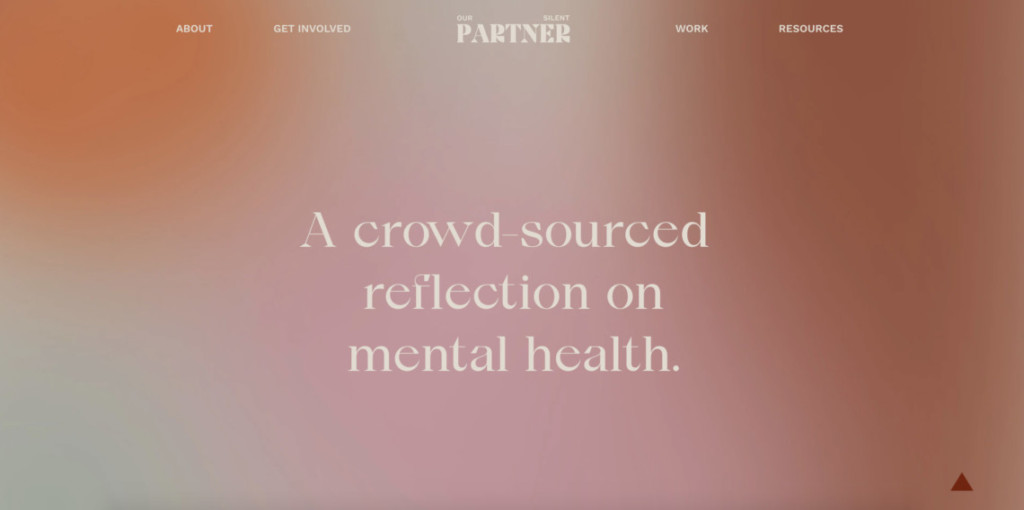
In the middle of isolation, speaking up about mental health in the creative community became an important, yet delicate theme. However, a lot of people and agencies struggle with speaking up about mental health. Launched in May, Our Silent Partner is an anonymous, crowd-sourced creative portfolio that expresses what it’s like to live and work as a creative with mental health challenges. It was created by Victoria Rosselli, an art director at FCB Chicago, and Laurel Stark Akman, freelance copywriter/creative director, who have forged their careers while battling anxiety, as well as attention-deficit and eating disorders.

2. c0ffe3

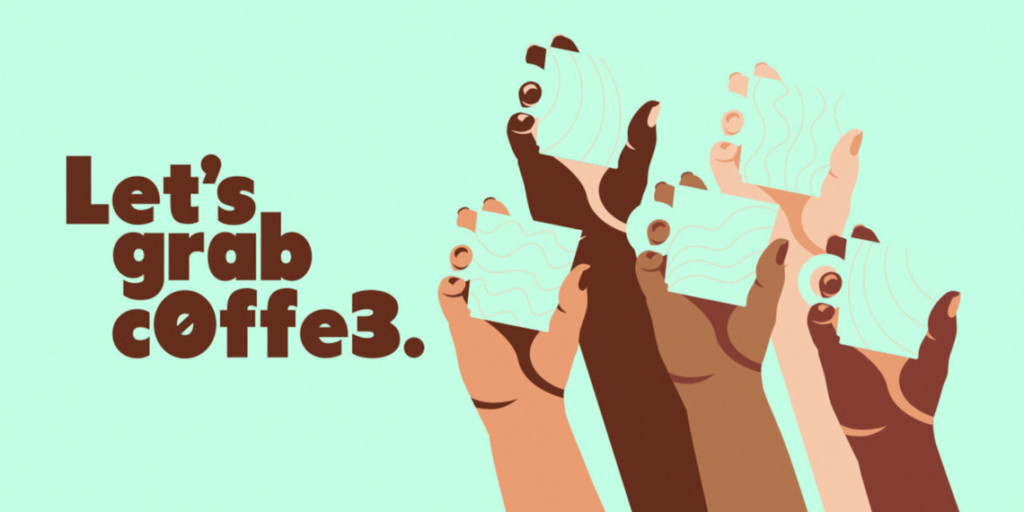
Many agencies and leaders struggle with recruiting talent of color. A lot cite the “we can’t find them” and “there aren’t enough of them” excuses. So, over the summer, New York-based Sr. Copywriter Chelsea Curry launched c0ffe3 — a fake company designed to help people of color land real jobs by increasing their visibility with recruiters and hiring managers. Anyone looking for talent of color can add “c0ffe3” to their search (i.e., “c0ffe3 Sr. Copywriter”) to see self-identified talent of color. If you’re a person of color, simply add c0ffe3 as a past employer on your Linkedin profile to be seen. Currently, c0ffe3’s Linkedin page has more than 530 employees. 

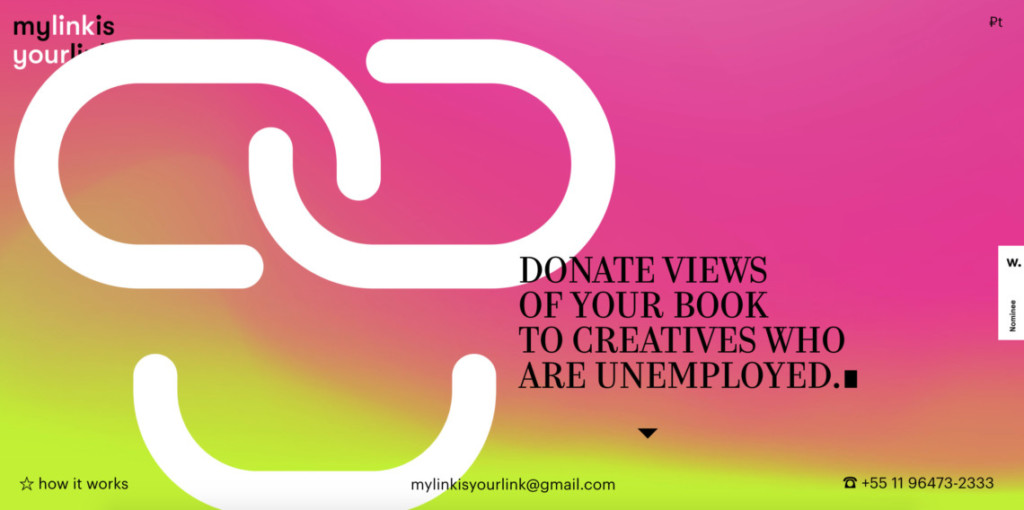
3. My Link Is Your Link

This June, three Brazilian creatives, Bernardo Tavares, Rodrigo Rocha and André Mezzomo, came up with an answer to the job loss and networking complications imposed by the pandemic. The team created My Link Is Your Link, a tool that gives visibility to job seekers through the use of a simple HTML code. The code redirects portfolios of those who already have a job to those who don’t. To participate in the project and redirect your portfolio to someone looking for work, all you have to do is go to its site and follow the instructions that allow you to paste the redirect into the session ‘code injection’ on your website platform. Weeks after launch My Link is Your Link already donated more than 50k page views.

4. One School

Everyone knows that advertising has a diversity problem. What most agency leaders are not aware of is that part of this is due to systemic bias in the hiring process, while another part is simply that  the cost of 2 years at a top portfolio school can pile up to $40,000. These barriers along with a lack of representation often prevent Black people from pursuing a career in the industry. In July, Spotify creative director Oriel Davis-Lyons , in partnership with The One Club, launched One School: a free, 16-week online portfolio school for Black creatives. With a maximum of 15 students per class, 30 young people have been selected to be a part of it so far. New classes will be returning in Spring 2021. Follow the initiative on Instagram to be the first to know when applications open.

Andre Chaves is the founder of the nonprofit collective Papel & Caneta.

https://www.adweek.com/agencies/10-projects-that-made-the-industry-better-in-2020/


And Here We Are, at the End of 2020

This year will forever be remembered as a year of loss—the loss of patience, privilege, jobs and loved ones. We experienced what it’s like to lose the things we’ve done freely our entire lives, like going to the movies or out to eat, without masks and the fear of getting sick. But it’s also the year that we’ve slowly regained something we’ve been losing over time—genuine connections and sense of humanity. 

Being forced to slow down and be more intentional with our actions, humbled so many of us and made us more human. Even when working from home erased the separation of personal and professional, we managed to build bridges of empathy between us through memes, virtual happy hours and stoop catch-ups. Juggling kids, dependent loved ones and home school, in between zoom calls, virtual panel appearances and writing business plans opened the door to understanding myself as a leader in new ways. I’ve had more space to truly digest lingering inequities in our society and understand how we can be a part of the solution as people and corporations.

This was true for brands as well, who were used to following strict guidelines, with clear directives of how and where to show up and when to stay in their lane. Well, those guidelines and safe spaces went out the window this year, when just as we couldn’t hide behind our carefully crafted office personas, brands also had to reveal their authentic selves and decide their place and voice in the world—because being neutral was no longer an option. 

This time last year, Black Lives Matter was considered controversial for many brands. But this year, racial justice became an essential part of our corporate responsibilities. It’s unfortunate it took multiple tragedies to build up our unapologetic empathy muscle, but we are here now, with many of us moving in tandem towards justice. As a 20-year marketing executive, and an activist at my core, watching brands move from neutral stances on crucial issues to advocates for real change is truly motivating. It reaffirms why I love this industry and the power of communication.

During this time while we were all becoming a bit more humbled and authentic in our daily lives, it spilled over into how brands had to behave. The brands that were the most successful were the ones who weren’t afraid to be vulnerable. While authenticity has always been at the heart of brand conversations, it has never been so accessible.

As a mother and wife—one of this year’s work-life jugglers—having so many courageous conversations and movements happening around me, stretched me as a person and grew me as a leader. The lifting of the professional veils so many of us easily hid behind, provided raw insight into what is needed from 21st century leaders. This was an opportunity to wield transparency as a real tool that empowers people to be impactful at work and in the world. And this is only the beginning, if we decide. We have the opportunity to ride this wave into the kind of work many of us dreamt of when we started our careers. In the words of the amazing Ruth Bader Ginsburg: “If you want to be a true professional, do something outside yourself.”

https://www.adweek.com/performance-marketing/and-here-we-are-at-the-end-of-2020/


6 Things Brands Should Know Before Launching a Voice Program in 2021

Voice is currently the fastest-growing user interface in history, and so it’s no surprise that 2020 has seen brands rush to add it to their marketing mix. The Covid-19 pandemic only accelerated that trend as more consumers spent an increasing amount of time at home with captive attention driving an increase in use of home assistants such as Google Voice and Amazon Alexa. It offers brands a unique opportunity to diversify their media portfolio with a platform that is very unlike existing channels.

With that said, voice is a different beast than most marketing departments are currently accustomed to. Before undertaking the integration of voice into your media planning, there are a few elements every team should know.

Understand the unique medium of voice

Voice is both a channel and a user interface. Any brand that is looking to add voice to their portfolio needs to understand that they can build apps for Alexa or Google voice assistants to take advantage of the growth of those channels, but they can also leverage voice as a user interface to voice-control their owned channels, like mobile applications, websites, physical spaces, custom hardware, etc. When we look back in ten years, voice will be a pervasive touch point across a consumer journey, so brands need to learn how to build voice into both their product and marketing roadmaps.

Embrace the advancement

Voice has been around for decades, and the “Alexa-era” has been around for over five years.  In that time, voice has become the fastest-growing digital channel ever—faster than the smartphone. The channel has hundreds of millions of dedicated devices in homes, billions of voice activated devices when you count mobile phones, tens of billions of dollars forecasted in the next 12-24 months for voice-driven commerce, and the platforms have been working incredibly hard to release an onslaught of developer tools that allow a gifted community of voice professionals to build really exciting voice apps and integrations. This will allow brands and consumers to engage over voice in unprecedented ways. 

The critical point for brands is to ensure they have a baseline of education on what these tools are so that they can create a real program to leverage voice. Simply running a pilot project is not enough anymore.

Know its nascency

It sounds contradictory, but despite voice being the fastest-growing channel ever, it is still nascent in many ways. The tools mentioned above still have a long way to go before it’s easy to make a full voice-driven marketing campaign or voice commerce activation. Analytics, attribution tools, awareness and discovery are still limited. This boils down to committing to a marathon and not a sprint. Build in time for analysis, iteration, long term capital resourcing, and giving teams leeway to fail, learn and grow.

Build consumer use cases

A brand seeking to build a successful voice program needs to first get educated on the nuances of voice and then focus on building a strategy around true consumer insights. It’s key to try to avoid as many errors as possible in the onset. Designing your user experience around a customer insight and then mapping that to the channel’s capabilities is key in developing a program strategy. 

Begin with white-boarded concepts built off of what you know consumer needs are and where your brand is able to successfully meet those needs in other channels. Then adapt to where you believe voice can improve that experience or remove friction from it. Once you have a baseline of a few great program concepts, it will be time to run user surveys, in-depth interviews, and user tests to whittle down to the right use case.

https://www.adweek.com/agencies/6-things-brands-should-know-before-launching-a-voice-program-in-2021/


How Covid Memories Will Open New Connections Between Brands and Consumers

Our memories of 2020 and Covid-19 are already so deeply imprinted on our minds. And our reactions to those memories will be so strong, they are likely to alter the way we live and make decisions for many years to come. Brands need to look beyond customer sentiment, activities and context in charting their next course. Therefore, they need to factor in the memories consumer are likely to have following this strange period of upheaval. Despite the enduring hardships and struggle that greets 2021, the impact on consumers’ memories will introduce incredible opportunities for marketers to modernize and humanize brands in 2021 and beyond.

From episodic to epochal memory

As the world shut down, consumers had to live with the sudden loss of long enjoyed and long underappreciated freedoms. This disruption caused deep-rooted distress, confusion, and even fear. Consumers were rightly concerned about life events, affecting the mental health of people worldwide. At the same time, they proved their resilience, improving and making the most of disruption. With many common places shut down or with concern for getting sick in public, they quickly gravitated toward becoming digital first. Consumers learned to search and shop differently and ultimately, to try new things.

According to McKinsey, 10 years of ecommerce growth happened in just a few months. The firm also discovered that 75% of U.S. consumers had already experimented with different stores, websites or brands. Of those consumers, 60% reported that they would integrate new brands in their post-pandemic lives.

The pandemic forced changes in all our lives, a far longer time than the 66 days it is estimated to take, on average, for new behaviors to become automatic. These behavior changes also reshape mindsets, which sets the foundation for changes in values, norms and cultures. By all accounts, this is a once-in-a-lifetime, global, life-altering time. This is a brand-new epoch.

A doorway to a new genre of branding and engagement

Our memories are deeply personal and individual. Yet, at the same time, those thoughts are highly connected and communal, both autobiographical and cultural. This type of memory is so rare and profound that there’s not even a word for it, so we’re giving it one. We’re calling it “epochal memory” to distinguish it from common episodic memory.

Epochal memory is defined by a series of shared somatic markers, deep, emotional, visceral bookmarks that entwine Covid-19 experiences, feelings and all the unique dynamics of a world in turmoil. These memories affect the course of our lives consciously or subconsciously. They influence our values and decisions, affect our physical and mental wellbeing, and shape our livelihoods.

Understanding epochal memory and how new behaviors, sentiments and aspirations shift and continue to evolve can help brands identify opportunities to add value, earn relevance and build stronger communities.

A new mindset and heartset

How your brand groups and segments your customers moving forward requires swift re-examination. Your relationships depend on it. Demographics, purchase frequency, loyalty membership, products owned, don’t provide a true customer 360 view when viewed through a lens of the past. Segmenting your customers based on their emotional responses to this crisis and their evolving behaviors, interests and desired outcomes is more meaningful. Since their memories during this period are epochal, if their behaviors they are developing are long-term, the segmentation needs to be epochal as well.

“Epographic segmentation” exists at the intersection of demographics, psychographics and neuromarketing. Epographics more accurately reflect the human changes we are witnessing and learning to discover in behavior across the entire population that this virus has inscribed and continues to influence.

@briansolis Brian Solis is global innovation evangelist at Salesforce, a digital anthropologist and a best-selling author.

Henry King is an innovation and transformation strategy leader at Salesforce and author of Flow by Design.

https://www.adweek.com/agencies/how-covid-memories-will-open-new-connections-between-brands-and-consumers/


TV: The Platform vs. the Art Form

I wasn’t sure about it until lunchtime today, but now I’m sure. TV is dead to me. It’s not only merely dead; it’s really most sincerely dead. Muerto. Over. Stick a fork in it … it’s done! I sat down for lunch and turned on the TV. I wanted to watch some news. You can probably guess what happened.

First to CNN. No news, just pharma commercials for ailments I do not have (at least I don’t think I have them). Then to MSNBC. 120-second, supplemental Medicare commercial. Nope, not for me. Then to FNC and another supplemental Medicare commercial. Back to CNN. Still in the commercial pod. OK. Forget news, maybe I’ll just find something entertaining. Over to HGTV. Commercial. Over to TBS. Commercial. Over to WNBC. Bump out, then commercial. WABC. WCBS. Same, same. Just under 10 minutes on the clock, and the only content I could find on any broadcast channel was a commercial or a tune-in promo. I turned off the set.

What is TV ‘the Platform?‘

When I speak of the death of my relationship with television, I am speaking about traditional broadcast television, which includes local television stations, national television networks, cable television networks and local cable channels. I’ll call this group TV “the Platform” as opposed to streaming video content you might consume on a television set, which I’ll call TV “the Art form.”

Come on, Shelly! It’s not really dead

It’s true that TV is not really dead. The business part of the business is still a multibillion-dollar industry. But don’t let the top line deceive you. TV “the Platform” is just holding on. And this time, it’s serious. Consumers have choices they’ve never had before, and they are empowered by technology and new behaviors which have been accelerated in response to the pandemic.

TV “the Platform” has damaged its consumer experience beyond repair. And in doing so, destroyed the commercial value of the audience segments that remain. You know what I did after I turned off the TV at lunchtime? I said, “Alexa, news.” And my custom daily news feed started to play. World News, Politics, Sports and Tech. In order. From my preferred news sources. Amazon delivered a commercial-free, on-demand, custom-curated experience.

TV ‘the Art form’ is entering its platinum era

While TV “the Platform” devolves into whatever it’s going to become, TV “the Art form” is doing great. Cords are cut, new accounts have been created, streaming services logins are stored. Want a perfect, 4K video experience? Netflix, Prime Video, Disney+, AppleTV+ (if it ever gets enough content), TikTok, YouTube, Twitch—all mostly commercial-free, all delivered on demand.

Don’t take my word for it. Do some armchair research. Ask your friends how their media consumption habits have changed over the past 10 months. You may not know precisely how others are consuming media, but you know that everyone has found their own way (a new way) to consume video.

Are theatrical motion pictures movies, TV or video?

Warner Bros. just announced that its entire 2021 slate of theatrical motion pictures will be released in theaters and on HBO Max on the same day. TV “the Platform” won’t get any part of this business until its usual “broadcast” window. However, anyone with an HBO Max app on any device will be able to consume and enjoy blockbuster “movies” all year long. Which raises the question, “What’s a movie?” The non-cerebral answer is, “Whatever else it may be, a movie is now just an expensively produced piece of VOD (video on demand) content.” This is new, and it signals a massive shift in the industry.

@shellypalmer Shelly Palmer is CEO of The Palmer Group, a strategic advisory, technology solutions and business development practice focused at the nexus of media and marketing with a special emphasis on machine learning and data-driven decision-making.

https://www.adweek.com/tv-video/tv-the-platform-vs-the-art-form/