How to Look and Sound Your Best on Zoom Calls
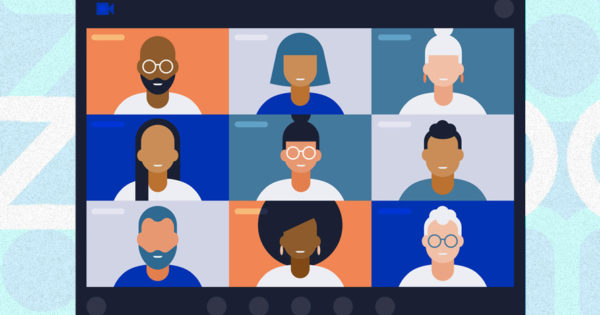
By now, you’ve Zoomed with them all: The guy who looks like an unmade bed and never looks at the camera. “Backlight person” who thinks you can see their amazing backyard, but all you see is their dark silhouette against the blinding light coming through the window. The would-be influencer who stares straight into her webcam, pushes out her chin and slightly clocks her shoulders until she’s ready for her close-up. The bald guy (whose head you know like the back of your hand) who, unfortunately, never looks up at the camera. The “check out my awesome green screen background” person. And of course, the motion sickness–inducing “selfie rover.”

Leaving how you should comport yourself in an online meeting for another time, here are a few simple things you can do to look and sound your best during Zoom meetings.

Camera position

Place your laptop on a stack of books or a shelf so that the webcam lens is level with the middle of your forehead. You want to be looking slightly up at the camera. This is tough if you must work on your laptop during your online meetings. It’s the main reason to consider an external webcam.

No light

If there’s a window, face it and let nature do your lighting. If you can position yourself so that you are at a 45-degree angle to the window, you’ll look even better. Overhead lights are not your friends. Turn them off. Or remove the bulbs directly above your head.

One light

Nighttime or no window? That’s OK. Place a lamp 45 degrees in front of you to your right or left side. If you look too yellow, get a “cooler” bulb that’s 5,600K or higher. Look too blue? Get a “warmer” bulb about 2,700 to 3,300K. There are any number of lighting solutions available. My wife moves her laptop all over our apartment all the time. I got her a $50 cube light kit with a suction cup attachment. It was a game changer for her.

Green screen

If you are using a green screen, a single light source directly in front and slightly above you (right on top of the camera) is the quickest, most foolproof way to help your software cut a usable key. That’s geek speak for, “properly separate you from the background so you can be superimposed on the virtual background of your choice.” If you have the space, place the green screen far enough behind you so that your shadow falls on the floor, not on the green screen. This is a balancing act between how much light falls on you and how much falls on the green screen. Grab an app called Green Screener if you want to become a world class green screen user.

In-home video studio

In a perfect world, you would set up your online meeting space with classic three-point lighting. If you have time, money and space, consider a key light, fill light and backlight. Just Google this classic lighting technique. It is “best practices.”

Computer mic and speakers

The microphone and speakers in your laptop are tools of last resort. If you must use them, you already know you need to be in a quiet room, preferably carpeted with enough clutter to keep the echo to a minimum.

Headphones and earbuds

For most people, a good pair of noise-canceling headphones is an excellent investment. Gaming headphones are built for streaming, but high-end earbuds like Apple’s AirPods Pro or Samsung’s Galaxy Buds Live work well. I am also a fan of good, old-fashioned, wired earbuds. It’s a personal choice. All that matters is that they sound good to you.

@shellypalmer Shelly Palmer is CEO of The Palmer Group, a strategic advisory, technology solutions and business development practice focused at the nexus of media and marketing with a special emphasis on machine learning and data-driven decision-making.


https://www.adweek.com/digital/how-to-look-and-sound-your-best-on-zoom-calls/


5 Things to Know to Win Over the Luxury Gen Z Consumer

Fashion month came and went with the click of the “Leave Meeting” button on Zoom. For many of us, the last thing on our minds may be purchasing a new designer handbag or a blue chip work of art.

The annual celebration of haute couture arrived against the backdrop of massive change, as a new generation is forging ahead and renegotiating the rules of engagement for the luxury space. Gen Z (born roughly between 1995 and 2010) already accounts for 40% of all consumers, and will make up 10- to 15% of the luxury market by the year 2025, according to Bain and Co. If you’re not already paying attention to the influence of the next gen, it’s time to do so. 

Here are our five things you need to know to win over the luxury Gen Z consumer:

Don’t be afraid to have personality; express it 

For too long, luxury brands were built upon an image of hyper-precision, utmost discretion, and in many ways, exclusivity and inaccessibility. That doesn’t work with Gen Z. We’re coming of age in strange (and often overwhelming) times, and we want brands to speak to the circumstances we inhabit. It’s no longer cool to be rarefied and voiceless. As more people become like personal brands, we relate to brands that speak to us like people.

Gucci was one of the earliest adopters of meme-culture and has embraced self-parody, even launching its own #GucciFakeNot campaign this month. This type of irreverent humor cuts through the noise because it shows that even Gucci is “in on the joke.” In today’s world, that often means you’re “in” as a brand as well.

Consider Telfar, which launched its “Bag Security Program” this summer to much excitement and acclaim. Rather than create a false sense of scarcity to drive demand, Telfar’s leadership found a way to speak openly about its production process to make the brand feel inclusive and accessible. At the same time, the company’s marketing strategy was able to maintain the brand’s status as an “it” bag. Brands that aren’t afraid to take risks—whether in their humor or their marketing tactics—are leading the charge. 

Establish a clear set of values—and act upon them

Unlike earlier generations who would wear brands to signal their taste, we’re choosing brands that reflect our values.

In fact, 49% of Gen Zers want brands to have a social impact initiative that they can be a part of.

Why?

Gen Z is the most progressive, diverse, and outspoken generation in modern history—and we opt for brands that are built upon clear missions of their own. Take a look at MadHappy, which sells high-end comfortwear. It’s on a “mission to make the world a more optimistic place.” The company developed its brand around de-stigmatizing mental health through its cheery “Local Optimist” statement sweats. MadHappy even launched its own mental health resources, including the brand’s own counseling hotline.

Savage x Fenty, which has disrupted the lingerie and intimate-wear space by committing itself to broader body and gender representation, provides another example of this trend towards aligning a brand with social meaning.

https://www.adweek.com/tv-video/5-things-to-know-to-win-over-the-luxury-gen-z-consumer/


7 Essentials to Sell Part of Your Business Now


If the headline above appeals to you, congratulations, you are probably an owner or management team member. I know how difficult it is to accomplish all that you’ve had to accomplish to be in the position you are in today. Furthermore, since you are reading Adweek, you probably work in an industry such as media, information services, technology or consumer goods—all massively competitive, where only the best can survive. And for some, in 2020, survival has been a challenge.

The uncertainty that this year has created may have triggered a thought such as: “I have a lot invested in this business and now may be a good time to sell part of it, take some chips off the table and provide additional protection, opportunity and growth to myself and my team.”

I empathize with this insight, as I sold part of my first marketing services business in 2008, which was a challenging year as well.

In the past four months, our private equity firm completed the sale of a media company and a digital consultancy for more than $150 million. There are buyers out there and they have capital, but things have changed. So, keep these seven essentials in mind to increase the probability of success.

1. Find your equivalent

I’ve always loved this quote from Napoleon Hill, “Every adversity brings with it the seed of equivalent advantage.” I was reminded of this quote during several recent conversations with business partner and decade-long friend, Tony Robbins.

One of his businesses also happens to be key to his mission: to help people. He prefers to do this through live events, but of course he has not been able to for most of the year. His solution was remarkable. He created a studio to conduct the largest Zoom call in the world and in doing so reimagined his business.

We’re not Tony and we don’t have his resources, but if he can do this with a live events business, it provides for a tremendous role model of what is possible. There is a seed of equivalent advantage in your business. You and your team can find it. And when you do, articulate it clearly and quickly to whomever you are approaching to buy into your business.

2. Define your sustainable competitive advantage now

You and your team must be able to articulate, illustrate, and demonstrate your sustainable competitive advantage quickly. And you must prove that in 2020 it is still as relevant as it was in years past. If you want to go to market with your business now, address what has changed upfront and how you managed to get through it while ‘future-proofing’ yourself in the process. Investment bankers and prospective bidders will have this concern in the back of their minds; answer it for them proactively.

3. Find a believer

One of the best tests to see if your business is ready to be sold is to present your story and financials to an investment banker. If they get excited and want to represent you, you have cleared a significant hurdle. Why? Because they have seen a dozen businesses like yours in the past month and they have their finger on the pulse of the market to determine how likely it is that you would have a successful transaction. You can choose to market your business on your own, but their insight about challenges you will face and potential valuation matters.

4. Set numbers you can hit


Don’t miss the Brandweek Sports Marketing Summit and Upfronts, a live virtual experience Nov. 16-19. Gain insights from leading sports figures on how they navigated a year of upsets and transformation and what’s in store for the coming year. Register. 

Brian F. Martin is Managing Partner & Vice Chairman at Beringer Capital.


https://www.adweek.com/programmatic/7-essentials-to-sell-part-of-your-business-now/


Understanding the Difference Between a Vendor and a Solutions Provider

With outsourcing becoming a necessity, it is more important than ever to understand the role of a vendor versus the role of a solutions provider. When is it a good idea to reach out to a vendor, and when are you better off retaining a solutions provider to help you achieve your objectives? Wait. Every vendor says they’re a solutions provider. OK. Let’s say that’s true—which is isn’t. Are you set up to leverage that resource?

For a solid overview of the issue, have a quick look at “The Middle Management Error Vendors Love Most.” It is a personal story about a famous director’s request for a blue disco ball. It will make you smile, cringe … or both.

The short version is that on my first job on a film set, the director asked for a 60-inch blue disco ball. An assistant producer ordered one from a vendor. It arrived on time and on budget. For reasons that I shall go into, it was never used.

Told this way, the “Blue Disco Ball” story doesn’t sound like much of a case study. But I can assure you, there are lessons to be learned.

The vision

In the director’s mind, he saw blue dots dancing on the set. His solution? A 60-inch blue disco ball hung out of frame. That would do the trick!

Lesson 1: If you’re not a professional in a specific field (in this case lighting and real-time effects), do not assume your solution is best—or even good. Share your goals with people schooled in the art and let them help you understand your options.

The meeting

The scene was scheduled to be shot in two days. In a production meeting with his department heads, the director asked for a 60-inch blue disco ball.

Lesson 2: If you are in charge, people will simply do what you tell them to do. It’s their job. This is great under most circumstances, but if your outcomes are not aligned with this incentive structure, the results will be suboptimal.

Three key department heads were missing from this meeting: props, art and lighting. The three of them were each holding production meetings of their own in different locations. So key people who could have offered high-level solutions were completely out of the loop.

Lesson 3: If you have the wrong people in the meeting, you are having the wrong meeting.

The vendors

The vendors all came back with similar pricing, including a significant rush charge. The pricing, while inside of the total production budget, was clearly out of line with the value of the purchase. No one said anything except, “When do you need it?”

Lesson 4: Vendors say yes. That’s how they get paid. That’s how they keep clients. Vendors do not push back, except with rush charges or outlandish price quotes. From a vendor’s point of view, you (the client) never seem to have the money to do it right, but you always seem to have the money to do it over. And when you need it in a hurry, money seems to magically appear. Vendors love orders for blue disco balls!

The alternative ending

In the real “Blue Disco Ball” story, the director threw a temper tantrum about an hour before the prop was scheduled to arrive. The property master, a solutions provider, just happened by in the middle of this tantrum and asked what the fuss was all about.

@shellypalmer Shelly Palmer is CEO of The Palmer Group, a strategic advisory, technology solutions and business development practice focused at the nexus of media and marketing with a special emphasis on machine learning and data-driven decision-making.


https://www.adweek.com/brand-marketing/understanding-the-difference-between-a-vendor-and-a-solutions-provider/


What Working in a Tattoo Shop Taught Me About Advertising’s Creative Process

There’s something about stabbing a stranger for several hours straight that reveals their true colors. Having previously worked in a tattoo shop, I learned early on in my career about people making questionable creative choices.

The tattoo parlor was a constant source of life lessons. For example, women have a much higher threshold for pain. You should never get a tattoo of your partner’s name (it’s truly a curse). And most people pick the wrong tattoo artist for the job.  

While a tattoo shop is seemingly worlds away from advertising, choosing the wrong creative person for the job is something I’ve seen happen again and again. The fit matters. 

The majority of tattoo hunters would walk in, flip through portfolios of amazing designs and then choose an artist whose work blew their mind. Maybe it was a black-and-white portfolio filled with incredibly detailed photorealism or an artist with a new-school style specializing in geometry. 

Don’t choose the people you like for a job; choose the people you need. 

These clients chose their artist based on a specific talent or style, but more often than not, they would hire them to do something completely different. A client might fall in love with an artist’s ability to do intricate geometry but then hire them to ink an owl eating a mouse under a rainbow surrounded by silhouettes of dancing frogs that spell the word “karma.”

This happens all the time—not the karma frogs; choosing the wrong artist—and the end result could be worse than it sounds.

The mistake the clients made was not incorporating what they loved about the person they hired and letting that artist shine. Instead, they insisted upon an idea that was set in their heads, and they pushed aside the craft and brilliance that made the chosen creative special. At that point, anyone could be doing the work. And many would do a better job. 

Advertising projects might be less physically painful, but just like tattoos, ads have a long lifespan, at least on the internet. Clients who create terrible work or hire the wrong agency might never live it down. And even worse, a lot of talent (not to mention money) is squandered when the person hired is a poor fit for the job.

I’ve long kept in mind what I learned from that old tattoo shop: Don’t choose the people you like for a job; choose the people you need. 

Employers and recruiters are sometimes so dazzled by an up-and-comer’s portfolio that they immediately want to hire them. But all too often they quickly place these hires in situations where the thing that makes them unique is ignored. 

You can be blown away by a person’s work and still say, “No, you’re not right for this position.” 

On the other hand, you could be bowled over by a person’s work, keep an open mind and tap into what makes them special to make original work that shakes up your department and perhaps win some awards in the process. An open mind just might bring you years of pride and fewer regrets. 

Giving someone space to deliver work that doesn’t precisely conform to your initial plan can be intimidating. It even goes against what many people believe an effective manager should do. But allowing that person to thrive and create is vital to truly brilliant work. If you don’t have some doubts during the creative process, you’re most likely doing it wrong. 

Zach Canfield is an associate partner and director of talent at Goodby Silverstein & Partners.


https://www.adweek.com/agencies/what-working-in-a-tattoo-shop-taught-me-about-advertisings-creative-process/


The Richards Group Incident Is Outrageous in Many Ways

The advertising industry as a whole is failing—failing to diversify teams in an authentic way.

This week, we saw Home Depot and Motel 6 step down from working with The Richards Group after its founder, Stan Richards, made racially fueled comments. While I don’t condone what Richards said, there’s something bigger going on here. Instead of instantly canceling the agency, let’s have a conversation about the issue at hand.

I’m never satisfied when I see someone’s life or livelihood destroyed because of a personal comment. I’m not outraged by the “too Black” comment that Richards made. I’m outraged that he viewed Motel 6’s demographic as white supremacists and continued to work with them.

As society as a whole faces a reckoning on how to be better allies to communities of color, it’s time that ad agency culture reflects that, too. However, this industry’s diversity should be more than just a buzzword that we use when serving clients. It should reflect our agencies themselves.

I have seen it all. As far as microaggressions, I’m pretty sure I’ve heard them all, too. From being asked to participate in a monthlong RFP process only to find out late in the pitch process that we were only brought in as a token agency to not being able to pitch in meetings due to my accent. Now, I realize these experiences must not be unique to me. Other minority creators, too, likely have been belittled due to either explicit or implicit bias.

For agencies and brands alike, the benefits of diversity go beyond just the optics of having diverse leadership in new business meetings. Employing diverse management is proven to increase overall value by as much as 19%, according to a study by Boston Consulting Group. That same survey additionally found that having a diverse team does more than just boost overall positioning in best workplace rankings; racially and ethnically diverse teams are 35% more likely to perform better.

While the lack of diversity in the advertising industry has been present for years, this has been especially apparent this year due to the amplified racial tensions in our world. Agencies should take a step back and reflect on the makeup of their teams. It’s not just hiring a chief of diversity; it’s giving a range of viewpoints a meaningful seat at the table responsible for day-to-day decision making. We’re not just fighting for diversity; we’re fighting for equity. When your agency lacks diversity, what culture are you actually speaking to? Marginalized voices set the culture we appropriate in ads today. Let them dictate how it’s expressed. Brands should hire agencies with that in mind.

Marla Gonzalez is co-founder and managing partner of RAXO.


https://www.adweek.com/brand-marketing/the-richards-group-incident-is-outrageous-in-many-ways/


5 Social Marketing Takeaways From Emily in Paris

Marketing and pop culture have always been connected, especially when Hollywood makes the character work in the field. We have seen public relations on display in Sex and the City, advertising in Mad Men and crisis communications in Scandal. Social media marketing is now under the spotlight in Netflix’s new show Emily in Paris.

Actress Lily Collins plays Emily Cooper, a marketing executive from Chicago who heads to Paris to be part of Savoir, a French marketing firm specializing in luxury brands. The show brings to life Emily’s journey working in social media while navigating working and living in a new city, juggling learning a new language, marketing practices and social norms.

The show got one thing right off the bat: highlighting the importance and prestige of being profiled in Adweek, which is a great professional accomplishment to have in the social media marketing industry.

But audience reviews of the show have been mixed, especially about how Emily utilizes social media and what she does for Savoir’s clients. Here are some social media marketing takeaways from Emily in Paris.

Personal branding

Emily in Paris puts personal (or even personality) branding front and center. It is not only about what you know and who you know, but who knows you. Whether you agree with how she did this or not, Emily’s consistency in her brand voice, content and messaging resulted in professional opportunities. In social media marketing, having a personal brand that showcases expertise and personality can open doors in the field.

No monitors

Emily in Paris presents a simplistic view of what social media marketing really is as a field. Posting selfies and adding text natively on a photo is simplistic in nature. Social media marketing is much more than this, having matured to be aligned near the same level of importance as other key specialized areas in the marketing field. Where are the analytics reports from listening and monitoring trends on social? Why isn’t Emily working with multiple screens on social media dashboards for her clients at her desk? Why is Emily focused on engagement as a key metric for success rather than other business- and communication-oriented objectives? Why isn’t Emily engaged on Marketing Twitter, communicating with other professionals to learn, network and bounce around ideas?

Slice of agency life

Emily in Paris presents a small window into what it is like working in social media marketing in another culture. Taking off while at work? Going to lunch for three hours? What’s more true is that working from home late nights while juggling different areas of specialization such as reputation management, event planning, content creation, influencer marketing and strategic planning is normal for the agency world. However, social media marketing involves more than just these areas. What is missing is the lack of research and collaboration that happens within an agency with digital, creative and research. In addition, most social departments or teams in agencies involve more than just one person.

Influencer marketing

Emily in Paris highlights do’s and don’ts in influencer and creator relations. Emily was able to bring her presence to life with her social media account @EmilyInParis. In the show, Emily was invited to an influencer event, and while others were posting selfies and promoting themselves (and not the products or brands that were hosting the event), she was a real fan of the makeup account and made sure the content reflect why she liked the account and was not there just for the experience, free swag or the paycheck. This was a basic lesson in Influencer Marketing 101.

@kfreberg Karen Freberg is an associate professor in strategic communications at the University of Louisville and is a member of Adweek’s Academic Council.


https://www.adweek.com/brand-marketing/5-social-marketing-takeaways-from-emily-in-paris/


3 Unexpected Lessons From the ‘Dreams’ TikTok


On Sept. 25, Nathan Apodaca took a ride on his longboard, casually sipping a jug of Ocean Spray Cran-Raspberry juice and lip-syncing to Fleetwood Mac’s “Dreams.” The resulting video and mood it evoked took the internet by storm, garnering 28.7 million views on TikTok and inspiring copycat videos from everyday people and celebs. Naturally, Tom Hayes, CEO of Ocean Spray, and Fleetwood Mac drummer Mick Fleetwood got in on the fun as well.

We now understand that products, people and concepts can all go viral on TikTok, sparking action from consumers in unexpected ways. So, what can brands learn about social marketing from a moment like this?

Be vigilant

It’s impossible to replicate the exact circumstances of Apodaca’s video. We may never understand why this particular post, out of millions of others shared that day, resonated with people so strongly. However, we can explain how it took off once it caught people’s attention. Add to the equation the fact that most popular TikTok trends inevitably end up on Instagram, Twitter and Facebook and there you have it—a cross-platform, viral moment that started the moment another TikToker found the video funny and shared it. 

Once you’re on the right platforms, it’s not enough to jump in on relevant fads, like the Ocean Spray CEO’s copycat response. Before you can start producing sponsored content and activating influencers, you need an understanding of how your target customers use social media and what sort of content resonates best with them. Each platform has its own lingo, tactics and even multiple subcultures, depending on the demographics of the users you want to engage with. And popular trends, challenges and posting styles can change nearly every day. This can be a daunting task, but it’s worth the effort. 

Look for leaders and personalities among your target audiences. Who are the popular voices in these groups? On TikTok, microinfluencers who started as virtual nobodies can ring even more true.

Earn the community

If you want to try for an authentic moment that’s primed to go viral, involve influencers in all facets of your campaign development. By creating a reciprocal relationship with influencers and everyday customers, you can participate in discourse taking place in their communities. Your strategy will then shift from waiting for your creatives and influencers to alert you of the next trend to being there, watching it develop alongside them and identifying ways to authentically enter the conversation.

Embrace the absurd

Any brand looking to achieve even a fraction of the success of the “Dreams” video must be willing to step out of their comfort zone and consider unconventional themes and ideas. Influencers know their peers best so, as you make an effort to engrain your brand into their culture, give them ample opportunity to suggest ideas for campaigns, content and messaging.

Some ideas might seem foreign or odd to you but remember: Often, that’s the content that catches customers and users in the perfect moment and performs best. Encourage creative, silly and relatable concepts and work with talent to involve your brand in these efforts in a way that’s unexpected, unique and persuasive.

TikTok is a launchpad for viral moments. Apodaca’s video wasn’t the first, and it surely won’t be the last. A certain popular song may put it best: “It’s only right that you should play the way you feel it.”

https://www.adweek.com/agencies/3-unexpected-lessons-from-the-dreams-tiktok/


The Interruption Heard ‘Round the World Is All Too Familiar: ‘I’m Speaking’

“I’m speaking.”

What kind of time are we living in when a woman in power speaking has to repetitively ask a man to stop interrupting her? Sad to say, we are still living it.

Women on social cheered, twitter memes went viral and GIF’s were already circulating—all in support of Sen. Kamala Harris during Wednesday’s night vice presidential debate.

Harris repetitively said “I’m Speaking,” when constantly interrupted by Vice President Mike Pence, which resonated with so many of the women that were watching the performance. Her firm response only exemplified what so many women deal with on too often a daily basis. Those women who have ever been in meetings can attest to the constant struggle of proving a point or sharing ideas, all while trying to manage interruptions by a male co-worker fighting to get in as many words as possible. While the issue never gets resolved, last night made a statement that will be a new inspiration for women. Interruption has been the norm for decades, and quite honestly has become normalized. From gender pay gaps to women’s health topics, women constantly grapple with the notion that men have more important things to say than women.

In the marketing sphere, another male-dominated industry, women are affected more than ever. Successful marketers show empathy and can relate to both the product and the consumer. This recent event may have been the precipice for women in marketing to use their voice. I’m hopeful this will inspire a new wave of campaigns and dialogue for brands to speak to the inequity of women and ultimately help with inspiring more women to strive for higher-level marketing roles.

Harris remained poised, strong and didn’t let emotions get in the way. For if she did, she would have been labeled with one of the many stereotypes that exist for marginalized women: loud, angry, aggressive, nasty. Harris captured the unresolved gap that still exists with minority females having an equal voice and influence both professionally and personally. What was just a few mere seconds is a textbook example of so many of the systemic issues that have been highlighted in this election year.

Harris spoke for all women with her candid facial gestures and striking side eyes allowing her opponent to continue speaking his mind. While I can relate from some of my own renowned smirks or awkward laughs in meetings, Harris’ meme inspiration may be what we all needed to keep pushing ahead. According to a New York Times article from 2017, academic studies show that being spoken over or interrupted is a universal experience for women when they are outnumbered by men in meetings. For when a lower number of women exist, it limits women advancing to the top of the organization.

After last night’s debate, mothers, sisters, wives, girlfriends came together to use that moment as not only validation, but reflection on how we continue to fight the fight and make sure our voice is heard. Female marketers have more incentive than ever to start stepping up, raising a hand and bringing ideas to the forefront. While there’s no guarantee that the interrupting will stop, it’s an even better time to band together, support one another and continue helping the marketing industry with making more diverse and progressive leaps.

May Sen. Kamala Harris show little girls around the world that we too deserve a chance to be heard, and it should be on the same terms and expectations as the man across the table. There is no question in my mind that brands are going to be pivoting and capitalizing on last night’s social whirlwind and creating ads that speak to women speaking out. The question is who will be the first one to cross the finish line? Save the memes and print the T-shirts, because this is only the beginning of an incredible movement of powerful, female voices.

https://www.adweek.com/brand-marketing/the-interruption-heard-round-the-world-is-all-too-familiar-im-speaking/


Congregating at the Online Watercooler

I missed meeting new people and I missed bumping into people I know. So six weeks ago, we introduced Shelly Palmer Online Networking Salons. They are free, category-specific, weekly 20-minute, super-curated, small Zoom meetings where you meet new people, bump into old friends, hang out for a bit and then get back to work. The results have been nothing short of amazing. And we’ve learned some things that I’d like to share with you.

From online networking salon to online watercooler

We originally designed these “free, category-specific, weekly, 20-minute, super-curated, small Zoom meetings” using a salon metaphor. The idea was to curate the audience, pick a topic and have a salon-like discussion about it. This worked fine, but everyone was not always well-versed in the individual daily topics, so many attendees just listened, which was not what we intended.

A ‘that’s interesting’ moment

But then something wonderful happened. Some of the salons naturally evolved into online watercooler conversations—old friends and new acquaintances taking a few minutes out of their very busy work days to talk about things that are important to them. It was—and is—magical.

The format

We host eight salons per week and the format is simple. After a minute of opening remarks, the attendees are sorted—by a very interesting algorithm—into small breakout sessions with five to eight people per discussion. There, they introduce themselves and take a minute to say whatever they want to say. Then, the rest of the time is spent hanging out at the online watercooler.

Method evolved, but goal achieved

I like where we ended up. We’ve created a platform where hundreds of people can enjoy the comfort of chatting with their friends while benefiting from the serendipity of meeting new people. I couldn’t be happier. But there’s a bigger lesson here.

Some say, “Follow the road, not the map.” Others say, “Follow the map, not the road.” Which is right?

We had a plan: Build an online salon. We had a working offline model: My in-person salons are the most productive business gatherings I host. We had test data: Beta testing showed the online salon format would work. We had competitive data: We attended online salons hosted by others that we admired and felt were successful.

We could have followed the “map.” It was our vision. The map clearly laddered up to our business strategy and things were working fine. In practice, we enjoyed “excellent” results from the salon format. Feedback was 85% positive, which we thought was statistically unbeatable.

But the road was leading us elsewhere.

Our self-assembled community is filled with super smart, super successful, interesting professionals, but right now, everyone can use a few minutes in a virtual break room with an online watercooler to gather around.

So instead of following our map or the road, we stayed laser-focused on our mission to create an online experience that replicates—as closely as possible—an environment where you can meet new people, bump into old friends, hang out for a bit and then get back to work.

I’m proud that this product launch not only embodies our approach to mission, vision and values, but also demonstrates that we practice what we preach. You’re welcome to join any or all of our “online breakrooms,” and please feel free to invite your friends. (And yes, after some market testing, we’ll probably rename them. In the meantime, please join us.)

Shelly Palmer online networking salons

@shellypalmer Shelly Palmer is CEO of The Palmer Group, a strategic advisory, technology solutions and business development practice focused at the nexus of media and marketing with a special emphasis on machine learning and data-driven decision-making.


https://www.adweek.com/digital/congregating-at-the-online-watercooler/