Essential Third-Quarter Stats for Agencies and Media Companies

Editor’s note: Adweek worked with Matthew Scott Goldstein, a consultant with a deep knowledge of the media industry, to craft his quarterly newsletter into an Adweek article. Through his findings on various industry earnings calls, we’re bringing you insights about how your favorite brands, agencies, media companies, publishers and tech companies are performing on a quarterly basis. His goal was to go past what the trades were focusing on, which mostly revolved around revenue, and tap into the nitty-gritty data shared on these calls.

This iteration focuses specifically on agencies and media companies in the 2019 third quarter.

an orange and blue background with a dollar sign that says Agencies

  • Interpublic Group (IPG): Continued global increases across a very broad range of verticals: healthcare, financial services, retail, tech and telecom and consumer goods. The auto and transportation sector decreased mainly because of last headwinds. A disconnect between business and what’s happening in the stock market and in the global world, if you will, in terms of what’s happening there. The uncertainty obviously is not helpful. Marketers have money and they’re willing to spend. The difference between now and in a stronger environment is today is very project-oriented. Marketers are concerned about the economy, but they realize that marketing with IPG actually works and they have to spend dollars to build their brands. Of course, no mention of Google, Facebook or Amazon.

an orange and blue background with a gold dollar sign that says Media Companies

  • Disney: Disney+ is a combination of four years of planning, organizational transformation and a lot of hard work, and we’re excited to be on the verge of this new era. ESPN+ was an immediate hit with sports fans when it launched last year and continues to deliver steady growth. ESPN+ has over 3.5 million paid subscribers. Acquisition of 21st Century Fox was largely driven by the value it brought to our overall DTC strategy, adding a number of critical elements, including control of Hulu, which opens numerous growth opportunities domestically and internationally. At launch, Disney+ users will have immediate access to more than 500 movies, including all of our beloved titles and more than 7,500 episodes of library television content, including 30 seasons of The Simpsons. By year five, this growing collection will include more than 620 movies and more than 10,000 television episodes along with countless shorts and features. ESPN’s domestic linear advertising revenue was down 2%, and, so far this quarter, ESPN’s domestic cash ad sales are pacing up 3% compared to last year. Ad revenue at the ABC Network was up modestly in the quarter; quarter-to-date prime-time scatter pricing at the ABC Network is running 47% above upfront levels. Hulu is a significant driver of advertising revenue, and will continue to be, particularly as we grow Hulu. Ad-supported Hulu has very high RPU, which is one of the reasons that it’s being bundled with ESPN+ and Disney+ for that $12.99 price, because the value of an ad-supported Hulu subscriber given the advertising revenue that it drives is very, very high.
  • Comcast: It goes without saying the utility and demand for high-speed and reliable internet access are ever increasing. See this in customers’ behavior: Monthly data usage more than doubled in the last three years, and our power users are connecting nearly 20 devices in their homes daily. Surpassed 55 million customer relationships. Added 1.3 million broadband customers over the last 12 months. Total video subscribers declined by 2.8% year-over-year to 21.4 million; we continue to be disciplined and are not chasing unprofitable subs. Content continues to resonate with consumers. NBCUniversal has the largest TV viewership share of any major media company in the U.S. and is one of the leading film businesses in the world. NBC is No. 1 in prime time among adults 18-49 for the sixth consecutive 52-week season. Telemundo was No. 1 in Spanish-language weekday prime for the third consecutive season. Cable networks revenue decreased 2.8% to $2.8 billion. Broadcast revenue decreased 9.1% to $2.2 billion. Advertising revenue declined 12%, primarily reflecting a difficult comparison to last year’s results, which included Telemundo’s broadcast of the FIFA World Cup. For the remainder of the year, we have a positive outlook on the ad market with the start of the NFL season and the return of original entertainment programming, as well as the benefit from higher upfront pricing. Regarding Peacock, announced about a month ago the name and listed a fair number of shows that we’re going to have on the service. Most important thing to think about as you’re thinking about Peacock and its role inside NBCU and broader Comcast is we’re not doing the same strategy that Netflix and people chasing Netflix have adopted. We’re primarily working with the existing ecosystem and doing a lot of AVOD activities. Comcast thinks that will cut the investment pretty substantially, going to get to cruising altitude much more quickly than a subscription service. In terms of the Peacock spending, marketing plan, going to remain pretty quiet until a month or two before launch in terms of the details, for competitive reasons.
  • Discovery: Strong 5% domestic advertising growth, marked by accelerating performance at both the legacy Discovery and Scripps Networks on the back of improved ratings, healthy overall pricing, nice growth on our TV Everywhere apps and strong execution by the sales and network teams. Ratings momentum has been an outlier in an industry where both cable and broadcast performance has been increasingly soft. Discovery is the No. 2 TV company in America, including both broadcast and cable, with NBCUniversal being the only company in the U.S. that reaches more people and is larger. On any given night, getting between a 3 and a 4 rating in women 25-54 across the portfolio, and typically exceeding a 4 rating on Sunday night. And across the pay-TV universe alone, achieving between a 5.4 and a 7.2 rating in women 25-54 across the portfolio. Putting some context around this, premium IP in the U.S. today is incredibly scarce, with perhaps the NFL as the very top of the pyramid with respect to aggregating both male and female demographics in large scale. And advertisers pay a significant premium for this IP. So, if you’re an advertiser buying the NFL to reach women, you could reach the same number by buying one spot, a roadblock, across our top women’s networks: HGTV, Food, TLC, ID and OWN. It’s like a women’s super-pack. I believe Discovery can intercept some of those huge CPM, NFL or broadcast dollars, which would be a big win for advertisers, because it would be at a much lower CPM, a big increase for Discovery and a huge reach. And it’s something that nobody else can do because Discovery has this ability now to aggregate so many compelling and strong female networks. It’s one of the “wow” reveals of Discovery and Scripps coming together. Third-quarter U.S. total revenues were up 4%, with 5% advertising growth and flat affiliate revenues. This was an outstanding quarter for our U.S. ad sales. The better-than-expected 5% growth was due to a combination of solid ratings, strong pricing, strong demand driving additional inventory, and continued monetization and integration of our GO platform and digital offerings. We are benefitting from overlaying smart cross-promotional activity against an increasingly large footprint, which, on certain evenings, is delivering a near 30% share of women watching television. For the fourth quarter, we expect continued strong pricing and continued monetization of digital as Discovery expects further success of our GO apps, slightly. Some color around expanded Hulu partnership: Cannot comment on specific deal terms, but there are some key high-level points that are important. This is a mutually-beneficial deal, where both sides will see incremental value. We are extremely pleased with the solid economics Discovery received. This is one of the main drivers of Discovery’s expected growth acceleration in 2019. There are many elements of the deal, including additional SVOD hours and an increase in our channels carried to a total of eight Discovery networks in the base package on Hulu with Live TV. Also pleased that additional networks will be available on the new Hulu with Live TV tier packages later this year. The deal has strong carriage projections, as do all of our deals for our top networks. And, overall, will see incremental economics next year and remain excited about our ability to drive greater returns from this distribution partnership as Hulu adds additional subs.
  • News Corp.: $2.34 billion represents a decline of 7% year-over-year. There has been a fundamental change in the content landscape. For over a decade, News Corp. has led the international debate in seeking fair returns for our high-quality content from the digital platforms. Clearly, the dominant digital platforms are under intense and continuing regulatory scrutiny on issues such as privacy and an opaque advertising market. There has, however, been a substantial development with Facebook’s decision to pay a significant premium for our premium journalism at the WSJ and beyond. This decision begins to change the content equation, and we expect a positive impact on financials at our News and Information Services segment over the long term, beginning this fiscal year. The Facebook deal complements the agreement we reached with Apple in March when The Wall Street Journal became a launch partner for Apple News+, which expanded the reach of the Journal and its journalism to new audiences. Our brands and content obviously benefit from the marketing prowess of a partner, which has nearly 189 million phones in the U.S. and 1.4 billion devices globally. We expect the sectoral shift in the value of digital content to have significant implications for our investors and our bottom line. These unprecedented changes in the publishing industry would not have been achieved without the determination of Rupert and Lock and Murdoch and the unwavering support of the board, which has taken a long-term principle stand on the need to change the digital ecosystem. Other publishers around the world should feel free to send us a commission for services rendered. Consistent with that theme of simplification, we have our Unruly ad-tech business under strategic view and are also in discussions about a potential sale. We learned much from the very talented team at Unruly, and those lessons will inform our ad business for many, many years to come. Advertising revenue at Dow Jones grew 2% in the quarter and led notably by strong digital outperformance at wsj.com, which grew 13% as compared to a decline of The New York Times. It’s led by digital growth with a relatively stable print performance. Digital advertising accounted for 42% of total Dow Jones advertising compared to 37% last year. Took the bold step of sharply increasing the cover price of The New York Post in June, and there has been a 12% year-over-year increase in circulation revenue. Advertising also rose at a similar rate. It is worth noting that more than 70% of the Post advertising revenues in the quarter were digital. The Facebook deal is a big deal. It establishes a clear precedent of paying a premium for premium journalism. And there are a couple of other initiatives that are notable. When you click on a headline in the Facebook News tab, you’ll be taken to our site. So the story is not hosted by Facebook. And that means that we’re able to sell advertising directly, and we’ll have a more lucrative flow of permission data. And these were all essential preconditions for our ascent and our agreement, and will have a long-term benefit on our accounts. The digital advertising market is dysfunctional. The so-called open market is a virtual monopoly. We’ve been very public about our concerns on that segment, which is in dire need of reform, and is thankfully now under close scrutiny by 50 U.S. attorneys general.
  • CBS: Revenue of $3.3 billion grew 1% from last year when we had record political spending. Digital advertising for network content across platforms grew 19%. So we are adding intellectual property to our content pipeline, which gives us even more strategic windowing opportunities in the years to come. Direct-to-consumer revenue was up over 39% for both the quarter and year-to-date as consumers shift from traditional bundles to skinnier bundles to CBS All Access and to Showtime OTT; we are getting paid higher rates per sub. Our rapid growth in DTC means that our total subs are growing as well. Underlying network advertising revenue was up 2% for the quarter. And the momentum continues here in the fourth quarter with strong scatter pricing and steady advertiser demand. In one major example, starting next September, Nielsen’s measurement of out-of-home viewing will be included in our ratings. So we will have an opportunity to monetize this viewing for the very first time. The NFL offers a great example here. Nine weeks into the season, the NFL on CBS is off to a strong start, up 6% year-to-date. When you factor in out-of-home viewing, we get an additional 11% lift to that increase, and, while sports is an obvious beneficiary, we are also seeing increases in out-of-home ratings in our prime time, daytime and news programming, which we will begin monetizing next fall, and, at CBS News, our emphasis on quality reporting is leading to additional opportunities as well.
  • iHeart Radio: Revenue of $948.3 million, up 3% year-over-year with digital revenue increase 33.4% year-over-year. Audio has never been hotter, and iHeartMedia has leadership across all major platforms: broadcast radio, streaming radio, podcasting and social. Approximately 135 million registered users, 20,000 live events and 211 million fans on social media. Consumers spend 30 minutes a day with us on average, whereas Google and Facebook’s audiences averaged 26 and 18 minutes per day, respectively. As the leading audio company in the U.S., we’re benefiting from that. The most prominent example of this has been Procter & Gamble, who’ve been a vocal leader about their shift back to radio and which just matched its strongest quarterly sales growth in over a decade. And we believe its performance since shifting its media mix back to include radio is no coincidence. The reality is consumers have never left radio. Radio’s reach has remained constant, above 90% dating back to the 1970s, while TV steadily declined from 95% in the early 2000s to 86% today. First, the podcasting industry is growing rapidly and shows no signs of slowing down. In fact, the Forrester Research report that was published earlier this week estimated that the podcasting industry could reach $1 billion by the end of 2020. iHeart is the No. 1 commercial podcast publisher based on Podtrac’s rankings, which are the industry standard for measurement. No. 1 priority is getting new advertisers to try us. We also have an opportunity to solve advertisers’ problems with TV’s declining reach and its large segment of light viewers by adding radio to the mix. Automated self-serve advertising product called AdBuilder, which is now in beta. AdBuilder creates customized audio ads for advertisers using proven techniques to get their businesses heard based on information the advertisers share about the businesses. We believe that this represents a long-term opportunity for us to capture the long-tail small-business advertiser that has historically been unavailable to us because of the economics of using a live salesperson. We do want to be clear, however, that we expect the adoption period to be very gradual over the next three to five years before it begins to reach critical mass. More details on this to come, but we’re extremely excited about the AdBuilder product as it aligns with one of the key revenue opportunities, which allows us to efficiently begin to address the 7 million small businesses that are uneconomic for our salesforce to call on instead of just the 60,000 clients we reach today. The two big digital players have proven this market and the opportunity, and we’re rolling out our product to serve it as well.
  • New York Times: Now have more than 3 million subscriptions to our digital news product, more than 4 million total digital subscriptions and just under 5 million total subscriptions. Added 273,000 net new digital subscriptions in the quarter, of which 209,000 were subscriptions to our core news products. That 209,000 was 46% more than the equivalent net adds in the third quarter of 2018. In the third quarter of 2019, we also made a significant change to our pay model. Most anonymous users now have to register and log in to The New York Times if they want to read more than a very limited number of stories. Now it’s much easier for us to encourage these logged-in users to engage more deeply with our content and consider subscribing. And we certainly saw a positive effect from this change in our net subscription adds during the quarter. Increasing run rate of new subscriptions makes our goal of hitting the 10 million total subscription milestone by or before 2025 look well within reach. Facebook News is a new initiative within the broader Facebook experience that is intended to offer users a curated selection of news from quality sources. Under the agreement, The New York Times will make its content available in the form of headlines, very short summaries and links. A small number of stories, under 1% of the whole, will be unlocked so that Facebook users can read them in their entirety. To do so, just as with the other stories, users will have to move from Facebook to our digital assets. Facebook News should bring new users to the Times. Consumption of the overwhelming majority of stories will increment our pay meter and support our subscription model. But we chose to participate in the model only after we reached a multiyear agreement for a license fee, which is a step change compared to previous content deals. This is the first time that a Silicon Valley major has recognized the value of Times journalism to its platform with a substantial multiyear fee. Digital advertising fell by 5% year-over-year in the third quarter, as I said, a little less than we predicted, and print advertising by 8%. The main reasons for the decline on the digital side were a tough comparison with the third quarter of 2018 and fewer large deals than we achieved in that quarter. We talked about this variability or lumpiness in the large-scale deals before. Expect this pattern to continue into the fourth quarter. We face an even more daunting comp: Digital advertising grew in the fourth quarter last year by 32% on a like-for-like basis, with several individual partnerships, including one that brought in nearly $10 million not repeating. We’ve described ourselves as a subscription-first company. And where there is a trade-off to be made between engaged user experience and a media advertising revenue, we will increasingly favor the subscription side. Our iOS and Android apps are the digital services that drive the highest per-user consumption of our journalism. We’ve decided that beginning January 2020, in an effort to improve low time and the overall user experience, we will no longer present open market programmatic advertising within these apps. That will result in the loss of digital advertising revenue in the single-digit millions, but we believe that this will be more than made up by gains in engagement and a higher propensity by app users, both to subscribe and retain. The decrease in digital advertising revenue is largely driven by declines in our core direct sold platforms, partially offset by continued growth in podcast. The print advertising result was mainly due to declines in the financial services, home furnishings and luxury categories, partially offset by growth in the advocacy category. The success of our price rise tests and our growing confidence in our ability to deliver discrete messages to different segments of our subscriber base has convinced us that we can execute a price rise for tenured subscribers with minimal risk of reducing new subscriber growth momentum. Overall advertising revenues and digital advertising revenues are expected to decrease in the mid-teens compared with the fourth quarter of 2018. The Daily is a monster hit, with an astonishingly valuable audience, and it just continues to grow with more than 2 million listens a day and three-quarters of this audience is 40 years old or younger; 45% is 30 years old or younger.
  • Viacom: $3.43 billion in revenue, down 1% year-over-year. Viacom maintains the No. 1 share of U.S. basic cable viewing among key demographics, and our portfolio grew market share in the quarter. Moving to domestic ad sales, thanks to the combination of our vibrant brand and strong ad sales execution, including our sophisticated suite of advanced marketing solutions, we delivered 6% ad growth, marking the second consecutive quarter of positive performance. In particular, the success of our advanced marketing solutions business, where revenue grew 83% in the quarter, shows how we’ve evolved the ad sales business to thrive even in the phase of linear impression constraints. Pluto TV is, of course, one of those strategic acquisitions and has quickly become an integral part of our AMS offering. Pluto TV continues to grow, expanding its leadership in the free streaming TV space and its contribution to our ad sales growth. It now has approximately 20 million domestic monthly active users. Viacom owned more top-30 original cable series in the quarter than any other cable family among key demos.
  • IAC/Dotdash: Adjusted EBITDA doubled, and revenue grew 34% year-over-year, up from 23% growth in the prior quarter. Now have emerging brands in seven high-intent categories—health, finance, home, food, tech, travel and beauty. The opportunity in beauty alone is measured in billions. Dotdash—in the fourth quarter we expect revenue growth over 25%. Look at each vertical as a huge opportunity. In health, ranked in the top five when you look at audience. In health and some very big players ahead of us, in terms of both revenue and profitability, and we’ve been very focused on innovating in product in this area. Always focused on having the best and freshest content and the  fewest ads. Monetized with other format of advertising: ecommerce as a format of advertising, sending audience on to other sites. Finance has several huge players in front of us. Doing very well with Investopedia and The Balance, and we’re going after the people who are bigger than us with bigger audience and bigger revenue. Beauty is another one. Home’s another one. All these are multibillion-dollar categories of advertising online where we can deliver really compelling content. More and better content in our existing category in 2020. And then we’re going to continue to look for acquisitions in new verticals or new additions in our existing verticals.
  • Meredith: Total company revenues from continuing operations were $725 million, compared to the prior year of $774 million. The prior year included $33 million more of cyclical high-margin political spot advertising in Meredith’s Local Media Group. Digital advertising revenues grew 8%, driven by growth in Meredith’s programmatic platform. Print advertising performance was down in the mid-single digits compared to the prior year, in line with Meredith’s historical performance. The EatingWell, Southern Living, Real Simple and InStyle brands all generated growth in print advertising. Been adding a number of people in helping us produce more content, and more video content, specifically. And when we look at the first quarter that we just closed, we’ve had some great trends in video. So overall, video revenue was up 20% in the first quarter, and video views were kind of up in that mid-double-digit range. The other area that we’re looking at investing is in consumer, what we would call our consumer digital business. A lot of that’s in ecommerce.
  • J2 Global: Digital media grew over 21% to $173 million. Particularly pleased with the 34% growth in digital media subscription revenues. Completed four acquisitions in the first quarter, and two acquisitions in the second quarter, making the total number of acquisitions this year 10. Generally speaking, seeing attractive deals across the markets in categories in which we operate. Organized the company into 13 business units. Of the 13, five of the units are below $75 million in annual revenues. As we continue to grow as a company, it’s a priority to scale these units to be north of $75 million and ultimately north of $100 million in annual revenues. Since January 2018, of the 21 deals that J2 has consummated, 11 were in cloud services, and 10 were in digital media, with 11 of the 13 business units closing at least one transaction. Through a combination of organic growth and programmatic acquisitions, we have more than doubled our revenues over the past five years. BabyCenter: The parenting and pregnancy space is a very attractive one to us. It sits at the nexus of a broad range of digital health extensions including fertility services, women’s health, child and family health care and genetic health services. By owning both BabyCenter and What to Expect, believe we have become a global leader in this vertical where users can be served at every stage of the pregnancy and parenting journey. From a value-creation point of view, this is very similar to our past digital media acquisitions. We see opportunities for business model innovation, as well as focusing the business on profitability. On the former, we have at What to Expect and many of the J2 digital media brands a great track record with performance marketing solutions, where we generate customers and leads for our clients. Today, the BabyCenter business is primarily display advertising, while the What to Expect business makes a majority of its revenues from performance marketing. We believe we can successfully implement performance-based solutions at BabyCenter to drive growth. Continuing good display advertising revenue. If you can be a cash buyer in the digital media industry, which we are, and historically have been, I think it’s a buyer’s market. Deployed over $420 million for acquisitions this year in the nine months. Video is a key part of how we monetize properties today inside of the advertising business. You know IGN has got a substantial video business. Mashable has got a substantial video business. Everyday Health has a video business. So video has been part of our advertising mix for a while. We don’t do as much in audio. We know it’s the space we’ll look at. In our advertising business, I see a couple of things. No. 1 is the display business continues to grow. And it’s been growing for four consecutive quarters after there was a period of time when we were having some challenges. The customer-generation performance marketing components of what we do, where we’re not selling CPM advertising, cost-per-thousand display advertising, but we’re selling cost per clip, cost per lead, cost per acquisition, that is sort of that. That is what the marketplace is really looking for. Can you generate customers for us? Can you get us measurable ROI where we’re fitting into their LTV equations? That’s where we do our best. And so any format that can produce those outcomes we’re interested in. There are a lot of interesting acquisition opportunities for us right now, and I think again depending on where the markets are and what business climate is, there may be even more. So I’m optimistic from an acquisition point of view in terms of what the next 12-36 months will look like. There’s an anti-unicorn sentiment that seems to be pervading the marketplace. In terms of general macro conditions in the U.S. I think we see it to continue to be good and stable.

https://www.adweek.com/agencies/essential-third-quarter-stats-for-agencies-and-media-companies/


Scientists and Health Professionals Overwhelmingly Think 5G Doesn’t Cause Cancer

There are scientific theories, some with extraordinary supporting evidence, that clearly identify carcinogens. But when I asked Dr. Michael La Quaglia, my granddaughter’s cancer surgeon, how a 2.5-year-old gets pancreatoblastoma, he looked me straight in the eye and said, “If we knew, we could prevent it. All I can do is try to remove it. And with God’s help, I will be successful.”

Those words ring in my ears to this day. So, it is with a great deal of humility, personal experience and a strong belief in the scientific method that I submit to you a reasoned rebuttal to the meme that “5G causes cancer.”

First and foremost, when researchers determine that something is a carcinogen (a substance, mixture or exposure circumstance that promotes the formation of cancer), they provide clear, specific protocols to avoid it.

So far, the only things related to 5G that have been classified as a carcinogen are cellphones. In 2011, the World Health Organization (WHO) put cellphones on its list of “Class 2B carcinogens.” Other Class 2B carcinogens include pickles, aloe vera leaf extract and being a firefighter. The warning about cellphones from the WHO is best paraphrased as “don’t use your cellphone as a pillow.”

That said, cancer is serious business, and this topic is more than worthy of exploration.

History of the idea

People have claimed that electromagnetic radiation causes cancer since the advent of 2G cellular networks. In 2000, Florida’s Broward County Public School system asked consultant Bill Curry to study the impact microwave radiation might have on schoolchildren. Curry concluded that the technology was “likely to be a serious health hazard.” As evidence, he referenced a graph labeled “Microwave Absorption in Brain Tissue (Gray Matter).” The graph has become a popular meme.

His report, methodology and conclusions have been called into question by so many scientists it would be impossible to name them all. However, Christopher Collins, professor of radiology at New York University, sums up the criticisms of Curry’s report concisely: Curry’s work failed to take “the shielding effect” of the human body into account. Dr. Kalil Abdullah, brain tumor neurosurgeon at UT Southwestern Medical Center in Dallas, agrees. There simply is no credible scientific evidence linking any cellular network (2G, 3G, 4G or 5G) to increases in brain tumors or other types of cancer.

Carcinogens

There are many known carcinogens. Some carcinogens, such as inhaled asbestos, certain dioxins and tobacco smoke, have nothing to do with radioactivity. Everyone knows the danger associated with inhaled asbestos, and anyone who has renovated an old structure knows what it costs (and the lengths to which one must go) to remove the cancer threat. Similarly, cigarettes (the main delivery vehicle for tobacco smoke) have carried a health risk warning from the Surgeon General of the United States for years.

Some electromagnetic waves are carcinogenic, such as the ultraviolet, x-ray and gamma-ray parts of the electromagnetic spectrum. Should you avoid extreme exposure to ultraviolet (UV) radiation? Yes, as there is a known correlation between exposure to UV and certain types of skin cancer. This is why you are told to wear SPF 50 sunblock and avoid extreme exposure to direct sunlight. It is why there is a significant industry based on the thesis that humans need to be protected from UV radiation.

But unlike exposure to high levels of ionizing radioactive material such as the materials used in nuclear reactors, which deterministically cause radiation sickness and may lead to death, when one analyzes the effects of exposure to low levels of non-ionizing radiation, one finds that cancer is a stochastic effect.

In other words, the radiation we are going to discuss in this article only has a probability of correlation with the occurrence of cancer, which is a major reason (among others, including small sample size, inconsistent exposure rates and controls and short duration) peer-reviewed scientific studies have so far been inconclusive.

Some believe 5G may pose a threat

In 2016, the U.S. National Toxicology Program (NTP) published a report. And while it’s not exactly light reading, the report details a study where mice and rats were exposed to extreme levels of radiation in the frequency range of cellphones. After two years of “whole-body exposure,” there was an elevated number of mice afflicted with heart tumors in the exposed group. This study has been highly criticized.

https://www.adweek.com/digital/scientists-and-health-professionals-overwhelmingly-think-5g-doesnt-cause-cancer/


Why Political Marketers Need to Focus More on Marginalized Voters

Just when we thought the smoke had cleared from the 2016 presidential race, here we are, in the blink of a proverbial eye, readying for the 2020 campaign.

Candidates on both sides of the aisle have linked their Madison Avenue consiglieri and strategist, with their street teams and war room colleagues. They are running projection polls, algorithms and side deals to connect their clients with the right segments of the population in the right ways. Reading the tea leaves is a bit complicated and requires some extra outreach to successfully maximize the potential impact on election day.

Political marketers need to grasp the reality: the multicultural vote, consisting of ethnic cultures, LGBTQ+ folks and various other factors, is key to win in 2020. African American, Hispanic American, Asian American and LGBTQ+ voters are critical to their chances of victory next November. Collectively, these consumers represent 30%-50% of the population in some key markets. Marketers can no longer be blind to the fact that without these votes, no candidate can win today.

Political marketers can and should double down on media that has proven to connect with these constituents. They can buy targeted media (radio, digital, social). Local radio is a huge grapevine tool. They can tactically utilize local OOH in key neighborhoods in key DMAs where the multicultural populations are high and easy to geotarget. They can reach out and connect with community influencers, opinion leaders and youth organizers. If candidates can get voters to believe in their messages and show them respect, the results will be golden.

Keynote marketers and advertisers need to realize that not all people of the same cultural backgrounds or lifestyles act and react the same. You must apply the same marketing rigor, depth and breadth of work to break through and connect. Industry focused and vetted organizations like Adcolor, the 4A’s and the AAF that can assist you in making sure you stay on the (true) straight and narrow will assist political marketers with connecting with these key audiences in meaningful and impactful ways. They’ll help with creating content environments, helping to identify and hire talent and advising on where to show up. They can also likely assist in your searches.

The longstanding excuse of “We don’t know where they are or how to reach them” is no longer acceptable or tolerable in this upcoming presidential campaign.

https://www.adweek.com/agencies/why-political-marketers-need-to-focus-more-on-marginalized-voters/


Here Are 3 Logo Design Trends We Can Expect Coming Into 2020

As we turn the corner into a new decade, marketers and brand builders are poised to enter a new era of design. Building on current styles and taking totally fresh artistic direction, designers around the world are pushing the boundaries in an effort to define the key design traits of the next 10 years.

Nowhere is this more apparent than in the visual manifestation of brands. These are just a few of the trends we see shaping logo design in 2020 and beyond.

Digital logos evolve as brands think screen-first

While personalization and variable design remain non-negotiables, 2020 will usher in increasingly sophisticated approaches as logos are tailored specifically for digital-first (or digital only) channels.

One of the most notable elements reflecting this trend is the use of three-dimensional gradients. While tough to handle in print, logos that leverage depth and dynamic spectrums through tapered gradients create energy by emphasizing contrasting colors and are perfect for screens. Combining colors in this way creates surprising results, and this type of gradient adds unexpected layers of sophistication and complexity to what are, on the surface at least, quite simple designs.

Thanks to the move toward screen-first visual branding, more elaborate motion design is another trend expected to dominate in 2020. Animated logos are nothing new, but as designers start to experiment with new technology and blend 2D and 3D animation with multiple moving parts, the style is reaching new heights and taking viewers on a narrative journey.

Adidas Running did this effectively when the brand worked with designer Jeroen Krielaars to create a number of complex abstract animations for their revolutionary Boost technology. You can see this below in the complex animation for Adidas Running Boost shoe and the below logo version of the animation.

Raw designs that demand the human touch

In direct contrast to the high-tech, sleek trends emerging around gradients and animation, many brands are bucking against digital perfection and embracing raw, imperfect logos instead. Proudly hand-drawn with a rougher, grittier edge, the feeling evoked is of stamps and sketchbooks as this trend taps into a more organic aesthetic through asymmetry, uneven lines and shading techniques like cross-hatching and contour shading.

someone hand-drawing a ram

Kingdom & Sparrow

the final logo of the ram with the Young's name

Kingdom & Sparrow

A recent well-executed example can be seen in the hand-drawn ram created by design studio Kingdom & Sparrow for heritage beer brand Young’s rebrand. This craving for a human connection within logo design is perhaps inevitable as consumers demand increasingly high levels of both personality and authenticity from the brands they interact with.

Nostalgia never goes away

Finally, as one of last year’s biggest trends, one thing is certain: Nostalgia is here to stay. In a world of economic, political and social uncertainty, it’s safe to say that consumers enjoy the emotional resonance of the good old days.

Enough time has finally passed for the ‘80s to be cool again, and thanks to a variety of cultural events (here’s looking at you, Stranger Things) we’re seeing a resurgence of video games, music, fashion and the attitudes that came with them. Expect to see brands get in on the act with a nod to the 1980s through touches of chrome, neon and a lot of pixels in their logo designs.

Some brands are even more overt in their nostalgia. The Milwaukee Brewers, for example, just announced they are returning to their roots next season, adopting a slightly modernized version of their classic 1980s ball in glove logo on a permanent basis.

Another noteworthy and emerging nostalgic trend, albeit with a completely different visual style, is a move toward cartoon elements inspired by the 1930s. Almost 100 years later, the handcrafted comfort of expressive characters appeals to both brands and designers as they seek to connect with customers on a human level, so expect to see more vintage-inspired custom illustration work in logo design throughout the coming year.

a sippy cup with a straw walking with a bottle of lager that says Beer & Bourbon above

From vintage throwbacks to futuristic complexity, disparate styles continue to coexist in visual branding. However, one thing is for sure: As the 2020s truly find their feet, designers will undoubtedly strike an exciting balance between the authentic human connection we all crave and our increasingly digitally-led world.

https://www.adweek.com/brand-marketing/3-logo-design-trends-2020/


Deadspin’s Demise Shows How Vital Community Is to a Brand

Folks have been piling on G/O Media for its “stick to sports” mandate to Deadspin, the creative sports publication with a cult following. That mandate saw its editorial staff leave in a revolt. Days later, an executive resigned.

Deadspin has been a ghost town for a month now, since Nov. 4, when it last posted a story. It’s unlikely the website will ever regain the 30 million monthly views it had once garnered.

This stick to sports controversy is a lesson in the power of content and community in today’s marketing world. Those in leadership for new parent company G/O Media failed to understand that Deadspin’s freewheeling journalists, like Laura Wagner and Drew Magary, together with its audience were the brand. Deadspin accomplished what should be considered a Holy Grail: a tight-knit, lively relationship with a devoted audience. This example should have been inspiring to marketers and salespeople, who increasingly have the data and tools to drive 1:1 relationships that grow the business. Instead, the brand is effectively comatose.

Every CMO, brand manager or digital marketer can learn a few things from Deadspin’s demise. One major upshot is that content and community cannot be taken for granted. Another takeaway is to know who your biggest influencers are and not to underestimate what they mean to your brand.

Deadspin was known for a style of creative freedom that attracted young readers until suddenly it didn’t stand for much at all.

Let’s look at what could have been, had Deadspin’s new owners recognized what made their brand special: the power of community.

Ethos can expand your business

The stick to sports mandate suggests brands should stay in their lane to succeed and inspire customer loyalty. In fact, sometimes the opposite is true.

We’ve learned that from REI closing its stores on Black Friday and encouraging customers #OptOutside instead of shopping. And we’ve learned that from up-and-coming retailer Outdoor Voices, which has become a $100 million company by building a community around being active while making its social media all about regular people wearing the fitness apparel brand in five years.

Deadspin was known for a style of creative freedom that attracted young readers until suddenly it didn’t stand for much at all.

Generally, anything that a brand creates—even if the creation isn’t in its original area of business—should develop a deeper connection with its audience. Red Bull didn’t “stick to energy drinks,” and the results have turned the brand into a juggernaut in the extreme sports world. Marriott didn’t “stick to hotels,” and it has become a content marketing machine. American Express didn’t “stick to credit cards,” and it created Small Business Saturday, among other initiatives that fall outside the realm of finance.

In the case of Deadspin, the stick to sports brouhaha seems to have been unnecessary. As Los Angeles Times editor Kim Janssen showed via a dive into the data, non-sports stories were less than 4% of Deadspin’s stories in September.

Commerce is now driven by a brand’s community

Every great brand has a community, and that community has a collective identity. REI, Outdoor Voices, Red Bull, Marriott and Amex obviously get this idea. Deadspin seemed like a community-first brand, but then it became clear that its proprietors didn’t understand what that concept meant.

Today’s customer experience is powered by information that is valuable and relevant to a specific audience. Direct-to-consumer beauty and skincare brand Glossier underscores this idea and shows that communities and content drive sales. The brand’s focus on community is at the heart of why it’s gone from a side gig to a $1.2 billion ecommerce company.

Nine years ago, Emily Weiss, founder and CEO of Glossier, launched her blog Into the Gloss, creating content around beauty topics before heading to her day job each morning. Within a few years, Weiss had millions of avid readers. That community had proven to be so strong that she eventually launched Glossier. With that in mind, it also seems fair to wonder whether Deadspin could have built a thriving ecommerce business around its content over time.

No matter what business you are in, your content and community are as responsible for your brand as your marketing or leadership is. Deadspin’s demise couldn’t have made that any clearer.

https://www.adweek.com/brand-marketing/deadspins-demise-shows-how-vital-community-is-to-a-brand/


Search and the ecommerce holiday season: Capturing key moments that matter

Search is not static – people don’t consume media in silos – and those consumers demand answers and content in an instant. Customers want information how they want it, wherever they are, in formats that delight — and they want it immediately.

This is especially true during the holiday season where SEO powers insights on consumer intent, behavior and trends across all digital channels.

If the analysts are right, the 2019 holiday shopping season will be one of the biggest in recent memory: 13% YoY growth for U.S. digital revenue ($136B sales) and 15% YoY growth for global digital revenue ($768B sales). And, while the season extends through the end of the year, a full 50% of all sales will be completed by December 6th – the last day of Cyber Week.

With so much shopping concentrated around the start of the holiday selling season – Black Friday through Cyber Week – there’s a lot of pressure on marketers to get the product, promotion and channel mix right ahead of time.

Most guidance on optimizing the search and digital marketing mix revolves – correctly – around the analysis and preparation you should be doing in advance of the shopping season, especially where SEO is concerned.

BrightEdge’s research found that SEO practitioners are using an average of six tools cobbled together and four-hours a day on research, reporting, and analysis. With half the day of an SEO practitioner spent on research, reporting, and analysis, it can be hard to find the time to actually make SEO changes and drive strategy over reactionary holiday periods.

Today, preparation and real-time marketing go hand-in-hand – especially when we think about voice, visual and vertical aspects of enterprise SEO.

Holiday seasons and real-time insights

Searchers are looking for the things you offer in any given moment, including throughout the holiday shopping season. If you know what people are looking for in the moment, you can capitalize on those trends in search and other marketing channels including on your website or in your dedicated ecommerce app, or in your digital advertising, email and social media campaigns.

Holidays are a period where things moving so fast (real-time demand for products) prices move, competition is higher than normal with new seasonal entrants, changes happen in real-time consumer habits (a trended new toy or gift, an influencer, a TV ad commercial driving online searches.

Consumers begin researching their holiday purchases well ahead of Black Friday, but on the day itself, searches ratchet up and stay elevated through Cyber Week. And shoppers are not done shopping when Cyber Weekends. This influx of new search data can expose opportunities that were not visible in the run-up to Black Friday.

During a compressed, high-volume shopping period like Black Friday or Cyber Monday, there will be predictable searches for the high-profile products and doorbuster deals where competition is high and margins are low, but there will also be demand for lower-profile, higher margin surprises.

To make the most of in-the-moment search insights, it’s important that you use a real-time information source to mirror the non-linear way consumers search that also enables you to follow fully the explicit and implicit paths indicated by those searches. Competition for these opportunities will generally be lower, but taken in aggregate, they can generate meaningful revenue.

Voice

With growing frequency, consumers are searching with their voices. At the end of 2018 there were 2.5 billion digital voice assistants in use by consumers. That figure is expected to grow to 8 billion devices by 2023. (source)

Consumers are using voice search more and more to shop with nearly 50% of people researching products by voice and 33% of people expected to use voice search to purchase a product at some point in 2019. (source)

But not all voice searches happen on one type of device and there are multiple avenues to consider.

(Source PWC)

In many ways the nature of voice search aligns closely with the practical application of real-time SEO. Voice searches tend to reflect in-the-moment queries. During the holidays, consumers will ask their voice assistants for help with product and shopping questions, like:

  • What is a good gift for a 10-year-old boy?
  • When is the last day for holiday shipping on Nike.com?
  • Which restaurants are open on Christmas?

Conversational queries change so fast, that voice search becomes instantaneous. When strategizing for voice, it’s important to understand the conversational journey. What questions most frequently initiate a search? What are the three or four follow up questions someone is most likely going to ask? Because voice search advances so rapidly, real-time data is a necessity.

To do it, start with identifying all the top-of-funnel, awareness-generating question keywords and their search volume. Then, analyze the keyword landscape for which portion of your keywords contain questions, and finally, assess which portion of those searches you are winning, and which portion represent opportunity.

Visual – YouTube

Visual search in itself is whole topic and article so for ecommerce I will just focus on YouTube today.

Traditional search engines and YouTube are complementary when it comes to product research with 80% of consumers saying they “typically switch between online search and video when researching products to buy.”

YouTube also plays a role for more than half of consumers directly in the purchase stream: “More than 55% of shoppers say they used online video while actually shopping in a store.”

All of that search behavior harbors insight you cannot get from Google search data alone. For one, YouTube product research indicates an increased level of purchase readiness with 70% of people expressing a feeling of motivation after viewing a YouTube video.

Take advantage of YouTube search behavior data to expose in real-time the performance of your videos and your competitors’ videos for any search and identify which product, category, and brand video are receiving outsize interest as well as what searches are leading consumers to them.

Armed with these insights, you can react in the moment across your marketing channels to capture share of sales. Add to that shopping ads in YouTube and SEO and PPC synergy become a must.

(Source – Google)

Vertical – Amazon

Nearly half of U.S. internet users start product searches on Amazon (eMarketer). As a marketers it is essential to know what are they searching for? What keywords are they using to search for it? Amazon may very well be the best source for insight into consumer purchase intent, so you cannot afford to ignore it.

For the products you sell on Amazon, especially if you sell hundreds or thousands of SKUs, it’s essential to track en masse the ranking of those products against your competition so that you can adapt in-platform while the selling opportunity is at its peak.

(Source – eMarketer)

Simultaneously, if there are products or product categories you don’t list on Amazon, you can still benefit from insights about searches within those categories.

Knowing this will help you understand where your biggest competitive threats lie so you can defend against them in your selling channels. It will also alert you to opportunities to meet heightened category demand via other channels.

Conclusion

Even with well-researched forecasts, there’s no way to know for sure how well a product category will perform for any sales period, but if you wait to measure that outcome and maximize sales, then real-time insights can take you all the way through to the January sales and more.

Jim Yu is the founder and CEO of leading enterprise SEO and content performance platform BrightEdge. He can be found on Twitter .

Whitepapers

Related reading

Long tail keywords: Why they matter so much in content strategy

Optimizing for position zero: The future of voice search

Going international: How to make your WordPress site globally friendly

https://www.searchenginewatch.com/2019/12/03/search-and-the-ecommerce-holiday-season-capturing-key-moments-that-matter/


Direct-to-Consumer Brands Are Reshaping the Face of Retail

The We Company was worth $47 billion and then it wasn’t. Peloton Interactive, branded like We to be valued as a tech company and not just a fitness company, is trading 20% off its IPO price. And a range of other direct-to-consumer brands see its stocks flagging as investors shift its focus from growth to profitability.

All of this takes me back to a debate I’ve been having with both my friend Randall Rothenberg of the IAB and my students at Duke’s Innovation and Entrepreneurship Initiative about the relative importance and staying power of brands in the rise of what Randy coined “the direct brand economy.”

What is not up for discussion is whether DTC is fundamentally changing the world of marketing. In many CPG categories, direct brands are capturing all of the category’s growth at the expense of legacy brands. Unlike legacy brands, they have direct access to its customers. They have the data to react to customer complaints and optimize for customer delight in real time. And as they move from online-only to omnichannel, they are changing the face of retail.

The argument against brand is that whoever masters the data wins, constantly optimizing programs to drive down cost of acquisition and growing customer retention. That’s a complete 180 back to the customer relationship management (CRM) origins of the web.

I would argue that brand has never mattered more, with We’s clumsy attempt at pulling the wool over investors’ eyes notwithstanding. Name a single product category in which any offering can claim meaningful and sustainable product superiority, and I’ll eat my proverbial hat.

Harry’s is happily stealing share in the shaving category with a razor that’s five generations behind current technology. Casper sells nice beds, but you can find a lot better. And Warby Parker’s glasses are not, in and of themselves, obviously better than those of either LensCrafters’ at many times the price or Zenni’s at a fraction.

Name a single product category in which any offering can claim meaningful and sustainable product superiority, and I’ll eat my proverbial hat.

Any product-level advantage a marketer enjoys is either too insignificant to convey a competitive advantage, or if it truly is a breakthrough, it’s one that will be copied in a matter of months.

We already have too many things competing for our attention. If we have to shop one company for our bed, another for our toothbrush, another for our eyeglasses, another for our cosmetics and yet another for our home-delivered meals, we are making a lot of decisions. The only way for a disruptor to win in that clutter is to create a brand that stands above the product offering itself. A brand that, in the greatest tradition of the most powerful and enduring brands of all time, stands for the emotional reasons people come to the category in the first place.

There are over a hundred startups competing with Casper to sell home-delivered mattresses. Some will find success through geographic and socioeconomic segmentation. But Casper is the one that is leading the disruption for a simple reason: even if they launched with a disruptive product, they dominate the space because they wrapped that product in a compelling and engaging brand.

So no, brands will not matter less. Because brand matters more.

But that takes us to the second question, and that’s about the staying power of brands in a DTC world.

The answer to this one is more nuanced because it starts with a simple fact: The barriers to launching a brand have never been lower. No need to start with a brick-and-mortar lease. No need to pay slotting fees. No need to own your supply chain or your marketing stack. It’s all available off the shelf, for rent.

https://www.adweek.com/digital/direct-to-consumer-brands-are-reshaping-the-face-of-retail/


Instagram’s Losing the Likes but Opening Itself to Story-Based Content

Instagram’s wave of likes removal has finally made its way to the U.S. While not unilaterally rolled out to date, someone you know is probably like-less, and a similar fate may strike your feed at any moment.

The popular narrative as to the reasoning behind this decision, fueled in many ways by the brand itself, is that Instagram’s platform changes were decided through a people-first, social good lens. Instagram isn’t claiming that hiding likes will fully reduce the pressures of social media. Instead, the platform suggests that people might gain back some of their mental health and actually start embracing the true mission of Instagram to “capture and share the world’s moments” by engaging with others in a more meaningful (rather than metrics-fueled) way.

I spot a different story underlying this shift, though.

Instagram’s migration away from likes is really a disguised shift to push story-based content to garner more TV ad money.

The move away from likes also means a departure from a picture posting model and a movement toward story-based, quick-form social media behavior. To put it bluntly, at the end of the day, Instagram’s migration away from likes is really a disguised shift to push story-based content to garner more TV ad money. It’s a media play migrating the ecosystem of social to fulfill Facebook’s vision of higher content consumption, more ads and, ultimately, more money. The removal of likes is a strong step in forced adoption by socializing users away from posts and more traditional news feeds and toward story-based content where views are the new like and viewership tracking data is the new ad currency.

But even if this change is all a veiled effort to increase Instagram’s ad revenue, it’s not necessarily a bad move.

For starters, I don’t anticipate a drastic change in user behavior. People will continue to like and comment on the images they like. That’s what we’ve been conditioned to do over the past nine years. Early reports in like-free pilot markets have shown that Instagram engagement has actually increased in countries such as Japan, especially among micro-influencers. We’ll end up going where Facebook tells us to like we always have, just as they socialized us from a yearbook to a news feed, chronology to an algorithm, status to story.

Stories are also cleaner territory for influencer marketing. The massive amount of fraudulence across the industry both in terms of fake followers and fake likes are being derailed through this focus on views. Influencer fraud will decrease, and influencers will be valued based on true influence, not inflated metrics. The story shift puts more power into the hands of the people as brands are leveraging user-generated content on a frequent, almost real-time basis to compete with this new normal in social media.

For brands, engagement data may go away on the frontend, but the backend metrics will still be available. In fact, influencer performance might become more valuable than ever as brands have to become more thoughtful in the data they look at and make decisions from.

As for the more complicated news, stories require snackable content and a lot more of it. The news feed of posts that last forever has shifted to high volume, high frequency, short-form videos. Those require brands to be more creative in developing this content while also reconsidering their production norms to keep pace with frequency demands.

Finally, as we move toward stories, views may be the core focus now, but I suspect we will become increasingly more focused on traffic in the future. Unlike feed posts, the story model itself is specifically built to drive traffic to our channels. Brands will find their social strategy shifting from a focus on vanity metrics to more meaningful behavioral metrics that not only drive traffic but impact the bottom line.

https://www.adweek.com/digital/instagrams-losing-the-likes-but-opening-itself-to-story-based-content/


These 3 Brands Ingrained Their Core Message Into Every Fiber of Their Organization

Remember when popularity was synonymous with success?

At a certain point, we all grow up, find our niches in life and accept that we can’t be everything to everyone. Nor do we want to be because we have influence and thrive in our own universes.

But for some reason, this simple life lesson doesn’t seem to have penetrated the professional brand sector. In what feels like a never-ending high school popularity contest, brands obsessively collect potential consumers, often by latching onto cultural moments—like Pride Month—in a desperate move to be universally appealing and a part of every conversation.

Logic suggests the more people our brand attracts, the better our business. But the fact is that we simply can’t be everything to everyone. Trying to be is not strategic and is a waste of energy. At most, it’s also harmful and leaves people questioning our authenticity.

Here’s the uncomfortable part, too. All of this means someone, somewhere will disagree with what we’re saying. But if we’re going to accomplish our brand goals, we must learn how to be comfortable with that inevitable friction. We must learn why intention can make all the difference in the world.

Although controversial, these following brands share a hallmark. There’s no question about where they stand. To many, their messages might seem over-simplified. However, people understand and remember what they stand for.

If we’re going to accomplish our brand goals, we must learn how to be comfortable with that inevitable friction.

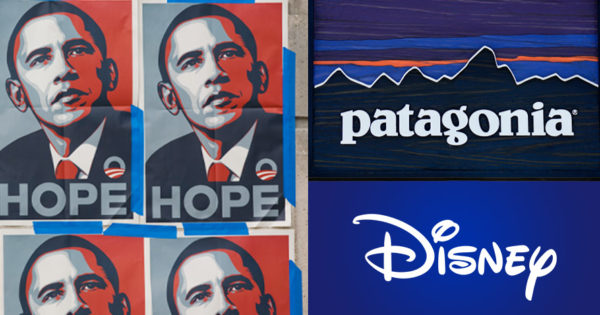
Obama: Change and hope

Some politicians get this better than most, and they’re often polarizing.

Politicians with multi-dimensional platforms and seemingly more layered sensibilities struggle to define their brand in a way that people can grasp. To be clear, complexity and sophistication aren’t bad. They are essential to business strategies and long-term success, but they don’t belong in our core messaging.

Obama understood the power of intention. Everything rolled into his idea of change, a message soon distilled into a slogan: “Yes, we can.”

More than 15 million ballots were cast by new voters in 2008, of which 68.7% voted for Obama. Part of his appeal was the simplicity of his brand. His message resonated with people and focused on a feeling and an aspiration more than an understanding of his political policies, creating a winning strategy.

Patagonia: Responsibility and advocacy 

Let’s consider how this concept translates to a consumer-facing brand. Patagonia has been equally polarizing and successful in recent years while staying close to its roots and adopting a persona matching the activism of its founder Yvon Chouinard.

In 2017, after President Trump announced rollbacks of protections on the Bears Ears and Grand Staircase-Escalante National Monuments, Patagonia took offensive maneuvers, issuing a campaign called “The President Stole Your Land.” This message lived on the Patagonia site, Chouinard threatened to sue the administration and later joined a coalition of grassroots groups and Native American tribes to do so.

While many brands would shy away from such overtly political messaging, the statement wasn’t about political gain. And instead of alienating its audience, people responded in favor. The day after the presidential rebuke, Patagonia’s external web sales were six times the regular rate.

Patagonia knows its audience and sticks to its brand values, and in the past decade, its revenue has quadrupled as it continues to develop its defense of public lands under the Patagonia Action Works program.

Disney: Joy and imagination

One brand has continued to build revenue with increasing speed while seemingly managing an impossible task: maintaining a simplified brand intention without risk of polarization. And that’s Disney.

Disney has built an empire on the concept of joy, delivering the three-letter word across every interaction and touchpoint in an imaginative way. “It all began with a mouse” in 1923, but the company has since amassed revenues of almost $60 billion. Disney’s empire spread from animation to filmmaking, then to franchise building in the form of Star Wars, Pixar and ESPN, and has now shifted into the lucrative streaming world in the form of Disney+.

https://www.adweek.com/brand-marketing/these-3-brands-ingrained-their-core-message-into-every-fiber-of-their-organization/


What Brands Need to Understand About Cancel Culture

Kanye West. Equinox. Taylor Swift. Kevin Spacey. Nelly. Donald Trump. Joe Biden. Guacamole. Post Malone. Crocs. Aziz Ansari. Elon Musk. 6ix9ine. Prada. Snapchat. United Airlines. Roseanne. Kim K’s Skims née Kimono.

Nothing in common? Think again. It’s not their charm and wit or a social following over 1 million or their unwitting ability to turn heads when you pass them in public. They’ve all been canceled.

You might be thinking, they don’t seem to be canceled. I just saw Aziz at the Comedy Cellar. I wore Prada loafers to work today. I didn’t even know Tesla was canceled. The truth is that it’s complicated.

Cancel culture, with roots on Black Twitter from around 2015, is used to express cultural boycott and is intended to take away power, attention and capital from a person or brand, whether it’s digital, financial or cultural.

It usually goes like this. Someone well known says or does something problematic, which goes viral and leads to online outrage, which leads to that figure apologizing. Cancellation means that a person or brand possesses enough equity to cancel, derived from words spoken or disseminated online where their power is predicated on the attention economy. Therefore, cancel culture continues its offend-outrage-atone cycle until the platforms from which they derive attention, or society’s derivation of value, change.

Because canceling has become so easy and frequent, cancel culture has become diluted.

Cancel culture encapsulates and amplifies what it means to be online. Our ubiquitous access to information allows us to see more things that are wrong and hear them more loudly. At the intersection of peak chaos and peak narcissism, cancel culture makes me as an individual feel like I have a voice that matters, that is making an impact and that can take back control over what’s happening around me. Canceling someone or something is transactional, socially performative and immediately rewarding with a low cost of entry. It’s essentially accountability arbitrage. Cancel culture is a space we feel we can hold public figures accountable so easily at the touch of a button.

But the truth is that outrage is less outrageous these days and often doesn’t translate offline. After Kanye West proclaimed slavery was a choice, Ye debuted at No. 1 on the Billboard 200. Tekashi69 committed the ultimate sin of ratting out his whole clique and signed a $10 million record deal from jail. After the Cambridge Analytica scandal (and all scandals thereafter) and a subsequent #DeleteFacebook campaign, Facebook’s numbers haven’t suffered. We behave much worse online than we do in real life. Perhaps nothing is ever truly canceled.

Canceling a person or brand is conceptual and is an attack on the method, as opposed to the underlying value system. Convenience, price or entrenched routines often outweigh brand trust and alignment with values. And because canceling has become so easy and frequent, cancel culture has become diluted. If you stacked up every brand you bought from in the last month against the causes you value, would you ever buy anything again? Keeping up would be a full-time job.

The impact of cancel culture on artist versus brand varies. It tends to be harder to separate artists from their work, and ultimately, there’s not a true direct replacement. This tends to make the cancel threshold higher but more permanent (think Kevin Spacey and Harvey Weinstein versus Kanye West).

For brands, the effect of being canceled depends on comparable substitutes. If Charmin were to suddenly become an ardent Second Amendment supporter, it would be easy for those who passionately believe in gun control to shift to Scott or Quilted Northern. And the more differentiated a brand is, the higher the switching costs for consumers when a brand does something they disagree with (think Equinox or Dior). Therefore, it’s even more important for brands to monitor cultural conversations tied to business results.

https://www.adweek.com/brand-marketing/what-brands-need-to-understand-about-cancel-culture/