5 Ways Brands Can Avoid Getting Lost in the Passing Wellness Fad

Welcome to the world of wellness, which is the philosophy that true health relies on the holistic care of the mind and body and that preventative healthcare is as important as treatment. As millennials age and become the highest spending generation, they are credited with driving the $4.2 trillion global wellness industry. But for every generation, wellness has become a part of life.

Recently, I listened to the audiobook Natural Causes: An Epidemic of Wellness, the Certainty of Dying, and Killing Ourselves to Live Longer by Barbara Ehrenreich, which pragmatically critiques the ideas of wellness and preventative care. Ehrenreich ruthlessly confronts the fact that these trends have developed a bad reputation, including being labeled self-indulgent or reducing self-care to a glass of wine and a bubble bath.

Like many Americans, I have also made some recent wellness changes in my life, including the adoption of a strict exercise regimen, awareness of my physical health and a change in eating habits. I have found myself considering diets like vegan, vegetarian and the popular keto diet, something I had never before explored. From SoulCycle and mindfulness to smartphone apps and mail-in DNA tests, wellness has become one of the fastest growing spaces for new products and services.

But why have we started to take our personal health so seriously? The answer is simply that we know more about our health now than ever before. It’s long been known in the consumer marketing world that the prevalence of the internet has encouraged consumers to research and make decisions for themselves. This includes personal health and wellness choices. We know that improving our health at a young age has a major impact on our longevity. Our society has also begun to take mental health more seriously (for good reason, as Americans have some of the highest rates of depression and anxiety seen in our history), and the issue of mental health awareness has become a major focus on social media.

These tactics have become static noise that goes unnoticed and becomes a useless differentiator when leveraged incorrectly.

On the flipside, wellness has lost its original meaning in the world of marketing. Brands evangelize that they represent a holistic lifestyle or are part of healthy living even when their mission may seem to be the opposite of healthy. These tactics have become static noise that goes unnoticed and becomes a useless differentiator when leveraged incorrectly. When done wrong, aligning with wellness comes across as disingenuous and can have a negative impact on consumer perception.

So, what does this mean for brands? Trends come and go, but brands can latch onto the enduring effect of wellness and personal health. Whether you lead marketing for a CPG brand, a fitness product, a health or food company or something that seems unrelated to wellness, there are important rules to follow to connect with wellness seekers.

Don’t lean into wellness unless you represent wellness

Make sure that wellness and health are core to your product or brand and that they represent something ownable. Ensure your brand has defined how its product or service fits into a wellness lifestyle and has demonstrated that online or through advertising. 

Focus on the science

Jade eggs may be a fad, but there is proven science around eating more vegetables, exercising and reducing stress. Instead of latching only onto abstract concepts, show how your products or brand ethos connects to reputable science (from peer reviewed science publications). Consumers are skeptical, and eventually, pseudoscience or stretching the truth will backfire and your brand will disappear with the fads.

Explore the concepts you’re promoting

Diluted concepts like mindfulness and holistic health have become somewhat meaningless, but they originally evolved from meaningful terms that came from spiritual practices and science. Instead of latching onto popularized meanings, advocate for specific ways that these unique concepts connect to your product.

Don’t be the bad guy

Our world is full of misinformation, alternative science and strange conspiracy theories. Be a responsible shepherd of ideas with advertising and try to stick to proven science.

Incorporate caring about the environment

Consumers increasingly care about the environment and sustainability. While promoting wellness, weave sustainability and reducing waste into your business mission and products.

Wellness and holistic health are not going anywhere. In fact, as more scientific studies support the ideas behind wellness and millennials get older, this way of thinking will only become more well-defined and widespread. While it’s up to brands to responsibly lead the way with wellness products and aligning themselves with a healthy lifestyle, companies should consider carefully before advertising themselves as part of the wellness movement.

https://www.adweek.com/brand-marketing/5-ways-brands-can-avoid-getting-lost-in-the-passing-wellness-fad/


4 Lessons Madison Avenue Can Learn From Silicon Valley

We’ve heard it ad nauseam: The agency model is broken. Consulting companies are coming for us, and Big Tech is stealing our best people with cafeterias that promise carving stations and kombucha on tap.

As an agency based in San Francisco, we don’t see doom; we see an opportunity to reinvent ourselves. Silicon Valley is where the world comes for ideas, and we’ve spent the last few years scouring these companies for behaviors and attitudes that we can apply to our business model.

Rather than complain about tech companies stealing our people, we wanted to see what we could steal from them.

Assume you’re doing it wrong

In advertising, we come in every morning with the assumption that we know what we’re doing; that we’re doing “it” right. But in Silicon Valley, they show up every day and assume they’re doing “it” wrong. That’s what drives them to constantly break what they’re working on and rebuild it.

The reason the word “pivot” has become a buzzword in business is because it happens so frequently in Silicon Valley.

We have to look at practices that began in the Mad Men era, like pairing a copywriter with an art director and sending them off to brainstorm, not as the way to do it but simply one way to do it.

As one example, we tested what would happen if we got a large number of people from all departments briefed in a room but gave them very little time to ideate. As you can imagine, the clock ticking created some palpable urgency and energy.

Make change a habit

The reason the word “pivot” has become a buzzword in business is because it happens so frequently in Silicon Valley.

Remember the craze around check-in apps? Well, one of them was called Instagram. But when the founders noticed that people liked the photo feature more than the check-in feature, they saw an opportunity and shifted all their resources to pursue it. The rest is billion-dollar history.

By contrast, we marketers have been trained to spend a lot of our intellectual calories on frameworks that map out which elements are fixed. We have to develop new muscles where change happens constantly and our teams get comfortable with this kind of uncertainty. 

Embrace the growth equation

In the book Hacking Growth, authors Sean Ellis and Morgan Brown lay out a detailed model for growth, which boils down to the following: Desire minus friction equals growth.

As agencies, we focus on building desire. As Don Draper said, “We create an itch they want to scratch.” But the engineers in Silicon Valley know that lowering all forms of friction can be just as powerful as increasing the desire. (They’re really good at math.)

When we try to understand as much as possible about both sides of that equation, we end up with better results. It also works when you apply it to your agency and think about the friction points potential clients might experience when working with you.

Track data inside your agency

In Silicon Valley, engineers are the creative department, and they are trained to be highly responsive to data. They want to build things people use and love, and if they get data that says otherwise, they ask what they can do differently to be more productive.

We all apply data analysis to the creative work that’s out there in market, but what if we track data as it applies to our ideation processes, too? Test out exactly how many ideas were created in how much time and how many of them went to the client and were approved. That data informs which processes are doubled down on and which should be left behind.

Not every idea you test will work—we’ve certainly had our share of humbling moments when something we were sure would be great was not. But everyone is vested in the process, and our client satisfaction scores are up double digits, so we continue to try to steal even more.

In advertising, we like to say that a great idea can come from anywhere. Considering Silicon Valley is responsible for the most business growth and innovation in history, looking to them for inspiration is not a bad place to start.

https://www.adweek.com/agencies/4-lessons-madison-avenue-can-learn-from-silicon-valley/


Can Dynamic Content Optimization Save Brand Storytelling as We Know It?

Brands and agencies are working overtime to establish a cost-effective model that maximizes the impact of both paid media and creative in a highly disrupted marketplace. This is evidenced by a recent increase in agency reviews, in-housing and hiring transformation experts.

While the explosion of inventory that is available to be purchased programmatically has been a virtual godsend for media buyers seeking control and efficiency, it has certainly posed some creative challenges. And that is putting it lightly.

Good storytelling in the age of programmatic media is really difficult.

Unlike the golden age of fixed position placements that featured exquisitely shot brand films, high gloss photography, pithy copywriting and other outputs from our industry’s top creatives, addressable media has not always been the ideal vehicle for delivering advertising brilliance.

This is particularly problematic for creatives because programmatic media spend will only increase year-over-year, according to eMarketer.

Necessity is the mother of invention, and fortunately, dynamic content optimization (DCO) platforms and partners have continued to innovate and grow their offerings in ways that will better support great brand stories.

DCO got a bit of a bad rap as a tool used primarily to drive lower funnel metrics by swapping out different offers or messages exclusively on digital banner ads. When in actuality, DCO simply uses data signals to trigger the most relevant content for an audience and can be used at any stage in the funnel. As DCO matured, the top players in the space now offer dynamic capabilities for social media, YouTube, OOH, TV and native. They have enabled some of the top platforms for telling great stories. It’s become a creative catalyst rather than a hindrance.

Brands and marketers of all business models and industries are now well-positioned to take full advantage of the more robust and compelling brand building capabilities of DCO.

We can look to DTC brands like Away and Glossier as best in class examples of building powerful brands by telling compelling and aspirational stories using DCO and programmatic media. Away has built a devout community of travel enthusiasts who feel a part of the brand’s mission and marketing because their travel photos are often included in that brand’s paid media content. Glossier has done an amazing job iterating multiple variations of beauty tutorials using behavioral data and fostering a close connection with its entrepreneurial founder and CEO who captures and posts a great deal of content herself.

Brands and marketers of all business models and industries are now well-positioned to take full advantage of the more robust and compelling brand building capabilities of DCO.

While this is awesome news, it’s only half the battle. To fully actualize the potential of DCO as a storytelling engine requires media and creative to closely align their planning. We need to bring together two disciplines that have historically operated somewhat in silos planning on different timelines, with a different set of insights and held to different KPIs.

Since the capabilities of DCO have evolved most rapidly in the last nine to 12 months, the collaborative kinks have yet to be worked out. Here are a few points of integration we can start with:

Audience

If you are going to plan your media against audiences, your brand’s content should be as well. Replace the big brand idea with a brand narrative crafted for each of your target audiences.

Planning should begin with deriving consumer and cultural insights that can help formulate a narrative that will resonate with each of your target audiences. After that narrative is crafted, you can start to map each one against the programmatic decision tree. Identify the key data signals that will be available to you and which aspects of the narrative will be most effective at each stage of the consumer journey. Use the data signals to serve the right elements of your story at the right time while your target is in the right mindset and make sure to optimize against a unified set of KPIs in-market.

Source

Next, pick the best sources of content for each audience in the context of the story you are trying to tell. Brands can get content from virtually anywhere today: their agency partners, in-house agencies, publishers, influencers. But not all sources are right for your specific brand, goals or budget. The selection of content sources requires a close and flexible collaboration between the stewards of the brand creative and those who are planning the media.

Some criteria for selecting the best sources collaboratively are those that are highly persuasive to my target audience, will produce all the required elements of a dynamic and flexible narrative, are willing to agree to full content rights or those that extend beyond their own fixed distribution and bring the narrative to life in an authentic, compelling and highly creative way. Net-net, the source is additive to the story and not just the delivery vehicle. 

Formats

Creative and media need to collaborate on making format decisions to ensure there is a balance between delivering creative excellence and driving media effectiveness. This is going to require a little give and take.

During a time of great change and disruption in our industry, when a lot of us often feel that up is down and left is right, it’s both inspiring and exciting to see DCO providers step up and truly provide a new paradigm for brand storytelling.

https://www.adweek.com/programmatic/can-dynamic-content-optimization-save-brand-storytelling-as-we-know-it/


The NCAA Compensating Players Was a PR Stunt

In a recent decision, the NCAA’s top governing board voted unanimously to allow college athletes to receive compensation for the use of their name, image and likeness. Each of the NCAA’s divisions must still create their own rules and details on the specifics.

Like many people, I saw the headlines in almost every major outlet and immediately thought this was a win for not only the players, but for everyone who fights for fair compensation in America. Not compensating student athletes has historically been especially egregious for many, not just because they are a major part of the NCAA’s show, but because they frankly are the show.

Student athletes have been the labor, marketers, influencers and overall reason that the NCAA, a nonprofit organization, earns nearly $1 billion in revenue annually. From the Fab Five at Michigan in the 1990s to Reggie Bush at Southern California in the early 2000s, players have often been bigger than the NCAA brand itself.

Now we are in a moment where college athletes have more tools and access than ever to build notoriety, excitement and brand loyalty for themselves and their programs, and everyone has made money from their influence—except the players.

From star quarterback Trevor Lawrence bolstering the Clemson football brand to the millions of dollars Zion Williamson brought to college basketball to the excitement Katelyn Ohashi brought to college gymnastics, we’ve seen the exceptionalism of college athletes raise the profiles of even the most storied schools.

We are in a renaissance of access and entertainment where players such as Arizona Cardinals quarterback Kyler Murray can have more social media followers than both the college he attended and the NFL team he was drafted by. Which is why many have praised the NCAA for finally being on the side of change by allowing their athletes to be compensated. But a deeper look at the NCAA’s decision actually reveals that what they actually did was nothing at all, merely smoke and mirrors.

One of the problems with the decision is that the statement released by the NCAA about it is extremely vague and doesn’t offer an outlook on implementation. In fact, the statement doesn’t even guarantee players will receive payments. It says they will have the “opportunity to benefit.” This is phrasing is at best thoughtless, and at worst, strategically ambiguous.

The NCAA also states that the “benefits” should be “consistent with the collegiate model.” This doesn’t make sense because the collegiate model as it currently stands doesn’t allow student athletes to be compensated in any form.

The statement does speak to the “modernization” of the current rules, but again, is vague with no true implementation strategy given. Unless the collegiate model is going to change, the language is inherently contradictory to the broad concept that has been presented.

That said, the NCAA has stated that its deadline to create an implementation plan and new rules is 2021. While that means we may see updates to their plan over the next year, right now it comes off as lackluster and possibly rushed. The sudden haste by the NCAA seems like an attempt to alter the narrative about being a villain, as pressure mounts from various directions to give student athletes more rights.

One example of that pressure has come from California Governor Gavin Newsom, who passed legislation in September that unilaterally allows student athletes in the state to be compensated for their name, image and likeness with no restrictions. Other large states such as New York and Florida were also gearing up to propose similar legislation, which put further pressure on the NCAA.

Not only did Newsom pass the bill, but he signed it on an episode of LeBron James’ HBO show The Shop. This made sense for many, as James has been very outspoken about the need for rights for athletes at both amateur and professional levels. But this may have also been a nod to James’ agent and longtime friend Rich Paul, who also spends his time trying to find ways to further empower and compensate players at every level.

https://www.adweek.com/brand-marketing/the-ncaa-compensating-players-was-a-pr-stunt/


3 Ways Your Agency Can Retain Diverse Global Creatives

When it comes to the challenges that people of diverse backgrounds face in the workplace, I’ve seen a lot. Not only have my accent and skin color stood out, but I’m also a woman working in a male-dominated field. Needless to say, I’m familiar with feeling uncomfortable. This discomfort has made me very aware of and sensitive to the nuances of diverse groups and how companies can help them thrive and contribute to the global perspectives needed in today’s business world.

Most days, I feel like your typical global citizen. I was born and raised in India and have lived in three countries and seven cities. But I was not always considered a diverse part of a team. Back in India, I was part of the majority and came to understand the downfalls of groups with homogenous members. It wasn’t until my curiosity led me to take a seat on the other side of the table (and world) as a minority that I understood the difference between a work culture that’s open and celebrates differences versus one that offers you a voiceless seat. It’s helped me recognize what companies need to do to help global thinkers like me thrive, especially in the Midwest, where I’ve lived for six years.

It may not be love at first sight

When you meet someone from a different background or culture, don’t expect the friendship sparks to fly. The first conversations will be awkward, and it may take multiple meetings and conversations to feel comfortable with each other. The truth is that if it’s uncomfortable for you, it’s probably more uncomfortable for the person who is in the minority.

We risk our global thinkers either walking away or conforming to the status quo and leaving their unique perspectives at home.

Before I knew it, I was talking to people with similar interests. Sometimes it can be harder to do. The wider and deeper relationships that I have made at work have come about by both parties coming to the table again and again. We continued coming back in spite of not getting each other’s humor right away because we left with ideas that made us think differently.

A question is just that 

In an effort to not offend me or sound unworldly, many people don’t talk to me at all. Living in an era when people are often called out publicly for their mistakes has made it harder for outsiders to make connections. I have never been offended by curiosity, and my friends and coworkers will tell you that I’m the queen of asking dumb questions. If it weren’t for those questions (good and bad), I would have learned very little in life besides the upcoming weather forecast.

Ask your global talent about their life outside of work, talk about the differences between where they grew up and where they live now. And truly listen. It will help you understand what they need to succeed. For example, I come from a culture where challenging authority or seniority is considered disrespectful. Initially, I found it hard to communicate my ideas in large meetings. To overcome that, I started to build in time for smaller meetings with my boss to have the opportunity to lay out my arguments. If my manager hadn’t made time for that, my voice would have been lost along with my ideas.

Reward and celebrate everyone, not just the majority 

I’m an agnostic who really enjoys wine so I’m always rooting for a good Christmas party and a celebration that includes alcohol after the completion of a successful project. But in talking with other members of minority subsets, they have pointed out that due to their religious beliefs, alcohol isn’t considered a reward for their efforts or the success of a project. It took me back to all the lunch and dinner meetings I had where I left hungry because of my personal belief in vegetarianism.

A diverse and inclusive work culture should celebrate more than Christmas. Small actions can be taken to recognize different holidays than what the majority celebrates, including making sure people know about and are accommodating of dietary restrictions and beliefs. When my company celebrated Chinese New Year, it opened up more dialog with employees of Chinese descent, and the food and cultural offerings were a treat for the whole office. Making it a habit to accommodate differences builds camaraderie and closer bonds. It lets the people working for you know that who they are matters to the company.

It’s taken me a long time to find the balance between feeling like I belong and holding on to my unique outlook, which is what I was hired for in the first place. The onus of achieving that balance can’t just fall on the individual but needs to fall on all of us. Otherwise we risk our global thinkers either walking away or conforming to the status quo and leaving their unique perspectives at home.

https://www.adweek.com/agencies/3-ways-your-agency-can-retain-diverse-global-creatives/


User-Generated Content Will Allow Plant-Based Protein to Flourish

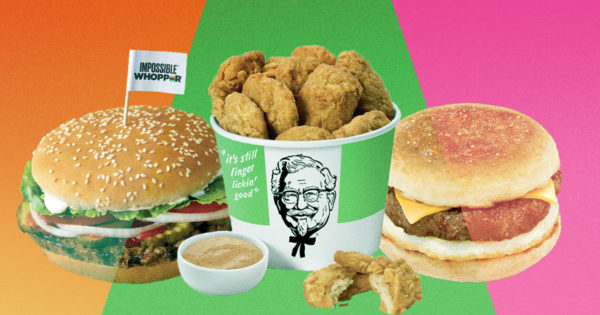
Need a good small talk conversation starter? Look no further than soliciting opinions on the new trend of plant-based protein. “Have you tried the Impossible Burger yet?” “Would you ever eat that Beyond Meat stuff?” “I was a vegan once for two weeks.”

Nearly seven in 10 Americans are trying to increase plant protein consumption. And the growing popularity is translating into real dollar growth, as the sales of plant-based meat alternatives in the U.S. grew 10% in the past year. Just in September alone, six new plant-based meat brands emerged, including Protein Patties from Trader Joes, Incogmeato from Kellogg’s Morningstar Farms, Awesome Burger from Nestle’s Earth Foods and Kroger’s Simple Truth Plant Based.

However, many still remain highly skeptical of the movement’s future, including Chipotle’s CEO, who questioned whether plant-based foods designed to taste like meat have long-term staying power.

A new trend like this follows a similar pattern of any customer adoption story: innovators, early adopters, early majority, late majority and laggards. But how can the plant-based protein movement become a ubiquitous staple in consumers’ diets and not just a fad that we all laugh about in 10 years and coin as “peak 2019”?

The answer is social proof. While there are a host of market factors that will contribute to adoption, recommendation currency will be absolutely critical to burgeoning plant-based protein brands and the restaurants and stores that will carry them. While marketers invest in advertising, celebrities and high-dollar influencers, consumers most trust recommendations from their personal social circles. In fact, in a study from Survey Monkey, they found about half of consumers have never bought something because of an advertisement. Fewer than one in 10 have ever purchased a product because of a celebrity endorsement, and only 13% have purchased because of an online influencer. Of all advertising mediums, TV is the most effective, but friends and family are approximately twice as influential across the board.

The real meat … of this movement will be determined by the dedicated marketing apparatus these brands build to foster authentic UGC from everyday people.

Right now, plant-based protein brands are still hovering around the innovator/early adopter phase. As you move along the innovation adoption curve, it becomes harder to convince people. Many brands will see a natural stream of organic user-generated content (UGC) simply due to its novelty.

When Beyond Meat filed to go public, the company cited 7.5 billion earned media impressions in the first nine months of 2018. Take note though; this will fade. The real meat (yes, sorry) of this movement will be determined by the dedicated marketing apparatus these brands build to foster authentic UGC from everyday people.

Here are three ways for plant-based protein brands to achieve staying power.

Build a community home for both passionate advocates and curious lurkers

The plant-based protein movement is ripe with early adopters, also referred to as lighthouse customers, who are primed to be more socially connected. Nurturing a compelling brand community as part of your brand’s website experience will amplify its collective sharing power in a brand positive way that also builds emotional ties and loyalty.

Additionally, it’s widely accepted in internet culture that the majority of content is driven by a small percentage. The 90-9-1 rule states that 1% of users contribute the most, 9% contribute from time to time and the remaining 90% are lurkers. For plant-based protein brands, they must develop a home for both vocal consumers to connect and for inquiring consumers to learn and engage.

It’s important for marketers to facilitate a valuable information exchange in addition to emotional lifestyle engagement. Remember, lurkers still consider themselves very much a part of the community even if they don’t contribute.

Focus more on storytelling and less on innovation

While it may be tempting to get consumers talking about the use of pea protein versus soy leghemoglobin to achieve the right bleed effect, most people beyond early adaptors don’t care. Burger King’s Impossible Whopper commercial gets it right by showing reactions from everyday people who can’t believe the burger they’re eating does not contain meat.

But advertising focused on the taste test “meat or no meat” game will run its course rather quickly. Plant-based protein brands must embrace storytelling that appeals to higher-order emotions. Marketers should encourage content that shows how plant-based protein leaves a positive impact. Maybe plant-based protein brands inspire hope for consumers, for a future where less beef consumption leads to a better environment.

Get personal with power users 

Early adopters are guinea pigs for new products. They provide marketers with valuable feedback and are the most invested, both emotionally and financially given the fact that they are taking a risk by purchasing your product that will likely be cheaper in the future. As such, they are entitled to a higher value exchange. Personalized marketing is at the top of marketers’ agendas. However, personalization should go beyond personalized ads or a personalized email campaign.

Marketers should proactively collect zero-party data on early consumers that focus on lifestyle behaviors, beliefs, motivations and preferences. From this data, marketers can offer brand experiences that match a consumer’s emotions rather than demographics. It also shows consumers that the data collected provides value to their experience.

https://www.adweek.com/brand-marketing/user-generated-content-will-allow-plant-based-protein-to-flourish/


Brands Need to Trust Creative Agencies Like They Do Consultancies

When McDonald’s awarded its business to Wieden+Kennedy last month, the entire agency world should have celebrated—or at least taken notice. Since when could a creative agency with a clear competitor on its roster (KFC) even be considered for the business? Where were the lawyers? Were the folks in procurement all on vacation?

The truth is that McDonald’s didn’t care about any conflict. Its CMO, Morgan Flatley, who clearly understood that we’re in a talent-based industry, chose the agency she felt would get her the best work and trusted that Wieden would keep the two competing companies’ confidential business information (and chicken sandwich recipes) separate.

Conflicts have long been one of my biggest industry peeves. One look at the largest agencies in the world, and it’s not hard to see why the issue gnaws at me. The largest agency on the list is Accenture, followed by PwC, IBM and Deloitte.

What do they all have common? They’re consultancies that simply aren’t expected to play by the same rules as creative agencies. Accenture, for example, boasts on its website that its clients include 92 of the Fortune Global 100. Something tells me there are a few conflicts among them.

It’s time for all clients … to place the same level of trust in creative agencies as they do in consultancies.

Why is it that when agencies have two brands in a category it’s considered a conflict, but when consultancies do it, it’s called a practice? It’s a double standard that gets in the way of what most matters: the work. And if you think about it, it’s more than a little insane that the rules for conflicts are more stringent for an agency that creates a brand’s shelf talker than it is for a consultancy tasked with coming up with the same brand’s five-year business plan.

I’m certainly not arguing that Accenture and its ilk shouldn’t be allowed to work with competing clients. Clients seek them out in large part because they’ve established category areas of expertise. Further, they understand that consultancies are more than capable of establishing proper firewalls.

But so are agencies. Conflicts and privacy aren’t new issues. Moreover, standards for protecting confidential information have always existed, and creative agencies have always adhered to them.

As the agency and consultancy worlds continue to merge, it’s time for all clients—not just McDonald’s—to place the same level of trust in creative agencies as they do in consultancies.

What is more, we work in an age where intersecting data and technology to inspire creativity is necessary. If agencies that find ways to bring these together and make the necessary investments in each are not allowed to monetize these investments across multiple clients, we simply won’t be able to do what our clients hire us to do: create competitive advantage through ideas. And in the end, it won’t be just agencies that lose as a result—it will be our clients as well.

Clients understand that they’re best served by accessing the best talent. They get this by facilitating the level of investment we need in technology, trusting that we know how to keep their confidential information confidential and respecting our ask for fair and equal treatment with the consultancies.

As a result, most of the contracts we sign today tie confidentiality to the individual with detailed security requirements across the agency. They do not restrict the entire agency from selling any liquids globally because there was once a social media post for a new soft drink.

As more and more client-agency relationships are project-based and many of the AOR relationships that thrive are built on talent-based models that tap into teams across a network, we need to revisit the whole concept of exclusivity across our industry. Combine these factors with our increased competition from consultancies and our imperative to continue scaled investments in data and technology, and the path forward is clear. It’s time for more brands to think like McDonald’s when choosing agency partners and trust them to respect their privacy. The result for our clients, I’m sure of it, will be better work and better results.

Now, if you’ll excuse me, I’m off to grab a Big Mac and then a Coolatta for dessert.

https://www.adweek.com/agencies/brands-need-to-trust-creative-agencies-like-they-do-consultancies/


If You Want Ad Transparency, Stop Playing the Blame Game

With an estimated one-third of the U.S. programmatic display ad spend going to the so-called ad tax, the need for transparency is obvious. But a feud over two new IAB tools—sellers.json and OpenRTB SupplyChain object—underscores why transparency will never be possible as long as the industry perpetuates the intermediary blame game.

While the dispute is nominally about technical specifications, the real issue is whether a particular market player—in this case, Google’s exchange bidding—should be considered an intermediary. According to the IAB, Sellers.json identifies a player as either direct or as an intermediary in a transaction, while SupplyChain Object identifies hops, in which a player, such as exchange bidding, is a financial participant that takes a cut or where it simply passes through the impression.

So can’t we just apply the correct label and move forward?

The issue is that intermediary carries a tremendous stigma within the context of the transparency conversation. In fact, as an industry, ad-tech vendors have spent more than a decade bashing each other with terms like “intermediary” and “middlemen” to point fingers over how the advertising spend leaks out of the supply chain on the way to the publisher.

The problem with this finger-pointing is that it gives publishers and advertisers the impression that all intermediaries are shady rent seekers who lurk in the shadows of an opaque ad-tech pipeline. To be clear, that’s not true. Buyers and sellers depend on intermediaries to transact, deliver and attribute media.

But our focus on labels like intermediary means we end up asking the wrong question. From a definition standpoint, an intermediary is any entity involved in the transaction that isn’t the ultimate buyer or seller. The vast majority of market participants—from technology vendors, data providers, buy-side and sell-side platforms and agencies—are intermediaries. The question we need to ask is whether those intermediaries add value to the transaction.

Ending the blame game isn’t a technological challenge. We have the tools; what we need is leadership.

Right now, that’s impossible to answer. Even if we analyze past transactions, there’s no way to tell who added value because there’s no visibility into the third-party agreements that bind the ad-tech pipeline together. Consequently, seemingly innocuous conversations about the intermediary label become fraught because that label is seen as the jumping off point for an advertiser to investigate an alternative supply path. Of course, even an alternative supply path would run through an intermediary (even if we don’t apply that label), which tells you the blame game isn’t on the level.

But let’s take a step back and think about what we’re trying to achieve. As the general manager of the IAB Tech Lab explained, “Growth in the global digital advertising ecosystem requires trust … These technologies help enable a more transparent, more efficient advertising environment.”

Unfortunately, what passes for trust in ad tech has been an exercise in reactive thinking. The industry has built a series of audit tools that, theoretically, should shed light on an opaque marketplace but never quite delivers on that promise. But what if buyers and sellers had the ability to be proactive about trust?

By recording media contracts as smart contracts, buyers and sellers could frontload the rules regarding fees, technical specifications and even which entities they wish to transact with. By definition, any intermediary that meets those prerequisites adds value, and because blockchain is an immutable and visible ledger, attribution of that value is transparent.

Ending the blame game isn’t a technological challenge. We have the tools; what we need is leadership. Instead of sitting on the sidelines watching intermediaries point fingers, buyers and sellers must rise above the fray by demanding that intermediaries meet their terms.

https://www.adweek.com/programmatic/if-you-want-ad-transparency-stop-playing-the-blame-game/


It’s Time We Overhaul the Industry’s Narrative Around Mental Illness

This is a very difficult topic to write about, given my cultural background where “we don’t talk about these things.” However, the truth is that we must talk about these things, as they are a natural part of life and affect so many people annually. Some we know, many we don’t. Too many suffer in silence and laugh along, as we make snide remarks and offhand jokes about the mental illness conditions that often lead up to—and sometimes are direct causes of—suicide.

We talk a lot these days about work-life balance and health and wellness in business. Too often it’s just talk. Very little action is taken to assist those that need help, much of which requires preventative actions and resources that allow people to be able to afford required help.

I was shocked to recently discover that some key medical needs in this area are not covered by health insurance, as they are not deemed medical priorities/emergencies or real medical issues. Those of us who work in advertising and marketing fields find ourselves in constant pools of stress, duress and high-level pressure, the precursors to depression, mood swings, hopelessness and their unfortunate outcomes (unexpected rage, loss of productivity, absenteeism, addictive behavior, etc.).

We hold people at fault when they show signs of stress and request time off to deal with it. Societal taboos don’t allow those affected to honestly discuss their issues, so they hide, lie and suffer in silence, alone and with the high anxiety of being discovered. HR people, naturally, are not trained to deal with these issues. Hell, they are not trained in most cases to even notice the signs before things derail.

I have worked with people that were clearly dealing with challenges. Depending on their level and stature in the organization, we allowed it to fester, pretending nothing was wrong. This is especially the order of the day if the person is considered “highly creative” or “valuable to the agency-client relationship.”

Often, their internal pain and suffering were more advanced than we thought. There were virtually no treatment options for them. We employed a position of: “Keep quiet. Don’t ask. Don’t tell.” We enabled them to scream at underlings, yell at colleagues and disappear for days at a time. And we still acted like all was fine. Then, when the bomb exploded, we all acted surprised.

We need to change the narrative and the workplace dynamics around these issues. We must take a stand and significantly ramp up discussions and solutions around preventative and real-life treatment options. We must provide safe spaces for people to raise their hands and seek help. We must erase the taboos from our mindset and become true supporters of our colleagues. This should be a topic at every industry conference and convention. We must fully open our eyes. These challenges are not going away.

Let’s truly help prevent suicide and not hinder treatment by hiding behind false realities and fear.

https://www.adweek.com/agencies/its-time-we-overhaul-the-industrys-narrative-around-mental-illness/


Influencer Marketing Has an Implicit Bias Problem

When you think of implicit bias, you probably associate it more with workplace culture than with social media and internet culture. But it isn’t something we turn off when we leave the office. Surprise—it’s also there when we go on that 30-minute Instagram binge. Just take a look at some of the hottest PR influencer trips of the summer that have taken over your feed, which are also likely all very white and very blonde.

YouTube has been slammed time and time again for its algorithm for promoting and recommending predominantly white influencers, ultimately getting more eyeballs on their content, leading to more engagement and more opportunities to work with brands and make a living. Now, with Instagram allowing advertisers to promote influencer content, this issue will take over more and more of our feed there too.

Implicit bias trickles down to influencer marketing and to how marketers select influencers for campaigns. We all tend to follow influencers that look and act like ourselves. We follow people who remind us of our values, those who we see and feel seen by. But even when we look for new content or influencers to follow, platforms often recommend more white content regardless of what had been previously viewed. And even when black influencers do work with brands, there have been many complaints that they often get paid less than their white counterparts.

With the industry hyper-focused on inclusivity, why is influencer marketing so behind the curve? It’s our job as marketers to end this cycle. Here’s a few things to think about regarding your next influencer campaign.

There is no risk

If we want to create change for the future, we have to systematically change the stereotypes.

Often when it comes to recommending influencers for brand partnerships, many marketers inadvertently bucket diverse candidates into a “risk category aka they aren’t brand aligned, in marketing speak. Marketers need to change this mindset. They need to understand that tapping into diverse influencers is not a risk, and it never was. If brands aim to be more inclusive, it’s not just about matching the white standard but creating a new standard altogether. Bringing diverse influencer candidates to the table is the first step and should be at every step of the creative process.

While legacy brands like Gucci and Revolve Clothing are taking a hit, we’re also seeing brands doing it right, such as Outdoor Voices, Fenty and Reebok. The latter prioritize and empower diverse influencers not in a performative way, but because they understand that diversity and inclusion are at the forefront of culture. And consumers stand behind them.

You can’t hire people you can’t see

When it comes down to discovering diverse influencers, it is just like an HR department. Continuing to recruit from the same sources will give you the same outcome. It’s the same for brands looking to expand their influencer pool. Look outside the regular pipeline of content to discover, even when it means checking the bias of those owning influencer identification.

Point of view over views

Tapping into diverse influencers is a way to show the audience their true self and culture through authenticity. After all, diverse influencers are reaching the exact audiences that brands need access to without compromising their identity and authenticity in the process, ultimately keeping their fans engaged and coming back for more—and it shows. If we want to create change for the future, we have to systematically change the stereotypes.

We are in the business of culture, which means we are responsible for accurately partnering with those depicting it. Brands that don’t evolve and prioritize true consumer representation will continue to be disrupted by companies that realize the risk doesn’t lie in diversity, it lies in ignoring it.

https://www.adweek.com/brand-marketing/influencer-marketing-has-an-implicit-bias-problem/