Vulnerability Exposes Rockwell Controllers to DoS Attacks

Some of Rockwell Automation’s MicroLogix controllers and ControlLogix communications modules are affected by a potentially serious vulnerability that can be exploited for denial-of-service (DoS) attacks.

ICS-CERT published an advisory describing the vulnerability on Thursday, but Rockwell Automation informed customers of the flaw several weeks ago – Rockwell’s advisory is only available to registered users.Serious vulnerability found in MicroLogix controllers

According to Rockwell and ICS-CERT, the security hole, tracked as CVE-2018-17924 with a CVSSv3 score of 8.6, impacts MicroLogix 1400 controllers from the A, B and C series. It also affects various versions of the 1756 ControlLogix Ethernet/IP communications modules, including series A, B, C and D.

ICS-CERT says the impacted products are used worldwide in sectors such as transportation, critical manufacturing, food and agriculture, and water and wastewater.

Learn More About ICS Vulnerabilities at SecurityWeek’s 2018 ICS Cyber Security Conference

The vulnerability allows a remote and unauthenticated attacker to cause the impacted devices to enter a DoS condition.

“An unauthenticated, remote threat actor could potentially send a CIP connection request to an affected device and, upon successful connection, send a new IP configuration to the affected device even if the controller in the system is set to Hard RUN mode,” Rockwell explained. “When the affected device accepts this new IP configuration, a loss of communication occurs between the device and the rest of the system. Reason being, the system traffic is still attempting to communicate with the device via the IP address that was overwritten.”

Rockwell has released firmware updates for some of the affected controllers and communications modules, but for many of them it has only provided mitigations.

These mitigations include using firewalls to block Ethernet/IP messages from unauthorized sources, using hardware keyswitch settings to prevent unauthorized changes to the device, and minimizing network exposure to control systems.

DoS vulnerabilities can pose a serious risk in industrial environments as they can be exploited to cause severe disruptions to production systems. In contrast to IT networks, where confidentiality is the most important, the biggest concern for OT network operators is availability.

Related: Rockwell Patches Flaw Affecting Safety Controllers From Several Vendors

Related: Severe Vulnerabilities Expose MicroLogix PLCs to Attacks

Related: Rockwell Automation Patches Severe Flaws in Communications Software

view counter

Eduard Kovacs (@EduardKovacs) is a contributing editor at SecurityWeek. He worked as a high school IT teacher for two years before starting a career in journalism as Softpedia’s security news reporter. Eduard holds a bachelor’s degree in industrial informatics and a master’s degree in computer techniques applied in electrical engineering.

Previous Columns by Eduard Kovacs:

Tags:

http://feedproxy.google.com/~r/Securityweek/~3/C9iB0dINonE/vulnerability-exposes-rockwell-controllers-dos-attacks


New Lawsuit Claims Marriott Still Exposes Customer Information

A new class action filed against Marriott following the massive data breach alleges that the hotel giant’s systems are affected by a serious vulnerability that still exposes customer information.

Several lawsuits have been filed against Marriott after the company revealed that hackers had access to its systems since at least 2014 and that they may have stolen the details of up to 500 million customers from the Starwood guest reservation database.

The latest class action, initiated by law firm Edelson in Maryland, claims that Marriott’s network is still vulnerable to cyberattacks. Edelson claims its in-house forensics lab discovered a flaw in Starwood’s internal systems that exposes a “wealth of information.”

Edelson’s complaint is redacted to avoid giving away the details of the vulnerability, but it does note that “some of the largest and most significant data breaches in recent history were carried out by leaving open access to this exact type of data.”

“[The exposed information] could provide an endless roadmap of network weaknesses and attack points. Likewise, a database of this kind offers numerous data points for phishing attacks and social engineering,” the complaint reads.

Edelson also pointed out that when individuals impacted by the breach sign up for the WebWatcher service offered by Marriott through Kroll, they relinquish their right to bring legal action.

The WebWatcher service, offered free of charge for one year, monitors websites where personal information is shared and alerts the consumer if their information is found. However, the WebWatcher terms of service include a mandatory arbitration, jury, and class action waiver.

The lawsuit highlights several past cybersecurity incidents involving Starwood and Marriott systems – including the discovery of vulnerabilities and malware – in an effort to show that the hotel company failed to take appropriate steps to secure customer information and that it violated several laws.

SecurityWeek has reached out to Marriott for comment and will update this article if the company responds.

Marriott discovered the massive breach on September 8, when one of its internal security tools detected suspicious activity related to the Starwood guest reservation database. The investigation launched by the company revealed that the unauthorized access may have dated as far back as 2014.

Individuals involved in the investigation revealed that some clues left behind by the hackers suggest that the attack may have been part of a cyber espionage operation conducted by the Chinese government.

Related: Schumer Says Marriott Should Pay to Replace Hacked Passports

Related: Espionage, ID Theft? Myriad Risks From Stolen Marriott Data

view counter

Eduard Kovacs (@EduardKovacs) is a contributing editor at SecurityWeek. He worked as a high school IT teacher for two years before starting a career in journalism as Softpedia’s security news reporter. Eduard holds a bachelor’s degree in industrial informatics and a master’s degree in computer techniques applied in electrical engineering.

Previous Columns by Eduard Kovacs:

Tags:

http://feedproxy.google.com/~r/Securityweek/~3/LPejGrwsiRQ/new-lawsuit-claims-marriott-still-exposes-customer-information


Google Patches More Than 50 Android Vulnerabilities in December

Google this week released a set of security patches for Android, to address over 50 vulnerabilities in the mobile operating system.

The most severe of the security bugs is a critical issue in Media framework that could be exploited by remote attackers to execute arbitrary code within the context of a privileged process, with the help of a specially crafted file. 

A total of four Critical flaws were addressed in Media framework this month, along with three High severity bugs. The patches were included in the 2018-12-01 security patch level along with fixes for two High risk vulnerabilities in Framework and 8 flaws (two Critical and 6 High severity) in System, for a total of 17 issues. 

Of the six Critical bugs addressed in this security patch level, five were remote code execution vulnerabilities and one was an information disclosure issue. The resolved High risk flaws included elevation of privilege, information disclosure, and remote code execution bugs. 

The second part of Android’s December 2018 update, the 2018-12-05 security patch level, fixes 36 vulnerabilities. 7 High risk bugs impacted System and HTC, Kernel, and Qualcomm components, while the remaining 29 (5 Critical and 24 High severity) were addressed in Qualcomm closed-source components. 

A separate software update was released for the Pixel/Nexus devices, to address a Moderate risk vulnerability in Qualcomm components. 

The update also includes a large number of functional patches, which address issues that are not related to security. This month, the update improves the performance of pattern unlock, memory, camera, and audio, along with other functionality of the Google devices. 

Related: Google Introduces Security Transparency Report for Android

Related: Google Boosts Android Security with Protected Confirmation

view counter

Ionut Arghire is an international correspondent for SecurityWeek.

Previous Columns by Ionut Arghire:

Tags:

http://feedproxy.google.com/~r/Securityweek/~3/uFVSmWC9K7k/google-patches-more-50-android-vulnerabilities-december


Apple Patches Tens of Flaws in iOS, macOS, Safari

Apple this week released several security updates to address tens of vulnerabilities impacting the iOS and macOS platforms, the Safari browser, and various Windows applications. 

20 of the vulnerabilities were patched with the release of iOS 12.1.1, impacting various components, including Airport, Disk Images, FaceTime, File Provider, Kernel, Profiles, Safari, and WebKit. 

WebKit was impacted the most, with 6 vulnerabilities addressed in it, followed by Kernel, with 5 flaws, and Safari, with 4 security bugs. 

The flaws include elevation of privilege, arbitrary code execution, denial of service, kernel memory leaks, and user interface and address bar spoofing, as well as issues that could lead to viewing contacts from the lock screen or could allow applications to learn the presence of other apps on a device. 

The update is available for iPhone 5s and later, iPad Air and later, and iPod touch 6th generation. 

macOS Mojave 10.14.2 fixes 13 vulnerabilities in Airport, AMD, Carbon Core, Disk Images, Intel Graphics Driver, IOHIDFamily, Kernel, and WindowServer. Kernel was impacted the most, with 5 vulnerabilities patched in it.

The addressed flaws could allow malicious applications to execute arbitrary code with kernel or system privileges, to elevate privileges, or to read restricted memory, or could be abused for denial of service attacks or to read kernel memory. 

Safari 12.0.2 was released with patches for 9 vulnerabilities, 6 of which impact WebKit. The updated browser is available for macOS Sierra 10.12.6, macOS High Sierra 10.13.6, and macOS Mojave 10.14.1. 

Apple also announced tvOS 12.1.1 this week, with patches for 14 vulnerabilities in five components, namely Airport, Disk Images, Kernel, Profiles, and WebKit. The update is available for Apple TV 4K and Apple TV (4th generation). 

iTunes 12.9.2 for Windows and iCloud for Windows 7.9 arrived with fixes for 8 vulnerabilities, Apple revealed. Both are available for machines running Windows 7 and later. 

Related: Apple Patches Passcode Bypass in iOS

Related: Researchers Find ‘Authentication Weakness’ in Apple’s Device Enrollment Program

view counter

Ionut Arghire is an international correspondent for SecurityWeek.

Previous Columns by Ionut Arghire:

Tags:

http://feedproxy.google.com/~r/Securityweek/~3/UQoFuDZaVhg/apple-patches-tens-flaws-ios-macos-safari


Siemens Wants to Release Security Advisories on Patch Tuesday

Siemens wants to release security advisories on the second Tuesday of every month, similar to Microsoft, Adobe and SAP.

The company carried out a pilot test last month, when it published a total of 16 advisories – including new advisories and updates to previously posted announcements – on November 13. It’s now hoping to get some feedback and comments from customers on the decision to release advisories on Patch Tuesday, which the company has dubbed “Siemens Advisory Day.”Siemens Patch Tuesday advisories

“We constantly improve our service quality and are eager to give you the best options we can to run your Siemens systems as secure as possible. Our approach with vulnerabilities in our products is to communicate them transparently and responsibly,” Martin Ruf of Siemens ProductCERT told customers via email.

“We want to give you the chance to better plan resources and maintenance windows. Therefore, we decided to publish vulnerabilities once a month. We decided to take the second Tuesday as you might already have service windows aligned to that date in place,” Ruf added. “In case we have reasons to publish advisories out of band (e.g. due to criticality), we will still do so.”

Learn More About ICS Vendor Strategies at SecurityWeek’s ICS Cyber Security Conference

Siemens’ advisories typically inform customers of vulnerabilities, but they don’t always announce the availability of patches. The German industrial giant also uses advisories to tell customers that it’s investigating the impact of specific flaws on its products, that mitigations and workarounds are available for a security hole, or that fixes are in the process of being developed.

One out-of-band advisory was published on November 27, when Siemens revealed that some of the Linux and GNU components of a multifunctional platform for its SIMATIC S7-1500 industrial automation controllers are affected by over 20 vulnerabilities.

It’s not uncommon for Siemens products to be exposed to attacks due to vulnerabilities in third-party components. The list includes several variants of the Meltdown and Spectre vulnerabilities, and the Foreshadow/L1TF flaws.

Related: Flaws in Siemens Tool Put ICS Environments at Risk

Related: Flaws Expose Siemens Protection Relays to DoS Attacks

Related: Flaws Expose Siemens Central Plant Clocks to Attacks

Related: Electrical Substations Exposed to Attacks by Flaws in Siemens Devices

view counter

Eduard Kovacs (@EduardKovacs) is a contributing editor at SecurityWeek. He worked as a high school IT teacher for two years before starting a career in journalism as Softpedia’s security news reporter. Eduard holds a bachelor’s degree in industrial informatics and a master’s degree in computer techniques applied in electrical engineering.

Previous Columns by Eduard Kovacs:

Tags:

http://feedproxy.google.com/~r/Securityweek/~3/AqE5ZHa4mp4/siemens-wants-release-security-advisories-patch-tuesday


UK Spy Agency Joins NSA in Sharing Zero-Day Disclosure Process

GCHQ Joins the NSA in Publishing its Vulnerabilities Equities Process

On November 15, 2017, the U.S. government made public its vulnerability equities process (VEP). This is the process used to decide whether a government agency should disclose a discovered vulnerability or keep it secret for its own purposes. Exactly one year and two weeks later, the UK government did similar, disclosing its own Equities Process. 

The issue at stake is summarized by Dr Ian Levy, technical director at the UK’s National Cyber Security Centre (NCSC), which is part of the Government Communications Headquarters (GCHQ) intelligence agency. “When we find a security problem, we need to decide what to do. Our default is to tell the vendor and have them fix it, but sometimes – after weighing up the implications – we decide to keep the fact of the vulnerability secret and develop intelligence capabilities with it.”

Both governments admit to stockpiling vulnerabilities. This is not open to discussion – they just do. The equities process is the means by which they decide which vulnerabilities should be kept secret from vendors, security companies and the public.

Neither government admits – within this process – that they also develop and stockpile exploits for those vulnerabilities. However, the Shadow Brokers release of the NSA EternalBlue exploit makes it self-evident that at least the NSA develops exploits; while GCHQ’s ‘developing intelligence capabilities’ would require the ability to exploit the stockpiled vulnerabilities.

The Two Processes

The principles underlying the U.S. and UK processes are almost identical. For example, in both cases the decision process involves only government agencies: it is effectively an arbitrary intelligence agency decision on whether to retain or disclose a vulnerability.

The U.S. process involves multiple government agencies. The UK process involves only two specified agencies: GCHQ and NCSC.

The U.S. process produces an annual report to the Cybersecurity Coordinator (at that time Rob Joyce, but a position that has since been eliminated by the Trump Administration). This report ‘may’ be provided to Congress. There is no public requirement for reports from GCHQ.

The similarities are not surprising since GCHQ and the NSA have a long-standing information sharing arrangement. Each process exempts vulnerabilities that have been shared by the other – these won’t even be considered for disclosure. 

There is, however, one major difference between the two processes. In the U.S., it is the NSA (the foreign cyber intelligence agency) that holds the key role by providing the Executive Secretariat for the VEP. In the UK it is the NCSC (the domestic cyber intelligence agency) that holds the key role – the CEO of the NCSC (currently Ciaran Martin) is the final arbiter on the decision to disclose or retain. 

The UK approach would be like giving the FBI the key role in the U.S. It may indicate a subtle difference in approach. In the U.S., value for foreign cyber purposes is key, while in the UK, lack of harm to the domestic market is key.

However, there is scope for tension here since the NCSC remains part of GCHQ, and Ciaran Martin is also a director at GCHQ. It is noticeable that a recent UK government committee report commented, “we heard there are unresolved tensions derived from (NCSC’s) status as part of GCHQ…” 

This could explain the inclusion within the UK equities process of the statement, “In exceptional cases, the CEO of the NCSC may decide that further escalation via submissions to Director GCHQ and, if required, the Foreign Secretary should be invoked.”

To hold or not to hold

For security vendors, private industry and the general public, the question is not so much how intelligence agencies decide to keep vulnerabilities secret, but whether they should do so at all.

The first point to stress is that there is no law compelling governments to disclose discovered vulnerabilities. These agencies, in general, currently have the legal right to stockpile vulnerabilities – just as business has the legal right to decline to patch vulnerabilities. The debate really focuses on whether stockpiling should be subject to legal restriction, and the moral issue of whether a government is right to allow its citizens to remain unknowingly vulnerable.

The need for some form of legal oversight is a common theme among independent security professionals. Microsoft has long argued for the development of international norms of cyber behavior. In February 2017, Brad Smith (Microsoft’s chief legal officer) focused these arguments into a call for an international Cyber Geneva Convention. Key, however, is that “it should mandate that governments report vulnerabilities to vendors rather than stockpile, sell or exploit them.”

This clearly isn’t happening. It is unlikely to happen. The history of nuclear disarmament suggests that the best that will happen will be bilateral agreements and perhaps international non-proliferation agreements. And neither of these have worked, with North Korea a recent nation to develop nuclear weapons, and President Trump indicating he will withdraw from the bilateral Intermediate-Range Nuclear Forces (INF) Treaty with Russia.

With nothing to stop antagonists from stockpiling cyber weapons, western agencies feel they need to do similar (although they describe the exploits as intelligence tools rather than cyber weapons). 

This de facto ‘they do, so we must’ attitude is supported by Tom Kellermann, Chief Cybersecurity Officer at Carbon Black. “Governments will withhold zero days as the future of armed conflict will be cyber-enabled,” he told SecurityWeek. “The asymmetric capability of zero-days is fundamental for Force projection. International norms are critically important, but they can only be established when our cold war adversaries stop colonizing western cyberspace and dismantle the protector racket state they have incubated around their cybercriminal communities.”

Chris Morales, head of security analytics at Vectra, takes a more nuanced view. He questions the focus on exploits as a means to prepare for and conduct potential cyber warfare.

“Keep in mind the exploit is simply one of many ways to gain access to a network or system,” Morales said. “While these types of exploits are heavily leveraged for automated attacks like ransomware, the most successful method of exploitation is still social engineering. Zero days are saved for the most critical needs. Most attackers don’t like to waste this type of knowledge when they can simply convince a user to give them access to their system instead.”

This raises an interesting issue. Exploits are commonly used by cybercriminals, and cannot be contained. The escape of Stuxnet from Iran (and the possible conversion of it into Shamoon used against Saudi Arabia) is one example. The theft of the NSA’s EternalBlue exploit and its leaking by ShadowBrokers (and its subsequent use in the WannaCry and NotPetya ransomware outbreaks that cost industry hundreds of millions of dollars) is another. Given the empirical inability of governments to guarantee the safe-keeping of their exploits, should they cease to stockpile them and focus on social engineering methods of infiltration?

Against this argument is the future potential for the development of advanced attacks that cannot be detected and cannot escape. IBM recently described such an approach that uses artificial intelligence to deliver malware under only the most specific requirements – malware that will only ever be activated against a particular and specific target. It would be a reasonable assumption that both the NSA and GCHQ already have such tools.

Having a zero-day vulnerability to deliver such a cyber weapon would be simpler than relying on social engineering.

Nathan Wenzler, senior director of cybersecurity at Moss Adams, questions whether government claims that stockpiling is necessary for national security are valid.

“While there is a case to be made for the national security work that many governments are tasked to perform on behalf of their citizens,” Wenzler says, “raising the overall security posture and defense strength of the applications and services that billions of people use on a daily basis by informing companies of these flaws and having them fix these issues would help ensure the safety and security of those same citizens in a much more comprehensive way.”

The view of Ed Williams, director EMEA, at Trustwave’s SpiderLabs, suggests that perhaps there is too much concern over whether governments stockpile vulnerabilities. “From a purely cyber perspective, a zero-day should not compromise an entire organization,” he said. “Sufficient defense in depth should be employed to withstand an attack and sufficient protective monitoring should be in place to detect such attacks and compromises; sadly, we know this isn’t the reality. We look at WannaCry as an example, this attack marauded around the Internet two months after the original patch was released and organizations that were compromised had very little defense in depth.” 

The implication is clear. Business already has to defend its systems against zero-day vulnerabilities and zero-day exploits, and this must include government zero-days. Whether governments disclose or reveal vulnerabilities doesn’t change this reality.

As it stands, neither private industry nor the general public have any direct input into whether the intelligence agencies stockpile vulnerabilities (and cyber weapons), nor the process by which a decision to keep or disclose them is operated. Both the U.S. and UK governments have now published their formal equities processes. This limited transparency is welcomed, but neither process has any realistically independent oversight. 

Sean Sullivan, security advisor at F-Secure (a company focused on detecting and stopping exploits and malware), doesn’t believe that simply publishing the decision process goes far enough. “I think there should be transparency on the number of disclosures made and the number of secrets kept,” he told SecurityWeek. “The public doesn’t need to know the details – but understanding the bigger picture (such as the percentage of vulnerabilities kept) would help maintain the default to disclose.” But even here, he adds, “Fixing it is ultimately better than using it.”

In his blog on the UK equities process, the NCSC’s Levy states, “We’ve also asked the Investigatory Powers Commissioner’s Office (IPCO), who oversees the use of statutory powers by GCHQ, to provide oversight of the process we run to make sure we’re running the process properly. We think that provides world class assurance around this bit of our work.”

However, the Investigatory Powers Act (which establishes the IPCO) states it must not “jeopardise the success of an intelligence or security operation or a law enforcement operation”, which effectively eliminates any active involvement in the equities process.

As things stand in both the U.S. and UK, the intelligence agencies stockpile and use vulnerabilities at their own discretion. This is unlikely to change. The processes by which a decision on whether to retain or disclose a vulnerability have been published. We cannot change this, but maybe we need to talk about it.

“We need to develop treaties and laws that will govern civilized behavior: what’s OK and what’s not OK,” comments Sam Curry, CSO at Cybereason. “And when we’ve done that we can judge if people are doing things that are too dangerous or illegal. In the meantime, we should at least discuss the life cycle of these weapons in public debate, which is our right and perhaps even our duty in a pluralist, open democracy. How long should these be kept for? How should they be disclosed eventually? How and when should they be employed? These are all still in the murky regions that haven’t been disclosed.”

He adds, “Kudos to the NSCS for saying what’s happening, because that’s good for democracy – so let’s now talk about what we should do with these new weapons.”

Related: Talking Global Cyberwar With Kaspersky Lab’s Anton Shingarev

Related: Talking UK Cyberwar With Sir David Omand

Related: Cyber War and the Compromise of Reliable Full Disclosure

view counter

Kevin Townsend is a Senior Contributor at SecurityWeek. He has been writing about high tech issues since before the birth of Microsoft. For the last 15 years he has specialized in information security; and has had many thousands of articles published in dozens of different magazines – from The Times and the Financial Times to current and long-gone computer magazines.

Previous Columns by Kevin Townsend:

Tags:

http://feedproxy.google.com/~r/Securityweek/~3/BjRZ9xBxB2U/uk-spy-agency-joins-nsa-sharing-zero-day-disclosure-process



M2M Protocols Expose Industrial Systems to Attacks

Some machine-to-machine (M2M) protocols can be abused by malicious actors in attacks aimed at Internet of Things (IoT) and industrial Internet of Things (IIoT) systems, according to research conducted by Trend Micro and the Polytechnic University of Milan.

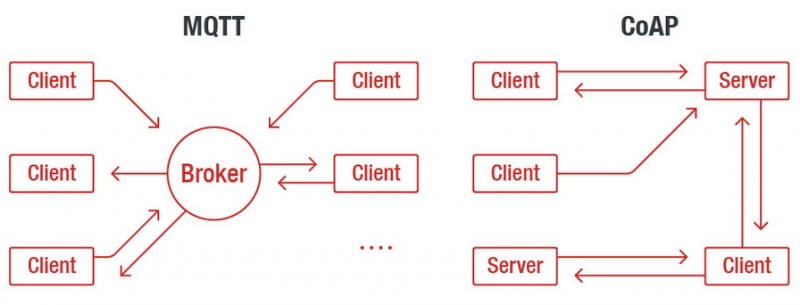
The security firm has analyzed two popular M2M protocols: Message Queuing Telemetry Transport (MQTT), which facilitates communications between a broker and multiple clients, and the Constrained Application Protocol (CoAP), a UDP-based server-client protocol that allows HTTP-like communications between nodes.

MQTT and CoAP protocols

MQTT is a mature standard that is widely used for automation and industrial applications. CoAP is relatively new, but it’s used by many IoT and IIoT products. Trend Micro has monitored activity associated with these protocols over a period of four months and identified over 200 million MQTT messages and more than 19 million CoAP messages leaked by hundreds of thousands of Internet-exposed brokers and servers.

In the case of MQTT, Trend Micro researchers discovered vulnerabilities in both the protocol itself and its implementations. The flaws can allow malicious actors to execute arbitrary code or cause a denial-of-service (DoS) condition, which, as experts have often warned, can pose a serious risk to industrial systems. The flaws have been reported to the developers of the affected software and patches have been released.

Trend Micro has published a video showing how serious such an attack can be:

[embedded content]

Researchers have not found any actual vulnerabilities in CoAP, but pointed out that since the protocol is based on UDP, it’s susceptible to IP spoofing, which makes it ideal for DDoS amplification.

“CoAP responses can be significantly larger than requests. In our estimate, CoAP can reach up to 32x amplification factor, which is roughly between the amplification of Domain Name System (DNS) and Simple Service Discovery Protocol (SSDP). An attacker who has access to a 1-Mbps link would be able to hit a target at 32 Mbps,” explained Federico Maggi, one of the authors of the research paper.

Learn More About ICS Protocols at SecurityWeek’s ICS Cyber Security Conference

Experts have warned that these M2M protocols can be abused for targeted reconnaissance, industrial espionage, targeted attacks and lateral movement. While there is no evidence of malware currently leveraging these protocols, Trend Micro believes it will not take long until threat actors become aware of their potential for malicious activity.

“Organizations and manufacturers should then pay adequate attention to IoT and IIoT security,” Trend Micro said. “Organizations’ security teams should ensure that proper security mechanisms are in place when using protocols. Solutions do exist to secure M2M communications — they are just not employed by all.”

Related: Internet-Exposed HMIs Put Energy, Water Facilities at Risk

Related: Trend Micro, Moxa Form New IIoT Security Company

Related: Industrial Robots Vulnerable to Remote Hacker Attacks

view counter

Eduard Kovacs (@EduardKovacs) is a contributing editor at SecurityWeek. He worked as a high school IT teacher for two years before starting a career in journalism as Softpedia’s security news reporter. Eduard holds a bachelor’s degree in industrial informatics and a master’s degree in computer techniques applied in electrical engineering.

Previous Columns by Eduard Kovacs:

Tags:

http://feedproxy.google.com/~r/Securityweek/~3/2bCNC4nL7T8/m2m-protocols-expose-industrial-systems-attacks


Critical Privilege Escalation Flaw Patched in Kubernetes

A critical privilege escalation vulnerability has been found in Kubernetes, the popular open-source container orchestration system that allows users to automate deployment, scaling and management of containerized applications.

The vulnerability, discovered by Rancher Labs Co-founder and Chief Architect Darren Shepherd, is tracked as CVE-2018-1002105 and it has been assigned a CVSS score of 9.8. It can allow an attacker to escalate privileges by sending specially crafted requests to the targeted server.

“With a specially crafted request, users that are allowed to establish a connection through the Kubernetes API server to a backend server can then send arbitrary requests over the same connection directly to that backend, authenticated with the Kubernetes API server’s TLS credentials used to establish the backend connection,” explained Jordan Liggitt, a Google software engineer and member of the Kubernetes product security team.

The security hole impacts versions 1.0.x-1.9.x, 1.10.0-1.10.10, 1.11.0-1.11.4 and 1.12.0-1.12.2. It has been patched with the release of versions 1.10.11, 1.11.5, 1.12.3 and 1.13.0-rc.1. Some mitigations also exist, but users have been warned that they are likely to be disruptive.

Red Hat, whose OpenShift products are impacted, has also released a blog post, a video and several advisories describing the impact of the vulnerability.

[embedded content]

“[The] privilege escalation flaw makes it possible for any user to gain full administrator privileges on any compute node being run in a Kubernetes cluster,” said Red Hat’s Ashesh Badani. “This is a big deal. Not only can this actor steal sensitive data or inject malicious code, but they can also bring down production applications and services from within an organization’s firewall.”

Red Hat noted that while the patch was made available quickly, it may not always be easy to apply as it could have a negative impact on production systems.

While there is no indication that this vulnerability has been leveraged for malicious attacks, Liggitt pointed out that there is no easy way to detect exploitation attempts.

“Because the unauthorized requests are made over an established connection, they do not appear in the Kubernetes API server audit logs or server log. The requests do appear in the kubelet or aggregated API server logs, but are indistinguishable from correctly authorized and proxied requests via the Kubernetes API server,” he explained.

Related: Misconfiguration a Top Security Concern for Containers

Related: Code Execution in Alpine Linux Impacts Containers

Related: Microsoft Patches Critical Flaw in Open Source Container Library

view counter

Eduard Kovacs (@EduardKovacs) is a contributing editor at SecurityWeek. He worked as a high school IT teacher for two years before starting a career in journalism as Softpedia’s security news reporter. Eduard holds a bachelor’s degree in industrial informatics and a master’s degree in computer techniques applied in electrical engineering.

Previous Columns by Eduard Kovacs:

Tags:

http://feedproxy.google.com/~r/Securityweek/~3/PHIFG8ph8DU/critical-privilege-escalation-flaw-patched-kubernetes


Hackers Using NSA Hacking Tools to Build Botnet

A Quarter Million Devices Vulnerable to UPnProxy Botnet

More than 270,000 Internet-connected devices run vulnerable implementations of UPnP and are susceptible to becoming part of a multi-purpose botnet, Akamai says. 

Dubbed UPnProxy, the botnet was first detailed in April this year, when it had infected around 65,000 devices. At the moment, there are more than 45,000 devices confirmed to have been compromised in the widely distributed UPnP NAT injection campaign.

The UPnP protocol was designed to allow for better communication between devices on a LAN, but has been known to be vulnerable for more than a decade. Vulnerable implementations may expose services that are privileged and meant to only be used by trusted devices on a local arear network (LAN).

According to Akamai, there are 3.5 million potentially vulnerable devices around the world, with 277,000 of them vulnerable to UPnProxy. The botnet has infected at least 45,000 devices so far, but the attackers continue to scan for more machines to compromise. Akamai’s security researchers also say a new campaign of injections has been recently discovered. 

Previously, the security researchers pointed out that attackers could leverage UPnProxy to exploit systems behind the compromised routers, and it appears that this is already happening. 

“For home users, these attacks can lead to a number of complications, such as degraded service, malware infections, ransomware, and fraud. But for business users, these recent developments could mean systems that were never supposed to exist on the internet in the first place, could now be living there unknowingly, greatly increasing their chances of being compromised,” Akamai notes. 

The security researchers also explain that the services being exposed in this campaign have a history of exploitation in campaigns targeting both Windows and Linux platforms: the TCP ports 139 and 445.

The campaign, which Akamai refers to as EternalSilence, is apparently looking to compromise “millions of machines living behind the vulnerable routers by leveraging the EternalBlue (CVE-2017-0144) and EternalRed (CVE-2017-7494) exploits.” 

The new family of injections was discovered on November 7, but the researchers say they couldn’t see the final payloads, so they cannot say what happens after a machine is successfully compromised. Possible attack scenarios, however, include ransomware, backdoors, and other types of malware. 

After logging the unique IPs exposed per device, the researchers determined that the 45,113 routers confirmed to contain the injections expose a total of 1.7 million unique machines to the attackers, the security researchers explain. 

“Additionally, there is no way to tell if EternalBlue or EternalRed was used to successfully compromise the exposed machine. However, if only a fraction of the potentially exposed systems were successfully compromised and fell into the hands of the attackers, the situation would quickly turn from bad to worse,” Akamai points out. 

The attacks, the researchers say, appear to be opportunistic. The actor is likely scanning the entire Internet for SSDP and pivoting to the TCP UPnP daemons or is targeting a set of devices that use static ports (TCP/2048) and paths (/etc/linuxigd/gatedesc.xml) for their UPnP daemons. 

This shotgun approach to blindly inject SMB port forwards might be working, as there might be machines not impacted by the first round of EternalBlue and EternalRed attacks because they were not directly exposed to the Internet, but hidden behind the NAT. The EternalSilence attacks remove the NAT protections and expose the machines to the old exploits. 

Related: Multi-Purpose Proxy Botnet Ensnares 65,000 Routers

view counter

Ionut Arghire is an international correspondent for SecurityWeek.

Previous Columns by Ionut Arghire:

Tags:

http://feedproxy.google.com/~r/Securityweek/~3/eTpYKs7CY_8/hackers-using-nsa-hacking-tools-build-botnet


Zoom Conferencing App Exposes Enterprises to Attacks

A potentially serious vulnerability discovered by researchers in the Zoom video conferencing application can allow external attackers or malicious insiders to hijack screen controls, spoof chat messages, and remove attendees from a session.

Tenable researcher David Wells discovered recently that the Zoom applications for Windows and macOS are affected by a vulnerability that can be exploited by an unauthorized user to invoke functions normally reserved for Zoom servers.

The security hole, whose exploitation requires sending specially crafted UDP packets, can be used by a malicious insider who has access to the targeted meeting, by an attacker with access to the local network, or by a remote hacker over the Internet.

“This bug is due to the fact that Zoom’s internal messaging pump (util.dll!ssb::events_t::loop) dispatches both client User Datagram Protocol (UDP) and server Transmission Control Protocol (TCP) messages (from util.dll!ssb::select_t::loop) to the same message handler in ssb_sdk.dll. This allows an attacker to craft and send UDP packets which get interpreted as messages processed from the trusted TCP channel used by authorized Zoom servers,” Tenable explained.

The flaw can be exploited to bypass screen control permissions and hijack a meeting attendee’s desktop by sending keystrokes and mouse movements, to send chat messages impersonating other users, or remove and lock out users.

Tenable has published a video and a proof-of-concept (PoC) exploit that show how an attacker can take control of the meeting presenter’s screen and open the calculator on their device.

The security firm noted that exploitation requires knowledge of an attendee’s IP address, the IP of the Zoom server, and the attendee’s ID. This last piece of information can be easily brute-forced, the company said.

In order to exploit this vulnerability from the Internet, an attacker would have to be able to spoof a public IP in a UDP packet. However, Tenable has admitted that this is a theoretical attack scenario that it has not tested.

“In this scenario, the remote attacker could exploit this vulnerability by spoofing the WAN IP and trivially brute force the source port the victim is using for the UDP session with the Zoom server while the meeting is live,” the company explained.

Tenable informed Zoom of the vulnerability on October 11 and it was patched on November 19 with the release of version 4.1.34814.1119 for Windows and version 4.1.34801.1116 for macOS. However, the vendor’s release notes only list “minor bug fixes” and don’t mention any security flaws.

Tenable noted that such a vulnerability can pose a serious risk to organizations. In this case, Zoom claims its video communications platform is used by more than 750,000 companies.

Related: Critical Vulnerability Patched in Cisco Conferencing Product

Related: Cisco Releases Second Patch for Webex Meetings Vulnerability

Related: Critical Vulnerability Impacts Hundreds of Thousands of IoT Cameras

view counter

Eduard Kovacs (@EduardKovacs) is a contributing editor at SecurityWeek. He worked as a high school IT teacher for two years before starting a career in journalism as Softpedia’s security news reporter. Eduard holds a bachelor’s degree in industrial informatics and a master’s degree in computer techniques applied in electrical engineering.

Previous Columns by Eduard Kovacs:

Tags:

http://feedproxy.google.com/~r/Securityweek/~3/8JiZKNgtO6U/zoom-conferencing-app-exposes-enterprises-attacks