IBM Starts Patching Spectre, Meltdown Vulnerabilities

IBM has started releasing firmware patches for its POWER processors to address the recently disclosed Meltdown and Spectre vulnerabilities. The company is also working on updates for its operating systems, but those are expected to become available only next month.

On January 4, one day after researchers disclosed the Meltdown and Spectre attack methods against Intel, AMD and ARM processors, IBM informed customers that it had started analyzing impact on its own products. On Tuesday, the company revealed that its POWER processors are affected.

IBM told customers that attacks against its Power Systems server line can be fully mitigated only by installing both firmware and operating system patches.

The company has already released firmware patches for its POWER7+ and POWER8 processors, and fixes are expected to become available for POWER9 systems on January 15. Users of earlier products that are still supported will be notified at a later time about the availability of firmware updates.

Users whose devices run Linux can obtain operating system patches from their respective vendors. Red Hat, SUSE and Canonical have already released fixes. As for IBM’s own operating systems, namely AIX and IBM i, patches are expected to become available on February 12.

“If this vulnerability poses a risk to your environment, then the first line of defense is the firewalls and security tools that most organizations already have in place,” IBM explained.

The company has told customers that IBM storage appliances are not impacted by the vulnerabilities.

The mitigations for the Meltdown and Spectre vulnerabilities are known to introduce performance penalties for certain types of operations, but IBM has not mentioned anything about performance impact.

Intel says regular users should not see any difference after applying the fixes, but Microsoft’s tests show that most Windows 7 and 8 systems will likely incur significant penalties if they use 2015-era or older CPUs.

In addition to performance penalties, some mitigations also cause problems due to compatibility issues. Microsoft has required security product vendors to set a specific registry key in order for their customers to receive security updates. Furthermore, one of the company’s updates has been found to break computers with some older AMD processors.

Related: Qualcomm Working on Mitigations for Spectre, Meltdown

Related: Lawsuits Filed Against Intel Over CPU Vulnerabilities

Related: Industry Reactions to Meltdown, Spectre Attacks

view counter

Eduard Kovacs is a contributing editor at SecurityWeek. He worked as a high school IT teacher for two years before starting a career in journalism as Softpedia’s security news reporter. Eduard holds a bachelor’s degree in industrial informatics and a master’s degree in computer techniques applied in electrical engineering.

Previous Columns by Eduard Kovacs:

Tags:

http://feedproxy.google.com/~r/Securityweek/~3/31XToJ-p2b0/ibm-starts-patching-spectre-meltdown-vulnerabilities


SAP Publishes Light Patch Day for January 2018

SAP this week released its monthly set of security patches to address just three vulnerabilities in its products, all three rated Medium severity.

In addition to the three security notes, the January 2018 SAP Security Patch Day includes four updates to previously released security notes. These too had a Medium severity rating, the company said.

The most severe of the patches were updates to a security note released in October 2014, which addressed a code injection bug in Knowledge Provider. The issue is tracked as CVE-2018-2363 and features a CVSS score of 6.5.

“Depending on the code, attackers can inject and run their own code, obtain additional information that should not be displayed, change and delete data, modify the output of the system, create new users with higher privileges, control the behavior of the system, or escalate privileges by executing malicious code or even perform a DOS attack,” ERPScan, a company that specializes in securing SAP and Oracle products, explains.

SAP also released an update to a security note released in December 2017, addressing CVE-2017-16690, a DLL preload attack possible on NwSapSetup and Installation self-extracting program for SAP Plant Connectivity (CVSS score 5.0).

Newly resolved issues include CVE-2018-2361, an Improper Role Authorizations in SAP Solution Manager 7.2 (CVSS score 6.3), CVE-2018-2360, Missing Authentication check in Startup Service (CVSS score 5.8), and CVE-2018-2362, Information Disclosure in Startup Service in SAP HANA (CVSS score 5.3).

By exploiting CVE-2018-2360, an attacker could access a service “without any authorization procedures and use service functionality that has restricted access. This can lead to an information disclosure, privilege escalation and other attacks,” ERPScan reveals.

CVE-2018-2361’s exploitation could provide an attacker with the possibility to edit all tables on the server, which could result in data compromise, the company continues.

ERPScan, which considers the code injection security note updates as a single patch, says that 10 SAP Security Notes (5 SAP Security Patch Day Notes and 5 Support Package Notes) were closed with the January 2018 SAP Security Patch Day. 3 were updates to previous security notes and 5 were released after the second Tuesday of the previous month and before the second Tuesday of this month.

Related: SAP Becomes CVE Numbering Authority

Related: SAP Patches Critical Issues With November 2017 Security Updates


view counter

Ionut Arghire is an international correspondent for SecurityWeek.

Previous Columns by Ionut Arghire:

Tags:

http://feedproxy.google.com/~r/Securityweek/~3/gLD-dyJHJjQ/sap-publishes-light-patch-day-january-2018


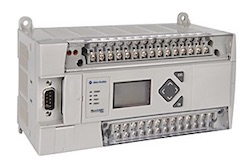
Rockwell Automation Patches Serious Flaw in MicroLogix 1400 PLC

A firmware update released a few weeks ago by Rockwell Automation for its MicroLogix 1400 programmable logic controllers (PLCs) patches a potentially serious vulnerability.

The MicroLogix PLC family is used worldwide by organizations in the critical infrastructure, food and agriculture, and water and wastewater sectors for controlling processes.

Thiago Alves from the University of Alabama in Huntsville (UAH) discovered that these controllers are affected by a buffer overflow vulnerability. In 2016, Alves and two other UAH researchers published a paper on using virtual testbeds for industrial control systems (ICS).Rockwell Automation MicroLogix 1400 PLC

According to Rockwell Automation, the expert discovered that several MicroLogix 1400 PLCs running version 21.002 and earlier of the firmware are affected by a buffer overflow vulnerability that can be triggered by sending specially crafted Modbus TCP packets to affected devices. The flaw can be exploited remotely by an unauthenticated attacker.

“The Modbus buffer is not deallocated when a packet exceeds a specific length. Repeated sending of Modbus TCP data can cause a denial of service to the Modbus functionality, and potentially cause the controller to fault,” the vendor explained.

Related: Learn More at SecurityWeek’s 2018 Singapore ICS Cyber Security Conference

The security hole is tracked as CVE-2017-16740 and it has been classified by both Rockwell and ICS-CERT as high severity with a CVSS score of 8.6. While Rockwell’s advisory only mentions DoS attacks, ICS-CERT’s advisory says it may also be possible to exploit the flaw for remote code execution.

Rockwell Automation patched the vulnerability last month with the release of firmware version 21.003 for series B and series C hardware. As a workaround, users can disable Modbus TCP support if it’s not needed, which prevents remote access to the device.

Last month, after discovering a serious DoS vulnerability in several product lines from Siemens, experts at industrial cybersecurity firm CyberX pointed out that these types of flaws should not be taken lightly.

“The December 2016 attack on the Ukrainian electrical grid used this type of exploit to disable protection relays and make it more difficult for operators to recover,” the company told SecurityWeek at the time.

Related: Several Vulnerabilities Found in Rockwell Automation PLCs

Related: Rockwell Updates Stratix Routers to Patch Cisco IOS Flaws

Related: Rockwell Automation Patches Serious Flaw in FactoryTalk Product

view counter

Eduard Kovacs is a contributing editor at SecurityWeek. He worked as a high school IT teacher for two years before starting a career in journalism as Softpedia’s security news reporter. Eduard holds a bachelor’s degree in industrial informatics and a master’s degree in computer techniques applied in electrical engineering.

Previous Columns by Eduard Kovacs:

Tags:

http://feedproxy.google.com/~r/Securityweek/~3/DqoJu_P4d-E/rockwell-automation-patches-serious-flaw-micrologix-1400-plc


Microsoft, Intel Share Data on Performance Impact of CPU Flaw Patches

Microsoft and Intel have shared more information on the performance impact of the patches released for the recently disclosed attack methods known as Spectre and Meltdown.

The Spectre and Meltdown exploits work on systems using CPUs from Intel, AMD and ARM, and they allow malicious applications to bypass memory isolation mechanisms and access passwords, photos, documents, emails, and other sensitive information. Patches and workarounds have been released by both hardware and software vendors, but they may introduce significant performance penalties.

Intel has insisted that average computer users – owners of typical home and business PCs – should not see any significant impact on performance during common tasks, such as reading emails, viewing photos or writing documents. Benchmark tests conducted by the company using SYSmark 2014 showed an impact of 6 percent or less for 8th Generation Core platforms with solid state storage.

All but two of currently supported Intel processors are said to be affected by the Spectre and Meltdown vulnerabilities. However, a technology called PCID (Process-Context Identifiers), which is present in newer processors, should lessen impact on performance.

Intel says it has yet to “build a complete picture of the impact on data center systems,” but points to statements from major vendors who have conducted tests.

Shortly after applying the Meltdown and Spectre patches to its Azure cloud platform, Microsoft said it had not seen any noticeable performance impact. The company noted that some users may experience networking performance impact, but that can be addressed using the Azure Accelerated Networking feature.

After conducting more tests, Microsoft pointed out that mitigations for Meltdown (CVE-2017-5754) and one of the Spectre flaws (CVE-2017-5753) have minimal performance impact, but the remediation for the second Spectre vulnerability (CVE-2017-5715) does introduce more significant performance penalties.

Specifically, Microsoft found that users running Windows 10 on newer chips (2016-era PCs with Skylake, Kabylake or newer CPUs) should not notice any slowdowns. While there are some single-digit performance penalties, they are reflected in milliseconds.

On the other hand, when running Windows 10, Windows 8 or Windows 7 on devices with older chips (2015-era PCs with Haswell or older CPUs), benchmark tests showed more significant penalties and users may actually notice a decrease in performance. On Windows 10, only some users should experience slowdowns, but on older versions of the operating system most users are expected to notice performance issues.

In the case of Windows Server, regardless of what type of chip is used, a more significant performance impact is expected after mitigations are applied, particularly in the case of IO-intensive applications. In the case of Windows Server, Microsoft has actually advised users to evaluate the risk of untrusted code running on their machines and “balance the security versus performance tradeoff” for their specific environment.

“For context, on newer CPUs such as on Skylake and beyond, Intel has refined the instructions used to disable branch speculation to be more specific to indirect branches, reducing the overall performance penalty of the Spectre mitigation. Older versions of Windows have a larger performance impact because Windows 7 and Windows 8 have more user-kernel transitions because of legacy design decisions, such as all font rendering taking place in the kernel,” Microsoft explained.

Red Hat has also reported seeing measurable performance impact, ranging between 8 and 19 percent, for operations involving highly cached random memory.

Amazon said it had not observed any significant performance impact for the overwhelming majority of EC2 workloads, but some AWS customers have complained about degraded performance after the patches were applied starting with December.

Apple, which started performing tests after releasing updates in December, also said it had not seen any measurable reduction in the performance of macOS and iOS. Google also claimed to have observed negligible impact on performance after applying mitigations to its own systems.

Epic Games informed users recently that the CPU usage of its backend cloud services increased significantly after Meltdown mitigations were applied, which led to login issues and service instability.

Related: Industry Reactions to Meltdown, Spectre Attacks

Related: Microsoft Suspends CPU Flaw Patches for AMD Devices

Related: Lawsuits Filed Against Intel Over CPU Vulnerabilities

view counter

Eduard Kovacs is a contributing editor at SecurityWeek. He worked as a high school IT teacher for two years before starting a career in journalism as Softpedia’s security news reporter. Eduard holds a bachelor’s degree in industrial informatics and a master’s degree in computer techniques applied in electrical engineering.

Previous Columns by Eduard Kovacs:

Tags:

http://feedproxy.google.com/~r/Securityweek/~3/cIxB7M6WFo4/microsoft-intel-share-data-performance-impact-cpu-flaw-patches


Microsoft Patches Zero-Day Vulnerability in Office

Microsoft’s January 2018 Patch Tuesday updates address more than 50 vulnerabilities, including a zero-day vulnerability in Office related to an Equation Editor flaw that has been exploited by several threat groups in the past few months.

The zero-day vulnerability, tracked as CVE-2018-0802, has been described by Microsoft as a memory corruption issue that can be exploited for remote code execution by getting targeted users to open a specially crafted file via Office or WordPad.

Microsoft has credited several researchers from Chinese companies Tencent and Qihoo 360, ACROS Security’s 0Patch Team, and experts from Check Point Software Technologies for finding the flaw.

The security hole is related to CVE-2017-11882, a 17-year-old vulnerability in the Equation Editor (EQNEDT32.EXE), which the vendor addressed with the November 2017 Patch Tuesday updates. Based on how the patch was developed, experts believe Microsoft may have lost the application’s source code, which forced it to somehow patch the executable file directly.

Microsoft replaced the Equation Editor component in Office 2007, but kept the old one as well for compatibility reasons. The problematic component has now been removed from Office.

0Patch researchers have been analyzing CVE-2017-11882, which has likely led them to discovering a new, related vulnerability. Check Point has published a blog post with the details of CVE-2018-0802 and showed how an exploit works, but they have not mentioned any attacks.

This suggests that the Chinese researchers may have been the ones who spotted the vulnerability being exploited in attacks. This would not be the first time experts at Qihoo 360 witnessed the exploitation of an Office zero-day. Back in October, after Microsoft released a patch, they reported seeing CVE-2017-11826 being leveraged to deliver malware.

If CVE-2018-0802 is related to CVE-2017-11882, there is a long list of threat actors who may be exploiting it. CVE-2017-11882 has been exploited by Iranian cyberspies, the Cobalt hacking group, someone who uses TelegramRAT, and likely others.

Microsoft’s Patch Tuesday updates also address a spoofing vulnerability in Office for Mac that has already been publicly disclosed. Sixteen of the flaws resolved this month have been rated critical, a majority affecting the scripting engine used by the Edge and Internet Explorer web browsers.

Microsoft has also rated critical a Word vulnerability (CVE-2018-0797) that can be exploited for remote code execution using specially crafted RTF files.

Adobe’s Patch Tuesday updates for this month patch only one information disclosure vulnerability in Flash Player.

Related: Microsoft Patches for CPU Flaws Break Windows, Apps

Related: Microsoft Suspends CPU Flaw Patches for AMD Devices

view counter

Eduard Kovacs is a contributing editor at SecurityWeek. He worked as a high school IT teacher for two years before starting a career in journalism as Softpedia’s security news reporter. Eduard holds a bachelor’s degree in industrial informatics and a master’s degree in computer techniques applied in electrical engineering.

Previous Columns by Eduard Kovacs:

Tags:

http://feedproxy.google.com/~r/Securityweek/~3/fy_7rlOZl8Q/microsoft-patches-zero-day-vulnerability-office


Adobe Patch Tuesday Updates Fix Only One Flash Player Flaw

Adobe’s Patch Tuesday updates for January 2018 resolve only an information disclosure vulnerability affecting Flash Player.

The flaw is tracked as CVE-2018-4871, it has been classified as “important,” and it has been assigned a priority rating of 2, which means it’s unlikely to be exploited in malicious attacks any time soon.

The security hole has been described as an out-of-bounds read issue that can lead to information exposure. It affects Flash Player 28.0.0.126 and earlier on Windows, Mac, Linux and Chrome OS, and it has been patched with the release of version 28.0.0.137. The patch will also be included in the next Chrome release and Microsoft’s Patch Tuesday updates.

Adobe says it has learned about the vulnerability from an anonymous researcher via Trend Micro’s Zero Day Initiative (ZDI).

The number of vulnerabilities discovered by researchers in Flash Player has dropped significantly in the past months after Adobe announced its intention to kill the application by 2020.

However, malicious actors are still finding and exploiting zero-day vulnerabilities in Flash. In October, shortly after Adobe announced that it had no Patch Tuesday updates, the company was forced to quickly release a fix for Flash Player after learning that a cyber espionage group from the Middle East had been leveraging a zero-day to deliver spyware.

The same vulnerability was later exploited by the Russia-linked group APT28 (also known as Fancy Bear, Pawn Storm, Strontium, Sofacy, Sednit and Tsar Team) in attacks aimed at government organizations and aerospace companies. Fortunately, this was apparently the only Flash Player zero-day exploited in 2017.

Related: Adobe Accidentally Posts Private PGP Key

Related: Adobe Patches Two Critical Flaws in Flash Player

Related: Adobe Patches ‘Business Logic Error’ in Flash Player

view counter

Eduard Kovacs is a contributing editor at SecurityWeek. He worked as a high school IT teacher for two years before starting a career in journalism as Softpedia’s security news reporter. Eduard holds a bachelor’s degree in industrial informatics and a master’s degree in computer techniques applied in electrical engineering.

Previous Columns by Eduard Kovacs:

Tags:

http://feedproxy.google.com/~r/Securityweek/~3/RIUynjCXyZg/adobe-patch-tuesday-updates-fix-only-one-flash-player-flaw


Microsoft Patches for CPU Flaws Break Windows, Apps

Users have complained that the updates released by Microsoft last week for the Spectre and Meltdown vulnerabilities cause Windows to break down on some computers with AMD processors.

Several individuals whose computers rely on AMD processors, particularly older Athlon models, say they are unable to start Windows 10 after installing KB4056892, an update released by Microsoft in response to the disclosure of serious flaws affecting Intel, AMD and ARM processors.

The security holes have been dubbed Spectre and Meltdown and they allow malicious applications to bypass memory isolation mechanisms and access passwords, photos, documents, emails, and other sensitive information. Both local and remote exploitation are possible.

Users have reported that after installing Microsoft’s update the operating system freezes during boot when the Windows logo is displayed. Some users claimed to have had problems reverting to a previous state, and those who did manage to do it warned that the automatic update feature needs to quickly be disabled to prevent the update from being reinstalled.

While a majority of the affected users appear to have older AMD Athlon processors, some devices with AMD Turion CPUs also appear to have been hit.

Microsoft has not shared any information regarding this issue. A Microsoft spokesperson told SecurityWeek that the company is aware of the reports and is investigating.

Users have reported other problems as well after installing KB4056892. Owners of Asus devices say they receive an error message related to an Asus utility after updating.

The Spectre/Meltdown updates appear to break the PulseSecure VPN on both Windows 10 and Windows 8.1 – the patch for Windows 8.1 is included in KB4056898. The VPN vendor has released patches to address the issue.

Some Windows users report that they simply cannot install the patches for the CPU vulnerabilities, and some say their web browsers have started crashing after applying the update.

Shortly after releasing the Meltdown/Spectre updates, Microsoft warned that it had identified some compatibility issues with some antivirus products. The company informed users that if they had not been offered the security updates, they may be running an incompatible antivirus application.

*updated with statement from Microsoft

Related: Qualcomm Working on Mitigations for Spectre, Meltdown

Related: Lawsuits Filed Against Intel Over CPU Vulnerabilities

Related: Industry Reactions to Meltdown, Spectre Attacks

view counter

Eduard Kovacs is a contributing editor at SecurityWeek. He worked as a high school IT teacher for two years before starting a career in journalism as Softpedia’s security news reporter. Eduard holds a bachelor’s degree in industrial informatics and a master’s degree in computer techniques applied in electrical engineering.

Previous Columns by Eduard Kovacs:

Tags:

http://feedproxy.google.com/~r/Securityweek/~3/OAXl7RZlbsw/microsoft-patches-cpu-flaws-break-windows-apps


Hardcoded Backdoor Found on Western Digital Storage Devices

Firmware updates released by Western Digital for its MyCloud family of devices address a series of security issues, including a hardcoded backdoor admin account.

The vulnerabilities were found in WDMyCloud firmware prior to version 2.30.165 and are said to affect devices such as MyCloud, MyCloudMirror, My Cloud Gen 2, My Cloud PR2100, My Cloud PR4100, My Cloud EX2 Ultra, My Cloud EX2, My Cloud EX4, My Cloud EX2100, My Cloud EX4100, My Cloud DL2100, and My Cloud DL4100.

Discovered by GulfTech security researcher James Bercegay, the security flaws could be exploited to achieve remote root code execution on the affected WD My Cloud personal cloud storage units (the device is currently the best-selling NAS (network attached storage) device on Amazon).

One of the most important security issues the researcher found was an unrestricted file upload vulnerability created by the “misuse and misunderstanding of the PHP gethostbyaddr() function,” the researcher says.

The vulnerable code in said file allows an attacker to define a remote auth server, which could be an attacker-controlled server. The result should fail if an invalid host is defined, but a series of bugs result in checks being skipped, eventually allowing an attacker to abuse the issue “to upload any file to the server that they want.”

While analyzing CGI binaries on the webserver, the security researcher discovered code where login functionality would specifically look for an admin user named “mydlinkBRionyg” and would accept the password “abc12345cba”.

The researcher then discovered that the backdoor could be turned into a root shell that would allow an attacker to execute any commands as root and gain control of the affected device. Damaging a vulnerable device would be extremely easy and would not require authentication.

“The triviality of exploiting this issues makes it very dangerous, and even wormable. Not only that, but users locked to a LAN are not safe either. An attacker could literally take over your WDMyCloud by just having you visit a website where an embedded iframe or img tag make a request to the vulnerable device using one of the many predictable default hostnames for the WDMyCloud such as “wdmycloud” and “wdmycloudmirror” etc.,” Bercegay explains.

In addition to the two critical vulnerabilities, the security researcher discovered a series of other dangerous issues as well in the WDMyCloud firmware. These bugs, however, are not deemed Critical, especially since some of them require authentication to be exploited.

The WDMyCloud web interface was found to lack an effective Cross site request forgery protection and exploitation of the issue is trivial, the researcher says. WDMyCloud is also plagued with a series of command injection issues. An attacker can abuse the language preferences functionality to cause denial of service to the web interface and can dump a list of all users, including detailed user information.

The researcher also discovered that the exact same mydlinkBRionyg backdoor account was found in the D-Link DNS-320L ShareCenter NAS device a while back, supposedly because both devices shared common firmware code. However, the issue was addressed in D-Link DNS-320L with firmware version 1.0.6, released in July 2014.

“It is interesting to think about how before D-Link updated their software two of the most popular NAS device families in the world, sold by two of the most popular tech companies in the world were both vulnerable at the same time, to the same backdoor for a while. The time frame in which both devices were vulnerable at the same time in the wild was roughly from early 2014 to later in 2014 based on comparing firmware release note dates,” Bercegay notes.

The researcher reported all these vulnerabilities to the vendor in June 2017. Firmware release 2.30.174 should address all of these issues.

Related: Multiple Zero-days Disclosed in Western Digital NAS Storage Devices

Related: Western Digital Patches Vulnerabilities in “My Cloud” Products


view counter

Ionut Arghire is an international correspondent for SecurityWeek.

Previous Columns by Ionut Arghire:

Tags:

http://feedproxy.google.com/~r/Securityweek/~3/b8EI54fVHD8/hardcoded-backdoor-found-western-digital-storage-devices


Lawsuits Filed Against Intel Over CPU Vulnerabilities

At least three class action lawsuits have been filed against Intel in the past days over the recently disclosed vulnerabilities that could allow malicious hackers to obtain potentially sensitive information from computers.

The Meltdown and Spectre attack methods uncovered by several independent research teams work not only against Intel processors, but also against CPUs from AMD and ARM. Intel has been hit the hardest – even its stock went down after initial reports claimed only Intel processors were affected – but the company says media reports describing the design flaws are overblown.

The lawsuits, all seeking class action status, have been filed in the Northern District of California, the Southern District of Indiana, and the District of Oregon, and they accuse Intel of violating state consumer protection laws. All complaints demand a jury trial.

In California, Branstetter, Stranch & Jennings of Nashville and Doyle APC of San Diego filed a consumer fraud case, accusing Intel of misleading consumers about the performance and reliability of its processors by selling a product with “fatal” security flaws.

The complaint filed in Indiana alleges that “Intel committed unfair and deceptive acts by representing that the Intel CPUs had performance, characteristics, or benefits which Intel knew or should reasonably have known they did not have.”

The chip giant has also been accused of breaching warranties by selling defective CPUs that it’s not willing to repair or replace free of charge. The Indiana lawsuit also claims the company was negligent in the manufacture and design of its processors.

In Oregon, plaintiffs say they are entitled to restitution based on Intel’s “intentional and knowing failures to disclose material defects.” The complaint claims plaintiffs would have acquired a CPU from an Intel competitor had they known about the flaws and the fact that they will end up with a slower product.

The Meltdown and Spectre attacks allow malicious applications to bypass memory isolation mechanisms and access potentially sensitive data, including passwords, photos, documents, emails, and data from instant messaging apps. The bugs that make these attacks possible are said to date back 20 years.

Intel and other major tech companies have started releasing patches and workarounds for the vulnerabilities, and many believe it’s enough for the time being. Some have suggested that Intel may need to recall impacted CPUs, but the vendor says that will not happen considering that the issue can be mitigated at software level.

Significant performance penalties have been observed in some cases, but Intel says most consumers will not experience any problems, and it’s confident that any penalties will be mitigated over time.

AMD has confirmed that some of the flaws also affect its own processors, but claims the risk of attacks is “near zero.” ARM, whose technology is used by Apple and Qualcomm, also confirmed that nearly a dozen of its Cortex CPUs are impacted.

Related: Hackers Expected to Remotely Exploit CPU Vulnerabilities

Related: Industry Reactions to Meltdown, Spectre Attacks

view counter

Eduard Kovacs is a contributing editor at SecurityWeek. He worked as a high school IT teacher for two years before starting a career in journalism as Softpedia’s security news reporter. Eduard holds a bachelor’s degree in industrial informatics and a master’s degree in computer techniques applied in electrical engineering.

Previous Columns by Eduard Kovacs:

Tags:

http://feedproxy.google.com/~r/Securityweek/~3/6mZav2tHca8/lawsuits-filed-against-intel-over-cpu-vulnerabilities


Serious Flaws Affect Dell EMC, VMware Data Protection Products

Data protection products from both Dell EMC and VMware are impacted by three potentially serious vulnerabilities discovered by researchers at Digital Defense.

EMC told customers that its Avamar Server, NetWorker Virtual Edition and Integrated Data Protection Appliance products have a common component, the Avamar Installation Manager (AVI). This component is affected by vulnerabilities that can be combined to take complete control of a system.

The most serious of the flaws, CVE-2017-15548, allows a remote attacker to bypass authentication and gain root access to the system. The vulnerability is related to the fact that authentication is performed via a POST request that includes the username, password and a parameter named wsUrl.

“The wsURL parameter can be an arbitrary URL that the Avamar server will send an authentication SOAP request to, that includes the user provided username and password,” Digital Defense explained. “If the Avamar server receives a successful SOAP response, it will return a valid session ID. The attacker doesn’t require any specific knowledge about the targeted Avamar server to generate the successful SOAP response, a generic, validly formed SOAP response will work for multiple Avamar servers.”

The second vulnerability, CVE-2017-15549, allows an authenticated attacker with low privileges to upload malicious files to the server.

“The saveFileContents method of the UserInputService class takes a single string parameter and splits it on the ‘\r’ character,” researchers said. “The first half of the parameter is a path, including the filename, and the second half of the string is the data that should be written to that path. The web server is running with root privileges, so arbitrary files can be written to arbitrary locations.”

The third security hole, CVE-2017-15550, has been described as a path traversal issue that allows an authenticated attacker with low privileges to access arbitrary files on the server.

“The getFileContents method of the UserInputService class doesn’t perform any validation of the user supplied filename parameter before retrieving the requested file from the Avamar server. Additionally, the web server runs as root, so any file can be retrieved using this vulnerability,” researchers said.

Combining the flaws allows a remote attacker to take complete control of a vulnerable system.

EMC Avamar Server 7.1.x, 7.2.x, 7.3.x, 7.4.x and 7.5.0, EMC NetWorker Virtual Edition (NVE) 9.0.x, 9.1.x and 9.2.x, and EMC Integrated Data Protection Appliance 2.0 are impacted. EMC has released patches for each of the affected products.

Digital Defense told SecurityWeek that there are more than 100 Avamar server instances accessible from the Internet – according to the Shodan search engine – which experts say is unexpected considering that the affected products are backup and deduplication appliances.

While a blog post from Digital Defense and some media reports describe the flaws as “zero-days,” the vendor has released patches prior to disclosure and there is no evidence of exploitation in the wild.

The vulnerabilities also affect VMware’s vSphere Data Protection (VDP) product. VMware informed customers of the issues on January 2, but it did not reference Digital Defense or EMC. Digital Defense told SecurityWeek that VMware’s VDP is a derivative of the EMC product and EMC informed VMware of the security bugs.

view counter

Eduard Kovacs is a contributing editor at SecurityWeek. He worked as a high school IT teacher for two years before starting a career in journalism as Softpedia’s security news reporter. Eduard holds a bachelor’s degree in industrial informatics and a master’s degree in computer techniques applied in electrical engineering.

Previous Columns by Eduard Kovacs:

Tags:

http://feedproxy.google.com/~r/Securityweek/~3/O73XL3cQ4BY/serious-flaws-affect-dell-emc-vmware-data-protection-products