Potent Firefox 0-day used to install undetected backdoors on Macs

Hackers exploited a pair of potent zero-day vulnerabilities in Firefox to infect Mac users with a largely undetected backdoor, according to accounts pieced together from multiple people.
Mozilla released an update on Tuesday that fixed a code-execution vulnerability in a JavaScript programming method known as Array.pop. On Thursday, Mozilla issued a second patch fixing a privilege-escalation flaw that allowed code to break out of a security sandbox that Firefox uses to prevent untrusted content from interacting with sensitive parts of a computer operating system. Interestingly, a researcher at Google’s Project Zero had privately reported the code-execution flaw to Mozilla in mid April.
On Monday, as Mozilla was readying a fix for the array.pop flaw, unknown hackers deployed an attack that combined working exploits for both vulnerabilities. The hackers then used the attack against employees of Coinbase, according to Philip Martin, chief information security officer for the digital currency exchange.
2/ We walked back the entire attack, recovered and reported the 0-day to firefox, pulled apart the malware and infra used in the attack and are working with various orgs to continue burning down attacker infrastructure and digging into the attacker involved.
— Philip Martin (@SecurityGuyPhil) June 19, 2019
“We’ve seen no evidence of exploitation targeting customers,” Martin added. “We were not the only crypto org targeted in this campaign. We are working to notify other orgs we believe were also targeted.” Martin also published cryptographic hashes of code used in the attack, along with IP addresses the code contacted.
The plot thickens
On Thursday, macOS security expert Patrick Wardle published an analysis of Mac malware that came from someone who claimed it infected his fully up-to-date Mac through a zero-day vulnerability in Firefox. The person claimed to have been “involved with a cryptocurrency exchange until fairly recently.” The hash of the malware matched one of the hashes provided by Martin.
Among the things Wardle noticed early on was that the VirusTotal service showed that the malware was detected by only one of what at the time was 53 available malware detectors (at the time this Ars post went live, five out of 57 engines flagged it). That was strange, because XProtect, the barebones malware detector built into macOS, had been detecting the NetWire sample since 2016. It’s surprising malware detectors hadn’t obtained a detection signature from Apple. Wardle also noticed that the malware sample wasn’t digitally signed by its developer.
Normally, an app that’s blacklisted by XProtect and unsigned should have posed no threat to most Mac users, since the software would have been blocked by default by both the built-in malware detector and Gatekeeper. This is a protection that, by default, requires apps to be signed by a known developer before they can be installed. But because NetWire was installed through a privileged process tied to Firefox, the exploit was able to bypass both protections. The reason: the file lacked a “quarantine” bit that’s only set when a user downloads the file from the Internet.
“In a nutshell, since XProtect and Gatekeeper only scan files that have the quarantine bit set, no, they would not have protected the user,” Wardle, who is chief research officer at Digita Security, told Ars. “Why? When an exploit downloads a file (versus the user), that bit wouldn’t be set.” As a result, he added: “There would be no visual indication of an infection—unless the user went digging.”
By digging, Wardle means manually inspecting a Mac to see what apps have permission to install themselves when the OS is booting. This can be done using security tools such as KnockKnock or BlockBlock, which are freely available from Wardle. It turns out, the Netwire sample used not one, but two relatively primitive methods to maintain persistence on a Mac.
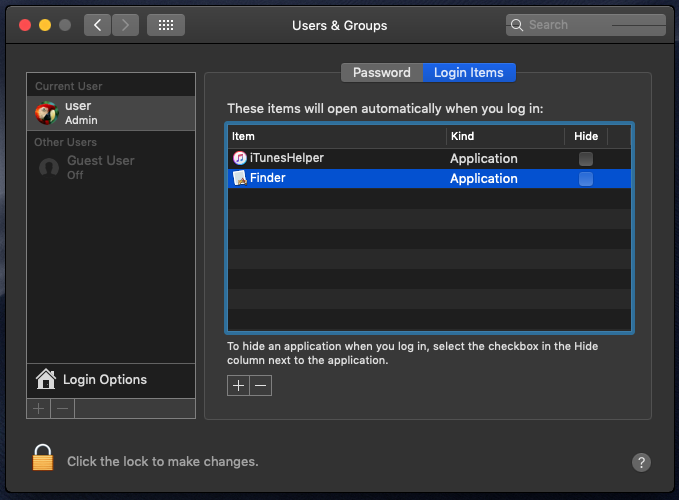
Wardle said he believes that Apple is in the process of updating XProtect and Gatekeeper so they scan all files, not just those with a quarantine bit. He said the change may be introduced in macOS 10.15.
The second hash Martin provided corresponds to a different piece of Mac software that, at the time this post went live, was undetected by all covered products. Wardle has yet to analyze it, so the threat it poses wasn’t immediately clear. Both he and independent reverse-engineer Vitali Kremez told Ars there appears to be a separate piece of malware that has backdoor and remote trojan properties. This post will be updated as more information becomes available.
Gone phishin’
Wardle also published an email the person who contacted him said contained a link to the drive-by site that exploited the Firefox zero-day. Here’s the slightly redacted text:
Dear XXX,
My name is Neil Morris. I’m one of the Adams Prize Organizers.
Each year, we update the team of independent specialists who could assess the quality of the competing projects: http://people.ds.cam.ac.uk/nm603/awards/Adams_Prize
Our colleagues have recommended you as an experienced specialist in this field.
We need your assistance in evaluating several projects for Adams Prize.
Looking forward to receiving your reply.
Best regards,
Neil Morris
By the time Wardle visited the site, it was returning a 404 error indicating it was no longer available.
A Windows component?
While both of the hashes provided by Martin applied to apps that run only on macOS, one of the command and control servers has also been known to control a Windows backdoor with characteristics that are similar to NetWire, according to this analysis from Kremez, the independent reverse engineer. The same analysis shows links to two other in-the-wild attacks, one exploiting a nasty vulnerability in the WinRAR Windows file compression program, and the other against a Microsoft Word zero-day in 2017.
“I do not have direct evidence [Windows users] were targeted as a result of this exploit,” Kremez told Ars referring to the one against Firefox. “The previous cases suggest they were—but it is unconfirmed in this case as the evidence is scarce.”
https://arstechnica.com/?p=1525253