The Job That Broke Gucci Also Built Hermès
Big companies always have a pecking order
First the CEO. Then CFO—who often eventually becomes CEO. This conveyor belt of corporate succession is replicated across every sector on earth.
But in fashion, the CFO is a back-office function. It is the creative director who sits alongside the CEO, sometimes as a junior partner, sometimes as an equal, occasionally as the more powerful of the two.
In an industry where the product is aesthetics and the currency is desire, the person who decides what the clothes look like, how they feel, what they mean and how they are presented shapes everything.
When analysts at Bernstein began scoring fashion show debuts on a scale of one to 10 last year, treating runway moments like earnings calls, they were not being eccentric. They were belatedly catching up to a reality that everyone inside the industry already understood: creation drives commerce.
The creative director role is one of the strangest in business. They must produce multiple collections a year—some houses demand twelve—while simultaneously managing a design studio, overseeing advertising campaigns, sitting for press interviews, and embodying a coherent aesthetic vision that can communicate something from a single garment in three seconds flat.
Karl Lagerfeld, who held the role at Chanel for 36 years until his death in 2019, described his function simply: “I am like a parasite. I need a host to express what I feel.”
It’s a precise account of what creative directors do: Walking into someone else’s house and making it theirs. Making it fresh. Making it desired. But also making sure the house still resembles the original house when the founder lived there.
Tom Ford arrived at Gucci in 1994 when the company was losing $22 million a year and its own outgoing creative director had declared that “no one would dream of wearing Gucci.”
Ford’s diagnosis was simple. “I wanted to bring the edge back to Gucci that it had in the Fifties and Sixties,” he told WWD at the time. Within a year of his appointment, Gucci sales had risen 90%.
By the time he left a decade later, annual revenues had gone from $230 million to $3 billion.
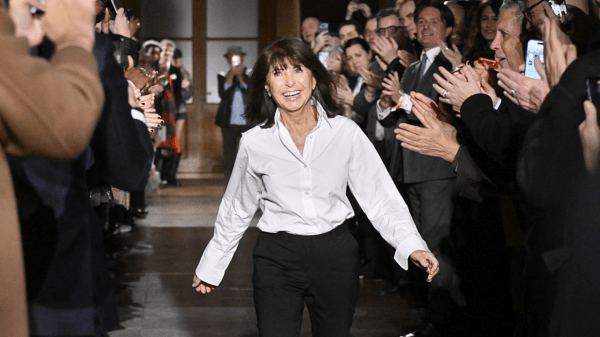
Veronique Nichanian, who stepped down earlier this year from Hermès’ menswear after 37 years—longer than almost any creative director in the modern luxury era— turned Hermès menswear from an empty corner of the business into one of the most copied aesthetics in the world.
Fashion went through the “great reset of 2025” with the debut of 15 new creative directors in a single season.
Gucci, Chanel, Dior, Balenciaga, Maison Margiela, Loewe, Bottega Veneta, Celine, Versace, Fendi, Jean Paul Gaultier, Mugler, Jil Sander, Proenza Schouler, Marni—all turned over simultaneously.
Bernstein is already scoring the results: Jonathan Anderson’s Dior debut earned a 9.1. Matthieu Blazy’s Chanel scored a 9.0. The rest of the field are still finding their feet.
The 3 challenges facing every creative director
Finding the right creative director requires solving three problems simultaneously, and most houses solve only two.
The first is commercial instinct: the ability to produce work that generates desire at the price points the house needs, not just desire among critics and editors.
The second is industrial stamina: the physical and creative capacity to produce upward of six full collections a year, plus campaigns, collaborations, store concepts and whatever cultural moment the PR team has planned. There is a reason that creative directors entering rehab is so much more than an industry cliche.
The third, and most difficult requirement, is fit with the brand’s DNA. Not slavish reproduction of the archive, but genuine fluency in what the house has always been about. An ability to understand the brand’s language before attempting to speak new sentences.
Jonathan Anderson understood this when he took the full Dior role this season, stepping up from menswear to oversee the whole house. His show notes read like an MBA in brand revitalisation: “Daring to enter the house of Dior requires an empathy with its history, a willingness to decode its language, and the resoluteness to put your own stamp on it.”
Gucci, which has burned through four consecutive creative directors in a decade and is troubled once again, needs to pay attention to Anderson’s three-stage model.
Revenues have fallen from 10.5 billion euros in 2022 to less than 6 billion euros last year, largely through Sabato de Sarno’s failed attempt to pivot toward quiet luxury—a direction so at odds with Gucci’s actual identity that it felt less like a revitalisation than a face transplant.
The house’s solution was to appoint Demna, the Georgian-born designer who spent ten years at Balenciaga building his reputation on subversion, irony, and deliberate ugliness.
Whether that approach will work for a house whose DNA runs on Italian sensuality, sex appeal, and unapologetic excess is currently the talk of fashion. Demna’s first full show in Milan drew polarised reviews: “necessary disruption” from his supporters, “Basic Instinct cosplay” from his critics. Bernstein scored it 7.6 out of 10, calling it “more good than bad”.
Ford turned Gucci around in 1994 because the brand still had an identity to rescue and the edge of the Fifties and Sixties he could reach back and retrieve. The question nobody can answer yet is whether Gucci, after this many reinventions, still has that kind of bedrock to build from.
The houses that remember Anderson’s sequence—empathy, decoding, then originality—are the ones compounding right now: Chanel. Dior. Hermès.
The ones that skipped steps one and two are reading Bernstein reports and wincing and already considering replacements.
https://www.adweek.com/brand-marketing/the-job-that-broke-gucci-also-built-hermes/