The Super Bowl Hit Record Viewership. Does That Mean Ads Will Be More Expensive in 2026?
The Super Bowl continues to be a colossal event for brands and marketers, but will this year’s Big Game have a lasting impact on the ad industry?
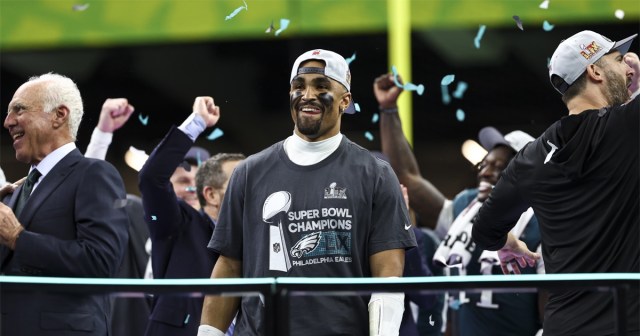
Recently, Fox reported that Super Bowl 59 was the most-watched game ever, with 127.7 million viewers, despite the Philadelphia Eagles blowing out the Kansas City Chiefs. The Apple Music Super Bowl Halftime Show featuring rapper Kendrick Lamar also drew in another record of 133.5 million viewers.
Due to unprecedented demand for this year’s Big Game, with ads costing more than $8 million for the first time, Fox and Tubi generated over $800 million in gross revenue from advertising sales across all platforms.
“Every year, it’s got a little bit of a different marketplace overall, but it has become more and more important to advertisers’ portfolios,” Adam Schwartz, senior vice president of investments for sports, Horizon Media, told ADWEEK. “Forget about the cost that they’re paying for the spot, specifically. They’re building full campaigns around the spots and trying to tell a story.”
In addition to Schwartz, ADWEEK spoke with several media buyers and advertising insiders to get their perspective on this year’s Big Game and how it could affect sales and pricing for NBC’s Big Game broadcast in 2026 and beyond.
Here are the answers to the most pressing questions on Super Bowl commercials:
Does Super Bowl viewership affect the cost of ads?
The Super Bowl’s viewership continues to grow. But do fluctuations in viewership affect pricing?
“Because of the way the demand was this year, the pricing would still increase even if the ratings did go down, just because the demand is still there,” Schwartz said.
Samba TV reported that Super Bowl 59 saw a dip in U.S. household TV views of 5%, to 37.1 million viewers from last year’s 39 million, which Schwartz pointed to as an example.
“If it went down by 5%, that’s not a huge amount,” Schwartz said. “At the same time, my price would not go down 5%. Because it’s a supply and demand market—and because it’s been so hot and still trending that way—that price is going to continue to escalate. At some point, it has to level out or plateau. I just don’t know when it’s going to happen.”
Speaking on the condition of anonymity, a second media buyer noted that the quality of the Super Bowl matchup and the competitiveness of the game can’t be predicted.
“Even when ratings are down, the Super Bowl remains the most-watched television event of the year,” the buyer said. “Advertisers pay for that visibility and for the cultural currency that comes from having an ad in the Big Game, regardless of ratings fluctuations.”
Do all Super Bowl advertisers pay $8 million per ad?
Schwartz said that every year for the past five years, the Super Bowl has sold out quicker. For instance, this year sold out around August, which he said was the earliest that the game has sold out.
“Since [Fox] sold so many spots during the traditional upfront period, anyone who came in that did not come in during the upfront period was paying more and more money,” Schwartz said. “That’s why it’s being touted everywhere that each ad is $8 million, while last year was $7 million.”
Of course, advertisers that have historically been in the Super Bowl usually pay less than the headline-grabbing amounts. Some may have multiyear exclusive deals with the broadcasting networks, as well, so pricing can vary among brands.

Does a Super Bowl blowout affect pricing?
Even when there’s a blowout, buyers said that doesn’t typically have much of an impact on pricing, since it can’t be predicted ahead of time.
“There’s no compensation for that because there are no audience guarantees with a Super Bowl buy the way there are with most TV buys,” the second buyer said. “It’s a risk the advertiser takes, and most years, it’s a much closer game, and viewership is more stable throughout. In any case, it’s most likely still the highest-rated program of the year, even at a low point.”
The Super Bowl also has some resilience to blowouts.
Showing that point, data from TV measurement and analytics company EDO shows that Jeep’s two-minute ad with Harrison Ford, which aired during the fourth quarter, ranked eighth overall for most engaging ads, with 6.4 times as much engagement as the median-performing Super Bowl LIX ad, according to EDO’s Super Bowl 59 ad ranker.
“The fact that it still grew at halftime has a lot to do with the talent, but it’s not really going to affect my negotiation with NBC because it was up X percent year over year,” a third buyer said. “We have a base from this year. We know what we paid. It’s all a negotiation.”
Even with some resilience to the game’s quality, Schwartz noted the impact of having an ad early in the game, adding that brands looking to secure a specific position in any quarter need to move quickly.
“If you want a position, or your creative has something to do with the second quarter, you can’t play games. You have to go out, get it, and buy it early, because it may not be there by the time you’re actually able to make that decision,” Schwartz said.
Is a Super Bowl ad worth it?
Although the Super Bowl has a bigger scale, tentpole events like the Grammy Awards, the Academy Awards, and others can serve as alternate outlets for brands.
“Other tentpoles are also very important, and they’re becoming more Super Bowl-like in terms of making sure they have brand new creative and storytelling,” Schwartz said. “It’s still just not at the same scale, but you’re seeing that with all of these tentpoles. That’s going to continue as we go forward, whether it’s the Grammys or the NCAA Tournament, whatever it may be.”
According to Martin Blich, executive director, sports and live investment for the U.S. at GroupM, the Super Bowl’s early sellout shows the power of live tentpoles, and advertisers don’t need to just set their sights on one.
“While brands are expanding their presence across a variety of high-profile moments, each event offers bespoke value in reaching and engaging audiences,” Blich said. “A mix of these live cultural moments can help brands maximize impact and stay atop the broader conversation.”
Although live events have more stability in ratings over time, the National Football League and the Super Bowl still reign supreme.
“I haven’t seen a trend of other live events being prioritized to the detriment of the NFL,” Marcy Greenberger, chief investment officer at UM, said. “Advertiser demand for NFL inventory was especially strong this past season, and I expect that trend to continue.”
https://www.adweek.com/convergent-tv/super-bowl-ads-cost-questions/