TikTok Brand Darlings Chart Their Next Steps
Stanley Cups, Charli XCX‘s Apple dance, Duolingo’s “unhinged” green owl mascot, and being “very demure, very mindful.”
Some things are simply synonymous with TikTok, including the brands that have used the platform to boost themselves into the stratosphere via paid and native content.
From January 19, TikTok will be banned in the U.S. after the Supreme Court squashed a last-ditch legal bid from its Chinese owner, ByteDance. As America looks to a future without a For You Page (FYP), TikTok darlings are working out how to fill the hole in their social strategies.
Among them is Duolingo. Over the last three years, the language learning app has used TikTok to build a dedicated Gen Z fanbase. Front and center of this strategy is its owl mascot, Duo, a bona fide Gen Z icon who ruffles the feathers of 14.5 million followers.
The character has found fame interacting with trending audio and memes on the platform. See: showing up at Charli XCX and Troye Sivan’s Sweat tour and relentlessly trying to capture Dua Lipa’s attention.
In days before the ban, Manu Orssaud, Duolingo’s CMO, told ADWEEK the brand was still posting organic content on TikTok in the U.S., but it wasn’t buying ads there. “However, we rarely do an ‘always-on’ spend on any social platform, opting instead to focus on creating content that resonates with our audience,” he explained.
Orssaud described TikTok as having been a “pivotal platform” in helping Duolingo connect with people through entertaining, relatable content, but noted the brand has intentionally been diversifying its efforts across Instagram Reels, YouTube Shorts.
Where spend is shifting
Duolingo isn’t alone in shifting spend.
Melissa Sierra, evp media integration at independent media agency USIM, which works with brands including Crunch Fitness and Buffalo Wild Wings, said in the hours before the ban, about “half, and in some cases, more” of clients’ TikTok spend was being funneled into YouTube Shorts.
“YouTube Shorts has become a major player in the short-form space in a short amount of time,” she added.
Globally, ad budgets allocated to short-form video, beloved by Gen Z and popularized by TikTok, are expected to continue growing by a compound annual rate of 50% in 2025, hitting more than $145 billion, per Statista.
Despite looming uncertainty over the ban, TikTok ad spend in the U.S. was projected to surge 57% YoY in the first two months of 2025, according to data from Guideline published in early January. However, on Jan. 10, when Supreme Court justices signaled skepticism of TikTok’s legal case and an inclination to uphold a ban, agencies, marketers, and publishers started to get antsy.
Per e-commerce analytics firm MikMak, major brands began diverting spend from TikTok in the days after Jan. 10, signaled by a dwindling decline in ad clicks on the platform. As of Jan. 17, TikTok traffic to paid media was down 21% daily.
Alphabet (which owns YouTube Shorts) gained the most paid traffic by comparison, followed by Pinterest.
Thinking outside the TikTok box
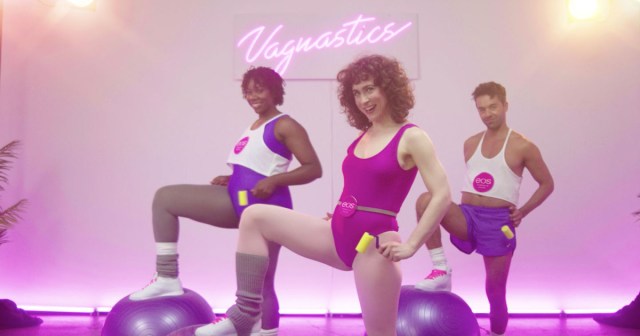
While some marketers are toggling the on-off switch between platforms to find what will work best, challenger skincare brand Eos has no immediate answer as to what should take TikTok’s place in its marketing plan.
It’s driven sales and engagement on TikTok by collaborating with relevant creators, and even based an entire product line (its “Bless Your F*ing Cooch” shaving range) on a trending video on the platform.
CMO Soyoung Kang told ADWEEK Eos was “actively marketing” on TikTok in the days leading up to the Supreme Court’s final ruling, but was also laying out contingency plans on other social platforms.
“We’ve always had a diversified social strategy, which should allow us to adapt quickly and reallocate resources. Ultimately, we’ll go where our audience goes,” she asserted.
That said, Kang is not set on how to replace the “truly unique” platform like-for-like. “It’s not just about the impressions,” she said. “The community element of TikTok—where there are multiple layers of conversations happening all the time, within the comments and across videos—is such an important part of the entire experience.”
Kang noted that before TikTok, discovery on social media was mostly one-directional. TikTok took the feed from linear to labyrinthine, “creating richer community engagement, and as a result, more opportunities for challengers like Eos to break through,” she added.
Duolingo’s Orssaud agreed that TikTok’s algorithm has been key to its success, but said his team’s ability to craft content that resonates across platforms would see the brand through.
With that in mind, Duolingo’s marketing department will spend 2025 focused on quality content and multiplatform campaigns. It set the groundwork for this approach in 2024 with a physical pop-up in New York pop-up and a Roblox tie-up.
“Having navigated platform-specific challenges like a TikTok ban in India, we’ve seen firsthand the importance of flexibility and creativity in staying connected with our fans and reaching learners where they are,” the marketer added.
As fellow TikTok favorite Scrub Daddy surmised: “It’s not goodbye, it’s just see ya somewhere else.”
https://www.adweek.com/social-marketing/tiktok-brand-darlings-chart-their-next-steps/