Timothée Chalamet Didn’t Mean to Drag Marketers, But He Did
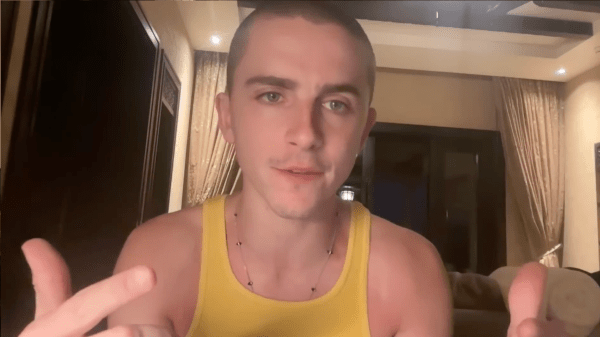
Have you seen the deliciously postmodern promo for Timothée Chalamet’s new film Marty Supreme? It’s ricocheting around the internet right now, and for good reason. The spot offers a bone-dry portrayal of a virtual marketing meeting between the film’s agency team and Chalamet himself, who joins the call to share his “thinking.”
He wants to be on a Wheaties box. He has a Pantone: “hardcore orange”. He demands the Statue of Liberty. The Eiffel Tower. The session culminates in a sixty-second team meditation on the values of “culmination, integration and fruitionizing”.
It’s worth the full eighteen minutes, because it offers a frighteningly accurate portrayal of modern marketing planning and its superficial cocktail of optics, bullshit, and tactification.
Yes, tactification. I made that word up. But if Chalamet gets “fruitionizing,” I’m having one too.
Tactification means the almost total obsession with execution that afflicts most marketers and comes at the expense of a broader, deeper grasp of the discipline.
Roughly 70% of American marketers have no formal marketing training. They stumble backwards into marketing from the consumer side and assume the entire discipline is just an array of tactical activities: Social posts, billboards, blimps. The Eiffel fucking Tower.
In reality — and this will shock precisely no one with proper training — tactics and communications are merely the tip of the marketing spear.
Proper marketers start in exactly the opposite place: diagnosis. First comes research. A total understanding of the market you’re about to enter before you enter.
Roughly 70% of American marketers have no formal marketing training.
After comes strategy.
The sequence has been clear for millennia: diagnosis informs strategy, strategy directs tactics. When you start with tactics, all you ultimately achieve is what Sun Tzu called “the noise before defeat.”
Too many marketing teams operate a noisy approach that starts and ends with tactics. In fact, that’s too generous.
When the late Jerry McCarthy gave us the Four Ps. Promotion was just one lever alongside pricing, product, and place.
But like the Chalamet meeting, marketers now usually restrict themselves not just to tactics, but only a quarter of the potential by focusing exclusively on advertising.
Most marketing teams are just glorified communications units, with all the other tactical challenges now outsourced to more able, better-trained alternates. Marketers are left with blimps and pantones. An echo of their former selves.
How to avoid becoming one of the poor bastards on the Chalamet Zoom call?
Simple. Have a strategy in place before anyone starts brainstorming.
We’ve never had more “strategists” in marketing, yet the absence of actual strategy has never been more glaring. And that’s a shame because marketing strategy really isn’t that complex. And it doesn’t have to be perfect.
Targeting is the start of the strategy. Most companies can’t clearly articulate to their ad agency who they are targeting when they brief them. So decide who you intend to go after with your marketing, and who you don’t. It’s a more complex question than it used to be, as targeting approaches range from personalization through STP to sophisticated mass marketing. Each approach has its merits, but as Michael Porter once told us, the art of strategy is choosing what not to do. So, choose.
Then comes positioning. The intention behind your brand or product. There is no greater shitshow right now than the nonsensically complicated decks and brand books that pass for proper positioning in most companies.
Most marketing teams are just glorified communications units.
What do you want to stand for? If you need more than a page to answer that question, you need help.
You had twelve weeks, sixty grand, and seven workshops to come up with your positioning “masterplan,” but your target consumer only has two spare brain cells reserved for the whole category (if you’re lucky). Keep it tight. Focus on distinctive brand assets and a very clear positioning message.
Finally, strategy is about objectives. If you ever want to separate competent marketers from the pretenders, ask to see their objectives.
The chaff will show you dreamy, open-ended statements of vague intent. But if you have more than four or five objectives, you don’t have objectives — you have what former P&G CEO A.G. Lafley called “dreams that will never come true.”
Plans with a handful of annual objectives are far more likely to achieve something than those based on a laundry list.
And write your objectives properly. Use SMART or OKRs — it doesn’t matter which. But include a benchmark, a specific goal, and a deadline. Good objectives aren’t about “growing share” or “increasing revenue” — that’s like a football coach whose game plan is “win the game.”
Show me a marketer with three or four clearly written, specific objectives, and I’ll show you a properly trained marketer about to deliver their results twelve months from now.
You can develop strategy first and make any tactical execution easier and more effective. Or you can opt to spend the rest of your career on the receiving end of Timothée Chalamet meetings, nodding along as someone inanely explains why everything needs to be orange.
Mark Ritson will teach the ADWEEK MiniMBA in Marketing in April 2026, a ten-week MBA level training program for senior managers who never received (or have completely forgotten) proper marketing training. Sign up here.
https://www.adweek.com/brand-marketing/timothee-chalamet-didnt-mean-to-drag-marketers-but-he-did/