Trump’s Tariffs Will Make AI Costs Soar, But Adoption Won’t Slow
As the reeling global markets can attest, President Trump’s tariffs have far-reaching implications, and the AI industry is no different.
While semiconductors remain exempt from the proposed tariff hikes, the AI ecosystem runs on far more than just chips—and the cost of everything else is about to rise. From cloud computing to data center parts and substrate materials, the less visible layers of AI infrastructure are set to face new pressures, triggering a chain reaction across marketing, talent, and technology investment strategies.
But “tariffs won’t slow AI down,” said Jason Snyder, chief technology officer at Momentum Worldwide. “They’ll speed up the scramble. Scarcity drives adoption and AI will feel more inevitable than ever.”
Here are the key areas where the next phase of trade policy will reshape the AI sector and the advertising industry.
Agencies rebalance talent
Agencies are tapping into AI both creatively and operationally. But they don’t control the infrastructure beneath it—like Nvidia’s chips or the compute pipelines powering today’s largest models. That power sits with model providers, who control the costs and scalability of AI infrastructure. As tariffs and infrastructure costs rise, agencies could face pressure to adapt.
“This means agencies won’t slash talent en masse but will be forced to rebalance,” Snyder said. “Creative technologists, prompt engineers, AI art directors—those roles are growing. Traditional volume-based production roles for repetitive editing, resizing, formatting—those will taper off.”
Some of that rebalancing is already underway.
“The general pattern in our industry because of AI is to hire fewer people,” said Henry Cowling, Monk’s chief innovation officer. “And that pattern is speeding up.”
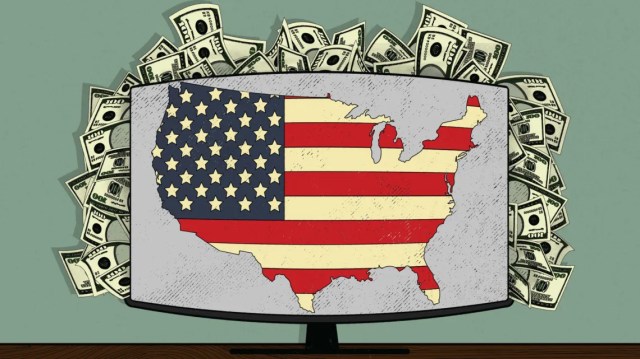
Infrastructure costs are climbing, but AI adoption won’t slow down
New tariffs on countries like Taiwan (32%) and South Korea (25%) are expected to ripple through the AI supply chain. While chips themselves aren’t being taxed, everything around them is—from substrate materials to server parts to data center construction. That raises the cost of running and scaling AI systems.
For brands and agencies, that means higher prices across the board: usage tiers, fine-tuning, and licensing are all set to climb. This means brands and agencies are likely to lean harder into AI to help justify spend.
The paradox? Higher costs are likely to reinforce AI’s perceived value.
“Scarcity always fuels demand,” said Snyder. “The irony here is by making interest infrastructure more expensive, tariffs validate the value of AI. If companies are willing to pay more to access compute and GPU, it means that AI is essential, not optional.”
AI goes local
The virtue of buying American-made goods may drive Trump’s trade wars—but in AI, it’s accelerating a shift toward sovereignty where governments and platforms are likely to double down on regional models and data localization.
For global brands, this changes everything—from data compliance to creative deployment. AI won’t scale across borders as smoothly as it used to, which means marketing teams must start thinking—and investing—regionally, according to Snyder.
“The ability for brands to own and control their own models is a pertinent thing coming out from this,” Cowling added.
Delay in AI advancement
Many of the companies leading the AI race are also major players in hardware: think Meta’s smart glasses and Apple’s on-device AI. Persistent tariffs on essential infrastructure components will only increase the cost of building this infrastructure, putting further strain on already thin AI margins.
“Simply put, scaling up AI is about to get even more expensive and harder to justify,” said Jacob Bourne, analyst, connectivity & tech briefings, Emarketer.
While AI companies were reducing costs and improving efficiency, tariffs threaten to undo those advances.
“That’s going to hinder AI advancement broadly,” Bourne added.
https://www.adweek.com/media/trumps-tariffs-ai-costs-soar/