What Marketers Need to Understand About Trust in the AI Age
This post was created in partnership with Chase Media Solutions
Key takeaways
- Building brand trust starts inside with a consistent mission and company culture.
- Rebuilding trust after a misstep is the ultimate test of a brand.
- Brands must build direct relationships to navigate AI disruption.
Trust has become the most valuable currency a brand can hold. Consumers are in control, and they are granting their loyalty to companies that prove their reliability, transparency, and commitment to doing the right thing.
During an ADWEEK House Advertising HQ Group Chat, co-hosted with Chase Media Solutions, a panel of marketing leaders explored the modern architecture of trust—how to build it from the inside out, defend it against modern threats, and evolve it for the future.
 (L-R) Audible’s Jess Kessler, Chase Media Solutions’s Lauren Griewski
Earning trust through consistency and action
The conversation began with the high stakes of institutional trust. Lauren Griewski, managing director, head of sales and partnerships at Chase Media Solutions, framed the challenge. “Warren Buffett says it best: It takes 20 years to build a reputation and five minutes to break it,” she shared. “And so, at Chase, trust is something that we hold as a very valuable asset that we then pass on to our merchant and brand partners.”
This principle of trust as a long-term, fragile asset was echoed by Tusar Barik, SVP of marketing at New York Times Advertising, “As I think about trust, it’s consistency over time. It takes time,” he said.
But consistency without a moral compass is meaningless.
That’s why, according to Eliot Hamlisch, chief commercial officer at Amtrak, it must be anchored to a core mission. “At Amtrak, we’ve got three pillars, one of which is doing the right thing,” he explained. “If that sits at the core of your offering, it goes a really long way.”
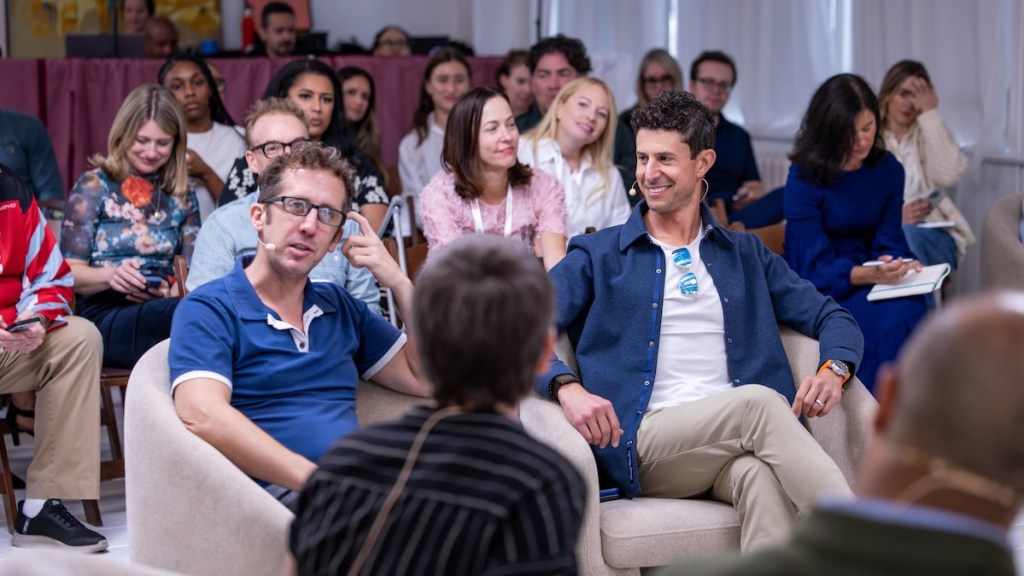 (L-R) Virginia Lottery’s Lindsay Yowell, Amtrak’s Eliot Hamlisch
Identifying and avoiding modern trust killers
When trust is broken, the damage is often done not in a major scandal, but in the small, frustrating moments of a poor user experience.
Jess Kessler, head of brand and content marketing, North America at Audible, shared that when things go wrong, Audible builds trust. “We have a playbook that is so customer-obsessed that automatically you can turn a challenge into an opportunity,” she explained.
Beyond a brand’s direct control lies the growing challenge of a chaotic digital landscape, noted Chase’s Griewski. “Fake news is now fake content that looks very real,” she warned. “As marketers, we’re really going to have to take this to the next level in terms of managing our content.”
It can be particularly hard to build trust in the gambling industry, shared Lindsay Yowell, senior brand and advertising manager for the Virginia Lottery. “For me, trust comes from transparency and authenticity,” he shared. “I don’t want people to think that all these games are developed behind closed doors. So, I’m trying to make it so we’re not just a veiled concept. I want to be a part of the community.”
 (L-R) New York Times Advertising’s Tusar Barik, ADWEEK’s Kathryn Lundstrom
Converting trust into loyalty and brand preference
So, what is the ultimate return on this difficult investment in trust? According to the panel, it’s the transformation of customers into true brand advocates. This power shift was articulated by Steve McGowan, senior director of U.S. consumer experience at Mondelēz International.
“It’s not about us anymore,” McGowan explained. “It’s what our consumers are saying about us that we have to think about from a trust perspective.” When a brand loses some of the control to consumers, consistency matters even more, he added.
Amtrak’s Hamlisch pointed to the power of surprise and delight, which he defined as “the above and beyond moments” that aren’t an offer or a promotion, but a thank you.
Deepening that bond also requires a commitment to representation, as Audible’s Kessler noted. “That bridge from the actual trust point to the actual purchase point comes from seeing yourself in the brand,” she said. “So, inclusivity and representation, I think, are really key.”
 Mondelēz International’s Steve McGowan
Securing trust in the age of AI
The conversation concluded by looking toward the horizon, where the rise of AI presents the next great test for brand trust. Hamlisch posed the central question facing every leader: “How do you continue to maintain trust in a world where you don’t know who you’re talking to?”
Griewski offered a tangible path forward, explaining that data, when used responsibly, can be a powerful tool for building trust in this new landscape. “Every time we put a message in front of that consumer, it needs to be informed by what we know about them,” she explained. “We see that as a way to drive personalization and relevancy.”
In the face of AI and technological upheaval, the most durable strategy is “building a direct relationship with our audience and our consumer,” Barik said. “That continues to pay off.”
Featured Conversation Leaders
- Tusar Barik, SVP, Marketing, New York Times Advertising
- Lauren Griewski, Managing Director, Head of Sales and Partnerships, Chase Media Solutions
- Eliot Hamlisch, Chief Commercial Officer, Amtrak
- Jess Kessler, Head of Brand and Content Marketing, North America, Audible
- Steve McGowan, Sr. Director, U.S. Consumer Experience (CX), Mondelēz International
- Lindsay Yowell, Senior Brand and Advertising Manager, Virginia Lottery
- Kathryn Lundstrom, Commerce and Sustainability Editor, ADWEEK
https://www.adweek.com/brand-marketing/what-marketers-need-to-understand-about-trust-in-the-ai-age/