What Media Rights Deals Mean to the Future of Women’s Sports
Media rights deals indicate the increasing value of women’s sports, but they’ve also illustrated the need for salaries, amenities, and benefits in line with that premium price.
The impact of the ongoing influx of media investment was evident in the lineup at the Deep Blue Business of Women’s Sports Summit on Tuesday in Manhattan, which included the presence of new, developmental leagues like League One Volleyball (LOVB) and the United Soccer League (USL) Super League as well as the WNBA’s Golden State Valkyries expansion franchise.
Among the recent highlights, in 2023, the National Women’s Soccer League entered a four-year, $240 million broadcast deal with CBS, Disney, Amazon, and Scripps that was the largest of its kind at the time. It was also more than 53 times the $4.5 million deal the NWSL received from CBS Sports and streaming platform Twitch in 2020.
Additionally, last year, the WNBA signed an 11-year media rights deal with Disney, Amazon, and NBCUniversal that was not only worth $2.2 billion, but allowed it to keep negotiating with existing broadcast partners like Scripps—which is seeking a long-term agreement after averaging more than 1 million viewers per game last season. The WNBA’s new pact will bring the league more than $200 million per season, or roughly four times the $50 million it receives annually from its current broadcast rights.
“It’s creating more visibility for our athletes and helping us grow our fan base and attract a broader audience,” Shana Stephenson, chief brand officer for the reigning WNBA champion New York Liberty, told ADWEEK at the Deep Blue summit. “If you really look at engagement and the commitment of our fans and the loyalty of our fans, that’s where the investment really shows up, and that’s where it really makes a lot of sense.”

Outside the U.S., soccer’s U.K.-based Women’s Super League (WSL) struck a five-year, $86.7 million deal with Sky Sports and the BBC last year that, at more than $17 million per year, exceeds the $9 million to $10.6 million annual value of the league’s last media cycle.
So why weren’t broadcasters so generous previously?
“It’s called sexism, just say it,” said Sue Bird, a Deep Blue partner and chief strategy officer who’ll be enshrined in the Naismith Basketball Hall of Fame later this year.
A multi-time Olympic gold medalist with Team USA and WNBA champion with the Seattle Storm, Bird is now part of the ownership groups of both the Storm and the NWSL’s Gotham FC. As the value of women’s sports media deals rises and conditions within the leagues themselves change, Bird observes it in the context of the greater sports landscape.
“It’s arguably the unit of measure in the world of live sports,” Bird said. “It’s where a lot of the value of the product lives, because the price tags are so high.”
Collective value
Jasmine Robinson, managing partner at Monarch Collective, has helped her fund found and manage three NWSL franchises: Angel City FC, the San Diego Wave, and the forthcoming Boston Legacy expansion franchise.
After the NWSL struck its new media deal in late 2023, the Wave were valued at $120 million when they were sold to the Levine Leichtman family. Two years earlier, Ron Burkle paid just $2 million for the Wave’s expansion rights.
In June 2024, USC Annenberg School dean Willow Bay and Disney CEO Bob Iger purchased Angel City FC at a valuation of $250 million. Angel City’s original ownership group—which included Reddit founder Alexis Ohanian and actors Natalie Portman and Jennifer Garner—also initially paid a $2 million expansion fee in 2022.

By the time Denver was awarded the NWSL’s 16th team earlier this year, the expansion fee had risen to $100 million. Robinson noted, however, that league media rights deals have benefits far beyond franchise valuations.
“I think they’re so important because it’s not only the revenue that comes into the leagues and can be then shared out with the teams and players as a result, but it’s also the marketing and coverage that all fits around it that multiplies the impact of these media deals,” she said.
Last year, as the NWSL began to reap the benefits of its new media package, the league and its players association negotiated a new collective bargaining agreement that eliminated entry and expansion drafts, embraced unrestricted free agency, guaranteed player contracts, increased salaries, added charter flights, and expanded parental leave, childcare, and mental health benefits. In October, after the WNBA announced its deal, its players’ union opted out of its collective bargaining agreement with the league.
“I think there’s still a ton of way to go in terms of getting female athletes to continue to get paid and be valued for the value that they’re creating for leagues and teams,” Robinson said. “A lot of that is making sure that we’re getting the monetization done right with media companies and with brands in collaboration with those stakeholders, because we’re all collaborating in this ecosystem to build something that really works for the long run and is sustainable and continues to scale.”
Bird was on the executive committee for the last WNBA collective bargaining agreement as a player and noted that she and other players wanted to rip up as much of the old CBA as possible since it was “essentially a copy-and-paste from the NBA” and didn’t apply to WNBA players. Ultimately, they were looking to create a foundation for the next agreement that’s more useful to current players.
“I’m hopeful that when an agreement does get done, it marks the start of a new partnership that fits the WNBA,” Bird said. “A CBA that is made for the WNBA and allows it to grow on all levels.”
Adding new players
Deep Blue founder and CEO Laura Correnti pointed out that media investment in women’s sports is quickly finding its way into corners beyond established leagues and circuits.
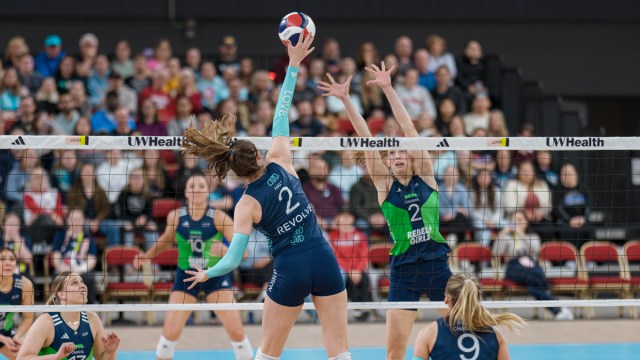
LOVB just ended its first season of professional volleyball on ESPN and drew in partners including shapewear brand Spanx and fashion retailer Revolve—”brands that have never spent in sports, period,” Correnti noted. As other women’s sports leagues emerge, secure media deals, and start offering ad inventory, Correnti said it presents an even greater opportunity to reach fan bases and consumers that were otherwise being ignored.
“For so long, it was just a handful of professional leagues that even had media deals, but now you’ve got League One Volleyball coming online, you’ve got [Professional Women’s Hockey] just finishing its second season, you’ve got a new pro softball league coming online, a baseball league coming online,” she said. “I think we’re only going to see further professionalization of sport, and with that, it’s going to be interesting to see what brands come in.”
https://www.adweek.com/media/media-rights-deals-future-womens-sports/