When AI Becomes the Gatekeeper of Brand Visibility
This post was created in partnership with Adobe
Brand discovery has always happened in places companies don’t fully control. What’s different now is that the intermediary doesn’t just surface options. It makes a judgment call.
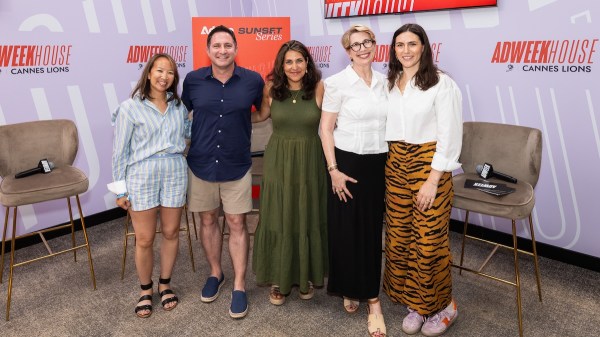
During an ADWEEK House Cannes Lions sunset series panel co-hosted with Adobe, marketing leaders explored how to earn credibility and trust when consumers first encounter brands through AI before reaching an owned channel.
Brand discovery becomes conversational
Brand voice has long lived in campaigns and creative. For Rachel Thornton, CMO of enterprise at Adobe, that’s the part that’s changing. Now it has to come through in an AI summary.
“Your brand matters now more than ever,” Thornton said. “You want to think through your brand visibility strategy and how you show up in places like ChatGPT, Claude, etc.”
This visibility question is tied to how consumers encounter your brand. They have conversations with AI models and often learn about your brand in those conversations. “You really have to think, ‘What’s my conversational brand?’” Thornton added.
Linda Ha, deputy CMO at IKEA Retail, IKEA, sees the change in how people behave. Fewer consumers are clicking through results to make up their own minds. Many simply read what an AI has already concluded. The way they ask questions has changed, too.
“Consumers are having conversations, instead of just searching for information,” Ha said.
Andy Kauffman, chief commercial officer for the U.S. and Canada at Marriott International, resisted the temptation to treat AI as a new game. “I think about AI as just another channel with its set of tactics,” he said.
The goal, in his view, hasn’t changed: understand what the traveler wants and deliver an experience worth coming back to. Marriott’s Ask Bonvoy beta runs on that same logic but uses a different interface. What used to be a “forms, filters, and fields experience” is giving way to intent-led, conversational planning.
Consistency still creates trust
As discovery spreads across AI agents, reviews, creator communities, and more, brands earn credibility through consistency.
Selina Sykes, VP of marketing transformation and social-first, beauty and wellbeing, at Unilever, said AI systems look for reliable patterns across the places where brands appear.
“If the algorithm goes out there and you say something different on Walmart than a creator says on Reddit, the AI is going to go, ‘We don’t know if we believe this product benefit. We’re not going to recommend it,’” she noted.
When language, tone, claims, or experience feel off across channels, the relationship weakens. Trust softens and eventually breaks.
Sykes pointed to Vaseline as proof that the principle holds over time. The brand is winning Cannes Lions this year with a campaign built around consumer-discovered hacks for a product more than 150 years old. Relevance endures when a company keeps listening to what people actually do with its products, not just what the brand wants to tell them.
Staying attuned to people on the outside requires investing in the people on the inside. Sykes described the challenge as “the poetry and the plumbing.” Creative instinct alongside technical rigor.
Ha echoed that people-first view. “AI has opened up so much opportunity for us. We need to constantly invest in continuous learning and really double down on our creativity and craft,” she said.
Being found in an AI era is only the opening move. Successful brands will be clear and consistent enough for machines to surface, trustworthy enough for people to believe, and meaningful enough for customers to choose.
https://www.adweek.com/brand-marketing/when-ai-becomes-the-gatekeeper-of-brand-visibility/