Why Publicis’ CEO Considers the Return to Office Mandate and AI Investments Crucial Business Strategies
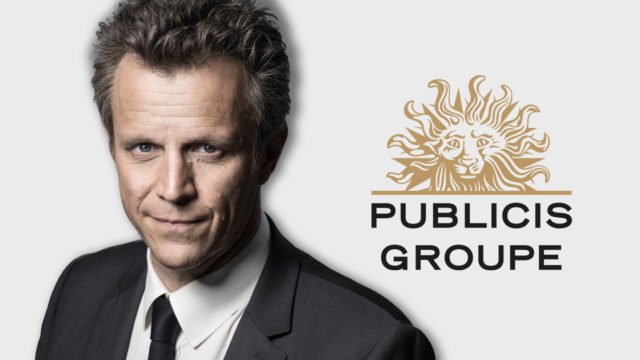
Earlier this month Publicis Groupe CEO Arthur Sadoun announced a controversial return-to-office (RTO) plan that’ll go into effect on January 1. It requires Publicis employees work in the office three days a week, and be present every Monday. Regardless of other agencies’ plans, Sadoun believes in-office work will be crucial to capturing more market share next year.
For its third quarter, Sadoun’s holding company reported better-than-expected financial results. Its 5.3% growth and $3.44 billion organic revenue are relatively positive considering the economic tailwinds slowing advertising growth overall. The RTO mandate is one piece of a two-pronged strategic approach. The other is a significant emphasis on emerging technology and AI.
It’s not surprising, considering Publicis Groupe’s media and technology business units drove a majority of its revenue this quarter.
“Making sure that we AI-ify our organization better than the competition is important, but bringing people [back] together is the other component that we think is critical,” Sadoun told Adweek.
Encouraging results, despite the tailwinds
Publicis’ financial results outperformed the broader market with its 5.3% global growth.
Slower growth in the U.S. market trails better year-over-year results in global markets. This quarter, the agency’s U.S. business grew just 3.2% compared to the 11.1% growth it achieved during the same period last year. But, the slower growth still surpassed expectations given a somewhat recessed business economy and its impact on advertising investments.
By contrast, the agency experienced 10.7% growth in Europe—nearly equal to the 11.1% it achieved in the region during the same period last year. Growth in Asia-Pacific was 3.8%, closely tailing the prior year’s 4.1%.
Encouraged by its overall performance, Publicis updated its guidance, or growth expectations, from 5.5% to 6% for the 2023 fiscal year.
“No one is expecting in the difficult conditions that we are going through as an industry (and the world, by the way,) that we’re in a position to upgrade our guidance,” Sadoun told Adweek. “This is a demonstration that our model is pretty different from [the] competition,” he added.
Media and technology categories prop up revenue
Publicis attributes its third-quarter revenue primarily to media billings; creative services; and its technology assets like Publicis.Sapient and Epsilon. Each category drives one third of the larger business, with Publicis.Sapient growing 1.2% and Epsilon growing 10.5% during the three month period. These technology and data-focused business units contribute significantly to the bottom line, explaining why Sadoun’s eager to emphasize a technology-oriented strategy.
“What we know is that we have built a model that is resilient to the business cycle,” Sadoun said. “The platform organization that we have put in place allows us to preserve a margin…to preserve our people. It’s as simple as that,” he said.
Jay Pattisall, a principal analyst at Forrester Research expected Publicis would report “mid-to-high single digit organic growth,” in the third quarter. He also predicted Publicis.Sapient and Publicis Media would perform well relative to the creative business. “Creative will likely remain the challenge for Publicis and its holding company peers,” the analyst told Adweek.
Media did outperform creative, achieving high single-digit growth on the year. This because the holding company’s Epsilon asset and data offering are compelling to media clients, Sadoun told Adweek. And, he said, because there are more high-budget media accounts up for grabs than there are creative accounts in review.
The year in review
Last year was a good new business year for Publicis. It secured significant billings from Mondelēz, McDonalds, Nestlé and Crocs. In 2022, the holding company grew a whopping 10.3% in the third quarter and generated $3.15 billion. Last November, it paid out a week’s extra wages to 45,000 employees.
The group also set aside between $450 and $680 million to execute more mergers and acquisitions, namely technology companies with e-commerce expertise.
Sadoun’s outlook remained rosy eight months ago, when Publicis reported its 2022 year-end results. Then, he told Adweek that hiring would continue in 2023, even after he’d already hired 10,000 in 2022.
By now, he’s somewhat more cautious, acknowledging as many as five global economic squeezes in a five-year period. Now that organic growth is more consistent with pre-pandemic levels, Sadoun told Adweek that regardless of the economic circumstances, he still intends to out-perform competitors next year.
Back to the office
The CEO intends three in-person working days will accomplish two greater goals: Strengthen client relationships–especially in cases where brand teams have also returned to the office; Create a more fair workplace, since certain production or client-facing roles that require in-person interaction do not currently enjoy the same benefits remote work provides others.
Most Publicis employees, according to the leader, are already commuting to the office about three days a week. Current office space would allow employees to work in-person four days a week without overcrowding, according to the leader. He considers the RTO policy flexible, acknowledging employees might choose to spend Monday in the office, and two other days with a client.
“Of course, we will adapt and and we will make sure that we make that flexible enough for everyone,” Sadoun said. “But the more people that can be [at a Publicis office] on Monday, the better. For sure.” he added.
https://www.adweek.com/agencies/why-publicis-ceo-considers-the-return-to-office-mandate-and-ai-investments-crucial-business-strategies/